Striped Bass Migration Up South Carolina’s Coastal Rivers
There's a unique thrill that comes with the change of seasons in South Carolina, especially if you're an angler who chases the mighty striped bass. Many folks get frustrated trying to pinpoint when and where these powerful fish will show up in our coastal rivers, feeling like they're constantly a step behind. This guide is here to unravel the mysteries of striped bass migration, helping you understand their seasonal movements and giving you the insights needed to intercept them as they make their incredible journeys up South Carolina's coastal waterways.
The Rhythmic Pulse of the Rivers: Understanding Striped Bass Migration
The idea of fish making long journeys isn't new, but for striped bass in South Carolina, it's a critical part of their life cycle that directly impacts how and when we can fish for them. These aren't just random movements; they're a finely tuned dance dictated by ancient instincts and environmental cues, deeply tied to their survival and reproduction. Understanding this rhythm is the first step to successful river striper fishing.
Why Stripers Undertake These Epic Journeys
Think about it from a fish's perspective: survival means finding the best food, the safest places to grow, and optimal conditions to reproduce. For striped bass, especially the anadromous populations that spend part of their lives in saltwater and part in freshwater, this means traveling. The cooler, brackish waters of our coastal rivers offer a sanctuary from the often warmer, more saline ocean, providing a distinct advantage for their reproductive cycles. It's a journey ingrained in their DNA, a testament to their resilience and adaptability.
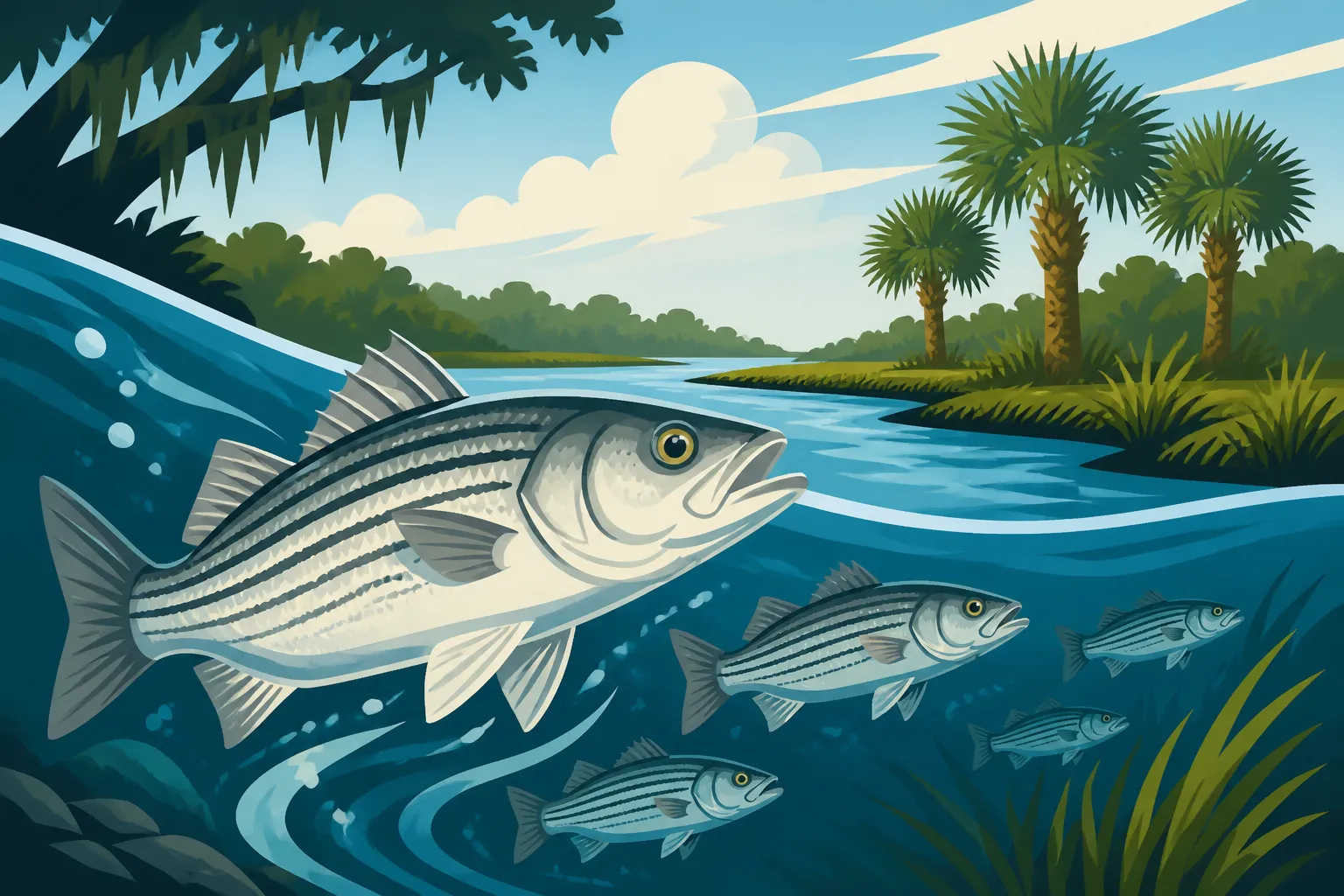
It's easy to assume fish just stay where they're comfortable, but striped bass are built for movement. Their strong, torpedo-shaped bodies are perfectly designed for navigating currents, whether it's the open ocean or the winding passages of a river. They're driven by biological imperative, moving from the open Atlantic into the estuaries and then further up freshwater rivers, often hundreds of miles, to complete their spawning ritual. This incredible feat is what makes them such a prized game fish and such a fascinating species to study and pursue.
The Role of Spawning in River Migrations
At the heart of the striped bass migration is one thing: spawning. Unlike some fish that can spawn in a variety of habitats, striped bass are specific. They need moving freshwater, often in the upper reaches of tidal rivers, where their eggs can remain suspended in the water column as they develop. This "semi-buoyant" characteristic of their eggs means they can't simply drop to the bottom in stagnant water; they need that gentle current to keep them oxygenated and prevent them from being smothered by sediment.
So, when you see those massive runs of stripers pushing far upstream in the spring, know that it's all about ensuring the next generation thrives. They're looking for those perfect conditions: a specific range of water temperature, adequate flow, and a safe substrate where their fertilized eggs can drift and eventually hatch. Without these river migrations, the populations of these iconic fish simply wouldn't be sustainable. It's why protecting these critical river habitats is so important, not just for the fish themselves, but for the entire ecosystem and the angling opportunities they provide.
South Carolina's Prime Coastal River Highways for Stripers
South Carolina's geography is a gift to anglers, with a network of coastal rivers that serve as vital arteries for migrating striped bass. While many people think of saltwater when they think of stripers, a significant portion of their life cycle, particularly their crucial spawning migrations, takes place within these freshwater and brackish systems. Knowing which rivers are key and how far inland these fish travel can dramatically increase your chances of finding them. These are truly South Carolina's Best Striped Bass Waters.
The Legendary Santee-Cooper System and Its Tributaries
When we talk about striped bass in South Carolina, the Santee-Cooper lake system, formed by Lake Marion and Lake Moultrie, and its connecting rivers, immediately comes to mind. This system isn't just a local hotspot; it's nationally renowned for its landlocked striped bass population, but also for its connections to the coast. The Santee River, particularly its lower stretches and the Rediversion Canal, is a critical highway for ocean-run striped bass moving inland. They use this route to access the freshwater spawning grounds further upstream, sometimes pushing all the way into the lakes themselves.
Anglers targeting migratory stripers here will often focus on the Santee River below the Wilson Dam, especially during the colder months and into early spring. The currents, depth changes, and presence of baitfish create ideal ambush points. Further upriver, anglers will explore areas where the river widens or narrows, looking for signs of active feeding. The sheer size and complexity of the Santee-Cooper system mean there are always new spots to discover, but the Santee River remains the backbone of this incredible migratory journey. If you're looking for Santee River Fishing Spots in South Carolina, this is a prime target.
Other Vital River Systems: Edisto, Ashepoo, and Combahee
While the Santee-Cooper system often gets the spotlight, South Carolina boasts other incredible river systems that play a crucial role in striped bass migration. The Edisto River, for instance, is one of the longest free-flowing blackwater rivers in North America, and it sees healthy runs of striped bass pushing up from the coast. Its dark, tannin-stained waters offer a unique environment, and stripers thrive here, moving upriver from the brackish lower reaches into the freshwater sections for spawning. Anglers often find success targeting structure and deeper bends, especially where the blackwater meets tidal influences. For those seeking Edisto River Fishing Spots in South Carolina, targeting these migratory runs can be incredibly rewarding.
Further south, the Ashepoo, Combahee, and Edisto (ACE Basin) rivers form a vast, protected estuarine system that is vital for countless species, including striped bass. While perhaps not known for the sheer volume of stripers seen in the Santee, these rivers provide essential migratory corridors and spawning habitat. These smaller, more intricate river systems often require a different approach, perhaps smaller boats or even kayak fishing, to navigate their winding channels and shallow flats. The fish here are often wilder, more wary, and can offer a challenging but immensely satisfying fishing experience. It's a testament to the diversity of our state's waterways that multiple river systems support these incredible migrations.
Navigating the Inland Reaches of Coastal Rivers
The journey doesn't stop at the brackish water line; striped bass will often push surprisingly far inland, seeking out pure freshwater for their spawning rituals. This means anglers need to shift their mindset from a coastal, tide-dependent approach to one focused on river currents, depth, and structure. Rivers like the Congaree and Broad, which feed into the larger Santee system, become critical highways during the spring spawning runs. Understanding these inland movements can open up entirely new fishing opportunities away from the more commonly fished lower river stretches. You might be surprised at how far upstream these fish will travel.
For example, the Congaree River near Columbia, where it merges with the Broad and Saluda to form the Santee, can be an absolute powerhouse during the peak of the migration. These upper river sections, with their rock shoals, swift currents, and deeper holes, provide exactly what spawning stripers need. It requires careful navigation and often heavier tackle to combat the strong currents, but the rewards can be immense. For those seeking Congaree River Fishing Spots Near Columbia, South Carolina or exploring Broad River Fishing Access Points in South Carolina, understanding the upstream limits of these migrations is key to intercepting the biggest schools of fish before they make their return journey. Always check local navigation charts and be aware of river hazards like rapids or low water levels, especially when pushing into lesser-known upstream areas.
Timing is Everything: Seasonal Breakdown of Striper Movements
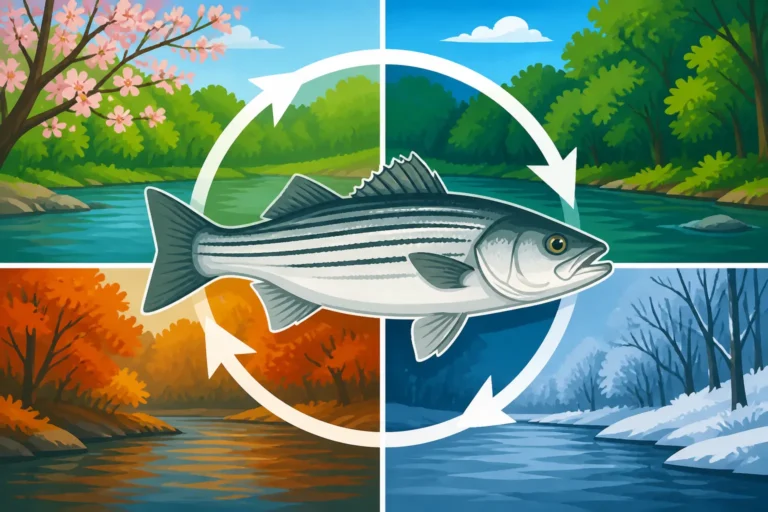
Just like a train schedule, striped bass migration has its peak times. It’s not just a continuous flow of fish up and down the river; there are distinct seasons when different parts of the journey occur. Knowing these seasonal patterns is paramount to planning a successful trip. Anglers who consistently catch migratory stripers aren't just lucky; they understand this seasonal ebb and flow, knowing when the fish are likely to be staging, spawning, or retreating. This insight helps in determining Best Time of Year to Catch Striped Bass on South Carolina's Rivers.
Fall Migration: The Feast Before the Spawn
As the days shorten and the water temperatures in the ocean begin to dip, often in late September through November, a subtle but significant shift occurs. This is when striped bass begin their initial movements from the cooler ocean waters into the estuaries and lower reaches of the coastal rivers. Think of it as the "pre-game" for the main event – the spring spawn. They're not yet in full spawning mode, but they're actively feeding, building up reserves for the arduous journey ahead. This is a fantastic time to target them, as they're often aggressive and focused on finding baitfish.
During the fall, these fish can be found ambushing schools of mullet, menhaden, and shrimp as they move out of the estuaries and back towards the ocean. You'll find them congregating in river mouths, tidal creeks, and the confluence of rivers where bait is abundant. This is when topwater lures, soft plastics, and live bait can be incredibly effective. The fall bite can be explosive, with multiple fish striking in quick succession. It's a dynamic period where the stripers are transitioning from their summer ocean haunts to their winter river residences, making them highly accessible to anglers who know where to look.
Winter Holding Patterns and Early Spawning Runs
Once the full chill of winter sets in, typically from December through February, the migratory striped bass often settle into specific holding patterns within the rivers. They'll seek out deeper holes, protected bends, and areas with stable water temperatures. While they're not as actively migratory as in spring or fall, they are still present and can be caught. This period can offer some excellent fishing, especially on warmer winter days when the fish become more active. Many anglers consider this a prime time for Striped Bass Winter Fishing Patterns in Freshwater Lakes and rivers.
As winter progresses, usually towards late February and early March, the first signs of the spawning run begin. Even in the depths of winter, some fish, particularly larger females, might start to make their way further upstream, testing the waters and positioning themselves for the main event. Targeting these early movers often means focusing on deeper water, using slower retrieves, and perhaps more subtle baits. It's a waiting game, but catching one of these pre-spawn giants can be the highlight of a winter fishing season. The fish are more sluggish in the cold, so a slower approach is generally more effective. If you're wondering How to Catch Striped Bass in Cold Water, patience and understanding their deep-water habits are key.
Spring Spawning and Post-Spawn Dispersal
This is it, the grand finale, the main event: the spring spawning run. From late March through May, as river temperatures steadily climb into their optimal range (typically 60-70 degrees Fahrenheit), the rivers come alive with thousands of striped bass pushing upstream to reproduce. This is when the upper freshwater sections of our coastal rivers become teeming with fish. They are focused, driven by instinct, and can offer incredible angling opportunities, though the priority should always be conservation during this sensitive time.
After the intense spawning activity, usually by late May and into June, the stripers begin their post-spawn dispersal. Exhausted from their journey and the act of reproduction, they'll slowly make their way back downstream, seeking out cooler, more oxygenated water. Some will head back to the estuaries and eventually the ocean, while others, particularly in systems like Santee-Cooper, may become residents in the freshwater lakes. This post-spawn period can still offer good fishing, as the fish are recovering and replenishing their energy, often aggressively feeding on anything they can find. It’s a transition period, marking the end of one life cycle and the beginning of another.
| Season | Typical River Location | Behavior | Fishing Approach |
|---|---|---|---|
| Fall | Lower river/Estuary mouths | Active feeding, staging | Topwater, soft plastics, live bait |
| Winter | Deeper holes, stable sections | Holding patterns, early runs | Slow retrieves, deep jigs, cut bait |
| Spring | Upper freshwater sections | Peak spawning activity | Power fishing, live bait (respect regulations) |
| Summer | Ocean/Deep freshwater lakes | Dispersal, recovery | Offshore trolling, lake structure fishing |
The Environmental Symphony: Factors Driving Striper Migration
Striped bass don't just pick a direction and go; their movements are an intricate response to a complex interplay of environmental cues. Think of it as a symphony where water temperature, river flow, salinity, and the availability of food all play a crucial part, guiding the fish along their migratory routes. Understanding these factors helps us predict their behavior and adjust our angling strategies accordingly, taking the guesswork out of locating these elusive fish.
Water Temperature: The Ultimate Migration Cue
If there's one single factor that dictates striped bass migration more than any other, it's water temperature. Stripers are cold-blooded creatures, meaning their metabolism and activity levels are directly tied to the temperature of their surroundings. For spawning, they have a very specific "comfort zone," typically between 60 and 70 degrees Fahrenheit. As river temperatures climb into this range in the spring, it acts as a powerful signal for them to move upstream and begin spawning. Conversely, as ocean waters cool in the fall, it nudges them into the relatively warmer, more stable estuarine and river environments.
This means that a warmer-than-average spring might trigger an earlier spawning run, while a prolonged cold snap could delay it. Experienced anglers are constantly monitoring water temperature, using inexpensive thermometers or their boat's fishfinder to track changes. Knowing the optimal temperature range helps you know exactly when to expect the fish in certain areas. It's not just about comfort; it's about the survival of their eggs, which have strict temperature requirements for successful development. Keeping an eye on those temperature gauges, whether it's a simple device from a local tackle shop or an advanced fishfinder, is an absolute game-changer. You might even find some reliable, affordable options on Amazon that fit the bill.
River Flow and Salinity Changes
Beyond temperature, the dynamics of river flow and salinity also play critical roles. Heavy rains can dramatically increase river flow and push freshwater further downstream, influencing where stripers decide to spawn or even where they hold. A strong, consistent flow is generally good for spawning, as it helps keep eggs suspended. However, excessively high or low flows can disrupt their normal patterns, making fishing challenging. Conversely, during periods of drought, lower river levels and increased salinity further upstream might limit how far inland the stripers are willing or able to travel.
Salinity, the salt content of the water, is another key factor. Striped bass are euryhaline, meaning they can tolerate a wide range of salinities, from pure freshwater to full saltwater. However, they need freshwater for spawning. As they migrate upstream, they're consciously moving from saline ocean water into brackish estuaries, and finally into the freshwater reaches where reproduction occurs. The transition zones where freshwater meets saltwater are often highly productive fishing areas, as fish pause there to acclimate or feed on the abundant baitfish that also congregate in these areas. Monitoring local river gauges and understanding recent rainfall patterns can give you a significant advantage in predicting where the fish might be.
The Influence of Baitfish Abundance
Let's be honest: fish go where the food is! While spawning is the primary driver for part of the migration, feeding is a constant necessity. Striped bass are voracious predators, and their movements are heavily influenced by the presence and abundance of their prey. As schools of baitfish—like menhaden, mullet, and shad—move in and out of the estuaries and up and down the rivers, the stripers are often right on their heels. Finding the bait is often key to finding the stripers.
During the fall, as baitfish migrate out of the estuaries towards the ocean, stripers will intercept them, staging in river mouths and channels. In the spring, as shad and other anadromous species move upstream to spawn, stripers will follow them, using them as a crucial food source to fuel their own arduous spawning journeys. If you see signs of baitfish, whether it's nervous water, birds diving, or schools on your sonar, you can bet that striped bass aren't far behind. Matching the hatch, or using lures that imitate the local baitfish, can be incredibly effective when you find these feeding frenzies. Knowing what Striped Bass Migration Up South Carolina's Coastal Rivers means for baitfish is half the battle.
Angling for Migratory Stripers: Techniques and Tackle
Now that we understand the "why" and "when" of striped bass migration, let's talk about the "how." Targeting these powerful, migratory fish in river systems requires specific techniques and the right gear. It's a different game than open ocean fishing, demanding an understanding of current, structure, and the fish's behavior in these dynamic environments. Don't be afraid to adapt your approach based on the conditions you encounter – that's often the secret to success!
Top Techniques for River Striped Bass
When stripers are actively migrating in rivers, they're often moving, feeding, and positioning themselves in relation to currents and structure. This calls for a variety of techniques:
- Trolling: This is a tried-and-true method, especially for covering a lot of water and finding schools of fish. Using diving crankbaits, bucktail jigs, or umbrella rigs can be very effective. You'll want to vary your speed and depth until you hit on what the fish are responding to. When trolling in rivers, pay close attention to depth contours and current breaks.
- Live Bait Fishing: Nothing beats live bait when stripers are being finicky. Large shad, herring, or even big shiners, if legal and available, can be presented on a Carolina rig or a three-way swivel rig. This allows the bait to drift naturally with the current near the bottom where stripers often hold. Using a circle hook is crucial for ensuring a solid hookup and easy release if you're practicing catch and release.
- Casting Artificials: For more active fishing, casting and retrieving artificial lures can be incredibly exciting. Heavy spoons, lipless crankbaits, and large soft plastic swimbaits rigged on jig heads are excellent choices. Work these lures around submerged structure, current seams, and drop-offs. The key is to match the hatch – use lures that imitate the baitfish present in the river at that time.
- Jigging: When you locate schools of stripers in deeper holes or holding around structure, vertical jigging can be deadly. Heavy bucktail jigs, metal jigs, or even large spoons dropped directly into the school can provoke a strike. Pay attention to your electronics to pinpoint the fish and present your lure right to them. This technique is often effective when the fish are less inclined to chase fast-moving baits.
Essential Gear for Targeting River Migratory Stripers
Just like any specialized fishing, targeting migratory stripers in rivers calls for appropriate gear that can stand up to the fight. These fish are strong, and river currents can add to the challenge, so don't skimp on your tackle.
- Rods and Reels: You'll want sturdy medium-heavy to heavy action rods, typically 7 to 8 feet long, capable of handling larger lures and heavy fish. Pair these with robust spinning reels (size 4000-6000) or baitcasting reels (300-400 series) with a strong drag system. When these fish hit, they hit hard, and you need a reel that can take the punishment. A reliable reel is an investment, but you can find great options for Best Lures for Striped Bass in South Carolina that pair well with quality rods, sometimes even on Amazon.
- Line: Spool up with braided line, usually 30-50 lb test, for its strength, sensitivity, and lack of stretch. This allows for solid hooksets and better feel for subtle bites. Always use a fluorocarbon leader (20-40 lb test) for abrasion resistance and invisibility, especially in clear water.
- Lures and Baits:
- Crankbaits: Deep-diving models in natural baitfish patterns (shad, herring) are excellent for trolling or casting in deeper sections.
- Bucktail Jigs: A classic for a reason. Various sizes (1/2 oz to 2 oz+) in white, chartreuse, or darker colors, often tipped with a soft plastic trailer, are incredibly versatile.
- Soft Plastics: Large swimbaits (5-8 inches) on heavy jig heads are great for imitating larger baitfish. Flukes and jerkbaits can also be effective.
- Live Bait Rigs: Essential components include heavy-duty swivels, appropriate sinker weights (1 oz to 4 oz or more, depending on current), and strong circle hooks (4/0 to 7/0).
- Electronics: A good fishfinder with side-imaging or down-imaging can be invaluable for locating schools of fish, identifying baitfish, and mapping out submerged structure and river channels. A portable fishfinder can even be useful if you're fishing from the bank or a smaller craft.
- Safety Gear: Don't forget your PFDs, a well-stocked first aid kit, navigation tools, and communication devices. River conditions can change quickly, so always prioritize safety. And while you might get a great deal on fishing line or lures, make sure your safety gear is top-notch, perhaps even checking out highly-rated options on Amazon.
Protecting the Journey: Conservation and Responsible Angling
Catching a magnificent striped bass, especially one that has migrated many miles upriver, is an incredible experience. But with great fishing opportunities comes great responsibility. The migratory striped bass populations, while resilient, face numerous challenges, from habitat degradation to fishing pressure. As anglers, we play a crucial role in ensuring these incredible fish continue their epic journeys for generations to come. Striped Bass: South Carolina's Official State Fish deserves our respect and protection.
Understanding Regulations for Migratory Stripers
One of the most important aspects of responsible angling is knowing and adhering to the current fishing regulations. These regulations are not arbitrary; they are carefully crafted based on scientific data to manage fish populations, ensure sustainable harvest, and protect spawning stocks. For migratory striped bass, regulations can be particularly complex because they often involve different rules for different bodies of water (ocean vs. estuaries vs. freshwater rivers) and different times of the year.
Always check the latest South Carolina Department of Natural Resources (SCDNR) regulations before you head out. These will cover things like:
- Size limits: Minimum and sometimes maximum lengths designed to protect juvenile fish and large, spawning adults.
- Bag limits: The number of fish you can keep per day.
- Seasons: Specific times of the year when fishing for or keeping certain species might be restricted, especially during peak spawning.
- Gear restrictions: Certain types of tackle or bait might be prohibited in specific areas or during certain seasons.
Ignoring these rules can not only lead to fines and penalties but, more importantly, can have a detrimental impact on the fish population. Familiarize yourself with the regulations and carry a copy with you, whether it's a printed guide or a digital version on your phone. Ignorance is never an excuse. Always double-check current information; it often changes!
Practicing Catch and Release for Future Generations
While it's thrilling to keep a legal-sized striper for the dinner table, practicing catch and release, especially for larger breeding-size fish, is a powerful conservation tool. The large, mature females are the most important for successful spawning, contributing significantly to the next generation of striped bass. Releasing these "broodstock" fish ensures they can continue to reproduce, maintaining healthy populations.
If you plan to practice catch and release, here are some best practices to minimize stress and maximize the fish's survival:
- Minimize Fight Time: Use tackle appropriate for the size of the fish to bring it in quickly, reducing exhaustion.
- Handle With Care: Avoid touching the fish's gills or eyes. Support its body horizontally, especially larger fish, to prevent internal organ damage. Use wet hands or a wet towel to protect its slime coat.
- Quick Release: Have your camera ready before you reel in the fish. Get your photo, and then release the fish as quickly as possible.
- Dehooking Tools: Keep a pair of pliers or a dehooking tool handy to quickly remove hooks, especially if the fish is deeply hooked. Consider using circle hooks, which tend to hook fish in the corner of the mouth, making release easier and less damaging.
- Revive the Fish: If the fish seems exhausted, hold it gently in the water, facing into the current, until it can swim away strongly on its own.
By embracing responsible angling practices, from understanding regulations to practicing careful catch and release, we can all contribute to the long-term health and abundance of Striped Bass Migration Up South Carolina's Coastal Rivers for many years to come. This commitment ensures that future generations of anglers will also have the opportunity to experience the thrill of chasing these magnificent fish.
Disclaimer
This article is for general informational purposes only and does not constitute professional advice. Laws, prices and regulations vary by location and change over time. Consult a qualified professional for guidance on your specific situation.