South Carolina’s Sturgeon: The State’s Rarest River Giants
For many anglers in South Carolina, the idea of encountering a sturgeon is like a mythical tale, whispered around campfires more than seen firsthand. These ancient fish, with their prehistoric appearance and immense size, are indeed the state's rarest river giants, facing significant challenges that make any encounter a truly special and memorable event. This comprehensive guide will pull back the curtain on South Carolina's sturgeon populations, exploring their unique biology, the rivers they call home, and the vital conservation efforts ensuring their survival for generations to come.
The Ancient Giants of South Carolina's Waters: An Introduction to Sturgeon
Imagine a fish that has roamed our rivers since the time of dinosaurs, a living fossil with armored plates instead of scales, and a snout designed for rooting along the riverbed. That's the sturgeon. These magnificent creatures represent an unbroken lineage stretching back millions of years, offering a direct link to a primeval past right here in the Palmetto State. Their presence in our waters speaks volumes about the health and history of our river ecosystems, even if they remain largely unseen by the casual observer.
A Legacy Spanning Millennia
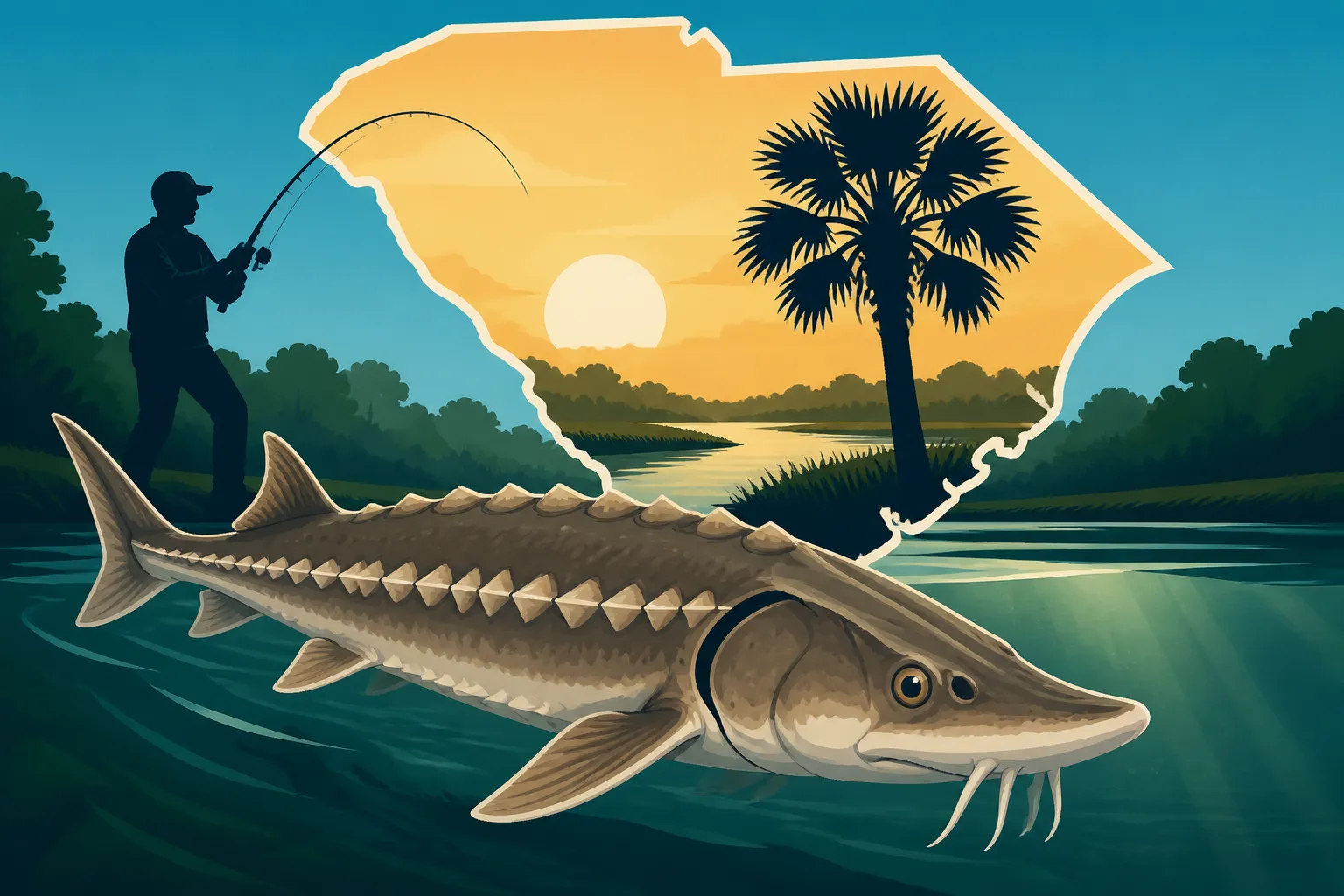
Sturgeon aren't just old; they're ancient. Their evolutionary path diverged from other fish species incredibly long ago, and they've maintained many of their primitive characteristics. Unlike the bony fish most of us are familiar with, sturgeon have skeletons primarily made of cartilage, similar to sharks. Their five rows of bony plates, or scutes, along their backs and sides are a distinctive feature, providing protection against predators and lending them that formidable, armored look. This robust design has allowed them to survive countless environmental changes, making them true aquatic survivors.
For centuries, sturgeon played a crucial role in the cultures and economies of communities living along South Carolina's major rivers. Native American tribes revered them, and early European settlers quickly recognized their value for their meat and the highly prized roe, or caviar. This long history of interaction, however, also led to significant overfishing, especially during the 19th and early 20th centuries, contributing to the dramatic declines we see today. Understanding this deep historical connection helps us appreciate why conservation is so critically important now.
Why They Are South Carolina's Rarest River Giants
The simple truth is, sturgeon populations in South Carolina, and indeed much of the East Coast, have been severely depleted. Decades of overharvesting, coupled with habitat destruction and pollution, took a massive toll on these slow-growing, long-lived fish. Dams constructed on major rivers blocked their migratory routes to crucial spawning grounds, segmenting populations and preventing them from completing their life cycles. This combination of factors has pushed them to the brink, earning them the unfortunate title of "rarest river giants."
When we talk about fishing in South Carolina, we often dream of reeling in a feisty largemouth bass or a powerful redfish. But for sturgeon, it's a completely different conversation. Catching one is an incredibly rare event, and if it happens, it's almost always accidental and requires immediate, careful release. Their rarity isn't just a fun fact; it's a stark reminder of how fragile our aquatic ecosystems can be and the consequences of past actions. Recognizing their protected status is the first step in ensuring these magnificent fish have a fighting chance at recovery.
Identifying South Carolina's Sturgeon Species: Shortnose vs. Atlantic
When we talk about sturgeon in South Carolina, we're primarily referring to two distinct species: the Shortnose Sturgeon and the Atlantic Sturgeon. While both are impressive, ancient fish, they have different life histories, sizes, and specific habitats, though their ranges can overlap. Knowing the difference is not just for scientific curiosity; it's vital for appreciating their unique conservation challenges.
The Shortnose Sturgeon: A Smaller, Freshwater Resident
The Shortnose Sturgeon (Acipenser brevirostrum) is typically the smaller of the two species found in South Carolina, though "smaller" in sturgeon terms still means a substantial fish! Adults generally range from 2 to 4 feet in length and can weigh between 10 to 20 pounds, though larger individuals have been recorded. They have a distinctly short, blunt snout, hence their name, and their mouth is located on the underside of their head, perfect for sifting through river bottoms for invertebrates.
These sturgeon are primarily freshwater residents, though they are anadromous, meaning they spend most of their lives in the brackish or freshwater sections of estuaries and rivers but migrate upstream to spawn in purely freshwater stretches. They are known to inhabit several major river systems in South Carolina, including the Cooper, Santee, Edisto, and Savannah rivers. Shortnose Sturgeon: South Carolina's Protected River Giant delves deeper into their specific protection status. Their reliance on specific river conditions for spawning makes them particularly vulnerable to changes in water quality and flow.
If you were fortunate enough to glimpse a shortnose sturgeon, you'd notice their coloration tends to be dark olive-brown to black on their back, fading to a lighter, often yellowish-white belly. Their scutes are prominent but tend to be less sharply keeled than their Atlantic cousins, and they possess a row of four barbels in front of their mouth, which they use to locate food on the riverbed. While still incredibly rare, an accidental catch of a shortnose sturgeon might occur while targeting other bottom-feeding fish in larger river systems.
The Atlantic Sturgeon: The True River Giant
The Atlantic Sturgeon (Acipenser oxyrinchus oxyrinchus) is the true titan of South Carolina's rivers. These fish are absolute behemoths, capable of reaching lengths of up to 14 feet and weighing over 800 pounds! While such massive individuals are exceedingly rare today, historically, they were a common sight. Their elongated, conical snout, which gives them a more pointed appearance compared to the shortnose, is a key distinguishing feature. They also have a more prominent, sharply keeled row of scutes, giving them an even more armored and formidable look.
Atlantic Sturgeon are also anadromous, but they spend a significant portion of their adult lives in saltwater, often ranging along the Atlantic coast, before returning to freshwater rivers to spawn. They have been documented in many of the same river systems as the shortnose, including the Savannah, Cooper, and Santee rivers, but their offshore migrations mean they cover much greater distances. Atlantic Sturgeon in South Carolina: A Rare Catch explains just how exceptional an encounter with one of these giants is. Their long lifespans, sometimes exceeding 60 years, mean they mature very slowly, making their recovery from population declines incredibly challenging.
Distinguishing features, beyond size and snout shape, include their generally darker, more uniform gray-brown to bluish-black coloration on the back, fading to a white belly. Their scutes are larger and more distinct. Due to their immense size and protected status, encountering an Atlantic sturgeon is an even rarer event. Both species are listed under the Endangered Species Act, meaning any interaction requires extreme care and immediate release, without removing the fish from the water.
| Feature | Shortnose Sturgeon | Atlantic Sturgeon |
|---|---|---|
| Typical Adult Size | 2-4 feet (up to 5 ft) | 6-14 feet (historically up to 14 ft) |
| Typical Adult Weight | 10-20 lbs (up to 60 lbs) | 100-800 lbs |
| Snout Shape | Short, blunt, rounded | Long, pointed, conical |
| Scutes (Bony Plates) | Prominent but less sharply keeled | Larger, more distinct, sharply keeled |
| Coloration | Dark olive-brown to black (back), yellowish-white (belly) | Dark gray-brown to bluish-black (back), white (belly) |
| Habitat Preference | Primarily freshwater/brackish estuaries; shorter marine excursions | Primarily marine, spawns in freshwater rivers; long marine excursions |
| Maturity | Males 3-5 years, Females 6-10 years | Males 5-12 years, Females 8-20 years |
| Lifespan | Up to 30-40 years | Up to 60+ years |
| Conservation Status | Federally Endangered | Federally Endangered |
Historical Decline and Conservation Efforts for Sturgeon
The majestic presence of sturgeon in South Carolina's rivers has been drastically reduced over the past few centuries. Once abundant, supporting commercial fisheries that rivaled those for salmon in other regions, their numbers plummeted due to a combination of human pressures. Understanding this history is crucial to appreciating the immense effort now being put into their recovery.
The Era of Overfishing and Habitat Destruction
In the 1800s and early 1900s, sturgeon were a lucrative commodity. Their meat was consumed fresh or smoked, and their roe was processed into caviar, fetching high prices in European markets. This led to intense fishing pressure, with large numbers of sturgeon harvested from rivers like the Savannah and Santee. The slow growth rate and delayed sexual maturity of sturgeon made them particularly susceptible to overfishing; it takes many years for them to reach reproductive age, and if too many adults are removed, the population cannot replenish itself quickly enough. Why Sturgeon Are a Protected Species highlights the dire consequences of such exploitation.
Beyond overfishing, habitat destruction played an equally devastating role. The construction of dams on major rivers like the Santee-Cooper system, starting as early as the 1940s, was a death knell for migratory fish species like sturgeon. These dams blocked their essential migratory routes to upstream spawning grounds, effectively isolating populations and preventing them from completing their life cycles. Siltation from agricultural runoff and industrial pollution further degraded water quality and spawning habitats. The cumulative impact of these activities led to precipitous declines, pushing both Atlantic and Shortnose sturgeon populations to critically low levels.
The effects of these historical actions are still felt today. Even with strict protections in place, it takes generations for fish with such long lifespans and slow reproductive rates to recover. The rivers themselves often bear the scars of past industrial activity and pollution, requiring ongoing efforts to restore water quality and natural flow regimes. It's a testament to their resilience that any sturgeon still call these rivers home.
Current Conservation Initiatives
Recognizing the severe plight of sturgeon, federal and state agencies have implemented robust conservation programs. Both Atlantic and Shortnose sturgeon are listed as endangered under the Endangered Species Act, which provides them with the highest level of legal protection. This listing prohibits their harvest, possession, or harm, making it illegal to intentionally target or keep these fish. If you accidentally catch one, it must be immediately released unharmed. Is It Legal to Catch Sturgeon in South Carolina? unequivocally states the legal ramifications.
Conservation efforts are multifaceted. One key area is habitat restoration, which includes efforts to improve water quality, remove obsolete dams, or implement fish passage solutions around existing ones. For instance, fish lifts and ladders have been considered or implemented on some river systems to allow migratory fish to bypass barriers. Research and monitoring are also critical, with scientists using advanced techniques like acoustic telemetry to track sturgeon movements, identify spawning grounds, and assess population health. This data helps inform management decisions and track recovery progress. You might find researchers on the Savannah River utilizing specialized equipment, perhaps even items sourced from online platforms like Amazon for data collection or field work, all in the name of understanding these elusive fish better.
Public awareness and angler education are also vital components. Most anglers have never seen a sturgeon, let alone caught one, so it's important to spread the word about their protected status and how to properly handle and release them if an accidental encounter occurs. Organizations dedicated to river conservation often partner with state agencies to educate the public, emphasizing that our rivers are home to more than just popular game fish; they are sanctuaries for ancient and vulnerable species like the sturgeon.
The Slow Road to Recovery
Despite decades of dedicated conservation work, the recovery of sturgeon populations is a slow and arduous process. Their long lives and delayed reproduction mean that progress is measured not in years, but in decades, sometimes even centuries. It's an exercise in patience and long-term commitment. For instance, an Atlantic Sturgeon might not even begin to spawn until it's 10 to 20 years old, and then only every few years, producing offspring that will take equally long to mature.
However, there are reasons for cautious optimism. Continued monitoring indicates that some populations are showing signs of stabilization, and in a few cases, even slight increases. The strict protections, combined with ongoing habitat improvements, are providing a lifeline. The health of sturgeon populations serves as an important indicator of the overall health of our river systems. Their recovery signifies not just the return of an ancient species, but the healing of an entire ecosystem, which benefits all forms of aquatic life and human communities alike.
Where South Carolina's Sturgeon Live: River Habitats and Migration
South Carolina's major river systems are the last bastions for its sturgeon populations. These ancient fish depend on a complex mosaic of freshwater, brackish, and sometimes even saltwater habitats throughout their long lives. Understanding where they live and how they migrate is fundamental to their survival and our efforts to protect them.
Key River Systems and Their Estuaries
Historically, both Shortnose and Atlantic Sturgeon were found in most of South Carolina's major coastal rivers that connect to the Atlantic Ocean. Today, their presence is significantly restricted. The most critical systems for both species are the Savannah River, which forms the border with Georgia, and the Cooper and Santee River systems. Top River Fishing Spots in South Carolina gives a broader overview of popular angling destinations, but for sturgeon, we're talking about specific, often remote, stretches.
These rivers provide the necessary freshwater spawning grounds far upstream, while their expansive estuaries offer critical nursery habitats for juvenile sturgeon and feeding grounds for adults. The Savannah River, in particular, has been a focal point for sturgeon research and conservation due to its relatively healthy, albeit still endangered, populations of both species. Fishing the Savannah River Border With a Georgia or South Carolina License hints at the unique cross-state management challenges for this shared resource. The mixing of fresh and saltwater in the estuaries creates a productive environment rich in the invertebrates and small fish that sturgeon feed on.
It's important to remember that river systems are not static. Water flow can be influenced by dams, rainfall, and drought, all of which can impact sturgeon movements and the availability of suitable habitat. Maintaining healthy riparian zones along these rivers – the areas of vegetation bordering the water – is also crucial as they filter pollutants and provide stability to the riverbanks, creating better conditions for sturgeon and their prey.
The Annual Migratory Journey
Sturgeon are anadromous fish, meaning they undertake remarkable migratory journeys between freshwater and saltwater environments to complete their life cycles. This migratory pattern is a cornerstone of their existence, and any impediment to it can be catastrophic for their populations. For Shortnose Sturgeon, their migrations are typically shorter, often staying within the brackish and freshwater reaches of a single river system. They move upstream to spawn in late winter or early spring, then disperse back downstream into the estuaries for feeding.
Atlantic Sturgeon, on the other hand, embark on much more extensive migrations. After spending several years in their natal rivers, juveniles will often venture out into the Atlantic Ocean, traveling hundreds of miles along the coast. They'll spend many years feeding and growing in the marine environment before returning to their birth rivers to spawn. These spawning migrations occur in the spring and fall, depending on the specific river system and water temperatures. This incredible journey highlights their resilience but also makes them vulnerable to a wider range of threats, both in rivers and along the coast.
Dams are perhaps the most significant threat to these migrations. A dam without proper fish passage is an impenetrable wall, preventing sturgeon from reaching the ancestral spawning grounds that have sustained their populations for millennia. Conservation efforts are intensely focused on restoring connectivity in these river systems, allowing these magnificent fish to complete their vital migratory journeys once again. Without this free movement, their chances of long-term survival diminish significantly.
Encountering Sturgeon: What Anglers Need to Know
While the chance of encountering a sturgeon in South Carolina is incredibly slim, it's not entirely impossible. Anglers targeting other large, bottom-dwelling species like catfish or striped bass in deep river channels might, on a rare occasion, hook into one of these ancient fish. If you're lucky enough to have such an experience, it's crucial to know exactly what to do, as sturgeon are federally protected species.
Strict Catch and Release Rules
The most important rule regarding sturgeon in South Carolina, and throughout the United States, is that they are strictly catch and release only. This isn't just a suggestion; it's a federal law due to their endangered status. Any intentional attempt to catch, harvest, or possess a sturgeon is illegal and carries significant penalties. This means if you happen to hook one, you must release it immediately and unharmed. South Carolina's Freshwater Fishing Regulations outlines the broader rules for river fishing, but sturgeon fall under very specific, strict federal mandates.
Proper handling is paramount to ensure the fish's survival. These are powerful, ancient creatures, and mishandling them can cause serious injury or even death. Never remove a sturgeon from the water. Keep the fish in the water alongside your boat or near the bank. If necessary, use bolt cutters to clip your line as close to the hook as possible if the hook is deeply embedded or difficult to remove without undue stress to the fish. Barbless hooks can certainly make this process easier, a practice many conservation-minded anglers embrace. The goal is to minimize stress and get the fish back into its natural environment as quickly as possible.
Remember, even holding a sturgeon for a quick photo, especially out of the water, is strongly discouraged and can be harmful. These fish are not adapted to being out of water, and their internal organs can be damaged by their own weight without the support of the water. Treat any accidental sturgeon catch as a true privilege, a glimpse into a rare and ancient world, and do everything in your power to ensure its safe return.
Gear and Methods for Accidental Encounters
Since intentionally targeting sturgeon is prohibited, any encounter will be accidental. However, understanding what might lead to such a hook-up can help you prepare for a safe release. Sturgeon are bottom feeders, primarily consuming invertebrates, small fish, and crustaceans they find in the mud or sand. Therefore, anglers using bottom-fishing techniques with natural baits are the most likely to encounter them.
If you're fishing for large catfish or striped bass in deep holes, along river ledges, or in strong currents using heavy tackle, large circle hooks, and baits like cut fish or worms, you might unknowingly be presenting an appealing meal to a foraging sturgeon. Circle hooks are often recommended for catch-and-release fishing, as they tend to hook in the corner of the fish's mouth, making removal easier and reducing gut-hooking. While you're fishing for other species, having a plan for an accidental sturgeon catch – like having pliers or cutters readily available – is a responsible angling practice.
It's a good idea to refresh yourself on general best practices for catch and release whenever you're out on the water. Even though sturgeon are rare, the techniques you'd use for a big striped bass or a large catfish translate well: use appropriate tackle to land the fish quickly, avoid over-fighting, keep the fish wet, and handle it gently. These practices not only help protected species like sturgeon but also ensure the health and vitality of all fish populations you encounter.
The Future of Sturgeon in South Carolina: Hope and Challenges
The story of South Carolina's sturgeon is one of both past devastation and tenacious hope. While their populations are still a shadow of what they once were, ongoing conservation efforts, coupled with the inherent resilience of these ancient fish, paint a picture of a potential, albeit distant, recovery. However, significant challenges remain that demand our continued attention and commitment.
Lingering Threats to Recovery
Despite their protected status and dedicated conservation efforts, sturgeon still face a gauntlet of threats in South Carolina's waterways. Habitat degradation continues to be a major concern. Pollution from agricultural runoff, industrial discharges, and urban development can degrade water quality, impacting spawning success and the health of juvenile fish. Changes in river flow patterns due to water withdrawals for irrigation or public supply can also alter critical habitats, making them less suitable for sturgeon.
Perhaps the most persistent challenge comes from the cumulative impact of dams. While some efforts are being made to provide fish passage, many dams still fragment river systems, preventing sturgeon from accessing vast stretches of their historical spawning and feeding grounds. Overcoming these barriers requires massive infrastructure projects and complex engineering solutions, often with significant financial and logistical hurdles. The long-term effects of climate change, such as altered rainfall patterns, increased water temperatures, and potential changes in sea level, also introduce an element of uncertainty for these delicate populations.
Another subtle but serious threat is bycatch – the accidental capture of sturgeon by commercial or recreational fishing gear targeting other species. While recreational anglers are primarily catch-and-release for other species, larger commercial operations, even those focused on shrimp or crab, can sometimes inadvertently entangle sturgeon. Continuous education and enforcement are necessary to minimize these occurrences and ensure that every accidental interaction results in a safe release.
Signs of Hope and What You Can Do
Despite the challenges, there are genuine reasons for optimism. Decades of strict protection under the Endangered Species Act have undoubtedly prevented further catastrophic declines. Scientists regularly monitor populations and have observed signs of natural reproduction in several South Carolina river systems. How Rare Is a Sturgeon Catch in South Carolina? acknowledges the difficulty, but these sightings confirm their presence. These aren't booming recoveries yet, but they represent the critical first steps in a long journey. The dedication of state and federal biologists, along with conservation groups, is unwavering, and their work provides a beacon of hope for these ancient fish.
As an angler or concerned citizen, your role in sturgeon recovery is incredibly important. First and foremost, adhere to all fishing regulations and immediately release any sturgeon you might accidentally catch, following the proper handling guidelines. Reporting any sightings of sturgeon, especially injured or dead ones, to the South Carolina Department of Natural Resources (SCDNR) can provide invaluable data for researchers. Even if you're just enjoying a day on the Congaree River Fishing Spots Near Columbia, South Carolina or the Santee River Fishing Spots in South Carolina, being aware and vigilant helps.
Beyond direct action on the water, supporting river conservation initiatives, advocating for responsible water management, and educating others about the importance of these species can make a significant difference. Every effort, no matter how small it seems, contributes to creating a healthier environment for sturgeon and all aquatic life. By understanding and respecting these rare river giants, we can all play a part in writing a brighter future for South Carolina's natural heritage.
Understanding the Importance of Protecting Sturgeon
For many, the idea of protecting a fish that few people ever see might seem abstract. After all, if they're so rare, how much impact do they really have? The truth is, the protection of sturgeon in South Carolina extends far beyond just saving a single species. It's about maintaining ecological balance, preserving biological diversity, and recognizing the intrinsic value of ancient life forms. Their survival is a barometer for the health of our most vital river systems.
Keystone Species and Ecosystem Health
Sturgeon, particularly in their historic abundance, functioned as what biologists call "keystone species" in their ecosystems. A keystone species is one that has a disproportionately large effect on its natural environment relative to its abundance. While their numbers are currently low, their historic role in turning over river bottoms as they forage for food helped aerate the substrate and circulate nutrients, benefiting a wide array of other aquatic organisms. Imagine these large fish rooting around, creating micro-habitats and influencing the food web from the bottom up.
Their presence also indicates the overall health of the river. Sturgeon require clean water, unobstructed migratory routes, and healthy, diverse habitats to survive and reproduce. If sturgeon populations are struggling, it’s a strong indicator that the river system itself is under stress from pollution, habitat fragmentation, or other environmental issues. Therefore, efforts to recover sturgeon naturally lead to improvements in water quality and habitat for countless other fish, invertebrates, and wildlife that depend on the same rivers. Protecting sturgeon means protecting the very foundation of these complex river ecosystems, which in turn benefits every living thing, including humans who rely on these waterways for drinking water, recreation, and commerce.
Biological Diversity and Our Natural Heritage
South Carolina is blessed with incredible biological diversity, from its mountain streams to its coastal estuaries. Sturgeon are a unique and irreplaceable part of that natural heritage. They represent a distinct evolutionary branch, a testament to life's endurance and adaptability over millions of years. Losing such a unique species would be a permanent void in the tapestry of our natural world, a loss of biological information and intrinsic beauty that cannot be replaced.
Just like we protect ancient forests or historic landmarks, we have a responsibility to safeguard ancient species like the sturgeon. They connect us to a past when these rivers flowed wild and untamed, brimming with life that has since been diminished. Their continued existence enriches our understanding of the natural world and reminds us of the delicate balance that sustains all life. When we talk about South Carolina Fish Species: A Complete Guide to What's in the Water, sturgeon hold a special, almost sacred place due to their history and vulnerability.
Furthermore, efforts to save sturgeon often lead to scientific advancements and new conservation techniques that can be applied to other endangered species. The knowledge gained from tracking sturgeon movements, restoring their habitats, and understanding their reproductive cycles has ripple effects across the entire field of conservation biology. It's an investment in the future of all wildlife and wild places, not just these rare river giants. By championing the cause of sturgeon, we affirm our commitment to preserving the richness and wonder of South Carolina's natural world for future generations of anglers, naturalists, and citizens alike.
Disclaimer
This article is for general informational purposes only and does not constitute professional advice. Laws, prices and regulations vary by location and change over time. Consult a qualified professional for guidance on your specific situation.