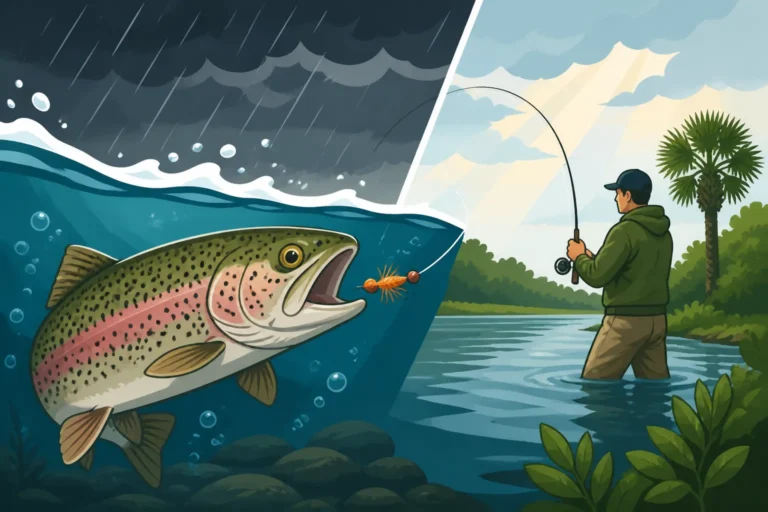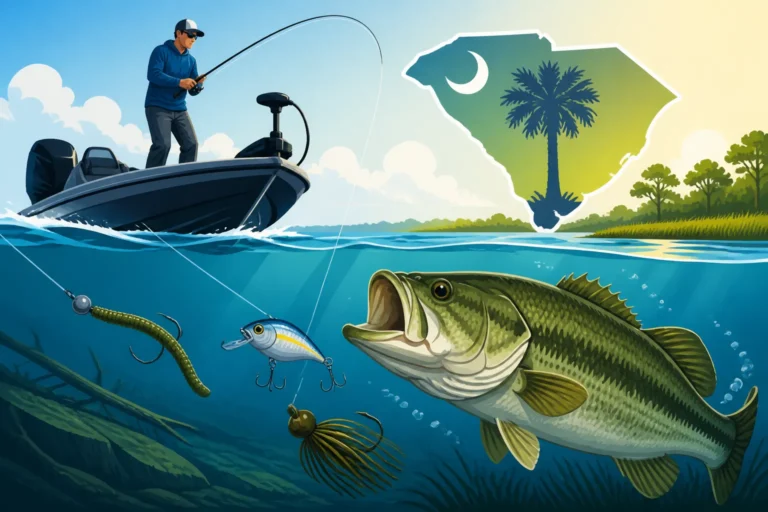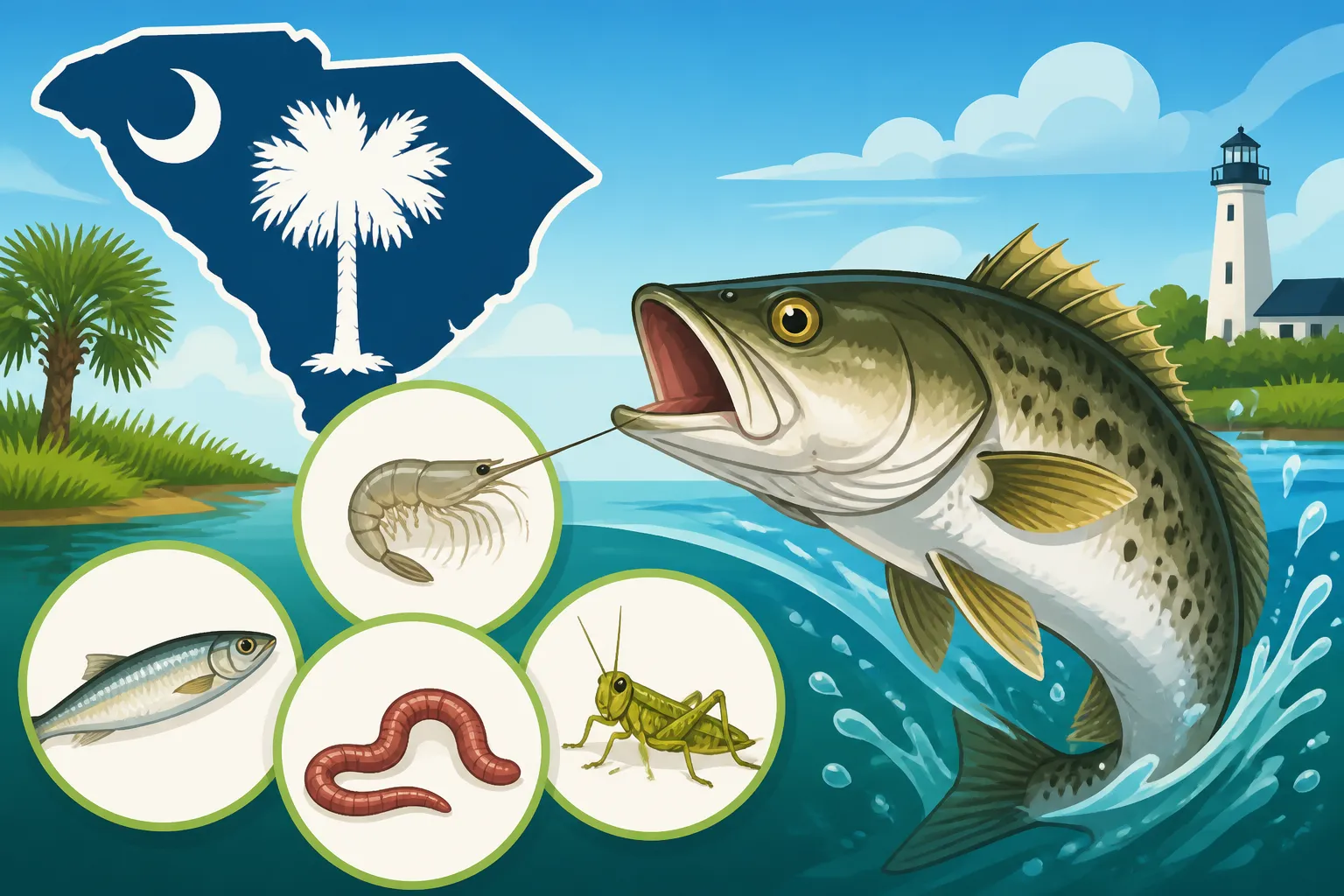
Best Live Bait Choices for Spring Fishing
Spring in South Carolina means that beautiful transition where the chill starts to lift, the trees burst into color, and our finned friends start getting active. But let's be honest, sometimes getting those fish to bite can still be a challenge, especially when they're still shaking off the winter sluggishness. That's where choosing the right live bait comes in, offering that irresistible, natural presentation that artificial lures just can't always match. This guide will walk you through the best live bait options for your South Carolina spring fishing adventures, ensuring you're ready to tackle both freshwater lakes and coastal estuaries.
Why Live Bait Shines in Spring for South Carolina Anglers
There's a reason live bait has been a staple for anglers for centuries, and in the springtime, its effectiveness truly comes to the forefront. As the water begins to warm up from its winter slumber, fish metabolism increases, and they start to feed more aggressively. However, they can still be a bit finicky, and that's where the natural appeal of live bait often outshines artificial alternatives.
Mimicking Natural Prey as Waters Warm
Think about it: as spring progresses, the natural world around and within our South Carolina waterways starts to awaken. Insects hatch, smaller baitfish become more active, and all sorts of critters become potential meals for predatory fish. Live bait perfectly mimics these natural food sources. It moves, it smells, and it looks exactly like what a hungry fish would naturally seek out. It's frustrating when artificial lures, no matter how realistic they look, just aren't cutting it, and you know the fish are there. The subtle flick of a live minnow's tail or the gentle wriggle of a worm can often trigger a strike when even the most expertly presented crankbait gets ignored.
This natural behavior is especially important in early spring when water temperatures might still be fluctuating. Fish might not be willing to chase down a fast-moving artificial lure, but a slowly presented, struggling live bait is often too tempting to pass up. It requires minimal energy for them to snatch, making it an efficient meal.
The Advantage of Scent and Movement
Live bait offers a two-pronged attack on a fish's senses: sight and smell. Artificial lures can mimic movement and sometimes even scent (with added attractants), but they rarely achieve the true, authentic combination that live bait provides. The erratic, natural movement of a live minnow or shrimp is something fish are hardwired to recognize as food. Their survival depends on it.
Beyond the visual appeal, the natural scent emitted by live bait is incredibly powerful. As it struggles on the hook, it releases pheromones and natural oils into the water, creating a scent trail that can draw fish in from a distance. This is crucial when fishing in slightly murky waters, after a spring rain, or in situations where fish might be holding tight to cover and not actively cruising for food. That subtle scent can be the difference between an empty hook and a bending rod. Even lethargic fish, those that aren't quite ready for a full-on chase, often can't resist a slow-moving, scent-laden meal right in front of their noses. It appeals to their most primal instincts.
Top Live Bait Picks for South Carolina Freshwater Spring Fishing
When the dogwoods are blooming and the days are getting longer, freshwater fishing in South Carolina truly comes alive. Our lakes and rivers are teeming with activity, and armed with the right live bait, you can have some incredible days on the water.
Shiners and Minnows for Bass and Crappie
Shiners and minnows are perhaps the most iconic live bait for freshwater fishing, and for good reason. They are incredibly versatile and effective for a wide range of popular species. Golden shiners and fathead minnows are readily available at most bait shops and are a go-to for many anglers.
For species like largemouth bass and spotted bass, a lively shiner is often irresistible. You can hook them through the lips for a more natural, free-swimming presentation, or through the dorsal fin for a retrieve that mimics an injured baitfish. Bass, especially during the pre-spawn and spawn phases in spring, are looking for a substantial meal to build up energy, and a struggling shiner perfectly fits that bill. I've seen countless times when a shiner out-fished every artificial bait in the tackle box, especially on those days when the bass are being particularly picky. If you're really aiming for those bucketmouths, you'll want to check out Largemouth Bass Fishing in South Carolina: The Complete Guide.
Crappie, another spring favorite, also absolutely devour minnows. Whether you're tightlining under a bobber or slowly trolling, a small minnow on a light hook is incredibly effective. Crappie tend to school up in spring around submerged brush piles, timber, and bridge pilings, and a lively minnow dropped right into their midst is a sure way to get a bite. Sometimes those bigger crappie will only hit live bait. For more specific techniques, consider exploring Crappie Jigging Techniques for Beginners.
Worms and Nightcrawlers for Panfish and Catfish
You simply can't talk about live bait without mentioning worms. They are the quintessential bait, beloved by anglers of all ages and highly effective for an incredible variety of fish. For spring fishing in South Carolina, earthworms and especially the larger nightcrawlers are absolute gold.
Panfish like bluegill and redbreast sunfish go crazy for worms. A small piece of a red worm or an entire earthworm can be threaded onto a tiny hook under a bobber, making it one of the easiest and most fun ways to fish, especially if you're introducing kids to the sport. The scent and wriggling action are just too much for these feisty little fish to resist. They're a fantastic choice for those sunny spring afternoons on a local pond or quiet creek. Learn more about these species in Bluegill and Redbreast Sunfish: A Beginner's Guide.
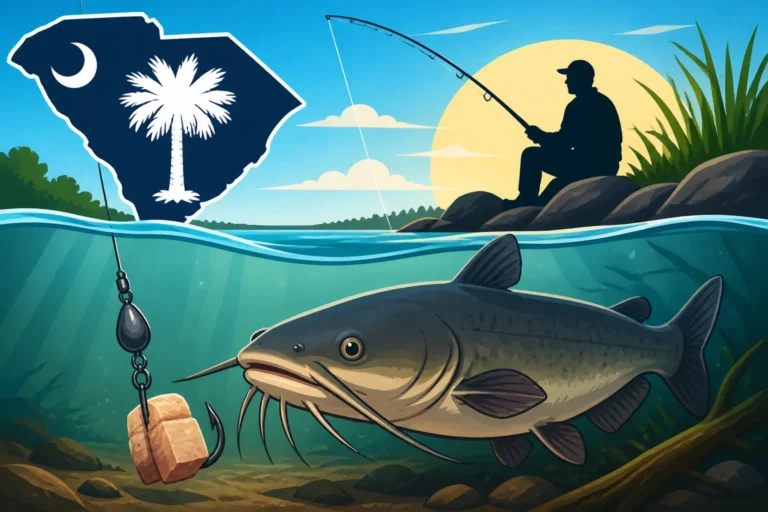
Catfish, from channel cats to big flatheads, are also massive fans of worms. A gob of nightcrawlers on a bottom rig is a classic and highly effective setup. As the waters warm in spring, catfish become more active and start moving into shallower areas to feed. The strong scent profile of worms helps them locate the bait, even in stained water. It’s a real bummer when you have all your gear ready but no reliable bait, so consider picking up a worm farm or a good quality insulated bait container for your nightcrawlers, you can find excellent options on Amazon to keep them lively. For specific strategies, our guide on Catfish Bottom Fishing Basics has some great advice.
Crickets and Grasshoppers for Smaller Game
While perhaps not as universal as worms or minnows, crickets and grasshoppers are phenomenal live bait options, especially as spring transitions into warmer weather. They are particularly effective for panfish, but don't be surprised if a hungry bass or even a smaller trout takes a swipe at one.
Crickets are easily purchased at most bait shops or even pet stores. Their chirping and struggling on the surface are incredibly enticing to bluegill, shellcrackers, and other sunfish. I often use them for ultra-light fishing, hooking a cricket gently through the thorax and letting it drift naturally near cover or over submerged vegetation. The light splash when it hits the water often immediately grabs the attention of nearby panfish. This natural, insect-like presentation can be exactly what's needed on those days when fish are a bit wary of anything larger. Grasshoppers, while a bit harder to source commercially, are equally effective when you can find them in late spring and early summer.
Essential Live Bait Choices for South Carolina Saltwater Spring Fishing
When the coastal waters of South Carolina begin to warm, the inshore bite really heats up. From our expansive marsh creeks to our productive estuaries, live bait is often the most productive way to target the highly sought-after redfish, spotted seatrout, and flounder.
Live Shrimp: The All-Around Coastal Winner
If there's one live bait that reigns supreme in South Carolina's saltwater, especially in the spring, it's live shrimp. These crustaceans are a natural and abundant food source for nearly every inshore species, making them the ultimate all-around bait. When you're fishing the lowcountry, it's almost a crime not to have some live shrimp in your bait well.
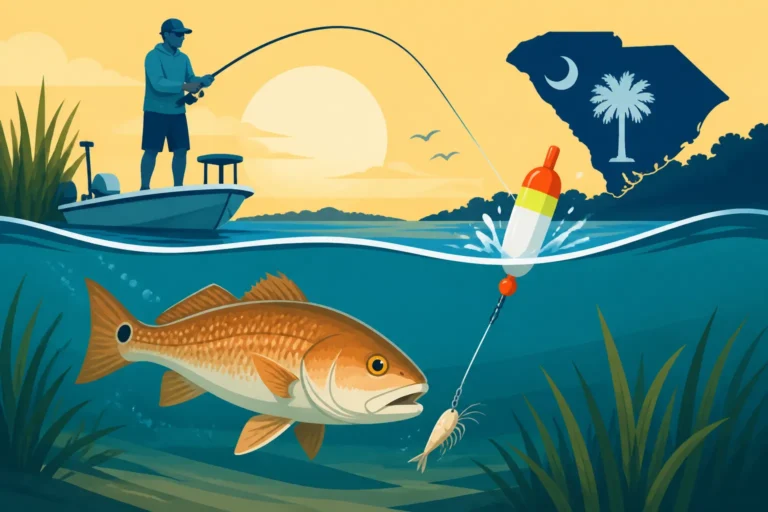
Redfish absolutely love live shrimp. Whether you're fishing them free-lined with a small weight or under a popping cork, the natural darting and struggling action of a live shrimp is irresistible to these bronze beauties. In spring, redfish move into shallower waters and onto grass flats as the sun warms them, and a live shrimp presented quietly in these areas is often met with an explosive strike. For comprehensive information on these powerful fish, check out Redfish Fishing in South Carolina: Rules, Spots, and Tips.
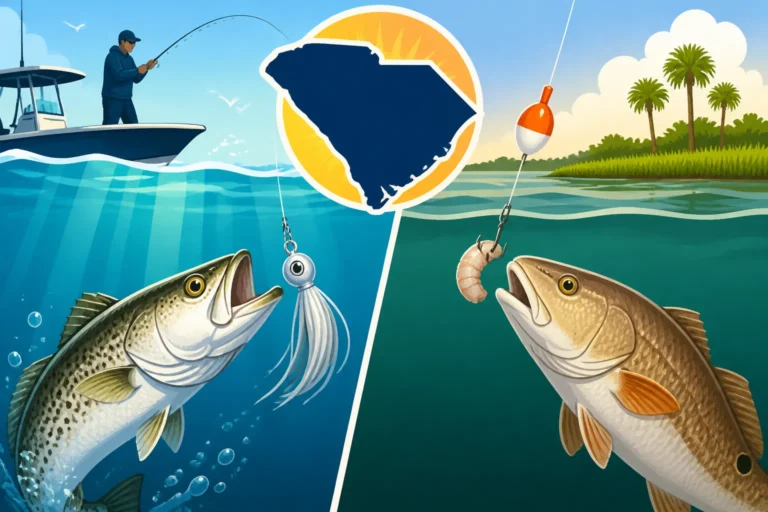
Spotted seatrout are equally fond of live shrimp. Under a popping cork, the shrimp's struggles combined with the "pop" sound imitate a feeding fish and can draw trout in from a surprising distance. Trout often ambush their prey, and a twitching shrimp is an easy target. Flounder also can't pass up a live shrimp, especially when it's slowly dragged across the bottom where they lie in wait. Ensuring your shrimp stay lively is key, so having a good aerated livewell or bucket is non-negotiable. You can find highly rated portable aerators and insulated bait buckets on Amazon that will make a huge difference in keeping your shrimp kicking. Our guide to Spotted Seatrout in South Carolina Waters: The Full Guide has more tips.
Mud Minnows (Killifish) for Resilient Action
Mud minnows, also known as killifish, are another fantastic live bait for South Carolina's inshore waters, particularly in the spring. What they lack in flash, they make up for in hardiness and effectiveness. These small, dark minnows are incredibly tough and can stay alive on a hook for a long time, making them perfect for fishing in areas with a lot of structure or when you need your bait to withstand multiple casts.
Flounder are particularly fond of mud minnows. Their slow, deliberate movements along the bottom are exactly what a flounder is looking for. Hooked through the lips or just behind the dorsal fin, a mud minnow slowly bounced along sandy or muddy bottoms near oyster beds or jetties is a prime target for a lurking flounder. They're excellent for targeting those flatfish as they move into shallower spring feeding grounds. You can dive deeper into this species with Flounder Fishing Guide for South Carolina Anglers.
Redfish will also readily strike mud minnows, especially larger ones. Because mud minnows are so resilient, they're great for situations where you might leave your bait in the water for a longer period, such as fishing around dock pilings, rock piles, or oyster reefs where redfish like to hide. Their strong scent and constant wiggling provide a persistent allure that can entice even a hesitant redfish to bite.
Finger Mullet for Larger Predatory Fish
As spring progresses and the water warms further, larger baitfish like finger mullet become more available and are an exceptional choice for targeting bigger predatory fish in South Carolina's saltwater estuaries and nearshore waters. These small, schooling fish are a primary food source for many species, making them a top-tier live bait.
Larger redfish, especially those in the slot limit and even some over-slot fish, absolutely crush finger mullet. They represent a more substantial meal, and a lively mullet free-lined or fished on a light Carolina rig in a current rip or along a marsh bank is a prime target. In brackish waters, you might even pick up some striped bass that have ventured downriver in pursuit of these baitfish. Understanding South Carolina Redfish Slot Limit Rules is crucial when targeting these fish.
Finger mullet can often be cast-netted in shallow creeks and ditches, especially on an outgoing tide, or purchased from bait shops. When hooking them, either through the lips or through the nostrils works well to keep them alive and swimming naturally. The frantic movement of a live mullet on the hook is an unmistakable signal to hungry predators that an easy meal is nearby. For information on the state's official fish, check out Striped Bass: South Carolina's Official State Fish.
Sourcing and Keeping Your Spring Live Bait Alive
Having the right live bait is only half the battle; the other half is making sure it stays alive and frisky until it's time to put it on the hook. Nothing's more deflating than reaching for your bait bucket only to find your precious bait has gone limp.
Where to Find Your Live Bait
For most anglers, the easiest and most reliable way to get live bait is through local bait and tackle shops. These shops often have a fresh supply of minnows, worms, shrimp, and sometimes even mullet or mud minnows. Plus, the folks who work there are usually lifelong anglers themselves and can give you invaluable, hyper-local advice on what's biting and what bait they prefer. It's a real bummer when you get to your spot and your bait's already gone limp because you bought it from a less-than-ideal source. Supporting these local businesses is also a great way to keep the fishing community thriving.
If you're feeling adventurous or just want to save a few bucks, catching your own bait can be a rewarding experience. For freshwater fishing, digging for worms in your garden after a rain or using a cast net for minnows in shallow areas are common practices. For saltwater, a cast net is your best friend for catching finger mullet or even some lively shrimp in tidal creeks. Always check local regulations regarding bait collection, though!
Essential Tips for Bait Longevity
Keeping live bait alive and active is critical for its effectiveness. A healthy, lively bait is much more appealing to a fish than a sluggish or dying one.
1. Aeration: This is paramount, especially for minnows, shiners, and live shrimp. A good aerator introduces oxygen into the water, which these aquatic baits need to breathe. Portable battery-operated aerators are readily available and are a fantastic investment for any angler using live bait. You can easily find these on Amazon, often bundled with bait buckets. Without proper aeration, your bait will quickly become stressed and die, turning your fishing trip into a frustrating waste of time.
2. Temperature Control: Most live baits thrive in cooler water. Avoid leaving your bait bucket in direct sunlight, especially on warmer spring days. For freshwater baits, adding a few ice cubes (in a plastic bag to prevent chlorine contamination) can help keep the water cool. For saltwater shrimp, using an insulated bait cooler and periodically exchanging some of the bait water with fresh, cooler saltwater from the fishing spot can make a huge difference. Rapid temperature changes can shock and kill your bait, so try to keep it consistent.
3. Water Quality: Keep your bait water clean. Over time, bait will excrete waste, which contaminates the water and depletes oxygen. Change out a portion of the water regularly, especially if you have a lot of bait in a small container. For freshwater baits, non-chlorinated tap water is usually fine. For saltwater baits, only use clean, ambient saltwater from the area you're fishing. Avoid using water from a different location if possible, as it might have different salinity or contaminants. A clean environment means happy, lively bait that's ready to catch fish. Taking care of your bait is just as important as choosing the right rod and reel, and it's a key part of ensuring a successful outing, no matter if you're out for an hour or a full day trip. For general trip preparation, consider our advice on What to Pack for a Hilton Head Fishing Charter Trip. Remember, springtime in South Carolina can offer some of the year's best fishing, so be ready for it by referring to guides like Best Time of Year to Fish in South Carolina and the comprehensive South Carolina Fishing Seasons Guide.
Spring Live Bait Comparison Table
| Live Bait Type | Primary Target Species (Freshwater) | Primary Target Species (Saltwater) | Rigging Tip | Key Advantage in Spring |
|---|---|---|---|---|
| Shiners/Minnows | Largemouth Bass, Crappie, Striper | (Not typically used) | Hook through lips for natural swim, or dorsal fin for injured look. | Irresistible natural movement for predatory freshwater fish. |
| Worms/Nightcrawlers | Bluegill, Catfish, Trout | (Not typically used) | Threaded on hook or wacky rigged for panfish; gob for catfish. | Strong scent trail, universal appeal, easy to obtain. |
| Crickets/Grasshoppers | Bluegill, Redbreast Sunfish | (Not typically used) | Small hook through thorax; float naturally or with light bobber. | Perfect for finicky panfish with a natural insect presentation. |
| Live Shrimp | (Not typically used) | Redfish, Spotted Seatrout, Flounder | Free-lined with weight, or under a popping cork. | All-around coastal winner, natural action and scent for many species. |
| Mud Minnows | (Not typically used) | Flounder, Redfish | Hook through lips or behind dorsal; bounced slowly on bottom. | Extremely hardy, stays lively, great for bottom dwellers. |
| Finger Mullet | (Not typically used, or brackish Striper) | Redfish, Larger Seatrout | Hook through lips or nostrils; free-lined or Carolina rigged. | Substantial meal for larger inshore predators. |
Disclaimer
This article is for general informational purposes only and does not constitute professional advice. Laws, prices and regulations vary by location and change over time. Consult a qualified professional for guidance on your specific situation.