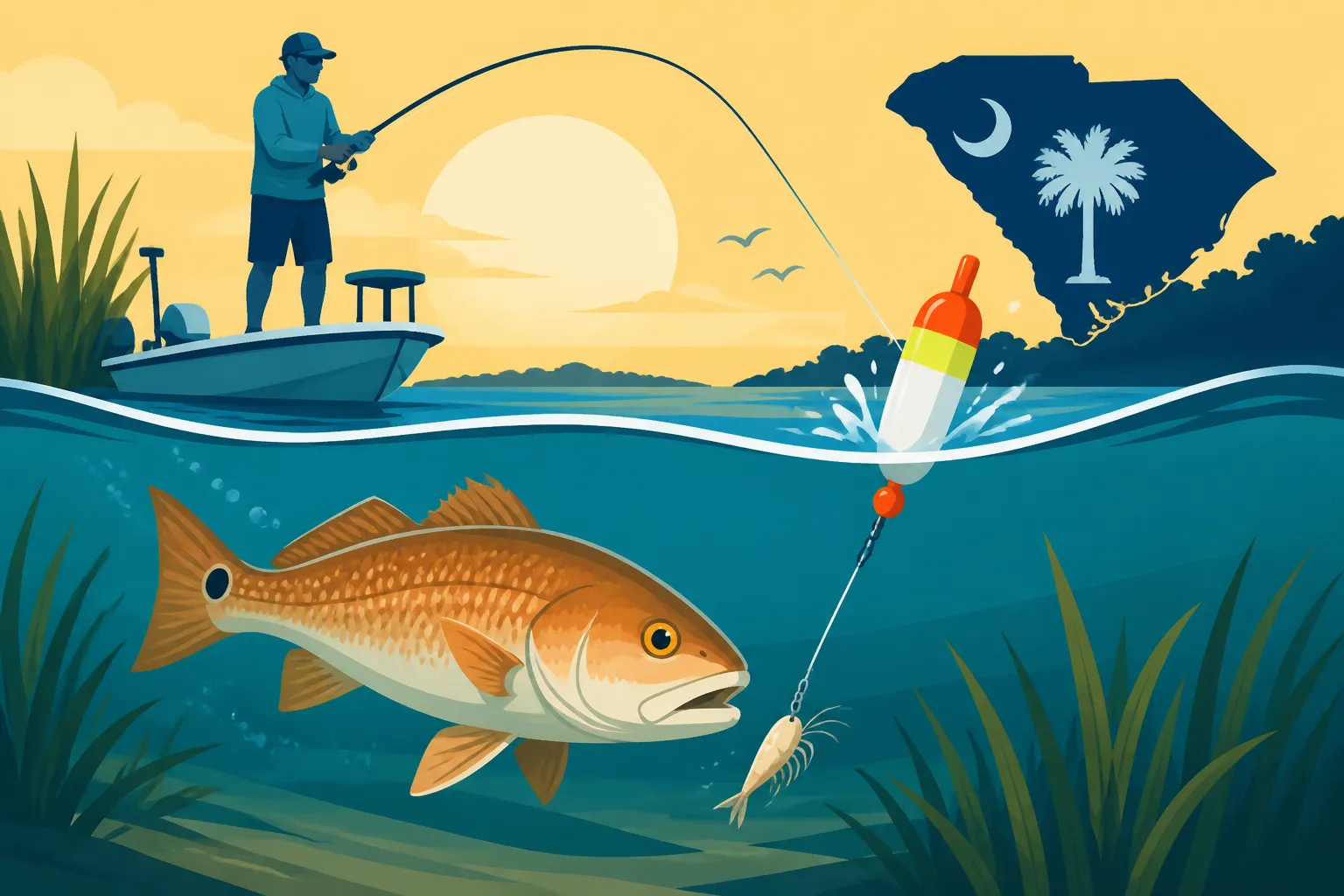
How to Fish a Popping Cork for Redfish
There's nothing quite like the thrill of a redfish strike, especially when you're targeting them in those shallow, grassy estuaries that make South Carolina fishing so legendary. But let's be honest, sometimes those redfish can be finicky, and presenting your bait effectively in their preferred habitat can feel like a real puzzle. That's where the humble popping cork comes in, a tool often misunderstood but, when mastered, can turn a slow day into an unforgettable one. This guide will demystify the art of fishing a popping cork for redfish, walking you through everything from rigging to technique, so you can confidently target these incredible game fish in our beautiful Lowcountry waters.
What Exactly is a Popping Cork and Why Redfish Love It?
When you first look at a popping cork, it might just seem like a fancy bobber, but trust me, it's so much more than that. It's a key piece of gear for inshore anglers, designed to do one primary thing: create a commotion that draws the attention of hungry redfish, often when other presentations fall short.
The Anatomy of a Popping Cork and Its Purpose
At its core, a popping cork is a buoyant float, but its clever design sets it apart. Most consist of a foam or plastic float, usually with a concave or cup-shaped top, threaded onto a stiff wire. On either side of the float, you'll find beads – often plastic or brass – which clack against the float when it's jerked. This entire assembly, with a leader and hook trailing below, acts as a "dinner bell" for redfish.
Think about it this way: redfish are opportunistic predators, often lurking in grass beds, oyster shells, or along marsh edges. They rely heavily on sound and vibration to locate prey, especially in the often murky or stained waters of our South Carolina estuaries. When you "pop" the cork, that distinctive "thwack" and the rattling beads mimic the sound of struggling baitfish, a shrimp flicking its tail, or even crabs scuttling along the bottom. It's an auditory signal that shouts, "Food!"
Without this noise, your bait might simply drift by unnoticed, especially if visibility is low. The popping cork solves this problem by actively alerting nearby fish to your offering, essentially calling them in for a closer look.
Why Redfish Respond to the "Pop"
Redfish are incredibly sensitive to vibrations and sound in the water. That unique "pop" sound isn't just noise; it's a specific invitation. Imagine a school of shrimp nervously fleeing a predator, or a small baitfish splashing on the surface – these are the natural sounds a popping cork is designed to imitate.
The commotion doesn't just attract redfish; it can also trigger a feeding instinct. When they hear that splash and clatter, it suggests a struggling, easy meal. This is particularly effective in those vast marsh systems where redfish cruise the grass lines on higher tides, searching for food. A popping cork allows your bait to stay suspended in the strike zone, just above the grass or oyster shells, while simultaneously creating an irresistible disturbance on the surface. It's a fantastic way to cover water and draw fish out of hiding, making it one of the most effective Inshore Redfish Techniques for Beginners. Whether you're fishing in a quiet creek or a bustling harbor, that distinct pop can make all the difference, waking up even the most lethargic redfish.
Rigging Up Right: Your Popping Cork Setup for South Carolina Waters
Getting your popping cork rig set up correctly is half the battle. There are a few different styles of corks and plenty of opinions on leader length and bait, but we'll focus on what works best for chasing redfish in South Carolina's diverse inshore environment.
Choosing the Right Popping Cork and Leader
When it comes to popping corks, you'll generally encounter two main types: the traditional "cigar" shaped corks and the "chugger" or "concave" faced corks.
- Cigar-shaped Corks: These are often a bit more subtle. They create less splash but still offer that telltale clacking sound from the beads. They're good for calmer days or when the fish might be a bit more wary.
- Chugger/Concave Corks: These are the workhorses for redfish. Their cupped face is designed to throw a lot of water and create a loud "pop." If you want to really get attention, this is your go-to. You can find a wide variety of these, sometimes referred to as 'Cajun Thunder' or similar brands, readily available on platforms like Amazon, making it easy to stock up before your next trip.
Regardless of the style, most popping corks come pre-rigged with a wire and swivels. Below the cork, you'll attach your leader. For redfish, a leader of 18-24 inches is usually a good starting point. You want your bait to hang naturally, just above any bottom structure or grass, so adjust this length based on water depth and grass height. A good fluorocarbon leader in the 20-30lb range offers excellent abrasion resistance against oyster shells and redfish teeth, plus it's nearly invisible underwater. I usually tie it directly to the bottom swivel of the cork rig, then add another small, strong swivel at the end of the leader before tying on my hook. This second swivel helps prevent line twist, especially with live bait. For hooks, a 2/0 to 4/0 circle hook is ideal, as it's great for catch and release and typically hooks the fish in the corner of the mouth.
Selecting the Best Bait for Your Popping Cork Rig
The beauty of a popping cork is its versatility with bait. Redfish aren't overly picky, but certain baits consistently outperform others. This is often where you can truly dial in your approach.
- Live Shrimp: This is, without a doubt, the king of popping cork baits for redfish. Almost every inshore fish loves a live shrimp, and redfish are no exception. The natural movement and scent of a live shrimp under a popping cork are incredibly enticing. Hook them just under the horn on their head, being careful not to hit the black spot (brain), or through the tail for a more vigorous swimming action. You can typically buy live shrimp from most local bait shops along the South Carolina coast.
- Live Mud Minnows/Finger Mullet: These are also fantastic choices. Mud minnows are hardy and can withstand a lot of abuse, making them great if you're fishing in areas with a lot of pinfish or other bait stealers. Finger mullet offer a larger profile, which can sometimes entice bigger redfish. Hook them through the lips or just behind the dorsal fin.
- Artificial Shrimp/Soft Plastics: When live bait is scarce or you prefer the convenience, artificial shrimp or soft plastic jerkbaits can be incredibly effective. Brands like Z-Man or Vudu Shrimp offer realistic imitations that, when paired with the popping cork's action, can fool even the wariest redfish. Pair them with a lightweight jig head (1/8 to 1/4 ounce) to give them natural movement. You can often find a wide array of these soft plastics on Amazon, allowing you to experiment with different colors and profiles. Many anglers swear by scented artificial baits for an added edge, mimicking the Best Bait for Redfish in South Carolina's Marsh Creeks.
Here’s a quick comparison of common bait types:
| Bait Type | Pros | Cons | Ideal Conditions |
|---|---|---|---|
| Live Shrimp | Natural movement & scent, highly effective | Delicate, requires aerated livewell | All conditions, especially effective in clear water |
| Live Mud Minnows | Hardy, durable, good vibration | Can be slower to attract attention, smaller | Murky water, when bait stealers are present |
| Live Finger Mullet | Larger profile attracts bigger fish | Can be harder to find, larger bait | Targeting larger redfish, active feeding |
| Artificial Shrimp | Durable, convenient, variety of colors | Lacks natural scent/movement (unless scented) | When live bait is scarce, covering lots of water |
| Soft Plastic Minnows | Versatile, castable, mimics baitfish | Requires more angler input for action | Targeting aggressive fish, covering open water |
The Art of the Pop: Mastering the Technique for Redfish Success
Now that you're rigged up, it's time to put that popping cork to work. The "pop" itself is just one part of the equation; casting, retrieving, and knowing when to set the hook are equally important.
Casting and Presenting Your Rig
The first hurdle for many new to popping corks is casting without tangles. Because you have a leader of 18-24 inches dangling below a relatively light cork, it's easy for the hook to snag the main line during the cast. The trick is to use a smooth, deliberate casting motion, rather than a powerful jerk. A gentle side-arm cast or an overhead lob often works best, allowing the bait to follow the cork through the air in a more controlled manner.
Once you cast, aim for areas where redfish are known to feed. This often means casting near oyster bars, along grass lines, into small pockets within the marsh, or near any kind of structure like dock pilings or fallen trees. Remember that redfish will often patrol these areas looking for an easy meal. Let your rig settle naturally after the cast. If you're fishing a strong current, like in the tidal creeks around McClellanville or Murrells Inlet, cast slightly upstream and let the current carry your bait naturally into the strike zone. This natural drift is crucial.
The Popping Action and Retrieve
This is where the "popping" cork earns its name and where you can really entice those redfish. After your bait settles, give your rod tip a sharp, downward jerk, about 6-12 inches. This action pulls the cork underwater, creating that distinctive "pop" and displacing water, while also making the beads clack. The sound and splash are what get the redfish's attention.
Immediately after the pop, let your rig sit for a few seconds – anywhere from 3 to 10 seconds. This pause is absolutely critical! Many redfish will strike during this moment, as the bait settles and appears vulnerable after the initial commotion. Experiment with the length of your pause; sometimes a shorter pause works better when fish are aggressive, and a longer one when they're shy.
Your retrieve should be a sequence of pops and pauses. Pop…pause…pop…pause. Don't be afraid to mix it up. Sometimes a series of quick pops followed by a longer pause can work wonders, especially if you're trying to simulate a baitfish in distress. Other times, a single, sharp pop every 5-7 seconds is all it takes. The goal is to make the bait look injured and easy to catch. Remember that Tide-Based Techniques for Inshore Fishing can greatly influence how aggressively you should work your cork.
Reading the Bites and Setting the Hook
One of the most common frustrations for new popping cork anglers is distinguishing between a bite and just the cork moving with the current or wind. A true redfish strike on a popping cork is usually unmistakable. The cork won't just bob; it will disappear rapidly beneath the surface, sometimes even jumping sideways before going under. It's often a sudden, aggressive pull.
When you see that cork vanish, resist the urge to immediately yank back on the rod. Instead, reel up any slack line until you feel the weight of the fish, then set the hook with a firm, sweeping motion of the rod. Because you're likely using a circle hook, the fish will often hook itself as it swims away. A strong, steady pull is usually more effective than a sharp jerk, especially with circle hooks, ensuring the hook finds purchase in the corner of the fish's mouth. Knowing How to Fish an Incoming Tide for Redfish can also lead to more aggressive strikes as redfish push into shallower feeding grounds.
Popping Cork Strategies for South Carolina Redfish Success
While the basic technique is straightforward, truly maximizing your success with a popping cork involves understanding how to adapt to different conditions and avoid common pitfalls. Our South Carolina waters are dynamic, and so too should be your approach.
Tide and Location Considerations
Tides are everything when fishing for redfish in our Lowcountry estuaries. The popping cork really shines on a rising tide as redfish push into the shallow grass flats to feed on shrimp, crabs, and baitfish that get covered by the incoming water. Cast your cork rig into the flooded grass pockets, along the edges of oyster bars, and near any creek mouths where bait might be flushing out. As the tide falls, redfish will often retreat to deeper guts, creek channels, or the edges of oyster reefs. You can still use a popping cork, but you might need to adjust your leader length to keep your bait deeper in the water column or focus on casting along those deeper edges where fish are staging.
Fishing around locations like Where to Catch Redfish Near Charleston, South Carolina means paying close attention to charts and local knowledge. Look for areas with current, baitfish activity, and structure that provides cover or feeding opportunities. Oyster reefs are a classic redfish hangout, and the sound of your cork popping over them can be incredibly effective at drawing fish out.
Adapting to Conditions
The weather and water conditions will dictate how you work your popping cork.
- Water Clarity: In clear water, fish might be more wary. You might want to use a slightly longer leader (up to 30 inches) and more subtle pops to avoid spooking them. In murky water, don't be afraid to pop more aggressively and frequently. The louder commotion helps fish locate your bait.
- Wind: Windy conditions can make casting a popping cork rig tricky and can also affect your drift. Try to cast with the wind if possible. The wind can also create natural chop on the water, which can mask your cork's sound, so you might need to pop a bit harder to cut through the noise.
- Fish Activity: If redfish are actively busting bait on the surface, they're aggressive. A fast, erratic pop-and-retrieve might be the ticket. If they seem sluggish, slow down your retrieve, lengthen your pauses, and use more subtle pops. Remember to always keep in mind the South Carolina Redfish Slot Limit Rules and adjust your tactics if you're primarily targeting fish within the legal slot. Using specific lures, as described in guides like Best Lures for Tailing Redfish in Grass Flats, can also be combined with popping corks by simply replacing live bait with a jighead and soft plastic.
Common Mistakes to Avoid
Even experienced anglers can make these errors with a popping cork:
- Over-popping: This is probably the most common mistake. Constantly yanking the rod without adequate pauses. Remember, the pause is when most fish strike. Give that bait time to flutter naturally after the pop.
- Too Fast a Retrieve: You're not trolling; you're enticing. A popping cork rig is meant to be worked slowly and deliberately. If you retrieve too quickly, you'll pull the bait out of the strike zone and away from interested fish too fast.
- Wrong Leader Length: A leader that's too short means your bait might not be far enough from the cork to look natural, or it might be too high above the fish. A leader that's too long can make casting difficult and keep your bait in too much grass. Adjust it based on the depth of the water and the height of any submerged structure.
- Not Checking Your Knot/Leader: Redfish have abrasive mouths, and oyster shells are sharp. Regularly check your leader for nicks and abrasions, especially after catching a fish or getting snagged. A small nick can mean a lost fish. Also, keep an eye on your knots. It's often the simplest gear failure that ends a good bite.
- Ignoring the Bait: Make sure your live bait is lively. If your shrimp or minnow is sluggish, replace it. Artificials should be clean and properly rigged on the jig head to ensure good action.
By understanding these nuances, from the mechanics of the cork to the feeding habits of redfish, you'll be well on your way to adding this exciting and effective technique to your South Carolina fishing arsenal. Don't forget that the Redfish Fishing Season Explained typically means they're active year-round in our coastal waters, so the popping cork can be a go-to technique in almost any month, particularly in warmer weather.
Disclaimer
This article is for general informational purposes only and does not constitute professional advice. Laws, prices and regulations vary by location and change over time. Consult a qualified professional for guidance on your specific situation.