How to Find Bluegill Beds in Spring
For many of us who love chasing panfish, there’s nothing quite like the excitement of spring, when the bluegill start moving into their spawning beds. But if you’ve ever spent hours cruising the shoreline, squinting into the water, and still come up empty-handed, you know how frustrating it can be. It feels like everyone else knows the secret handshake to finding those prime spots, while you’re left guessing. This guide is here to demystify the process, helping you understand how and where to locate those productive bluegill beds in South Carolina waters each spring, turning your next fishing trip into a success.
Why Spring is the Prime Time for Bluegill Bed Fishing
Spring isn't just a beautiful time in South Carolina; it's also when bluegill, often called bream by local anglers, become incredibly active and predictable. They move into shallower water with a singular purpose: to spawn. This makes them easier to locate and, let's be honest, much more fun to catch! Understanding the "why" behind their behavior helps us anticipate the "where."
The Rhythms of the Bluegill Spawning Cycle
Bluegill are creatures of comfort, and their spawning ritual is no exception. They typically begin to move towards their breeding grounds when water temperatures consistently reach the mid-60s to low 70s Fahrenheit. Think late April, May, and sometimes into June in many parts of South Carolina, though it can vary a bit depending on how warm the spring has been. They're not just looking for warmth; they're looking for stability. A sudden cold snap can send them retreating to deeper water temporarily, only for them to return when conditions stabilize. This cycle can repeat several times throughout the spring and early summer, meaning you often have multiple opportunities to hit the beds.
It’s truly a sight to behold when you find an active bed – dozens, sometimes hundreds, of fish fanning out their nests, guarding them diligently. This highly concentrated activity is precisely what makes bed fishing so rewarding. It’s not just about catching one fish; it’s about finding a whole community of them. This is also why understanding the local conditions is key. Keep an eye on local water temperature reports or invest in a thermometer for your boat or kayak. It can make all the difference in timing your trip just right and is a crucial part of the broader South Carolina Freshwater Fishing Calendar If you're looking for general tips on how to improve your success, our guide on Best Time of Year to Catch Bluegill might offer further insights.
Ideal Conditions for Bed Formation
Bluegill aren't just looking for warm water; they're looking for specific types of habitat to create their nurseries. They prefer firm bottoms – think sand, gravel, or even hard clay – over soft, mucky areas. These firmer substrates provide a stable base for their circular nests. They also seek out areas with some protection from strong currents and predators. This often means shallow coves, protected points, or calm areas near submerged timber or weed lines. The water depth can vary, but typically they'll be in two to six feet of water, sometimes even shallower, especially in dingier water.
The visibility of the water also plays a role. In clearer lakes, you might spot beds in slightly deeper water, while in stained or muddy ponds, they'll often be right up against the bank in just a foot or two of water. Factors like rainfall can temporarily muddy up an area, scattering the fish, so planning your trip after a few days of stable, clear weather can really improve your chances. Look for these calm, protected, shallow zones, and you're already halfway there.
Key Visual and Sensory Cues for Locating Beds
Once you know when and why bluegill bed, the next step is learning how to spot their spawning grounds. It's not always as obvious as you might think, especially in waters with lower visibility, but with a keen eye and a bit of practice, you'll start seeing them everywhere.
Spotting the "Dinner Plates"
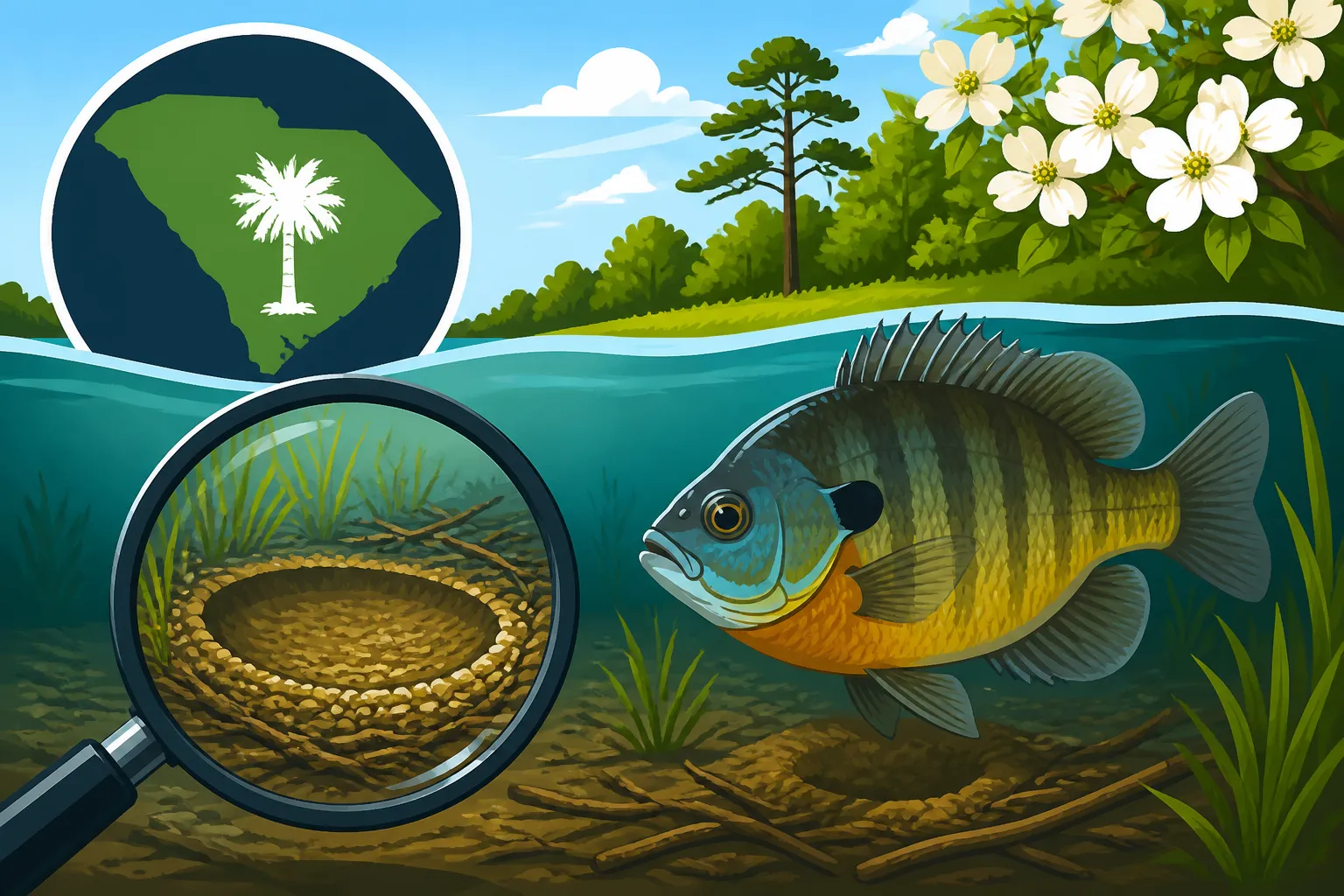
The most classic visual cue for bluegill beds are the nests themselves. These are circular depressions, often referred to as "dinner plates" or "saucer-sized craters," fanned out by the male bluegill. They clear away silt and debris to expose the firm bottom, and when there are many of them together, they form a honeycomb-like pattern on the lakebed. From above, especially in clear water, they'll appear as lighter, sandier-looking spots contrasting with the darker surrounding bottom.
You'll often see the males hovering protectively over these nests, sometimes gently fanning their fins to keep silt away. This protective instinct makes them quite aggressive and easier to entice with a lure or bait. Approach slowly, ideally with polarized sunglasses, and scan the shallow areas. Look for any irregularities on the bottom that might indicate these fanned-out depressions. The clearer the water, the easier it will be to spot these clusters, which is why areas like Lake Jocassee or parts of Lake Keowee might offer better visual opportunities than some of the more turbid Lowcountry ponds.
A Nose for Bluegill: The Distinctive Smell
This might sound a little strange if you've never experienced it, but a strong bluegill bed actually has a very distinctive, musky, almost watermelon-like smell. Yes, seriously! When you drift over an active, large bedding area, especially on a calm day, you might actually catch a whiff of it. This smell comes from the pheromones released by the fish during spawning. It's not always strong enough to detect, but when it is, it's an undeniable sign that you're right on top of a hot spot.
This sensory cue is particularly useful in stained or murky waters where visual detection is difficult. Imagine cruising slowly down a shoreline in a kayak or boat, and suddenly, that faint, sweet, earthy scent hits you. That's your signal to drop anchor and start exploring. Sometimes, the smell is more pronounced after a sunny spell, which really gets the fish active. It’s one of those old angler's tricks that sounds like folklore but absolutely holds true for many seasoned panfish pros.
Listening and Other Subtle Clues
Beyond sight and smell, there are other subtle clues that experienced anglers use. Sometimes, in very calm and shallow water, you might hear a faint "pop" or "splash" as bluegill move around vigorously or chase off smaller fish from their nests. It's not as common as seeing the beds or smelling them, but it’s another piece of the puzzle.
Also, pay attention to any other signs of life. If you see wading birds like herons or egrets congregating in a specific shallow area, they might be there because they're finding an abundance of small fish, which could indicate a larger food chain activity, including bluegill. The presence of other panfish, like redear sunfish, which often bed in similar areas, can also be a good indicator. It's about taking in the whole picture of the environment, not just looking for one specific thing. This holistic approach will greatly increase your chances of finding a productive area for Bluegill Fishing Tips for South Carolina Ponds
Where to Focus Your Search in South Carolina
South Carolina is blessed with an abundance of fantastic bluegill waters, from massive reservoirs to tranquil farm ponds. Knowing the general characteristics of these waters and where bluegill typically choose to bed down will save you a lot of time.
Shallow Coves and Protected Bays
These are absolute goldmines for spring bluegill. Shallow coves and bays warm up faster than open water and offer excellent protection from wind and strong currents. Look for areas with depths ranging from one to six feet, especially those with sandy or gravelly bottoms. These are prime real estate for bluegill to fan their nests. In larger lakes like Lake Murray or Lake Marion, investigate the backs of long coves or the protected sides of islands. These areas often have calmer water, allowing silt to settle and exposing those firm bottom areas the bluegill love.
Consider the shoreline structure too. Areas where the bank gently slopes into the water, perhaps with some cypress trees or lily pads nearby, often harbor large bedding colonies. The vegetation provides cover, and the gradual slope allows for a wide swath of potential bedding ground. These kinds of spots are often perfect for Kid-Friendly Bluegill Fishing Techniques You'll find many excellent locations if you check out our guide on South Carolina's Best Ponds for Panfish Fishing
Docks, Piers, and Submerged Structure
Bluegill love structure, and artificial structures are no exception. Docks and piers offer both shade and protection from predators overhead. The pilings themselves can sometimes serve as points of interest around which beds are formed, or the bluegill will bed just off the edges of the structure in the firm bottom. If you're fishing from the bank or a pier, these are excellent starting points. Look for older, established docks rather than newer ones, as the bottom around them has likely been undisturbed for longer.
Submerged timber, brush piles, and even old roadbeds can also attract bluegill for bedding. These provide additional cover and act as current breaks. While they might be harder to spot directly, if you know of any such underwater features in shallow, protected areas, they are worth exploring. A good fish finder can sometimes help identify these structures and even spot concentrations of fish nearby. Just remember, when fishing near docks, be courteous to property owners.
Canal Systems and River Backwaters
In the Lowcountry, South Carolina's extensive canal systems and river backwaters offer fantastic bluegill fishing opportunities. These waters often have slower currents, plenty of vegetation, and numerous shallow, protected pockets perfect for bedding. The banks of slow-moving canals, especially those with some natural vegetation or riprap, are excellent places to start. The water might be a bit stained, so rely more on smell and carefully scanning the shallowest margins.
River backwaters, particularly oxbow lakes or sloughs that are somewhat cut off from the main river's flow, are also prime spots. The water here is usually calmer and warms up quickly. Look for areas where the river has deposited sand or gravel, creating those firm bottoms the bluegill prefer. These locations are often less pressured than the main lakes and can yield incredible numbers of fish once you find a bed.
Essential Gear and Techniques for Bed Fishing
Finding the beds is one thing; fishing them effectively is another. You don't need highly specialized gear, but having the right setup and knowing a few key techniques can make a big difference in your catch rate.
Simple and Effective Tackle
For bluegill bed fishing, simplicity is key. A lightweight spinning rod and reel combo, spooled with 4 to 6-pound test monofilament line, is ideal. This lighter line allows for subtle presentations and reduces visibility to the fish. You'll want a rod with a sensitive tip to detect those light bluegill bites, but enough backbone to handle a good-sized panfish. If you're just starting out or looking to upgrade, you can find a wide array of options for lightweight spinning reels and rods on Amazon.
As for terminal tackle, small hooks (size 8 or 10 Aberdeen or bream hooks are perfect) are essential. Bluegill have small mouths, so a small hook ensures a good hookset. Pair this with a tiny split shot or two, just enough to get your bait down, and a small bobber if you're fishing with live bait. For lures, small jigs (1/32 to 1/16 ounce) with tiny plastic grub bodies or hair jigs are incredibly effective. Again, you'll find a massive selection of these small jigs and fishing accessories on Amazon, often in multi-packs that give you a variety of colors to experiment with.
| Component | Recommendation | Purpose |
|---|---|---|
| Rod & Reel | Lightweight Spinning Combo (5-6 ft) | Sensitive tip, light line, easy handling |
| Line | 4-6 lb Monofilament | Low visibility, good for subtle bites |
| Hooks | Size 8 or 10 Bream/Aberdeen | Small mouth size, good hookset |
| Weights | Small Split Shot (removable) | Gets bait to depth, adjustable |
| Bobbers | Small Slip or Clip-on Indicator | Visual bite detection, depth control |
| Lures (Optional) | 1/32 – 1/16 oz Jigs with Small Grubs/Hair | Mimics small insects/fry, versatile |
Bait and Lure Choices for Bedding Bluegill
When bluegill are on their beds, they're not just feeding; they're also aggressively protecting their nests. This means they can be less finicky about bait than at other times of the year. Live bait is always a go-to for bluegill, and worms are king. Small pieces of redworm or wax worms are irresistible. Crickets are another excellent choice, especially on a warm spring day. Just hooking a cricket under the collar and floating it under a small bobber near a bed can produce incredible action. For more options, check out our guide on Best Bait for Panfish in Farm Ponds
For artificial lures, tiny soft plastic grubs in white, chartreuse, or black on a 1/32 or 1/16 ounce jig head are deadly. Cast beyond the bed and retrieve slowly, letting the jig fall naturally into the depressions. Sometimes a small inline spinner can also provoke a strike from an aggressive male. The key is to keep your presentation small and subtle. Bluegill are curious and protective, so a small, intrusive lure often gets their attention. Don't be afraid to experiment with different colors and retrieves until you find what they're hitting on that day. You can easily stock up on a variety of soft plastics and jig heads by browsing the fishing section on Amazon.
Presentation and Approach
The way you present your bait or lure can be just as important as your tackle choice. When you've located a bed, approach it quietly and slowly. If you're in a boat or kayak, use a trolling motor on a very low setting or paddle gently. Avoid casting your shadow over the bed if possible. Make precise casts, aiming just beyond the visible nests and slowly retrieving your offering into the center of the bed. If you're using a bobber, let it sit for a moment, then give it a gentle twitch.
Remember, the males are guarding their nests, so they're often more aggressive than hungry. They might not inhale the bait; they might just "mouth" it to move it away. Watch your bobber or line carefully for the slightest twitch or pause. A light, sensitive rod tip will help you feel these subtle takes. Once you hook a fish, try to land it quickly and quietly to avoid spooking the rest of the bed. After catching a few, you might need to rest the spot for a few minutes before returning for more action. If you're fishing with young anglers, our guide on How to Catch Bluegill for Beginners provides excellent starter tips.
Fishing the Beds: Techniques for a Bountiful Harvest
Once you’ve successfully located a bluegill bed and have your gear ready, it’s time to put theory into practice. There are a few different techniques you can employ to maximize your success when actively fishing these spawning grounds.
The Bobber and Bait Classic
This is arguably the most straightforward and effective method for bluegill bed fishing, especially for those learning the ropes or fishing with kids. A small, sensitive bobber (a slip bobber allows for easier depth adjustment) paired with a small hook and a piece of live bait like a redworm, wax worm, or cricket is a classic combination. The bobber suspends your bait right in the bluegill's face, allowing you to easily detect even the most subtle bites.
The key here is setting the depth correctly. You want your bait to be just above or right on the bottom, where the nests are. Start by setting your bobber so the bait is about 2-3 feet deep, and adjust from there until you find the sweet spot where you're consistently getting bites. Cast your rig quietly near the edge of a visible bed. Let it sit for a moment, then give it a very gentle twitch – sometimes just a light jiggle is enough to entice a strike from a protective male. When the bobber dips or moves sideways, set the hook with a gentle, upward sweep of your rod. This technique is fantastic for teaching new anglers and for just relaxing and enjoying the steady action.
Jigging and Sight Fishing
For a more active approach, or when fishing in clearer waters where you can actually see the beds and the fish, jigging and sight fishing can be incredibly productive. This involves using a very small jig (1/32 or 1/16 ounce) often tipped with a tiny piece of plastic, a hair jig, or even a small piece of worm. The goal is to cast the jig into or just beyond the bed and work it slowly through the nests.
When sight fishing, you literally try to drop your jig right in front of a bluegill guarding its nest. Watch how the fish reacts. If it darts towards the jig, you're doing something right. A slow, erratic retrieve, with pauses and subtle twitches, often triggers a strike from a protective male. Sometimes, simply letting the jig sink slowly to the bottom of a nest and then barely moving it will be enough. The bluegill might pick it up to move it out of its territory. Pay close attention to your line, as many bites will feel like a slight "tick" or simply a sudden heaviness on the line rather than a violent strike. This method allows for more precision and can be very rewarding once you get the hang of it, and is often employed by those wanting to truly master South Carolina Sunfish and Panfish: A Beginner's Guide
Fan Casting and Grid Searches
If you've identified a general area where bluegill should be bedding, but you can't quite pinpoint the individual nests, a fan casting or grid search technique can help you locate the hot zone. This involves systematically casting your bait or lure across an area, covering it thoroughly from different angles. Start by casting straight out, then progressively cast further left, then further right, until you’ve covered a wide arc in front of you.
Alternatively, if you're in a boat or kayak, you can slowly motor or paddle in a grid pattern across a promising shallow flat. Make casts as you go, and when you get a bite, mark the spot (mentally, with a small buoy, or using your GPS). Multiple bites in one localized area likely indicate a bed or a cluster of beds. This method is particularly useful in slightly stained water where visual identification of nests is difficult, or when exploring new territory. Persistence and methodical coverage often lead to discovering those hidden honey holes, proving that sometimes, simply covering water effectively can be the most rewarding strategy.
Final Thoughts on Spring Bluegill
Finding bluegill beds in spring in South Carolina is one of fishing's great simple pleasures. It’s not about expensive gear or complex techniques; it’s about observation, patience, and understanding the natural rhythms of these feisty little fish. By knowing what to look for, where to concentrate your efforts, and how to present your offering, you'll be well on your way to filling your cooler with some of the best-eating freshwater fish the Palmetto State has to offer. So grab your rod, put on your polarized sunglasses, and head out to those warm, shallow coves this spring. Happy fishing!
Disclaimer
This article is for general informational purposes only and does not constitute professional advice. Laws, prices and regulations vary by location and change over time. Consult a qualified professional for guidance on your specific situation.