How to Fish an Outgoing Tide for Trout
It's easy to feel lost trying to time your fishing trips with the ever-changing tides, especially when you're targeting elusive spotted seatrout in South Carolina's intricate coastal waters. Many anglers find themselves guessing, casting into dead water, and wondering if they're missing that crucial feeding window. This guide will demystify how to effectively fish an outgoing tide for trout, helping you understand their behavior and where to cast for success along our beautiful coast.
Understanding the Outgoing Tide's Influence on Trout
For many inshore anglers, the outgoing tide can feel like a mystery. You've heard it's good, but why? And how does it truly change the behavior of spotted seatrout? It's not just about water moving out; it's about the entire ecosystem reacting to that shift, creating prime opportunities if you know where to look.
The Mechanics of a Falling Tide
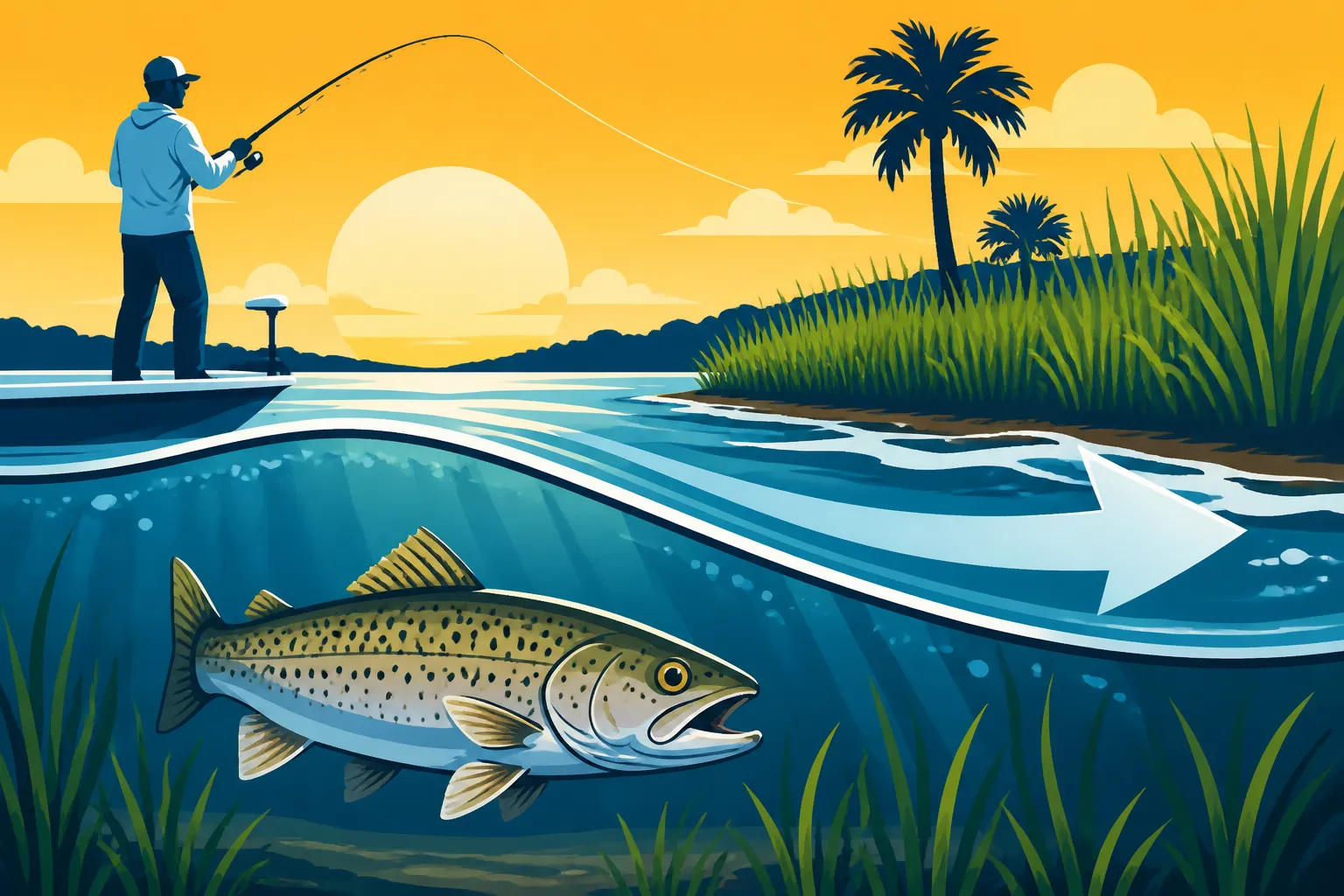
Imagine our Lowcountry estuaries and marsh creeks as giant sponges. When the tide comes in, it floods those grass flats, oyster rakes, and shallow pockets, bringing in baitfish and crustaceans. As the tide turns and begins its journey back out to sea, this water literally drains off these flooded areas. This creates a current, sometimes subtle, sometimes strong, that pulls everything with it. It's a natural flushing system, pushing food, and fish, into more concentrated areas.
This draining action doesn't happen uniformly. Some areas will drain faster or slower than others, creating distinct current lines and eddies that are crucial for understanding trout behavior. The speed and volume of the outgoing tide can also be influenced by factors like recent rainfall, which adds freshwater runoff, or strong winds that can either accelerate or impede the natural flow. It’s a dynamic environment, and understanding these nuances is key to consistent success.
How Trout React to Draining Water
Spotted seatrout, being opportunistic ambush predators, are incredibly attuned to these tidal movements. As the water begins to recede from the shallow flats, two main things happen. First, the baitfish, shrimp, and other small critters that were scattered across the flats suddenly find their escape routes narrowing. They get funneled into deeper channels, creek mouths, and the edges of oyster beds. Second, the trout know this. They've learned to position themselves in strategic ambush points where they can effortlessly pick off unsuspecting prey being swept past them.
This isn't just about finding food; it's about energy conservation. Trout would rather sit in a calm spot, letting the current bring dinner to them, than expend precious energy chasing prey all over a vast flat. They'll often face into the current, waiting for an easy meal. This behavior makes them predictable if you understand the flow, but it also means if you're casting where there's no funneling action, you might be missing them entirely. You can learn more about how Does Tide Direction Change Where Trout Feed? in our detailed guide.
Key Locations for Outgoing Tide Trout
Knowing that the outgoing tide creates a feeding frenzy for trout is one thing; knowing precisely where to cast your line is another. South Carolina's coast is a maze of productive waters, but certain features become absolute magnets for trout during a falling tide.
Draining Creeks and Oyster Bars
As the tide starts its retreat, every small creek, ditch, and feeder stream draining into a larger channel becomes a hotspot. These are the natural highways for all the bait that was just enjoying the flooded marsh. Trout will often stage right at the mouth of these creeks, waiting for the buffet line to pass. Cast your lure or bait up into the draining creek and let the current carry it out, mimicking a natural flow. The same goes for oyster bars. These jagged, nutrient-rich structures are natural filters and provide excellent ambush points. As water drains over and around them, it dislodges food, and trout will often tuck into depressions or along the edges of the bars, just out of the main current, ready to pounce.
When fishing these areas, pay close attention to the depth changes and current breaks. A subtle drop-off or a slight change in the oyster bed structure can create a prime holding spot for a hungry trout. It’s not always about finding the deepest water, but rather the most advantageous position relative to the bait flow. If you're looking for where to start, many of the Best Inshore Fishing Spots Along the South Carolina Coast are characterized by these very features.
Main Channel Edges and Points
While creeks and oyster bars are excellent, don't overlook the edges of the main channels and prominent points, especially towards the latter half of the outgoing tide. As vast amounts of water continue to drain, it concentrates both trout and bait into these deeper, more defined thoroughfares. Points of land that jut out into the channel create current breaks and eddies where bait can gather, making them prime targets. Similarly, the deep edges of navigation channels, particularly those with nearby shell rubble or grass beds, become highways for fish moving to deeper water.
Think about how the current washes over these features. On a sharp point, the water will often create an eddy on the down-current side. Trout will often sit in these calmer pockets, waiting for bait to be swept by on the faster main current. Casting into the main current above the point and letting your offering drift into that eddy can be incredibly effective. Consider also that many larger trout prefer these deeper, more protected areas as the tide gets lower, offering them security and easy access to a steady food supply.
Best Baits and Techniques for a Falling Tide
Once you've identified the prime locations, the next step is choosing the right tools and knowing how to present them. The outgoing tide's current can be your best friend or your worst enemy, depending on your approach.
Artificial Lures: Mimicking Escaping Bait
Artificial lures truly shine during an outgoing tide because they allow you to precisely imitate the distressed baitfish and shrimp being swept out of the marsh. Soft plastics, especially those rigged on a jig head, are incredibly versatile. Paddle tail or curly tail grubs in natural colors like pearl, chartreuse, or even a clear with silver flake, are fantastic choices. Cast them up-current of your target area and let them drift naturally with the flow, imparting subtle twitches to mimic a struggling baitfish. The weight of your jig head is crucial here; you want just enough weight to get it down to where the fish are, but not so much that it snags constantly or inhibits a natural drift.
Another highly effective lure is a good old-fashioned popping cork paired with a soft plastic or a live shrimp. The "pop" sound mimics a feeding fish or a distressed shrimp, drawing trout in. The outgoing current will carry your cork rig along, allowing you to cover ground while the lure dangles enticingly below. This technique is especially potent around creek mouths and oyster bars where trout are actively ambushing. Many anglers stock up on these on platforms like Amazon before a trip. For more specific lure advice, check out our guide on Best Lures for Spotted Seatrout in Grass Flats.
Live and Cut Bait Strategies
Sometimes, especially when the bite is tough or the trout are particularly finicky, nothing beats natural bait. Live shrimp, mud minnows, or small finger mullet are absolute trout candy. Rig a live shrimp under a popping cork, just as you would with a soft plastic, and let the outgoing current do the work. The natural swimming action of the shrimp is often irresistible. For mud minnows or finger mullet, consider a Carolina rig with a small egg sinker, letting the bait sit on the bottom in those deeper channel edges or near oyster beds. The scent trail of live bait can be a huge advantage when the water is a bit stained from recent rains.
Cut bait can also be surprisingly effective, particularly chunks of mullet or pinfish. While not as common for trout as for other species, the strong scent can attract larger, more aggressive trout that are keyed in on an easy, meaty meal being flushed out of the marsh. This method is often best deployed in slightly deeper channels where the current isn't ripping too fast, allowing the scent to disperse effectively without the bait being immediately swept away. Always remember to check South Carolina Spotted Seatrout Minimum Size 14 Inches and other regulations before keeping any fish.
Fine-Tuning Your Approach: Reading the Conditions
Even with the best spots and baits, successful outgoing tide trout fishing often comes down to adapting to the subtle cues the water gives you. Every tide is a little different, and being able to read the conditions and adjust on the fly will dramatically increase your catch rate.
Observing Baitfish and Bird Activity
Nature provides some of the best indicators of where the fish are. Keep a keen eye out for baitfish skipping across the surface, especially near draining creeks or channel edges. Where there's bait, there are usually predators. Even subtle ripples or flashes can indicate a school of bait is being pushed by the current. Equally important is bird activity. Diving pelicans or terns are almost always a sign that baitfish are schooling near the surface, often pushed up by feeding game fish below. If you see birds actively working an area, especially near a point or creek mouth, you can bet there are trout (or other predators) in the vicinity.
Don't just look for frantic activity; sometimes, it's the subtle cues that tell the story. A lone heron patiently waiting at a creek mouth or an egret stalking the shallow edges of an oyster bar means there's a reliable food source in that spot. These observations can tell you not just where the bait is, but also how it's behaving, which can inform your lure choice and retrieve speed. A good pair of polarized sunglasses, available on Amazon, can greatly aid in spotting these subtle movements.
Adapting to Current Speed and Water Clarity
The speed of the outgoing current will dictate many of your decisions. During a slower drain, you might need lighter jig heads or slower retrieves to keep your bait in the strike zone longer. As the current picks up, you'll likely need heavier weights or faster retrieves to maintain control and prevent your lure from washing out too quickly. It's a constant dance with the water, feeling how your line and lure react to the flow. If the current is ripping, consider moving to an area with more current breaks, like the down-current side of an island or a deeper pocket where the flow might be less intense.
Water clarity is another huge factor. In clear water, trout rely heavily on sight, making natural-colored lures and stealthy presentations paramount. If the water is stained or murky, either from heavy rains or bottom disturbance, scent becomes more important, favoring live or cut bait, or brighter, more contrasting artificial lures. Murky water can also make fish more willing to strike lures with more vibration or noise, like a rattling jig or a louder popping cork. Understanding these dynamics is part of the art of fishing, and it’s especially vital when the tide is doing its powerful work. For more insights on fishing specific species, our comprehensive guide on Spotted Seatrout in South Carolina Waters: The Full Guide is a great resource.
Here's a quick reference for optimizing your outgoing tide trout fishing:
| Tidal Phase | Prime Locations | Recommended Baits/Lures | Techniques | Key Considerations |
|---|---|---|---|---|
| Early Outgoing | Creek mouths, marsh drains | Live shrimp, paddle tail jigs | Drift & twitch, popping corks | Look for initial bait movement off flats, lighter current |
| Mid Outgoing | Oyster bars, channel edges | Soft plastics, live minnows | Slow retrieve along bottom, jigging | Stronger current, trout staging in ambush points |
| Late Outgoing | Deeper channels, points | Carolina rigs, suspending lures | Bottom fishing, slow trolling | Concentrated fish, lower water, check South Carolina's 10-Fish Spotted Seatrout Daily Limit Explained |
Remember, fishing an outgoing tide for trout in South Carolina isn't just about throwing a line in the water; it's about understanding the subtle ballet between the water, the bait, and the predator. By focusing on where the water drains, how bait is funneled, and using the right presentations, you'll unlock some of the most consistent and exciting trout action our coast has to offer. Don't forget that knowing South Carolina Fishing License Guide is essential before you head out, and you can usually find the most up-to-date regulations on the state's wildlife department website.
Disclaimer
This article is for general informational purposes only and does not constitute professional advice. Laws, prices and regulations vary by location and change over time. Consult a qualified professional for guidance on your specific situation.