Bait Choices for Cold Weather Fishing
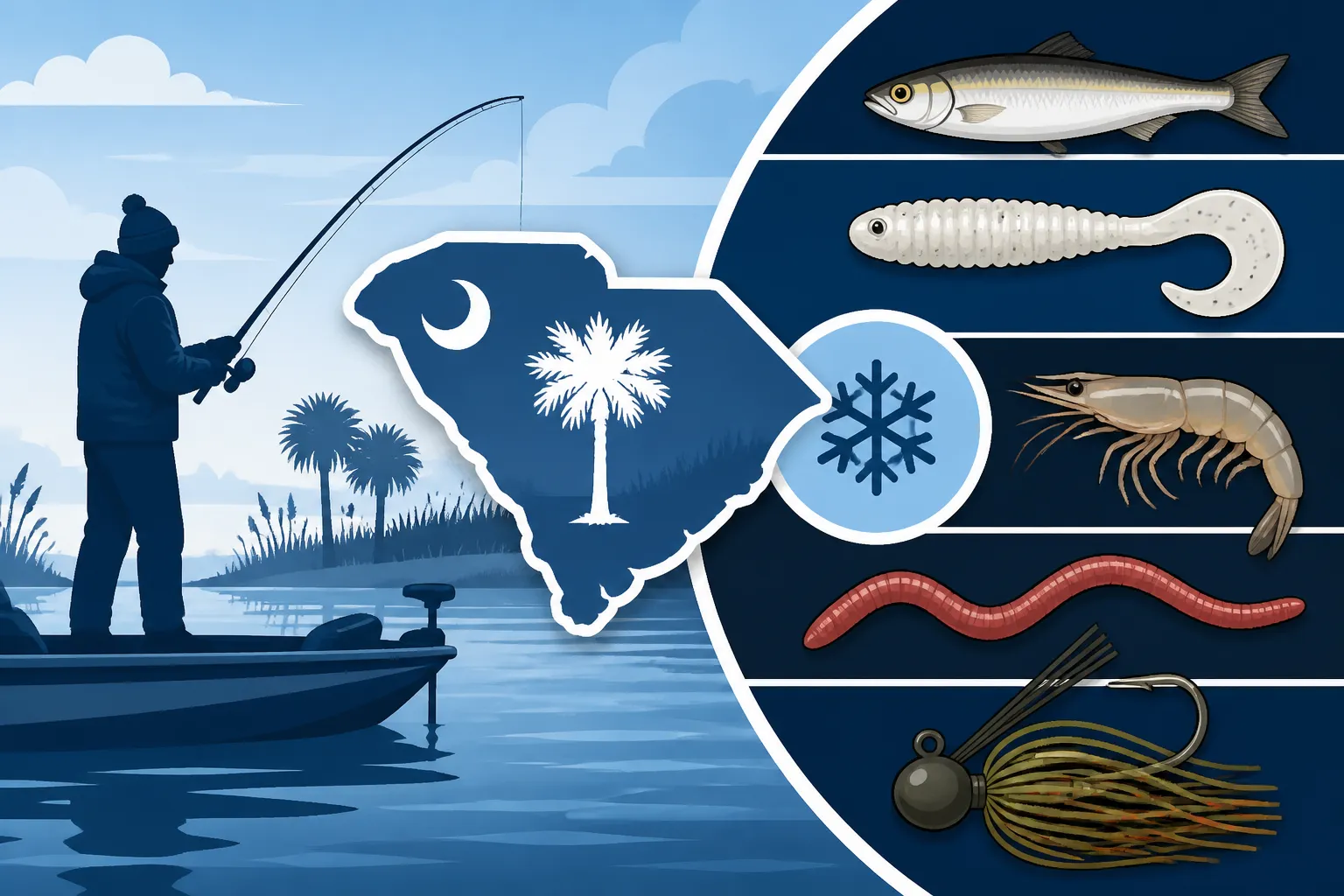
The biting cold of a South Carolina winter often tricks anglers into thinking the fish have simply vanished or gone dormant, making a successful trip seem impossible. It's a frustrating belief that keeps many indoors, but the truth is, while fish behavior changes drastically with dropping water temperatures, they still need to eat. The key to unlocking successful cold weather fishing lies almost entirely in understanding these changes and, most critically, selecting the right bait. This guide will help you navigate the chilly waters of South Carolina and equip you with the knowledge to make smart bait choices that entice even the most sluggish fish.
Understanding Cold Water Fish Behavior
When the mercury drops, both above and below the surface, fish aren't as active as they are in the warmer months. Their world slows down, and so should your approach. It’s a common misconception that fish simply stop eating; they don't, but their feeding habits shift dramatically, and understanding this is the first step to choosing the right bait.
Metabolism Slowdown and Feeding Windows
Think of fish in cold water like you on a lazy Sunday morning – they're conserving energy. Their metabolism slows down significantly, meaning they don't need to eat as often or as much. This translates to shorter, less frequent feeding windows. During these colder periods, fish are less likely to chase down fast-moving prey over long distances. Instead, they prefer easy, readily available meals that require minimal effort to catch.
This metabolic shift also affects how they perceive bait. A flashy, fast-retrieved lure that screams "escape!" in summer might be completely ignored in winter. What they're looking for is something slow, natural, and potent enough to be worth the energy expenditure. It’s a game of efficiency for them, and you need to play by their rules. This is why bait choice becomes paramount; it needs to appeal to their survival instincts rather than provoke a chase.
Where Fish Relocate in Winter
Just like we might huddle by a fireplace when it's cold, fish seek out warmer, more stable water. In freshwater lakes and rivers across South Carolina, this often means deeper pockets, submerged structures, and areas with slower currents. These spots offer thermal refuge and a degree of protection from the elements. On large impoundments like Lake Murray or the Santee Cooper lakes, fish might congregate around deep creek channels, brush piles, or underwater humps. They'll stack up in these areas, forming dense schools, which means if you find one, you're likely to find many.
In saltwater environments along the South Carolina coast, fish like redfish and spotted seatrout will move into deeper creeks, ICW canals, and even larger rivers, often seeking out mud flats warmed by the sun or oyster beds that offer structure and ambush points. They are still driven by food, but they won’t expend excessive energy to find it. This relocation is critical for anglers because it means you'll need to focus your efforts on these specific wintering grounds, and then present the right bait directly to them. Simply casting into shallow flats where they might be abundant in summer will yield little to no success.
Essential Principles for Cold Weather Bait Selection
Picking the right bait when the water is frigid isn’t just about what you use, but how you think about it. The basic rules of fishing might still apply, but they need a serious adjustment for winter success. Forget the fast, flashy presentations of summer; winter demands subtlety, patience, and a keen understanding of a fish’s dulled senses.
Prioritizing Scent and Natural Appeal
When fish are sluggish and their senses are dialed back, a strong scent can be a game-changer. They're not actively hunting as much, so a bait that broadcasts its presence through smell can draw them in from a distance and convince them to bite even if they're not in an aggressive mood. Natural baits, or artificial baits enhanced with powerful scents, become incredibly effective. Think about live worms, small minnows, or shrimp in the saltwater – these are classic go-tos for a reason.
Many anglers also turn to prepared baits infused with strong attractants. For freshwater species like catfish, stinky concoctions and cut bait are often superior to anything else. For crappie, tiny jigs tipped with a crappie nibbler or a small piece of minnow can make all the difference. In the saltwater, a piece of fresh shrimp or a mud minnow pinned to a jighead often outperforms artificials, simply because of its natural odor and texture. You can even find scent additives on platforms like Amazon to enhance your existing artificial lures, making them more appealing in cold water. The goal is to make the fish think, "Hmm, an easy meal is right here, and it smells delicious."
Downsizing and Slowing Down
This might be the most crucial principle for cold weather bait selection. Remember, fish are not chasing. They are looking for an effortless meal. A big, bulky bait that looks like a lot of work is often ignored. This is why downsizing your offerings is so effective. Smaller baits mimic the more vulnerable, smaller prey items that cold-stunned fish are likely to encounter and can consume with minimal energy.
Beyond size, the presentation speed is equally vital. A slow, almost imperceptible retrieve is often what it takes to tempt a cold-water fish. This could mean "dead-sticking" a bait, letting it sit motionless on the bottom, or employing an extremely slow jigging motion. For instance, when targeting bass in Lake Hartwell during winter, many anglers find success with a small finesse jig or a shaky head worm crawled agonizingly slow across the bottom, rather than a crankbait ripped through the water column. The lure needs to stay in the strike zone longer, giving the fish ample time to decide if it's worth the meager effort to eat. It's about presenting a meal that practically swims into their mouths, rather than one they have to pursue.
Top Freshwater Baits for South Carolina Winter
South Carolina's diverse freshwater fisheries, from the sprawling Santee Cooper Lakes to the cold mountain streams, offer fantastic winter fishing opportunities if you know what to throw. When water temperatures drop, many popular summer baits become less effective. This is when you need to switch gears to entice sluggish bass, crappie, and catfish.
Crappie and Panfish Favorites
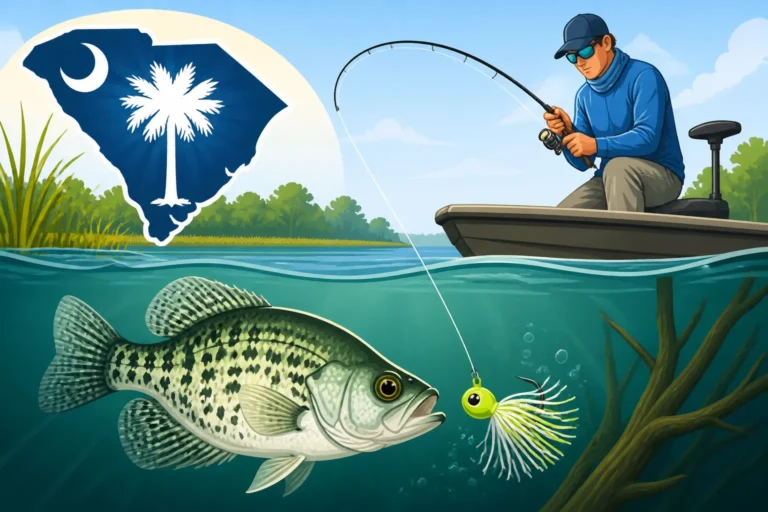
Crappie and various panfish like bluegill and shellcrackers are often the stars of winter freshwater fishing in South Carolina. They tend to school up in deeper water around structure, making them prime targets. For crappie, minnows are king. Live minnows, particularly small ones, are incredibly effective when fished on a bare hook or beneath a small float, allowing them to swim naturally. You can find quality minnows at most local bait shops around lakes like Lake Greenwood or Lake Wateree. Another excellent option is a small jig, typically 1/32 to 1/16 ounce, tipped with a minnow or a soft plastic grub. Colors like white, chartreuse, or black and chartreuse often perform well. The key is to fish these jigs slowly, often vertically, right in the heart of the crappie schools you locate with your electronics. You'll want to check out our guide on Crappie Fishing Tips for South Carolina Lakes Small artificial baits, like Bobby Garland's "Baby Shad" or "Stroll'R" are also fantastic, especially when paired with a scent enhancer.
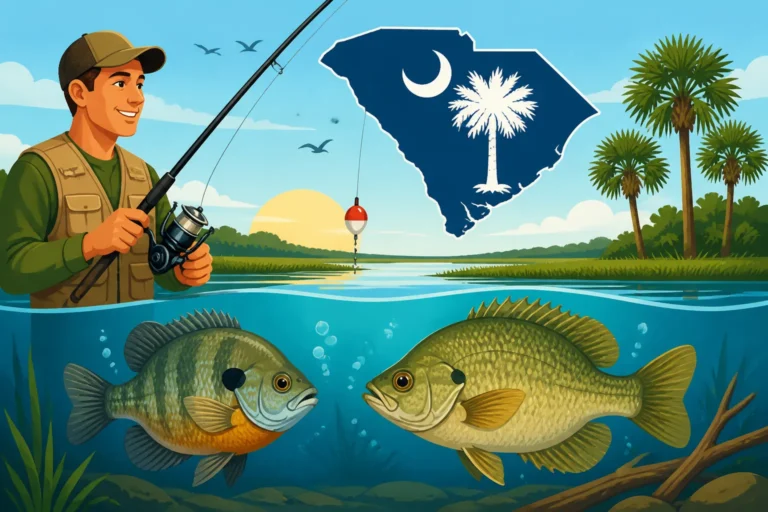
For bluegill and other sunfish, while they can be caught year-round, winter often requires a more refined approach. Tiny pieces of real worm, like red wigglers, or even crickets (if you can find them in winter) are irresistible when presented on a small hook with minimal weight. These species are less active, so a subtle presentation near brush piles or docks in slightly deeper water will often yield results. Again, the emphasis is on small, slow, and natural.
Bass and Striper Baits
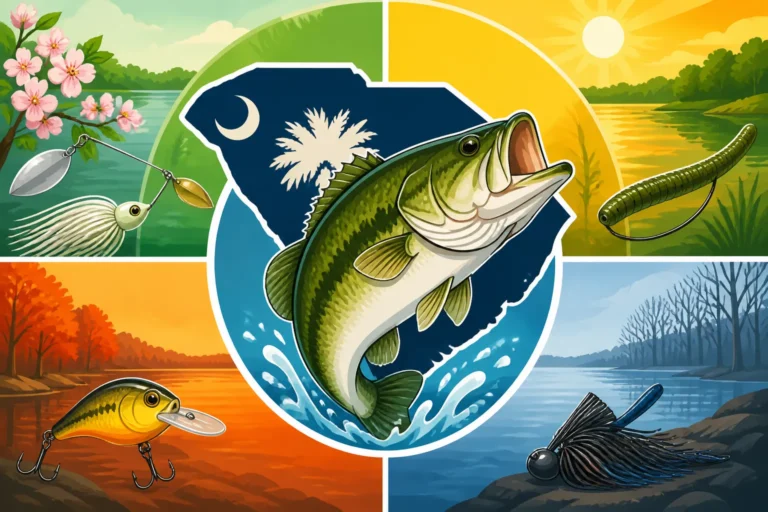
Largemouth bass are still catchable in South Carolina during the colder months, but they demand a different strategy. Forget topwater explosions; winter bass are often hugging the bottom in deeper water or tight to cover. One of the most effective cold-weather bass baits is a jig, especially a football head or skirted jig, fished slowly along ledges, humps, and brush piles. Darker colors like black and blue or green pumpkin tend to be very productive. Pair it with a small, complementary trailer for added bulk and subtle action. Another excellent option is a shaky head worm or a finesse worm rigged on a drop shot. These baits offer a natural, subtle presentation that can trigger bites from even the most lethargic bass. Slow-rolling a crankbait or a spinnerbait deep can also work on warmer winter days or if you're targeting suspended fish.
For striped bass, especially the robust populations in Lake Murray and the Santee Cooper Lakes, winter can be an incredible time. They often school up in vast numbers in deeper water. Live bait is extremely effective, with large shiners or herring being prime choices, fished on downlines or freelines at the depth where the stripers are holding. Artificials like bucktail jigs, spoons, or large swimbaits can also be productive, particularly when vertically jigged directly over schools. Anglers looking to explore these techniques further might find value in resources discussing Striped Bass Winter Fishing Patterns in Freshwater Lakes. Remember, when targeting stripers in cold water, using your electronics to locate the schools is half the battle; the other half is presenting the right bait right to them.
Catfish Cold Weather Candies
Catfish are surprisingly active in South Carolina's colder waters, and winter can be a fantastic time to land some trophy-sized blues and flatheads, especially in systems like the Congaree River or the Santee River. Unlike many other species, catfish are still very much scent-driven in winter, making natural cut baits highly effective. Fresh cut bait from shad, herring, or even smaller panfish is a top choice. The oilier the bait, the better, as the scent trail it leaves in the cold water is crucial for attracting catfish.
Rig your cut bait on a Carolina rig or a simple bottom rig with a heavy sinker to keep it in place, especially if you're fishing in current. Focus on deeper holes, river bends, and channels where catfish will congregate. Prepared stink baits can also work, but fresh cut bait generally outperforms them for larger fish in winter. Don't be afraid to leave your bait soaking for extended periods; cold water catfish are often less aggressive and might take their time finding and deciding to eat your offering. For a deeper dive into effective strategies, check out articles on Catfish Fishing Techniques for Cold Water. The patience required is often rewarded with some of the biggest catfish of the year.
Top Saltwater Baits for South Carolina Winter
The South Carolina coast doesn't shut down in winter; it just offers a different kind of challenge and reward. Anglers targeting inshore species like redfish, spotted seatrout, and flounder can find incredible success with the right bait choices, as these fish often school up and become more predictable in their winter habits.
Redfish and Spotted Seatrout Go-Tos
Redfish, those beautiful bronze brawlers, remain a prime target in South Carolina's lowcountry throughout winter. As the water cools, they move out of the super-shallow grass flats and into deeper creeks, tidal rivers, and protected areas with muddy bottoms that absorb the sun's warmth. Live mud minnows or small live shrimp are arguably the best baits for winter redfish. Fished on a light jighead or a Carolina rig, these natural baits offer irresistible scent and subtle movement that cold redfish can't easily ignore. You can often find live mud minnows at local bait shops in coastal towns like Mount Pleasant or Murrells Inlet.
Artificial options also work, but they need to be fished slowly. Soft plastic scented baits, like a D.O.A. C.A.L. Series Shad Tail or a Z-Man PaddlerZ, in natural colors (e.g., "new penny," "chartreuse glow") can be deadly when retrieved with a slow drag-and-pause motion along the bottom. For anglers keen on understanding the rules, learning about South Carolina Redfish Slot Limit Rules, which dictate what you can keep, is essential.
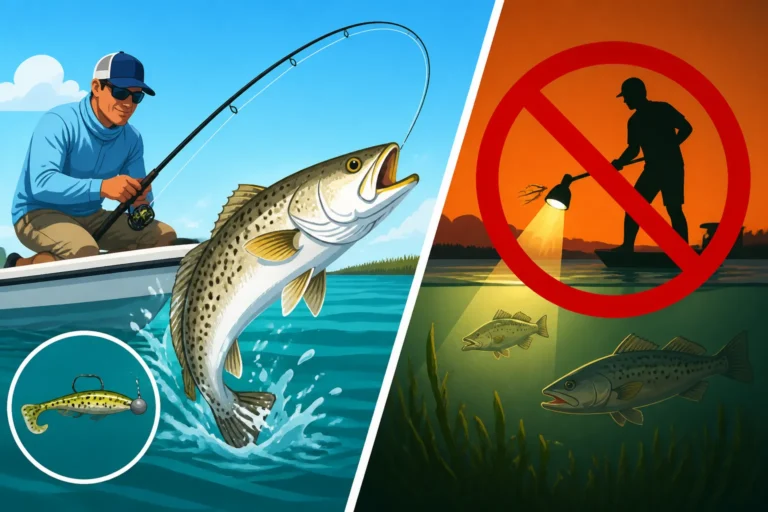
Spotted seatrout also continue to bite well into winter, especially during warmer spells. Like redfish, they’ll seek out deeper channels, oyster beds, and dark mud bottoms. Live shrimp, whether freelined or suspended under a popping cork (fished with very subtle pops), are absolute killers. Mud minnows are another reliable live bait. For artificials, soft plastic jerkbaits or grubs in white, pearl, or chartreuse colors, rigged on a light jighead, are excellent. The key here is an extremely slow, twitch-and-pause retrieve, mimicking a stunned or weak baitfish. When targeting seatrout in winter, it's also worth noting the South Carolina Spotted Seatrout Gigging Ban Explained, which restricts gigging during certain cold months to protect the species. You can still catch them with rod and reel, of course!
Flounder and Sheepshead Specifics
Flounder, those masters of camouflage, might be a bit harder to tempt in the dead of winter, but they are absolutely catchable. They tend to bury themselves deeper in the mud or sand in protected areas. Live mud minnows, again, are fantastic. Fished slowly on a Carolina rig, dragged across the bottom, these baits are the perfect presentation for flounder. You want to feel for that subtle thump-and-then-weight, giving the flounder time to engulf the bait before setting the hook. Finding good Flounder Fishing Spots Along the South Carolina Coast often means looking for deeper channels near inlets and around bridge pilings.
Sheepshead, often called "convict fish" due to their striped pattern, are a winter staple along the South Carolina coast, especially around structures like jetties, bridge pilings, and oyster reefs. They are notoriously tricky to hook due to their small mouths and bait-stealing prowess, but cold water doesn't deter them much. Their primary diet consists of crustaceans and mollusks, so the best baits mimic these. Fiddler crabs are hands down the number one choice. If you can't find fiddlers, small pieces of shrimp, barnacles, or even mussels can work. Present these baits on a small, sharp hook (like a Kahle hook or a circle hook) with just enough weight to get it down to the structure. Sensitivity is key here; you'll often feel nothing more than a light tap before they've cleaned your hook.
Presentation is Key: Making Your Cold Weather Baits Irresistible
Choosing the right bait is only half the battle when fishing in cold water. How you present that bait makes all the difference between a productive day and a frustrating one. Remember, fish are lethargic; they're not going to chase. Your goal is to make the meal as easy as possible for them.
Slow Retrieve Techniques
The mantra for cold weather fishing is "slow down, then slow down some more." A fast retrieve in chilly water is almost always a wasted effort. Fish metabolism is reduced, and their reaction time is significantly slower. Instead, embrace the art of the agonizingly slow retrieve.
For soft plastics or jigs, this often means a subtle drag-and-pause, or a slow lift-and-drop. Imagine your lure as a weak, dying baitfish or an insect slowly crawling along the bottom. For example, when fishing a grub for spotted seatrout in the creeks near Charleston, instead of a snappy retrieve, cast it out and let it sink. Then, barely move your rod tip, just enough to make the tail twitch, pausing for several seconds between each subtle movement. This prolonged exposure in the strike zone, combined with minimal effort required from the fish, dramatically increases your chances. The same applies to bass fishing with jigs; a slow hop-and-drag mimics a crayfish scuttling along the bottom, making it an easy target. Don't be afraid to experiment with even slower retrieves than you think necessary; often, the slower, the better.
Bottom Bouncing and Dead-Sticking
Many cold-water fish, especially freshwater species like bass and catfish, or saltwater species like flounder and redfish, will hold tight to the bottom in deeper sections. This makes bottom bouncing and dead-sticking incredibly effective techniques.
Bottom Bouncing involves dragging your bait along the bottom, making occasional contact with the structure. This stirs up sediment, creating a natural appearance of a critter digging around, and also keeps your bait in the zone where fish are likely to be lurking. A Carolina rig with a live minnow or a soft plastic, or a jig with a grub, are perfect for this. When fishing for redfish in the wintering holes of Murrells Inlet, slowly dragging a mud minnow on a Carolina rig through deeper channels where fish are known to congregate can be deadly. The key is to maintain bottom contact without snagging excessively, feeling for every subtle tap or tick.
Dead-sticking takes "slow" to an extreme – it means letting your bait sit almost motionless. This technique is particularly effective for highly lethargic fish. You cast your bait out, let it sink to the bottom, and then do absolutely nothing, or just impart the slightest twitch every minute or so. This works wonderfully for bass with a Texas-rigged worm or a shaky head, or for catfish with cut bait. The idea is that the bait presents itself as a completely vulnerable, non-threatening meal. The scent from natural baits, or the subtle movement from a soft plastic's buoyancy, will do the work. Often, the strike will be a subtle "thump" or just a feeling of added weight, rather than an aggressive yank. Patience is a virtue here, but the rewards can be significant, particularly on challenging cold days.
Gear and Prep for Cold Weather Bait Success
While bait choice and presentation are paramount, the right gear and preparation are equally critical for a successful and comfortable cold-weather fishing trip in South Carolina. Being cold, uncomfortable, or ill-equipped will quickly cut your day short, regardless of how perfect your bait is.
Line Choice and Rod Sensitivity
In cold water, fish bites can be incredibly subtle. That aggressive thump of summer often turns into a soft "tick" or just a feeling of added weight. This makes line choice and rod sensitivity absolutely crucial.
Line Choice: Opt for fluorocarbon line whenever possible. Its low stretch provides excellent sensitivity, allowing you to feel those faint bites. It's also virtually invisible underwater, which is a significant advantage when fish are highly pressured and clear-sighted in winter's often clearer water. If you're using braided line, consider adding a longer fluorocarbon leader (4-6 feet) to combine the sensitivity of braid with the invisibility of fluorocarbon. For very light presentations, a thin monofilament can also work, but fluorocarbon generally offers superior performance in cold conditions. You can find a wide array of fishing lines suitable for cold water on platforms like Amazon, making it easy to prepare for your next trip.
Rod Sensitivity: A sensitive rod is your best friend in cold weather. Look for rods with a fast action and a lightweight, high-modulus graphite blank. This allows you to feel the slightest contact with your bait, the bottom, and, most importantly, a fish. Pair it with a lightweight reel that balances the rod well, ensuring you're not fighting your gear, but rather focusing on those subtle cues. A longer rod (7 feet or more) can also help with longer casts and better line management, especially when you need to cover more water from the bank. The difference a sensitive rod makes cannot be overstated; it truly is your primary tool for detecting those faint winter bites.
Keeping Your Bait Alive and You Warm
Preparing for the cold is not just about the fish; it's about your comfort and the effectiveness of your live bait.
Keeping Your Bait Alive: If you're using live bait like minnows or shrimp, keeping them healthy and lively is essential. In cold weather, water temperature fluctuations can be hard on them. Use a well-aerated bait bucket with a portable aerator. Avoid overcrowding your bait. Some anglers even add a small amount of ice (from filtered, non-chlorinated water) to their bait tank water if the air temperature is significantly warmer than the water they were caught in, or if you're transporting them over a long distance, to keep the water cool and oxygenated. Conversely, if it's freezing, ensure your bait water doesn't freeze. A simple insulation wrap around the bucket can help. The livelier your bait, the more appealing it will be to sluggish fish.
Keeping You Warm: This might seem obvious, but it's often overlooked. Layering is key: start with a moisture-wicking base layer, add an insulating mid-layer (fleece or down), and finish with a waterproof and windproof outer shell. Don't forget extremities! Good quality, insulated, waterproof gloves are a must, as are warm socks and waterproof boots. A warm hat will prevent significant heat loss. Hand warmers (the disposable kind you can buy in bulk on Amazon) can be a lifesaver, tucked into gloves or pockets. A thermos with hot coffee, tea, or soup can provide much-needed warmth and a morale boost. Remember, if you're uncomfortable, you're less likely to be patient, focused, and ultimately, successful. Prioritizing your warmth ensures you can spend more time on the water, giving those carefully selected baits the best chance to attract a bite.
| Species Targeted (SC Winter) | Preferred Live Baits | Recommended Artificial Baits | Key Presentation Notes |
|---|---|---|---|
| Largemouth Bass | Live Minnows | Finesse Jigs, Shaky Heads, Small Crankbaits, Soft Plastics | Slow crawl, drag-and-pause, vertical jigging |
| Striped Bass | Large Shiners, Herring | Bucktail Jigs, Spoons, Large Swimbaits | Vertical jigging, downlining |
| Crappie | Live Minnows | Small Jigs (1/32-1/16 oz), Crappie Nibblers | Vertical jigging, slow retrieve, dead-sticking |
| Catfish | Cut Shad, Herring, Chicken Livers | Prepared Stink Baits (less effective for large fish) | Bottom rigs, long soaks, scent is key |
| Redfish | Live Mud Minnows, Live Shrimp | Scented Soft Plastics (paddletails, jerkbaits) | Slow drag-and-pause, Carolina rig |
| Spotted Seatrout | Live Shrimp, Live Mud Minnows | Soft Plastic Grubs, Jerkbaits (light jigheads) | Slow twitch-and-pause, subtle popping cork |
| Flounder | Live Mud Minnows | Scented Soft Plastics | Slow drag on bottom, Carolina rig |
| Sheepshead | Fiddler Crabs, Small Shrimp, Barnacles | Small pieces of hard shell bait | Vertical drop, tiny hook, highly sensitive feel |
Disclaimer
Fishing regulations, license requirements, and catch limits can change frequently. Always consult the latest South Carolina Department of Natural Resources (SCDNR) rules and regulations before heading out on your fishing trip. This guide is for informational purposes only and does not supersede official government regulations.