Crappie Fishing Tips for South Carolina Lakes
Crappie fishing in South Carolina lakes can be incredibly rewarding, but it often feels like you're chasing ghosts, especially when they move deep or scatter after the spawn. Many anglers get frustrated trying to consistently locate and catch these delicious panfish. This comprehensive guide will equip you with the knowledge, gear, and techniques to turn those frustrating outings into successful crappie catching adventures across the Palmetto State.
Understanding Crappie Behavior in South Carolina Lakes
Before you even think about casting a line, getting a handle on crappie behavior is paramount. These aren't just any fish; they have distinct preferences that, once understood, can drastically improve your catch rate. South Carolina's diverse aquatic environments offer a rich habitat for crappie, but knowing the nuances of their lives is the real secret.
Black Crappie vs. White Crappie
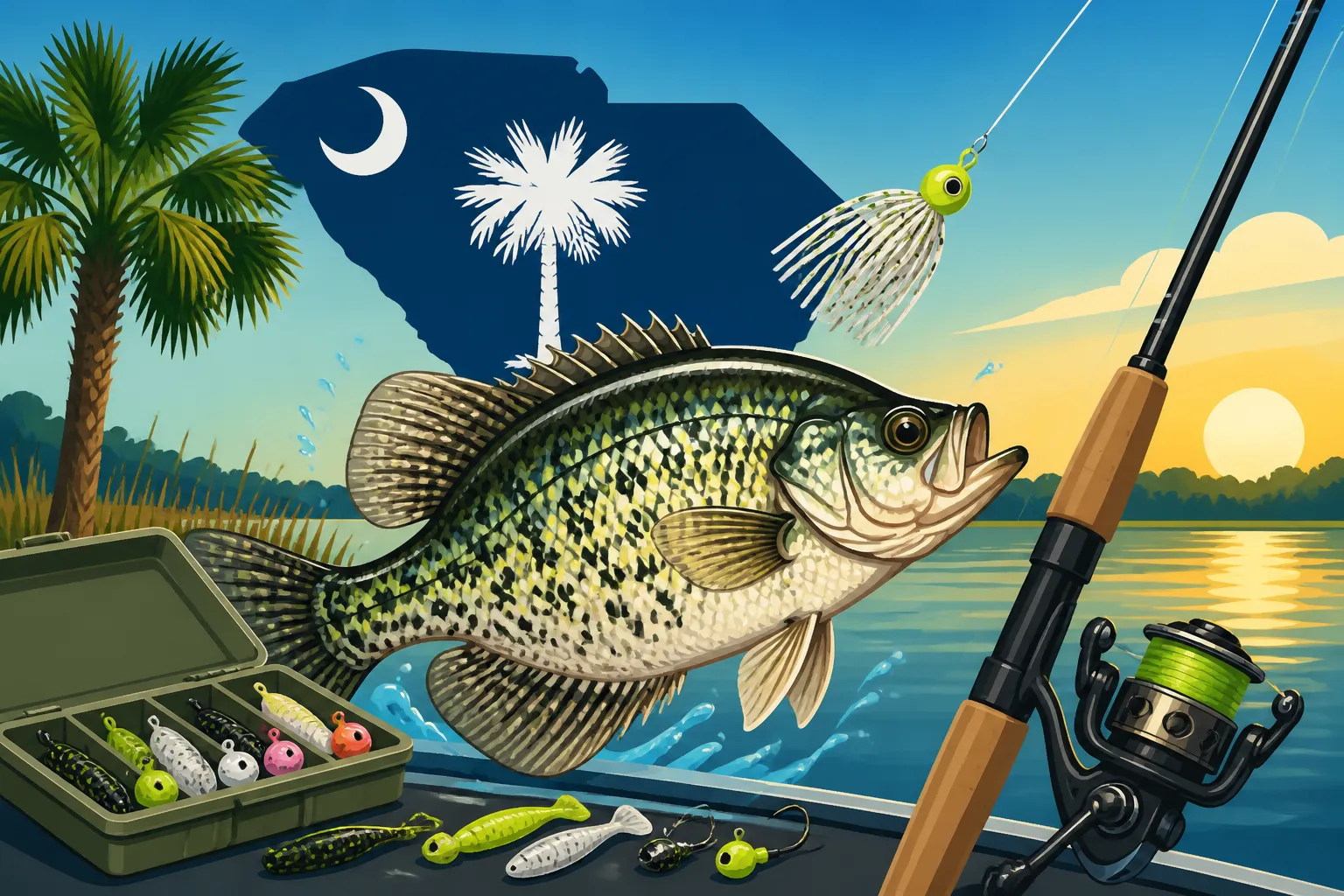
In South Carolina, you'll primarily encounter two species of crappie: black crappie and white crappie. While they share many similarities, knowing their subtle differences can help you tailor your approach. Black crappie typically have a more speckled, irregular pattern on their sides and possess seven to eight dorsal spines. They tend to prefer clearer, cooler water with more vegetation and structure, making them common targets in many of our pristine reservoirs.
White crappie, on the other hand, usually have distinct vertical bars on their sides and only six dorsal spines. They're often more tolerant of murkier, warmer waters and are frequently found in larger rivers and the more turbid sections of our lakes. While both are fantastic eating and aggressive biters, understanding which species you're targeting can influence your choice of fishing spot and even your presentation. Both species grow to impressive sizes here, so don't be surprised when you pull up a slab crappie that gives you a good fight!
Preferred Habitats and Behavior
Crappie are schooling fish, which is excellent news for anglers because once you find one, you've likely found a whole group. They are notorious for congregating around various types of cover and structure. Think submerged brush piles, standing timber, docks, bridge pilings, rock piles, and even artificial fish attractors installed by the state or local clubs. These structures provide them with ambush points for prey and protection from larger predators.
Their behavior is heavily influenced by factors like water temperature, light conditions, and the availability of baitfish. They prefer lower light conditions, which is why early morning, late evening, or even night fishing can be incredibly productive. During bright sunny days, they'll often retreat to deeper, shadier areas. Understanding their reliance on cover means you should always be looking for irregularities on the lake bottom or along shorelines.
Seasonal Movements of Crappie
Crappie are creatures of habit, and their movements throughout the year are largely predictable, following the changes in water temperature and their spawning cycle. In the spring, as water temperatures rise into the 50s and 60s, crappie move into shallower waters to spawn. This is often the easiest time to catch them, as they concentrate in accessible areas. How to Find Crappie in Spring covers this in more detail.
As summer heats up, crappie retreat to deeper, cooler waters, often suspending over ledges, creek channels, or congregating around deep brush piles. This can be a challenging time for anglers, but specialized deep-water techniques can still yield great results. Come fall, as temperatures begin to drop, crappie often become very active again, feeding heavily in preparation for winter, moving back towards mid-depth structures. In winter, they'll typically be found in deep channels or basins, often in very large, tight schools. Knowing these general patterns is key to year-round success.
Gearing Up for South Carolina Crappie Success
Having the right tools for the job can make a huge difference between a frustrating day on the water and one filled with tight lines. Crappie fishing doesn't require a massive investment, but choosing gear specifically suited for these delicate yet feisty fish will significantly boost your enjoyment and catch rate.
Rod and Reel Setup
For crappie, finesse is often the name of the game, which means an ultralight or light-action spinning rod is your best friend. Look for rods in the 6 to 7.5-foot range, with a fast or moderate-fast action. This combination allows for sensitive bite detection – essential for crappie's often subtle take – and enough backbone to handle a decent-sized slab. A sensitive tip will transmit even the slightest tap from a crappie back to your hand, preventing you from missing those light bites.
Pair your ultralight rod with a small spinning reel, typically in the 1000 or 2000 series. These reels are lightweight and perfectly balanced for the rods, making it comfortable to hold and cast all day. The smooth drag system is crucial, especially when a big crappie decides to make a run at the boat. You can find excellent quality ultralight combos or individual rods and reels on platforms like Amazon, offering a wide range to fit any budget.
Line Choices and Terminal Tackle
When it comes to line, lighter is almost always better for crappie. Many experienced crappie anglers opt for 4 to 6-pound test monofilament or fluorocarbon line. Monofilament is a budget-friendly option with good knot strength and stretch, which can act as a shock absorber. Fluorocarbon, while a bit pricier, offers superior abrasion resistance and, most importantly, is virtually invisible underwater, which can be critical in clear South Carolina lakes.
Your terminal tackle needs to be equally refined. Small, sharp hooks are a must – think sizes #2 to #8, depending on your bait. Aberdeen hooks are popular due to their light wire construction, which allows them to straighten out if snagged, potentially saving your rig. For sinkers, a small split shot or a light bell sinker will suffice, just enough weight to get your bait down. Swivels can help prevent line twist, especially when trolling or using spinning baits. Always carry a variety of sizes to adapt to different depths and current conditions.
Baits and Lures for Success
Crappie are not overly picky, but certain baits and lures consistently outperform others. Live minnows are king for many crappie anglers. Hooked lightly through the back or lip, a lively minnow is often irresistible to crappie, especially when they're less active. Small jigs are another staple, ranging from 1/32 to 1/8 ounce. These can be tipped with a small plastic body – grubs, tubes, or small paddle tails – in a myriad of colors. Best Jig Colors for Crappie Fishing discusses popular options.
Soft plastics imitating minnows or small insects are also incredibly effective. Colors like chartreuse, white, black, and various shades of green and blue are perennial favorites. Don't be afraid to experiment! Sometimes, a subtle change in color or profile can make all the difference. Small spinnerbaits and even tiny crankbaits can also entice aggressive crappie, especially when they're chasing baitfish. Having a diverse selection of baits and lures, easily stocked from retailers like Amazon, will prepare you for any situation the lake throws at you.
Effective Crappie Fishing Techniques for South Carolina
Once you have your gear sorted, it's time to put it to work. Crappie can be caught using a variety of techniques, and the most effective one often depends on the season, depth, and specific lake conditions. Mastering a few key methods will make you a much more versatile and successful angler.
Jigging and Vertical Fishing
Jigging is arguably one of the most popular and effective techniques for crappie, particularly when fish are concentrated around structure or in deeper water. How to Jig for Crappie in Deep Water goes into great detail on this. The basic idea is to present a small jig directly to the crappie. This can be done by lowering a jig straight down to a brush pile detected on your fish finder, or by casting it out and slowly retrieving it with a subtle lift-and-drop motion.
When vertical jigging, the goal is to keep your bait in the strike zone for as long as possible. Many anglers use a tactic called "spider rigging" where multiple rods are deployed from the front of the boat, each with a different depth or bait, allowing them to cover a wider vertical area. This technique is deadly over submerged timber or deep-water ledges where crappie are schooling tight. Precision is key; gently twitch your rod tip to give the jig an enticing action without overworking it.
Trolling for Crappie
Trolling is another highly effective method, especially for covering large expanses of water and locating scattered schools of crappie. This technique involves slowly moving your boat while dragging baits or lures behind it. Speed is crucial here; a slow, steady pace of 0.5 to 1.5 miles per hour is usually ideal. Many anglers employ multiple rods, often using planer boards or weights to spread their lines out and target various depths and areas simultaneously.
There are different trolling setups, from pulling jigs to live bait rigs or small crankbaits. Tightlining Techniques for Crappie Explained is a common trolling method that keeps your bait at a precise depth. Pay close attention to your electronics while trolling; when you mark fish, make a mental note of the depth and location, and be prepared to make repeated passes through that area. Trolling is particularly productive in large open lakes like Lake Marion or Lake Moultrie, where crappie might be spread out over vast flats or suspended in creek channels.
Slip Bobber Fishing and Live Bait
Sometimes, the simplest methods are the most effective, and slip bobber fishing with live bait falls squarely into this category. This technique is fantastic for targeting crappie suspended at specific depths around cover, or for casual fishing with kids. A slip bobber allows you to easily adjust the depth of your bait by simply sliding a bobber stop up or down your line. This means you can fish as shallow as a few feet or as deep as 20 feet or more with ease.
Pair your slip bobber with a lively minnow, hooked through the lips or dorsal fin, or even a small worm. Cast your rig near docks, brush piles, or standing timber, and let the bobber do the work. The natural movement of the live bait under the bobber is often all it takes to trigger a bite. This method is incredibly versatile and can be used from a boat, pier, or even the bank, making it very accessible for anglers of all skill levels.
Finding and Catching Crappie Year-Round
Consistency is the ultimate goal for any crappie angler, and achieving that means understanding where to find them and how their feeding patterns change throughout the year in South Carolina's diverse waters. It’s not just about one perfect spot, but knowing how to interpret the conditions.
Structure and Cover Identification
Crappie are structure-oriented fish, meaning they'll almost always be found relating to some form of cover. This could be natural, like submerged trees, weed beds, or rock piles, or artificial, such as bridge pilings, docks, and even old sunken boats. When approaching a new area, mentally or physically scan for these features. On our large reservoirs like the Santee Cooper Lakes, expansive flats can have subtle depressions or old creek channels that hold fish.
During the spring spawn, look for shallow brush, lily pads, or reeds in protected coves. As temperatures rise in summer, shift your focus to deeper timber, channel ledges, or man-made fish attractors. A good pair of polarized sunglasses will help you spot shallow cover, while a quality fish finder is indispensable for locating deeper structure. Remember, if you find baitfish congregating around cover, crappie are likely not far behind.
Using Electronics Fish Finders
Modern fish finders are a game-changer for crappie anglers, virtually eliminating the guesswork of finding schools. Side imaging, down imaging, and traditional 2D sonar can show you not only the depth but also the shape and density of submerged cover, as well as the fish holding within or around it. Learning to interpret these displays takes practice, but it’s time well spent.
When you're out on a South Carolina lake, use your fish finder to locate brush piles, standing timber, or baitfish schools in creek channels. Pay attention to suspended fish arches; these are often crappie. Mark these spots on your GPS so you can return to them later. Don't just motor over a spot once; make several passes from different angles to get a complete picture of the structure and the fish holding there. Many of the crappie anglers I know swear by their units from brands like Humminbird or Lowrance, which are available through various online retailers like Amazon.
Best Lakes for Crappie Fishing
South Carolina is blessed with numerous fantastic crappie fisheries. The Santee Cooper Lakes (Lake Marion and Lake Moultrie) are legendary for their crappie populations, with anglers regularly pulling in "slab" crappie. These vast lakes offer endless opportunities for both shallow-water and deep-water fishing. Lake Moultrie Catfish and Crappie Fishing Guide and Lake Marion Fishing Spots and Access Points are great resources for these areas.
Other notable lakes include Lake Murray, particularly for its healthy black crappie population, offering fantastic fishing around its many docks and brush piles. Lake Greenwood and Lake Wateree are also crappie hotspots, known for producing good numbers of fish, especially in their feeder creeks and river channels. Even smaller, local ponds often hold surprisingly good numbers of crappie. The key is to do a little research on local forums or tackle shops to find out what's biting where before you head out.
Here's a quick rundown of seasonal crappie behaviors and tips:
| Season | Typical Location | Effective Techniques | Key Considerations |
|---|---|---|---|
| Spring | Shallow coves, creek arms, brush, lily pads | Jigging (casting & vertical), slip bobbers with minnows | Spawn timing (water temps 58-68°F), protecting bedding fish |
| Summer | Deeper brush piles, creek channels, suspended over ledges | Vertical jigging, slow trolling, spider rigging | Fish move deeper, target low light hours or night fishing |
| Fall | Mid-depth structures, creek channels, main lake points | Jigging, slow trolling, casting small crankbaits | Crappie feed aggressively, follow baitfish movements |
| Winter | Deep channels, basins, tight schools near structure | Vertical jigging, tightlining, very slow retrieves | Slow presentations are key, often find large schools |
Best Time of Year to Catch Crappie is an excellent resource for planning your trips around these seasonal patterns. Remember, crappie are delicious, but always be mindful of bag limits and size restrictions to ensure sustainable fishing for generations to come. Happy crappie fishing!
Disclaimer
This article is for general informational purposes only and does not constitute professional advice. Laws, prices and regulations vary by location and change over time. Consult a qualified professional for guidance on your specific situation.