Catfish Fishing Techniques for Cold Water
Trying to catch catfish when the temperatures drop can feel like a fool's errand. You've probably experienced those frustrating winter days on the water where you feel like the fish have completely vanished, making you wonder if it's even worth bundling up. But don't give up! This guide will break down effective catfish fishing techniques for cold water in South Carolina, helping you understand how these resilient fish behave when the mercury plunges and what strategies will put them on your line.
Understanding Cold Water Catfish Behavior
When the crisp South Carolina air signals winter's arrival, many anglers pack away their catfish gear, assuming the bite is dead. But that's a mistake! While catfish behavior certainly changes, they don't stop eating entirely. The key to success is understanding their physiological response to the cold and how it dictates their movement, feeding patterns, and preferred hangouts. It's a whole different ballgame than those sweltering summer nights.
The Slowdown: Metabolism and Movement
Imagine trying to run a marathon in freezing temperatures – you'd be slow, sluggish, and probably conserving every ounce of energy. Catfish are no different. As water temperatures fall below 50-55°F, their metabolism drops significantly. This means they digest food much slower, require less energy, and consequently, feed less frequently and with less aggression. They're not actively chasing prey like they might in warmer months. Instead, they're looking for easy meals that require minimal effort.
This metabolic slowdown also affects their movement. You won't find them roaming vast stretches of water. They become much more sedentary, often grouping together in tight schools to conserve energy. This can be a blessing and a curse; hard to find them, but when you do, you might hit a jackpot. Understanding this reduced activity is crucial because it dictates your approach – patience, slow presentations, and precise bait placement become paramount. They're not going to come to you; you have to go to them and present your offerings right in front of their noses.
Prime Winter Hangouts: Where to Find Them
So, if they're not cruising around, where do these cold-blooded creatures go? Catfish in cold water seek out areas that offer stable temperatures, protection from current, and easy access to food without expending much energy. Deep water is often the primary attraction because it provides the most stable temperatures. Think about it: the deep spots in a lake or river don't cool down or warm up as quickly as the shallows.
Look for structures in deep channels, sharp drop-offs, river bends with deep holes, and submerged cover like brush piles, rock formations, or old roadbeds. These areas provide refuge and often hold baitfish that are also seeking stable, deeper water. In reservoirs like Lake Moultrie or Lake Marion, this might mean focusing on the old river channels winding through the lake, particularly where they intersect with humps or underwater points. On rivers, slack water eddies behind prominent structures or deep scour holes in bends are prime targets. Sometimes, even the deep water just off a boat ramp or a public fishing pier can hold surprisingly large numbers of fish if it offers the right depth and protection.
Essential Gear and Bait for Cold Water Catfishing
Fishing in colder temperatures demands a slight adjustment to your typical catfish setup. While some of your trusty gear will still work, optimizing your rods, reels, lines, and especially your bait can dramatically increase your chances of success when the fish are less active. It's all about maximizing your feel and presenting the most enticing, low-effort meal possible.
Rods, Reels, and Line: Sensitivity is Key
When catfish are sluggish, their bites are often incredibly subtle – a slight tap, a gentle pull, or even just a feeling of added weight. You won't always get that aggressive slam you might feel in summer. This means sensitivity in your gear is paramount.
For rods, consider a medium-heavy to heavy action rod with a fast tip. The fast tip will allow you to detect those light bites, while the robust backbone will still give you the power to fight larger fish. Graphite rods generally offer more sensitivity than fiberglass. As for reels, a quality baitcasting reel spooled with a sensitive line is often preferred for bottom fishing. You need smooth drag and good line capacity, but the ability to feel what your bait is doing and what's happening at the end of your line is critical.
Line choice is also important. Many cold-water catfish anglers opt for braided line due to its zero-stretch properties, which significantly enhances sensitivity. A 30-50 pound braid is a good starting point, paired with a fluorocarbon leader (20-40 pound test) for its invisibility and abrasion resistance. Fluorocarbon also has less stretch than monofilament, adding to the sensitivity. This setup will give you the best chance to feel even the most tentative nibbles from lethargic catfish. If you're looking for reliable gear, many anglers find a good selection of sensitive rods and reels on platforms like Amazon, often with reviews that highlight their performance in various conditions.
The Right Rig: Presentations for Lethargic Cats
Since cold-water catfish aren't chasing, your rig needs to present the bait directly to them and keep it there. Bottom-fishing rigs are almost always the way to go.
- Carolina Rig (or Slip Sinker Rig): This is a classic for a reason and highly effective in cold water. It consists of a slip sinker (egg sinker or no-roll sinker) on your main line, followed by a bead (to protect the knot), a barrel swivel, and then a leader (1-3 feet of fluorocarbon or monofilament) with your hook. The slip sinker allows the line to run freely, so a cautious catfish can pick up the bait without feeling the weight of the sinker. This is crucial when they're not feeding aggressively.
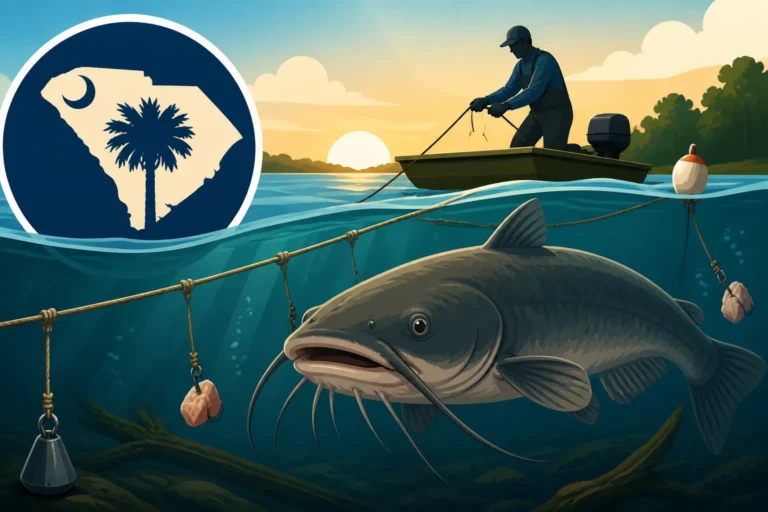
- Santee Cooper Rig: This is a variation of the Carolina rig, but with the addition of a peg float on the leader, above the hook. This float lifts your bait off the bottom slightly, keeping it visible above submerged vegetation or debris, and preventing it from sinking into soft mud. This can be a game-changer when targeting catfish holding near the bottom in murky conditions or areas with soft sediment.
- Three-Way Swivel Rig: This rig is excellent for presenting two baits at different depths or for fishing areas with light current. One eye of the swivel attaches to your main line, another to a sinker on a short dropper line (6-12 inches), and the third to your hook leader. This allows the bait to drift more naturally with the current while the sinker holds bottom.
When setting up your terminal tackle, remember that heavy-duty circle hooks (2/0 to 8/0, depending on target species and bait size) are generally preferred. They are safer for the fish (often hooking in the corner of the mouth) and improve your hook-up ratio when fish are gently mouthing the bait.
Bait Selection: Potent Scents and Subtle Appeal
Forget about lively shiners or rapidly moving lures; in cold water, scent and ease of consumption are king. Catfish rely heavily on their sense of smell, especially when their other senses are dulled by cold water.
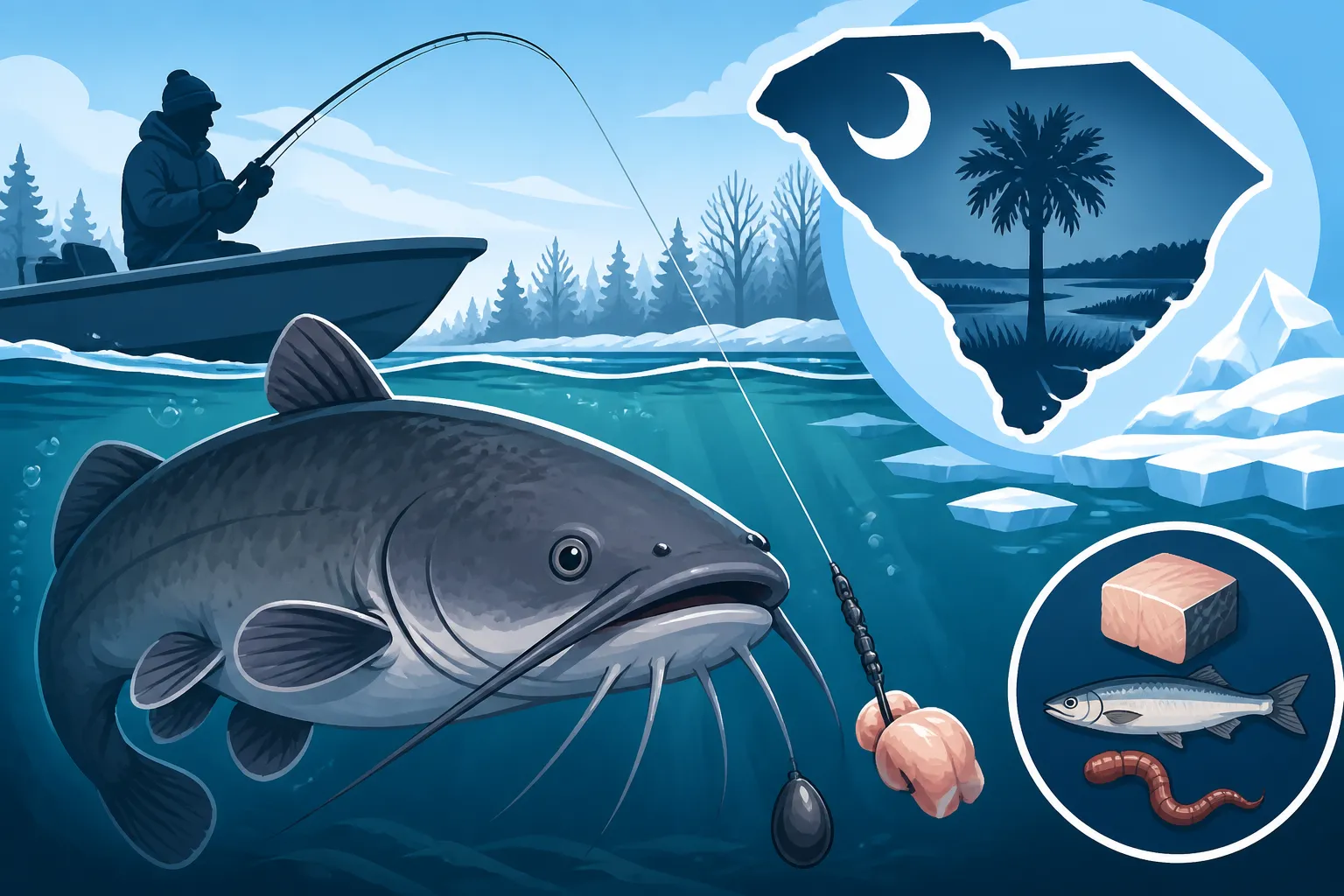
- Cut Bait: Fresh cut bait is often the absolute best choice. Shad, herring, skipjack, bluegill, or even pieces of mullet work wonders. The key is freshness. Cut it into chunks or strips that fit your hook, ensuring a good amount of blood and natural oils seep into the water. The potent scent trail will draw in sluggish catfish from a distance.
- Prepared Baits: While not always as effective as fresh cut bait, some commercially prepared baits with strong, oily scents can work, particularly on channel catfish. Look for those with a pungent cheese, blood, or garlic base.
- Live Bait (Slow-Moving): If you opt for live bait, think small and slow. A small shiner or minnow, hooked through the back or lips, that barely wiggles can sometimes entice a bite. However, cut bait typically outperforms live bait in very cold conditions because it releases more scent.
- Nightcrawlers: A classic for a reason, a wad of nightcrawlers can also be effective, especially for smaller channel and bullhead catfish. Their natural scent and subtle movements can be just enough to trigger a bite.
When rigging your bait, make sure your hook point is exposed to ensure a good hook set. Don't be afraid to experiment with different baits and sizes. Sometimes, a smaller, more manageable piece of cut bait is more appealing to a lethargic fish than a large chunk. You can often find a variety of scents and flavors of prepared catfish bait, along with bait knives and cutting boards, on popular online retail sites like Amazon.
Strategic Techniques for Cold Water Success
Knowing where the catfish are and what gear to use is a great start, but the real magic happens in how you approach your fishing. Cold water catfishing isn't about power or speed; it's about precision, patience, and adapting to the fish's slow pace. You're trying to whisper sweet nothings to them, not shout.
Slow and Low: The Art of Patient Presentation
This is perhaps the most crucial mindset shift for cold water catfishing. Remember, catfish are conserving energy. They're not going to chase down a rapidly retrieved bait. Your presentation needs to be slow, deliberate, and directly in their strike zone.
- Minimal Movement: Once your bait is on the bottom in a promising spot, leave it there. Resist the urge to constantly reel in and cast. Catfish might take a while to approach and mouth the bait. Give them time. Many anglers use multiple rods, spread out, to cover more ground and increase the chances of hitting a feeding zone.
- Gentle Retrievals: If you do need to move your bait, do so incredibly slowly. A very slow, almost imperceptible drag along the bottom can sometimes trigger a reaction strike, but generally, less movement is more. Think of it as nudging the bait just a few inches at a time.
- Bottom Bouncing: In areas with very light current, you can try a controlled "bottom bouncing" technique. Use a heavy enough sinker to keep contact with the bottom, but allow the current to slowly roll or drag it along, covering a small area. This can help you locate schools of fish. For more detailed instructions, check out our guide on How to Bottom Fish for Catfish.
- Patience is a Virtue: This cannot be stressed enough. Cold-water fishing tests your patience. There might be long lulls between bites. Bring a good book, enjoy the scenery, but stay attentive to your rod tips. Those subtle taps are easy to miss if you're not paying attention.
Sonar and Structure: Reading the Depths
In cold water, sonar (fish finders) become an invaluable tool. Since catfish school up tightly in deep water, finding those schools is half the battle.
- Identify Deep Structure: Use your sonar to locate river channels, submerged humps, ledges, and deep holes. Look for distinct changes in bottom contour. Catfish will often hold right on these transitions.
- Look for Bait Balls: Wherever there are baitfish, there are usually predators. Sonar can help you spot schools of shad or other forage fish, which are likely to attract catfish seeking an easy meal.
- Distinguish Fish Marks: Learn to interpret your sonar screen. Larger, distinct arches holding tight to the bottom in deep water are often catfish. Don't just look for random marks; look for concentrations in key structural areas.
- Precise Anchoring: Once you've identified a promising area, anchor precisely to present your baits directly to the fish. A good GPS-enabled sonar system can help you mark spots and return to them easily. Remember that How to Anchor for Catfish in Current is a critical skill, especially in rivers, to keep your baits in the strike zone.
Timing Your Trip: Weather and Water Temperature
While cold water generally slows fish down, certain conditions can make them slightly more active. Paying attention to weather patterns and water temperature can give you an edge.
- Stable Weather Patterns: A few days of stable, milder weather, especially if it follows a cold snap, can encourage a slight increase in feeding activity. A sudden cold front, on the other hand, will often shut the bite down even more.
- Rising Barometer: A rising or stable barometer is generally better for fishing than a falling one.
- Sunlight Penetration: On bright, sunny days, fish might move slightly shallower to absorb some warmth, particularly if the sun has been out for several hours. This doesn't mean shallow water by summer standards, but perhaps the shallower edges of a deep channel.
- Warmest Part of the Day: Generally, the warmest part of the day, typically late morning to mid-afternoon, will be your best bet for cold-water catfish. The water temperature might only fluctuate by a degree or two, but that can be enough to make a difference. This contrasts sharply with summer fishing where Best Time of Day to Catch Catfish often means early morning or late evening.
- Water Temperature: If you have a water thermometer, pay close attention. A slight increase in temperature (even a single degree) can sometimes trigger a bite. Focus on areas where the water might be slightly warmer, such as power plant discharges (where legal and safe) or dark-bottomed areas that absorb more solar radiation.
Safety First: Staying Warm and Prepared
Cold weather fishing, while rewarding, comes with inherent risks. Exposure to the elements can quickly turn a fun day on the water into a dangerous situation. Your comfort and safety should always be your top priority. Dressing appropriately and carrying essential safety gear are non-negotiable.
Dressing for the Chill: Layer Up!
The classic advice for cold weather is "dress in layers," and for good reason. Multiple layers trap air, providing better insulation than one thick layer, and allow you to adjust to changing temperatures throughout the day.
- Base Layer: Start with a moisture-wicking base layer made of synthetic materials or merino wool. Avoid cotton directly against your skin, as it loses its insulating properties when wet and takes a long time to dry. This layer helps regulate your body temperature and wicks away sweat.
- Mid-Layers: Add insulating mid-layers like fleece jackets, down vests, or wool sweaters. The number of mid-layers will depend on how cold it truly is. These layers provide the bulk of your warmth.
- Outer Layer (Shell): Your outermost layer should be waterproof and windproof. A good quality fishing jacket and bibs or pants will protect you from rain, spray, and biting winds. Look for features like sealed seams and adjustable cuffs to keep the elements out.
- Extremities: Don't forget your head, hands, and feet! A warm hat (beanie or trapper hat) is crucial, as a significant amount of body heat is lost through the head. Insulated, waterproof gloves are a must for handling wet lines and fish. For your feet, wear thick wool or synthetic socks and insulated, waterproof boots. You can find excellent selections of all these cold-weather essentials, from base layers to waterproof outer shells, on Amazon or at local outdoor sporting goods stores.
- Thermals and Hand Warmers: Consider bringing chemical hand warmers and foot warmers to tuck into your gloves and boots for an extra boost of warmth, especially during those long periods of inactivity.
Essential Cold Weather Safety Gear
Beyond staying warm, you need to be prepared for potential emergencies on the water, especially when conditions are harsh.
- Personal Flotation Device (PFD): Always wear a PFD, even if you're a strong swimmer. Cold water immersion can quickly incapacitate you, making it difficult to swim or stay afloat. Inflatable PFDs are less bulky and more comfortable for continuous wear.
- Emergency Contact and Float Plan: Tell someone where you're going, when you expect to return, and what your float plan is. This simple step can be life-saving if something goes wrong.
- First-Aid Kit: A well-stocked first-aid kit is essential, including items for minor cuts, scrapes, and any personal medications.
- Communication Device: A fully charged cell phone in a waterproof case is critical. A marine radio (VHF) is also a good idea if you're fishing on larger bodies of water, especially where cell service might be spotty.
- Navigation Tools: GPS or detailed maps are important for navigating, especially if fog or sudden weather changes reduce visibility.
- Extra Supplies: Bring extra warm, dry clothes, a thermos of hot coffee or soup, plenty of water, and high-energy snacks. A small, portable heater (with proper ventilation if in an enclosed space) can also be a comfort.
- Never Go Alone: If possible, fish with a buddy. There's safety in numbers, especially in cold weather when unexpected issues can arise.
By combining an understanding of cold-water catfish behavior with the right gear, strategic techniques, and a strong emphasis on safety, you'll be well on your way to enjoying successful catfish outings even when the temperatures drop in South Carolina. For more tips on preparing for specific species, consider exploring guides like Bait Choices for Cold Weather Fishing to optimize your approach.
Disclaimer
This article is for general informational purposes only and does not constitute professional advice. Laws, prices and regulations vary by location and change over time. Consult a qualified professional for guidance on your specific situation.