South Carolina Redfish Slot Limit and Tide-Based Techniques
There’s nothing quite like the thrill of a redfish pulling drag in South Carolina’s tidal creeks, but let’s be honest, figuring out all the rules and exactly when and how to best target these elusive fish can feel like trying to solve a puzzle with half the pieces missing. Many anglers, especially those new to the Lowcountry, get confused by the ever-important slot limits and the dizzying dance of the tides. This guide is designed to demystify these crucial elements, ensuring you not only understand the regulations but also master the tide-based techniques that will put more slot-sized redfish in your sights.
Understanding South Carolina's Redfish Slot Limit
Fishing for redfish in South Carolina isn't just about catching fish; it's about being a responsible steward of our precious coastal resources. The regulations, particularly the slot limit, are in place for a very good reason, and understanding them is the first step to successful and ethical angling. It’s easy to get frustrated when a magnificent bull red pulls on your line, only to realize you have to release it, but these rules are critical for the health of the fishery.
Why Slot Limits Exist for Redfish
Slot limits might seem like an unnecessary complication at first glance, but they are a cornerstone of modern fisheries management, especially for popular species like redfish (also known as red drum). The primary goal is conservation and sustainability. Think about it: every fish population needs a healthy number of breeding adults to reproduce and replenish the stock. If we only keep the largest fish, we remove the most prolific breeders from the ecosystem. On the flip side, if we only keep the smallest fish, we might be harvesting them before they even have a chance to reproduce effectively.
A slot limit, like the one for redfish in South Carolina, is designed to protect both the very young, immature fish and the large, mature breeding stock. By allowing anglers to keep fish within a specific size window, wildlife agencies ensure that a healthy population of breeders remains in the water to keep the fishery vibrant for future generations. It’s a delicate balance that helps prevent overfishing and ensures there are plenty of redfish for everyone to enjoy for years to come. These regulations are a living thing, too, constantly monitored and updated based on scientific data, which is why it's always smart to stay informed on How Often Redfish Regulations Get Updated.
Current South Carolina Redfish Slot Limit Details
So, what exactly is the redfish slot limit in South Carolina right now? Currently, anglers are permitted to keep red drum that measure between 18 and 25 inches in length. This measurement is taken from the tip of the snout to the tip of the tail, with the tail pinched together. Any redfish shorter than 18 inches or longer than 25 inches must be immediately released, unharmed, back into the water.
In addition to the length limits, there are also bag limits. Each individual angler is allowed a daily bag limit of three redfish within that 18-25 inch slot. Furthermore, there's a vessel limit of six redfish per boat, regardless of how many licensed anglers are on board. This means that if you and a buddy are out fishing and you both catch three slot reds, your boat has hit its limit, even if you have room for more. These rules are in place to manage the total harvest from our waters and protect the population. Always double-check the latest rules on sites like the South Carolina Department of Natural Resources (SCDNR) or reputable bait and tackle shops, as South Carolina Redfish Slot Limit Rules can sometimes change due to biological surveys or environmental factors. It’s crucial to know the specific South Carolina Redfish Vessel Limit Explained before heading out with a group.
Measuring Your Catch Accurately
Knowing the slot limit is one thing; accurately measuring your catch on a rocking boat or in a marsh can be another challenge entirely. However, precise measurement is non-negotiable, as failing to adhere to the slot limit can result in hefty fines and penalties. The best practice is to have a reliable measuring device readily accessible on your boat or in your kayak. A rigid bump board is often preferred over a flexible tape measure because it provides a consistent, flat surface to lay the fish against, ensuring a true nose-to-tail measurement. Many anglers swear by specialized measuring devices designed for this exact purpose, which you can often find on sites like Amazon, ensuring you're ready for every catch.
When you land a redfish, handle it gently. Wet your hands before touching the fish to protect its slime coat, which is vital for its health. Lay the fish flat on your bump board, with its snout firmly against the front stop. Gently pinch the tail fin together to get the longest possible measurement. Read the length quickly and accurately. If the fish is undersized or oversized, remove the hook with a de-hooking tool (another great investment you can find on Amazon) or pliers as quickly as possible and release it back into the water. The goal is minimal stress and a swift return to its habitat, especially for those beautiful oversized breeding fish.
The Critical Role of Tides in Redfish Behavior
If you want to consistently find and catch redfish in South Carolina's coastal waters, you simply must pay attention to the tides. It's not an optional extra; it's the fundamental rhythm that dictates where these fish will be, what they'll be doing, and how aggressively they'll be feeding. Ignoring the tides is like trying to navigate without a compass – you might get lucky, but you'll mostly be lost.
How Tides Influence Redfish Movement and Feeding
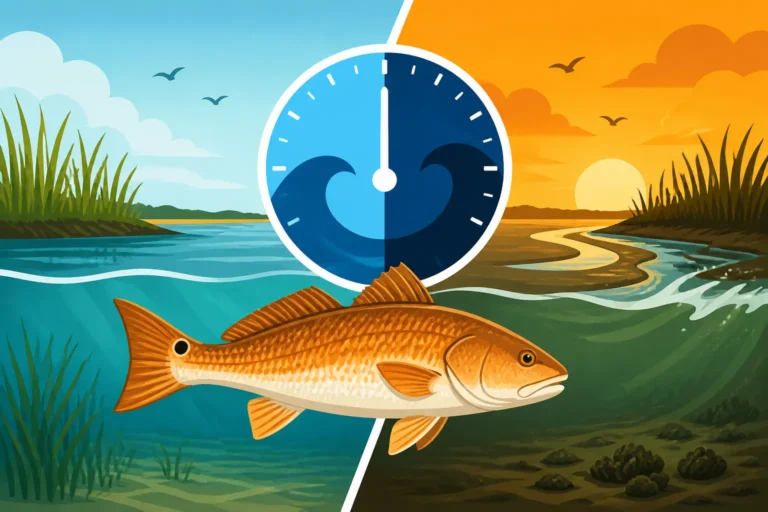
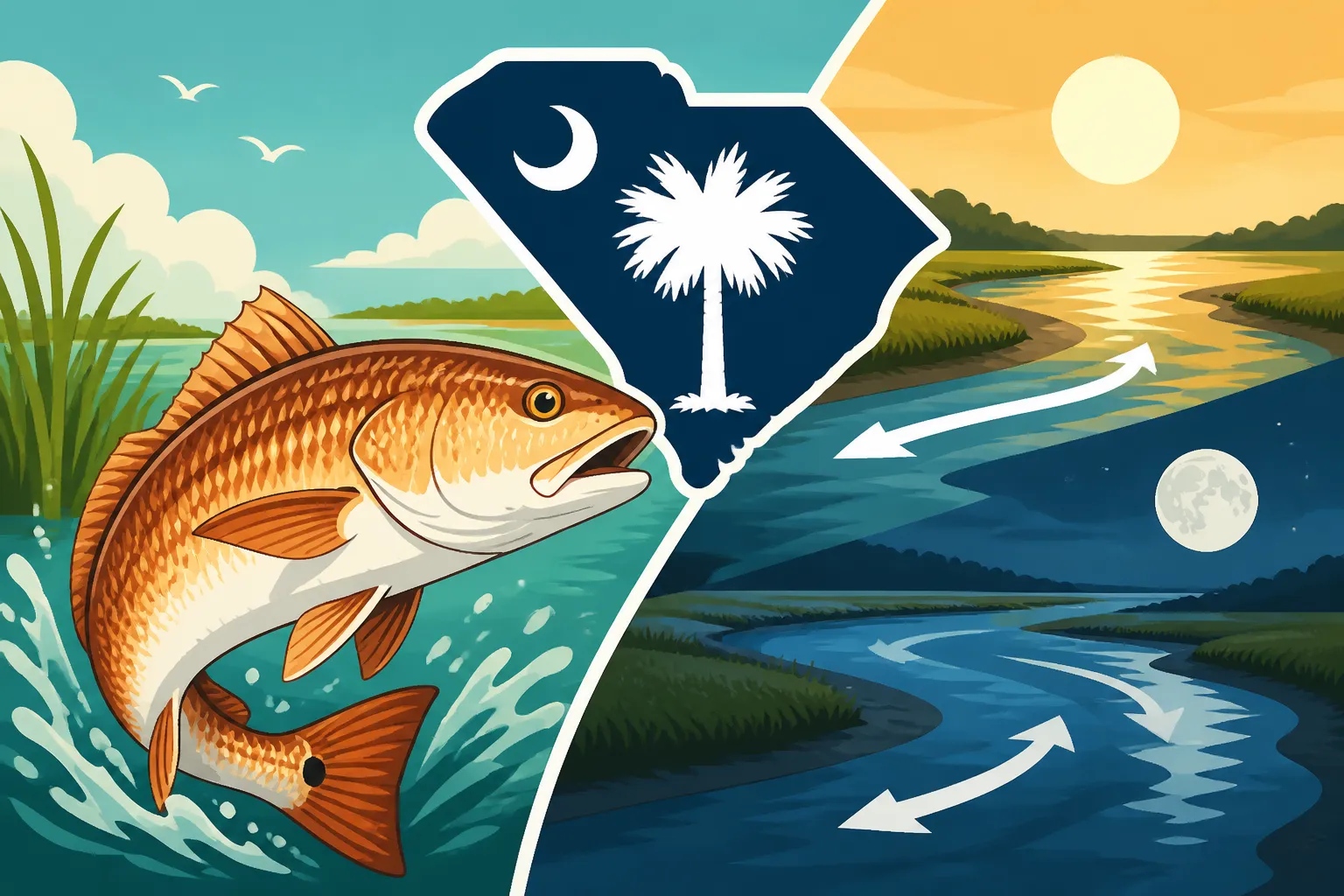
Imagine the vast network of marsh grass, oyster beds, and intricate creek systems that define South Carolina's Lowcountry. This entire ecosystem breathes with the incoming and outgoing tides. As the tide floods in, water pushes into shallow areas, flooding grass flats and oyster beds that were previously exposed or barely covered. This inundation of water brings with it baitfish, shrimp, and crabs that were hiding in the deeper channels or are now accessible in the newly flooded areas. Redfish, being opportunistic predators, follow this food. They'll move up into these shallow feeding grounds, using the cover of the grass and the rising water to ambush prey. This is often when you'll see those telltale "tailing" redfish, their tails breaking the surface as they nose down to root for crabs in the flooded grass.
Conversely, as the tide begins to ebb, or go out, the water starts to recede from these shallow areas. This concentrates bait in the deeper channels, creek mouths, and along the edges of oyster bars. Redfish will follow this retreating water, positioning themselves in strategic ambush points where they can pick off confused or disoriented baitfish being flushed out of the grass. The current created by the moving water also plays a crucial role, making it easier for redfish to conserve energy while waiting for food to come to them. Understanding this push and pull is the secret to unlocking many of Targeting Slot-Size Redfish in South Carolina's Lowcountry Estuaries.
Understanding Tidal Charts and Predictions
To fish with the tides, you first need to understand them. Tidal charts and prediction apps are your best friends in South Carolina's coastal environment. These resources provide crucial information: the times of high tide and low tide, and importantly, the height of those tides. A higher-than-average high tide might flood more grass, while a lower-than-average low tide could expose more oyster beds, altering fish behavior.
You can find accurate tidal information from several sources. The National Oceanic and Atmospheric Administration (NOAA) offers detailed tide predictions for various locations along the South Carolina coast, from Little River all the way down to Hilton Head. There are also numerous smartphone apps, both free and paid, that provide localized tide charts, often with real-time current data. Planning your fishing trip around these predictions is paramount. Instead of just picking a day to go, pick a tide. Whether it’s an early morning outgoing tide or a late afternoon incoming tide, understanding the ebb and flow will dramatically increase your chances of success. It’s also wise to consider the moon phase, as full and new moons often produce stronger tidal swings, which can heighten redfish activity.
Best Tidal Stages for Redfish Action
While redfish can be caught on any tide, certain stages tend to be more productive and dictate different fishing strategies. Generally speaking, the periods of moving water – the incoming (flood) tide and the outgoing (ebb) tide – are when redfish are most active and predictable in their feeding patterns. Slack tide, the brief period when the water is neither rising nor falling, can often be slower, but not always devoid of fish.
- Incoming (Flood) Tide: As the tide rises and pushes water into the shallow marsh grass, redfish will often move with it. This is prime time for sight fishing in the grass flats as the fish root for crabs and shrimp. You're looking for subtle movements, a ripple, a tail, or a push of water that gives away their location. This stage is particularly exciting for anglers who enjoy stalking their prey.
- Outgoing (Ebb) Tide: This is arguably the most consistent producer for many South Carolina redfish anglers. As the water recedes from the grass, it funnels baitfish, shrimp, and crabs into the deeper channels, creek mouths, and along the edges of oyster reefs. Redfish will stage themselves at these pinch points and ambush spots, waiting for an easy meal to be flushed out. This is a fantastic time to target structure and drop-offs.
- Slack Tide: While the current slows down, fish don't stop eating entirely. During slack high tide, redfish might hold tight to deeper pockets within the grass or around structure like docks and bridges. During slack low tide, they might congregate in deeper holes or depressions in the creek bottoms. The key during slack tide is often a slower, more deliberate presentation, perhaps fishing cut bait or slower-moving soft plastics. Many seasoned anglers consider the hour or two leading up to and after the peak of high or low tide to be the "sweet spot" for active feeding, as the water is moving, but not too strong to make fishing difficult. Knowing Tide-Based Techniques for Inshore Fishing will give you a significant advantage.
| Tidal Stage | Redfish Behavior | Recommended Techniques | Preferred Bait/Lures |
|---|---|---|---|
| Incoming Tide | Pushing into shallow grass, rooting for crabs, shrimp | Sight fishing, stealthy approaches | Weedless soft plastics, Gulp! shrimp, live fiddler crabs |
| High Slack | Holding in deeper pockets of grass, near structure | Slower presentations, targeting specific cover | Live shrimp, cut mullet, weedless soft plastics |
| Outgoing Tide | Staging at creek mouths, oyster bars, channel edges | Ambush tactics, fishing choke points, current seams | Live mud minnows, shrimp, cut bait, jigheads, popping corks |
| Low Slack | Congregated in deeper holes, depressions | Bottom fishing, slow retrieves | Live shrimp, cut bait, scent-infused soft plastics |
Mastering Tide-Based Techniques for Slot-Sized Redfish
Once you understand how the tides influence redfish, the next step is to adapt your fishing techniques to capitalize on these movements. This isn't about one-size-fits-all fishing; it's about being versatile and knowing which approach works best for each stage of the tide. Fishing for redfish is a dance, and the tide is your music.
Strategies for the Incoming Flood Tide
As the water begins its slow crawl in, pushing over mud flats and into the spartina grass, redfish will often follow, eager to explore newly accessible feeding grounds. This is typically the realm of sight fishing, where patience and keen observation are your most valuable tools. The key here is stealth. Redfish in these super shallow environments are easily spooked by noise, sudden movements, or heavy splashes.
Your strategy should involve slowly poling a skiff, kayaking, or wading the edges of these grass flats, keeping your eyes peeled for any sign of fish. Look for "nervous water," subtle ripples, mud clouds, or the unmistakable flash of a red tail cutting through the surface. When you spot a fish, cast well ahead of it, allowing your bait or lure to settle without making a commotion. Weedless soft plastics, such as a Gulp! shrimp or a Vudu Shrimp on a light weedless hook, are excellent choices because they can be worked through the grass without snagging. Live fiddler crabs, if you can find them, are also deadly. The retrieve should be slow and deliberate, mimicking a natural forage item. This is also when you might effectively use a shallow-running topwater lure in slightly deeper grass pockets or along the edges, especially during low light conditions. Learning How to Fish an Incoming Tide for Redfish effectively opens up a whole new world of exciting shallow water angling.
Tactics for the Outgoing Ebb Tide
The outgoing tide is a favorite for many South Carolina redfish anglers, and for good reason. As the water drains from the grass flats, it concentrates bait into predictable areas, making redfish easier to locate and target. The fish will set up in ambush points, waiting for shrimp, crabs, and baitfish to be swept past them by the current.
Focus your efforts on areas where water is actively flowing out of the marsh: creek mouths, oyster bars, points, and sudden drop-offs into deeper channels. These are natural choke points where redfish can conserve energy and capitalize on the current. Live bait shines here. A live mud minnow, small finger mullet, or shrimp fished on a light jighead or a Carolina rig (with an appropriately sized weight to hold bottom in the current) is incredibly effective. Cast upstream of where you expect the fish to be and allow the current to carry your bait naturally into their strike zone. For artificial lures, soft plastic paddle tails on jigheads (1/4 to 3/8 ounce, depending on current and depth) are excellent. Work them slowly along the bottom with short hops and pauses, mimicking a struggling baitfish or crab. A popping cork rig with a live shrimp or soft plastic underneath can also be deadly when fished along current seams or over oyster reefs, creating an enticing splash that draws attention. For detailed guidance on this, check out How to Catch Redfish on a Falling Tide.
Fishing Around Slack Tide
While periods of strong current often yield the most active bites, don't write off slack tide entirely. Fish don't just stop feeding when the water movement pauses, but their behavior does change. During slack water, redfish tend to move to deeper, more structured areas where they feel secure and can still find food, even without the strong currents.
At high slack tide, after the marsh has fully flooded, redfish might push into deeper potholes within the grass or hold tight to shaded structure like docks, fallen trees, or bridge pilings. Here, a slower presentation is key. Flipping a weedless jig with a soft plastic trailer into thick cover, or pitching a live shrimp under a dock, can entice a bite from a redfish that's hunkering down. At low slack tide, when the water is at its lowest, redfish will often retreat to deeper holes, depressions, or the main channels. This is an excellent time for bottom fishing with cut bait (like mullet or blue crab) or soaking a live shrimp. While the bite might be less aggressive than during moving tides, patience and precise bait placement can still lead to success. The key is to think about where the fish would seek refuge and food when the current isn't doing the work for them.
Essential Gear and Bait for Tide-Based Redfish Fishing
Having the right tools for the job makes all the difference when you're trying to outsmart a smart fish like a redfish. From your rod and reel setup to the baits you choose and the accessories you carry, being prepared will undoubtedly improve your chances and overall experience on the water.
Rods, Reels, and Lines for Inshore Redfish
For inshore redfish fishing in South Carolina, versatility is key. You're typically dealing with fish ranging from a few pounds to the occasional bull red, often in environments with oyster shells, snags, and strong currents. A good all-around setup will be a medium-light to medium-heavy action spinning rod, typically 7' to 7'6" in length. This provides enough backbone to fight a strong fish but enough tip sensitivity to detect subtle bites and cast lighter lures. Popular brands like Penn, Shimano, and Daiwa offer excellent options that balance durability and performance. Many anglers find the Penn Battle or Shimano Stradic series to be perfect workhorses for this kind of fishing.
Pair your rod with a matching spinning reel in the 2500 to 4000 size range. This size offers a good balance of line capacity, retrieve speed, and drag power. For line, braided line is almost universally preferred due to its incredible strength-to-diameter ratio and lack of stretch, which enhances sensitivity. A 10-20 lb braided main line is usually sufficient. However, because braid is visible to fish and can fray easily on oyster shells, it’s crucial to attach a fluorocarbon leader. A 20-30 lb fluorocarbon leader, typically 2-3 feet long, provides abrasion resistance and a nearly invisible connection to your lure or hook. Connect your braid to fluorocarbon with a reliable knot like an FG knot or an Albright knot – practice these at home!
Top Baits and Lures for South Carolina Redfish
Redfish are not particularly picky eaters, but certain baits and lures consistently outperform others, especially when matched to tidal conditions. Having a diverse tackle box will allow you to adapt to whatever the fish are keying in on.
- Live Bait: This is often the most effective choice, especially on outgoing tides or when fish are less active.
- Live Shrimp: The quintessential bait for almost everything that swims in the Lowcountry. Fished under a popping cork, on a jighead, or free-lined, shrimp are irresistible to redfish.
- Mud Minnows (Killifish): Tough, lively, and a favorite redfish snack. They stay on the hook well and are great for bottom fishing or slow retrieves.
- Fiddler Crabs: Especially effective when redfish are tailing in flooded grass.
- Finger Mullet: A hearty bait, particularly good for larger redfish.
- Artificial Lures: Modern artificials are incredibly effective and allow for more active fishing.
- Soft Plastics: These are arguably the most versatile. Paddle tails (like Z-Man MinnowZ or Keitech Swing Impact FAT) on jigheads (1/8 to 1/2 oz) are excellent for imitating baitfish. Gulp! shrimp (like Berkley Gulp! Shrimp) are incredibly popular, offering scent and realistic action. Jerk shads and split-tail baits also have their place.
- Spoons: Weedless spoons, such as Johnson Silver Minnows, are fantastic for covering water and working through grass flats without snagging.
- Topwater Plugs: Early morning or late evening, when fish are aggressive, a topwater plug (like a Heddon Super Spook or a MirrOLure Top Dog) can lead to explosive strikes.
- Popping Corks: When paired with a live shrimp or soft plastic, a popping cork creates a commotion that draws redfish in, especially in choppy water or over oyster reefs.
Experimentation is key, but having a selection of these Best Lures for Inshore Redfish Fishing will keep you prepared for various conditions and fish moods.
Must-Have Accessories and Safety Gear
Beyond your rod, reel, and tackle, a few essential accessories will make your redfish outing safer, more comfortable, and more successful. Don't skimp on these "extras," as they often prove invaluable.
First and foremost, polarized sunglasses are not just a fashion statement; they are absolutely critical for spotting fish in shallow water and reducing glare. You can find excellent options, even budget-friendly ones, on Amazon that will significantly enhance your ability to sight fish. Next, invest in a good pair of fishing pliers (preferably corrosion-resistant stainless steel or aluminum) for cutting line and removing hooks. A fish gripper like a BogaGrip or a similar lip-gripper tool is excellent for safely handling redfish, especially larger ones, minimizing stress on both the fish and your hands. A landing net with a rubberized mesh is also highly recommended to safely land fish and prevent them from tangling in the net.
Beyond fishing-specific tools, always prioritize safety. Carry a first-aid kit for minor cuts and scrapes (oyster shells are sharp!). Sun protection is vital in South Carolina: broad-brimmed hats, long-sleeved shirts with UPF protection, and sunscreen are absolute necessities. Stay hydrated by bringing plenty of water or sports drinks. If you're using a boat, ensure all required safety gear, such as life jackets, anchor, and signaling devices, are on board and in good working order. Finally, for those legal keepers, a cooler with plenty of ice is essential to keep your catch fresh.
Conservation and Ethical Angling Practices
As South Carolina anglers, we have a responsibility to protect the incredible redfish fishery that brings so much joy and economic benefit to our state. Ethical angling isn't just about following the rules; it's about making conscious choices that promote the long-term health of the fish and their habitat. It’s part of the fun to bring home a delicious meal, but ensuring the population thrives is paramount.
Practicing Catch and Release for Oversized Redfish
The redfish slot limit is specifically designed to protect the large, mature breeding fish (often called "bull reds") that are over 25 inches. While these larger fish offer an exhilarating fight, releasing them unharmed is crucial for the future of the fishery. These big females are the most prolific egg producers, and their continued presence in the ecosystem ensures that new generations of redfish will thrive.
When you catch an oversized redfish (or any fish you intend to release), handling it gently is paramount. Try to minimize the time the fish is out of the water. Wet your hands before touching the fish to protect its delicate slime coat, which acts as a barrier against disease. Avoid holding the fish by the mouth with a lip gripper if it's a large, heavy fish, as this can damage its jaw. Instead, support its body horizontally with one hand under its belly and the other gently gripping the lip. Use a de-hooking tool or pliers to quickly and carefully remove the hook. If the fish is deeply hooked, cut the line as close to the hook as possible rather than trying to rip the hook out, as this can cause more damage. For fish that seem lethargic, gently hold them upright in the water, facing into the current, until they regain their strength and can swim away on their own. These simple actions make a huge difference in the survival rate of released fish.
Respecting the Environment and Fellow Anglers
Beyond direct fish handling, ethical angling encompasses how we interact with the entire environment and other people enjoying the water. The beautiful marsh and coastal areas where redfish thrive are fragile ecosystems, and it's up to all of us to protect them.
Always practice the "Leave No Trace" principle. This means packing out everything you pack in – don't leave behind fishing line, bait containers, plastic bottles, or any other trash. Fishing line, especially, can be a deadly hazard for birds, marine mammals, and other aquatic life. Be mindful of prop scars in shallow grass flats; these destroy vital habitat. If your motor is digging into the bottom, you're in water that's too shallow, so trim up or use your trolling motor. Avoid disturbing oyster beds, which are not only sharp but also provide critical habitat and natural filtration for the water.
When it comes to other anglers, courtesy goes a long way. Maintain a respectful distance from other boats or people fishing from the bank. If someone is clearly fishing a spot, don't motor right up to them and crowd their space. Be quiet and avoid making excessive noise that could spook fish or disturb others. Sharing information, offering help, and generally being a good steward of the resource creates a positive and enjoyable atmosphere for everyone. It's not just about Current Redfish Regulations for Coastal Waters; it's about being a good neighbor to nature and to each other.
Local Hotspots and When to Go
South Carolina is blessed with an abundance of fantastic redfish habitat, from the northern coast down to the southern Lowcountry. While the tides are paramount, knowing where and when to generally focus your efforts can dramatically increase your success rate.
Prime Redfish Locations in South Carolina
The entire coastline of South Carolina offers incredible opportunities for redfish, but certain areas are renowned for their consistent action and diverse fishing grounds. These spots are characterized by their expansive marsh systems, intricate creek networks, and abundant oyster beds – all prime redfish territory.
- Murrells Inlet: Located just south of Myrtle Beach, Murrells Inlet is a true gem for inshore fishing. Its extensive network of tidal creeks, oyster rakes, and protected waters makes it a haven for redfish, especially during the cooler months when they school up. Anglers can target the edges of grass flats, the myriad of oyster bars, and the deeper channels. Check out Murrells Inlet Redfish Fishing Spots in South Carolina for specific areas.
- Charleston Harbor and Surrounding Waters: Charleston boasts one of the most vibrant inshore fisheries. The vast Charleston Harbor itself, along with the surrounding areas of Mount Pleasant, Isle of Palms, and Folly Beach, offers endless opportunities. The Wando and Cooper Rivers, along with their tributary creeks, are prime real estate. You'll find redfish around docks, bridge pilings, jetties, and of course, the ever-present grass flats and oyster shells. Many local guides specifically target redfish here. If you're fishing near Mount Pleasant, Mount Pleasant Redfish Fishing Spots in South Carolina can provide a good starting point.
- Hilton Head Island and Beaufort: Further south, the waters around Hilton Head and Beaufort are equally productive. The Broad River, May River, and the countless small tidal creeks and estuaries offer incredible sight-fishing opportunities in shallow water. These areas are known for their strong tidal currents and vast expanses of spartina grass, making them ideal for pursuing tailing reds.
- Edisto Island: This somewhat quieter stretch of coast provides excellent redfish action for those looking for a more serene experience. The creeks and rivers around Edisto, particularly the Edisto River itself, are teeming with redfish. The extensive oyster reefs and marsh habitat here are perfect for both live bait and artificial lure presentations.
Regardless of the specific location, look for the same key features: moving water, structure (oyster beds, docks, fallen trees), and healthy marsh grass.
Seasonal Considerations for Redfish
While South Carolina offers year-round redfish opportunities, their behavior and preferred locations do shift with the seasons. Understanding these general patterns, combined with your tidal knowledge, will help you refine your approach. For a general overview, it's always good to consult a Redfish Fishing Season Explained guide.
- Spring (March – May): As water temperatures rise, redfish become increasingly active and move into shallower waters. This is a prime time for sight fishing in the grass flats as the fish begin to spread out after winter schooling. They'll be aggressively feeding on shrimp and crabs.
- Summer (June – August): The summer heat can push redfish into deeper, cooler water during the middle of the day, but early mornings and late evenings can be fantastic for topwater action and shallow water sight fishing. Fish will often hold tight to shady structure like docks or bridge pilings. Night fishing around lights can also be productive.
- Fall (September – November): Many consider fall to be the absolute best time for redfish in South Carolina. Cooler temperatures, active baitfish migrations, and schooling behavior make for incredible fishing. Large schools of redfish, including bull reds, can be found in bays and estuaries, aggressively feeding before winter. This is a great time for both shallow water and deeper creek fishing.
- Winter (December – February): While slower, winter can offer some of the most consistent fishing if you know where to look. Redfish tend to school up tightly in deep, muddy-bottomed creeks or protected bays where water temperatures are more stable. Fishing these schools can be fantastic, but they can be sensitive to cold fronts. Slower presentations with live bait or soft plastics are typically most effective.
Remember, even with these seasonal trends, the tide remains the most critical factor. A cold winter day with a strong outgoing tide can still outfish a mild summer day with slack water. Always prioritize the tidal movement when planning your trip.
Disclaimer
Fishing regulations, including slot limits, bag limits, and licensing requirements, are subject to change. While this guide provides the most current information available at the time of writing, it is the angler's responsibility to verify all regulations with the South Carolina Department of Natural Resources (SCDNR) before fishing. Always prioritize safety on the water.