Spinner Techniques for Stocked Trout Streams
There's nothing quite like the feeling of watching a spinner flash and flutter through clear stream water, knowing a feisty stocked trout could strike at any moment. But if you've ever cast a spinner into a South Carolina stream only to reel it back in untouched, you know the frustration. It’s easy to think, "These fish just aren't biting today," when often, it's about refining your technique. This guide will dive deep into the world of spinner fishing for stocked trout, breaking down everything from choosing the right lure to mastering your retrieve, helping you turn those "just fishing" days into "catching" days.
Why Spinners are a Go-To for Stocked Trout
When it comes to tempting stocked trout, spinners are often considered a secret weapon by seasoned anglers. These aren't wild, wary trout that have seen every fly in the book; stocked trout are often raised in hatcheries and are conditioned to respond to movement and flash, making spinners incredibly effective.
The Irresistible Flash and Vibration
What makes a spinner so appealing? It’s a combination of visual and sensory triggers. The spinning blade creates an intense flash in the water, mimicking a fleeing baitfish or an insect struggling on the surface. This visual cue alone is enough to grab a trout's attention, especially in clearer waters where visibility is high. But it's more than just what the trout sees. The rotating blade also produces vibrations that travel through the water, which trout can detect through their lateral line system. This subtle "thump-thump-thump" acts like an audible signal, drawing fish in even if they can't perfectly see the lure. It's a double-whammy that capitalizes on a stocked trout's innate predatory instincts, making it hard for them to resist.
Simplicity and Versatility for All Skill Levels
One of the best aspects of spinner fishing is its accessibility. You don't need a degree in fluid dynamics or years of casting practice to get started. Spinners are incredibly user-friendly, making them perfect for beginners and seasoned anglers alike. They cast easily on light tackle, and the action is built right into the lure—just cast and retrieve! This simplicity doesn't mean a lack of depth, however. Spinners are also incredibly versatile. You can adjust your retrieve speed, vary the depth, or even twitch the rod tip to give the lure a more erratic, injured baitfish presentation. They work effectively in a wide range of water conditions, from slow, deep pools to fast-moving riffles, giving you options no matter where you find yourself on the stream. This ease of use, combined with their inherent effectiveness, is why so many anglers keep a selection of spinners in their tackle box, ready for any trout stream adventure.
Choosing the Right Spinner for Your South Carolina Adventure
Stepping into a tackle shop or browsing online for spinners can be overwhelming with all the options available. But don't fret! For South Carolina's stocked trout streams, a few key types, sizes, and colors will cover most of your bases and help you feel confident in your selection.
Spinner Types: Mepps, Panther Martin, and Rooster Tail
While countless brands make spinners, three stand out as perennial favorites for trout:
- Mepps Aglia/Black Fury: The classic Mepps Aglia is renowned for its broad, oval blade that creates a significant vibration and flash even at slower retrieve speeds. It's a fantastic all-around choice. The Mepps Black Fury, a variant with a black blade adorned with colored dots (chartreuse, orange, or red), is particularly effective in stained or low-light conditions, as the dots provide a contrast that stands out. The blade spins close to the body, offering a compact presentation.
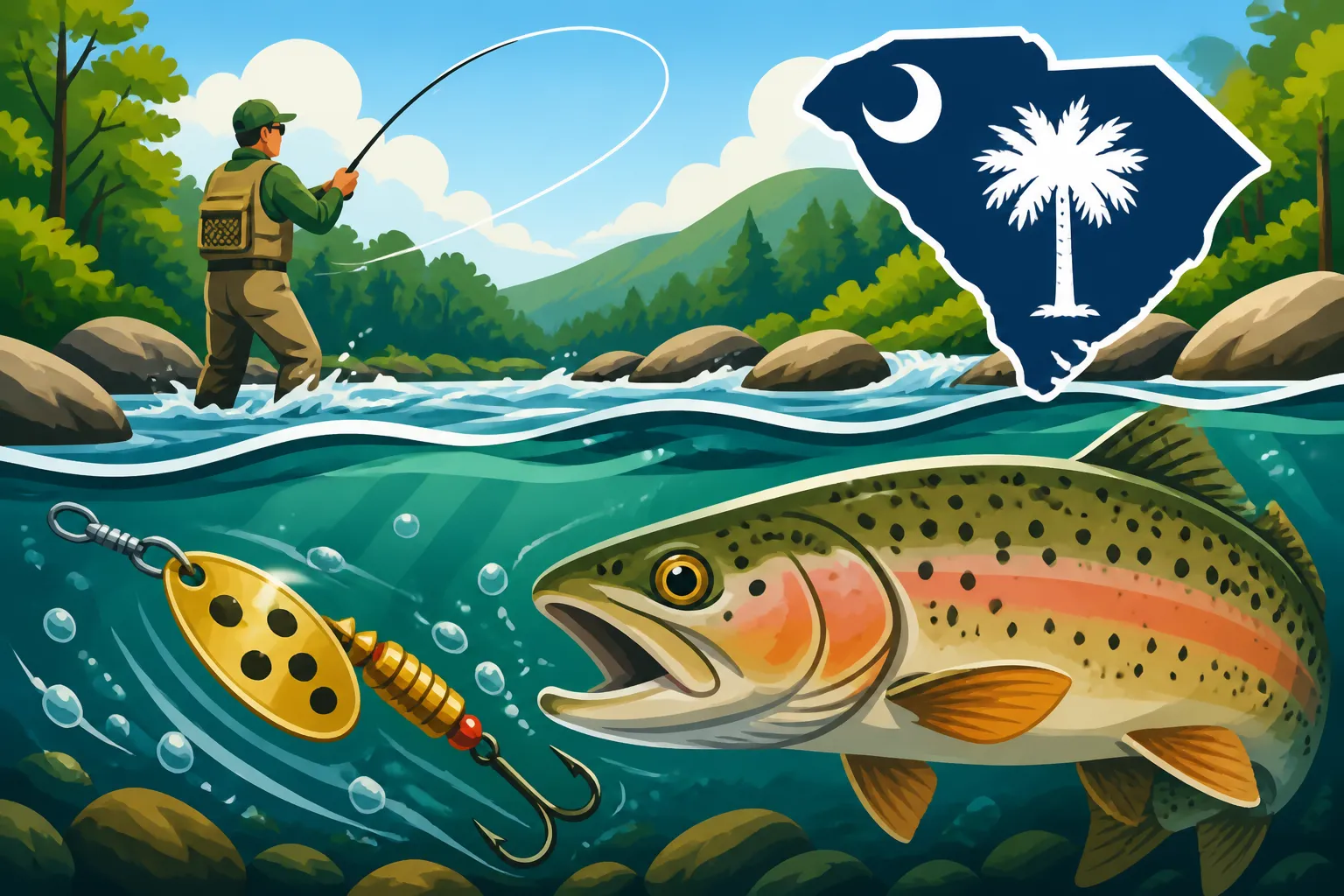
- Panther Martin: Characterized by its unique shaft-through-blade design, the Panther Martin spinner has a heavy body and a concaved blade that spins directly on the shaft. This design generates incredible vibration and a distinct flash, often allowing it to sink deeper and retrieve faster without tumbling. They're excellent for getting down into deeper pockets or battling stronger currents.
- Rooster Tail: The Rooster Tail features a unique hackle tail that adds lifelike pulsation and bulk to the lure. The blade, usually a willow leaf shape, spins easily and is incredibly effective. The hackle provides a visual target and can sometimes entice finicky trout that might hesitate on a bare metal lure. These are particularly good for shallower runs or when trout are feeding on insects near the surface.
You can find a fantastic selection of spinners from these and other reputable brands on Amazon, making it easy to stock up before your next adventure.
Size Matters: Matching the Hatch and Conditions
When it comes to spinner size, a good rule of thumb is to start small and adjust. For most stocked trout in South Carolina, sizes #00, #0, and #1 are excellent starting points. These smaller sizes mimic the common insect larvae and small baitfish that trout are accustomed to eating.
- Tiny #00 or #0: These are ideal for very clear, shallow water or when trout are being particularly selective. They present a subtle profile that's less intimidating. They also excel in smaller streams or during low water conditions.
- Standard #1: This is your workhorse size. It's versatile enough for most stream conditions and average-sized stocked trout. It casts well and provides a good balance of flash and vibration without being overly large.
- Larger #2 or #3: While generally less common for stocked trout, these can be effective if you're targeting larger fish, fishing deeper pools, or when the water is murky after a rain. They create more commotion and are more visible in stained water, but they can also spook smaller, wary fish.
Always observe the conditions. If you see tiny insects hatching, lean towards smaller spinners. If the water is higher and a bit discolored, a slightly larger size might be more easily detected by the trout.
Color Considerations: When to Go Bright or Natural
Spinner color can make a surprising difference, and it often comes down to water clarity and light conditions.
- Natural Colors (Silver, Gold, Copper, Black): These are your primary choices for most situations. Silver and gold are fantastic on bright, sunny days or in clear water, as they reflect light naturally. Copper can be great in slightly stained water or on overcast days. Black, especially with contrasting dots (like the Mepps Black Fury), creates a strong silhouette and can be incredibly effective in low light, cloudy conditions, or in murky water.
- Bright/Fluorescent Colors (Chartreuse, Orange, Firetiger): These colors really shine when visibility is poor. If the water is muddy, heavily stained, or you're fishing on a very dark, overcast day, a bright chartreuse or orange spinner can provide the contrast needed for a trout to see and react to it. They also work well as an "attractor" in clear water when trout are aggressive or when you're trying to provoke a reaction strike.
- Combination Colors: Many spinners feature a mix, like a silver blade with an orange or red dressed hook. These combinations can offer the best of both worlds, providing flash with a pop of color that can be particularly enticing.
It's always a good idea to start with a natural color like silver or gold in clear water and then experiment. If nothing's hitting, don't be afraid to switch to a darker or brighter color to see if it triggers a bite.
| Spinner Type | Blade Shape | Key Features | Best Use Cases |
|---|---|---|---|
| Mepps Aglia | Oval/Round | Wide-angle rotation, strong vibration, classic design | All-around, slow retrieves, various water conditions |
| Mepps Black Fury | Oval/Round | Black blade with contrasting dots, good silhouette | Low light, stained water, overcast days |
| Panther Martin | Concaved/Willow | Heavy body, high vibration, deep-diving capabilities | Deeper pools, fast currents, getting down quickly |
| Rooster Tail | Willow/Leaf | Hackle tail for added attraction, good for shallow | Shallow runs, surface feeding, clear water, subtle bite |
Mastering the Cast and Retrieve for Stocked Trout
Getting a spinner wet is one thing, but presenting it effectively is an art form that can dramatically increase your success. It’s not just about flinging it out there; it’s about control, observation, and a bit of finesse.
Precision Casting: Targeting Prime Lies
For stocked trout, precise casting is paramount. These fish often hold in predictable spots where they can find food and shelter without expending too much energy.
- Upstream Cast: This is a fantastic technique, especially in clear, shallow water. Cast your spinner slightly upstream and across the current. As the current carries your lure downstream, reel in just fast enough to keep the line tight and the blade spinning, allowing the spinner to drift naturally past the trout's holding spot. This approach minimizes the chance of spooking fish, as the lure approaches them from behind or the side, looking like natural food. It’s also easier to manage your line and maintain contact with the lure.
- Cross-Stream Cast: When you're fishing wider sections of a stream or trying to cover a large area, a cross-stream cast is your friend. Cast directly across or slightly downstream. Immediately begin your retrieve, allowing the current to create a "bow" in your line. This technique sweeps the spinner through a wide arc, covering more water and allowing it to swing into potential holding spots like eddies or current seams. Be mindful of how the current affects your retrieve speed; you might need to reel faster or slower to maintain the desired action.
- Downstream Cast: While less common for the initial approach, a downstream cast can be effective in certain situations, especially for fishing under overhanging banks or getting a lure deep into a hole. Cast directly downstream and let the current take your lure. Reel in slowly against the current, allowing the spinner to "swim" upstream. This can be particularly good for getting a spinner deep without added weight, but be aware that the lure's approach from the front can sometimes spook trout.
Remember that trout often hide near cover like submerged logs, rocks, or undercut banks. These are prime lies, and a well-placed cast that lands your spinner just past these spots and retrieves it directly through them can be incredibly effective. Consider practicing your casting accuracy so you can hit those tight spots with confidence.
Retrieve Speeds and Actions: Finding the Sweet Spot
The retrieve is where the magic happens. It’s not a one-size-fits-all approach; varying your retrieve speed and adding subtle actions can make all the difference.
- Steady Retrieve: Often, a simple, steady retrieve is all you need. Reel just fast enough to get the spinner blade working. You'll feel a distinct vibration in your rod tip when the blade is spinning correctly. This retrieve mimics a swimming baitfish or an insect carried by the current. Experiment with slightly faster or slower retrieves until you find what the trout prefer on a given day. Sometimes a slow, deliberate retrieve is key, especially in colder water or when fish are lethargic. Other times, a quicker retrieve can trigger aggressive reaction strikes.
- Stop-and-Go: This technique can be deadly effective. Cast your spinner and retrieve it steadily for a few cranks, then pause for a second or two, allowing the spinner to flutter and fall slightly. Then resume your retrieve. This erratic action often imitates a wounded baitfish or an insect struggling, which can be irresistible to a predatory trout. Many strikes happen on the pause or just as you resume the retrieve, so be ready!
- Twitching and Jigging: For added enticement, try twitching your rod tip subtly during the retrieve. A gentle upward twitch can make the spinner dart or jump, mimicking an escaping minnow. In deeper pools, you can even use a slight jigging motion, lifting and dropping the rod tip to give the spinner a vertical presentation. This is particularly good for probing structure or targeting trout holding near the bottom. The key is to make these movements natural and not overdo them.
The best retrieve speed and action can change by the hour, so don't be afraid to experiment until you find what triggers a bite.
Common Mistakes to Avoid
Even with the right gear and knowledge, it's easy to fall into common traps that can hinder your success:
- Fishing Too Fast or Too Slow: As mentioned, retrieve speed is crucial. If you're not getting bites, it's usually the first thing to adjust. Many beginners retrieve too fast, pulling the lure out of the strike zone too quickly or giving it an unnatural appearance. Others retrieve too slowly, and the blade might not be spinning effectively. Feel for that vibration in your rod tip to confirm your spinner is working correctly.
- Not Covering All Depths: Trout don't always hang out in the same water column. If you're only reeling in your spinner right under the surface, you might be missing fish holding deeper. Try varying your cast and retrieve to explore different depths. Let the spinner sink a few seconds before starting your retrieve to probe deeper water. Conversely, a quick retrieve can keep it higher if trout are looking up for food.
- Lack of Patience: Sometimes, it simply takes time for a trout to decide to strike. Don't cast to a spot once and abandon it. Make multiple casts from different angles and with varied retrieves before moving on. Stocked trout often congregate, so if you catch one, there's a good chance more are in the same area.
- Ignoring Current and Structure: The current dictates where trout will hold, and structure provides cover and ambush points. Always be aware of how the current is moving your lure and aim your casts to work with the current, sweeping your spinner into those inviting eddies, undercuts, and logjams. Understanding how to read a trout stream for beginners can drastically improve your odds.
Reading the Stream and Adapting Your Approach
Understanding where trout hold and how to adapt your spinner presentation to different stream features is crucial for consistent success. It's like being a detective, looking for clues in the water.
Identifying Productive Water: Where Trout Hide
Trout, especially stocked trout, are opportunistic feeders that seek out areas that offer a comfortable current, access to food, and protection from predators.
- Pools: These are deeper, slower-moving sections of the stream. Trout often congregate in pools, especially the deeper parts, as they offer respite from strong currents and a place to rest. Cast your spinner to the head of the pool and let it sink, then retrieve it slowly through the depth. You can also target the tail of the pool, where water speeds up, as trout will often wait there for food to be swept to them.
- Riffles and Runs: These are shallower, faster-moving sections with broken water. While they might seem too fast, trout often hold in the seams where faster water meets slower water, or behind rocks and other obstructions. The agitated water provides cover, and the current brings food. Cast upstream into the faster water and let your spinner drift naturally into these seams and behind structures, reeling just enough to keep the blade spinning.
- Eddies and Current Seams: These are goldmines for trout. An eddy is a section of water that swirls or moves in a circular pattern, often found behind large rocks, fallen trees, or along bankside bends. Current seams are the lines where fast water meets slow water. Trout will sit in the slower water of an eddy or seam, waiting for food to be swept into their path by the faster current. Cast your spinner into the faster water upstream of the seam or eddy, allowing the current to carry it into the slower, holding water.
- Undercut Banks and Overhanging Vegetation: These offer excellent cover and shade, providing a sense of security for trout. Fish will often tuck themselves under these banks, waiting for insects or small baitfish to drift by. A precise cast that delivers your spinner right along the edge of an undercut or under low-hanging branches can be incredibly effective. Sometimes, you'll need to cast from downstream and let the current carry your spinner into these hidden spots.
Learning to identify these key features will unlock many potential fishing spots. Different streams might have varying trout limits, so it's always wise to check regulations, such as those discussed in Why Trout Limits Differ From Stream to Stream.
Adjusting to Water Conditions
South Carolina's weather can be fickle, and stream conditions can change rapidly. Being able to adapt your spinner tactics is part of becoming a more successful angler.
- Clear Water: In clear water, trout can be very spooky. Use smaller, more natural-colored spinners (silver, gold, black). Make longer casts to avoid getting too close to the fish, and retrieve slowly and deliberately. Stealth is your best friend here. Approach the stream cautiously, minimizing your silhouette, and avoid stomping along the bank.
- Stained or Murky Water: After a rain shower, streams can become stained with sediment. This reduces visibility but can also make trout less wary. This is when brighter, more vibrant spinner colors (chartreuse, orange) can shine, providing the necessary contrast for trout to spot them. A slightly larger spinner might also be more detectable. You might also want to increase your retrieve speed slightly to enhance vibration.
- High Water/Fast Current: Elevated water levels and stronger currents can make fishing challenging. Trout will often move out of the main current into slower pockets, eddies, or behind larger obstructions to conserve energy. Use heavier spinners or those with a more compact design (like a Panther Martin) that can sink faster and maintain their action in strong current. Cast into the calmer seams and retrieve just fast enough to keep the blade spinning.
- Low Water/Slow Current: In very low water, streams become exceptionally clear, and trout can be extra wary. Focus on very small, subtle spinners (#00 or #0) in natural colors. Retrieve them very slowly, almost to the point of stalling the blade, to mimic a struggling insect. Targeting deeper pools or shaded areas will also be more productive. This is when techniques like those for South Carolina Stocked Trout Season Fishing Techniques can be particularly useful.
Essential Gear for Spinner Fishing Success
You don't need a boatload of expensive equipment to get started with spinner fishing for stocked trout, but having the right basic setup can make a world of difference in your enjoyment and success.
Rod and Reel Setup
The right rod and reel provide the balance and sensitivity you need to cast light spinners and feel those subtle trout bites.
- Light or Ultralight Spinning Rod: For stream trout, a spinning rod in the 5 to 6.5-foot range with a light or ultralight action is ideal. This length offers a good balance between casting accuracy in tight stream environments and enough leverage to fight a lively trout. The light action allows you to cast those small, lightweight spinners effectively, while the sensitive tip helps you detect even the slightest tap. You'll feel every bump and the constant thrum of the spinning blade, which is crucial for knowing your lure is working correctly.
- Small Spinning Reel: Pair your rod with a small, lightweight spinning reel (size 1000 or 2000 is typically perfect). It should balance well with your chosen rod. Look for a reel with a smooth drag system, which is essential for protecting light lines when a strong trout makes a run. A good retrieve ratio will help you manage your spinner's speed effectively.
Fishing Line
Line choice is more important than you might think when targeting wary trout with small lures.
- Monofilament or Fluorocarbon: For leader material, fluorocarbon in 2-4 lb test is excellent. It's nearly invisible underwater and offers good abrasion resistance against rocks and logs. For your main line, 4-6 lb test monofilament is a popular choice for its castability and affordability. The stretch in mono can also be forgiving with sudden strikes on light tackle. If you prefer to spool your entire reel with fluorocarbon, that works too, but some anglers find it stiffer and harder to cast with very light lures. Many anglers swear by the convenience of buying their tackle, including specialized trout fishing line, from retailers like Amazon.
- Why Light Line? Using light line is critical. Heavier lines are more visible to trout in clear water and can hinder the natural action of small spinners. They also reduce casting distance with lightweight lures. While it might seem intimidating to fight a fish on 4lb test, a properly set drag and a well-played fish will handle it just fine.
Terminal Tackle and Accessories
Beyond the rod, reel, and line, a few other items are essential for a productive spinner fishing trip.
- Small Swivels/Snaps: Using a small barrel swivel or a snap swivel can help prevent line twist, which is a common issue with spinning lures. A small snap swivel (size 10-14) also allows for quick spinner changes without having to re-tie your line every time. Tie your main line to one end of the swivel and a short (1-2 foot) fluorocarbon leader to the other end, then attach your spinner to the leader.
- Pliers/Forceps: These are invaluable for safely removing hooks from a trout's mouth, especially if you plan on releasing your catch. They also come in handy for cutting line or straightening hooks.
- Net: A small, soft-mesh landing net is a great investment. It helps you safely land and handle trout, reducing stress on the fish and preventing them from flopping onto the bank. This is particularly important if you're practicing catch and release or need to measure a fish against regulations like the South Carolina Stocked Trout Daily Limit.
- Tackle Box/Lure Wallet: Keep your spinners organized and easily accessible. A small, compact tackle box or a specialized lure wallet with individual compartments is perfect. Don't forget a small tackle box or a convenient lure wallet, easily found on Amazon, to keep your spinners organized and prevent them from tangling.
- Waders and Boots: If you plan on wading South Carolina's trout streams, a good pair of waders and wading boots will keep you dry and provide good traction on slippery rocks. This allows you to access more water and present your spinner from optimal angles.
Having this basic gear will set you up for success and allow you to fully enjoy the rewarding experience of spinner fishing for stocked trout. Just remember to check the specific rules for the stream you're visiting, as different areas may have specific limits, such as those found for South Carolina Streams With an 8-Fish Trout Limit.
Disclaimer
This article is for general informational purposes only and does not constitute professional advice. Laws, prices and regulations vary by location and change over time. Consult a qualified professional for guidance on your specific situation.