Santee Cooper Bass Fishing Seasons in South Carolina
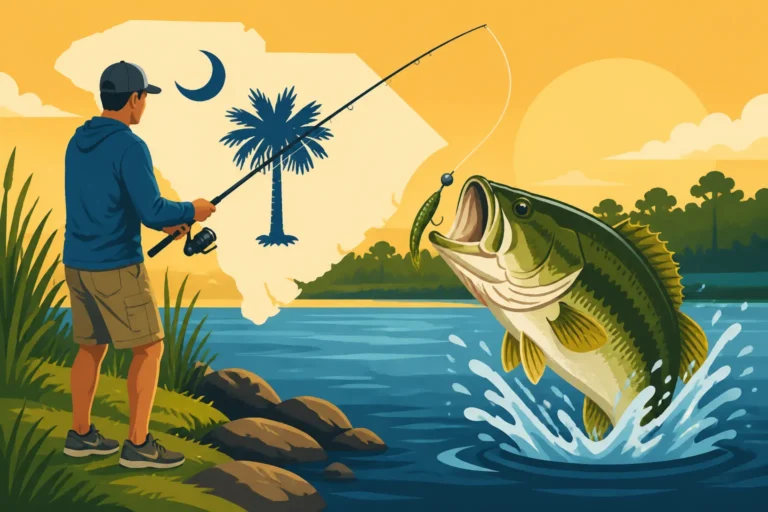
There's nothing quite like the anticipation of a good bass fishing trip, but sometimes, the Palmetto State's waters can feel a little… fickle. You head out with high hopes, ready to wrestle a trophy largemouth, only to find the fish aren't biting where you expect them to be. This struggle is especially true on a vast, complex system like the Santee Cooper Lakes. This comprehensive guide will help demystify bass behavior across the seasons on these legendary South Carolina waters, giving you the insights you need to consistently land those lunkers, no matter the time of year.
Understanding the Santee Cooper Lakes Fishery
The Santee Cooper Lakes, comprising Lake Marion and Lake Moultrie, along with the connecting Diversion Canal, form one of the most iconic freshwater fishing destinations in the southeastern United States. This sprawling system, covering over 170,000 acres, was created in the 1940s by damming the Santee and Cooper rivers to generate hydroelectric power. What resulted was a phenomenal fishery, known globally for its diverse habitats and, of course, its incredible bass population.
A Brief History and Layout of Santee Cooper
The origins of the Santee Cooper Lakes are truly fascinating. Imagine carving out two massive reservoirs from a vast river basin, flooding swamps, forests, and farmlands to create the largest lake in South Carolina, Lake Marion, and its slightly smaller but equally productive counterpart, Lake Moultrie. This historic undertaking connected these two lakes via the six-and-a-half-mile long Diversion Canal, which plays a critical role in water flow and, consequently, fish movement. The submerged timber and expansive cypress forests that were inundated now provide intricate, challenging, and incredibly rich habitat for a variety of fish species, especially largemouth bass.
When you're out on the water, you'll notice the stark differences between the two lakes. Lake Marion, often called the "Big Lake," is characterized by its vast open water, extensive cypress tree forests, and blackwater swamp sections. Lake Moultrie, on the other hand, is generally deeper, with more distinct ledges, humps, and submerged structure. Both offer incredible bass fishing, but understanding their unique characteristics is key to unlocking their potential. Many anglers consider these waters among the Santee Cooper Lakes: South Carolina's Legendary Bass Fishery.
Why Santee Cooper is a Bass Angler's Paradise
Santee Cooper isn't just a good bass fishery; it's legendary. Anglers travel from all over to experience the thrill of battling a monster largemouth here. The sheer abundance of structure, from dense cypress groves and flooded timber to vast hydrilla beds and rocky ledges, provides endless ambush points for bass. This diverse habitat, combined with an incredibly rich forage base of shad, bream, and other baitfish, allows bass to grow to impressive sizes. It’s not uncommon to hear tales of double-digit bass caught by local pros and weekend warriors alike.
The unique conditions, including fluctuating water levels and the complex interplay of river currents, keep the bass population healthy and challenging to pursue. Whether you prefer throwing topwater frogs over lily pads, flipping jigs into thick cover, or dragging deep-diving crankbaits along ledges, Santee Cooper offers a technique for every angler. This dynamic environment is why it consistently ranks as one of the best bass fishing lakes in the country, offering both quantity and quality when it comes to largemouth bass.
Key Environmental Factors Influencing Bass Behavior
To truly master bass fishing on Santee Cooper, you need to become a student of the environment. Water temperature is perhaps the most critical factor, dictating everything from metabolism to spawning habits. As temperatures rise and fall throughout the year, bass move to different depths and utilize different types of cover. For instance, in colder months, bass will often seek out deeper, more stable water, while in warmer months, they might hold tight to dense cover or move to main lake structures.
Water levels, influenced by rainfall and dam operations, also play a huge role. High water can flood new areas, creating fresh feeding grounds and cover, while low water can concentrate fish and expose previously submerged structure. Current, particularly in the Diversion Canal and near dam outflows, can activate baitfish and, in turn, bass, creating prime feeding opportunities. Understanding these dynamics and how they interact with the South Carolina Freshwater Fishing Calendar is fundamental to predicting where the bass will be and what they'll be willing to bite.
Spring: The Pre-Spawn and Spawn Frenzy
Spring on Santee Cooper is nothing short of magical for bass anglers. As the water begins to warm, the entire lake system awakens, and largemouth bass start their annual migration from deeper wintering holes to shallower spawning grounds. This period, typically from late February through May, offers some of the most exciting and productive fishing of the year, with bass often at their heaviest weights as they prepare to spawn.
Early Spring Tactics and Locations February-March
As the first hints of spring arrive, usually in late February and through March, water temperatures on Santee Cooper typically hover in the 50s and low 60s. Bass are starting to shake off their winter lethargy and are on the move. They aren't quite ready to spawn yet, but they're making their way to shallower staging areas, often congregating on points, humps, and secondary channels that lead into protected coves. These are the crucial transition zones where bass will hold before moving onto beds.
This is a prime time for "power fishing" techniques. Search baits like medium-diving crankbaits, especially in crawfish or red patterns, are excellent for covering water and locating active fish. Jerkbaits, retrieved with a stop-and-go cadence, can also be incredibly effective as bass are often suspended and wary. Spinnerbaits, particularly those with a combination of willow and Colorado blades, are great for probing submerged brush and grass lines. Many anglers find a good selection of these foundational lures on Amazon. Look for warmer pockets in Lake Marion, particularly those with dark bottoms that absorb more heat from the sun. On Lake Moultrie, focus on main lake points and channel swings close to potential spawning flats. This period is a prime example of effective Bass Fishing Techniques for Spring Pre-Spawn.
Peak Spawning Season Strategies March-April
By late March and throughout April, when water temperatures climb into the mid-60s, the bass on Santee Cooper are fully engaged in their spawning ritual. This is the period when bass move into the shallowest water, constructing and guarding their nests. Sight fishing becomes a prevalent and often highly effective technique, especially on sunny days with calm conditions. Anglers will cruise through shallow coves, cypress tree lines, and lily pad fields, visually searching for bass on their beds.
When you spot a bass on a bed, a subtle approach is key. Soft plastics are the absolute heroes here. Weightless Senkos, flukes, and creature baits (like lizards or Brush Hogs) in natural colors are fantastic choices. Rigged Texas-style or Carolina-rigged, these baits can be repeatedly cast past the bed and slowly dragged into the bass's territory to trigger a strike. A well-placed jig-and-trailer can also prove irresistible to a protective bass. Remember, the goal is to irritate the bass into striking, rather than feeding it. Patience is a virtue, and sometimes it takes multiple casts and bait changes to coax a bite. This is when the Largemouth Bass Spawn Timing in South Carolina Reservoirs is most critical to understand.
Post-Spawn Recovery and Feeding April-May
As May approaches and water temperatures stabilize in the upper 60s to low 70s, the bass finish their spawning duties and enter a post-spawn recovery phase. They're often tired and can be a bit lethargic immediately after leaving the beds, but they quickly transition into a crucial feeding period to regain energy. These bass typically move to slightly deeper cover adjacent to their spawning grounds, often holding around submerged timber, hydrilla edges, and boat docks.
Topwater action can explode during this time, especially during low-light hours in the mornings and evenings. Poppers, walking baits (like a Heddon Zara Spook), and hollow-body frogs skipped across lily pads or matted vegetation can draw aggressive strikes. Swim jigs and shaky heads are also highly effective for targeting bass holding just off the bottom in moderate depths. Look for areas where they can easily ambush baitfish moving in and out of the shallows. Understanding Bass Fishing Techniques After the Spawn can make all the difference in connecting with these recovering fish.
Summer: Deep Water and Early Morning Bites
Summer on Santee Cooper brings with it the sweltering heat of South Carolina, and with it, a significant shift in bass behavior. As water temperatures soar, bass will seek out cooler, more oxygenated water, often retreating to deeper main lake structures or finding refuge in dense, shaded cover. While the fishing can be challenging during the middle of the day, early mornings, evenings, and even night fishing can be incredibly productive.
Targeting Summer Bass in Deep Water June-August
From June through August, water temperatures on Santee Cooper can easily climb into the upper 70s and even mid-80s, especially in the shallower sections. This drives many of the larger bass into deeper water, often suspending near the thermocline (the layer where warm surface water meets cooler, deeper water). They'll congregate around main lake points, ledges, humps, and brush piles in depths ranging from 15 to 30 feet or more.
Deep-diving crankbaits are absolutely essential for covering these deeper areas. Lures like the Strike King 6XD or 10XD, retrieved to bounce off the bottom, can provoke reaction strikes. Carolina rigs, especially with a lizard or worm trailing a heavy weight, are also deadly for slowly dragging along contours and structure. For vertical presentations, football jigs and drop shots are excellent for targeting isolated cover or suspended fish. High-quality electronics (like those from Garmin or Lowrance) are invaluable during this period to locate these subtle offshore structures. Sometimes, the largest fish of the day can be found using these deep-water techniques, making the effort worthwhile.
Early Morning and Evening Topwater Action June-August
While deep water holds many of the summer bass, don't overlook the shallow bite during low-light periods. As the sun begins to rise or set, bass will often move temporarily into the shallows to feed on baitfish that are also becoming more active. This creates fantastic opportunities for topwater enthusiasts. Think about those glassy smooth mornings on Lake Moultrie or the golden hour on Lake Marion.
Hollow-body frogs, cast deep into matted hydrilla or lily pad fields, can draw explosive strikes. Poppers, walking baits, and buzzbaits fished along grass lines, riprap, or shaded seawalls can also be incredibly effective. The key is to be on the water at dawn, literally, as the bite can be short-lived once the sun climbs high and pushes the bass back to deeper cover. This is a thrilling time to be on the water, offering some of the most visual and exciting bites of the year, provided you time it right.
The Role of Current in Summer Bass Fishing
The Santee Cooper system, being a large river-fed reservoir, can have significant current, especially in the Diversion Canal and near the dam outflows. This current becomes a major factor in summer, as it concentrates baitfish and, consequently, hungry bass. When water is being pulled through the system, it creates a feeding frenzy as baitfish are swept along, and bass position themselves in ambush points.
Fishing the current requires specific tactics. Lipless crankbaits, swimbaits (like those from Keitech), and heavier jigs can be highly effective. Look for eddies, current seams, and any structure that breaks the current, as these are prime locations for bass to hold. The Diversion Canal itself can be a hotspot during periods of strong current flow, though it requires careful boat handling. Always check dam release schedules from Santee Cooper Lakes for cues on when current will be strongest, providing insight into What Time of Day Do Bass Bite Best?.
Fall: The Great Bass Migration and Feeding Blitz
Fall on Santee Cooper is often heralded as one of the most enjoyable and productive times to chase bass. As air temperatures cool and days shorten, the water temperature gradually drops, signaling to the bass that it's time to put on the feedbag before winter sets in. This period, from September through November, sees bass becoming incredibly active, chasing baitfish in a full-blown feeding blitz across the lakes.
Early Fall Transition September-October
In early fall, typically September and into October, water temperatures begin to drop from their summer highs, usually settling into the mid-70s to mid-60s. This cooling trend triggers a major movement of baitfish from their summer haunts towards shallower creek arms and main lake points. The bass follow suit, abandoning their deep summer patterns and migrating towards these shallower areas where forage is abundant.
This transition period is characterized by aggressive bass that are actively chasing schools of shad and other baitfish. Spinnerbaits, lipless crankbaits (like the Bill Lewis Rat-L-Trap), and shallow-diving crankbaits are excellent for covering water and mimicking fleeing baitfish. Topwater lures can still be highly effective, especially on calm mornings, as bass push bait to the surface. Focus on creek mouths, main lake points, and secondary points where bass can ambush schools of shad. Identifying active schools of baitfish, often betrayed by diving birds or surface boils, is a sure sign you're in a productive area.
Peak Fall Feeding Frenzy October-November
By October and into November, when water temperatures fall into the low 60s and mid-50s, the fall feeding frenzy on Santee Cooper reaches its peak. Bass are incredibly active, aggressively feeding to build up fat reserves for the lean winter months. This is a fantastic time for both numbers of fish and the potential for a trophy. The bass are typically less finicky than in summer and more willing to chase down a variety of presentations.
Jigs, crankbaits, and jerkbaits continue to shine during this period. You'll find bass relating to a wider range of structure, from channel swings and humps to ledges and submerged timber. The key is to keep moving and cover water until you find an active school. Once you locate them, it's often possible to catch multiple fish from the same area. Pay close attention to current, as bass will often stage in current breaks to ambush passing bait. The sheer aggressiveness of the bass during this time makes it a favorite for many anglers on the South Carolina Fishing Seasons Guide.
Adjusting to Cooling Waters and Shorter Days
As fall progresses into late November, the water continues to cool, and the days grow noticeably shorter. Bass, while still feeding, will start to become a bit more sluggish. Their metabolism slows, and they won't expend as much energy chasing down fast-moving lures. This requires a slight adjustment in your approach, moving from aggressive power fishing to more deliberate presentations.
Slower retrieves and smaller baits often become more effective. Think about slowing down your crankbait, using a subtle jig presentation, or twitching a jerkbait with longer pauses. Bass might start to congregate in tighter schools, particularly around deeper structure, offering opportunities for multiple catches once located. Pay attention to changes in weather patterns; a sudden cold snap can really turn off the bite, while stable, mild weather can keep them active. This preparation for winter means understanding Winter Fishing Techniques in South Carolina Lakes will soon be essential.
Winter: Slow and Steady for Trophy Bass
Winter bass fishing on Santee Cooper can be a mental game, demanding patience and a refined technique. Many anglers shy away from the colder months, but for those willing to brave the chill, it offers a unique opportunity to catch some of the biggest bass of the year. While the numbers might not be as high as in spring or fall, the quality of the fish can be exceptional.
Cold Water Challenges and Rewards December-January
From December through January, water temperatures on Santee Cooper typically drop into the 40s and low 50s. Bass are at their most sluggish during this period, with their metabolism significantly slowed. They won't chase a lure far, and their strike often feels more like a subtle "thump" or added weight on your line rather than an aggressive hit. This can be frustrating, but the reward is often a truly massive fish that has spent all year growing.
During winter, bass tend to congregate in deep holes, river channels, and around dense, submerged timber where temperatures are more stable. They'll also seek out any pockets of warmth, such as north-facing banks that get more sun throughout the day. Finesse techniques become paramount. Slowly dragging a jig, especially a finesse jig in darker colors, can be highly effective. Suspending jerkbaits, twitched with very long pauses, can also draw strikes from wary bass. Look for areas on Lake Marion Fishing Spots and Access Points or Lake Moultrie Catfish and Crappie Fishing Guide that offer deep water access.
Finesse Techniques for Lethargic Bass
When bass are cold and sluggish, traditional power fishing methods often fall flat. This is where finesse shines. A light spinning rod, paired with fluorocarbon line (which is nearly invisible underwater and has little stretch for better feel), becomes your best friend. Drop shot rigs, fished vertically over deep structure, allow you to present a small plastic bait directly to a fish you've located on your electronics. Shaky head jigs, slowly dragged along the bottom, can also entice a bite.
Another overlooked winter tactic is the slow-rolling spinnerbait. Use a large, single Colorado blade spinnerbait and retrieve it just fast enough to make the blade turn, keeping it in contact with the bottom. The slow, thumping vibration can be enough to draw a strike from a lethargic bass without requiring them to expend much energy. Remember, during winter, "less is more" when it comes to retrieve speed and lure action. A wide variety of these finesse baits, including soft plastics, can be found on Amazon.
Finding Warmer Pockets and Structure
Even a few degrees difference in water temperature can make a huge impact on bass location in winter. Actively seek out areas that might be slightly warmer. This could be dark-bottomed coves that absorb more sunlight, deep ledges adjacent to main channels, or areas with dense submerged timber that provides thermal cover. On Lake Marion, the blackwater sections can sometimes hold slightly warmer water than the main lake.
Your boat's electronics are indispensable for locating these subtle temperature breaks and identifying schools of baitfish and bass holding tight to structure. Once you find a productive area, dissect it thoroughly. Bass will often stack up in very specific spots, and a slight boat repositioning or cast angle can be the difference between an empty livewell and a banner day. Patience, observation, and meticulous technique are the hallmarks of successful winter bass fishing on Santee Cooper.
Essential Gear and Tips for Santee Cooper Bass
Having the right gear and a solid understanding of how to use it can significantly impact your success rate on the Santee Cooper Lakes. These waters are diverse, challenging, and often require anglers to be versatile in their approach. From the rods and reels you choose to the lures you tie on, every decision can count.
Rods, Reels, and Line for Santee Cooper
When it comes to bass fishing on Santee Cooper, a one-size-fits-all approach typically falls short. You'll want a versatile arsenal to tackle the varied conditions and techniques. For heavy cover situations, such as flipping jigs into dense cypress trees or punching through hydrilla mats, a heavy-action casting rod (7' to 7'6") paired with a high-speed baitcasting reel (7.1:1 or higher gear ratio) is crucial. This setup allows for powerful hooksets and quick retrieval of fish from thick cover. For such demanding applications, many anglers trust brands like Shimano or Daiwa for their durability.
For open water techniques like cranking, spinnerbaiting, or using topwater lures, a medium-heavy action casting rod (6'6" to 7') with a moderate gear ratio reel (6.4:1) is more appropriate, offering better casting distance and a parabolic bend that helps keep fish hooked. For finesse techniques, especially in colder months or when fish are finicky, a medium-light to medium action spinning rod (6'9" to 7'2") with a sensitive spinning reel is essential. This allows for lighter line and more subtle presentations.
Line choice is also critical. Braided line (30-65 lb test) is ideal for heavy cover and punching due to its strength and lack of stretch. Fluorocarbon (10-20 lb test) is excellent for cranking and jigging because of its sensitivity and invisibility underwater. Monofilament (10-17 lb test) is a good choice for topwater lures and some spinnerbait applications, as its buoyancy can be an advantage. You can find a wide selection of these rods, reels, and lines, often with helpful user reviews, on Amazon.
Must-Have Lures and Baits
While personal preference plays a huge role, certain lure categories are perennial producers on Santee Cooper. For South Carolina Bass Fishing Techniques by Season, here's a quick rundown of essential baits:
- Crankbaits: Deep-diving (Strike King 6XD, 10XD) for summer ledges, medium-diving for spring and fall transition (Rapala DT Series, Strike King KVD 2.5), and lipless (Bill Lewis Rat-L-Trap) for fall schooling fish.
- Jigs: Flipping jigs (Strike King KVD Football Jig, Jewel Bait Company) for heavy cover, football jigs for deeper structure, and finesse jigs for cold water.
- Soft Plastics: Texas-rigged worms (Zoom Trick Worm, U-Tail Worm), creature baits (Zoom Brush Hog, NetBait Paca Craw), Senkos (Gary Yamamoto Custom Baits) for spawning bass and wacky rigs, and flukes (Zoom Super Fluke) for schooling fish.
- Spinnerbaits: Double willow leaf for open water, tandem Colorado/willow for versatility, and single Colorado for slow-rolling in cold water. (Booyah, War Eagle)
- Topwater: Frogs (Spro Bronzeye Frog) for matted vegetation, walking baits (Heddon Zara Spook) for open water, and poppers for calm conditions.
- Jerkbaits: Suspending jerkbaits (Megabass Vision Oneten, Lucky Craft Pointer) for pre-spawn and winter.
Live bait, particularly shiners, can also be incredibly effective for targeting trophy bass, especially during the colder months when fish are less willing to chase artificials.
Reading the Water and Environmental Cues
Being a successful bass angler on Santee Cooper means becoming a keen observer of your surroundings. Your boat's electronics are a powerful tool; units from brands like Lowrance or Humminbird can show you water temperature, depth, bottom composition, structure, and even schools of baitfish and individual bass. Don't just rely on GPS; learn to interpret your sonar and down/side imaging.
Beyond electronics, pay attention to visible cues. Birds diving can indicate baitfish being pushed to the surface by predatory fish. Surface boils are a dead giveaway for schooling bass. Changes in water color or clarity can inform your lure choices (e.g., brighter colors in stained water, natural colors in clear water). Cloud cover, wind direction, and recent rainfall all influence bass behavior. Even subtle things like the smell of rotten eggs could indicate a thermocline, a crucial detail for summer fishing. Learning to process these environmental factors is how you adapt your South Carolina Bass Fishing Techniques by Season and find success.
Santee Cooper Bass Fishing Seasonal Overview
To help you visualize the seasonal changes and plan your trips, here's a comprehensive overview of bass fishing on the Santee Cooper Lakes.
| Season | Typical Water Temperature | Bass Behavior | Key Lures | Best Locations |
|---|---|---|---|---|
| Spring | 50s – Low 70s | Pre-spawn staging, spawning, post-spawn recovery/feeding | Crankbaits, Jerkbaits, Spinnerbaits, Jigs, Soft Plastics (Senkos, Flukes), Topwater Poppers | Protected coves, secondary points, cypress tree lines, shallow grass beds, boat docks, lily pad fields |
| Summer | Mid-70s – Mid-80s | Retreat to deeper water, early morning/evening shallow feeding | Deep-diving Crankbaits, Carolina Rigs, Football Jigs, Drop Shots, Frogs, Poppers, Buzzbaits | Main lake points, ledges, humps, brush piles, submerged islands, dense hydrilla (early/late), Diversion Canal (with current) |
| Fall | Mid-70s – Mid-50s | Active feeding frenzy, chasing baitfish | Spinnerbaits, Lipless Crankbaits, Shallow Crankbaits, Jigs, Jerkbaits, Topwater | Creek mouths, main lake points, channel swings, humps, ledges, submerged timber, areas with schooling baitfish |
| Winter | 40s – Low 50s | Slowed metabolism, holding on deep structure | Finesse Jigs, Suspending Jerkbaits, Slow-rolling Spinnerbaits, Spoons, Drop Shots | Deep holes, river channels, dense submerged timber, deep ledges, areas with stable water temperatures, north-facing banks with sun exposure |
Disclaimer
Fishing conditions and regulations in South Carolina can change, sometimes without much notice. While this guide provides comprehensive information, it is always your responsibility to check the latest rules and requirements from the South Carolina Department of Natural Resources (SCDNR) before heading out. This includes current fishing license requirements, bag limits, and any other special regulations that may be in effect. Stay safe and enjoy your time on the water!