South Carolina Bass Fishing Techniques by Season
Navigating the ever-changing moods of South Carolina's bass can feel like a guessing game sometimes. One day they're hitting everything you throw, the next they're nowhere to be found, leaving you scratching your head on the water. It’s frustrating when you spend a day casting without success, wondering if you’re using the wrong lure or fishing the wrong spot. This comprehensive guide will pull back the curtain on seasonal bass behavior in the Palmetto State, offering proven techniques to help you consistently land more fish, no matter the time of year.
Understanding South Carolina's Bass Species
Before we dive into the nitty-gritty of seasonal tactics, it’s important to understand the primary bass species you’ll encounter in South Carolina. While Largemouth bass are undoubtedly the stars of the show, there are other exciting species that can influence your approach, especially in certain regions. Knowing your quarry is the first step to successful fishing.
Largemouth Bass: The Palmetto State King
When most folks talk about bass fishing in South Carolina, they’re almost certainly talking about Largemouth bass. These aggressive, hard-fighting fish are abundant in nearly every lake, pond, and slow-moving river across the state. From the vast expanses of Lake Santee Cooper to the smaller, more intimate waters of Lake Greenwood, Largemouth are the dominant predator. They thrive in various habitats, from shallow, vegetated coves to deep, timber-laden points, making them a versatile and rewarding target. Their adaptability means you can find them in many different conditions, but their behavior changes dramatically with the seasons, making specific techniques crucial.
Largemouth bass are generally identified by their prominent jaw that extends past their eye, and a dark, irregular lateral line running along their sides. They're often found hiding in cover, ambushing prey. Understanding their preferences for structure – whether it’s submerged timber, lily pads, or rock piles – is key to consistently finding them. For a deeper dive, check out our guide on How to Identify a Largemouth Bass.
Spotted and Smallmouth Bass: Less Common, Still Exciting
While Largemouth hog the spotlight, South Carolina does offer opportunities for other bass species. Spotted bass are becoming more prevalent, particularly in clear, rocky reservoirs in the Upstate like Lake Hartwell and Lake Keowee. They tend to prefer deeper, clearer water than Largemouth and often school up, making them a blast to catch once you find them. Their mouth doesn't extend past the eye, and they have distinct rows of spots below the lateral line, distinguishing them from their Largemouth cousins. They might not get as big as a trophy Largemouth, but they offer a fantastic fight on lighter tackle.
Smallmouth bass, while not widespread, can be found in some of the cooler, clearer rivers and reservoirs in the extreme northwestern corner of the state, especially those with rocky bottoms and flowing water. These bronzebacks are known for their incredible fight and preference for current. Targeting them often requires different techniques and lures, leaning more towards finesse presentations and small crankbaits that mimic crayfish or minnows, rather than the power fishing typically associated with Largemouth. While less common, the thrill of catching a Smallmouth in South Carolina is a unique reward for the adventurous angler.
Spring Bass Fishing: The Pre-Spawn and Spawn Frenzy
Spring is arguably the most exciting time for bass fishing in South Carolina. As water temperatures begin to rise, bass shake off their winter lethargy and become incredibly active, driven by the urge to spawn. This season can be broken down into distinct phases: pre-spawn, the spawn itself, and post-spawn, each requiring slightly different tactics for maximum success.
Pre-Spawn Strategies: Bulking Up Before the Bed
As late winter gives way to early spring, typically from late February through April, water temperatures climb into the 50s and low 60s Fahrenheit. This signals the pre-spawn phase. Bass, particularly the larger females, begin to move from their deeper winter haunts towards shallower staging areas near prime spawning grounds. They are gorging themselves, trying to pack on as much weight as possible before the energy-intensive spawning process. This makes them incredibly aggressive and willing to chase down a meal.
Focus your efforts on transition areas: points, humps, and channel swings that offer a clear path from deep water to shallow coves. Look for areas with hard bottoms, rock, or submerged timber where bass can ambush prey. Lipless crankbaits, jerkbaits, and spinnerbaits are incredibly effective during this time, allowing you to cover water quickly and entice those hungry, pre-spawn fish. Fishing these lures around grass lines, docks, and submerged brush can yield some truly massive bass. Don't be afraid to experiment with retrieve speeds; sometimes a fast, erratic retrieve triggers a strike, while other times a slow, steady roll is what they're looking for.
During the Spawn: Nurturing New Life and Catching a Few
The actual spawning period typically occurs when water temperatures consistently hold in the mid-60s, usually from late March to May, depending on the specific lake and conditions. This is when female bass move onto shallow flats, protected coves, and pockets to build their nests. Males will guard the beds. During this time, bass are incredibly focused on reproduction, and their feeding habits can become secondary. However, they will aggressively strike at anything they perceive as a threat to their nest.
Target shallow, protected areas with sunny exposure. Look for visible beds, which often appear as lighter, circular depressions on the bottom, usually in 1-5 feet of water. Sight fishing can be highly effective if the water is clear. Soft plastic baits like lizards, senkos, and creature baits pitched directly onto or around the bed are excellent choices. A shaky head worm or a Texas-rigged plastic can also be deadly. Present your lure carefully, letting it sit on the bed for a moment, then giving it subtle twitches. The goal isn't necessarily to make the bass eat, but to annoy it into striking out of aggression. Remember that during this sensitive time, it’s often best to practice catch and release to protect the future of the fishery. If you're curious about the specifics, our article on Largemouth Bass Spawning Season Explained offers more detail.
Post-Spawn Recovery: The Transition Period
Immediately after spawning, usually from May into early June, both male and female bass are exhausted. Females often retreat to slightly deeper, cooler water to recover, while males might stay on the beds for a short period to guard the fry. This can be a challenging time for anglers, as bass aren't as aggressive as they were during the pre-spawn. They are typically lethargic and less willing to chase.
During the post-spawn, bass will often hold on secondary points, submerged humps, or the first available cover adjacent to their spawning flats. They're still looking for food, but they prefer an easy meal. Slower presentations become key. Jerkbaits, small crankbaits, topwater frogs (especially around matted vegetation), and finesse worms can all be productive. Focus on fishing shaded areas or cover, particularly during the brighter parts of the day. As they recover, bass will gradually move back into more predictable feeding patterns, making this a transition period where patience and varied techniques pay off. For specific strategies on how fish behave after they spawn, you might find our insights on Post-Spawn Bass Patterns on South Carolina's Santee Cooper particularly helpful, as these patterns apply to many other lakes as well.
Summer Bass Fishing: Dealing with the Heat and Deep Water
South Carolina summers are hot, and the scorching temperatures significantly impact bass behavior. As water temperatures climb into the 80s, bass become less active in shallow water during the day and often retreat to deeper, cooler havens. Adapting your techniques to these conditions is crucial for summer success.
Early Morning and Late Evening Bites: Beating the Midday Heat
When the sun beats down relentlessly, bass, like most sensible creatures, seek refuge from the heat. This means the prime feeding times often shift to the cooler parts of the day: early mornings just after sunrise and late evenings as the sun begins to set. During these windows, bass might move into shallower water to feed before the heat of the day drives them deep again.
Topwater lures truly shine during these low-light conditions. Poppers, walking baits, and buzzbaits can provoke explosive strikes from bass cruising the shallows. Target areas like grass edges, lily pad fields, shaded docks, and brush piles. As the sun gets higher, transition to spinnerbaits, chatterbaits, or shallow-diving crankbaits to probe slightly deeper cover near those same areas. This short feeding window can be incredibly productive, so it’s worth setting that alarm or staying out a little longer.
Targeting Deep Structure: The Thermocline Hunt
During the midday heat, and often throughout the summer, most bass will move to deeper, cooler water. Reservoirs in South Carolina typically develop a thermocline – a distinct layer where the water temperature changes rapidly, and oxygen levels are usually optimal for fish. Learning to locate this thermocline, typically with good electronics, is paramount. Bass will often suspend right above or within this layer, seeking comfort.
Focus on deep points, ledges, humps, and submerged timber. Large Carolina rigs, deep-diving crankbaits, football jigs, and heavy Texas-rigged worms are excellent choices for probing these deep-water structures. Fishing vertical presentations like drop-shot rigs or spoons can also be incredibly effective for bass suspended off the bottom. Pay close attention to your electronics, looking for baitfish schools and isolated pieces of cover where bass might be holding. Understanding Why Lake Murray Stripers Move Deeper as Water Warms provides a great analogy, as bass share similar thermal preferences. Similarly, our guide on How to Fish Deep Structure for Bass in Summer offers excellent tactical advice that applies across species.
Night Fishing for Summer Bass: A Cooler Alternative
When daytime temperatures make fishing unbearable, night fishing becomes a fantastic alternative for summer bass. As the sun sets and the water cools slightly, bass often move into shallower water to feed under the cover of darkness. The reduced light also makes them less wary, leading to some truly epic bites.
Dark-colored lures, especially those that displace a lot of water or create a strong vibration, are ideal for night fishing. Large spinnerbaits with thumping blades, black or dark blue jigs with big trailers, and oversized worms or creature baits are highly effective. Buzzbaits and other topwater lures can also be thrilling in the moonlight, creating dramatic surface explosions. Focus on the same shallow areas you'd target in the early morning: grass lines, docks, seawalls, and prominent points. Pay attention to ambient light sources like streetlights or dock lights, as these can attract baitfish and, subsequently, bass. Always prioritize safety when night fishing, ensuring you have proper lighting and know your surroundings.
Fall Bass Fishing: The Feeding Blitz
As summer heat gives way to cooler autumn temperatures, typically from September through November, bass enter another aggressive feeding phase. This "fall feeding blitz" is driven by their biological need to bulk up before the lean winter months. Baitfish are abundant and schooling, making bass highly active and willing to chase.
Locating Baitfish Schools: Following the Food
In the fall, bass are almost entirely focused on shad and other baitfish. As water temperatures cool, these baitfish often congregate in large schools and move into creeks, coves, and main lake points. Your primary mission is to find these schools, because where the bait is, the bass will follow. Use your electronics to scan for bait balls and look for signs of activity on the surface, such as schooling fish, diving birds, or splashes.
Once you locate baitfish, try to determine what kind of structure or cover the bass are using to ambush them. It could be a submerged hump, a rocky point, or the edge of a grass bed. Crankbaits that mimic the local baitfish, lipless crankbaits, and swimbaits are incredibly effective at this time. Focus on covering water quickly to find active fish. Often, if you catch one bass, there will be more nearby, so be prepared to cast back into the same area. This season demands a mobile approach, constantly searching for the next concentration of bait and bass.
Aggressive Presentations: Capitalizing on the Feeding Frenzy
With bass actively chasing bait, fall is a prime time for power fishing. Aggressive presentations that mimic fleeing or injured baitfish are often met with vicious strikes. Think fast-moving lures that create a lot of commotion and vibration.
Bladed jigs, such as a Chatterbait, are fantastic for covering water and eliciting reactive strikes. Spinnerbaits, especially those with willow leaf blades for flash, can also be deadly. When you encounter active schools of bass, keep a topwater walking bait or popper handy, as they'll often come up to smash surface lures. Don't be afraid to experiment with brighter, more aggressive lure colors, as the fish are less wary and more focused on the chase. Our guide on Best Bass Lures for Fall Fishing provides a comprehensive list of what to tie on, ensuring you're ready for that explosive autumn bite.
Transitional Waterways: Creeks and River Arms
As fall progresses and water temperatures continue to drop, baitfish will often migrate deeper into creek arms and major river tributaries. Bass will follow them, setting up ambush points along channel bends, drop-offs, and points within these smaller waterways. These areas become hot spots as the season moves towards winter.
Focus on the mouths of creeks and gradually work your way back, paying close attention to any depth changes or isolated cover. Crankbaits, jigs, and Texas-rigged worms can all be effective here. Look for subtle current breaks or areas where baitfish might be pushed against a wall or point. The fish often stack up in these transitional zones, offering excellent opportunities for multiple catches. This period is all about understanding the migration patterns of the forage and positioning yourself accordingly to intercept the feeding bass.
Winter Bass Fishing: Slow and Steady Wins the Race
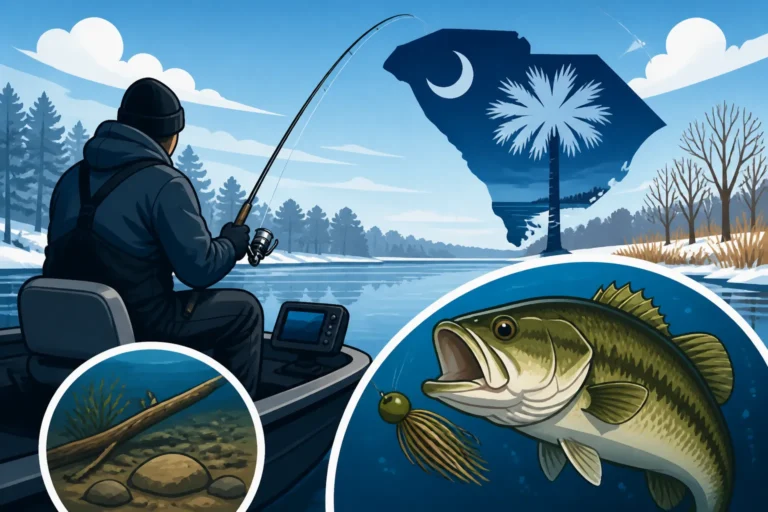
Winter bass fishing in South Carolina, from December through February, can be challenging but incredibly rewarding. Water temperatures plummet into the 40s and low 50s, causing bass metabolism to slow significantly. They become lethargic, less aggressive, and often school up tightly in deep water. This means you need a patient, precise approach.
Deep and Slow: Targeting Cold Water Bass
When the water turns cold, bass typically retreat to their deepest wintering holes. They often congregate in large schools on main lake points, channel bends, deep humps, and submerged timber. The key here is not just finding the deep water, but finding the right deep water – usually where there’s easy access to even deeper channels or where baitfish are present.
Slow, deliberate presentations are crucial. You won't get reaction strikes with fast-moving lures. Jigging spoons, blade baits, and heavy football jigs fished painstakingly slow along the bottom are prime choices. Drop-shot rigs with small worms or minnow imitations can also be incredibly effective for suspended bass or those hugging tight to structure. Use your electronics extensively to locate schools of bass and baitfish. Once you find them, mark the spot and fish it thoroughly, often making multiple passes. This isn't about covering water; it's about dissecting a specific piece of structure with precision. Our article on Do Largemouth Bass Bite in Cold Weather? confirms that they absolutely do, but you need the right approach.
Understanding Bass Metabolism in Winter
The reason for this slow-and-low approach lies in bass physiology. In cold water, their metabolism slows down dramatically. They don't need to eat as often, and they conserve energy, meaning they're not going to expend much effort chasing a lure. This is why a bait that stays in their strike zone for an extended period, or one that barely moves, is often the most effective.
Think about baits that mimic dying or sluggish prey. A slow-falling jerkbait, paused for long periods, can be deadly. A jigging spoon, fluttering down like an injured baitfish, can also trigger strikes. Even a classic Alabama rig, although more of a reaction bait, can be effective if retrieved slowly through schools of bait. The important thing is to understand that you’re appealing to a bass that is trying to conserve energy, not one that is actively hunting. This mindset shift is critical for success in the colder months.
Reservoir Specific Techniques
While the general principles of deep and slow apply, each South Carolina reservoir has its unique characteristics that can influence winter bass patterns. For instance, on a deep, clear lake like Lake Hartwell, bass might suspend over deep timber or hold tight to rocky ledges. On a murkier system like the Santee Cooper lakes, they might relate more to deep creek channels or massive cypress trees.
It pays to consult local knowledge or guides for specific winter patterns on your chosen body of water. Some lakes might have thriving populations of threadfin shad that congregate in certain areas, attracting bass. Others might have deep rock quarries or submerged bridge pilings that become winter magnets. Always research the specific characteristics of the lake you plan to fish. Often, the best winter fishing occurs on sunny days when the bass might move slightly shallower on north-facing banks or dark bottoms that absorb more heat. Remember that even a slight warming trend can bring fish up a few feet, making them more accessible.
Key Factors Influencing Bass Behavior and Techniques
While seasonal changes are the biggest drivers of bass behavior, several other environmental factors constantly influence how bass feed and where they position themselves. Overlooking these variables can lead to frustrating days on the water, even if you’re fishing the "right" season.
Water Temperature: The Ultimate Regulator
Water temperature is, without a doubt, the single most critical factor influencing bass behavior. Every seasonal shift we've discussed is primarily driven by changes in water temperature. Bass are cold-blooded, so their metabolism, activity levels, and reproductive cycles are directly tied to the temperature of their environment. Too cold, and they become lethargic; too hot, and they seek deeper, cooler refuge.
Learning to read water temperature is a superpower for bass anglers. Most boats have built-in thermometers, or you can purchase a handheld model. Knowing the ideal temperature ranges for different bass activities – 50s for pre-spawn, mid-60s for spawning, 70s for active summer feeding – allows you to predict where bass will be and what they'll be doing. For example, if you're fishing a spring day and the main lake is 55 degrees but a shallow, sunny cove is 60 degrees, you know where to focus your spawning efforts. Conversely, in summer, if the surface water is 90 degrees, you know to look deeper for cooler water.
Weather Patterns and Barometric Pressure
Beyond temperature, broader weather patterns and changes in barometric pressure play a significant role. A stable, high-pressure system typically leads to more consistent, but often tougher, fishing, as fish tend to hug the bottom. A falling barometer, often signaling an approaching storm or front, can trigger a feeding frenzy, as bass sense the change and feed aggressively before the weather hits. This is often the best time to fish, especially during spring and fall.
Conversely, a rapidly rising barometer after a cold front can shut down the bite almost completely, as bass become less active and move tighter to cover. Fishing after a major cold front, especially in winter, can be incredibly challenging. During these times, super-slow, finesse presentations are your best bet. Even heavy rain can affect clarity and fish behavior, pushing them into muddier, shallower water or causing them to hug cover. Understanding How Cold Fronts Affect Fish Behavior is essential for adapting your techniques when the weather takes a turn. Similarly, knowing Bass Fishing Techniques for Muddy Water After Rain can turn a potentially tough day into a productive one.
Forage and Habitat: Where the Food Is
Ultimately, bass go where the food is. Identifying the primary forage in a given lake – whether it's shad, bluegill, crayfish, or even smaller bass – and understanding its behavior is critical. If shad are schooling in open water, bass will often be close by. If crayfish are abundant on rocky bottoms, a jig becomes a powerful tool. Knowing the local prey allows you to "match the hatch" with your lure selection.
Furthermore, bass are highly structure-oriented. They use natural and artificial cover for ambush points, shade, and protection. This could be submerged timber, rock piles, brush, docks, lily pads, or grass beds. The type of habitat available in a given area will dictate where bass hold and what techniques are most effective. For instance, in lakes with extensive grass, fishing weed lines and pockets with frogs or punching jigs will be key. In lakes dominated by rock and timber, crankbaits and jigs worked along contours will be more productive. Always be observant of the environment, both above and below the water, to decipher where the bass are likely to be hiding.
Essential Gear for Seasonal Bass Fishing
Having the right tackle for the job is just as important as knowing the techniques. While a single rod and reel can catch fish year-round, optimizing your setup for specific seasons and presentations will dramatically increase your success rate. This isn't about having a boatload of expensive gear, but rather a few versatile setups that cover your bases. Many anglers find great deals and a wide selection of specialized gear for various bass fishing techniques and seasons on Amazon.
Rod, Reel, and Line Selection by Technique
For spring power fishing with lipless crankbaits or spinnerbaits, a medium-heavy action casting rod (6'10" – 7'4") paired with a high-speed baitcasting reel (7.1:1 gear ratio or higher) spooled with 15-20 lb fluorocarbon or monofilament line is ideal. This setup provides the backbone to horse fish out of cover and the speed to retrieve quickly.
Come summer, when you're targeting deep structure with football jigs or heavy Carolina rigs, a heavier action rod (7'3" – 7'11") with a slower gear ratio baitcaster (6.3:1) might be preferred for better torque and control. For finesse techniques like drop-shotting, a medium-light spinning rod (6'6" – 7'0") with a matching spinning reel and 6-10 lb fluorocarbon or braided line with a fluorocarbon leader is perfect for detecting subtle bites. Looking for specific rod models or reel brands? Many popular options like those from Abu Garcia or Lew's can be found readily on Amazon.
Lure Categories for Year-Round Success
Instead of thinking about individual lures, consider categories that excel in different seasons:
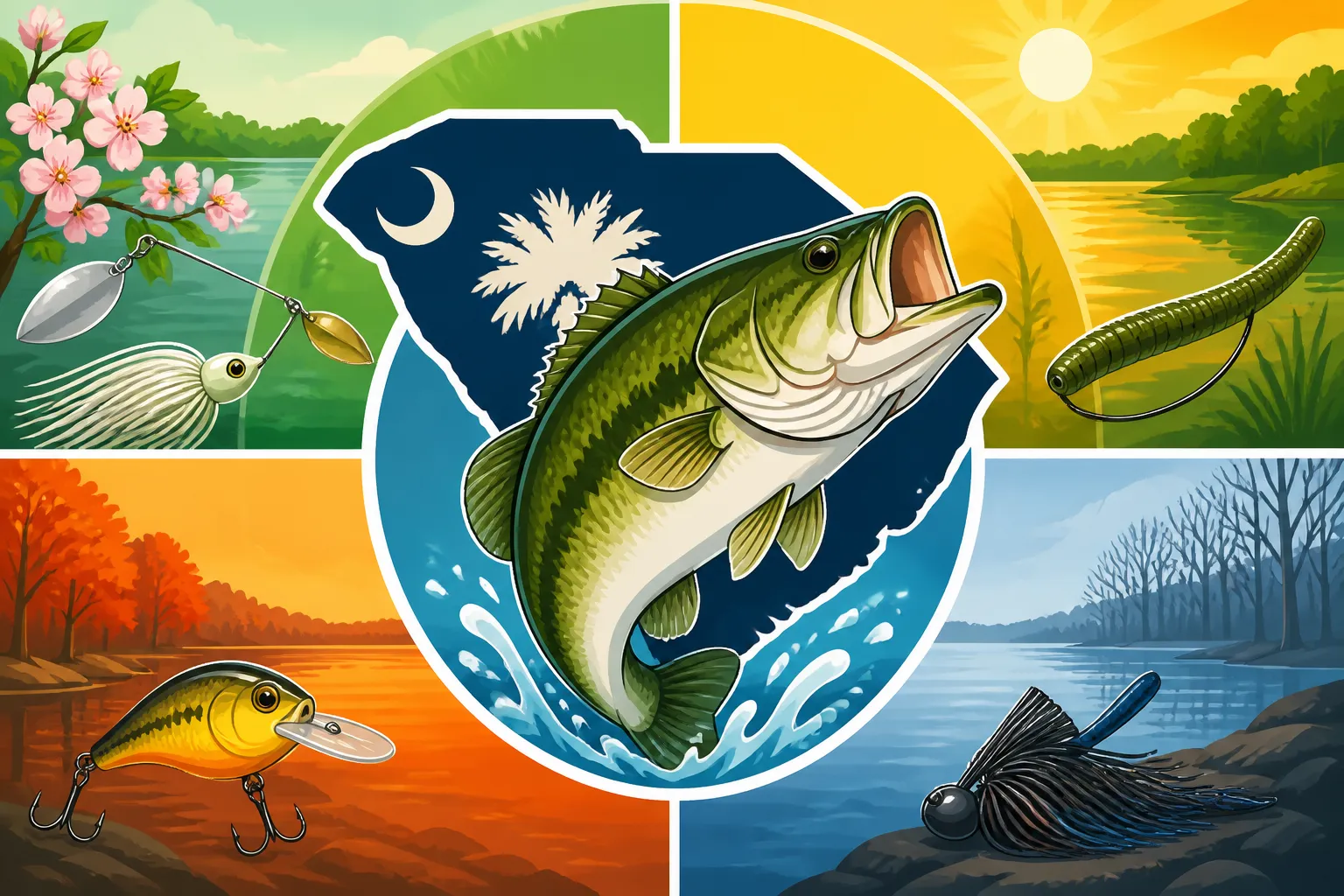
- Spring: Crankbaits (lipless and square bill), jerkbaits, spinnerbaits, jigs, soft plastic creature baits.
- Summer: Deep-diving crankbaits, jigs, Texas-rigged worms, topwater (early/late), Carolina rigs, swimbaits.
- Fall: Spinnerbaits, bladed jigs, swimbaits, topwater, crankbaits, jigs.
- Winter: Jigging spoons, blade baits, football jigs, drop-shot rigs, slow-moving jerkbaits.
Always have a selection of colors too. Natural baitfish patterns (shad, bluegill) are good all year, while brighter colors (chartreuse, firetiger) can be excellent in murky water or when fish are aggressive. Darker colors (black, blue) are often best for night fishing. You can easily stock up on a wide variety of these lures, from brands like Rapala or Strike King, by browsing through Amazon's extensive fishing department. Our list of Best Lures for Largemouth Bass in Muddy Water offers some specific recommendations that work wonders when clarity is an issue.
Electronics and Accessories: Modern Angler's Edge
Modern electronics have revolutionized bass fishing. A good fishfinder with side imaging and down imaging capabilities is invaluable for locating submerged structure, baitfish schools, and even individual bass, especially in deeper water. GPS mapping helps you navigate and mark productive spots. Brands like Humminbird and Garmin offer excellent units that can be purchased on Amazon.
Beyond electronics, essential accessories include a good pair of polarized sunglasses to cut glare and spot fish or cover, sturdy pliers for hook removal, a selection of hooks and weights, and a quality tackle bag or box to keep everything organized. Don't forget a landing net, especially for those bigger fish, to ensure a safe and easy release. And, of course, always have a valid South Carolina Fishing License Guide in hand, whether it's a digital copy on your phone or a printed one.
Conservation and Responsible Bass Fishing in South Carolina
As passionate anglers, we have a responsibility to protect South Carolina's incredible bass fisheries for future generations. Practicing ethical fishing techniques and adhering to regulations ensures that these valuable resources remain healthy and abundant.
Catch and Release Best Practices
While keeping a few bass for a delicious meal is certainly part of the fishing experience, practicing catch and release, especially for larger breeding-size fish, is vital for conservation. When you decide to release a bass, handle it with care. Minimize its time out of the water, support its body horizontally (avoid holding it vertically by the jaw if it's a large fish), and use wet hands to protect its slime coat.
If a fish is deeply hooked, consider cutting the line as close to the hook as possible rather than trying to rip it out, which can cause more damage. For fish caught from deep water, especially in summer, they might suffer from barotrauma (swim bladder expansion). If a fish is struggling to swim down, gentle fizzing (puncturing the swim bladder with a specialized tool) can help, but this should only be done by experienced anglers. The ultimate goal is to return the fish to the water quickly and in the best possible condition, ensuring it survives to spawn another day.
Understanding Regulations and Limits
South Carolina has specific regulations regarding bass fishing, including size limits and creel limits. These are put in place by the South Carolina Department of Natural Resources (SCDNR) to manage fish populations and ensure sustainability. For example, Largemouth bass generally have a daily creel limit of 10 fish per person, with no minimum size limit on most public waters, though some specific lakes may have slot limits or other restrictions.
It is your responsibility as an angler to know and follow these rules. Always check the latest SCDNR regulations booklet or website before heading out, as rules can change. Ignorance of the law is not an excuse, and penalties for violations can include fines and loss of fishing privileges. Beyond the general guide, specific rules are outlined in guides like South Carolina's Freshwater Fishing Regulations. Staying informed helps protect the fishery and keeps you out of trouble.
Protecting Bass Habitats
A healthy bass population relies on healthy habitat. This means being mindful of the environment while you’re on the water. Avoid littering, and if you see trash, consider picking it up. Be careful not to damage aquatic vegetation that serves as crucial spawning grounds and cover for bass and baitfish. Boaters should be aware of prop wash in shallow areas, which can disturb beds or harm young fish.
Supporting local conservation efforts, participating in clean-up events, and advocating for responsible land and water management practices also contribute significantly. The future of South Carolina bass fishing depends not just on how we fish, but also on how we treat the precious natural environments that sustain these incredible fish.
Disclaimer
Fishing conditions and regulations in South Carolina can change. Always check the latest South Carolina Department of Natural Resources (SCDNR) guidelines and local advisories before heading out on the water. This guide is for informational purposes only and should not replace official regulations.