Where to Catch the Biggest Striped Bass?
Many anglers dream of landing a truly massive striped bass, but finding those monster fish in South Carolina can feel like searching for a needle in a haystack. It's frustrating to spend countless hours on the water only to come up short, wondering if you're even fishing the right spots. This guide is here to help you pinpoint exactly where to increase your chances of hooking into the biggest striped bass the Palmetto State has to offer, focusing on the prime locations and what makes them so special for these impressive fish.
Understanding South Carolina's Striped Bass Powerhouses
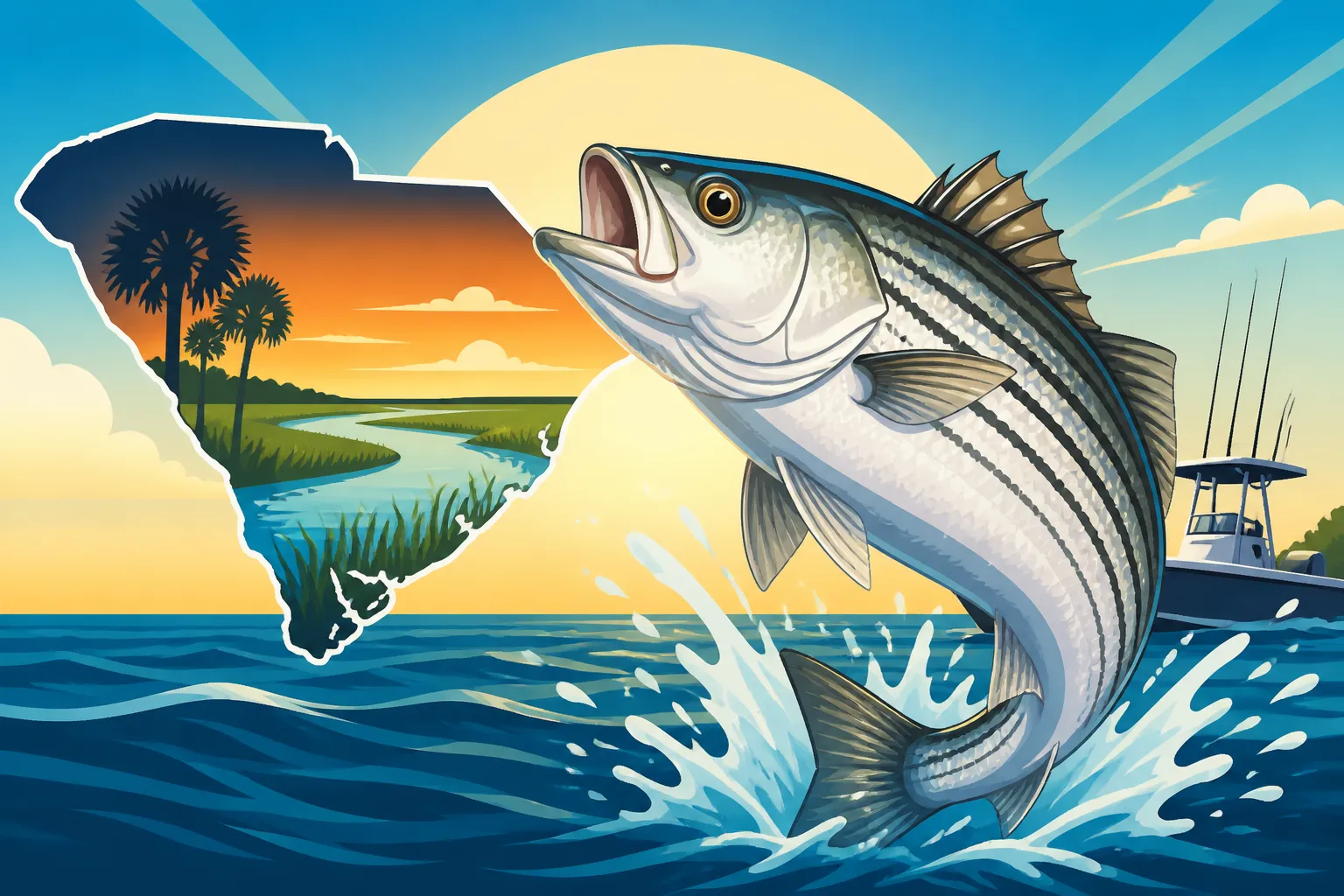
South Carolina is a phenomenal state for striped bass fishing, boasting some of the largest landlocked populations in the country. While stripers are traditionally an anadromous species—meaning they migrate from saltwater to freshwater to spawn—many of South Carolina's major reservoirs maintain thriving, self-sustaining populations that never see the ocean. These landlocked giants grow to incredible sizes, fueled by abundant forage and the vast, deep waters they call home. The sheer size of these lakes provides the perfect habitat for stripers to grow old and truly massive. When you're talking about where to catch the biggest striped bass, you're really talking about a few key lakes that stand out from the rest due to their unique ecosystems and historical success. It's not just about luck; it's about understanding the environment these fish thrive in.
Why Certain Lakes Produce Bigger Stripers
Not all lakes are created equal when it comes to growing trophy-sized striped bass. Several factors contribute to a lake's ability to produce those truly massive fish that make anglers' hearts pound. First and foremost is the forage base. Stripers are voracious predators, and they need a consistent, abundant supply of baitfish to pack on the pounds. Lakes rich in threadfin shad, gizzard shad, and blueback herring provide the high-protein diet necessary for rapid growth. Without a robust food chain, stripers might still be present, but they won't reach those trophy dimensions.
Another critical element is the presence of deep, cool, oxygenated water, especially during the hot South Carolina summers. Striped bass are cold-water fish, and while they can tolerate warmer surface temperatures for short periods, they need access to thermal refuge in deeper water when the heat ramps up. Lakes with significant depth and good circulation that maintains oxygen levels throughout the water column are essential. When surface temperatures climb into the 80s, stripers will retreat to cooler, deeper zones. If those zones lack oxygen, the fish become stressed, making them less likely to grow large or even survive.
Finally, consistent management by the South Carolina Department of Natural Resources (SCDNR) plays a huge role. Through stocking programs (where self-sustaining populations aren't present), habitat protection, and responsible regulation, the SCDNR ensures that these fisheries remain healthy and productive. They monitor populations, study growth rates, and adjust regulations, like size and bag limits, to protect the trophy potential of the species. This proactive approach helps maintain the delicate balance required for a thriving big striper fishery. For those interested in the details, you can find comprehensive information on "South Carolina's Best Striped Bass Waters" which delves into the top locations that consistently produce these impressive fish.
The Landlocked Striper Phenomenon
It's truly fascinating how striped bass have adapted to a completely freshwater existence in many of South Carolina's lakes. Originally, stripers would migrate from the Atlantic Ocean up coastal rivers like the Santee and Cooper to spawn. However, with the construction of large hydroelectric dams, many of these fish became trapped, forming landlocked populations. Over generations, these fish adapted to their new environment, successfully spawning in the long, flowing riverine sections upstream of the impoundments. The creation of these massive reservoirs, like Lake Murray and the Santee Cooper system, inadvertently created perfect, self-contained ecosystems for stripers to thrive.
Unlike their anadromous cousins, these landlocked stripers don't have to contend with the rigors of ocean life, but they still retain their predatory instincts and schooling behavior. This means they grow big, fight hard, and offer incredible angling opportunities right here in our backyard. The key is finding where these adapted populations congregate, especially the larger, older fish that are true giants. Learning about "Striped Bass: South Carolina's Official State Fish" can give you even more insight into their biology and importance in the state. Many anglers are drawn to this unique aspect of South Carolina fishing, specifically targeting these freshwater leviathans that offer such a powerful fight.
Lake Murray: The Reigning King for Trophy Stripers
If you're serious about landing a truly colossal striped bass in South Carolina, then Lake Murray should be at the absolute top of your list. This massive 50,000-acre reservoir, often called the "Jewel of South Carolina," has a long-standing reputation for producing not just good numbers of stripers, but truly enormous ones. It's not uncommon for anglers here to pull in fish weighing 20, 30, or even 40 pounds, with the state record for landlocked stripers frequently being challenged on its waters. The lake’s deep, clear waters, combined with an abundant population of blueback herring, create an ideal environment for stripers to grow to epic proportions. Fishing Lake Murray for these giants is a quintessential South Carolina experience, a true test of skill and patience.
Key Hotspots and Structural Elements
Lake Murray is vast, so knowing where to focus your efforts is crucial. The larger, older stripers often relate to specific structural elements and deeper areas of the lake. One of the most famous areas for trophy stripers is around Dreher Island and the main channel ledges. The submerged humps and points in this general vicinity act as ambush points for schooling baitfish, which in turn attracts the big stripers. Using your electronics to locate significant depth changes, submerged timber, and brush piles along the old Saluda River channel is absolutely essential. These structures provide cover and feeding lanes for the fish. A good place to start your research for specific spots around this area is our guide on "Dreher Island Striped Bass Fishing on Lake Murray".
Another key area to explore is the lower end of the lake, particularly near the dam. This section tends to be deeper and maintains cooler water temperatures, which is critical during the warmer months when big stripers seek thermal refuge. The main lake points, especially those that drop off sharply into deeper water, are always worth investigating. These areas are often migration routes for baitfish and offer perfect ambush opportunities for large predators. Don't be afraid to venture out into open water, particularly when the fish are schooling on large bait balls. For a more comprehensive overview of fishing opportunities, check out our full "Lake Murray Fishing Guide for South Carolina Anglers".
Seasonal Strategies for Monster Stripers on Lake Murray
Successfully targeting big stripers on Lake Murray often comes down to understanding their seasonal movements and feeding patterns.
- Spring (March-May): This is a prime time as stripers move shallower to feed aggressively after the winter doldrums. They'll often be found in the upper reaches of the lake and in major creeks, chasing schools of baitfish. Topwater plugs, jerkbaits, and swimbaits can be incredibly effective early and late in the day. Live bait, such as blueback herring, fished under a balloon or free-lined, is also deadly. This is when you can find some of the heaviest fish as they're actively feeding and still carrying their winter weight.
- Summer (June-August): As temperatures rise, the biggest stripers retreat to deeper, cooler water. This is when anglers typically switch to downrigging, planer boards, or vertically jigging spoons and heavy baits in the main lake basin. Look for thermoclines and concentrate on areas where baitfish are schooling in these cooler zones. Night fishing can also be exceptionally productive in summer, as stripers will move shallower under the cover of darkness. Detailed strategies for "Lake Murray Summer Striped Bass Techniques in South Carolina" are a must-read for any serious angler. If you're looking for specific guidance, a reputable guide found on platforms like FishingBooker can significantly increase your chances of success, especially for nocturnal adventures.
- Fall (September-November): The cooling water temperatures in fall trigger another aggressive feeding period. Stripers will begin to move out of their deep summer haunts and spread out across the lake. Topwater action can pick back up, and trolling with artificial lures or live bait remains highly effective. The fish are often chasing bait on the surface, making for some exciting visual strikes. This is a favorite time for many anglers because of the active fish and comfortable weather.
- Winter (December-February): Don't let the cold deter you! Winter can be fantastic for big stripers on Lake Murray. The fish will school tightly in deep water, often near the dam or in the lower lake. Vertical jigging with heavy spoons or fishing live bait on umbrella rigs are common tactics. While the bite might be slower, the fish you do hook are often some of the biggest and healthiest of the year. Understanding "Striped Bass Winter Fishing Patterns in Freshwater Lakes" will definitely give you an edge. For more general advice on timing your trip, consult a "South Carolina Fishing Seasons Guide".
The Santee Cooper Lakes: A Deep Dive into Striper Giants
The Santee Cooper Lakes, comprising Lake Marion and Lake Moultrie, form an interconnected system that is arguably South Carolina's most famous fishery. These lakes are legendary for their abundant and diverse fish populations, and when it comes to striped bass, they are absolutely in the running for producing some of the biggest and most powerful fish in the state. This expansive 171,000-acre system, particularly Lake Moultrie, is renowned for its trophy catfish, but its striped bass fishery is equally impressive, offering incredible opportunities for anglers seeking to tangle with a true giant. The sheer size and intricate network of old river channels, submerged timber, and vast flats make it a challenging but rewarding destination for big stripers.
Lake Marion and Lake Moultrie's Unique Appeal
While both lakes in the Santee Cooper system hold stripers, they each offer slightly different environments for trophy fish. Lake Marion, the larger and shallower of the two, is often characterized by its cypress tree forests and extensive stump fields. Here, stripers can be found relating to the deeper sections of the old Santee River channel, especially where it winds through these flooded timber areas. The abundance of cover and baitfish in Lake Marion provides excellent habitat, particularly during cooler months.
Lake Moultrie, on the other hand, is a deeper, more open lake with clearer water and a distinct "bowl" shape. This makes it particularly attractive to larger stripers, especially in summer when they need deeper, cooler water. The diversion canal connecting the two lakes is also a significant area, as it provides a constant flow of water and acts as a migration corridor for baitfish and predators alike. Anglers often find phenomenal action in the canal, especially during periods of strong current. For a detailed guide on the entire system, explore "Santee Cooper Lakes: South Carolina's Legendary Bass Fishery".
Tactics for Taming Santee Cooper Stripers
Successfully targeting huge striped bass on the Santee Cooper system requires specific tactics tailored to its unique characteristics.
- Trolling: This is one of the most popular and effective methods for covering vast amounts of water and locating schooling stripers. Anglers use a variety of baits, from deep-diving crankbaits and swimbaits to umbrella rigs with multiple lures, typically trolled behind planer boards or using downriggers to reach specific depths. Matching the hatch, or using lures that mimic the local baitfish (like gizzard shad or blueback herring), is often the key to success.
- Live Bait Fishing: Nothing beats a frisky live bait for attracting large, wary stripers. Blueback herring, gizzard shad, or even small bream (where legal) can be highly effective. These are often fished on free lines, under balloons, or on planner boards to present them naturally to cruising stripers. Drifting with live bait in deeper channels or over submerged structure is a proven big-fish tactic. Many experienced anglers prefer using circle hooks with live bait to ensure solid hookups and minimize harm to fish.
- Jigging and Spooning: When stripers are found schooling deep, often suspended over old river channels or humps, vertical jigging with heavy spoons or soft plastic swimbaits can be deadly. Modern sonar technology is invaluable for locating these schools and positioning your boat directly over them. This technique is often employed in the winter months when fish are tightly grouped.
- Night Fishing: Much like Lake Murray, night fishing on Santee Cooper, especially Lake Moultrie, can be incredibly productive for trophy stripers. Fish will move into shallower areas to feed under the cover of darkness. Anglers often use powerful lights to attract baitfish, which in turn attracts the stripers. Live bait, cut bait, or even large glow-in-the-dark jigs can yield impressive results after sunset. Our article on "Night Fishing Spots on Lake Murray, South Carolina" offers valuable insights that can be adapted for Santee Cooper as well.
Targeting Big Stripers: Essential Gear and Advanced Techniques
Landing a truly enormous striped bass isn't just about finding the right lake; it also demands the right gear and a nuanced understanding of their behavior. These fish are powerful, and if you're targeting the kind of stripers that stretch beyond 20 pounds, you'll need tackle that can stand up to the fight. Investing in quality equipment isn't just about comfort; it's about minimizing the chance of losing that fish of a lifetime. Many anglers underestimate the brute strength of a large landlocked striper until they're hooked into one.
Rods, Reels, and Line for Giants
When tackling big stripers, your setup needs to be robust. For trolling and live bait fishing, a medium-heavy to heavy action casting rod, typically 7 to 8 feet long, is ideal. Look for rods with a strong backbone to handle powerful runs and the ability to cast or deploy heavy lures and baits. Paired with this, you'll want a conventional reel (baitcaster) with a smooth, reliable drag system and high line capacity. Reels like the Shimano Tekota or Daiwa Sealine are popular choices among serious striper anglers. A robust drag is paramount, as a trophy striper will test it to its limits.
For line, braided main lines in the 30-50 lb test range are common, offering incredible strength-to-diameter ratio and sensitivity. However, always use a fluorocarbon or monofilament leader of 20-40 lb test, depending on water clarity and bait size. This leader provides abrasion resistance against teeth and structure, and the lower visibility of fluorocarbon can be a game-changer in clear waters. For jigging or casting artificials, a heavy-duty spinning setup with similar line ratings can also be effective, especially if you prefer that style of fishing. Don't skimp on terminal tackle either; strong, sharp hooks and robust swivels are non-negotiable. Using "Best Lures for Striped Bass in South Carolina" is also a good way to match your tackle to effective presentations.
Electronics and Watercraft: Your Eyes and Ears on the Water
Modern marine electronics are indispensable for consistently finding big stripers. A good fish finder with down imaging and side imaging capabilities will be your best friend. Look for large schools of baitfish, often appearing as dense clouds or balls on your screen, and then identify the larger, individual arches that represent the stripers feeding on them. Pay attention to suspended fish in the water column and fish relating to subtle depth changes or submerged structures. GPS mapping is also crucial for marking productive spots, navigating vast lakes, and returning to "the bite" on subsequent trips. Many high-end units from brands like Garmin, Lowrance, or Humminbird offer incredible detail and precision.
Having a capable boat is also key, as chasing big stripers often means covering a lot of water. A comfortable, stable boat with plenty of deck space is ideal for deploying multiple lines for trolling or drift fishing. Outboard motors that are both powerful and fuel-efficient are a huge plus for navigating these large reservoirs. For those without their own boat, consider booking a trip through platforms like FishingBooker, where experienced local guides come equipped with all the necessary high-end gear and expertise to put you on trophy fish. Their local knowledge of specific "Fishing Spots on Lake Murray, South Carolina" can save you years of trial and error.
The Importance of Current and Weather
Striped bass are highly influenced by current and weather patterns. On large reservoirs like Lake Murray and Santee Cooper, current is often generated by hydroelectric dams, particularly during periods of power generation. These currents concentrate baitfish and activate stripers, making them more aggressive feeders. Pay attention to dam generation schedules, which are often publicly available, and plan your trips around these times. A strong current can turn an average day into an exceptional one for big fish.
Weather also plays a significant role. Stable weather patterns, especially a few days of consistent conditions, often lead to predictable fish behavior. Cold fronts, on the other hand, can shut down the bite temporarily, as fish become lethargic. Overcast days and low-light conditions (dawn, dusk, and night) are generally excellent for stripers, as they are visually oriented predators and prefer to hunt when the sun is not directly overhead. Observing these environmental cues can provide a crucial advantage in your quest for the biggest striped bass. Remember that even on those challenging days, perseverance and adapting your approach, like slowing down your retrieve or changing bait, can sometimes still yield a surprise. Always be prepared for changing conditions, and prioritize safety on the water.
Table: Comparison of South Carolina's Top Striper Lakes
| Feature | Lake Murray | Santee Cooper Lakes (Marion & Moultrie) |
|---|---|---|
| Size | ~50,000 acres | ~171,000 acres (Marion: 110,000, Moultrie: 60,000) |
| Primary Forage | Blueback Herring, Threadfin Shad | Gizzard Shad, Threadfin Shad, Blueback Herring |
| Water Clarity | Generally clearer, especially in lower lake | Varies; Marion often stained, Moultrie clearer |
| Max Depth | ~200 feet | ~75 feet (Marion: 30-40 ft, Moultrie: 75 ft) |
| Key Habitat | Deep main channel, humps, points, open water | Old river channels, submerged timber, open basins |
| Trophy Potential | Excellent, state record frequently challenged | Excellent, consistent producers of 20-40lb+ fish |
| Best Seasons | Spring, Summer (Night), Fall, Winter | Spring, Summer (Night), Fall, Winter |
Disclaimer
Fishing conditions and regulations in South Carolina can change. Always consult the latest South Carolina Department of Natural Resources (SCDNR) rules and regulations before heading out on the water. This guide is for informational purposes only and does not constitute legal advice or endorsement of specific practices.