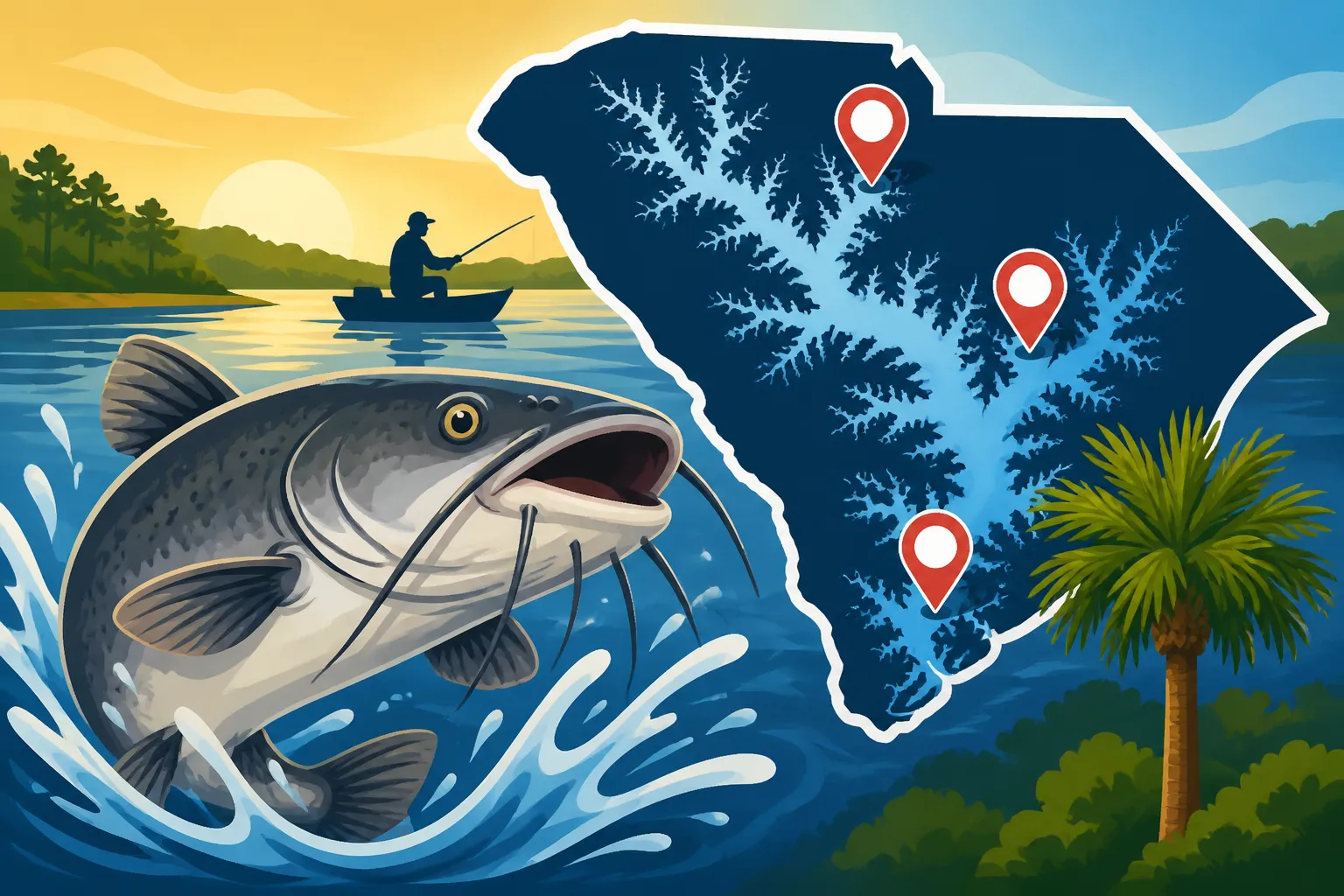
Catfish Fishing Spots on Lake Hartwell, South Carolina
Lake Hartwell, a vast reservoir sprawling across the South Carolina and Georgia border, can feel like an overwhelming expanse when you're trying to pinpoint where the catfish are hiding. It’s easy to spend hours cruising around, casting into seemingly good spots only to come up empty-handed. This guide is designed to cut through that frustration, directing you to the most productive catfish fishing spots on Lake Hartwell and arming you with the knowledge to make your next outing a resounding success.
Understanding Catfish Behavior in Lake Hartwell
Before we dive into specific locations, it's really helpful to get into the mind of a catfish. Understanding what makes them tick, where they prefer to live, and how they react to the changing seasons will dramatically increase your chances of finding them on a big lake like Hartwell. These aren't just random fish; they have routines and preferences, just like us.
Preferred Habitats of Lake Hartwell Catfish
Lake Hartwell is home to a robust population of several catfish species, primarily Channel Catfish, Flathead Catfish, and a healthy number of Blue Catfish. Each of these species has slightly different habitat preferences, though there's often overlap, especially when it comes to finding a good meal or escaping the midday sun.
Channel Catfish, for instance, are the most common and widely distributed. You'll often find them patrolling the main lake channels, particularly around humps, ledges, and deeper breaks. They appreciate structure but are also quite comfortable in open water, especially if there's a good current or baitfish congregation. During the day, they tend to hang out in deeper water, moving shallower as the light fades or temperatures are more agreeable. Their diet is incredibly varied, making them somewhat opportunistic in where they seek food.
Flathead Catfish, on the other hand, are the true ambush predators of the catfish world. They absolutely love heavy cover and structure. Think submerged timber, dense brush piles, old foundations, and rocky points. If there's a snag-filled area with a good current nearby, you can bet a big flathead might be lurking, waiting for an unsuspecting baitfish or small panfish to swim by. They prefer live bait and will defend their territory vigorously, making them a thrilling catch for those who can find them. Targeting these fish often means fishing in places where you're likely to get snagged, so be prepared with heavy line and tackle.
Blue Catfish, often the largest of the three in Hartwell, typically inhabit the deeper, more open areas of the lake, especially along the old river channels. They are schooling fish and will follow vast schools of baitfish, often suspending in the water column rather than hugging the bottom exclusively. Look for them around major channel swings, deep humps, and points that drop off quickly into abyssal depths. They are powerful fighters and highly sought after by anglers looking for a trophy catch. Lake Hartwell, with its vast deep water and abundant forage, provides an excellent home for these big blues.
Seasonal Movements and Feeding Patterns
Catfish in Lake Hartwell are highly influenced by the seasons, which dictate their metabolism, spawning cycles, and ultimately, where they can be found and how actively they're feeding. Understanding these patterns is like having a secret map to their hideouts.
In spring, as the water temperatures begin to rise, catfish become incredibly active. They'll start moving out of their deep winter haunts and push into shallower flats, creek mouths, and secondary points. This is their pre-spawn gorging period, where they're trying to pack on as much weight as possible before the demanding spawning season. You can often find them in water depths of 10-25 feet, sometimes shallower, especially early in the morning or late in the evening. This is a fantastic time for both numbers and size.
Summer brings warmer water, and with it, a shift in catfish behavior. During the heat of the day, particularly in July and August, catfish, especially the larger blues and channels, will retreat to the cooler, oxygen-rich waters of the main lake channels, deep ledges, and the thermocline (the layer where water temperature changes rapidly). They might be as deep as 40-70 feet or even deeper, depending on the lake's stratification. However, as the sun dips and temperatures become more bearable, these fish will often move significantly shallower to feed during the twilight hours and throughout the night. If you're wondering Is Night Fishing Better for Catfish? on Lake Hartwell in summer, the answer is often a resounding yes! For more in-depth strategies, check out Catfish Fishing Techniques for South Carolina Lakes in Summer.
Fall is another excellent time for catfishing on Hartwell. As water temperatures cool down, catfish begin another aggressive feeding period, preparing for the lean winter months. They will follow baitfish into creek arms, coves, and shallower main lake areas. Look for schools of shad or herring on your electronics, and you're likely to find catfish not far behind. They can be found at various depths, but often become more accessible to anglers as they spread out from the deepest holes.
Finally, in winter, catfish metabolism slows down significantly, but they are still catchable. They tend to congregate in the deepest holes of the river channels, often forming large schools. While they might not be actively chasing bait, they will readily take a well-presented piece of cut bait right on the bottom. It requires a bit more patience and precise bait placement, but trophy catfish are often caught during the colder months when they are concentrated.
Prime Catfish Haunts on Lake Hartwell
Now that we understand a bit more about where catfish like to live and how they move throughout the year, let's talk about some specific areas on Lake Hartwell that consistently produce quality catfish. Remember, Lake Hartwell is vast, covering nearly 56,000 acres, so pinpointing exact GPS coordinates is tough, but focusing on types of structure and general locations will get you much closer to the action. If you're looking for an overall guide to the lake, you might want to explore Lake Hartwell Fishing Spots and Boat Ramps.
Deep Channels and River Bends
The backbone of Lake Hartwell for catfish is undoubtedly the old river channels of the Tugaloo and Seneca Rivers. These channels wind through the lake, often reaching depths of 80 to over 100 feet in some areas. These are prime highways and congregating points for blue and channel catfish, especially during the warmer months and winter.
One of the most productive areas to target is where these ancient river beds make sharp turns or where they converge. The confluence of the Tugaloo and Seneca Rivers, which forms the main body of Lake Hartwell, is a hotspot. Look for distinct bends in the old river channel, particularly those with steep drops on the outside edge. Fish will often stage along these drops, waiting for bait to be carried by the subtle currents. Mapping apps and your boat's sonar are indispensable here for identifying the channels and their contours.
Another excellent spot is around major bridges, like the I-85 bridge crossing the Tugaloo River arm. The bridge pilings themselves offer vertical structure, and the deep channel that runs underneath them creates a natural funnel for baitfish and a current that attracts catfish. Anchoring upstream or downstream from these bridges and casting into the channel can be very effective. Anglers often find success drifting cut bait along these deep channel edges. You might also find catfish concentrating in the deeper sections around Submerged Timber and Rocky Points on Hartwell's Tugaloo Arm.
Submerged Structures and Brush Piles
Flathead catfish, in particular, are drawn to submerged structures that offer cover and ambush points. Lake Hartwell, being a man-made reservoir, is full of such hidden gems. Before the lake was flooded, many homes, farms, and forests were submerged, leaving behind a wealth of structure for fish.
Utilize your boat's electronics to scout for these submerged features. Look for clusters of standing timber, old roadbeds, rock piles, or even remnants of old building foundations. These areas are often found in deeper sections of creek arms or along the main lake's edge, sometimes in 20-50 feet of water. If you find a dense brush pile on your sonar, mark it, because it’s highly likely to be holding flatheads or even big blue cats. These fish will hide within the cover, especially during bright sunny days, and ambush passing prey.
Fishing these spots requires patience and often a willingness to lose some tackle to snags. Heavy-duty tackle is a must. Presenting live bait, such as bream or shad, right on the edge or carefully into the cover, is often the most effective way to entice a strike from a big flathead. These aren't high-numbers spots, but they offer the best chance at a truly monstrous catfish.
Creek Mouths and Shallow Flats
While catfish are often associated with deep water, creek mouths and adjacent shallow flats can be incredibly productive, especially during the spring and fall, and for night fishing in summer. These areas are rich in forage and offer warmer water temperatures earlier in the season.
Some of Lake Hartwell's most prominent creek arms, like Six & Twenty Creek, Twelvemile Creek, and Lightwood Log Creek, offer excellent catfishing opportunities near their mouths. As these creeks feed into the main lake, they often create subtle currents and deposit nutrients, attracting baitfish. Catfish will move into these areas to feed, particularly after heavy rains when new nutrients and food sources are washed in.
During the spring, target flats that are 10-20 feet deep near these creek mouths. Catfish will cruise these areas looking for easy meals before and after the spawn. In the fall, they'll follow schools of baitfish that migrate into the creeks. For summer night fishing, these shallower flats, particularly those with some nearby cover or a gradual drop-off, can be exceptional as catfish move up from the deeper channels to feed under the cover of darkness. Try setting up on a flat where you can cast towards deeper water or adjacent structure.
Essential Catfishing Techniques for Lake Hartwell
Knowing where the catfish are is only half the battle; the other half is knowing how to catch them. Lake Hartwell’s diverse environment supports a variety of effective catfishing techniques, each suited to different conditions and catfish species.
Bottom Fishing and Anchor Tactics
The venerable art of bottom fishing is, for many, the quintessential way to catch catfish, and it remains incredibly effective on Lake Hartwell. This technique involves anchoring your boat strategically and presenting bait directly on the lakebed where catfish are feeding or resting.
To do this effectively, first, choose your spot based on the locations discussed earlier – a deep channel bend, a brush pile, or a creek mouth. Drop your anchor well ahead of your intended fishing zone, allowing your boat to drift back into position over the target area. This prevents spooking the fish directly beneath you. Using two anchors (one off the bow, one off the stern) can help you hold your position precisely, especially in windy conditions or subtle currents.
Once anchored, deploy multiple rods, each rigged with a simple but sturdy bottom rig. A Carolina rig or a three-way swivel rig with a leader and a heavy sinker (1-4 ounces, depending on current and depth) works wonders. Circle hooks are highly recommended, as they typically hook the fish in the corner of the mouth, leading to fewer gut-hooked fish and easier release if desired. For bait, the choices are plentiful. Cut bait (like shad, herring, or bream), chicken livers, nightcrawlers, and commercially prepared stink baits are all excellent for channel catfish. For flatheads, live bait is usually preferred. If you want a full rundown, our guide on How to Bottom Fish for Catfish is a great resource.
Drifting and Trolling for Active Fish
When catfish are scattered or actively searching for food over larger areas, or when you’re targeting the bigger blue cats in open water, drifting or slow trolling can be far more productive than anchoring in one spot. This technique allows you to cover more water and present your bait to a wider range of potential fish.
Drifting is typically done by letting the wind or a very slow current push your boat along. If there's no natural drift, you can use your trolling motor at its slowest speed (often called "controlled drifting"). As you drift, deploy multiple rods with Santee rigs or similar setups that keep your bait just off the bottom. A Santee rig uses a small float on the leader above the hook, which helps to lift the bait slightly off the bottom, making it more visible and preventing it from getting lost in muck or snags. This is especially useful when drifting over uneven bottom or light cover.
Trolling for catfish involves using your main motor or a powerful trolling motor to move at a very slow, controlled speed, dragging baits behind the boat. This is particularly effective for blue catfish that might be suspended in the water column or cruising along deep ledges. Using planer boards can help spread out your lines, covering a wider swath of water and preventing tangles. Your fish finder is your best friend here. Look for schools of baitfish or arches that indicate larger fish, and adjust your depth and speed to match what you're seeing on the screen. The goal is to imitate a natural, slow-moving meal.
Jug Fishing and Trotlining Where Permitted
For those looking to catch a substantial number of catfish or target truly enormous specimens, traditional methods like jug fishing and trotlining can be incredibly effective. However, it’s absolutely critical to confirm the legality of these methods on Lake Hartwell and in South Carolina, as regulations can vary by body of water and change over time. Always consult South Carolina's Freshwater Fishing Regulations before deploying any passive fishing gear.
Jug Fishing involves setting out multiple independent lines, each attached to a float (the "jug") that drifts freely. These jugs are typically brightly colored and can be anything from repurposed plastic bottles to custom-made foam floats. Each jug has a line of a specific length with a hook and bait. The beauty of jug fishing is that it covers a huge area as the jugs drift, and when a fish bites, the jug starts dancing, alerting you to the strike. It's a highly active way to fish, as you'll be constantly chasing down your jugs. For a step-by-step guide, you can refer to How to Jug Fish for Catfish.
Trotlining involves setting a long main line (often hundreds of feet) with multiple baited hooks attached at intervals along its length. One end is typically anchored to the shore or a heavy weight, and the other end is held by another anchor or a prominent float. Trotlines are set overnight or for several hours and then run periodically to check for fish. This method allows you to target a specific depth or stretch of the lake and can be incredibly productive for catching many catfish. Again, precise regulations on the number of hooks, length, and tagging requirements are paramount. Understanding Setting Up a Trotline for Catfish is key to using this method safely and legally.
Preparing for Your Lake Hartwell Catfish Adventure
A successful catfishing trip to Lake Hartwell isn't just about knowing where the fish are; it's also about having the right gear, understanding the rules, and knowing when to ask for help. A little preparation goes a long way in ensuring a safe, enjoyable, and productive day on the water.
Gear and Bait Recommendations
Having the right equipment is crucial when targeting powerful catfish, especially the larger blues and flatheads that call Lake Hartwell home. They can put up a serious fight, so don't skimp on your tackle.
For rods, think medium-heavy to heavy action, typically in the 7 to 9-foot range. A sturdy backbone is essential for handling large fish and for horsing them out of heavy cover if you're targeting flatheads. Paired with these, robust baitcasting reels or large spinning reels with smooth, powerful drags are ideal. Look for reels with a high line capacity, capable of holding 150-300 yards of 20-50 pound test monofilament or braided line. Braided line is often preferred for its strength, sensitivity, and smaller diameter, which allows for more line on the reel.
As mentioned earlier, circle hooks are a game-changer for catfishing. Sizes ranging from 5/0 to 10/0 are common, depending on the size of your bait and target fish. The beauty of circle hooks is that they almost always set themselves in the corner of the fish's mouth as it tries to swim away, minimizing harm and making unhooking much easier. You'll also need a good assortment of sinkers (egg sinkers, bank sinkers, pyramid sinkers) from 1 oz to 6 oz or more, heavy-duty swivels, and strong leaders (fluorocarbon or heavy monofilament) to prevent break-offs.
When it comes to bait, variety is your friend. For channel catfish, classic choices like chicken livers, nightcrawlers, shrimp, and hot dogs soaked in garlic or an anise extract are always popular. However, freshly cut bait, especially from local species like shad, bream, or perch, is often irresistible to all three species of catfish, particularly larger blue and flathead cats. Live bait, such as small bream or gizzard shad, is hands-down the best choice if you're specifically targeting flatheads. Always ensure your live bait is legally acquired and used according to regulations.
Safety and Regulations on Lake Hartwell
No matter how excited you are to hit the water, safety should always be your top priority. Lake Hartwell is a large, busy lake, and conditions can change rapidly. Always wear a properly fitted personal flotation device (PFD), especially if you're a weaker swimmer or alone on the boat. Inform someone of your float plan – where you're going and when you expect to return. Always keep an eye on the weather forecast; thunderstorms can pop up quickly on large reservoirs.
Beyond personal safety, it's critical to be aware of and abide by all fishing regulations set forth by the South Carolina Department of Natural Resources (SCDNR). This includes having a valid South Carolina Fishing License Guide for anyone over the age of 16. Even if you're just visiting, you'll need a non-resident license. Familiarize yourself with the specific South Carolina's Freshwater Fishing Regulations regarding catfish. This typically covers daily bag limits and minimum size limits, which can vary by species. For example, some species might have a certain number of fish allowed per day, and sometimes a slot limit on larger fish (allowing harvest of smaller fish but requiring release of very large breeding stock) may be in place.
Here’s a quick glance at typical South Carolina freshwater catfish regulations, but always double-check the current SCDNR guide before you head out:
| Species | Daily Creel Limit | Size Limit (if applicable) | Notes |
|---|---|---|---|
| Channel Catfish | 25 | None | No more than 10 over 24 inches in length |
| Blue Catfish | 25 | None | No more than 10 over 24 inches in length |
| Flathead Catfish | 10 | None | No more than 1 over 36 inches in length |
Note: These are general South Carolina freshwater regulations. Specific lakes, like Hartwell, can have unique rules. Always check the latest SCDNR Fishing Regulations Guide for the most current information.
Penalties for fishing without a license or violating bag limits can be steep, so it's not worth the risk. Make sure your boat is equipped with all required safety gear, including lights, a horn, and a fire extinguisher. Also, be respectful of other anglers and boaters on the water.
Finding a Guide or Booking a Trip
If you're new to Lake Hartwell, don't have a boat, or simply want to maximize your chances of catching fish without the hassle of figuring it all out yourself, hiring a local fishing guide is an excellent option. Guides are intimately familiar with the lake, its hotspots, and the ever-changing patterns of the fish. They have all the necessary gear, bait, and often the specialized electronics to put you on fish.
A good guide can teach you techniques, help you understand the nuances of the lake, and most importantly, take you directly to the productive catfish spots. This can be especially valuable if you only have a short amount of time for your trip or if you're hoping to land a trophy catfish. Many guides offer half-day and full-day trips, catering to different skill levels and group sizes.
Platforms like FishingBooker can be a fantastic resource for finding and booking experienced catfish guides on Lake Hartwell. You can browse various charter options, read reviews from other anglers, and compare prices and what's included in each trip. Booking a guide takes the guesswork out of your fishing adventure, allowing you to relax and enjoy the experience, confident that you’re in good hands and targeting the Best Catfish Fishing Spots in South Carolina. Many guides will even clean and fillet your catch for you at the end of the day, making it a truly stress-free experience.
Disclaimer
The information provided in this guide is for general informational purposes only and is subject to change. Fishing conditions, regulations, and fish behavior can vary. Always consult the latest South Carolina Department of Natural Resources (SCDNR) regulations before fishing and prioritize personal safety on the water.