Does a South Carolina Fishing License Work in Georgia?
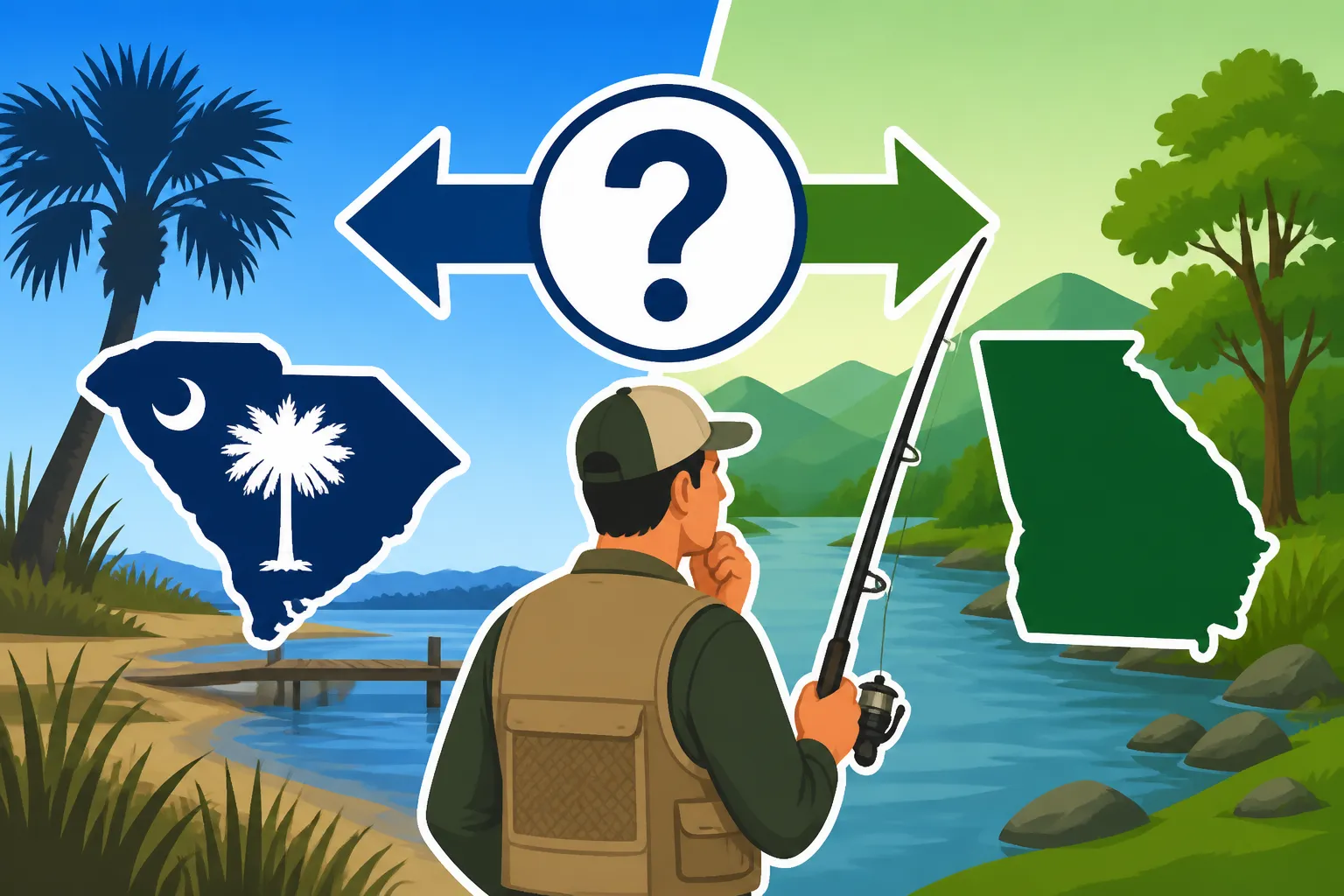
It’s a common scenario that can lead to a lot of head-scratching and, frankly, unnecessary stress: you’re planning a fishing trip, maybe to a beautiful spot along a river that just so happens to form a state line, and suddenly you’re wondering, "Do I need two fishing licenses for this?" This confusion is particularly prevalent when you’re looking at angling opportunities between South Carolina and its neighbors, especially Georgia, where the mighty Savannah River carves a natural boundary. Navigating these waters with confidence means understanding precisely whether your South Carolina fishing license holds up on the Georgia side of things.
Understanding Fishing License Reciprocity Between States
Fishing license reciprocity is one of those concepts that sounds simple on paper but can get tangled up in real-world application, especially when state lines are involved. Essentially, reciprocity means that two states have an agreement where a fishing license purchased in one state is also recognized as valid in certain waters of the other state. This is usually put in place to make life easier for anglers who want to enjoy shared natural resources without having to buy multiple licenses. But here’s the kicker: these agreements are often very specific and don't apply universally across all waters.
The General Rule: One State, One License
For the vast majority of fishing spots, the general rule of thumb holds true: you need a fishing license for the state whose waters you are actively fishing in. If you're dropping a line into a lake entirely within South Carolina, you need a South Carolina license. If you're on a pond exclusively in Georgia, you need a Georgia license. It seems straightforward, right? But think about those moments when you're casting from a boat, drifting with the current, and suddenly you're not quite sure which side of the imaginary line you're on. This is where the complexities begin, and why many anglers find themselves asking, "Do You Need Two Licenses to Fish Border Lakes?"
The truth is, without a specific agreement, states maintain their own independent licensing requirements, and ignorance of these rules isn't usually a valid excuse if a game warden checks your credentials. This is why it's so important to be proactive and informed, rather than relying on assumptions or old wives' tales about state lines. Your peace of mind, and your wallet, will thank you for doing your homework.
Border Waters: Where Things Get Tricky
Border waters are the true battleground for license reciprocity questions. These are rivers, lakes, and reservoirs that physically separate two states, creating a shared resource that both states manage. The Savannah River is the most prominent example when we talk about South Carolina and Georgia. Imagine yourself fishing for a trophy largemouth bass on Lake Hartwell; one bank is clearly South Carolina, the other is clearly Georgia. If your boat drifts into the middle, or you decide to fish closer to the "other" shore, which license do you need?
It’s easy to get confused. Some states have blanket agreements that say if you have either state's license, you're good to go anywhere on the shared waterway. Other states have more nuanced rules, perhaps designating only certain sections or only specific species under a reciprocal agreement. Sometimes, there's no agreement at all, meaning you absolutely need the license for the state you are in, no matter how inconvenient it might be. This is precisely why a lot of anglers end up carrying two licenses, just to be on the safe side, especially when purchasing one is as simple as a few clicks on a website like Amazon for a physical license holder, or directly from the respective DNR site.
South Carolina and Georgia Specifics: The Savannah River Exception
Now, let's get down to the nitty-gritty of South Carolina and Georgia. The good news for anglers who frequent the border between these two states is that there is a reciprocal agreement in place for certain shared waters. This is a huge relief, because it means you usually won't need to buy a South Carolina Fishing License and a Georgia license if you stick to these specific areas.
Fishing the Savannah River and Border Lakes
When it comes to the main stem of the Savannah River and its major impoundments that form the border between South Carolina and Georgia, such as Lake Hartwell, Richard B. Russell Lake, and J. Strom Thurmond Lake (also known as Clarks Hill Lake), the rules are designed to be angler-friendly. If you possess a valid resident or nonresident fishing license from either South Carolina or Georgia, you are generally allowed to fish in the reciprocal waters of the other state within these specific bodies of water.
This means if you have your South Carolina Fishing License Guide in hand and you're out on Lake Hartwell, you can confidently cast your line on both the South Carolina and Georgia sides of the lake without needing a separate Georgia license. The same applies if you're a Georgia license holder fishing on the South Carolina side of these particular reservoirs. It’s a wonderful example of interstate cooperation that benefits all of us who love to cast a line.
However, and this is a crucial "however," this reciprocity typically applies only to these specific border reservoirs and the main stem of the Savannah River itself. It does not extend to other lakes, rivers, or streams that are wholly within the borders of Georgia, nor does it typically cover tributaries of the Savannah River once they leave the main channel and enter solely one state's territory. For instance, if you decide to venture up a creek that's entirely within Georgia and feeds into Lake Thurmond, your South Carolina license might not cover you there. Always check the specific regulations for any smaller waterways you plan to explore. You can find detailed information on the South Carolina's Freshwater Fishing Regulations to understand the nuances.
How to Ensure You're Compliant
The best way to ensure you're always compliant is to do your homework before you head out. Here's a quick checklist to help you stay on the right side of the rules:
- Consult Official Sources: Always, always, always check the current regulations published by the South Carolina Department of Natural Resources (SCDNR) and the Georgia Department of Natural Resources (GADNR). These are the definitive sources for all licensing and reciprocity rules. You can often find these online or pick up a physical regulation handbook from a tackle shop.
- Understand "Reciprocal Waters": Familiarize yourself with the exact definitions of reciprocal waters. It's usually the main body of water forming the border, not every single inlet, creek, or side channel.
- Know Your License Type: Be aware of what your specific license covers. A freshwater license might not cover saltwater, and vice-versa, even within reciprocal agreements.
- Keep Your License Accessible: Whether it's a printed copy, a digital version on your phone, or a physical card, make sure your license is readily available for inspection. A waterproof case, perhaps purchased from Amazon, can be a real lifesaver for protecting your paper license or phone while on the water.
- When in Doubt, Ask: If you're truly unsure, contact the SCDNR or GADNR directly. A quick phone call or email can save you a lot of grief. It’s far better to ask than to assume and face potential Penalties for Fishing Without a License in South Carolina.
Remember, the reciprocal agreement between South Carolina and Georgia for border waters is a convenience, not an invitation to ignore all other state-specific regulations. You are still subject to the bag limits, size limits, and gear restrictions of the state whose waters you are fishing in, or the more restrictive of the two if both states have different rules for the same border water.
| Water Body | South Carolina License Valid? | Georgia License Valid? | Notes |
|---|---|---|---|
| Savannah River (Main Stem) | Yes | Yes | A valid SC or GA license is generally recognized for fishing the main stem of the river that forms the state boundary. However, this does not typically extend to tributaries once they are entirely within one state's jurisdiction. |
| Lake Hartwell | Yes | Yes | As a border lake, a valid SC or GA license allows you to fish anywhere on the lake, regardless of the perceived state line. |
| Richard B. Russell Lake | Yes | Yes | Similar to Lake Hartwell, a license from either state is valid for fishing the entire lake. |
| J. Strom Thurmond Lake | Yes | Yes | Also known as Clarks Hill Lake, a license from either state is reciprocally valid for fishing anywhere within its waters. |
| Waters Entirely within SC | Yes | No | For any lake, river, or pond that is fully within South Carolina's borders (e.g., Lake Murray, Lake Moultrie), only a South Carolina fishing license is valid. |
| Waters Entirely within GA | No | Yes | For any lake, river, or pond that is fully within Georgia's borders (e.g., Lake Lanier, Lake Oconee), only a Georgia fishing license is valid. This is the main point of confusion: your SC license won't work if you cross into Georgia to fish a non-border lake. |
Consequences of Non-Compliance
It's tempting to think, "What are the odds I'll actually get caught?" But relying on luck when it comes to fishing regulations is a risky gamble. Wildlife enforcement officers from both South Carolina and Georgia are diligent, especially on border waters, and they are fully authorized to check licenses and ensure compliance. The consequences of fishing without the appropriate license can range from inconvenient to downright costly, significantly dampening your fishing enthusiasm.
Fines and Legal Ramifications
If you are caught fishing without the correct license in South Carolina, or in Georgia where your South Carolina license is not valid, you're likely to face a citation. These aren't just minor slaps on the wrist. Fines can vary depending on the specific violation and the state, but they often start in the hundreds of dollars. For instance, in South Carolina, the Penalty for Fishing Without a License in South Carolina can be significant. Beyond the immediate fine, you might also face court costs, and in some cases, your fishing gear could be confiscated.
It's not just about the money, either. A violation could potentially go on your record, and repeated offenses could lead to more severe penalties, including the suspension of future fishing privileges. Imagine being banned from fishing the beautiful waters you love, all because you tried to save a few dollars or didn't take the time to confirm the rules. This scenario is a real possibility and a stark reminder that understanding rules like Fishing License Requirements in South Carolina is crucial.
Why It's Not Worth the Risk
Honestly, the cost and hassle of getting the right license are negligible compared to the potential headache of a violation. A typical South Carolina Annual Fishing License Price Breakdown shows that licenses are quite affordable, especially for residents. Even for non-residents, the cost is a small investment for the enjoyment of fishing legally and responsibly. You can usually acquire a license easily, often online through portals like Go Outdoors Online License Portal Explained or at local retailers.
Think about it: you invest in good rods, reels, tackle, maybe even a boat. Why would you skimp on the one piece of paper that legally allows you to pursue your passion? It's not just about avoiding fines; it's about being a responsible angler who respects wildlife laws and contributes to the conservation efforts that these license fees support. Every license purchased helps fund critical programs for fish stocking, habitat restoration, and enforcement, ensuring that future generations can enjoy the same fantastic fishing opportunities we do today. Plus, carrying the correct license simply makes your day on the water more relaxing, knowing you're fully compliant. You can always check South Carolina's Senior Fishing License Guide or South Carolina Nonresident Fishing License Guide for specific eligibility and options.
What Each License Covers
Understanding what each state's license generally covers can help clarify the need for specific licenses, especially when comparing Freshwater vs Saltwater Fishing License Costs Compared. While the reciprocal agreement simplifies things for border waters, knowing the broad strokes of each state's individual licensing system is always beneficial.
South Carolina's License Scope
In South Carolina, fishing licenses are primarily divided into freshwater and saltwater categories. Most resident and nonresident licenses allow you to fish for a variety of species within their respective domains. For example, a freshwater license covers species like largemouth bass, crappie, catfish, and various sunfish in the state's many lakes, rivers, and ponds. If you're heading to the coast, you'll need a saltwater license to pursue red drum, spotted seatrout, flounder, and other inshore and nearshore species.
There are different durations available, too, from annual licenses to shorter-term options like South Carolina 14-Day Fishing License Options, catering to locals and visitors alike. Exemptions also exist, such as for very young anglers, which is clearly laid out in Fishing License Rules for Kids in South Carolina. The key takeaway is that an SC license is your golden ticket for fishing within South Carolina's designated waters, both freshwater and saltwater, and, importantly, the reciprocal portions of border waters with Georgia.
Georgia's License Scope
Similarly, Georgia offers distinct licenses for freshwater and saltwater fishing. A Georgia freshwater license grants you access to their abundant inland fisheries, from the mountain streams to the expansive reservoirs like Lake Lanier and Lake Oconee, targeting species like bass, crappie, and catfish. For coastal anglers in Georgia, a saltwater license is essential for pursuing their rich marine resources.
Georgia also has various license types and durations, including annual and short-term options, designed to accommodate residents and non-residents visiting the state. Their system, much like South Carolina's, aims to provide accessible licensing while ensuring funds are generated for crucial fisheries management and conservation efforts. Just like for South Carolina, while your Georgia license works on reciprocal border waters like the Savannah River and its impoundments, it won't allow you to fish in other South Carolina-only waters.
In essence, while the specific border waters between South Carolina and Georgia offer a fantastic degree of flexibility thanks to reciprocity, the moment you step outside those defined reciprocal zones, you revert to the standard rule: you need the license for the state you are in. It's a system designed to make sense for shared resources, but still uphold the individual regulations and conservation efforts of each state.
Disclaimer
Please note that fishing regulations, including those concerning license reciprocity, can change. While every effort has been made to provide accurate and up-to-date information, it is always the angler's responsibility to verify current regulations with the South Carolina Department of Natural Resources (SCDNR) and the Georgia Department of Natural Resources (GADNR) before fishing. This guide is for informational purposes only and should not be considered legal advice.