South Carolina Fishing License Reciprocity on Border Waters
It’s a common headache for anglers: you’re fishing a beautiful body of water that straddles a state line, and suddenly you start wondering, "Do I need two fishing licenses?" The anxiety of accidentally breaking the law can really put a damper on what should be a relaxing day on the water. This guide is here to untangle the complexities of South Carolina fishing license reciprocity on border waters, specifically focusing on the agreements with our neighbors, North Carolina and Georgia, so you can cast your line with confidence.
Understanding Fishing License Reciprocity on Shared Waters
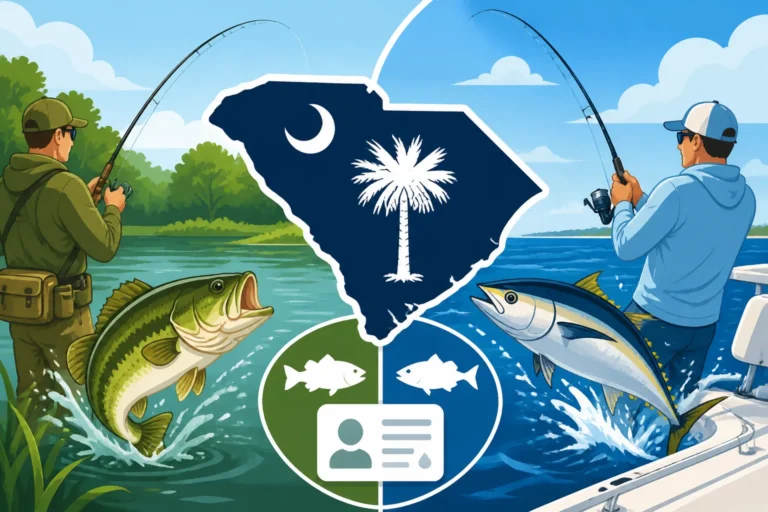
The concept of fishing license reciprocity on border waters is a real lifesaver for many anglers. Essentially, it means that instead of needing a separate fishing license for each state when you're on a shared body of water, one state's license might be recognized by the other. This saves you money, hassle, and allows you to enjoy a wider range of fishing spots without having to meticulously check your GPS to ensure you haven't drifted into another state's jurisdiction. However, it's not always a blanket rule, and knowing the specifics is absolutely crucial.
South Carolina and North Carolina Border Waters
When it comes to the border between South Carolina and North Carolina, the primary focus for most anglers is the majestic Catawba River Basin, particularly Lake Wylie. This expansive lake is a popular spot for both South Carolina and North Carolina residents, and thankfully, there's a good reciprocity agreement in place.
Historically, anglers possessing a valid South Carolina fishing license or a valid North Carolina fishing license could fish the waters of Lake Wylie without needing an additional permit from the other state. This agreement generally covers the main body of the lake itself. It means you can launch your boat from the North Carolina side with a South Carolina license, or vice-versa, and fish freely. This is a huge benefit, especially for those who live near the border and want to explore all that Lake Wylie has to offer. Imagine trying to chase a schooling stripers when you constantly have to worry about crossing an invisible line in the water – it would be maddening! The agreement helps prevent this unnecessary stress. Always remember that while your license might be reciprocal, specific rules like South Carolina's Freshwater Fishing Regulations regarding seasons or tackle can sometimes still vary depending on where you are.
South Carolina and Georgia Border Waters
The border waters shared between South Carolina and Georgia are perhaps even more significant for anglers, encompassing some of the most popular lakes in the Southeast: Lake Hartwell, Lake Russell, and Lake Thurmond (also known as Clark Hill Lake). The Savannah River, which forms a large part of the border, is also a key area. The reciprocity agreements here are comprehensive and incredibly beneficial for anglers on both sides.
For instance, if you're fishing on Lake Hartwell, whether you possess a valid South Carolina fishing license or a valid Georgia fishing license, you are generally permitted to fish the entire lake, regardless of which state's waters you are physically in. This applies to Lake Russell and Lake Thurmond as well. This reciprocal agreement simplifies things immensely. Many anglers have homes or favorite access points on one side of Lake Hartwell Fishing Spots on the South Carolina-Georgia Border, but want to explore structure or chase fish on the other side without fear of legal repercussions. This ensures that a local angler in Anderson, SC, can fish alongside someone from Hartwell, GA, both legally and without needing Do You Need Two Licenses to Fish Border Lakes? In the same vein, if you’re fishing the Savannah River Border With a Georgia or South Carolina License, the same principle generally applies, allowing for seamless fishing along this important waterway. These agreements are essential for fostering a sense of shared resource and community among anglers, encouraging conservation efforts that benefit both states.
What Reciprocity Agreements Actually Cover
While the idea of reciprocity is fantastic, it's vital to understand the exact scope of these agreements. It's not just about the license itself; other regulations can come into play, and misunderstanding them can still lead to fines or worse.
Fishing License Requirements on Border Waters
The core of reciprocity is that a resident or nonresident license from one state (South Carolina, North Carolina, or Georgia, depending on the border) is recognized as valid for fishing in the shared border waters of the other state. For example, a South Carolina annual freshwater fishing license should be sufficient for you to fish Lake Wylie or Lake Hartwell, even in the parts that technically fall within North Carolina or Georgia, respectively. This saves you the expense and hassle of purchasing multiple licenses.
However, there are often caveats. These agreements typically cover recreational fishing only. If you're engaging in commercial fishing, using specialized gear not common for recreational angling, or participating in tournaments that require specific permits (beyond a general fishing license), you must check with both state agencies. Also, remember that your license must be valid. An expired license from South Carolina won't magically become valid in Georgia just because of reciprocity. Always ensure your South Carolina Fishing License Renewal Basics are up to date before hitting the water. The point is to make general recreational fishing accessible, not to bypass fundamental licensing requirements. Many anglers find it helpful to keep a digital copy of their license on their phone or even a laminated copy readily available in their tackle box, perhaps stored in a waterproof case that you might find on Amazon.
Bag Limits and Size Restrictions: The Hidden Traps
Here’s where many anglers get tripped up, even when they understand the license reciprocity. While your license might be valid across state lines, the specific fishing regulations regarding bag limits, size restrictions, and sometimes even seasonal closures can still differ between the two states, even on the same shared body of water.
Let’s take Lake Hartwell, for example. While your South Carolina license might be valid for fishing the entire lake, the Georgia Department of Natural Resources (DNR) and the South Carolina Department of Natural Resources (SCDNR) might have slightly different rules for certain species. Imagine you're targeting striped bass; South Carolina might have a slightly different minimum size or creel limit than Georgia. If you catch a fish that is legal under South Carolina's rules but not under Georgia's, and you are fishing in Georgia waters (even with your SC license), you could still be in violation.
This is a critical point of confusion and one of the primary reasons to always consult both state's regulations before fishing border waters. Don't assume that just because your license is valid, all the rules are uniform. These differences are often subtle but can lead to significant penalties. For instance, you might be accustomed to South Carolina Redfish Slot Limit Rules if you fish the coast, but inland species might have different, less forgiving rules. Always check the official SCDNR and Georgia DNR or North Carolina Wildlife Resources Commission websites for the most current information. A quick check of a compact, waterproof guide to regulations, perhaps one you could easily find on Amazon, can prevent a lot of headaches.
Here's a quick overview of common border waters and their general reciprocity rules:
| Border Water Name | Shared States | General License Reciprocity | Specific Considerations (Always Verify Current Rules) |
|---|---|---|---|
| Lake Wylie | SC & NC | Yes, one state's license is generally valid across the entire lake. | Check bag limits/size for specific species. |
| Lake Hartwell | SC & GA | Yes, one state's license is generally valid across the entire lake. | Bag limits, size restrictions, and seasons can differ by state. |
| Lake Russell | SC & GA | Yes, one state's license is generally valid across the entire lake. | Bag limits, size restrictions, and seasons can differ by state. |
| Lake Thurmond (Clark Hill Lake) | SC & GA | Yes, one state's license is generally valid across the entire lake. | Bag limits, size restrictions, and seasons can differ by state. |
| Savannah River | SC & GA | Yes, one state's license is generally valid in the river itself, not tributaries. | Check specific boundaries and tributary rules. |
| Catawba River | SC & NC | Generally reciprocal on mainstem, but check specific sections near dams or impoundments. | Ensure you're clear on where the mainstem applies. |
Practical Advice for Border Water Anglers
Navigating border water regulations can feel like a minefield, but with a bit of foresight and diligent checking, you can enjoy these fantastic fisheries without worry. Don't let the paperwork detract from your passion for fishing!
Checking Current Regulations from Official Sources
This cannot be stressed enough: always consult the official wildlife and fisheries agencies for the most current regulations. Laws can change, sometimes annually, and what was true last season might not be true today.
For South Carolina, the primary source is the South Carolina Department of Natural Resources (SCDNR). Their website is comprehensive and provides detailed information on all South Carolina's Freshwater Fishing Regulations and saltwater rules, including any reciprocity agreements. For North Carolina, you'll want to check the North Carolina Wildlife Resources Commission. For Georgia, it's the Georgia Department of Natural Resources (DNR), Wildlife Resources Division. These sites will have the most up-to-date information on license requirements, bag limits, size restrictions, and any specific rules pertaining to border waters. Before heading out, especially if you haven't fished a particular border water in a while, take five minutes to refresh your memory. You can even find specific region maps that might highlight state lines on a fishing app on your phone, or you might order a detailed paper map from Amazon to keep in your boat.
Print out relevant sections or save them to your phone as a PDF. Having a hard copy or easily accessible digital version can be incredibly helpful if a game warden asks about your compliance, especially in a spot where cell service might be spotty. Remember, ignorance of the law is generally not a valid defense if you're caught fishing without a license or violating other regulations. The Penalties for Fishing Without a License in South Carolina can be significant, so it's always better to be safe than sorry.
What to Do If You Are Unsure About a Regulation
If you're out on the water, or even planning your trip, and you encounter a situation where you're just not sure about a particular rule on a border water, err on the side of caution. Don't risk it.
The best course of action is to contact the relevant state wildlife agencies directly. Both the SCDNR and their counterparts in North Carolina and Georgia have call centers or contact forms where you can ask specific questions. While it might take a little time to get an answer, it's far better than facing a citation. For example, if you're fishing a small tributary that flows into a larger reciprocal lake, it might not be covered by the reciprocity agreement. Or if you're using a specific type of bait or tackle, there might be state-specific restrictions.
Another strategy, especially on the water, is to observe what other local anglers are doing, but only as a general guide. While most experienced anglers follow the rules, there's always a chance someone else might be mistaken or unaware. The ultimate responsibility lies with you. When in doubt, scale back to the most conservative interpretation of the rules you know. For example, if one state has a 12-inch minimum and the other has an 11-inch, stick to the 12-inch minimum to be safe. If you're planning a trip, a comprehensive guide like the South Carolina Fishing License Guide might provide more general context, but always seek the specific border water details from the official sources.
The Benefits and Challenges of Border Water Fishing
Fishing border waters offers a unique blend of opportunities and potential headaches. Understanding both sides of the coin can help you maximize your enjoyment while minimizing stress.
Expanding Your Fishing Horizons
The most obvious benefit of reciprocity on border waters is the sheer expansion of your fishing territory. Instead of being confined to one side of a lake or river, you can explore the entire body of water. This means access to more diverse habitats, potentially better fishing spots, and the chance to chase fish across their entire range. For example, migratory species like striped bass in the Savannah River might move between South Carolina and Georgia waters seasonally. With reciprocity, you're free to follow them.
This expanded access also means more public boat ramps, more shoreline access points, and generally more options for your fishing trips. If your favorite ramp on the South Carolina side of Lake Wylie is crowded, you might find a less busy one on the North Carolina side. It encourages exploration and can introduce you to new techniques or target species you might not have considered. Plus, it fosters a sense of regional community among anglers, as people from different states share the same passion on the same waters. You might even discover a new favorite fishing lodge or tackle shop across the border, perhaps finding specialized gear that's hard to get locally, or browsing for a specific brand of lure on Amazon before your next trip.
Potential Pitfalls and Misunderstandings
Despite the conveniences, border water fishing isn't entirely without its challenges. The primary pitfall, as highlighted earlier, is the potential for differing regulations beyond just the license itself. Bag limits, size restrictions, seasonal closures, gear restrictions (like specific types of cast nets or trotlines), and even rules about consuming fish (due to local advisories) can vary from one state to the next.
Imagine you're fishing on Lake Hartwell and you catch a large stringer of crappie. If you happen to be in Georgia waters, but you're only familiar with South Carolina's South Carolina's Freshwater Fishing Regulations, you could inadvertently keep too many fish or fish that are under the minimum size for Georgia. This isn't just a minor infraction; it can result in significant fines and even forfeiture of your catch and gear. These situations are easily avoidable with a little preparation, but they are very real risks for the unprepared angler. It’s also important to remember that reciprocity agreements often apply to the main body of water, but not necessarily to every small tributary or creek that flows into it. If you venture too far up a small creek that is entirely within one state's boundary, you might suddenly be subject to that state's license requirements exclusively. Always double-check maps and official guidelines to ensure you're covered.
Disclaimer
Fishing regulations and reciprocity agreements can change. While this guide provides a comprehensive overview based on current information, always verify the latest rules and requirements directly with the South Carolina Department of Natural Resources, North Carolina Wildlife Resources Commission, and Georgia Department of Natural Resources before heading out. Your responsibility as an angler is to know and abide by all applicable laws.