Does a South Carolina Fishing License Work in North Carolina?
It's a common question that pops into every angler's mind when planning a trip across state lines: "Do I really need another fishing license?" You've already got your trusty South Carolina fishing license in your wallet, and you're eyeing those promising fishing reports from just over the North Carolina border. The thought of navigating a whole new set of regulations, and shelling out more cash, can be a real headache. This guide is here to clear up that confusion, specifically addressing whether your South Carolina fishing license will legally cover you in North Carolina waters and what you need to know to stay on the right side of the law.
Understanding Fishing License Reciprocity Between States
Let's talk about fishing license reciprocity, because it's a concept that often causes more head-scratching than it should. Essentially, reciprocity means that two states have an agreement where one state's fishing license is recognized as valid in certain waters of the other state, usually when those waters form a shared border. It's designed to make life easier for anglers who live near or fish frequently on these shared boundaries.
The General Rule for State Borders
The most common scenario for reciprocity applies to waters that literally form the border between two states. Think of a river that separates State A from State B. Instead of needing two licenses to fish from one bank to the other, or even to drift down the middle, a reciprocity agreement might allow you to fish the entire border water with just one of the state's licenses. This is incredibly convenient, especially for those who live right on the line. For example, South Carolina has specific agreements for border waters like the Savannah River with Georgia, allowing you to fish certain stretches with either a South Carolina or a Georgia license. You can find more details in our guide on South Carolina Fishing License Reciprocity With Georgia.
However, this isn't a blanket rule that applies everywhere. Not all border waters have these agreements, and certainly, non-border waters almost never do. The agreements are usually quite specific about which bodies of water are covered and sometimes even what species of fish. It's never safe to assume; you always have to check the current regulations from both state wildlife agencies. The intent is to simplify things, but if you don't do your homework, it can easily complicate your trip.
Why Reciprocity Matters for Anglers
For us anglers, understanding reciprocity isn't just about saving a few bucks on a second license; it's about avoiding potential legal trouble and ensuring our fishing trips are smooth and enjoyable. Imagine driving for hours, getting to your favorite spot, only to be approached by a wildlife officer and told you're fishing illegally. That's a surefire way to ruin a perfectly good day on the water.
Beyond the legalities, reciprocity highlights a shared commitment between states to manage fisheries effectively. By agreeing on shared access, they also often collaborate on stocking programs, habitat protection, and harvest regulations for those specific shared waters. It means that the fish you're targeting—whether it's bass, catfish, or panfish—are being managed for sustainability across state lines. This ensures a healthier fishery for everyone in the long run. Plus, for those of us living close to a border, it opens up a much larger playground without the bureaucratic hurdles of obtaining multiple licenses for every single trip.
South Carolina and North Carolina: A Clear Distinction
Now, let's get down to the nitty-gritty of South Carolina and North Carolina. This is where a common misconception often surfaces, and it's vital to get it right before you pack your tackle box and head north (or south!).
No Direct Border Water Reciprocity
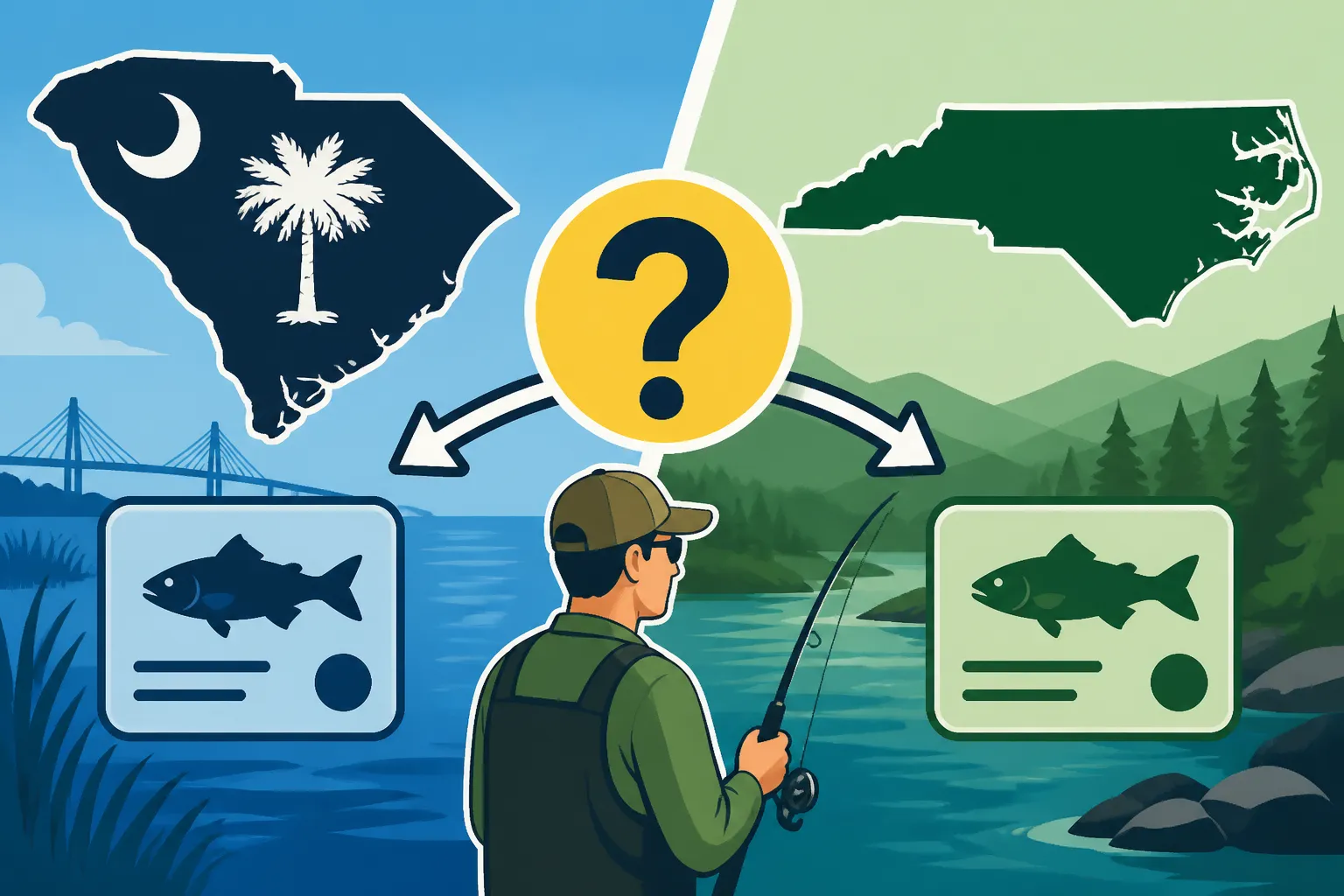
Here's the straightforward answer: Generally speaking, no, a South Carolina fishing license does not work in North Carolina waters, and vice versa. Unlike states that share significant rivers or lakes as their border, South Carolina and North Carolina's shared boundary is primarily land-based. There aren't any major, shared water bodies that naturally fall under a comprehensive reciprocity agreement for fishing licenses between these two states.
This means that if you're fishing in any lake, river, or coastal water located entirely within North Carolina's state lines, you must possess a valid North Carolina fishing license. The same holds true for North Carolina residents visiting South Carolina; they would need a South Carolina Fishing License Guide to fish here. This can be a bit of a bummer if you live close to the border, say in Fort Mill, SC, and want to fish just a few miles north in Lake Wylie, which straddles both states but has different rules for different sections. Always check the specific body of water. For general information on licenses, you might want to read about Fishing License Costs in South Carolina.
It's tempting to think that since the states are neighbors, there must be some overlap, but unfortunately, for these two, that's rarely the case when it comes to fishing permits. Each state operates under its own distinct set of wildlife laws and regulations, and these are enforced independently.
The Importance of Separate Licenses
Given the lack of broad reciprocity, the importance of purchasing a separate fishing license for each state you plan to fish in cannot be overstated. If you're a South Carolina resident planning a weekend trip to the Outer Banks for some surf fishing or a freshwater excursion to Fontana Lake, you will need a North Carolina fishing license. Conversely, if you're an angler from Charlotte, NC, looking to experience the amazing bass fishing on Lake Murray or the redfish action in Charleston Harbor, you'll need to secure a South Carolina license.
Think of it as two separate jurisdictions, each with its own rules, fees, and conservation programs. Your license fees contribute directly to the management and protection of the fisheries within that specific state. So, when you buy a South Carolina Nonresident Fishing License Guide, you're directly supporting conservation efforts in the Palmetto State. It’s not just a piece of paper; it's your contribution to healthy fish populations and accessible fishing opportunities in the waters you're enjoying.
It’s crucial to understand that even if you're just dipping a line into a small creek that happens to flow into another state, if the segment of water you're fishing is within the geographical bounds of that other state, you need their license. This level of diligence protects you from legal repercussions and ensures you're a responsible angler contributing to the fisheries you enjoy. You can often buy these licenses online, saving a trip to a tackle shop. Our guide on Buying a South Carolina Fishing License Online can give you an idea of how straightforward the process usually is.
What Happens If You Fish in North Carolina Without an NC License?
Let's talk about the downside of not following the rules. It might seem like a minor offense, especially if you "accidentally" cross a state line, but fishing without the proper license can lead to some significant and unpleasant consequences. It's far better to be prepared than to face these issues on what should be a relaxing day outdoors.
Potential Penalties and Fines
If you're caught fishing in North Carolina waters with only a South Carolina license, or no license at all, you're looking at more than just a stern talking-to. Fishing without a valid license is generally considered a misdemeanor offense in North Carolina, just as it is in South Carolina. The exact penalties can vary depending on the discretion of the wildlife officer, the specific circumstances (e.g., if you were also violating bag limits), and whether it's a first offense or a repeat violation.
Typically, you can expect a hefty fine. These fines aren't insignificant; they can easily be several times the cost of an annual fishing license. In North Carolina, fines for fishing without a license often start in the hundreds of dollars, plus court costs. On top of that, wildlife officers have the authority to confiscate your fishing gear, including rods, reels, and even your boat in some severe cases, though this is usually reserved for more egregious violations. Imagine losing your prized fishing rod, the one you painstakingly saved up for, all because you didn't spend $30 on the correct license. It's a bitter pill to swallow. Our article on Penalties for Fishing Without a License in South Carolina gives a similar picture of what to expect in the Palmetto State.
Enforcement and Your Responsibility
It's a common misconception that remote fishing spots are somehow "off the radar" for wildlife enforcement. This couldn't be further from the truth. Wildlife officers in both South Carolina and North Carolina are highly dedicated and patrol vast areas, including remote lakes, rivers, and coastal marshes. They have boats, ATVs, and even sometimes aerial surveillance to ensure compliance. They're not out to ruin your day, but they are absolutely committed to protecting the state's natural resources and ensuring fair play.
As an angler, the responsibility for knowing and adhering to the regulations falls squarely on your shoulders. Ignorance of the law is not a valid defense. Before every trip, especially when venturing into new territory or across state lines, it's your duty to check the current fishing regulations for that specific body of water and state. This includes understanding South Carolina's Freshwater Fishing Regulations or Saltwater Fishing Rules in South Carolina, and of course, North Carolina's equivalents. A quick visit to the North Carolina Wildlife Resources Commission website can provide all the information you need on licenses, regulations, and even where to purchase your permit.
Staying informed means you can enjoy your time on the water worry-free, knowing that you're contributing to conservation efforts and setting a good example for others, especially younger anglers who might be learning from you.
Securing Your North Carolina Fishing License
Okay, so you've accepted that you'll need a separate North Carolina license. Great! Now, let's talk about how to get one, because it's usually a pretty straightforward process, designed to get you on the water quickly.
Options for Non-Resident Anglers
North Carolina makes it relatively easy for out-of-state anglers to purchase a fishing license. Just like South Carolina, they offer several options to cater to different trip lengths and needs.
- Online: The quickest and often most convenient way is to purchase your license directly through the North Carolina Wildlife Resources Commission (NCWRC) website. Their online portal is user-friendly, allowing you to select the appropriate license type (freshwater, saltwater, or unified), input your information, and pay securely. You can usually print a temporary license immediately, which is valid until your physical license arrives by mail.
- In-Person: Many bait and tackle shops, sporting goods stores (like a Bass Pro Shops or Cabela's), and even some county government offices in North Carolina are authorized license agents. This is a great option if you prefer to speak to someone, or if you're already at a tackle shop stocking up on bait and lures. Plus, the folks at these local spots often have up-to-the-minute fishing reports and local knowledge that can be invaluable.
- By Phone: Some states also offer a phone-in option, though online is usually faster if you have internet access.
For non-residents, North Carolina offers various license types, including annual licenses for those who plan multiple trips, and short-term licenses (like a 10-day or 3-day option) which are perfect for a weekend getaway or a single planned vacation. These short-term options are generally more cost-effective if you're not going to be fishing in NC for an extended period. This is similar to the South Carolina 14-Day Fishing License Options available in our state. You can compare these with options like the Nonresident Freshwater Fishing License Costs in South Carolina to see what best fits your budget and fishing plans.
Planning Your Multi-State Fishing Adventures
For dedicated anglers who love exploring different waters, planning multi-state fishing adventures can be incredibly rewarding. It allows you to chase different species, experience varied environments, and broaden your angling horizons. However, it requires a little bit of foresight and organization.
Before you even hit the road, make a checklist. This should include:
- Checking License Requirements: Confirming the exact license needed for each state and the specific waters you intend to fish. Don't forget to look into Fishing License Age Requirements in South Carolina if you're bringing kids along, as these vary by state too.
- Reviewing Regulations: Each state has its own set of rules regarding bag limits, size limits, seasons, and gear restrictions. What's legal for redfish in South Carolina might be different in North Carolina, or even different for different sections of the same waterway. You want to be sure you understand the nuances. For example, South Carolina Redfish Slot Limit Rules will differ from North Carolina's.
- Gear Preparation: Ensure your gear is appropriate for the species and conditions you'll encounter in both states. While many tackle items are universal, specific lures or bait types might be more effective in one location than another. Websites like Amazon can be a great resource for getting last-minute gear, from a new set of pliers to specialized saltwater lures, delivered right to your door before your trip.
- Accommodation & Logistics: Booking your stay, understanding boat ramp access, and knowing where to find bait and tackle shops are all crucial for a smooth trip.
By taking these proactive steps, you can avoid frustrating delays, unexpected fines, and maximize your time enjoying the sport you love. The initial effort in planning pays dividends in peace of mind and successful fishing trips across state lines.
A Comparison of SC and NC Fishing Licenses
To help clarify the differences, here's a brief comparison of some general fishing license aspects for South Carolina and North Carolina. Remember that specific costs and regulations can change, so always check the official state wildlife agency websites for the most current information.
| Feature | South Carolina | North Carolina |
|---|---|---|
| Primary Issuing Authority | SC Department of Natural Resources (SCDNR) | NC Wildlife Resources Commission (NCWRC) |
| Online Purchase | Yes, via Go Outdoors South Carolina portal | Yes, via NCWRC website portal |
| In-Person Purchase | License vendors (tackle shops, chain stores) | License agents (tackle shops, chain stores) |
| Resident Annual Freshwater | Approx. $10 | Approx. $16 |
| Resident Annual Saltwater | Approx. $15 | Included in Unified Resident (approx. $26 for basic) |
| Nonresident Annual Freshwater | Approx. $35 | Approx. $32 |
| Nonresident Annual Saltwater | Approx. $75 | Included in Unified Nonresident (approx. $43 for basic) |
| Short-Term Options (Nonresident) | 14-Day, 3-Year | 10-Day, 3-Day |
| Border Water Reciprocity | Yes, with Georgia (Savannah River) | Limited, primarily with Virginia on specific waters |
| Digital License | Digital copy often accepted on phone | Digital copy accepted on phone |
Note: Prices are approximate as of the last update and are subject to change by state agencies. Always verify current costs and regulations on the official SCDNR and NCWRC websites.
This table highlights that while both states offer similar ways to purchase licenses, the pricing structures and, most importantly, the reciprocity agreements differ significantly. North Carolina tends to offer more "unified" license options that cover both fresh and saltwater, simplifying things for anglers who fish both, whereas South Carolina typically requires separate freshwater and saltwater licenses, or a combo. For instance, you can explore South Carolina Annual Fishing License Price Breakdown for more SC-specific cost details.
Final Thoughts on Planning Your Trip
Fishing in the Carolinas is an incredible experience, offering diverse opportunities from mountain trout streams to expansive coastal estuaries. The beauty of being able to explore both states is immense, but it absolutely hinges on understanding and respecting each state's individual regulations.
While it might feel like a minor inconvenience to purchase an additional license for a neighboring state, remember that these fees are directly invested back into conservation efforts, habitat restoration, and the enforcement that protects our beloved fisheries. It's a small price to pay for the privilege of enjoying these natural wonders.
Before your next fishing trip that might take you across the South Carolina-North Carolina line, make sure you've done your homework. A quick visit to the South Carolina DNR and North Carolina Wildlife Resources Commission websites will give you all the most current information on licenses, regulations, and any specific alerts. Don't let a simple misunderstanding turn a great day on the water into a costly one. Prepare properly, fish responsibly, and most importantly, enjoy every moment out there! Whether you're targeting South Carolina's Best Bass Fishing Lakes or chasing coastal species, being prepared is key.
Disclaimer
Please note that fishing regulations, license requirements, and costs are subject to change by state wildlife agencies. Always consult the official South Carolina Department of Natural Resources (SCDNR) and North Carolina Wildlife Resources Commission (NCWRC) websites for the most current and accurate information before planning your fishing trip. This guide is for informational purposes only and should not be considered legal advice.