How Rare Is a Sturgeon Catch in South Carolina?
Many anglers dream of battling a truly ancient, impressive fish, something that whispers tales of prehistory. But if you’re fishing in South Carolina and hoping to hook into a sturgeon, prepare for a dose of reality: these magnificent creatures are incredibly rare, highly protected, and encountering one is less about angling skill and more about pure, unadulterated luck. This guide will walk you through why sturgeon are such an uncommon catch in the Palmetto State, the strict rules you must follow, and what to do if you happen to cross paths with one of these living fossils.
The Ancient Giants: Sturgeon Species in South Carolina
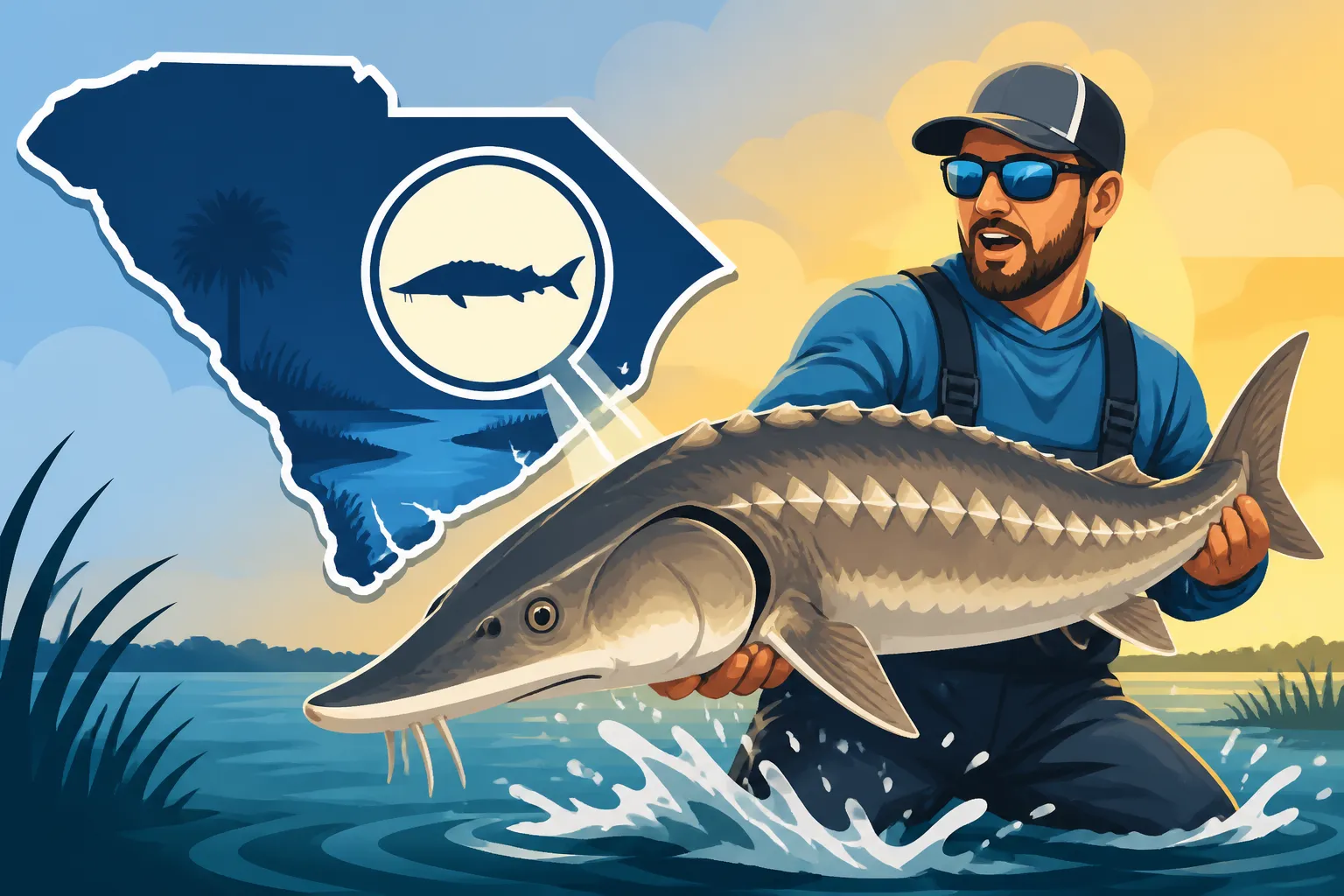
For generations, the rivers and coastal waters of South Carolina have been home to some truly remarkable fish, and among them, the sturgeon stands out. These aren't your typical bass or flounder; sturgeon are survivors, with a lineage stretching back millions of years. Their appearance — armored plates instead of scales, elongated bodies, and distinctive barbels near their mouths — makes them unmistakable. However, their story in South Carolina, and across much of their range, is one of decline, making any encounter with them incredibly special, and incredibly rare.
A Glimpse into the Past: Historical Abundance
Imagine a time when sturgeon were a common sight in South Carolina's major rivers. Early settlers and Native Americans alike depended on them, both for their flesh and their valuable roe. These fish were a significant part of the ecosystem and the economy. But like many slow-growing, long-lived species, sturgeon were vulnerable to human activity. Overfishing in the 19th and early 20th centuries, coupled with rampant habitat destruction, took a devastating toll. Dams blocked their migratory paths to crucial spawning grounds, pollution degraded their waters, and dredging altered the river bottoms they relied on. Their slow reproductive cycle, with females taking many years to reach maturity, meant they couldn't rebound quickly from these pressures. What was once abundant became critically scarce, pushing them to the brink.
Meet the Locals: Atlantic and Shortnose Sturgeon
In South Carolina, we primarily have two species of sturgeon: the Atlantic Sturgeon and the Shortnose Sturgeon. Both are anadromous, meaning they spend significant portions of their lives in saltwater estuaries and the ocean, but migrate upstream into freshwater rivers to spawn.
The Atlantic Sturgeon is the larger of the two, truly a river giant that can grow up to 14 feet long and weigh over 800 pounds! Think about trying to reel in something that big – it's a testament to their strength and size. They have a long, pointed snout and five rows of bony plates, called scutes, running along their bodies. Their coloration is typically dark olive or bluish-brown on top, fading to a lighter belly. They're built for deep, slow-moving currents and bottom feeding. To learn more about these fascinating creatures, check out Atlantic Sturgeon in South Carolina: A Rare Catch.
The Shortnose Sturgeon is a smaller, more estuarine-dependent cousin. While still a substantial fish, they typically top out around 4.5 feet long and weigh up to 60 pounds. They have a shorter, blunter snout compared to the Atlantic sturgeon, and their scutes are less pronounced. Both species are bottom feeders, using those barbels near their mouths to sift through substrate for invertebrates and small fish. They share many of the same river systems, and their lives are intrinsically linked to the health of our waterways. You can delve deeper into their specific characteristics by reading Shortnose Sturgeon: South Carolina's Protected River Giant. It's a humbling thought to know these ancient fish are still navigating our waters, a testament to their enduring resilience and the ongoing efforts to protect them. The fact that both are considered South Carolina's Sturgeon: The State's Rarest River Giants should really underscore their unique status.
Protected Status: Why You Can't Target Them
It's one thing to hear a fish is "rare," but for sturgeon in South Carolina, "rare" also means "off-limits." This isn't just a suggestion; it's a legal mandate rooted in their critically low population numbers. For anglers who love the thrill of the catch, this can be a bit disheartening, but understanding why these rules are in place is crucial for their survival.
Federal Protection: Endangered and Threatened Species
This is the big one. Both the Atlantic Sturgeon and the Shortnose Sturgeon are listed under the Endangered Species Act by the federal government. This isn't a state-level designation that might vary; this is a serious, nationwide protection. For Atlantic Sturgeon, different population segments are listed as either endangered or threatened, while Shortnose Sturgeon are endangered throughout their range.
What does "endangered" or "threatened" mean for you, the angler? It means it is strictly illegal to fish for, catch, harm, or possess either of these species. Period. There is no open season, no bag limit (because you can't keep any), and no special license that allows you to target them. The goal is to give these populations every possible chance to recover without any additional human-induced mortality. The penalties for violating these protections are severe and can include substantial fines and even jail time. It’s a stark reminder of Why Sturgeon Are a Protected Species and the importance of respecting these regulations. If you're wondering, Is It Legal to Catch Sturgeon in South Carolina?, the answer is a resounding no if it's intentional, and very carefully if accidental.
Accidental Encounters: The "Do Not Disturb" Rule
Despite your best intentions, if you spend enough time fishing in South Carolina's river systems, particularly in areas where sturgeon are known to migrate, you might have an accidental encounter. This is where your knowledge and quick actions become vital. It's not about being a bad angler; sometimes, these fish just happen to be in the wrong place at the wrong time when you're targeting catfish or stripers.
If you do accidentally hook a sturgeon, the absolute most important rule is: do not remove it from the water. Sturgeon are very sensitive to air exposure, and taking them out of their element, even for a quick photo, can cause severe stress or even death.
Here’s what you need to do:
- Keep the fish in the water: If possible, maneuver your boat or yourself to keep the sturgeon fully submerged.
- Handle with care: Avoid touching its eyes or gills. Minimize contact with its body to protect its delicate mucus layer and scutes.
- Cut the line: If you can’t easily remove the hook without causing more stress or injury, cut the line as close to the hook or the fish’s mouth as possible. Don’t try to yank it out. Having tools like long-nose pliers or even small bolt cutters (many anglers keep a pair of these on board, and they’re readily available on Amazon) can be incredibly helpful for a quick and clean release.
- Release gently: Allow the fish to swim away on its own power. Don't throw it back or handle it roughly.
The "do not disturb" rule is paramount because these fish are fighting for survival. Every individual sturgeon is critical to the species' recovery. By following these careful handling techniques, you're not just avoiding a hefty fine; you're actively contributing to the conservation of a truly unique and endangered part of South Carolina's natural heritage.
Where and How Accidental Catches Might Occur
Given their protected status, intentionally seeking out sturgeon is, as we've discussed, a big no-no. However, understanding their habits and habitats can help you be prepared if an accidental encounter occurs. It also sheds light on just how rare, and yet how possible, these chance meetings are when you're targeting other, more common bottom-dwelling species in the right locations.
River Systems and Habitats
Sturgeon are primarily found in South Carolina's major river systems that flow into the Atlantic Ocean. These are the historical highways they've used for millennia to migrate between saltwater and freshwater. Key rivers where both Atlantic and Shortnose sturgeon have been documented include:
- The Cooper River: Flowing through the Charleston area, this river has significant historical sturgeon populations and still sees migrations.
- The Edisto River: Known as one of the longest free-flowing blackwater rivers in North America, its pristine nature provides valuable habitat. Anglers pursuing other species in Edisto River Fishing Spots in South Carolina might inadvertently cross paths with a sturgeon.
- The Santee River: Part of the massive Santee-Cooper system, this river is a historical stronghold for sturgeon. Exploring Santee River Fishing Spots in South Carolina means being aware of their potential presence.
- The Savannah River: Forming part of the border with Georgia, this river system is also important for sturgeon.
- The Waccamaw River: Further north, this river also supports sturgeon populations.
- The Congaree River: Near Columbia, this river is another crucial migratory pathway. You might be targeting catfish in Congaree River Fishing Spots Near Columbia, South Carolina and find yourself with a surprising tug on the line.
These fish prefer deep channels, slow-moving currents, and river bottoms with a mix of sand, gravel, and mud, where they can effectively forage for food. This preference often means they inhabit the same types of deep holes and bends that attract large catfish and striped bass, increasing the potential for accidental bycatch when anglers are specifically targeting those species.
Fishing Techniques and Baits that Attract Them
So, if you're not trying to catch a sturgeon, how does it happen? Typically, it occurs when anglers are using methods and baits designed for other large, bottom-feeding fish.
The most common scenario involves bottom fishing with heavy tackle. If you're using a stout rod and reel, a heavy sinker, and a large hook with substantial bait like cut mullet, chunks of shad, shrimp, or even large nightcrawlers (all readily available, including specialized bait rigs from retailers like Amazon) — you're essentially presenting a meal that a sturgeon might find appealing while it's foraging along the riverbed. Catfish anglers, in particular, often employ these techniques, and their setup for a trophy blue or flathead can easily attract an unsuspecting sturgeon. Similarly, anglers targeting large striped bass in the deeper sections of rivers might also accidentally hook one, especially if using live bait or large artificials that run deep.
Sturgeon have excellent senses, using those barbels to detect food along the bottom. If your bait is sitting on the bottom in a deep channel or a river bend where sturgeon are known to travel, there's always a chance they'll pick it up. This isn't about blaming the angler; it's simply a reality of how indiscriminate certain fishing methods can be when applied in shared habitats. Focusing on Catfish Bottom Fishing Basics highlights techniques that, while effective for cats, might also lead to these rare encounters.
Seasonal Movements and Spawning Runs
Understanding the seasonal movements of sturgeon can also give you an idea of when they might be more concentrated in certain areas, again, not for targeting them, but for heightened awareness.
Sturgeon are migratory. For both species, spring is a crucial time as they migrate upstream from the estuaries into freshwater river sections to spawn. During these spawning runs, they are naturally more concentrated in certain areas of the rivers, making accidental encounters slightly more probable for anglers fishing those same areas for spring species. After spawning, they will gradually move back downstream. Some Year-Round Fishing Techniques in South Carolina might put you in their path.
While their exact movements can be complex and influenced by factors like water temperature and flow, knowing that spring often brings them into more confined river stretches can make you more vigilant if you're fishing for other species in those specific locales. It's a subtle but important piece of knowledge for any responsible angler in South Carolina.
Anglers as Stewards: Supporting Sturgeon Recovery
Even if you can't actively fish for sturgeon, every angler has a vital role to play in their recovery. It's about being a good steward of our natural resources and understanding that conservation is a collective effort. Your actions on the water, whether it's a planned outing or an accidental encounter, can make a difference in the long-term health of these precious fish populations.
Reporting Sightings and Encounters
This is one of the most direct ways anglers can contribute to sturgeon conservation. If you are lucky enough to accidentally hook a sturgeon, or even just see one jump or swim by, reporting that information to the South Carolina Department of Natural Resources (SCDNR) is incredibly valuable.
Why? Because every bit of data helps. SCDNR biologists rely on these reports to:
- Track populations: Even a single sighting can provide clues about where sturgeon are currently present and in what numbers.
- Understand movements: Repeated sightings in specific areas during certain times of the year help map their migratory patterns and identify critical habitats.
- Assess health: Observations of fish condition can give insights into environmental factors affecting them.
When reporting, try to include as much detail as possible, such as:
- The exact date and time of the sighting or encounter.
- The precise location (GPS coordinates are ideal, but specific landmarks work too).
- An estimate of the fish's size.
- A description of its condition upon release (if hooked).
- Any distinguishing features you might have noticed.
Remember, reporting an accidental catch is not about getting in trouble, as long as you followed proper release protocols. It’s about being responsible and helping scientists gather the crucial information they need to protect these fish.
Practicing Responsible Angling
Beyond reporting, adopting a general philosophy of responsible angling benefits all species, including sturgeon.
- Catch-and-Release Best Practices: Even when targeting common species, using best practices for catch and release — minimizing fight time, using appropriate gear, avoiding excessive handling, and quickly returning fish to the water — reduces stress on all fish, including any accidental bycatch.
- Appropriate Gear: Using gear that is appropriately sized for your target species can help. While bottom fishing for large catfish requires robust gear, ensuring your hooks are of a type that minimizes harm (like circle hooks, which are designed to hook in the corner of the mouth rather than deep in the gullet, and are widely available, including from online retailers like Amazon) is a great step. This minimizes deep hooking, making any accidental release of a sturgeon much more successful.
- Habitat Protection: Support local and state efforts to protect and restore riverine and estuarine habitats. Clean water and healthy environments are paramount for sturgeon, and indeed, for all fish. This includes being mindful of litter, chemical use near waterways, and advocating for policies that preserve natural areas.
The Future of South Carolina's Sturgeon
The journey for South Carolina's sturgeon populations is a long one, but there is hope. Decades of protection, habitat restoration efforts, and scientific research are slowly allowing these resilient fish to begin a comeback. Their rarity today is a direct consequence of past exploitation and habitat loss, but it doesn't have to be their permanent state.
By understanding their protected status, practicing careful handling during accidental encounters, and contributing valuable sighting data, anglers become powerful allies in conservation. The dream of a future where sturgeon are once again a more common sight in our rivers isn't just a biologist's hope; it's a collective vision that every South Carolina angler can help achieve. It reminds us that sometimes, the greatest privilege isn't just catching a fish, but ensuring its continued existence for generations to come.
Sturgeon Species Comparison in South Carolina
Here's a quick look at the two sturgeon species found in South Carolina, highlighting their key differences and conservation status:
| Feature | Atlantic Sturgeon | Shortnose Sturgeon |
|---|---|---|
| Federal Conservation Status | Endangered/Threatened (by population segment) | Endangered (throughout range) |
| Maximum Adult Size | Up to 14 feet (typically 6-8 ft in SC) | Up to 4.5 feet (typically 2-3.5 ft) |
| Maximum Weight | 800+ lbs | 60 lbs |
| Lifespan | Up to 60 years or more | Up to 30 years |
| Snout Shape | Longer, more pointed | Shorter, blunter |
| Primary Habitat | Coastal waters, large rivers, estuaries | Large rivers, estuaries (more estuarine-focused) |
| Spawning Preference | Further upstream in freshwater | Closer to tidewater, still in freshwater |
| Appearance (Scutes) | 5 rows of prominent, sharp bony plates | 5 rows of less prominent bony plates |
| Illegal to Target? | YES | YES |
| Accidental Catch Protocol | Keep in water, cut line, release gently | Keep in water, cut line, release gently |
Disclaimer
This article is for general informational purposes only and does not constitute professional advice. Laws, prices and regulations vary by location and change over time. Consult a qualified professional for guidance on your specific situation.