Best Lures for Spotted Seatrout in Grass Flats
There's nothing quite like the thrill of targeting spotted seatrout in South Carolina's expansive grass flats. However, it can also be incredibly frustrating when you're casting your heart out and getting no bites, wondering if you're using the right lure, or even fishing the right way. This guide is here to cut through the confusion, helping you understand the best lures and techniques to consistently hook into those beautiful speckled fighters in our shallow, grassy estuaries.
Understanding Spotted Seatrout Behavior in Grass Flats
Before we even talk about specific lures, it's crucial to understand why spotted seatrout love grass flats and how they behave in them. Knowing their preferences will make your lure choices and presentations much more effective. Think of yourself as an undercover investigator trying to understand the daily routine of your target!
Why Grass Flats Are Prime Seatrout Habitat
South Carolina's coastal waters are blessed with extensive areas of shallow, nutrient-rich grass flats, particularly in our Lowcountry estuaries from Georgetown down to Hilton Head. These submerged meadows of spartina grass, turtle grass, and even some patchy oyster shells are absolute havens for spotted seatrout. Why? It's simple: food, cover, and comfortable living conditions. The grass provides perfect ambush points for seatrout to hide from predators and, more importantly, to surprise their prey. All sorts of delicious baitfish—like mullet, menhaden, and small pinfish—along with shrimp and crabs, thrive within these grassy ecosystems. When the tide rises, these flats become flooded with water, bringing in a smorgasbord for hungry trout.
Imagine a vast underwater supermarket for seatrout. That's exactly what these grass flats are. They offer a constant supply of calories, especially during incoming and outgoing tides when water movement dislodges prey or forces it to move. This rich environment supports not only seatrout but also redfish, flounder, and countless other species, creating a vibrant fishery. The dense grass also offers protection from larger predators like dolphins and sharks, making it a relatively safe zone for trout to feed and grow.
Reading the Water for Seatrout Signs
One of the biggest mistakes anglers make is casting blindly. To truly succeed in grass flats, you need to become a keen observer of the water itself. The flats might look uniform, but subtle signs can tell you exactly where the trout are lurking. Look for nervous baitfish skipping across the surface, indicating a predator is near. Sometimes you'll even see a distinct swirl or a "V" wake from a trout chasing something just below the surface. These are immediate indicators to cast your lure in that direction!
Beyond visual cues, understanding the tide is paramount. Seatrout often move onto the flats with the incoming tide to feed, retreating to deeper channels or creek mouths as the tide falls. Pay attention to how the current moves through the grass. Trout will often position themselves on the downcurrent side of a grass patch or oyster bar, waiting for an easy meal to be swept their way. Don't forget about "potholes"—sandy depressions within the grass that often hold baitfish and, consequently, seatrout. A discerning eye for these details will dramatically increase your success rate.
Top Lures for Targeting Spotted Seatrout in South Carolina's Grass Flats
Okay, now that we've set the stage, let's talk about the gear that gets the job done. Over my years of fishing South Carolina's diverse waters, I've found a few categories of lures that consistently produce spotted seatrout in the grass.
Soft Plastics: The Versatile Choice
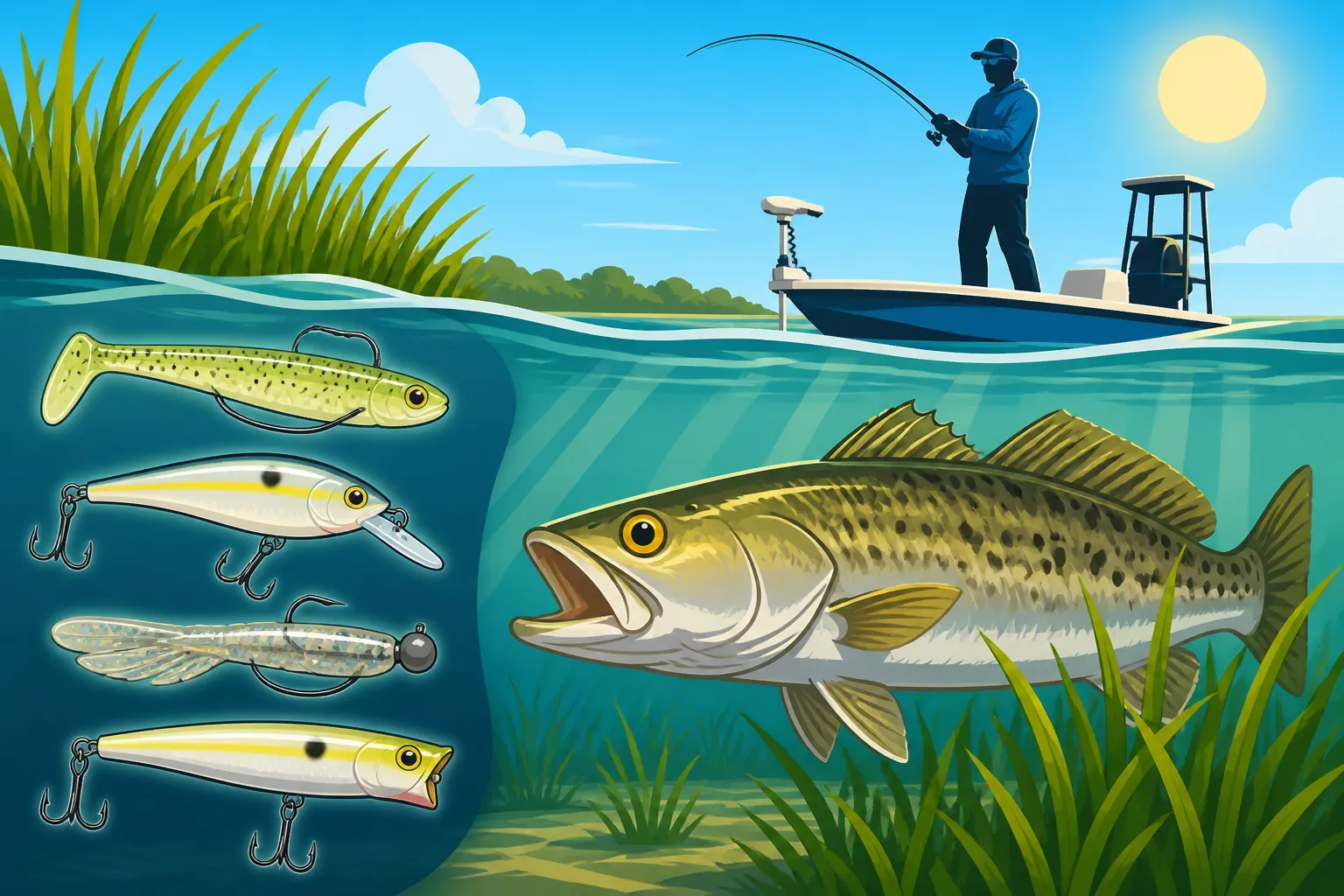
If there's one lure type I can't live without for grass flat trout, it's soft plastics. They are incredibly versatile, mimicking everything from a fleeing shrimp to a struggling baitfish, and they can be rigged in countless ways to suit different conditions. Paddle tails are probably the most popular choice, offering a seductive thump and wobble that trout can't resist. Think of a 3-4 inch pearl, chartreuse, or natural baitfish color. Rig them on a lightweight jig head (1/8 to 1/4 ounce is usually plenty for shallow flats), and you're in business. These are fantastic for slow, steady retrieves just above the grass.
Jerk shads are another fantastic option. These slender, baitfish-imitation plastics have a subtle darting action when twitched, perfectly mimicking a wounded baitfish. They don't have a paddle tail, so their action comes entirely from your rod tip. Colors like white, clear with silver flakes, or a dark back with a light belly work wonders. The key with jerk shads is to give them a series of short twitches, then pause, allowing them to suspend or slowly sink, which often triggers a strike. You can find a wide array of soft plastics on Amazon, with many popular brands offering multi-packs that are great for experimenting with different colors and sizes. For more details on common species, check out Spotted Seatrout vs Weakfish: What's the Difference?.
| Lure Type | Best Conditions | Pros | Cons |
|---|---|---|---|
| Paddle Tail Grub | All tides, especially low current; 1-4 ft water | Versatile, easy to use, wide range of colors/sizes, strong vibration | Can get snagged in thick grass, retrieve speed critical for action |
| Jerk Shad | Clearer water, light current; 1-3 ft water | Realistic darting action, good for finicky fish, can be fished very slowly | Requires more angler input for action, not ideal for dirty water |
| Suspending Twitch | Calm water, moderate current; 1-3 ft water | Excellent subsurface action, mimics wounded bait, casts well | More expensive, can snag on grass if fished too deep |
| Popping Cork | Choppy water, active bait, searching; 1-5 ft water | Attracts fish from a distance, good for beginners, covers water quickly | Can be noisy, less subtle, might spook wary fish in calm, clear water |
| Topwater Plug | Low light (dawn/dusk), calm water, aggressive fish; surface | Explosive strikes, visually exciting, covers water | Only effective for active fish, not ideal in choppy conditions |
Hard Baits: MirrOLures and Suspending Plugs
While soft plastics are my workhorses, there are definitely times when a hard bait outshines everything else. MirrOLures are legendary in the seatrout world, and for good reason. Their suspending twitch baits, like the MirrOLure MirrOdine, are absolutely deadly. These lures are designed to be retrieved with a twitch-pause motion, diving slightly on the twitch and then suspending tantalizingly in the water column on the pause. This action perfectly imitates a wounded baitfish, and a slow, deliberate retrieve can be irresistible to a hungry trout.
Topwater plugs, especially "walk-the-dog" style baits, are also fantastic, particularly during low light conditions like dawn or dusk, or when the water is calm. There's nothing quite like the explosive strike of a spotted seatrout blowing up on a topwater lure. These lures sit on the surface and create a zig-zagging motion when twitched correctly. They are less prone to snagging in shallow grass and can call fish up from a surprising distance. Always keep an eye on the water temperature; seatrout tend to be more aggressive with topwaters when the water is warmer and they are actively feeding. If you're looking to stock up, many specialty fishing stores and online retailers like Amazon carry a good selection of these classic hard baits. Remember the South Carolina Spotted Seatrout Daily Bag Limit of 10 Fish when you're planning your trip.
Popping Corks and Live Bait Rigs
Okay, I know, a popping cork isn't technically a "lure" on its own, but when combined with a soft plastic or live bait, it becomes an incredibly effective system for grass flats. A popping cork creates a "chugging" or "popping" sound that mimics the distress of a feeding fish or shrimp, drawing trout to your bait. Beneath the cork, you'll typically have a leader (18-24 inches) tied to a jig head with a soft plastic shrimp or paddle tail, or even a live shrimp or mud minnow.
The beauty of the popping cork is its ability to cover water and present your offering just above the grass without snagging. It's also incredibly effective for beginners because the retrieve is simple: cast it out, let it sit for a few seconds, give a sharp "pop" with your rod tip, then let it sit again. That "pop" is what grabs the trout's attention. This method is particularly deadly when trout are spread out and you're trying to locate a school. Whether you prefer to rig a natural looking soft plastic or the real deal, a popping cork rig is a staple in any South Carolina inshore angler's arsenal.
Techniques for Presenting Lures in Grass Flats
Having the best lures in your tackle box is only half the battle. Knowing how to present them effectively in the unique environment of a grass flat is what truly makes a difference.
Mastering the Retrieve
The retrieve is everything when it comes to enticing a strike from a spotted seatrout. These fish are opportunistic predators, but they can also be finicky. For soft plastics, a slow, methodical retrieve is often best. Cast your lure out, let it sink for a moment, then begin a slow, steady crank with a few subtle twitches of the rod tip mixed in. The goal is to keep the lure just above the top of the grass without snagging. If you feel it tick the grass, give your rod tip a quick upward twitch to clear it. A lot of strikes happen right after clearing the grass or during a pause.
For hard baits, especially suspending twitch baits, a "twitch-pause" retrieve is key. Cast, let it settle, then twitch your rod tip sharply 1-3 times, followed by a pause of 1-3 seconds. Experiment with the length of your pauses; sometimes a longer pause is what it takes to trigger a strike from a hesitant trout. With topwater plugs, you're looking for that rhythmic "walk-the-dog" action. This requires a slack-line retrieve: twitch your rod tip while reeling in a bit of slack, then let the lure glide. It takes practice, but it's incredibly rewarding when you get it right. Understanding Tide-Based Techniques for Inshore Fishing will also greatly enhance your retrieve effectiveness.
Targeting Structure within the Flats
While grass flats might seem uniform, they are rarely completely flat. There's always subtle "structure" that concentrates fish. Look for potholes—those sandy depressions within the grass beds. Trout love to sit on the edges of these, waiting to ambush baitfish that swim across the open sand. Cast your lure so it lands just beyond the pothole and retrieve it directly through the center. Oyster shell rakes, even small ones, also provide excellent ambush points. The rough texture of the shells often harbors small crabs and shrimp, attracting baitfish and, in turn, seatrout.
Creek mouths and channel edges adjacent to the flats are also prime spots. As the tide changes, baitfish will move in and out of these areas, and trout will often stage themselves along these transitions. Cast parallel to these edges or into the mouth of a creek, letting the current carry your lure naturally. Don't overlook scattered clumps of grass either; a lone clump can provide just enough cover for a territorial trout. Many of these prime spots are highlighted in guides like Spotted Seatrout Fishing Spots in South Carolina's Inshore Waters.
Essential Gear and Tips for Grass Flat Seatrout Success
Beyond the lures and techniques, having the right supporting gear and a few insider tips can make your spotted seatrout adventures in South Carolina's grass flats much more productive and enjoyable.
Rod, Reel, and Line Recommendations
For spotted seatrout in grass flats, lighter tackle is generally preferred. A medium-light to medium power spinning rod, around 7 feet to 7 feet 6 inches in length, is ideal. This length provides good casting distance and enough sensitivity to feel those subtle trout bites, yet enough backbone to handle a decent fish. Pair this with a 2500 or 3000 series spinning reel. You want something lightweight and smooth for comfortable casting all day.
As for line, 10-15 lb braided line is excellent. Braid offers superior casting distance, incredible sensitivity (you'll feel every bump and tick), and very little stretch, which helps with hook sets. Always tie on a fluorocarbon leader of about 2-3 feet in length. Fluorocarbon is nearly invisible underwater, which is crucial for wary trout, and its abrasion resistance protects your main line from sharp oyster shells and fish teeth. A 15-20 lb fluorocarbon leader is a good starting point. Having a well-balanced setup will allow you to cast accurately and fish effectively for hours, making your time on the water much more fruitful.
Seasonal Considerations and Adaptations
Spotted seatrout are present in South Carolina year-round, but their behavior and where you find them on the grass flats will change with the seasons. In the warmer months, they are typically more spread out across the flats and more aggressive, making topwater and faster retrieves very effective. This is when you'll often find them chasing bait right up into the shallowest areas of the grass.
As the water cools in fall and winter, trout tend to school up more tightly and move to slightly deeper water or deeper edges of the flats. They also become less aggressive, meaning a slower retrieve with soft plastics or suspending baits is often the ticket. During winter, there are even specific regulations like South Carolina's Winter Gigging Ban for Seatrout, so it's vital to stay informed. Don't be afraid to slow down your retrieve significantly in cooler water, giving the fish more time to react. The general rule is: warm water, faster retrieves; cold water, slower retrieves.
The Importance of Stealth
Spotted seatrout can be surprisingly spooky, especially in clear, shallow grass flats. Any sudden noise, shadow, or heavy footfall in a boat can send them scattering. When approaching a flat, try to do so quietly. Use a trolling motor at a low setting, or better yet, pole your boat or kayak quietly into position. If you're wading, shuffle your feet to avoid creating too much commotion.
Long casts are your friend in these situations. The further you can cast, the less likely you are to spook the fish. Also, pay attention to your shadow; avoid casting your shadow over the water you intend to fish. Small details like a gentle boat approach or a quiet cast can mean the difference between a successful fishing trip and watching empty water. Always remember to check current regulations before you head out, like the South Carolina Spotted Seatrout Minimum Size 14 Inches, to ensure you're fishing responsibly.
Disclaimer
This article is for general informational purposes only and does not constitute professional advice. Laws, prices and regulations vary by location and change over time. Consult a qualified professional for guidance on your specific situation.