Best Bait for Striped Bass in Freshwater Lakes
There's nothing quite as frustrating as heading out onto a beautiful South Carolina freshwater lake, knowing the striped bass are down there, but struggling to get them to bite. It feels like you've tried everything in your tackle box, yet those elusive stripers just aren't cooperating. This guide is here to unravel the mystery of what truly entices these powerful fish, offering a deep dive into the best baits and techniques to help you consistently land more striped bass in our amazing freshwater lakes.
Understanding Striped Bass Behavior in Freshwater Lakes
Before we even talk about hooks and lines, it’s crucial to get inside the head of a striped bass. These aren't your leisurely bottom feeders; they are apex predators, constantly on the move, and their behavior directly dictates which baits will be most effective. Understanding their habits is the first step to successful striper fishing.
Their Voracious Appetite and Schooling Nature
Freshwater striped bass, whether they are purebred or the popular hybrid stripers, are incredibly aggressive and possess a ravenous appetite. They are pelagic fish, meaning they typically inhabit the open waters of lakes rather than sticking to the shoreline. What's even more important to remember is that stripers are schooling fish. They travel in packs, often herding baitfish like threadfin and gizzard shad into tight balls before launching a coordinated attack. When you find one striper, you've often found a whole group ready to feed.
This schooling behavior means that once you locate a school, the action can be fast and furious. However, it also means that if you're not where the school is, you might as well be fishing in a bathtub. Their diet primarily consists of the most abundant baitfish in the lake, so matching your bait to their natural forage is paramount. This aggressive, schooling instinct is what makes striper fishing so exciting, but it also demands a certain approach from the angler. You're not just trying to catch a fish; you're trying to capitalize on a feeding frenzy.
Habitat and Depth Preferences
Striped bass in freshwater lakes, like Lake Murray, Lake Hartwell, or Santee Cooper, have distinct habitat and depth preferences that shift with the seasons and even the time of day. They generally prefer cooler, well-oxygenated water. In the spring and fall, when surface temperatures are more moderate, you might find them shallower, chasing baitfish closer to the surface or around points and humps. As summer heats up, they'll retreat to deeper, cooler thermocline layers, often suspending over deep channels, submerged timber, or underwater points. Why Lake Murray Stripers Move Deeper as Water Warms is a great read for understanding these seasonal shifts.
Their preference for open water doesn't mean they ignore structure entirely. They often relate to submerged humps, ledges, creek channels, and even standing timber, especially if these structures hold schools of bait. Learning to read your electronics to identify these features and, more importantly, locate baitfish and suspended stripers, is a game-changer. These fish are constantly on the hunt, so finding them often means finding their food source in the right depth range for the current conditions.
Top Live Baits for Freshwater Striped Bass
When it comes to consistently catching freshwater striped bass, especially the bigger, more wary ones, live bait is often king. Nothing can truly mimic the frantic struggle of a real baitfish trying to escape a predator. The key is using baits that are natural to the striper's diet and presenting them effectively.
Shad: The Perennial Favorite
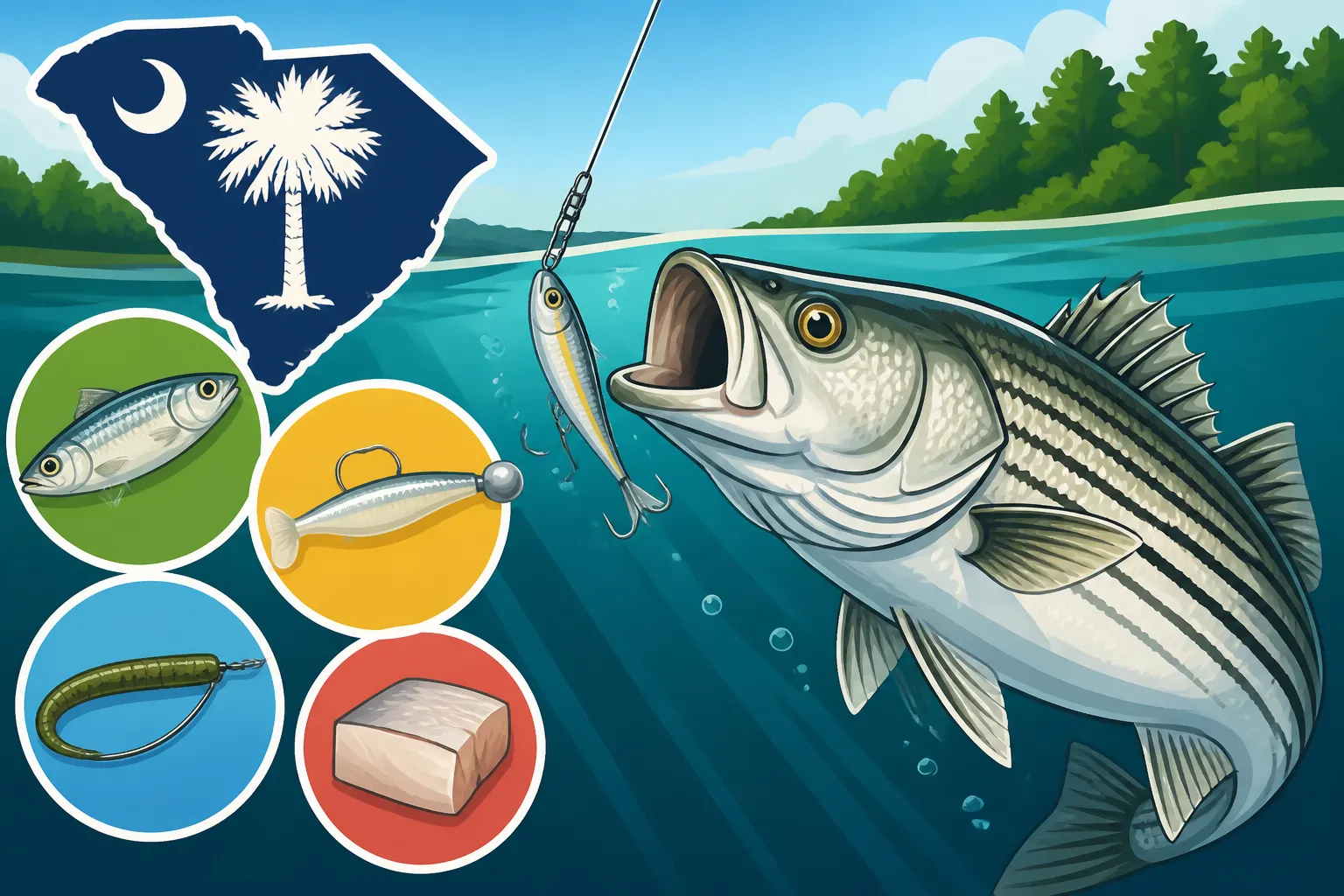
If there's one bait that reigns supreme for freshwater striped bass across South Carolina's lakes, it's shad. Both gizzard shad and threadfin shad are absolute candy for stripers. They are the primary forage in many of our best striper lakes, making them an irresistible offering. Catching your own fresh shad with a cast net is often the most effective method, as their freshness and liveliness are crucial. A lively shad swimming erratically is far more tempting than a sluggish one.
Presenting shad can be done in various ways. Free-lining them off the back of the boat, especially when drifting over schooling fish, is a classic and highly effective technique. You can also use a weighted Carolina rig or a three-way swivel rig to get them down to specific depths where stripers are holding. Ensuring your baitfish are healthy and swimming naturally is paramount. A good livewell system that keeps water oxygenated and cool is an investment that pays off handsomely when chasing stripers with live shad. You can find quality livewell aeration systems on platforms like Amazon.
Herring and Alewives: Regional Delicacies
While shad are widely popular, other baitfish can be incredibly effective depending on the lake and region. Blueback herring, for instance, are a significant food source for striped bass in certain South Carolina lakes. These are typically smaller and more streamlined than gizzard shad, often resulting in explosive strikes when stripers are actively feeding on them. Like shad, fresh blueback herring are best, often caught with cast nets around points or humps.
Alewives, another type of herring, also play a role in some striper fisheries. The exact species of baitfish present in a given lake can subtly influence what stripers prefer. It's always a good idea to check with local bait shops or fishing reports to understand what the stripers are keying in on in your specific fishing area. Sometimes, a subtle difference in bait profile or scent can make all the difference, turning a slow day into a memorable one.
Eels: A Big Striper's Delight
For targeting truly massive freshwater stripers, especially at night or in colder months, live eels can be an absolutely devastating bait. While they might not be as common as shad or herring, eels offer a unique appeal that big stripers find hard to resist. Their serpentine movement and oily scent can trigger strikes from the most lethargic or selective fish. They are particularly effective when targeting stripers that are holding tight to deep structure.
Rigging eels typically involves a sturdy circle hook through the lips or eye socket, allowing them to swim naturally. You'll often need heavy tackle to handle both the eel and the eventual strike of a trophy-sized striper. Because eels can be hard to come by in some areas, they are often considered a specialty bait, reserved for serious trophy hunters. If you're serious about landing a monster, however, the effort to acquire and rig live eels can be incredibly rewarding.
Large Shiners and Bluegill
While not as common as shad or herring for pure stripers, large golden shiners or even small bluegill can be surprisingly effective for hybrid stripers and even larger purebreds in certain situations. These baits are often more readily available at bait shops and can be a good alternative if fresh shad or herring are difficult to obtain. Their robust nature means they stay lively on the hook for longer, which can be an advantage when waiting for a bite.
When using shiners or bluegill, make sure they are of an appropriate size – typically 4 to 6 inches – to appeal to the stripers' predatory instincts. A standard Carolina rig or a free-line setup works well. The key is still liveliness; a struggling shiner sends out strong vibrations that can attract stripers from a distance. Don't underestimate the effectiveness of these more common baits, especially when other options are scarce.
Effective Artificial Lures for Freshwater Striped Bass
While live bait often steals the show, artificial lures can be incredibly effective, especially when stripers are actively chasing bait on the surface or when you need to cover a lot of water quickly. The advantage of lures is their durability and the ability to mimic various baitfish behaviors. Best Lures for Striped Bass in South Carolina offers an even broader look at lure options.
Swimbaits and Soft Plastics: Mimicking Natural Prey
Soft plastic swimbaits are a cornerstone of any serious freshwater striper angler's tackle box. These lures are designed to accurately imitate the profile, action, and sometimes even the scent of natural baitfish like shad and herring. Paddle-tail swimbaits, in particular, produce a thumping vibration that stripers can detect from a distance. They come in various sizes and colors, and matching the hatch – meaning using a swimbait that closely resembles the current baitfish in size and color – is critical.
These can be rigged on a jig head and cast-and-retrieved, vertically jigged, or even trolled. The versatility of soft plastics means you can adapt your presentation to where the fish are holding, whether they're deep or shallow. Many anglers will purchase bulk packs of soft plastics from online retailers like Amazon to ensure they always have a variety of colors and sizes on hand. When stripers are chasing schools of bait, a well-presented swimbait can be absolutely irresistible.
Bucktail Jigs and Spoons: Versatility is Key
Bucktail jigs are timeless classics for good reason – they simply work. Their simple design, combining a lead head with a deer hair skirt, creates a natural pulsing action in the water that stripers instinctively attack. They are incredibly versatile, capable of being cast, jigged vertically, or even trolled. Different weights allow you to fish them at various depths, making them perfect for targeting stripers suspended deep or those crashing bait near the surface.
Similarly, heavy spoons, often referred to as "jigging spoons," are phenomenal for vertical presentations. When you locate a school of stripers suspended beneath your boat, dropping a heavy spoon down and jigging it aggressively can trigger powerful reaction strikes. The flash and flutter of a spoon imitate a dying baitfish, a signal that predators like stripers cannot ignore. Having a selection of bucktails and spoons in various weights and colors is crucial for adapting to different conditions and depths.
Topwater Plugs: Excitement at the Surface
For sheer excitement, nothing beats a topwater strike from a powerful striped bass. When stripers are actively herding and busting bait on the surface, a well-placed topwater plug can lead to explosive, heart-stopping action. Walk-the-dog style baits, poppers, and prop baits are all excellent choices. The key is to cast them accurately into the feeding frenzy and work them with a retrieve that mimics a fleeing or injured baitfish.
Topwater action for stripers often happens at dawn or dusk, or on overcast days when the fish are less wary of coming to the surface. It's not always the most consistent method, but when the conditions are right, it can be the most thrilling way to catch them. Always be ready for a sudden, violent strike that can come out of nowhere, often right at your boat. Keep your drag set properly, because these fish hit hard!
Crankbaits and Jerkbaits: Diving for Reaction Strikes
Crankbaits and jerkbaits are excellent for covering water and targeting stripers that might be suspended at various depths. Deep-diving crankbaits can be trolled or cast to reach fish holding in the thermocline, while shallower running models are great for targeting points and ledges. The erratic, darting action of a jerkbait, especially when paused, often triggers aggressive reaction strikes from stripers that might not be actively feeding.
Experiment with different retrieve speeds and pauses to find what the fish prefer on any given day. Color choice can also be important; natural baitfish patterns are usually a safe bet, but sometimes a brighter, more aggressive color can provoke a strike in stained water or low light. These lures are particularly effective when stripers are spread out or when you're trying to locate a school before switching to other methods. Many anglers keep a variety of these lures in their boat, often stocked from their favorite online fishing supply store on Amazon.
Tips for Presenting Your Bait to Freshwater Stripers
Knowing what bait to use is only half the battle; knowing how to present it effectively is the other, equally important part. Stripers are powerful and cunning, and a poor presentation can mean the difference between a trophy catch and a silent boat.
Live Bait Rigs: Keeping Them Enticing
When using live bait, your rig needs to allow the baitfish to swim naturally while still being strong enough to handle a hard-fighting striper. A simple Carolina rig, using a swivel, a lead weight (egg sinker or bullet weight), and a leader (fluorocarbon is preferred for its invisibility) with a circle hook, is a go-to setup. The weight helps get your bait down, while the long leader allows the baitfish to move freely. Circle hooks are excellent for stripers, as they typically hook the fish in the corner of the mouth, leading to fewer gut hooks and healthier releases.
Another popular setup is a free-line rig, where you simply tie a hook directly to your main line (or a short leader) and let the live bait swim freely. This is deadly when stripers are feeding on the surface or when drifting over schools. For deeper presentations, a three-way swivel rig, often called a "mojo rig" in some areas, allows you to attach a heavy sinker to one eye, your leader and bait to another, and your main line to the third. This keeps your bait at a consistent depth while drifting or slow trolling. Remember that South Carolina Fishing License Requirements in South Carolina means you need a license even when fishing with live bait.
Trolling and Casting Techniques for Lures
Trolling is an incredibly effective way to cover vast amounts of water and present lures to suspended stripers. Using planer boards can help spread out your lines, covering a wider swath and preventing tangles. Downriggers are essential for getting lures down to precise depths where stripers are holding, especially in summer. Experiment with different trolling speeds until you find what triggers bites, as stripers often prefer a particular speed on any given day. You'll find yourself needing to adapt these techniques, as Striped Bass Depth Patterns at South Carolina's Lake Murray in Summer are constantly shifting.
When casting, focus on areas where baitfish are abundant or where you've marked stripers on your sonar. Fan casting around points, humps, or submerged timber is a great strategy. For topwater action, cast beyond the schooling fish and work your lure into the frenzy. For jigs and spoons, a strong vertical jigging motion, often with a slight pause at the top of the lift, can be incredibly effective. Always be prepared for a strike on the fall, as stripers often hit jigs and spoons as they sink.
Using Electronics to Locate Schools
Modern sonar and GPS units are indispensable tools for freshwater striper fishing. They allow you to not only identify underwater structure like creek channels and humps but, more importantly, to mark schools of baitfish and the stripers themselves. Look for arches or dense clouds on your fish finder – these are often baitfish, and the larger, distinct arches below or around them are your target stripers.
Once you locate a school, mark it on your GPS. This allows you to drift back over the school, make precise casts, or set up a trolling pass. Pay attention to the depth at which the fish are holding, as this will inform your bait selection and presentation. Don't be afraid to experiment with different baits and techniques once you've found the fish; sometimes, a subtle change can turn a looker into a biter. Striped Bass Fishing on Lake Murray, South Carolina often relies heavily on good electronics.
Seasonal Considerations for Striped Bass Bait
The "best" bait for freshwater striped bass isn't a static answer; it changes with the seasons. Stripers are highly reactive to water temperature, oxygen levels, and baitfish availability, meaning your approach must adapt throughout the year.
Spring: Pre-Spawn and Post-Spawn Feeding Frenzies
Spring is an incredible time for freshwater striper fishing. As water temperatures begin to rise, stripers become incredibly active, preparing for or recovering from their spawning ritual. In the pre-spawn period, they are bulking up, making them very aggressive feeders. Live bait, particularly large shad or herring, presented around creek mouths, points, and humps where baitfish are staging, can be phenomenal. Trolling large crankbaits or swimbaits is also highly effective for covering water and finding these active fish.
After the spawn, stripers are often recuperating but still feeding heavily. They might be found shallower, chasing baitfish closer to the surface or around newly emerging weed lines. Topwater plugs can be explosive during this time, especially in the early morning or late evening. The key in spring is often to target transitional areas where fish are moving between their deeper wintering grounds and shallower spawning or feeding areas. Best Time to Catch Striped Bass on South Carolina's Rivers shares similar seasonal insights applicable to lakes.
Summer: Deep Water Retreats and Night Fishing
As South Carolina's lakes heat up in the summer, stripers will retreat to deeper, cooler water. This is when understanding the thermocline – the layer of water where temperature changes rapidly – becomes crucial. Stripers will often suspend just above or within the thermocline, seeking optimal temperature and oxygen levels. Live bait, such as shad or herring, fished with downriggers or three-way swivel rigs to get them down to precise depths, is often the most productive method.
Night fishing for stripers can also be incredibly effective in summer. As surface temperatures drop after dark, stripers may move shallower to feed under the cover of darkness. Large topwater plugs, noisy crankbaits, or even simply free-lined live bait can trigger aggressive strikes. Night Fishing Techniques for Catfish provides some good parallels for fishing in the dark, even if the target species is different. Targeting lights around docks or bridges can also be productive, as these attract baitfish and, consequently, stripers.
Fall: Aggressive Feeding Before Winter
Fall is another fantastic season for freshwater striper fishing, often rivaling spring in terms of action. As water temperatures cool down, stripers become incredibly active, feeding aggressively to build up fat reserves for the winter. This is when you'll often see them schooling baitfish on the surface, creating spectacular "busts" where multiple fish break water. During these frenzies, casting topwater plugs, spoons, or fast-retrieved swimbaits into the action can lead to non-stop hookups.
Outside of the surface busts, stripers will still be found relating to structure and baitfish schools. Trolling with umbrella rigs, large swimbaits, or deep-diving crankbaits can be highly effective for finding scattered schools. Live bait, fished shallower than in summer, but still often over deeper water, will also produce. The key in fall is to be mobile and constantly on the lookout for signs of feeding activity, whether it's birds diving or fish breaking the surface.
Winter: Slow and Deep Presentations
Winter fishing for freshwater stripers in South Carolina lakes can be challenging but rewarding. The fish are less active, but they still need to feed. They will often congregate in large, tight schools in deep water, often in major creek channels or near the dam. Your presentations need to slow down significantly. Striped Bass Winter Fishing Patterns in Freshwater Lakes explains this in detail.
Live bait, fished very slowly and precisely, often directly over or just above these deep schools, is usually the most effective approach. Vertically jigging heavy spoons or bucktails right in the face of suspended stripers can also trigger bites, often more out of irritation or opportunity than aggressive feeding. Pay close attention to your electronics, as locating these deep winter schools is the primary hurdle. Once you find them, patient, deliberate presentations are key to enticing a strike. How to Catch Striped Bass in Cold Water offers even more specific advice for these tough conditions.
The world of freshwater striped bass fishing in South Carolina's lakes is dynamic and incredibly rewarding. By understanding their behavior, adapting your bait choices, and refining your presentation techniques throughout the year, you'll be well on your way to consistent success. Remember, patience and persistence are just as important as the right bait, so get out there and enjoy the chase! For a general overview of fishing possibilities, check out Year-Round Fishing Techniques in South Carolina.
| Bait Type | Best Season | Preferred Depth | Primary Presentation | Pros | Cons |
|---|---|---|---|---|---|
| Live Shad | Year-round | All depths | Free-line, Carolina, 3-way | Highly natural, irresistible | Requires bait catch/storage, can be fragile |
| Live Herring | Spring, Fall | Mid-deep | Free-line, Carolina, 3-way | Excellent natural forage, very lively | Can be harder to source, specific to some lakes |
| Live Eels | Late Fall, Winter, Night | Deep | Weighted rig | Attracts large trophy stripers | Hard to find, expensive, messy |
| Paddle Tail Swimbaits | Spring, Fall, Summer | All depths | Cast & retrieve, troll, jig | Versatile, durable, wide color range | Scent not natural, can be ignored by wary fish |
| Bucktail Jigs | Year-round | All depths | Cast & retrieve, jig, troll | Extremely versatile, classic, effective | Requires active retrieve, limited natural scent |
| Jigging Spoons | Summer, Winter | Deep | Vertical jigging | Excellent for suspended fish, reaction strikes | Limited to vertical presentation, depth specific |
| Topwater Plugs | Spring, Fall, Summer (dawn/dusk) | Surface | Cast & retrieve | Thrilling visual strikes, high excitement | Only effective when fish are surface feeding |
| Crankbaits/Jerkbaits | Spring, Fall | Mid-deep | Cast & retrieve, troll | Covers water, various dive depths, reaction | Can be snagged easily, fish can be particular |
Disclaimer
This article is for general informational purposes only and does not constitute professional advice. Laws, prices and regulations vary by location and change over time. Consult a qualified professional for guidance on your specific situation.