Striped Bass Size and Growth Rates Explained
If you've ever spent time on South Carolina's lakes or coastal rivers, you've likely heard tales of epic battles with striped bass. These powerful fish are a true angling icon in our state, and it's easy to wonder just how big they get and how quickly they reach those impressive sizes. This guide is dedicated to shedding light on the fascinating growth patterns and potential sizes of striped bass here in the Palmetto State, helping you appreciate these magnificent fish even more.
The Allure of South Carolina Striped Bass
There's something truly special about hooking into a big striped bass. The sheer power, the long runs, and the undeniable challenge make them a favorite target for countless anglers across South Carolina. They're not just a fish; they're a symbol of our rich aquatic heritage and the thrill of the chase.
Why Stripers Are So Popular Here
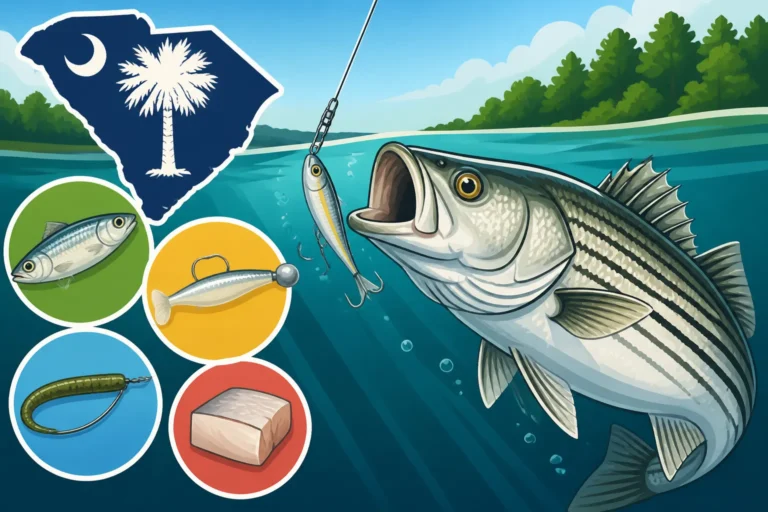
South Carolina holds a unique place in the striped bass world. Our freshwater lakes, particularly Lake Murray and the Santee Cooper system (Lake Marion and Lake Moultrie), are renowned for producing some truly massive landlocked stripers. For many years, these waters have been celebrated for their robust populations and the sheer size these fish can attain. They're considered a premier sportfish because of their aggressive nature and their incredible fighting ability once hooked. Imagine the excitement of feeling that strong pull on your line, knowing you're in for a serious workout! It’s a pursuit that draws anglers from all over, eager to test their skills against these formidable opponents.
Beyond their fighting prowess, their beauty also adds to their appeal. With their sleek, silver bodies and distinct horizontal stripes, they are truly magnificent creatures to behold, whether you're admiring one before release or bringing a legal keeper home for dinner. The sheer potential for size also adds to the mystique, as every cast could, in theory, connect you with the fish of a lifetime.
The Difference Between Anadromous and Landlocked Stripers
Understanding striped bass in South Carolina requires knowing there are essentially two main types we encounter: anadromous (sea-run) and landlocked populations. This distinction is incredibly important when we talk about growth rates and maximum size.
Anadromous stripers are those that spend most of their lives in saltwater, like along our coast, but migrate into freshwater rivers to spawn. Think of the Cooper River or the Santee River system during their spawning runs. These fish have access to the vast food resources of the ocean, which generally allows them to grow larger and reach their maximum potential size more readily. They travel significant distances, constantly feeding on a diverse diet of baitfish, crustaceans, and other marine life.
Landlocked stripers, on the other hand, are populations that were introduced or became isolated in freshwater impoundments like Lake Murray and the Santee Cooper lakes. While they still thrive and grow to impressive sizes, their growth is somewhat limited by the size and productivity of their specific lake environment. They rely entirely on the freshwater ecosystem for their food sources, which, while abundant, don't offer the same vastness or diversity as the open ocean. However, South Carolina has done an exceptional job of managing these landlocked populations, creating fisheries that consistently produce trophy-sized fish that would make any angler proud. When you're out on the water, you'll be primarily targeting one or the other, and knowing which type you're after can help set expectations for size. You can learn more about where these fish migrate in Striped Bass Migration Up South Carolina's Coastal Rivers.
Understanding Striped Bass Growth Rates
The growth of a striped bass isn't a linear, predictable path. It's a complex interplay of environmental factors, genetics, and food availability that dictates how quickly and how large these powerful fish will become. It's a marvel of nature to witness a tiny fingerling transform into a true freshwater giant over just a few years.
Factors Influencing Striper Size
Several key factors play a critical role in how large a striped bass will grow and how quickly it will get there.
- Diet and Food Availability: This is perhaps the most crucial factor. Striped bass are voracious predators, and a constant, abundant supply of baitfish—like shad, herring, or alewives—is essential for rapid growth. In a rich environment like the Santee Cooper lakes, where baitfish populations can boom, stripers have the fuel they need to pack on pounds. Conversely, in waters with scarcer food resources, growth rates might be slower, and fish may not reach their genetic potential. When shopping for gear to pursue these giants, you might even find books on "baitfish patterns" on Amazon that help you understand what they're eating!
- Water Temperature: Like all cold-blooded creatures, a striped bass's metabolism is heavily influenced by water temperature. They generally thrive and grow best in a certain temperature range. If waters are consistently too cold, their metabolism slows down, reducing feeding and growth. If waters get too hot, it can stress the fish, leading to reduced feeding and even mortality. This is why you'll often see distinct seasonal patterns in their activity and feeding, which directly impacts their growth curve. For instance, in Striped Bass Winter Fishing Patterns in Freshwater Lakes, we discuss how their behavior changes in colder months.
- Genetics: Just like in humans, genetics play a role. Some individual fish are simply predisposed to grow larger and faster than others. This inherent potential is passed down through generations, and healthy, diverse genetics within a population contribute to the overall potential for trophy-sized fish.
- Habitat Quality and Space: A large, healthy lake or river system with plenty of deep water, oxygenated areas, and varied structure (like submerged timber or ledges) provides stripers with ample space to roam, hunt, and find refuge. Overcrowding, on the other hand, can lead to competition for food and slower growth rates for all fish in the system. The sheer size of South Carolina's major reservoirs offers these fish incredible expanses to thrive.
- Fishing Pressure: While not directly affecting an individual fish's growth rate, heavy fishing pressure, particularly high harvest rates of larger fish, can influence the average size of fish in a population over time. Conservation efforts and South Carolina Fishing Bag Limits Explained are crucial to ensuring healthy, balanced populations where fish have the opportunity to grow large.
Average Growth in South Carolina Waters
So, what can an angler reasonably expect in terms of striped bass size and growth in South Carolina? It's important to remember these are general estimates, as individual fish and specific lake conditions can vary. However, here's a rough idea of what you might encounter:
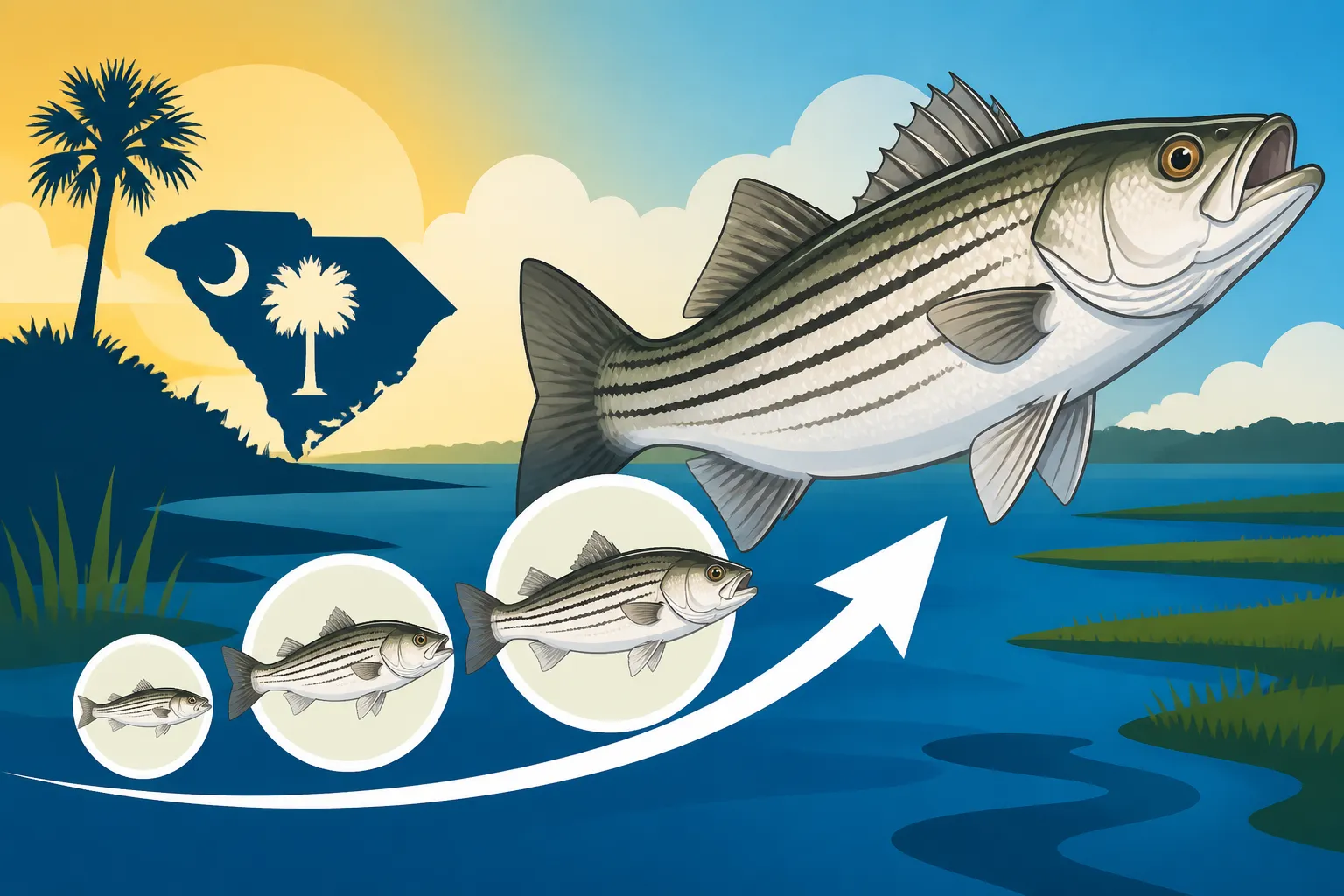
In their first year, striped bass typically grow quite quickly, often reaching 8-12 inches in length. They are essentially little eating machines, constantly foraging to put on size. By their second year, they can be in the 15-20 inch range, starting to show that distinctive striper power. This is often the size when many anglers begin to catch them more consistently.
As they mature into their third and fourth years, their growth continues, and they start to become truly impressive game fish. A three-year-old striper could easily be 20-25 inches and weigh several pounds, offering a fantastic fight. By five to seven years old, many stripers will be in the 25-35 inch range and weigh 10-20 pounds, sometimes even more in highly productive waters like the Santee Cooper lakes. These are the fish that really test your tackle and your resolve.
Beyond seven years, growth often slows down in length but continues in girth and weight. These older, larger fish are the true giants of our waters, potentially exceeding 40 inches and pushing 30, 40, or even 50 pounds. It takes many years and optimal conditions for a striped bass to reach these truly colossal sizes. These are the fish that become legend, and catching one is a once-in-a-lifetime experience for many.
It’s worth noting that while coastal, anadromous stripers have the potential for even greater sizes due to ocean resources, our landlocked populations are specifically managed to produce exceptionally large fish, often rivaling their sea-run counterparts in pure poundage.
How Old is That Striper?
When you reel in a big striper, it's natural to wonder about its age. While you can't get an exact age without specialized scientific methods (like examining otoliths, or ear bones, which show growth rings similar to tree rings), anglers can make educated guesses based on the fish's size.
Generally, a healthy, robust 10-pound striper in South Carolina might be anywhere from 4 to 6 years old, depending on the specific lake and its conditions. A 20-pound fish could easily be 6 to 9 years old, while those truly massive 40-pound-plus monsters could be a decade or more in age. These older, larger fish have survived many seasons, outsmarted countless predators (including anglers!), and are a testament to the health and productivity of their habitat.
For practical purposes, a simple length-to-age chart can give you a rough idea, but always remember that these are averages. A fish in a nutrient-rich lake with perfect temperatures and minimal stress might grow faster than one in a less ideal environment. This curiosity about a fish's age often adds another layer to the catch-and-release experience, making you appreciate the journey that fish has taken.
Trophy Potential and Record Chasers
South Carolina is a prime destination for anglers dreaming of catching a trophy striped bass. Our unique blend of natural waterways and carefully managed reservoirs provides ideal conditions for these magnificent fish to grow to truly impressive dimensions. The pursuit of a giant striper is almost a pilgrimage for some, fueled by the hope of landing that one fish that will forever be etched in memory.
What Qualifies as a "Trophy" Striper in South Carolina?
Defining a "trophy" striped bass can be subjective, as it often depends on an angler's personal goals and local fishing conditions. However, in South Carolina, there are some generally accepted benchmarks that elevate a striper from a great catch to a truly monumental one.
For many, a striped bass exceeding 20 pounds is considered a trophy. This weight usually corresponds to a fish in the 30-inch range or more. These are substantial fish that provide an incredible fight and require serious effort to land. They stand out from the average catch and represent a significant achievement. As you climb higher, a 30-pound striper is undoubtedly a true trophy, a fish of a lifetime for many. These are typically much older, more experienced fish that have grown large by being smart and strong. Anything over 40 pounds is considered a "giant" or "monster" striper in our waters, placing it in an elite category. These rare behemoths are the stuff of angling legends and often generate considerable excitement when caught. For those aiming for bragging rights, having a reliable scale and measuring tape (perhaps one you found on Amazon!) is key.
Remember, a trophy isn't just about weight; it's also about the experience. The fight, the location, the company – all contribute to making a catch memorable, regardless of whether it breaks a record. But the sheer size and power of a South Carolina striper pushing these limits is something truly unforgettable.
Famous Striper Fisheries and Their Big Fish Potential
South Carolina boasts several world-class striped bass fisheries, each with its own character and reputation for producing large fish. These are the destinations that serious striper anglers flock to.
- Lake Murray: Often called the "Jewel of South Carolina," Lake Murray is arguably the state's most famous landlocked striped bass fishery. It consistently produces incredible numbers of fish, including many in the 20-30 pound range, with occasional giants pushing 40+ pounds. The deep, clear waters and abundant baitfish populations create an ideal environment. Anglers targeting Lake Murray Fishing Guide for South Carolina Anglers often focus on the lower lake's deep humps and ledges, particularly during the warmer months when stripers school up. The challenge here is finding them in the vast expanse, but the reward can be immense.
- Santee Cooper Lakes (Lake Marion & Lake Moultrie): This massive, connected lake system is legendary for its freshwater fishing, and striped bass are a huge part of that reputation. The sheer size and incredible productivity of these lakes mean stripers have an endless buffet of baitfish, allowing them to grow exceptionally large. Many of the state record fish have come from Santee Cooper. Santee Cooper Lakes South Carolina's Legendary Bass Fishery truly lives up to its name, offering opportunities for monstrous stripers, especially when they follow the schooling bait.
- Clarks Hill Lake (Lake Strom Thurmond): While perhaps not as famous for stripers as Murray or Santee Cooper, Clarks Hill, located on the Georgia border, also offers excellent striped bass fishing. Its vastness and structure provide good habitat for stripers to grow, with anglers regularly catching respectable fish. Lake Hartwell Fishing Spots on the South Carolina-Georgia Border (though Clarks Hill is distinct, it shares the border lake characteristic) points to the appeal of these large, managed bodies of water.
- Coastal Rivers (e.g., Cooper, Santee): While the landlocked lakes get a lot of attention for their sheer size, the coastal rivers, particularly during the anadromous spawning runs, offer opportunities for incredible catches of sea-run stripers. These fish, while perhaps not always as heavy as the largest landlocked giants, are incredibly powerful and offer a different kind of fight, having spent their lives in the ocean.
The Thrill of a Record Catch (and How to Measure Safely)
For some anglers, catching a record-breaking striped bass is the ultimate dream. South Carolina has a rich history of impressive catches, with dedicated anglers constantly trying to best previous records. When pursuing these massive fish, it's crucial to understand how to handle them safely, both for the fish's well-being and for accurate measurement.
If you believe you've caught a potential record, the first step is to keep the fish alive and minimize stress. Have a large, adequately sized livewell ready if you intend to take it to an official weigh station. For immediate, accurate measurement, have a certified scale (many serious anglers invest in a quality digital scale, readily available on platforms like Amazon) and a measuring tape on board. Measure the length from the tip of the jaw to the tip of the tail and the girth around the thickest part of the fish. Take clear photographs from multiple angles, ideally with a ruler or measuring device visible.
However, for most trophy stripers, especially those you don't intend to keep, the thrill is in the catch and a healthy release. These large, older fish are vital to the breeding population and deserve to be treated with the utmost care. Use proper catch-and-release techniques:
- Minimize Fight Time: Use appropriate heavy tackle to land the fish quickly.
- Keep the Fish in the Water: Try to unhook, measure, and photograph the fish while it's still in the water as much as possible. This greatly reduces stress on their organs and gills.
- Support the Fish: If you must lift it for a quick photo, support its body horizontally with two hands (one under the head, one under the belly) to prevent damage to its internal organs or jaw. Never hold a large fish vertically by the jaw.
- Revive Carefully: If the fish seems sluggish, hold it gently in the water, facing into the current or moving your boat slowly to push water over its gills, until it regains its strength and swims off on its own.
The memory of battling and releasing a true South Carolina giant is often more rewarding than any record, ensuring these magnificent creatures continue to thrive for future generations.
Conservation and Sustainable Fishing Practices
The allure of South Carolina's striped bass fishery is immense, and its continued health depends on all of us practicing responsible angling. As anglers, we have a vital role to play in ensuring these incredible fish not only survive but thrive for years to come. Understanding and adhering to regulations, combined with thoughtful fishing practices, is key to the future of this prized species.
Importance of Slot Limits and Regulations
South Carolina's Department of Natural Resources (SCDNR) implements a range of regulations designed specifically to manage and protect our striped bass populations. These aren't arbitrary rules; they are based on extensive scientific research into fish biology, population dynamics, and ecosystem health.
A common regulation for striped bass, especially in our freshwater lakes, is the use of "slot limits." A slot limit means that anglers can only keep fish that fall within a specific size range (e.g., between 20 and 25 inches). Fish smaller than the minimum size are protected to allow them to grow to maturity and reproduce, while fish larger than the maximum size are also protected, often because these are the prime breeding stock, producing the most eggs. Protecting these large, mature fish ensures the genetic health and reproductive output of the population. Understanding these specific rules, like those detailed in South Carolina Fishing Bag Limits Explained, is not just about avoiding a penalty; it's about contributing to the long-term health of the fishery.
In addition to slot limits, there are daily bag limits (the number of fish you can keep per person per day) and sometimes seasonal restrictions, particularly during spawning periods, to minimize disturbance. These regulations help prevent overfishing and maintain a balanced age structure within the population, ensuring there are enough fish of all sizes for the ecosystem to flourish and for future generations of anglers to enjoy. Before every trip, it's a good habit to quickly check the latest regulations, as they can change to adapt to the needs of the fishery.
Responsible Catch and Release for Large Stripers
While some legal-sized stripers might end up on your dinner table, many anglers, especially those targeting trophy fish, practice catch and release. This is particularly important for the very large striped bass, which are often the most reproductively valuable members of the population. Releasing these giants allows them to continue contributing to the gene pool and producing more fish.
Here are some best practices for responsible catch and release, especially for big stripers:
- Use Appropriate Tackle: Don't "light line" a huge striper unless you're prepared for an extended fight. Prolonged battles exhaust the fish, making their survival post-release less likely. Use rods, reels, and lines that are suited for the size of fish you expect to encounter.
- Minimize Handling: The less you handle the fish, the better. Try to unhook it while it's still in the water, or in a large, wetted net. If you must lift it, wet your hands first to protect its slime coat, which is crucial for its immune system.
- Avoid the Gills and Eyes: Never put your fingers in the gills or apply pressure to the eyes. These are extremely sensitive areas that can be easily damaged.
- Support the Weight: If lifting a large fish for a photo, always support its full weight horizontally with two hands—one under the belly and one near the head/jaw. Do not hang a large striper vertically by the jaw alone, as this can dislocate its jaw and damage its spine and internal organs.
- Revival Time: After a tough fight, a large striper might be exhausted. Hold it gently in the water, facing it into a slow current or moving your boat slowly to force water over its gills. Look for signs of recovery, like strong tail kicks and the ability to hold itself upright, before letting it go. Be patient; it might take a few minutes for a big fish to fully recover.
- Barbless Hooks: Consider using barbless hooks or crimping the barbs on your hooks. This makes hook removal much easier and quicker, reducing stress and damage to the fish.
By being mindful of these practices, we ensure that the next angler, or even the next generation, can experience the thrill of South Carolina's magnificent striped bass. It’s a small effort that yields huge benefits for our beloved fisheries.
| Age (Years) | Typical Length Range (Inches) | Typical Weight Range (Pounds) | Notes |
|---|---|---|---|
| 1 | 8-12 | <1 | Rapid initial growth, focused on feeding. |
| 2 | 15-20 | 1-3 | Becoming more aggressive, good fighting potential. |
| 3 | 20-25 | 3-8 | Strong fighters, often within legal harvest limits. |
| 4-6 | 25-35 | 8-20 | Prime angling size, many trophy potential fish fall here. |
| 7-10+ | 35-45+ | 20-50+ | True giants, highly sought-after, crucial for breeding; growth slows in length but gains in girth. |
Disclaimer
This article is for general informational purposes only and does not constitute professional advice. Laws, prices and regulations vary by location and change over time. Consult a qualified professional for guidance on your specific situation.