Why Trout Limits Differ From Stream to Stream
Many South Carolina trout anglers scratch their heads when they realize that the daily catch limits and size restrictions aren't the same for every stream. It can feel like a confusing maze of rules, wondering why one river allows you to keep a few fish while another, just miles away, is strictly catch-and-release. This guide will unravel the mystery, explaining exactly why trout limits differ from stream to stream across the beautiful waters of South Carolina.
The Fundamental Drivers Behind Varied Trout Limits
The South Carolina Department of Natural Resources (SCDNR) doesn't just pull numbers out of a hat when it comes to setting trout limits. There's a deep, scientific rationale behind every decision, primarily focused on the long-term health and sustainability of our trout fisheries. It's a complex dance between biology, conservation, and providing quality recreational opportunities.
Ecological Capacity and Stream Health
Every stream, from the smallest mountain trickle to a larger river, is a unique ecosystem with its own set of challenges and capabilities. Factors like water temperature, flow volume, the types and abundance of aquatic insects, and the physical structure of the streambed all dictate how many trout a given stretch of water can realistically support. A pristine, spring-fed stream that maintains consistently cold temperatures and boasts a rich invertebrate community will naturally have a higher carrying capacity than a stream prone to warmer summer temperatures or limited food sources. The SCDNR conducts extensive surveys to understand these nuances, assessing fish populations, habitat quality, and reproductive success before any regulations are set. This data-driven approach ensures that the limits reflect the stream's ability to bounce back from angling pressure.
Think of it like a garden: a fertile plot with rich soil and plenty of sun can yield a bountiful harvest, while a rockier, shadier spot will produce less. Stream management is no different. If a stream is naturally less productive, limits will be more conservative to prevent overharvesting and safeguard the existing fish stocks. This careful balancing act is at the heart of South Carolina's Freshwater Fishing Regulations. Without these tailored approaches, we risk depleting sensitive populations and diminishing the quality of fishing for everyone down the line.
The Critical Distinction: Native vs. Stocked Trout
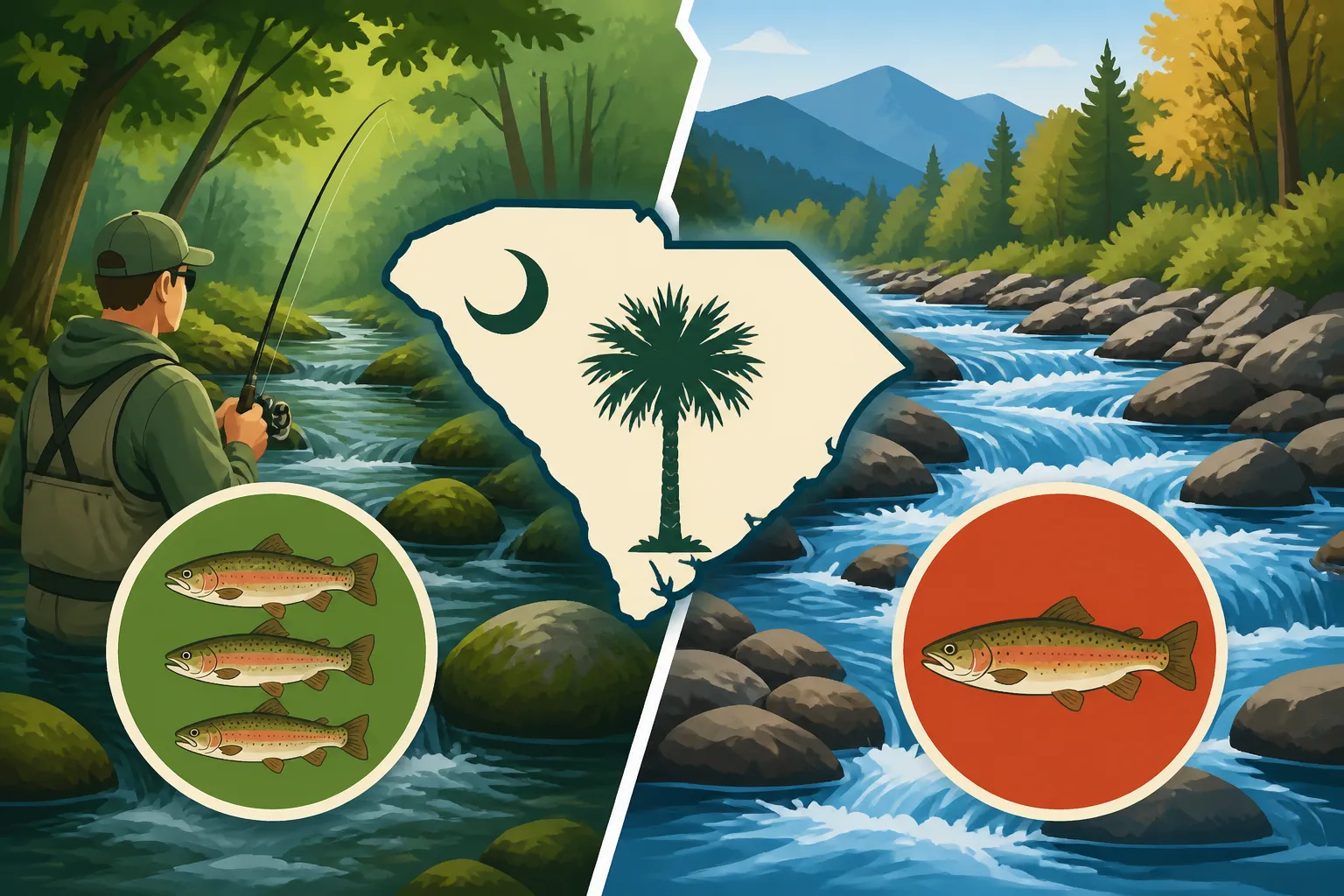
One of the most significant factors influencing trout limits in South Carolina is whether a stream primarily holds native, wild trout or relies on stocked fish from hatcheries. This distinction fundamentally alters the management strategy.
- Protecting Our Native Brook Trout: In the higher elevations of the Blue Ridge Mountains, South Carolina is home to populations of native brook trout, an iconic species that has adapted to these specific cold-water environments over millennia. These fish are incredibly sensitive to environmental changes and angling pressure. Streams supporting native brook trout, such as some headwater tributaries of the Chattooga River or the East Fork Chattooga, often have highly restrictive limits, including "Catch-and-Release Only" sections or very low daily bag limits, sometimes as few as one or two fish, with specific size restrictions. The primary goal in these waters is conservation – to ensure the survival and natural reproduction of these unique, indigenous populations. Protecting South Carolina's Native Brook Trout: A Blue Ridge Mountain Original is a key focus for the SCDNR. Understanding Why Certain Streams Restrict Trout Harvest becomes clear when you consider the fragility of these wild populations.
- Managing Stocked Fisheries: In contrast, many popular and more accessible trout streams in the Upstate, such as significant sections of the Chattooga River below Burrells Ford or parts of the Chauga River, are actively managed as "put-and-take" fisheries. These waters receive regular stockings of hatchery-raised rainbow and brown trout. Since these fish are grown elsewhere and released specifically to provide immediate recreational opportunities, the regulations can be more liberal. Anglers might find daily limits of 5, 7, or even 8 fish in these areas, depending on the stream's capacity and stocking intensity. The expectation is that many of these stocked fish will be harvested, as they are specifically introduced to meet angler demand and are often not intended to establish self-sustaining populations in all these locations. This approach allows the SCDNR to provide abundant fishing opportunities while simultaneously protecting more vulnerable wild stocks. If you're wondering about the Stocked Trout Daily Limit, it will invariably be higher than for native species.
Specific Factors Influencing Regulatory Decisions
Beyond the foundational ecological and species-specific considerations, several other practical elements come into play when the SCDNR determines the specific limits for a given trout stream. These factors often reflect human interaction with the fishery, as well as unique conservation goals for particular areas.
Angler Access and Fishing Pressure
It's a simple truth: if a fishing spot is easy to get to, more people will fish it. This human element has a profound impact on regulations.
- High-Traffic Areas: Streams that are easily accessible via roads, trails, or are located near popular campgrounds and towns will naturally experience significantly higher angler pressure. More anglers mean a greater number of fish caught, whether intended for harvest or not. To prevent rapid depletion of fish stocks in these easily reached locations, the SCDNR often implements stricter bag and size limits. For example, a stream that's close to a major highway might have a daily limit of 5 fish, while a more remote stream, even with a similar fish population, might allow for a slightly higher take simply because fewer people are reaching it. These regulations aim to distribute the catch more evenly among anglers and ensure that the fishery can sustain continuous pressure throughout the season. Sometimes, you'll find South Carolina Streams With a 5-Fish Trout Limit in these highly accessible areas.
- Remote and Wilderness Streams: Conversely, streams that require considerable effort to reach – perhaps a long hike through the Sumter National Forest – typically see less fishing pressure. While many of these remote waters are home to fragile native brook trout and thus have very conservative or catch-and-release rules for conservation reasons, the lower human impact also plays a role. In some very specific, high-productivity but low-access stocked streams, this reduced pressure might allow for slightly more generous limits than a similarly productive but more accessible stream. It's all about balancing the number of fish available with the number of anglers trying to catch them.
Unique Management Objectives and Conservation Zones
Some streams or specific sections of rivers are managed with very particular goals in mind, which directly translate into unique regulations that differ from the statewide standard.
- Trophy Trout Programs: For anglers dreaming of catching a truly massive trout, certain sections of streams might be designated as "trophy waters." Here, the management objective isn't about harvest quantity, but about growing fish to exceptional sizes. This often involves stringent "Catch-and-Release Only" rules, or very high minimum size limits (e.g., 20 inches or more), coupled with gear restrictions like "artificial lures only" or "single, barbless hooks." These rules are designed to maximize the survival rate of caught fish, allowing them to grow larger and provide a challenging, rewarding experience. The focus shifts from taking fish home to the quality of the angling encounter.
- Research and Recovery Areas: Occasionally, a stream might have special regulations implemented for scientific research or to aid in the recovery of a threatened fish population or habitat. These could include temporary closures, highly restrictive limits, or specific gear requirements, all designed to facilitate biological studies or give a struggling fish stock a chance to rebound. While these are usually temporary, they are critical for the long-term health of the entire fishery.
- Youth Fishing and Special Events: Sometimes, specific ponds or easy-access stream sections are set aside or temporarily modified for youth fishing events. During these times, regulations might be relaxed to encourage participation and make it easier for young anglers to catch fish, fostering a love for the outdoors. These are often well-advertised events, with the normal rules resuming afterward. For instance, specific ponds might see an increased Stocked Trout Daily Limit for a weekend event aimed at families.
Your Role: Navigating and Respecting South Carolina's Trout Regulations
Given the intricate and varied nature of trout regulations in South Carolina, it's absolutely paramount that every angler takes personal responsibility for knowing the rules for the specific body of water they intend to fish. Assuming the same rules apply everywhere is a sure-fire way to end up with a hefty fine or, worse, to unintentionally harm a fragile fish population.
Essential Resources for Current Regulations
Your most reliable source for up-to-date and accurate fishing regulations will always be the South Carolina Department of Natural Resources (SCDNR). Make it a habit to check before every trip.
- The SCDNR Website: The official SCDNR website is your ultimate resource. It contains comprehensive guides to statewide fishing regulations, often broken down by specific species, bodies of water, and counties. Before you head out, especially to a new stream or if you haven't fished in a while, navigate to their fishing regulations section. You can find detailed information, including Checking a Stream's Trout Limit Before You Fish It, daily bag limits, size restrictions, and any unique gear rules for particular waters. This online resource is the most current source of information, crucial because regulations can and do change.
- Printed Regulation Guides: Many local bait and tackle shops, sporting goods stores, and SCDNR offices offer free printed regulation digests. These handy booklets summarize the rules and are excellent to keep in your tackle box or glove compartment for quick reference. While convenient, always remember that printed materials can become outdated. It's always best practice to cross-reference with the online SCDNR resources for the very latest information, especially if there have been recent legislative changes. You might even find comprehensive fishing guides for South Carolina available on Amazon that can complement official resources.
- Local Knowledge (with caution): Experienced local anglers and bait shop owners can be a wealth of information regarding current fishing conditions and recent regulatory changes. However, while their insights are valuable, always verify any information regarding limits and regulations with official SCDNR sources. Misinformation, even well-intentioned, can lead to violations.
Understanding the Nuances of Limits and Restrictions
Fishing regulations extend beyond just a simple number of fish. There are often multiple layers of rules designed to protect different aspects of the fishery. Familiarizing yourself with these nuances is crucial for ethical and legal angling.
- Daily Bag Limits: This is the maximum number of fish you can legally keep in a single day. For trout, this might be a general "all trout" limit, or it could be species-specific, such as "5 trout total, of which no more than 2 can be native brook trout." Pay close attention to these distinctions. For instance, you might encounter South Carolina Streams With a 7-Fish Trout Limit in a heavily stocked section, whereas a stream managed for wild fish might be a South Carolina Streams With a 5-Fish Trout Limit or even less.
- Size Limits: Many trout waters have minimum size limits (e.g., all trout must be at least 7 inches long to be kept) to ensure fish have a chance to reach maturity and reproduce before being harvested. Some unique fisheries might even employ maximum size limits or slot limits, though less common for trout in South Carolina, to protect larger, trophy-sized breeding fish. Always measure your catch carefully.
- Gear Restrictions: In sensitive native trout waters or trophy management areas, you might encounter restrictions on the type of tackle allowed. This often includes "artificial lures only" to reduce incidental mortality from deep-hooking, or "single, barbless hooks" to minimize tissue damage if a fish is caught and released. These rules are vital for protecting fish that are intended to be put back into the water, ensuring their survival.
- Possession Limits: While daily bag limits apply to what you can catch in a 24-hour period, possession limits often refer to the total number of fish you can have in your cooler or at your camp, regardless of when they were caught. Always be aware of both.
- Licensing: Of course, before you even cast a line, you need the appropriate license. Ensure you have your South Carolina Fishing License Requirements in South Carolina sorted out, whether it's for freshwater, saltwater, or a combination. The consequences for fishing without a license can be severe, including significant fines.
What Happens If You Don't Know the Rules?
Ignorance of fishing regulations is not a valid defense in the eyes of the law. South Carolina game wardens actively patrol trout waters, and they take violations seriously.
- Fines and Penalties: Getting caught with too many fish, undersized fish, or violating gear restrictions can result in substantial fines. These penalties are designed to be a deterrent and a mechanism for funding conservation efforts. The Penalty for Fishing Without a License in South Carolina, for example, can be steep. It’s far cheaper and less stressful to simply know and follow the rules.
- Confiscation and Loss of Privileges: In addition to fines, you might face the confiscation of your catch, fishing equipment, or even the suspension of your fishing privileges for a period. Repeated offenses can lead to more severe consequences.
- Environmental Impact: Beyond the legal and financial repercussions, the biggest cost of not knowing or following the rules is the potential harm to the trout population. Even a small number of anglers unintentionally overharvesting can have a significant negative impact on a fragile native brook trout stream or deplete a stocked section faster than the SCDNR can replenish it. Our collective adherence to these specific, stream-tailored regulations is the only way to ensure healthy and abundant trout fishing opportunities for years to come.
| Factor | Native Brook Trout Streams (e.g., East Fork Chattooga) | Stocked Trout Streams (e.g., Chattooga River below Burrells Ford) |
|---|---|---|
| Primary Goal | Conservation, natural reproduction, ecological health | Provide recreational "put-and-take" fishing opportunities |
| Typical Daily Bag Limit | Very low (e.g., 1-2 fish) or Catch-and-Release Only | Moderate (e.g., 5-8 fish) |
| Typical Size Limit | Minimum size to protect breeding fish (e.g., 7-inch minimum) | Often minimum size limits (e.g., 7-inch minimum) |
| Common Gear Restrictions | Often "artificial lures only," "single barbless hook" | Generally fewer gear restrictions, but always check specific rules |
| Angler Pressure | Generally lower due to remote access and stricter rules | Can be very high due to easy access and regular stocking |
| Stream Productivity | Often lower, with pristine but less nutrient-rich waters | Varies; some highly productive, others rely heavily on stocking |
| SCDNR Focus | Habitat protection, population monitoring, long-term sustainability | Hatchery operations, stocking schedules, managing angler harvest |
Disclaimer
Please remember that fishing regulations, limits, and seasons are subject to change by the South Carolina Department of Natural Resources (SCDNR). Always consult the most current official SCDNR regulations before heading out on your fishing trip. This guide is for informational purposes only and should not be considered a substitute for official government publications.