How to Drift a Fly for Stocked Trout
Ever find yourself staring at a pristine South Carolina trout stream, fly rod in hand, watching those freshly stocked trout seemingly ignore every perfectly tied fly you offer? It's a common frustration, feeling like you're doing everything right but still coming up empty. Stocked trout, while often less wary than their wild cousins, still demand a particular presentation to entice a bite. This guide will walk you through the art and science of drifting a fly for stocked trout, ensuring your next trip to the creek is far more productive and enjoyable, turning those frustrating stares into exciting hook-sets.
Understanding Stocked Trout Behavior and Why Drifting Works Best
Stocked trout are a wonderful resource, bringing the joy of trout fishing to many South Carolina anglers, especially in our mountain streams. However, they don't always behave like the wily, native fish that have spent generations honing their survival instincts. Understanding their unique background is the first step to unlocking their secrets.
The Pellet-Fed Instinct
Most stocked trout spend their early lives in hatcheries, feasting on protein-rich pellets. This upbringing instills in them a few key behaviors that differ from wild trout. First, they're accustomed to food coming to them in a relatively predictable, often dense, form. They don't have to chase down tiny aquatic insects with the same vigor or scrutiny. Second, they're less likely to be spooked by shadows or subtle disturbances in the water, at least initially, because their hatchery environment was relatively safe.
When these fish are released into a stream, their instinct often remains opportunistic. They'll look for easy meals that float by naturally. A well-presented fly that mimics a drifting insect or a small pellet, without any unnatural drag, appeals directly to this ingrained feeding behavior. It signals "easy food, no effort required." This is precisely why a drag-free drift is so profoundly effective; it perfectly imitates the effortless journey of natural food items carried by the current. It's not about fooling a hyper-selective fish with an exact imitation every time, but rather presenting something that looks like an easy, natural snack they recognize from their new surroundings or even subconsciously from their past.
Stocked Versus Wild Trout Preferences
While both stocked and wild trout will eat insects, their initial approaches can vary. Wild trout, particularly those that have survived multiple seasons, are masters of discerning real food from an imitation. They're tuned into minute details – the angle of the leader, the exact coloration, and especially any unnatural drag that tells them "this isn't real." They often hold in very specific, energy-efficient lies, darting out only for the most appealing morsels.
Stocked trout, on the other hand, are often more driven by hunger and less by suspicion. They might be less particular about the exact species of insect your fly imitates, but they are still highly sensitive to how that fly moves. A fly that travels at a different speed than the surrounding current immediately signals something is amiss. It’s like offering a dog a treat on a string that’s being pulled too fast – they might be interested, but they can’t quite get it, or they become suspicious. For stocked trout, the ideal is a fly that drifts past them as if it were truly unattached, a tiny piece of protein simply flowing with the stream. This natural presentation overcomes their less refined senses of suspicion and triggers that opportunistic feeding response. When you perfect your drift, you're not just presenting a fly; you're presenting a meal that perfectly matches the environment they're learning to call home.
Essential Gear for Drifting Flies
Having the right equipment won't automatically guarantee a limit of fish, but it certainly makes the process of achieving that perfect drift much, much easier. Fly fishing gear is designed to work together, and when chasing stocked trout, a few key pieces will significantly improve your chances.
Rod, Reel, and Line Selection
For drifting flies for stocked trout in South Carolina's streams, you'll generally want a lighter setup that allows for delicate presentations and sensitivity.
- Rod: A 3-weight or 4-weight fly rod, typically between 7.5 and 9 feet in length, is ideal. These lighter rods are flexible enough to protect fine tippets from snapping when a trout takes the fly, and they cast lighter flies with precision. The length helps with line control and mending (more on that soon!) over different current seams. For example, a longer 9-foot 4-weight rod gives you more reach to keep your line off the water for longer, crucial for maintaining a drag-free drift. If you're fishing smaller, tighter streams, a 7.5 or 8-foot rod might be more maneuverable. You can find excellent entry-level rods on platforms like Amazon that are perfect for getting started without breaking the bank.
- Reel: The reel's primary purpose here is simply to hold your line. A basic, single-action reel that balances your chosen rod is all you need. Don't worry about expensive disc drags; for trout, you'll usually be fighting them by hand-stripping the line or simply letting the lighter drag of a basic reel do its job.
- Fly Line: A weight-forward (WF) floating line is the standard. The weight-forward taper helps you cast more easily, especially in windy conditions or when you need a bit more distance. A floating line is essential for drifting nymphs and dries, as it keeps your indicator and the majority of your line on the surface, allowing your fly to sink naturally below. Consider a line that is brightly colored for better visibility, which helps in detecting subtle strikes and observing your drift.
Leaders, Tippet, and Indicators
These components are your direct connection to the fly and play a monumental role in achieving a natural drift. They are the "invisible hand" guiding your presentation.
- Leaders: A tapered leader is crucial. It connects your fly line to your tippet and gradually thins out, helping to transfer casting energy smoothly and lay your fly down delicately. For nymphing or dry fly fishing for stocked trout, a 7.5-foot or 9-foot leader is a good starting point. Longer leaders (10-12 feet) can be beneficial in clear water or when fish are particularly spooky, as they provide a longer, less visible connection to your fly line. You'll want a leader that tapers down to a specific size, often 4X or 5X, to match your chosen tippet.
- Tippet: This is the thinnest, most delicate part of your setup, tied directly to your fly. For stocked trout, especially in clear water, fine tippet is essential for a natural presentation. 5X or 6X fluorocarbon tippet is often the go-to choice. Fluorocarbon is nearly invisible in water and sinks slightly, which can aid in getting nymphs down faster. The finer the tippet, the less drag it creates in the water, further enhancing your drift. Many anglers carry a spool of 4X, 5X, and 6X tippet, readily available on Amazon, to adapt to different conditions and fly sizes. Remember, protecting that fine tippet is why a softer rod action is so helpful.
- Indicators: When nymphing, an indicator is your best friend. It acts like a tiny bobber, signaling even the most subtle takes. Without it, you'd miss countless bites, as stocked trout often take a nymph gently. Common types include small, buoyant yarn indicators (which are sensitive and don't kink your line), or pinch-on foam indicators. Experiment to find what works for you. The goal is an indicator that is just buoyant enough to suspend your fly and any split shot, but sensitive enough to dip or twitch at the slightest disturbance. Position your indicator at a depth roughly 1.5 to 2 times the depth of the water you're fishing. For instance, if the stream is 3 feet deep, place your indicator about 4.5 to 6 feet above your fly.
Fly Selection for Stocked Trout
Stocked trout are generally not as picky as wild trout when it comes to specific fly patterns, but a good presentation with an appropriate fly is still key. They tend to be opportunistic feeders, so attractor patterns and basic insect imitations work well.
- Nymphs: These are often the most effective for drifting. Stocked trout readily take nymphs that imitate the larval stages of aquatic insects or even small, protein-rich morsels. Popular choices include the Pheasant Tail Nymph, Hare's Ear Nymph, Prince Nymph, and Squirmy Wormy. Tungsten-bead head versions of these flies will help them sink quickly to the fish's feeding zone. Don't be afraid to experiment with brighter "junk flies" like mop flies or egg patterns, especially right after a stocking, as these can mimic the pellets they were raised on or simply trigger an aggressive response.
- Wet Flies: These flies sink just below the surface and are fished with a similar drifting technique to nymphs. They can be incredibly effective when fish are feeding in the upper water column or when insects are emerging. Patterns like the Soft Hackle Pheasant Tail or even a simple Woolly Bugger (fished with a drift-and-swing) can be deadly.
- Dry Flies: While nymphing often dominates, don't underestimate the power of a well-drifted dry fly, especially during an active hatch or on a warm, sunny day when fish are looking up. Small parachute Adams, Elk Hair Caddis, or even a simple Griffith's Gnat can elicit strikes if presented without drag. Remember, the dry fly should float high and ride the current naturally, just like a real insect.
- Streamers: While not strictly "drifting" in the same passive sense, small streamers like a micro-Woolly Bugger or a small Olive Sculpin can be drifted and then given subtle twitches. This can imitate baitfish or larger prey and can be very effective on larger, more aggressive stocked trout.
Always carry a variety of sizes (from small #18 nymphs to larger #12 or #10 patterns) and colors. Sometimes, a subtle change can make all the difference, especially when you're targeting fish that have seen a lot of pressure.
| Fly Category | Common Patterns | Best Presentation | Why it Works for Stocked Trout |
|---|---|---|---|
| Nymphs | Pheasant Tail, Hare's Ear, Prince Nymph, Squirmy Wormy, Egg Patterns | Drag-free drift with indicator, often with split shot | Mimics sinking insects or hatchery pellets, appeals to opportunistic feeding |
| Wet Flies | Soft Hackle, Partridge & Orange, Light Cahill Wet | Fished just below surface, subtle drift, slight swing | Imitates drowned insects or emergers, less visible leader |
| Dry Flies | Parachute Adams, Elk Hair Caddis, Griffith's Gnat | Perfect drag-free float on surface, no drag | Mimics terrestrial or emerging insects, visual strike |
| Streamers | Woolly Bugger (small), Sculpin Patterns | Drifted with occasional subtle twitches/strips | Imitates baitfish, triggers aggressive predatory instinct |
Mastering the Drift: Techniques and Tips
Now that you have your gear, it's time to put it to use. The heart of successful stocked trout fishing with flies lies in achieving a truly natural, drag-free drift. This isn't just a fancy term; it's the fundamental principle that unlocks consistent success.
The Perfect Drag-Free Drift
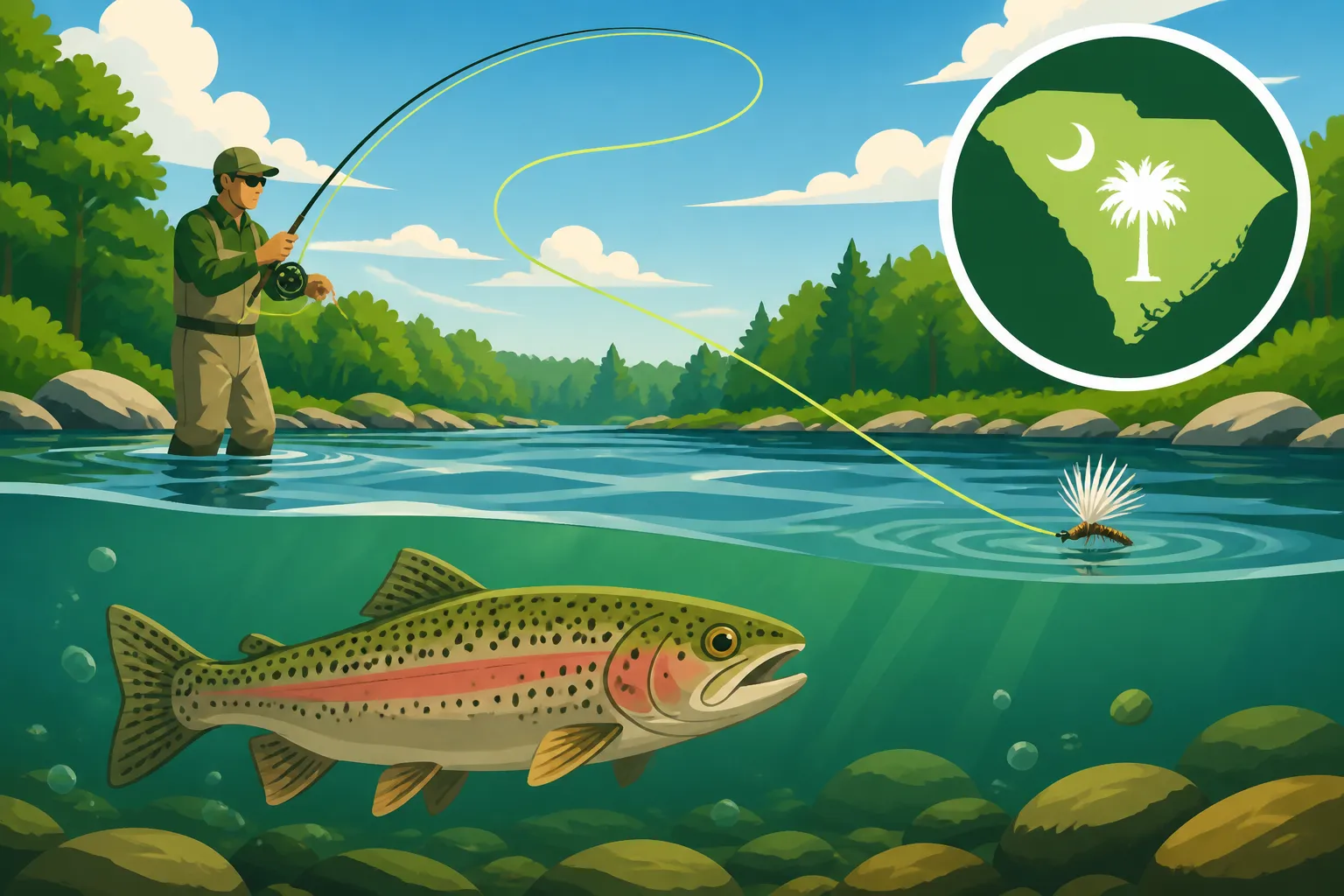
A drag-free drift means your fly is moving at precisely the same speed as the current directly around it, without being pulled or pushed unnaturally by your fly line or leader. Think of a natural leaf or a small twig floating downstream; it moves seamlessly with the water. That's what you want your fly to do. Any tension or pull on your fly line or leader creates drag, making your fly move faster or slower than the current. This immediately signals to the trout that something is artificial, and they will likely ignore it.
Achieving this requires constant attention to your line and the water. Different currents on the surface versus subsurface, or even across the width of the stream, will affect your line and thus your fly. Your goal is to counteract these forces to allow your fly to travel as if it were truly unattached. This is easier said than done, but with practice, it becomes second nature. It's about being one with the water, observing its subtle flows, and making tiny adjustments to keep your fly perfectly in sync.
Casting and Mending for Success
The cast gets your fly where it needs to be, but the mend is what truly perfects the drift. These two actions, performed in concert, are your primary tools for presenting a drag-free fly.
- The Upstream Cast: For nymphing or dry fly fishing, you'll generally cast upstream and slightly across the current. This allows your fly to sink (if it's a nymph) or settle (if it's a dry fly) before it reaches the trout's feeding zone. A good starting point is to cast about 10-20 feet upstream of where you expect the fish to be holding. Aim for a soft, accurate cast that lays your leader and fly out gently without splashing. Avoid casting directly over the fish, as the line landing can spook them.
- The Reach Cast: This is a fantastic technique that involves casting your line slightly upstream or downstream of your body, then, before the line hits the water, swinging your rod tip back in the opposite direction. This creates a curve in your fly line on the water, effectively giving you an immediate mend and delaying drag. It’s incredibly useful for getting your line to land in one current seam while your fly drifts in another.
- Mending Techniques: Mending is the art of repositioning your fly line on the water without moving your fly. It's the critical step to combating drag.
- Upstream Mend: As your line and fly drift downstream, the current closest to you (often faster) will start to pull a belly in your line. To correct this, gently lift your rod tip and roll a small loop of line upstream without pulling your fly. This puts slack back into your line, allowing the fly to continue its natural drift. This is probably the most common mend you'll use.
- Downstream Mend: Less common but still useful, a downstream mend can be employed if the current away from you is faster, pulling your fly prematurely. Here, you'd roll a loop of line downstream to remove slack.
- Stack Mend/Pile Cast: This cast involves purposely throwing a pile of slack line upstream of your fly. It's particularly useful when you need an extra-long, drag-free drift in complex currents or when your fly needs to sink deeply. The extra slack on the surface gives the fly more time to sink and drift before drag sets in.
Practice these casts and mends in your backyard or on a local pond. The muscle memory you build will be invaluable on the stream. Remember, the goal is always to keep your fly line from directly pulling on your fly. It should feel almost weightless to the fish.
Detecting Strikes and Setting the Hook
Stocked trout takes can range from aggressive grabs to incredibly subtle nudges. Learning to distinguish a strike from a snag or current disturbance is a learned skill that comes with observation and practice.
- Watching the Indicator: When nymphing, your indicator is your primary strike detector. Any unusual movement – a dip, a twitch, a sudden stop, or even just a slight hesitation – should be treated as a strike. Don't wait for a dramatic pull; often, it will be incredibly subtle. The moment your indicator does anything out of the ordinary, set the hook.
- Watching the Line: If you're fishing a dry fly, you'll be watching the fly itself. For nymphs without an indicator (tightline nymphing), you'll be watching the subtle movements of your fly line where it enters the water. A quick pause, a subtle sideways movement, or a slight tightening of the line are all clues.
- The Hook Set: When you see a strike, set the hook with a quick, gentle, upward (or slightly sideways) wrist flick. Avoid a hard, sweeping motion, as this can snap your fine tippet, especially if the fish turns out to be a submerged rock. The goal is just enough tension to embed the hook firmly. Once the hook is set, keep your rod tip high and maintain steady pressure. Stocked trout can put up a surprisingly good fight, especially in swift currents, so be ready to let them run and use your reel's drag (or palm the spool) as needed.
Remember, you'll likely set the hook on a few snags or false alarms. That's part of the learning process. It's far better to set the hook on nothing than to miss a fish!
Reading the Water for Stocked Trout
Understanding where stocked trout like to hold and feed is just as important as perfecting your cast and drift. While they might be less selective about flies, they still seek out comfortable and advantageous positions in the water, especially after they've had a little time to adjust to their new environment.
Likely Holding Lies
Stocked trout, like all fish, are looking for two primary things: food and shelter. Their new surroundings mean they’ll often congregate in specific areas that offer these comforts.
- Slower Pools and Eddies: These are prime locations. After being released, stocked trout often seek out areas of calmer water where they can expend less energy swimming against strong currents. Pools offer depth and a sense of security from predators, while eddies (areas where the current flows in a circular pattern) provide a steady supply of drifting food that gets trapped. Fish these areas thoroughly, fanning your casts to cover the entire pool.
- Current Seams: The seam where a fast current meets a slower current is a classic trout holding lie. Food is carried down the faster current, and the trout can sit in the slower water, darting out to snatch passing morsels. These seams can be found along the edges of the main current, behind large rocks, or where a feeder creek enters the main stream. Present your fly so it drifts along these seams, bringing it directly into the trout's strike zone.
- Structure: Anything that offers cover – submerged logs, undercut banks, large rocks, or even thick aquatic vegetation – can hold stocked trout. They provide a sense of security and often create areas of slower current where food collects. Cast your flies close to, but not directly into, these structures. Drifting a nymph along an undercut bank or letting a dry fly float over a submerged log can be incredibly effective. Remember, these fish are still prey animals, and cover offers them protection from overhead threats like birds.
- Deep Runs and Riffles: While pools offer calm, deeper runs with a consistent flow can also hold fish. These areas often have good oxygen levels and a conveyor belt of food. Riffles (shallow, fast-moving sections) might seem too chaotic, but pockets of deeper, slower water within them can be surprisingly productive, especially for freshly stocked fish that might be less experienced in finding classic holding lies.
It’s always a good idea to approach the water cautiously. Don't just march right up to the bank. Observe the water from a distance, looking for any signs of fish activity or promising lies.
Seasonal Considerations for Stocked Trout
The time of year and recent stocking events can significantly influence where and how stocked trout behave. Being aware of these factors can help you refine your approach.
- Immediately After Stocking: When fish are first put into a stream, they can be a bit disoriented. They might congregate in large groups, often in the calmer, deeper parts of pools, and be highly aggressive takers due to hunger from transport. This is often when brighter attractor patterns or even simple bait can be incredibly effective. Check with the South Carolina Department of Natural Resources (SCDNR) website for information on when and where streams are stocked. You might also find details on specific trout limits for certain streams by checking a stream's trout limit before you fish it.
- Later in the Season: As stocked trout spend more time in the stream, they become more acclimated and can start to behave more like wild fish. They'll spread out, become more wary, and may start to feed more selectively on natural insects. This is when perfecting your drag-free drift and matching the hatch (or at least presenting a common nymph) becomes even more critical. During this time, knowing South Carolina's Stocked Trout Daily Limit becomes especially important, as careful harvest management ensures continued enjoyment for all anglers.
- Water Temperature: Like all trout, stocked fish are sensitive to water temperature. In warmer months, they'll seek out cooler, more oxygenated water, often found in deeper pools or at the mouths of cold feeder creeks. In colder months, they might become less active, preferring slower, deeper water where they can conserve energy. Your presentation should reflect their activity level; a slower, more deliberate drift is often better in cold water, while a quicker drift might entice an aggressive strike in warmer conditions. You can also find valuable insights into South Carolina Stocked Trout Season Fishing Techniques that delve deeper into these seasonal nuances.
By understanding the nature of stocked trout and how to present your fly naturally, you're well on your way to becoming a more effective and successful fly angler in South Carolina's beautiful trout waters. Always remember to check the South Carolina Fishing License Guide and South Carolina's Freshwater Fishing Regulations before heading out, to ensure you're compliant with all local rules.
Disclaimer
This article is for general informational purposes only and does not constitute professional advice. Laws, prices and regulations vary by location and change over time. Consult a qualified professional for guidance on your specific situation.