Best Flies for Stocked Trout in Spring
Spring in South Carolina brings a renewed sense of hope and a flurry of activity, especially for those of us eager to hit the water for some trout fishing. However, stocked trout can sometimes feel like a puzzle, especially when they're fresh out of the hatchery and still acclimating. If you've ever felt frustrated trying to figure out what they're biting on, this guide is here to help you crack the code on the best flies for stocked trout in spring, ensuring your next trip is a successful and enjoyable one.
Understanding Stocked Trout Behavior in Spring
When we talk about stocked trout in the spring, we're often dealing with fish that have recently been introduced to a new environment. This means their behavior can be a little different from wild, stream-born trout. They haven't had to hunt for every meal their whole lives, and their instincts might be a bit dulled.
From Hatchery to Stream: The Transition Shock
Imagine being plucked from your comfortable, predictable home and dropped into a brand new world where you suddenly have to fend for yourself. That's a bit like what a stocked trout experiences. In the hatchery, food comes easily – pellets dropped right into their tanks. They're used to a consistent diet and don't have to think much about hunting or dodging predators. When they're released into a stream or lake, they undergo a "transition shock." This period can make them less wary but also less discerning initially. They might react to anything that looks remotely like food, but they can also be spooky if they feel threatened. Understanding this initial adjustment phase is key to choosing and presenting your flies effectively. They're often opportunistic feeders at first, more interested in an easy meal than a perfectly matched hatch.
Environmental Factors Influencing Spring Bites
Spring in South Carolina's trout waters, primarily in the Upstate mountains, means fluctuating conditions. Snowmelt can lead to higher, colder, and sometimes murkier water, which impacts visibility for both fish and angler. As spring progresses, water temperatures slowly rise, triggering insect hatches and increasing trout metabolism. On warmer, sunny days, fish might be more active and willing to rise to the surface for dry flies. On colder, cloudier days or when the water is high, they're more likely to hug the bottom, feeding on nymphs and subsurface offerings. The amount of light penetration also plays a role; clear, bright days often mean fish are more color-sensitive, while darker days or stained water might call for brighter, more contrasting patterns. Always pay attention to the water clarity and temperature when you arrive at your chosen fishing spot – it'll give you huge clues! You can often find detailed information about different trout fishing spots by exploring resources like the Best Streams for Brook Trout in the Blue Ridge Mountains.
Essential Fly Categories for Spring Stocked Trout
To consistently catch stocked trout in the spring, you need a versatile fly box. These fish aren't always picky, but having a variety of styles can make a world of difference when conditions change or the fish become selective.
Nymphs: The Subsurface Powerhouses
Nymphs are often the bread and butter for catching stocked trout, especially in the spring. These flies imitate the immature aquatic insects that live on the bottom of streams and lakes. Trout spend a vast majority of their time feeding subsurface, so nymphs are a natural choice. In spring, with potentially higher water flows and cooler temperatures, trout often stay deeper, making nymphs incredibly effective. You're mimicking what they're already accustomed to seeing drift past them.
When choosing nymphs, think about size and color. Smaller nymphs (sizes 16-20) are great for mimicking midges and tiny mayflies, while larger ones (sizes 10-14) can imitate stoneflies or larger mayfly nymphs. Colors like olive, brown, black, and tan are generally safe bets, as they mimic common insect species. Don't be afraid to experiment with bead-head versions, which sink faster and add a bit of flash, making them more visible in off-color water. For more insights into how to present these effectively, check out South Carolina Stocked Trout Season Fishing Techniques.
Wet Flies and Emergers: The In-Betweeners
Wet flies and emergers represent the transitional stages of aquatic insects – either drowned insects drifting downstream or nymphs making their way to the surface to hatch. These flies are often overlooked but can be incredibly effective, especially when fish are starting to look up but aren't fully committed to dry flies. Emergers, in particular, imitate insects struggling in the film of the water, a vulnerable stage that trout find irresistible.
A classic wet fly presentation often involves swinging the fly through a current, allowing it to drift naturally. Emergers are best fished just below or in the surface film. Consider patterns with a small bead or a bit of weight to help them sink slightly, but not so much that they plunge to the bottom. Colors typically mirror nymphs – greens, browns, and grays – often with a touch of flash or a distinct wing bud imitation.
Streamers: The Aggressive Attractors
Streamers are excellent for triggering an aggressive strike from stocked trout, especially those that are still a bit disoriented or looking for a substantial meal. These flies imitate baitfish, leeches, or larger aquatic invertebrates. When fished with an erratic retrieve, they can provoke a predatory response that a subtle nymph might not.
In spring, when water levels can be higher and visibility lower, streamers with a bit of flash or vibration can be incredibly effective. White, black, olive, and natural baitfish colors are all good choices. Sizes can vary from small, subtle patterns (size 8-12) to larger, more intimidating imitations (size 4-6). Think about how you retrieve them – strip, strip, pause; or a steady swing with a few twitches. This erratic movement mimics a wounded or fleeing baitfish, making it an easy target for a hungry trout. Many anglers forget that stocked trout, even those new to the wild, still possess that predatory instinct. You can find a good selection of quality streamers on platforms like Amazon.
Specific Fly Patterns That Dominate in Spring
While knowing the categories is helpful, having a few proven patterns in your fly box can significantly increase your chances of success. These are some of my go-to flies when chasing stocked trout in South Carolina during the spring.
Classic Nymphs for Consistent Bites
You can't go wrong with these reliable subsurface patterns that consistently trick stocked trout. They're effective because they imitate common food sources that trout, even those fresh from a hatchery, recognize as edible.
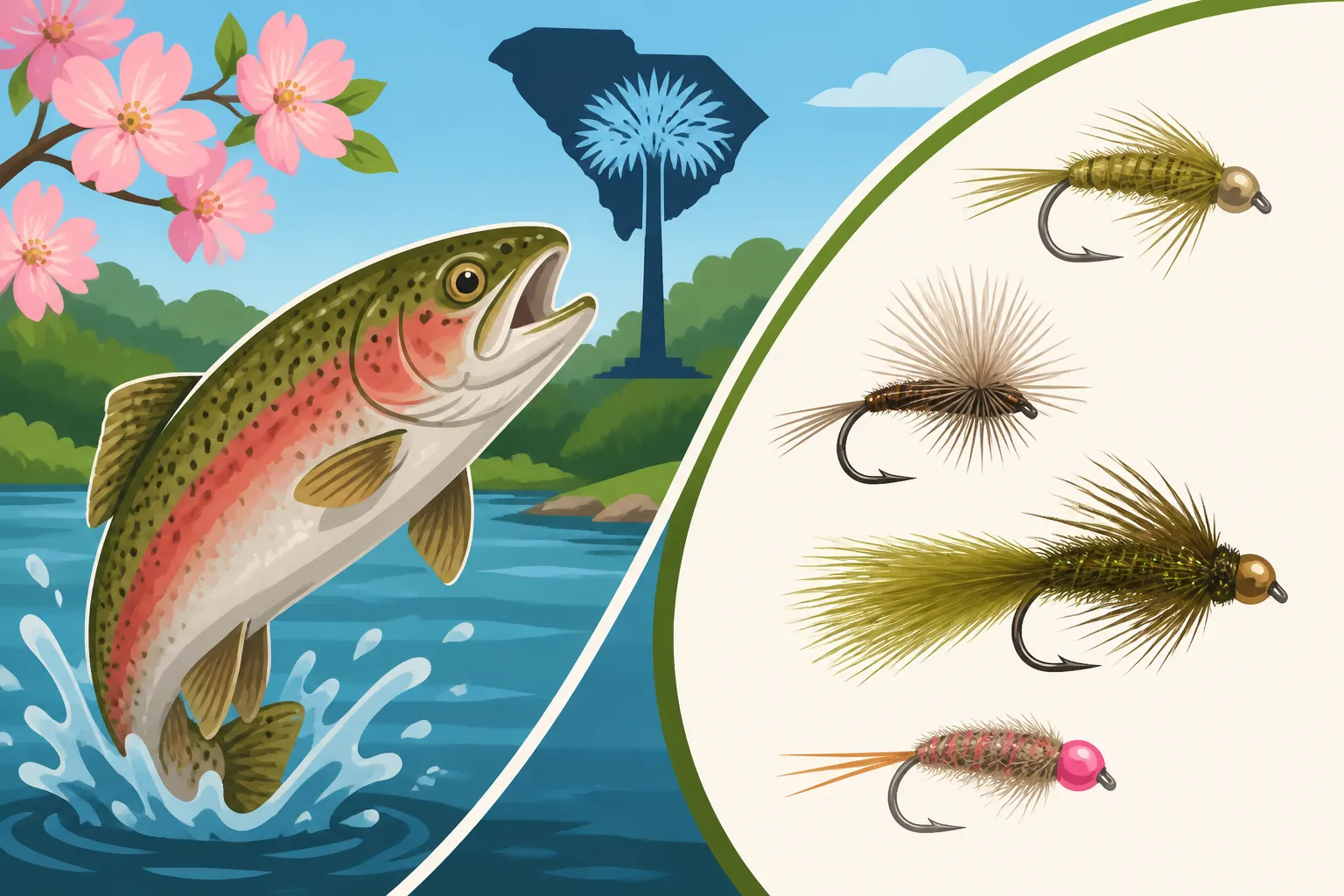
- Pheasant Tail Nymph: This fly is a perennial favorite for a reason. It's subtle, realistic, and can imitate a wide variety of mayfly nymphs. I typically carry them in sizes 14-20, both with and without a bead head. The bead head version is excellent for getting down quickly in deeper runs or faster currents. The segmented body and wispy tail create a lifelike silhouette that trout find hard to resist. When presenting, aim for a dead drift, allowing the fly to tumble naturally with the current. This can be fished alone or as the point fly in a multi-nymph rig.
- Hare's Ear Nymph: Another staple, the Hare's Ear is a buggy, versatile nymph that can mimic caddis larvae, scuds, or even a drowned terrestrial. Its rough, impressionistic look is often more than enough to fool stocked trout. I like sizes 12-18, especially in natural brown or olive tones. The Hare's Ear often has a slightly shaggier appearance than the Pheasant Tail, which can be particularly enticing in slightly off-color water. Don't underestimate its effectiveness in slower pools where trout have more time to inspect their meal. You can often find multipacks of these essential nymphs on Amazon, making it easy to stock up.
- Walt's Worm: Simple, yet incredibly effective. This pattern is essentially a heavily dubbed body, often with a bead head, designed to imitate a variety of aquatic worms or caddis larvae. Its sparse design is often key; sometimes less is more. I prefer tan, gray, or olive in sizes 10-16. The beauty of the Walt's Worm is its universality; it's not a perfect imitation of any one insect, but a general representation of many, which is exactly what stocked trout often respond to. It sinks well and is highly durable.
Attractor and Emerger Patterns
Sometimes you need something a little more flashy or a fly that perfectly captures that delicate emergence stage. These patterns are great for drawing attention or when trout are feeding just below the surface.
- Rainbow Warrior: This nymph is a fantastic "attractor" pattern that combines the slim profile of a small mayfly with a surprising amount of flash. The pearl body and rainbow scud back catch the light beautifully, making it stand out, especially in clearer water. I like this in sizes 16-20. It's particularly effective on bright days when the sun can make the fly shimmer. Don't be surprised if this simple yet flashy fly becomes one of your confidence patterns for picky fish.
- Green Weenie: This might sound comical, but this bright green chenille worm pattern is an absolute killer for stocked trout. It doesn't imitate any specific insect, but its vibrant color and worm-like profile drive trout wild. It's often fished as a simple nymph or under a strike indicator. Sizes 10-14 are popular. The Green Weenie is an example of an "attractor" fly that simply pushes a fish's buttons, often causing a reaction strike.
- Zebra Midge: Midges are present year-round, but can be particularly important in early spring when other hatches haven't fully kicked in. The Zebra Midge is a simple, effective imitation, typically tied with a black body, silver wire ribbing, and a bead head. Sizes 18-22 are standard. Fish this tiny nymph deep under an indicator or as a dropper behind a larger nymph. It's a subtle presentation for when trout are being finicky or feeding on micro-insects. For information on trout limits and how they vary, you might find How Trout Limits Vary by Stream in South Carolina helpful.
Streamers for Aggressive Fish
When you want to provoke a reaction or cover a lot of water quickly, streamers are your friend. They're perfect for larger, more aggressive stocked trout.
- Woolly Bugger: The undisputed king of streamers, the Woolly Bugger is a must-have. Its chenille body, marabou tail, and hackle collar create a pulsating, lifelike movement in the water. Black, olive, and brown are essential colors, and I carry them in sizes 4-10. This fly can imitate a leech, a baitfish, or even a large aquatic insect. You can strip it erratically, swing it through currents, or even dead-drift it like a nymph. It's so versatile, it often works when nothing else will. I always make sure I have a good supply of these in my fly box, often picking up a few different sizes and colors from Amazon.
- Sculpin Pattern: Sculpins are small, bottom-dwelling fish that are a natural food source for larger trout. A good sculpin imitation, often tied with a broad, flat head and mottled colors, can be deadly. Olive, brown, and natural gray are the best colors, in sizes 6-10. These patterns are designed to hug the bottom and dart with short strips, mimicking the natural movement of a sculpin. They are particularly effective in rocky areas where sculpins hide.
- Crystal Bugger: A variant of the Woolly Bugger, the Crystal Bugger incorporates synthetic flash materials into its body and tail, giving it extra sparkle and attraction. This added flash can be incredibly effective in slightly stained water or on bright, sunny days when you want to catch a trout's eye. I use these in similar sizes and colors to the standard Woolly Bugger, especially when I want a bit more "bling" to my presentation.
Here's a quick reference table for some of the best spring stocked trout flies:
| Fly Category | Pattern | Primary Imitation | Key Characteristics | Sizes (typically) | Best Conditions |
|---|---|---|---|---|---|
| Nymphs | Pheasant Tail | Mayfly nymph | Slim, segmented body, realistic | 14-20 | Clear water, dead drift |
| Hare's Ear | Caddis, scud, general nymph | Buggy, shaggy texture | 12-18 | Versatile, slightly off-color water | |
| Walt's Worm | Aquatic worm, caddis larvae | Simple, dubbed body, sinks well | 10-16 | All-around, opportunistic feeding | |
| Rainbow Warrior | Flashy mayfly nymph | Pearl body, iridescent flash | 16-20 | Clear water, bright days, attractor | |
| Green Weenie | Attractor, aquatic worm | Bright green chenille | 10-14 | High visibility, reaction strikes | |
| Zebra Midge | Midge larva | Black body, silver ribbing | 18-22 | Finicky fish, deep water, subtle presentation | |
| Streamers | Woolly Bugger | Leech, baitfish, large nymph | Pulsating movement, versatile | 4-10 | Aggressive fish, varied retrieve, all conditions |
| Sculpin Pattern | Sculpin baitfish | Broad head, dark mottled colors | 6-10 | Rocky bottoms, predatory strikes | |
| Crystal Bugger | Leech, baitfish (flashy) | Similar to Woolly Bugger, more flash | 4-10 | Stained water, bright days, added attraction |
Tips for Presenting Your Flies Effectively
Having the right flies is only half the battle; knowing how to present them to maximize their appeal is crucial. Stocked trout can be a bit more forgiving than their wild counterparts, but a good presentation will always increase your hook-up rate.
Matching the Hatch (or Lack Thereof)
Even with stocked trout, paying attention to what's happening around you can provide valuable clues. Are there any insects fluttering around? Are bugs drifting on the surface? If you see a specific hatch, try to "match the hatch" with a fly that mimics that particular insect. However, in spring, especially early spring, hatches can be sparse. This is where the beauty of attractor patterns and generalist nymphs comes in.
If there's no obvious hatch, fall back on the reliable subsurface patterns. Focus on getting your nymphs deep enough to be in the trout's feeding zone. Stocked trout, particularly when newly introduced, often cruise the bottom looking for easy meals. Don't be afraid to try multiple patterns if one isn't working. Sometimes it's the size, sometimes the color, and sometimes just a subtle difference in the fly's profile that makes all the difference. Remember, the goal is to make your fly look like a natural, easy meal.
Mastering the Drift for Nymphs and Wet Flies
The concept of a "dead drift" is paramount for nymph and wet fly fishing. This means allowing your fly to move at the exact same speed as the current, without any drag or unnatural pulling. When your fly drags, it looks unnatural to the fish, often causing them to ignore it. Achieving a perfect dead drift often involves upstream casts, mending your line (flipping an arc of line upstream to delay drag), and closely watching your strike indicator or leader for any subtle movement that indicates a bite.
In spring, with varying water flows, mastering your drift is even more important. Fast currents might require weighted flies or split shot to get your nymphs down quickly. Slower pools might demand a more delicate, unweighted presentation. Practice your casting and line control to achieve that natural, unhindered drift, and you'll see a noticeable increase in strikes. Understanding how to present these effectively is part of developing your Fly Fishing Basics for Stocked Trout.
Active Retrieves for Streamers
Unlike the passive dead drift of nymphs, streamer fishing is all about an active, engaging retrieve. You want your streamer to mimic a fleeing baitfish or a scurrying crayfish, triggering a predatory response from the trout. There's no single "right" way to retrieve a streamer, and experimentation is key.
Try short, quick strips followed by pauses. Vary the length and speed of your strips. Sometimes a steady, slow retrieve works best, especially in colder water. Other times, an aggressive, erratic strip with hard jerks will get the fish's attention. Think about the water you're fishing: if you're in a deep pool, let the streamer sink before starting your retrieve. If you're near cover, try stripping it out from behind rocks or logs. Don't forget to pause occasionally, as many strikes occur when the fly is briefly suspended or falling. The flash and movement are often enough to make a trout react, even if they're not actively feeding.
Reading the Water and Adjusting Your Approach
One of the most valuable skills any angler can develop is reading the water. This means observing the currents, identifying potential holding lies (places where fish might rest and feed), and understanding how water depth and structure impact fish behavior. In South Carolina's varied waters, from the gentle riffles of a mountain stream to the deeper pockets of a river, trout will hold in different spots.
Look for seams where fast and slow water meet, behind large rocks, in deeper pools, and along undercut banks. These are prime locations where trout can hide from the current while waiting for food to drift by. In spring, when water temperatures are still on the rise, trout might prefer slightly slower, deeper water where they expend less energy. If one spot isn't producing, don't be afraid to move and try a different type of water. Sometimes just a slight change in angle or depth can make all the difference. Learning to "read a stream" is a skill that only comes with practice, but it's essential for consistent success. You might also find some excellent guidance on this by referring to articles like How to Read a Trout Stream for Beginners.
Disclaimer
This article is for general informational purposes only and does not constitute professional advice. Laws, prices and regulations vary by location and change over time. Consult a qualified professional for guidance on your specific situation.