How to Fish for Crappie Around Brush Piles
There’s nothing quite as frustrating as heading out to your favorite South Carolina lake, knowing that crappie are lurking, but just not being able to coax them out of their hiding spots. We've all been there, casting endlessly without a bite, especially when you suspect they're tucked away in those dense brush piles. This guide is all about demystifying the art of fishing for crappie in and around brush piles, giving you the insider knowledge to consistently fill your cooler.
Understanding Why Crappie Love Brush Piles
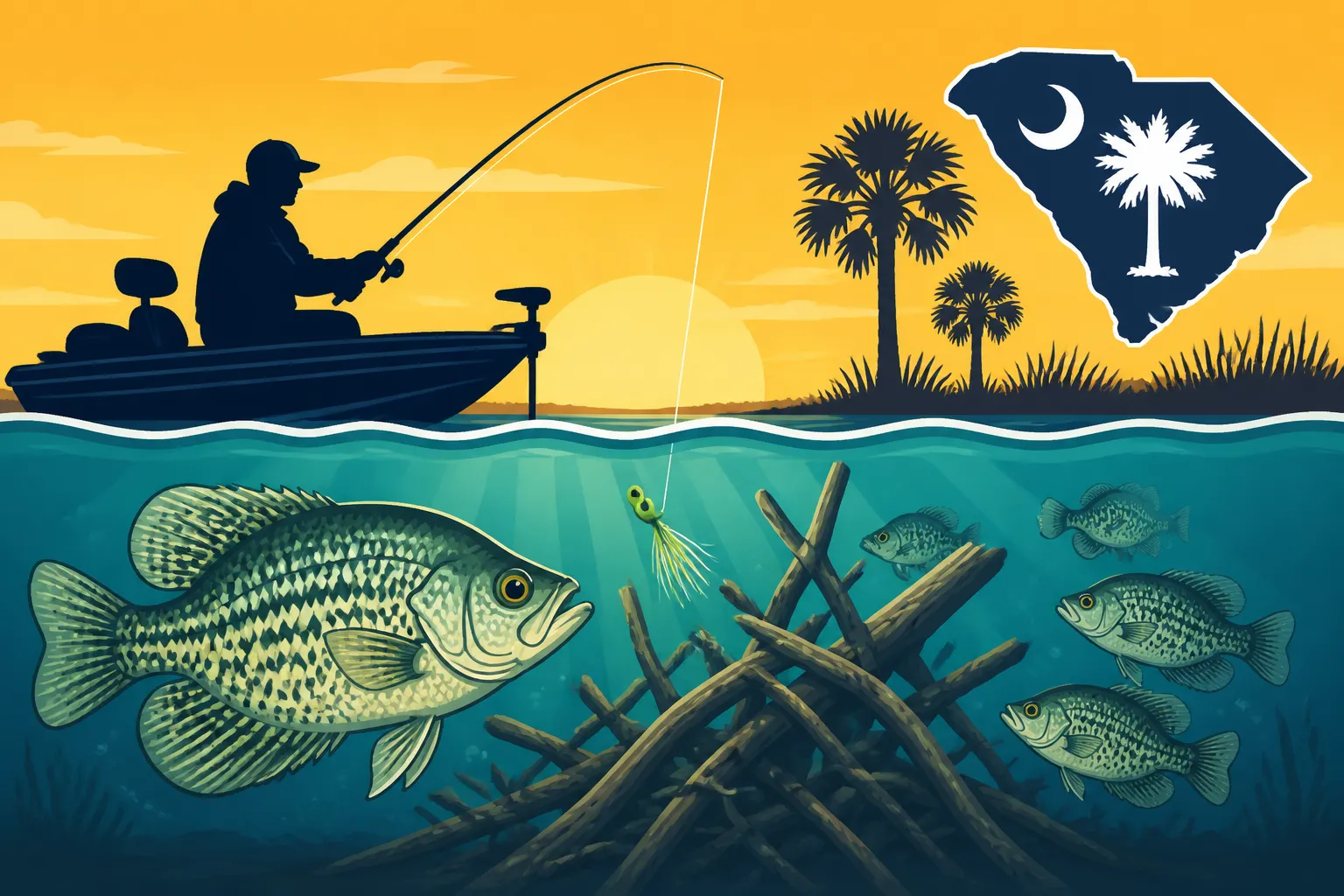
Crappie, whether they're the black or white variety, are undeniably attracted to structure. And when it comes to structure, few things beat a good brush pile. These submerged havens offer everything a crappie needs to thrive and survive, making them absolute magnets for these popular panfish.
Why Brush Piles are Crappie Magnets
Think of a brush pile as a crappie's personal fort, diner, and nursery all rolled into one. First and foremost, brush piles provide crucial cover. These intricate networks of branches and limbs offer excellent refuge from larger predators like bass and stripers, allowing crappie to feel safe and secure. It's tough to be a tasty meal when you're woven deep within a maze of sticks. Beyond protection, this dense cover also provides excellent ambush points. Crappie are ambush predators, and a brush pile gives them the perfect concealed position to dart out and snatch unsuspecting baitfish or insects that venture too close.
Furthermore, brush piles are teeming with food sources. Algae and microscopic organisms often cling to the submerged wood, attracting smaller insects, crustaceans, and baitfish. These smaller creatures form the base of the food chain, drawing in the crappie who are looking for an easy meal. This combination of shelter, ambush opportunities, and a readily available pantry makes brush piles an irresistible draw for crappie throughout the year. If you're looking to catch a mess of crappie, understanding why they choose these spots is the first step to unlocking their secrets.
Types of Brush Piles Anglers Encounter
Not all brush piles are created equal, and knowing the difference can significantly impact your approach. You'll generally run into two main categories: natural and man-made. Natural brush piles are often formed by fallen trees, limbs washed downstream, or even submerged stumps that have collected debris. These can be trickier to locate initially, as they often blend in with the natural bottom contour. They might be less dense than their man-made counterparts, offering more "pockets" for crappie to hold in.
Man-made brush piles, on the other hand, are intentionally placed by anglers or sometimes by state agencies like the South Carolina Department of Natural Resources (SSCDNR) to enhance fish habitat. These can range from a few Christmas trees tied together with concrete blocks to elaborate structures of PVC pipe and plastic designed to last for years. Man-made piles are often easier to find, sometimes marked on fishing maps or popular with local anglers. They tend to be denser and offer more vertical relief, often attracting larger schools of crappie. Knowing if you're fishing a shallow, spread-out natural pile or a deep, compact man-made one will help you choose the right presentation, which we'll get into later. For great resources on South Carolina's excellent crappie fisheries, check out our guide on the Best Crappie Spots on the Santee Cooper Lakes.
Seasonal Movements and Brush Pile Use
Crappie don't just hang out in brush piles willy-nilly; their use of these structures changes with the seasons, often influenced by water temperature and their spawning cycle. Understanding these seasonal shifts is key to knowing where and how deep to target them.
- Spring (Pre-spawn & Spawn): As water temperatures rise into the 50s and 60s Fahrenheit, crappie move shallower, often seeking brush piles in 3-10 feet of water. During the pre-spawn, they stage nearby, fattening up. Once the water hits the mid-60s, they'll move onto actual beds, which might be close to shallow brush piles, especially those offering a bit of shade or protection. This is a prime time for anglers, as the fish are aggressive. You can learn more about this period in our article on How to Find Crappie in Spring.
- Summer: When the scorching South Carolina summer heat arrives, crappie often retreat to deeper, cooler water. You'll find them concentrating in brush piles that are 15-30 feet deep or even deeper, especially those near creek channels or significant drop-offs. They use these deeper structures for thermal refuge and continue to feed on baitfish that also seek cooler water. This can be a challenging time, but targeting deep brush piles can be incredibly productive.
- Fall: As temperatures begin to cool in the fall, crappie become more active again. They often start to move back to brush piles in intermediate depths, say 8-20 feet, as they chase baitfish that are also on the move. This is a fantastic time for aggressive fishing, as crappie are feeding heavily to prepare for winter. Our guide on Crappie Fishing Techniques for Fall delves deeper into this exciting season.
- Winter: During the coldest months, crappie will often be found in deep brush piles, sometimes 20-40 feet down, or in brush piles nestled along deep channel bends. They become lethargic and less active, but they still hold tight to structure. Presenting a bait slowly and precisely is crucial during winter.
Knowing these patterns helps you predict where crappie will be and adjusts your fishing strategy accordingly. For general insights into the best times to fish for these popular panfish, consider reviewing our article on the Best Time of Year to Catch Crappie.
Essential Gear for Brush Pile Crappie Success
Fishing brush piles demands a specific setup to minimize snags and maximize bites. You need gear that offers sensitivity, control, and a bit of backbone.
Rod and Reel Setups
For brush pile crappie, light tackle is your best friend. A good crappie rod is typically 6 to 7 feet long, ultra-light or light action, with a fast or extra-fast tip. This sensitive tip is crucial for detecting those subtle crappie bites, which can sometimes feel like nothing more than a slight tap or the line going slack. The length helps with casting accuracy and keeping your bait precisely positioned around the brush without getting hung up.
Pair this with a small, lightweight spinning reel in the 500 to 1000 size range. This keeps the overall setup balanced and comfortable for long days of holding. The smooth drag system on a quality reel is vital for fighting crappie, especially if you hook a slab that tries to bury itself deeper into the brush. Brands like Shimano, Daiwa, or even specific crappie-focused brands like BnM Poles offer excellent options. You can find a wide selection of these setups on Amazon, making it easy to get started or upgrade your existing gear.
Line Selection for Dense Cover
Choosing the right fishing line is paramount when targeting crappie in brush piles. You need a line that offers sensitivity, decent abrasion resistance, and enough strength to pull out a snag if needed (or at least break cleanly).
- Monofilament (Mono): This is a classic choice, and for good reason. Mono is relatively inexpensive, has good knot strength, and offers a bit of stretch, which can act as a shock absorber for hard-fighting crappie. However, its stretch can reduce sensitivity, and it's less abrasion-resistant than other options. A 4-6 lb test monofilament is common.
- Fluorocarbon: Becoming increasingly popular, fluorocarbon offers excellent sensitivity due to its low stretch, and it's nearly invisible underwater, which can be a huge advantage for spooky crappie. It also has much better abrasion resistance than mono, which is a big plus when fishing around rough wood. However, it can be stiffer and more expensive. A 4-6 lb test fluorocarbon is a strong contender.
- Braided Line: While braid offers incredible strength and zero stretch (maximum sensitivity), it can be a double-edged sword in brush piles. Its super-thin diameter can easily cut into soft wood, making snags almost impossible to free. If you use braid, typically 6-10 lb test, it's almost always paired with a fluorocarbon leader (2-4 feet) to offer invisibility and some abrasion resistance without the risk of cutting the brush. This setup is fantastic for deep water crappie where sensitivity is key. For more on specific techniques like vertical jigging, which often benefits from sensitive line, explore our guide on How to Jig for Crappie in Deep Water.
Baits and Lures That Get the Bite
Crappie are opportunists, and a variety of baits and lures will entice them from brush piles. The key is to match the hatch or offer something irresistible.
- Live Minnows: The undisputed king of crappie baits. A small shiner or fathead minnow, hooked lightly through the lips or dorsal fin, is often irresistible. Present them on a small jig head, a plain hook under a bobber, or on a tight-line rig. They offer natural scent and movement, often outperforming artificials, especially when fish are finicky.
- Jigs: Small jigs (1/32 to 1/16 ounce are common, sometimes 1/8 ounce for deeper water) are incredibly effective. They can be dressed with soft plastic bodies (tubes, grubs, tiny swimbaits), marabou, or hair. The versatility of jigs allows for various presentations and color changes. Our article on Best Jig Colors for Crappie Fishing can give you some excellent starting points.
- Soft Plastics: These come in a dizzying array of shapes and colors. Tiny plastic tubes, curly tail grubs, and shad-imitating swimbaits are all excellent choices. The key is to use small profiles, typically 1 to 2 inches, to match the crappie's mouth size and natural forage. You can easily find multi-packs of popular crappie jigs and soft plastics on Amazon to experiment with different patterns and actions.
| Jig Type | Common Size | Best for Brush Piles? | Pros | Cons |
|---|---|---|---|---|
| Tube Jig | 1/32 – 1/8 oz | Excellent | Versatile, great action, many colors | Can twist line if retrieved too fast |
| Curly Tail Grub | 1/32 – 1/8 oz | Excellent | Enticing tail action, good vibration | Tail can get bitten off by small fish |
| Marabou Jig | 1/32 – 1/16 oz | Very Good | Natural breathing action, subtle | Fragile, can foul easily |
| Hair Jig | 1/32 – 1/16 oz | Good | Durable, natural look | Less action than plastics, limited colors |
| Paddle Tail Swimbait | 1/16 – 1/8 oz | Good | Strong thumping action, mimics baitfish | Can be less subtle for finicky crappie |
Techniques for Fishing Brush Piles Effectively
Successfully fishing crappie in brush piles is less about brute force and more about finesse, precision, and understanding fish behavior.
Locating Brush Piles in South Carolina Waters
Finding the brush piles is half the battle, especially in expansive South Carolina lakes like Lake Marion or Lake Moultrie.
- Electronics are Your Best Friend: Modern fish finders with down imaging and side imaging capabilities are invaluable. Down imaging shows you a cross-section directly below your boat, clearly revealing brush piles as dense, irregular blobs on the screen. Side imaging scans out to the sides, allowing you to cover more water and spot piles that aren't directly beneath you. Many anglers will idle over an area, marking promising brush piles as waypoints on their GPS before returning to fish them.
- Visual Cues (Shallow Water): In shallower areas, especially in the spring or fall, you might be able to spot brush piles visually. Look for subtle disturbances on the water's surface, slight changes in water color, or even the tips of branches breaking the surface during low water periods. Old dock pilings, submerged timber, or even cypress tree knees often hold crappie and can indicate nearby natural brush.
- Mapping Apps and Community Knowledge: Digital mapping apps like Navionics or C-MAP often mark submerged structures, including known brush piles. Additionally, local bait shops are treasure troves of information. Don't be shy; ask about good crappie spots, and they might even share general areas where brush piles are prevalent. Social media fishing groups dedicated to specific South Carolina lakes (like those for the Santee Cooper Lakes: South Carolina's Legendary Bass Fishery) can also offer hints.
Approaching and Positioning Your Boat
Stealth and precision are crucial when approaching brush piles. Crappie can be easily spooked, especially in clearer water.
- Stealth is Key: Don't motor directly over a brush pile you intend to fish. Approach from a distance, using your trolling motor. If you have an electric motor with spot-lock or anchor features, these are incredibly useful for holding your position without drifting.
- Wind and Current Considerations: Always approach from upwind or upcurrent if possible. This allows you to drift slowly into position or easily hold your boat against the forces, maintaining better control over your bait presentation. If you approach downwind/downcurrent, you'll constantly be fighting to stay in place, making it harder to fish effectively.
- Multiple Casting Angles: Position your boat so you can cast to different sides of the brush pile. Crappie might be holding on the windward side, the leeward side, or even directly on top. Being able to present your bait from various angles increases your chances of hitting the "sweet spot" where the fish are concentrated. Sometimes, just a slight adjustment in boat position can make all the difference between no bites and a flurry of action.
Presentation Strategies for Hungry Crappie
Once you've found a brush pile and positioned your boat, it's time to present your bait. This is where the finesse really comes into play.
- Vertical Jigging (Spider Rigging/Long-lining): This is a highly effective method, especially for deep brush piles or when crappie are tightly schooled. Using multiple rods (often 4-8), you drop your jigs or minnows straight down into the brush, carefully monitoring your fish finder to keep your bait just above or right in the middle of the fish. This is known as "spider rigging" when using many rods around the boat or "tightlining" when focusing on precision drops. For an in-depth look, check out our guide on Tightlining Techniques for Crappie Explained. The key is slow, controlled vertical movements, barely lifting and dropping the bait, letting it "dance" in place.
- Casting and Retrieving: For shallower brush piles or when crappie are scattered, casting can be productive. Cast beyond the pile and retrieve your jig slowly, allowing it to fall through the branches. The goal is to make the jig "tick" the branches without getting hung up. A slow, steady retrieve with occasional pauses often triggers bites. Pay close attention to any sudden stops or changes in line tension – that's likely a crappie.
- Bobber Fishing (Shallow Brush): In shallower brush (under 10 feet), a slip bobber or fixed bobber setup can be incredibly effective, especially for beginners or kids. Set your bobber stop so your bait (a minnow or small jig) hangs just above the top of the brush or at the depth where you're seeing fish on your electronics. Cast near the brush and let the bobber do the work. The subtle movement of the water or a gentle twitch of the rod tip can give your bait enough action. This is a great way to target crappie without constant snagging.
- Slow Trolling (Pushing Jigs): This method involves slowly "pushing" jigs or minnows on multiple rods from the front of the boat while the trolling motor propels you forward. This is excellent for covering long brush piles or searching for active schools around multiple piles. It allows you to present baits at various depths and distances from the boat simultaneously, increasing your chances of finding the crappie's preferred zone. This is a popular technique on large reservoirs like the Santee Cooper lakes, known for their abundant crappie. Don't forget, crappie often feed actively at night, and brush piles are still prime targets; our article on Can You Catch Crappie at Night? offers great tips.
Reading the Bite: The Art of Detection
Crappie bites can be incredibly subtle, often earning them the nickname "paper mouths." It's rarely a violent jerk, especially when they're lethargic or in dense cover.
- The "Thump" or "Tap": The most common bite sensation is a light "thump" or "tap" on your line or rod tip. It might feel like a tiny bump against a stick, but if you feel it near a brush pile, set the hook!
- Line Movement: Sometimes, you won't feel anything at all on the rod. Instead, you'll see your line suddenly twitch, jump, or just inexplicably go slack. If your line suddenly stops falling or moves sideways, even slightly, assume it's a fish. This is why having a brightly colored main line (or braided line with a mono/fluoro leader) can be helpful, as visual detection of the bite becomes critical.
- Increased Weight: Occasionally, you'll simply feel a slight increase in weight or pressure on your line as if you've hooked a leaf. This is often a crappie that has gently inhaled your bait and is just sitting there.
- The Rod Tip: With a sensitive rod, even the slightest bending or straightening of the tip can indicate a bite. Constantly watch your rod tip, especially when vertically jigging, as it provides a direct visual cue to what's happening at the end of your line.
Always err on the side of caution. If anything feels "different," set the hook. Crappie have soft mouths, so a firm but not overly aggressive hookset is usually sufficient.
Troubleshooting and Overcoming Common Challenges
Even with the best gear and techniques, fishing brush piles can present unique challenges. Knowing how to adapt will save you frustration and lead to more fish.
Minimizing Snags in Dense Cover
Snags are an inevitable part of fishing brush piles, but you can significantly reduce their frequency.
- Jig Head Choice: Use jig heads with lighter wire hooks. While you might straighten a hook on a big fish, you're much more likely to pull free from a snag by bending the hook than breaking your line or losing your entire rig. Some anglers even bend their jig hooks slightly outwards to increase the chance of pulling free.
- Weedless Rigs: For especially dense cover, consider using weedless jig heads or small weedless hooks designed for soft plastics. While they might slightly reduce hook-up percentages, they drastically cut down on snags, allowing you to fish areas that would otherwise be impossible.
- Depth Control: Use your electronics religiously to keep your bait just above the thickest parts of the brush pile. Crappie often suspend slightly above the densest cover, ready to dart in and out. If you're constantly getting snagged, you're likely fishing too deep into the structure.
- The "Crappie Pole" Technique: Many seasoned anglers use long, limber crappie poles (10-16 feet) to "dap" or "dip" their jigs directly into openings in the brush pile. This direct vertical presentation gives unparalleled control, allowing you to gently probe pockets without casting and retrieving through tangles. This is a common technique on lakes like Lake Wateree, which has extensive standing timber and brush.
Dealing with Finicky Bites
Sometimes crappie are there, but they just won't commit. This usually means you need to adjust your approach.
- Slow Down: Crappie, especially in cold water or after a cold front, can be incredibly lethargic. Slow down your retrieve to a crawl, or hold your vertical jig almost motionless. A slight quiver of the rod tip might be all it takes to trigger a strike. For more insights on how fish react to changing weather, check out our guide on Fishing Techniques After a Cold Front.
- Downsize Your Bait: If they're hitting but not getting hooked, or if bites are scarce, try a smaller jig (1/32 oz or even 1/64 oz) or a tiny minnow. Sometimes a subtle change in profile is all it takes.
- Change Colors: While natural colors (chartreuse, white, black/chartreuse) are often reliable, crappie can be picky. Experiment with different jig colors. On some days, a bright pink or orange might be the ticket, while on others, a subdued smoke or clear might work better. Pay attention to water clarity – bright colors for stained water, natural colors for clear water. Our article on Best Jig Colors for Crappie Fishing offers a detailed breakdown.
- Vary Your Depth: Even if your electronics show fish at a certain depth, try fishing a foot or two above or below that mark. Crappie can be extremely particular about the exact depth.
Knowing When to Move On from a Brush Pile
It's easy to get stuck on a brush pile that looks perfect but just isn't producing. Part of being an effective crappie angler is knowing when to cut your losses and search for greener pastures.
- Lack of Activity: If you've fished a brush pile thoroughly from multiple angles, at various depths, and with different baits for 15-20 minutes without a single bite or a mark on your electronics, it's probably time to move. Crappie often school, so if there's one, there are usually more.
- No Marks on Electronics: If your fish finder shows absolutely no fish on or around the brush pile, especially in deep water, then you're likely wasting your time. Trust your electronics.
- Moving to the Next Spot: Have a plan. Don't just pick one brush pile and commit to it all day. Identify several potential brush piles in an area, hit them in sequence, and if they're not producing, move on to the next. This strategy maximizes your time on the water and increases your chances of finding an active school. Remember, conditions change throughout the day, so a pile that was quiet in the morning might light up in the afternoon.
Fishing crappie around brush piles is a rewarding challenge that, with the right knowledge and patience, can lead to incredible days on the water. Now go out there and put these techniques to good use!
Disclaimer
Fishing regulations, including licensing requirements, bag limits, and seasons, can change frequently. Always consult the latest South Carolina Department of Natural Resources (SCDNR) regulations before heading out on the water. This guide is for informational purposes only and should not be considered a substitute for official legal guidelines.