Spotted Bass Identification and Where to Find Them in South Carolina
Have you ever reeled in a bass in a South Carolina lake, looked at it closely, and thought, "Wait, what kind of bass is this, really?" You're not alone! Many anglers in our beautiful state grapple with identifying the subtle differences between our various bass species, and the spotted bass is often at the heart of this confusion. This comprehensive guide is here to clear up that mystery, offering clear identification tips and pinpointing the best places to find these intriguing fish across South Carolina.
Unmasking the Elusive Spotted Bass: What Makes Them Unique?
Spotted bass can be a bit of a trickster, often mistaken for their more famous cousin, the largemouth. But once you know what to look for, their unique characteristics become much clearer. It’s not just about the spots, though those are certainly a big clue! It’s a combination of subtle features and even how they behave in the water. Understanding these nuances will not only help you identify your catch but also improve your fishing strategy, as knowing your target helps you choose the right approach.
The Distinctive Physical Traits of a Spotted Bass
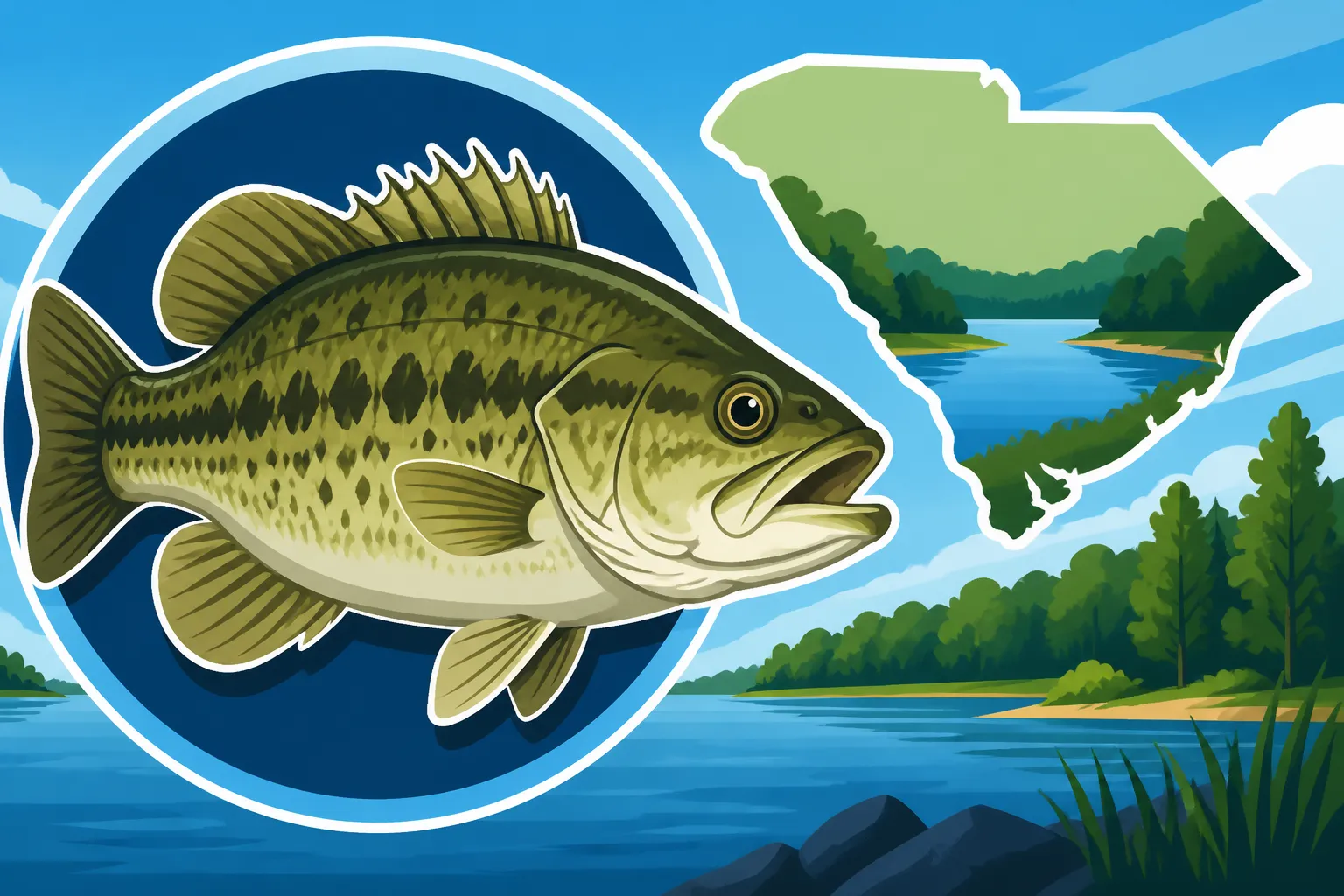
At first glance, a spotted bass might just look like a smaller largemouth. However, if you examine it closely, you'll start to notice some key differences. The most obvious, of course, are the rows of dark spots along their lower side, below the lateral line, which often form distinct rows. These spots are usually more pronounced than any faint patterning you might see on a largemouth. Their coloration generally ranges from green to olive on the back, fading to white on the belly, with a dark, broken lateral line running down their side.
Beyond the spots, pay close attention to the mouth. When a spotted bass's mouth is closed, the upper jaw (maxilla) typically does not extend past the back of the eye. This is a crucial difference from a largemouth, whose jaw usually extends well beyond. Their body tends to be more streamlined and torpedo-shaped compared to the largemouth's robust, almost football-like build. Also, feel for a patch of small teeth on their tongue – this is a hallmark of the spotted bass, something you won't find on a largemouth. If you're really into knowing your fish, a good South Carolina Fish Species: A Complete Guide to What's in the Water can be incredibly helpful for identifying all your catches.
Behavioral Quirks: How Spotted Bass Act Differently
Spotted bass aren't just physically distinct; they also tend to behave a bit differently than largemouth bass. They often prefer clearer, deeper water with rockier bottoms, whereas largemouths are more at home in weedy, woody cover in shallower areas. You'll frequently find spotted bass congregating in schools, particularly around points, humps, and submerged structure in open water. This schooling behavior can make for exciting fishing, as once you find one, you're likely to find more.
They're also known for their aggressive fight, often diving deep and pulling hard, unlike the largemouth's tendency to jump and thrash on the surface. They’ll readily hit a variety of lures, often striking with a ferocity that belies their size. While they might not grow as large as the biggest largemouth, their sheer strength and willingness to bite make them a favorite target for many anglers. This spirited fight is part of their appeal and makes catching them a memorable experience.
Common Misconceptions: Why They Get Confused
The primary reason spotted bass get confused with other species, especially largemouths, is their similar overall appearance. Both are green-ish bass with dark lateral lines, and in some waters, their habitats can even overlap. However, ignoring the finer details, like the jaw length or the tongue patch, leads to misidentification. Anglers might also mistake them for smallmouth bass, particularly in clearer, rocky areas. The lack of vertical bars (common on smallmouths) and the presence of distinct horizontal spots on the spotted bass's lower flanks are key here.
Another source of confusion might be regional variations or hybridizations in certain waters, although this is less common for spotted bass in South Carolina. For instance, in some parts of the country, different strains of spotted bass exist, but here, the key is really knowing the primary identification markers. Many anglers, especially those new to a particular lake, might simply categorize any green bass as a largemouth without a closer look. Taking a moment to examine the fish's mouth, tongue, and body spotting can quickly resolve the mystery. It's truly a game-changer once you get the hang of it, and a great way to deepen your understanding of the fish you're targeting.
Where to Find Spotted Bass in the Palmetto State
South Carolina offers a fantastic array of fishing opportunities, and while largemouth bass get a lot of the spotlight, spotted bass have carved out their own niches in several of our premier lakes. Knowing where to look for these feisty fighters is half the battle, and it often involves understanding their preference for certain types of habitat that differ from their largemouth cousins. These waters tend to be clearer, deeper, and more rocky, providing the perfect environment for spotted bass to thrive.
The Upstate's Prime Spotted Bass Haunts
When it comes to spotted bass, the Upstate region of South Carolina is definitely where you want to focus your efforts. Lakes like Lake Keowee and Lake Hartwell are absolutely legendary for their healthy populations of spotted bass. Lake Keowee, with its clear, deep, cold water and abundant rocky structure, is practically a tailor-made spotted bass paradise. Anglers here often find great success targeting points, humps, and deep-water structure using drop shots, shaky heads, and small crankbaits. The fish thrive in these conditions, growing to impressive sizes for their species. If you're looking for Lake Keowee Fishing Spots and Boat Ramps, you'll find plenty of areas perfect for targeting these bass.
Lake Hartwell, straddling the South Carolina-Georgia border, is another fantastic destination. While it also boasts a robust largemouth population, the clear water and rocky sections of Hartwell provide excellent habitat for spotted bass. They often coexist with other species, but knowing their preferences means you can specifically target them. Deep main lake points, submerged islands, and areas with significant rock formations are prime real estate for spotted bass on Hartwell. Many anglers find great success in the Tugaloo River arm of Lake Hartwell, which offers a variety of underwater structures. For more specific information, check out Lake Hartwell Fishing Spots on the South Carolina-Georgia Border.
Targeting Spotted Bass in Mid-State Reservoirs
While the Upstate reservoirs are famous for their spots, you might be surprised to find them in some mid-state waters too. Lake Greenwood, for instance, has a decent population of spotted bass alongside its largemouth and striped bass. This lake, known for its clear water and diverse structure, offers suitable conditions for spots, especially in its deeper, rockier sections. Anglers exploring Lake Greenwood should look for areas with current, deep points, and hard bottom composition, similar to the techniques used in the Upstate lakes. They might not be as dominant as in Keowee or Hartwell, but they are certainly present and can provide a thrilling fight.
The key to finding them in these mid-state reservoirs often comes down to adapting Upstate tactics to local conditions. Think clear water, rock, and depth. They aren't going to be holding in thick hydrilla beds or shallow stump fields like a largemouth might. Instead, focus on transition areas where rocky banks meet deeper channels, or areas with submerged timber that create current breaks and ambush points. Using your electronics to locate schooling fish around humps and drop-offs can be incredibly effective.
Preferred Habitats and Structures They Love
Spotted bass are creatures of structure, but not just any structure. They have a definite preference for hard, rocky bottoms, ledges, humps, and points, especially those that drop off into deeper water. They love current and often position themselves where they can ambush baitfish flowing by. In lakes like Keowee, you'll find them hugging steep rock walls or suspended over deep water near ledges. They are also known to relate to offshore brush piles and sunken timber in deeper sections, particularly during the warmer months when they seek cooler water.
When you're out on the water, think about areas where the topography changes quickly. A long, tapering point that extends out into a deep channel, a rock pile on an otherwise flat bottom, or an abrupt depth change along a creek channel are all prime locations. They're also often found around riprap and bridge pilings where baitfish congregate and current is present. Unlike largemouth bass which prefer heavy cover, spotted bass thrive in more open, yet structured environments. This distinct preference is a significant factor in Where Are Spotted Bass Found in South Carolina?, guiding anglers to the most productive areas.
Spotted Bass vs. Their Cousins: A Guide to Identification
The world of bass fishing can be a little confusing, especially when you're trying to figure out if you've landed a largemouth, smallmouth, or spotted bass. These three species, while distinct, share enough similarities to make identification tricky for even seasoned anglers. But don't fret! With a few key pointers, you'll be able to tell them apart like a pro. This section will break down the crucial differences, ensuring you never again have to wonder what kind of bass you just pulled from the water.
Spotting the Difference: Spotted Bass vs. Largemouth Bass
This is the most common identification challenge in South Carolina. The main thing people look for is mouth size. As mentioned, the largemouth bass lives up to its name; when its mouth is closed, the upper jaw extends beyond the back of the eye. For the spotted bass, that jaw typically stops at or before the back of the eye. That's your number one visual cue. Secondly, consider the body shape. Largemouths are generally bulkier, with a more pronounced arch in their back, giving them a football-like appearance. Spotted bass tend to be more slender, almost cigar-shaped, which gives them their strong fighting power.
Then, there are the spots. While largemouths can have some blotches or faint markings, they rarely have the distinct rows of dark spots below the lateral line that are characteristic of the spotted bass. Finally, the "tongue patch." Gently open the fish's mouth and run your finger over its tongue. If you feel a small, rough patch of teeth, it's almost certainly a spotted bass. Largemouth bass do not have this patch. This combination of jaw, body, spots, and tongue teeth makes it quite clear, as detailed in Spotted Bass vs Largemouth Bass: How to Tell Them Apart.
Separating Spotted Bass from Smallmouth Bass
While less common to confuse in South Carolina due to the limited range of smallmouth, it can still happen, especially in clear, rocky Upstate rivers. Smallmouth bass are easily identified by their coloration: they typically have distinct dark, vertical bars or blotches along their sides, which are absent on spotted bass. Their overall color is often a bronzy-brown or golden-green, quite different from the greener hues of a spotted bass. Like the spotted bass, the smallmouth's upper jaw usually doesn't extend past the eye.
Smallmouths also tend to have a more uniform, muscular body structure. They prefer cold, clear, flowing water, such as the rivers in the mountainous regions of our state. Spotted bass, while preferring clear water, are more at home in large reservoirs and lakes. If you're exploring Smallmouth Bass Fishing in South Carolina's Upstate Rivers, you'll likely encounter distinct differences in habitat as well as appearance. The absence of the spotted bass's distinct horizontal spots and the presence of vertical banding on the smallmouth are your best visual clues.
Don't Confuse Them with Redeye Bass
Redeye bass (sometimes called Coosa bass) are another species that can sometimes be mistaken for spotted bass, particularly by new anglers or in certain river systems. The key identifier for a redeye bass is, as its name suggests, a reddish tint to its eye, especially the iris. While not always super obvious, it's often present. Redeye bass also have distinct dark, often connected, diamond-shaped blotches along their sides, which can appear somewhat like a broken lateral line, but different from the distinct lower-body spots of a spotted bass. Their fins also often have a reddish-orange hue, particularly the caudal (tail) and anal fins.
Another important distinction is geographical. In South Carolina, true redeye bass are typically found in the upper reaches of certain river systems, primarily in the Appalachian drainages, like the Savannah River basin headwaters. Spotted bass have a broader distribution in the larger reservoirs. If you're fishing a mountain stream or smaller river with a rocky bottom, and you see that reddish eye and fin tint, it's more likely a redeye. You can learn more about differentiating these species by looking into Redeye Bass vs Largemouth Bass: How to Tell Them Apart, which provides excellent comparative insights.
| Feature | Spotted Bass | Largemouth Bass | Smallmouth Bass | Redeye Bass |
|---|---|---|---|---|
| Jaw Extension | Does not extend past back of eye | Extends past back of eye | Does not extend past back of eye | Does not extend past back of eye |
| Tongue Teeth | Present (rough patch) | Absent | Absent | Present (rough patch) |
| Body Markings | Rows of dark spots below lateral line | Dark, often broken, lateral stripe | Vertical bars/blotches on sides | Diamond-shaped blotches, reddish fins |
| Eye Color | Typically dark | Dark | Dark | Often reddish tint in iris |
| Body Shape | More slender, torpedo-like | Stocky, robust, "football" shape | Muscular, more uniform | Slender, similar to spotted bass |
| Preferred Water | Clear, deep, rocky lakes/reservoirs | Weedy, woody, shallower lakes/ponds | Cold, clear, flowing rivers/rocky lakes | Clear, flowing mountain streams |
The Story of Spotted Bass in South Carolina: Origins and Impact
Every fish species has a story, and the spotted bass in South Carolina is no exception. They weren't always a prominent feature in our waters, and their introduction has had a noticeable impact on our freshwater fisheries. Understanding their origins helps us appreciate their presence today and informs our approach to managing and fishing for them. It’s a tale of deliberate stocking, adaptation, and how a new player can change the game for anglers and the ecosystem alike.
How Spotted Bass Arrived in Our Waters
Spotted bass aren't native to all of South Carolina's waters. They were intentionally introduced into some of our larger reservoirs, primarily to provide a new sport fish for anglers and to fill a specific niche in the ecosystem. Historically, the southeastern spotted bass subspecies (often called Coosa spotted bass in other states, though our primary spots are Kentucky spotted bass) found their way into various river systems. In South Carolina, their spread into major reservoirs like Lake Hartwell and Lake Keowee was largely due to stocking efforts in the mid-to-late 20th century. These lakes, with their deep, clear, rocky habitats, proved to be ideal homes for these adaptable fish.
The idea was often to introduce a species that could thrive in conditions that might not be optimal for largemouth bass, which prefer more cover and shallower water. Spotted bass, with their preference for open, deeper water, fit this bill perfectly. Over time, these introduced populations grew and established themselves, often becoming self-sustaining. This historical context is important because it explains why you find them so abundantly in specific lakes rather than widespread across every body of water in the state. Learning about this history truly enriches the fishing experience, giving you a sense of the ecosystem's journey.
Their Role in South Carolina's Ecosystems
The introduction of spotted bass has had a significant, albeit sometimes complex, impact on South Carolina's aquatic ecosystems. In some cases, they've helped to diversify the sportfishing opportunities, providing another exciting target for anglers, particularly in oligotrophic (nutrient-poor, clear water) reservoirs where largemouth might struggle to reach trophy sizes. Their schooling behavior and aggressive nature make them a fun catch, and they've certainly created a loyal following among bass anglers.
However, their presence also means a new competitor for native species, including largemouth bass and various baitfish. Spotted bass can outcompete largemouths in certain deeper, clearer water habitats, sometimes leading to a shift in the overall bass population dynamics. They feed on a variety of prey, including threadfin shad, blueback herring, and smaller fish, which can put pressure on these forage bases. Fisheries biologists continually monitor these interactions to ensure a healthy balance and sustainable populations of all species. It's a delicate dance, where one species' success can ripple through the entire food web. You can explore topics related to growth and size by checking out Spotted Bass Growth Rate and Average Size.
Fishing Regulations Specific to Spotted Bass
Like all sportfish in South Carolina, spotted bass are subject to specific fishing regulations designed to ensure their populations remain healthy and sustainable for future generations of anglers. These regulations typically cover aspects such as daily bag limits (how many fish you can keep in a single day) and minimum size limits (the smallest legal length a fish must be to be kept). While specific regulations can vary by lake or region, generally, spotted bass often fall under the same broader bass regulations as largemouth bass, especially in terms of size and creel limits.
It’s absolutely crucial to always check the most current regulations provided by the South Carolina Department of Natural Resources (SCDNR) before heading out, as rules can change. This information is usually available on their website or in their annual fishing guide, often found at bait shops or sporting goods stores. Adhering to these rules helps maintain the ecological balance and ensures everyone can enjoy fishing for these magnificent fish. Always practice responsible catch-and-release, especially for larger breeding fish, to contribute to a thriving fishery.
Techniques for Landing a South Carolina Spotted Bass
Catching spotted bass in South Carolina is incredibly rewarding, but it often requires a slightly different approach than you might use for largemouths. Because spotted bass prefer deeper, clearer, and often rockier environments, your choice of lures, baits, and presentation needs to match their habitat and feeding behavior. It’s all about getting down to where they live and presenting something that looks irresistible.
Go-To Baits and Lures That Spotted Bass Can't Resist
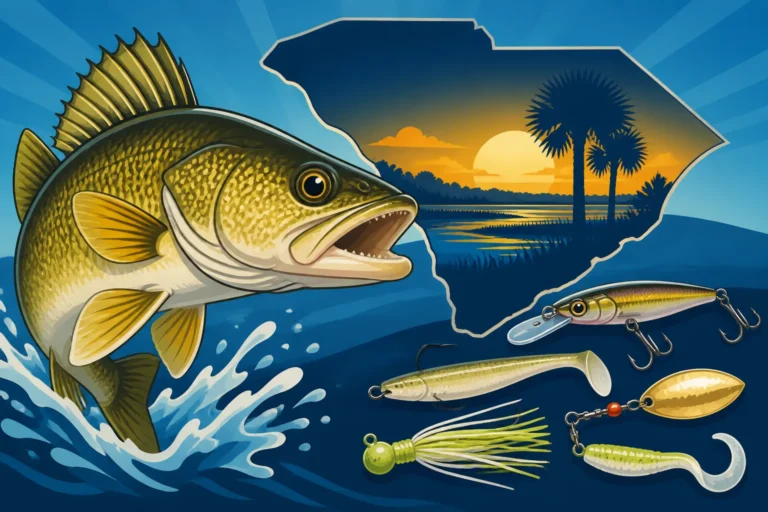
Spotted bass are aggressive eaters and will strike a wide array of baits and lures, but some are definitely more effective than others, especially when targeting their preferred deep, rocky haunts. Finesse techniques shine here. Drop shots with small worms or creature baits are incredibly effective, allowing you to present a bait directly in front of fish suspended over deep structure. Shaky head jigs rigged with small plastic worms or craws are another top choice, perfect for crawling along rocky bottoms and provoking strikes. You can find a great selection of these on Amazon, often bundled with various colors to experiment with.
Beyond finesse, small crankbaits that dive to the depths where spots are holding can be deadly, particularly those with a tight wobble that imitate shad or other baitfish. Jerkbaits are also excellent, especially in clearer water, mimicking injured baitfish with their erratic action. Underspins and swimbaits, particularly those resembling blueback herring or threadfin shad, are also highly effective, especially when spotted bass are actively chasing bait. For those looking for specific recommendations, checking out Best Lures for Spotted Bass in Rocky Lakes can offer valuable insights. Don't forget metal baits like spoons or blade baits, which can be dropped into schools of fish you've located on your electronics for a quick reaction bite.
Seasonal Strategies for Consistent Catches
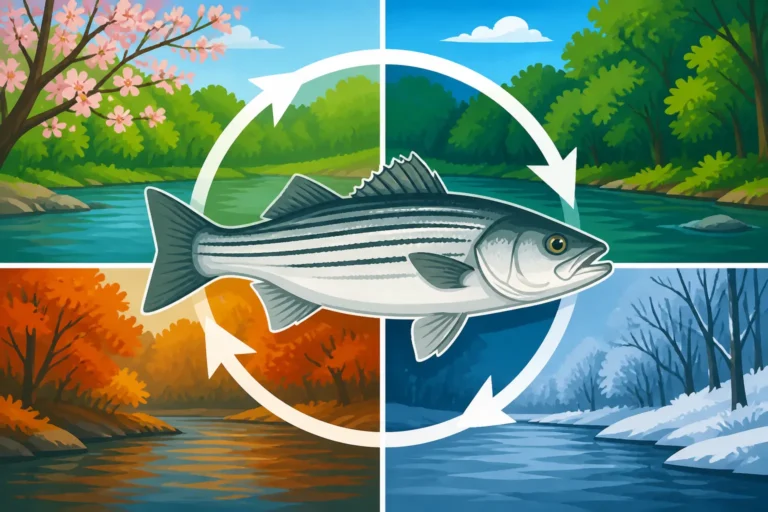
Just like other bass species, spotted bass behavior changes with the seasons, and adapting your tactics accordingly will lead to more consistent success. In spring, as water temperatures rise, spotted bass will move shallower to spawn, though often not as shallow as largemouths. Look for them on rocky points and humps near deeper water. Jigs, spinnerbaits, and even topwater lures can be effective. As they move into deeper summer patterns, they'll seek cooler, oxygen-rich water. This is when deep cranking, drop shotting, and jigging spoons become paramount. Focus on main lake points, humps, and submerged timber.
Fall sees them becoming more active as water temperatures cool, often schooling up and chasing baitfish on the surface or just below. This is prime time for topwater, jerkbaits, and swimbaits. They can be found shallower than in summer, but still often relate to hard structure. In winter, they'll retreat to the deepest parts of the lake, often suspending over deep channels or congregating on deep ledges. Slow-rolling jigs, spoons, and vertical jigging techniques are key for enticing these lethargic fish. Remember, even in winter, their aggression means they'll hit if you can put the bait in front of them. For a broader understanding of fishing throughout the year, a South Carolina Fishing Seasons Guide can be very helpful.
Fishing for Spotted Bass in Rocky Lakes
Fishing for spotted bass in South Carolina's rocky lakes, like Keowee and Hartwell, requires a specific mindset and tackle. First, be prepared for snags! Rock is their preferred habitat, and your lures will inevitably get hung up. Use fluorocarbon line for its abrasion resistance and low visibility, and consider a medium-light to medium-heavy spinning or casting rod for better feel and control. Lures that mimic baitfish or crawfish are ideal. Think about small jigs, crankbaits with stout hooks, and finesse worms in natural colors like green pumpkin or watermelon.
When fishing these areas, use your electronics to identify underwater features such as rock piles, ledges, and deep humps. Spotted bass often suspend just off these structures or hold tight to the bottom. Approach these spots quietly, and make precise casts. Once you get a bite, note the depth and type of structure, as you'll likely find more fish behaving similarly in other parts of the lake. Experiment with retrieve speeds and pauses, as spotted bass can be finicky. Keep a diverse tackle box, perhaps with a multi-compartment storage box from Amazon, ready for any condition. Mastering these techniques will undoubtedly lead you to more success, as highlighted in South Carolina Spotted Bass Fishing Tips for Beginners.
Disclaimer
This article is for general informational purposes only and does not constitute professional advice. Laws, prices and regulations vary by location and change over time. Consult a qualified professional for guidance on your specific situation.