Slow-Rolling a Crankbait for Winter Bass
Winter bass fishing in South Carolina can feel like an impossible puzzle. The fish seem to vanish, the water turns frigid, and those aggressive strikes you love in warmer months become ghost stories. But don't throw in the towel just yet! This guide is all about equipping you with the knowledge to consistently catch bass when the mercury drops, specifically by mastering the art of slow-rolling a crankbait.
Understanding Winter Bass Behavior in South Carolina
When winter truly sets in across the Palmetto State, anglers often find themselves staring at sonar screens that look eerily empty. It’s a common frustration, but understanding why bass behave this way is the first step toward outsmarting them. They don't just disappear; they simply adapt to the colder conditions.
Why Bass Slow Down in Winter
As water temperatures plummet, typically falling below 50-55 degrees Fahrenheit in many South Carolina lakes, the metabolism of largemouth and spotted bass slows dramatically. Think of it like us trying to run a marathon in a snowstorm – we just don't have the same energy. This means bass become less active, their need to feed diminishes, and they're far less inclined to chase down a fast-moving meal. Their prey, like shad and other baitfish, also become lethargic, often grouping up in tight schools. This creates a challenging scenario where bass are less willing to expend energy, making those aggressive topwater blow-ups or spinnerbait strikes a distant memory until spring. Anglers often struggle because they continue to use techniques designed for warmer water, resulting in empty livewells and cold hands.
The colder water also affects a bass's oxygen intake and overall bodily functions. They move slower, digest food at a glacial pace, and tend to hold tighter to cover or structure. Instead of roaming wide areas in search of food, they conserve energy by hunkering down in predictable spots. This makes locating them crucial, but once found, presenting an irresistible, easy meal is the next challenge. For a broader look at how bass change their habits, you might find our guide on South Carolina Bass Fishing Techniques by Season helpful as it details seasonal shifts.
Key Winter Bass Habitats in South Carolina Lakes
During winter, bass in South Carolina reservoirs aren't just anywhere; they seek out specific areas that offer stability, cover, and access to food, even if that food is sluggish. The main lake points, deep channels, and creek arms are prime real estate. On sprawling lakes like Lake Murray, you’ll often find bass congregating on deep main lake points or along steep drops where creek channels intersect with the main river channel. These areas provide a quick escape to deeper, more stable water if conditions change drastically. Similarly, on Lake Hartwell, rocky ledges and deep timber lines along the Tugaloo River arm become magnets for wintering bass. They appreciate the consistent temperatures and the ambush points these structures provide.
Furthermore, brush piles, submerged timber, and deep rock formations in these channels are critical. Bass will often position themselves in or just above these structures, waiting for an easy meal to pass by. It’s not about chasing anymore; it’s about conserving energy and letting the food come to them. Understanding these preferred winter habitats is paramount, because even the best technique is useless if you're not fishing where the fish are holding. Many anglers often overlook the nuances of Winter Fishing Techniques in South Carolina Lakes, leading to frustration. If you're focusing on a specific body of water, our detailed Lake Murray Fishing Guide for South Carolina Anglers or Lake Hartwell Fishing Spots on the South Carolina-Georgia Border can give you an even more localized advantage.
What is "Slow-Rolling" a Crankbait?
You've heard of cranking for bass, but "slow-rolling" a crankbait isn't quite the same as burning it through the water. It's a nuanced technique specifically designed to appeal to those sluggish, cold-water bass.
The Concept Behind the Technique
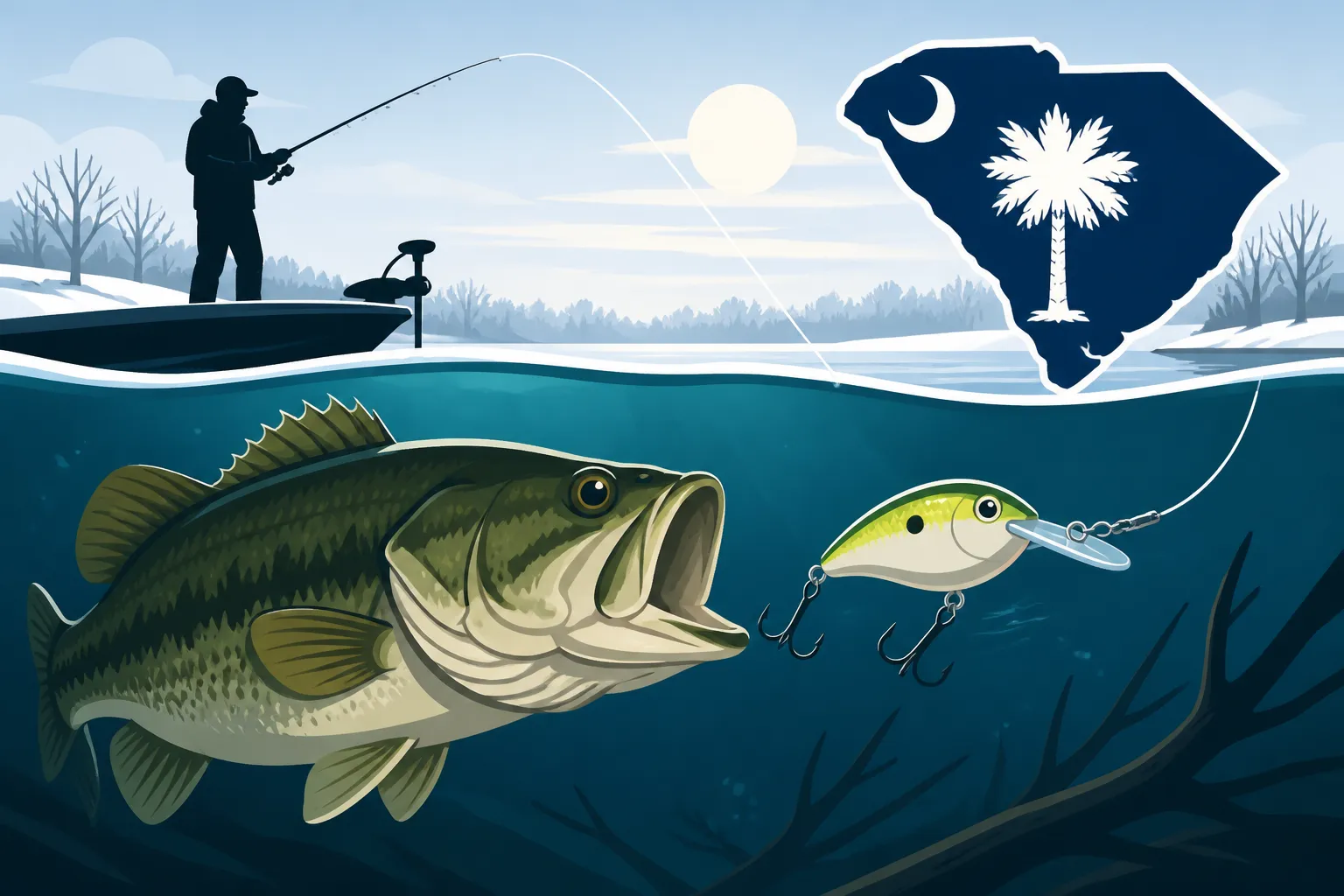
Slow-rolling a crankbait is all about mimicking a dying or lethargic baitfish struggling along the bottom, or just above it. Imagine a cold shad, barely able to swim, bumping into logs and rocks as it tries to escape. This is the meal a winter bass is looking for – something easy, something that doesn't require a high-energy chase. Unlike aggressive retrieves where you're trying to provoke a reaction strike with speed and erratic movement, slow-rolling relies on a slow, steady, methodical retrieve that keeps the bait in the strike zone for as long as possible. The crankbait's bill is designed to deflect off structure, creating subtle, life-like movements without excessive speed. This deflecting action is key; it often triggers a reaction bite from a less-than-enthusiastic bass who sees a vulnerable meal trying to get away.
The beauty of this technique is its simplicity in theory, yet it requires patience and a keen sense of feel in practice. You're not just casting and reeling; you're feeling the bottom, feeling the thumps against submerged objects, and maintaining a constant, almost hypnotic rhythm. For anglers used to a faster pace, it can take some getting used to, but the rewards in winter are undeniable. It's a stark contrast to the aggressive post-spawn techniques you might use, and a testament to how crucial adaptability is when bass fishing throughout the Best Time of Year to Fish in South Carolina.
The Ideal Crankbait Characteristics for Winter
Choosing the right crankbait for slow-rolling in winter is crucial. You're not just grabbing any old crankbait from your tackle box. The ideal baits possess several key characteristics that enhance their effectiveness in cold water. First and foremost, you want a crankbait that can reach the depths where winter bass are holding – often 10 to 20 feet, sometimes even deeper. This means deep-diving models are essential. Brands like Strike King with their 5XD or 6XD series, or Rapala's DT series, are popular choices that can reach these depths efficiently. You can find a wide selection of these on Amazon.
Next, look for crankbaits with a tight, subtle wobble. Unlike wider, more erratic wobbles that work well in warm water, a tight action mimics a cold, struggling baitfish more effectively. Flat-sided crankbaits are particularly excellent for this, as their design naturally produces a tighter wobble and better deflection off cover. Lastly, consider the sound. While some anglers swear by rattling baits, many prefer silent or very subtly rattling crankbaits in winter. The idea is not to spook the sluggish fish but to offer a natural, non-threatening presentation. Color choice is also critical, typically leaning towards natural baitfish patterns (shad, bluegill, crawfish) in clear water and brighter, more visible colors like chartreuse in stained or muddy conditions. When you're looking to stock up on these, remember that Amazon often has competitive prices and a vast array of options.
Choosing the Right Gear for Slow-Rolling Success
Having the perfect crankbait is only half the battle; pairing it with the right rod, reel, and line can significantly increase your success when slow-rolling for winter bass. The goal is to maximize sensitivity, casting distance, and the ability to detect those subtle cold-water bites.
Rod and Reel Setup
For slow-rolling crankbaits, a medium-heavy casting rod, typically between 7 and 7.5 feet in length, with a moderate-fast or moderate action, is often considered ideal. The moderate action is crucial because it provides a parabolic bend, which means the rod loads up throughout its length, not just the tip. This allows for longer, smoother casts of crankbaits, which can be lighter than other winter baits. More importantly, it acts as a shock absorber when a bass strikes, preventing hooks from tearing out of a fish's mouth, especially when they're barely hooked or just "mouthing" the bait. Look for rods with good sensitivity; models with graphite blanks or composite blends are excellent for transmitting those subtle bumps and bites back to your hand.
Pair this rod with a casting reel that has a slower gear ratio, typically in the 5.1:1 to 6.3:1 range. This slower retrieve rate makes it much easier to maintain that consistent, slow-rolling pace without having to constantly remind yourself to reel slower. A faster reel can make you over-crank, pulling the bait too quickly for lethargic bass. A quality reel with a smooth drag system is also essential, especially when battling a big, stubborn bass in deep water. Shimano and Daiwa both offer excellent reels in these gear ratio ranges that are perfect for this technique, and you can usually find good deals on them, even on Amazon.
Line Selection for Sensitivity and Durability
The choice of fishing line plays a critical role in your ability to slow-roll effectively. You need a line that offers a balance of sensitivity, durability, and a bit of stretch. Fluorocarbon is often the top choice for slow-rolling crankbaits. Its low stretch properties provide excellent sensitivity, allowing you to feel every subtle bump against structure and every faint bite. This is invaluable in cold water where strikes are rarely aggressive. Furthermore, fluorocarbon sinks, which helps your crankbait get to its target depth faster and stay there throughout the retrieve. It's also virtually invisible underwater, a definite advantage when targeting wary winter bass in clear South Carolina waters. A line test of 10-14 pounds is generally sufficient, offering a good balance between strength and castability.
While fluorocarbon is king, some anglers still prefer monofilament for its buoyancy and stretch. Mono's stretch can be forgiving, which might be helpful if you're prone to ripping hooks out of soft-mouthed fish. However, its buoyancy can hinder deep diving crankbaits from reaching their maximum depth, and its lower sensitivity means you might miss some of those faint winter bites. For ultimate sensitivity and minimal stretch, braided line can be an option, but it's usually paired with a fluorocarbon leader. Braid's zero stretch and high visibility can be a double-edged sword: you'll feel everything, but the lack of give can make it easier to pull hooks, and its visibility can be a deterrent to clear water bass. Experimentation can help you find what works best for your specific setup and fishing conditions, but many anglers find their ideal fluorocarbon options readily available on Amazon. For more insights on how external factors impact fishing, consider reading How Water Temperature Affects Fish Feeding.
Mastering the Slow-Roll Technique
Now that you've got the right gear and an understanding of winter bass, it's time to put it all together and master the actual slow-roll technique. It’s more about feel and patience than brute force.
The Retrieve: Slow and Steady Wins the Race
The essence of slow-rolling a crankbait is right there in the name: slow. After making a long cast to your target area – a deep point, a submerged hump, or along a channel edge – let the crankbait sink for a few seconds. This allows it to get down to the approximate depth where you expect the bass to be. Then, begin a slow, continuous retrieve. We’re talking about just barely turning the reel handle, enough to keep the crankbait digging and wobbling. The goal is to maintain constant contact with the bottom or the top of submerged structure. You want that bill to tick, tick, tick off the rocks, timber, or shell beds.
This bottom contact is crucial. Each time the crankbait deflects off an object, it creates a subtle, erratic movement that often triggers a strike from a hesitant bass. Don't be afraid to let it occasionally get "stuck" for a split second before gently pulling it free. This momentary hang-up can simulate a baitfish struggling and can be a powerful trigger. Resist the urge to speed up your retrieve, even if you're not getting bites immediately. Persistence with a slow, deliberate pace is what will eventually lead to success. Remember, you're trying to appeal to a bass that has very low energy and isn't willing to chase far. It's truly a game of patience and finesse, a concept that's often emphasized when discussing Bass Fishing Techniques for Cold Weather.
Recognizing the Subtle Winter Bite
One of the biggest challenges with slow-rolling in winter is recognizing the bite. Forget the jarring, rod-bending strikes of summer. In cold water, bass bites are often incredibly subtle. It's rare to feel a violent thump that almost snatches the rod from your hands. Instead, you'll typically feel one of two things: a slight thump that feels like hitting a softer piece of cover, or simply a sudden increase in weight or pressure on your line. It might feel like your bait has snagged on something heavy, but there's no give. That subtle "pressure" or "dead weight" feeling is often a bass that has inhaled the bait and is just sitting there, barely moving.
Because these bites are so faint, extreme focus and sensitivity are paramount. Keep a watchful eye on your line where it enters the water. Any twitch, jump, or sideways movement of the line can indicate a bite, even if you haven't felt anything in the rod. When you do suspect a bite, don't hesitate. Set the hook with a sweeping motion, not an aggressive snap, as a powerful hookset might pull the bait away from a gently holding fish. The moderate action rod will help here, allowing the fish to take the bait more fully before the hookset. Learning to differentiate between a subtle bite and actual bottom contact takes practice, but once you tune into those nuances, your catch rates will soar, especially after a How to Catch Bass After a Cold Front.
Advanced Tips for South Carolina Winter Crankbaiting
Once you've got the basics down, there are always ways to refine your slow-rolling technique to maximize your chances during the colder months in South Carolina. A couple of key areas to focus on are color selection and how you work the bait through different types of structure.
Color Selection and Water Clarity
Just like in other seasons, matching your crankbait's color to the local forage and water clarity is critical in winter. In the crystal-clear waters of some of South Carolina's Upstate lakes, like parts of Lake Keowee, natural baitfish patterns are typically most effective. Think about colors that mimic shad, bluegill, or even crawfish. Shad patterns (silvers, whites, light blues) are often a go-to, as shad are a primary food source for bass in many reservoirs. Crawfish patterns (browns, reds, oranges) can also be deadly, especially when bass are feeding on crawfish around rocky bottoms or deep ledges.
However, if you're fishing in stained or murky water, which can be common in some of the deeper channels of the Santee Cooper lakes or after heavy rains, you'll want to opt for brighter, more visible colors. Chartreuse, bright oranges, or even combinations of chartreuse and blue can stand out better in low visibility. The key is to provide enough contrast for the bass to see the bait without being overly flashy and unnatural. Don't be afraid to experiment. Sometimes, a subtle shift in hue can make all the difference on a tough day. And remember, if you're ever unsure about what's in stock or available, online retailers like Amazon offer a huge variety of options to try.
Working Structure Effectively
The magic of slow-rolling a crankbait truly shines when you're effectively working various types of submerged structure. As mentioned earlier, bass in winter relate heavily to deep cover and contour changes. Your goal is to keep that crankbait in constant contact with these features. When you're fishing a deep ledge, for instance, cast past the ledge and let your crankbait dive down the face of it, bouncing and ticking off the rocks as it descends. As it comes up and over the lip of the ledge, slow your retrieve even further, letting it "hang" for a moment before continuing. This often triggers a reaction strike from bass sitting just off the edge.
For submerged timber or brush piles, cast parallel to the structure or directly over it, ensuring your crankbait dives deep enough to make contact. When you feel your bait hit wood, hesitate for a split second, then give your rod a gentle twitch to help it deflect over the snag. The idea is to mimic a struggling baitfish trying to navigate the cover. The more precise you are with your casting and retrieve, the more time your bait spends in the productive strike zone. This meticulous approach to working structure is what separates a good slow-roller from a great one and is a fundamental aspect of Largemouth Bass Fishing in South Carolina: The Complete Guide.
Winter Crankbait Selection Guide
| Crankbait Type | Ideal Depth Range | Action/Wobble | Rattle | Best Use Case | Common Brands (Examples) |
|---|---|---|---|---|---|
| Deep Diving | 15-25+ feet | Moderate | Mixed | Main lake points, deep channels, steep ledges | Strike King XD, Rapala DT Series |
| Flat-Sided | 5-15 feet | Tight | Silent | Finesse presentation, shallower winter structure | SPRO Little John, Lucky Craft RC |
| Lipless (Slow) | Any (count-down) | Tight | Mixed | Vertical jigging, slow-rolling over grass/soft bottom | Bill Lewis Rat-L-Trap (smaller sizes), Yo-Zuri Rattl'n Vibe |
| Medium Diving | 8-15 feet | Moderate | Mixed | Intermediate depths, gradual slopes, secondary points | Norman Deep Little N, Bandit Series |
Disclaimer
Fishing conditions and regulations in South Carolina can change. Always consult the latest South Carolina Department of Natural Resources (SCDNR) regulations before heading out on the water. This guide is for informational purposes only and does not constitute official advice.