Lure Choices for Warm Weather Fishing
Oh, the dog days of summer in South Carolina! We all know that feeling, right? You wake up before the sun, full of anticipation, only to hit the water as the mercury starts climbing, and suddenly, your usual go-to lures aren't getting a single bite. It's frustrating, plain and simple, to see the fish seemingly vanish when the water heats up. But here’s the thing: those fish haven't disappeared; they've just changed their habits. This guide is all about helping you crack the code on warm weather fishing, specifically by digging deep into the lure choices that will put more fish in your boat (or on the bank!) when the South Carolina sun is blazing.
Understanding Warm Water Fish Behavior
When the water temperatures really start to climb in South Carolina, fish aren't just lounging around, sunbathing. Their entire world changes, and understanding these shifts is absolutely critical to choosing the right lures and presenting them effectively. It’s not just about what they eat, but when and where they eat it.
Metabolism and Activity Levels
Think about how you feel on a sweltering July afternoon – probably not in the mood for a sprint, right? Fish are much the same. As water temperatures rise, their metabolism actually speeds up, which can paradoxically make them less active and more lethargic during the hottest parts of the day. They need to conserve energy, and chasing down fast-moving prey in warm, oxygen-depleted water isn't typically on their agenda. This is why you often hear about the early morning and late evening bites being so good. During these cooler periods, their metabolism settles, and they feel more comfortable expending energy to feed.
However, a faster metabolism also means they need to eat more frequently. The challenge is finding them when they are willing to bite. This means your lure presentation might need to be slower, more deliberate, or conversely, so aggressive and irritating that it triggers a reaction strike rather than a pure feeding instinct. They're looking for easy meals, something that requires minimal effort to snatch up. This shift dictates everything from the size of your bait to the speed of your retrieve.
Seeking Cooler Depths and Shade
Just like us, fish seek refuge from the relentless sun. The sun's rays penetrate the water, heating it up, and also causing oxygen levels to drop, especially in shallower areas. This forces fish to move, seeking out thermal refuges where temperatures are more stable and oxygen is more plentiful. This typically means deeper water, dense shade, or areas with current.
In freshwater lakes and rivers across South Carolina, you'll find bass, crappie, and other species retreating to the coolest, shadiest spots they can find. This could be the deep side of a boat dock, under dense lily pads, along steep bluffs, or down in the thermocline of a deep reservoir like Lake Murray. For saltwater species like redfish and spotted seatrout, they might move into deeper channels, oyster beds, or shadow lines cast by mangroves and docks in the estuaries. If you're not targeting these areas, you're quite literally fishing where the fish aren't. Understanding these migratory patterns throughout the day is the first step in successful warm weather angling. You can learn more about general behaviors by exploring our South Carolina Fishing Seasons Guide.
Baitfish and Forage Patterns
Warm weather profoundly impacts baitfish and other forage as well, and subsequently, how game fish feed. Many baitfish, like shad and bluegill, also seek cooler water, often schooling up tightly around structure or in deeper, oxygenated zones. This congregation can make them a prime target for predators. Insects, frogs, and other terrestrial creatures are also very active in warm weather, and a quick splash into the water can present an opportunistic meal for a hungry bass lurking in the shadows.
In saltwater, shrimp and crabs become incredibly active in the warm marshes and creeks, providing a rich food source. Understanding these forage patterns is key to "matching the hatch" with your lure selection. If the bass are feasting on bluegill around boat docks, a bluegill-imitation swimbait or a large jig in bluegill colors might be just the ticket. If redfish are rooting around for crabs in oyster beds, a soft plastic crab imitation becomes indispensable. Paying attention to what’s active and available as a food source will significantly improve your warm weather success.
Topwater Temptations: Morning and Evening Bites
Ah, topwater! There’s nothing quite like the explosive strike of a bass or a redfish blowing up on a lure right on the surface. While the middle of the day in warm weather can be tough for topwater, the low-light periods of early morning and late evening are absolutely prime. This is when the water is coolest, and many predatory fish feel more comfortable coming to the surface to ambush prey. These brief windows can offer some of the most thrilling bites of the day, making it a crucial technique to master for South Carolina Bass Fishing Techniques by Season and inshore saltwater angling.
Poppers and Chuggers for Aggressive Strikes
When you want to create a commotion and really draw attention, poppers and chuggers are your friends. These lures are designed with a concave or angled face that "chugs" or "pops" water when retrieved, mimicking a struggling baitfish or a frog splashing on the surface. The sound and splash they create can be irresistible, particularly when fish are holding tight to cover or are a bit sluggish.
- When to Use Them: These are fantastic for targeting bass around docks, lily pads, submerged timber, or even along riprap banks in lakes like Lake Hartwell. In saltwater, a larger popper can be deadly for redfish and spotted seatrout busting bait in shallow estuaries or grass flats.
- Technique: The key is often patience. Cast to your target, let the ripples dissipate, then give a sharp twitch to make it pop. Pause, let the ripples fade, then pop again. Experiment with the cadence – sometimes a rapid-fire series of pops gets them, other times a long, agonizing pause is what triggers the strike. Remember, a lot of strikes happen on the pause, so resist the urge to immediately set the hook when you see the splash; wait until you feel the weight of the fish.
- Colors & Sizes: Natural colors like frog patterns, shad, or chrome with a blue back work well. For bass, typical sizes range from 1/4 oz to 1/2 oz. For larger redfish, you might go up to a 3/4 oz or even 1 oz popper. Brands like Heddon's Pop'n Image or Rebel Pop-R are classics.
Walking Baits and Buzzbaits for Covering Water
If you need to cover a lot of water quickly to find active fish, walking baits and buzzbaits are excellent choices during warm weather low-light conditions. They create a distinct disturbance that can call fish from a distance.
- Walking Baits (Walk-the-Dog Lures): These lures glide from side to side across the surface with a rhythmic retrieve, mimicking an injured baitfish or small snake. The Zara Spook by Heddon is the quintessential walking bait.
- When to Use Them: Ideal for open water, points, or over submerged grass beds where fish are actively hunting. They excel when fish are chasing schools of baitfish in the early morning. They can be incredibly effective for striped bass on Lake Murray during cooler hours when they're feeding on the surface.
- Technique: The "walk-the-dog" retrieve takes practice. Use subtle wrist movements and maintain a slight slack in your line to allow the lure to glide. Consistency is key.
- Colors & Sizes: Shad, bone, and chrome patterns are popular. Sizes can vary from smaller 3-inch models for bass up to 6-inch models for larger predators.
- Buzzbaits: Featuring a propeller blade that churns water, buzzbaits create a loud, gurgling sound and a visible wake.
- When to Use Them: Best for fishing shallow cover, over grass, or around laydowns. They can provoke aggressive reaction strikes, even from somewhat sluggish fish. They're particularly effective for bass when they are in a chasing mood.
- Technique: Keep the lure moving at a steady pace, just fast enough to keep the blade spinning and the bait on the surface. Cast it past your target and retrieve through the strike zone.
- Colors & Sizes: Black and white are perennial favorites. Often paired with a skirt, like a spinnerbait.
Frogs and Toads for Heavy Cover
When the sun gets high and fish bury themselves in the densest, nastiest cover imaginable – think thick lily pads, matted grass, or dense hydrilla – traditional topwater lures just won't cut it. This is where hollow-bodied frogs and soft plastic toad imitations truly shine. These are absolutely essential for fishing choked-out ponds and backwater areas throughout South Carolina.
- Hollow-Bodied Frogs: Designed to be virtually weedless, these lures glide over the heaviest vegetation without snagging. The legs often have a kicking or flapping action.
- When to Use Them: Absolutely crucial for fishing heavy slop, matted weeds, and lily pad fields where bass are seeking shade and ambush points.
- Technique: Cast directly onto the mats, then slowly twitch and pause the frog, making it "walk" or "jump" across the cover. When a fish strikes, resist the urge to set the hook immediately. Let the fish pull the frog under for a moment to ensure it has the lure in its mouth before setting the hook hard.
- Colors & Sizes: Natural frog patterns, black, white, and chartreuse are popular.
- Soft Plastic Toads: These are often rigged weedless on a wide-gap hook, similar to a soft plastic swimbait, but with legs that kick wildly on the surface.
- When to Use Them: Great for fishing slightly less dense cover than hollow-bodied frogs, or when you want a faster, more continuous retrieve.
- Technique: Retrieve steadily, allowing the legs to create a strong churning action. The key is to keep it moving on the surface.
- Colors & Sizes: Green pumpkin, black, and white are common, often with subtle flecks.
Both frogs and toads offer fantastic opportunities for truly explosive strikes and are invaluable tools for targeting stubborn fish in thick cover during the warmest months.
Subsurface Solutions: Targeting Deeper Fish
Once the sun climbs high and the surface bite dies, those smart fish head for deeper, cooler water. That doesn’t mean they stop eating, but it does mean you need to change your approach and your lure selection to reach them. This is where subsurface lures come into their own, allowing you to probe different depths and elicit strikes from fish that are holding tight to structure. This is often the prime strategy for Lake Murray Summer Striped Bass Techniques in South Carolina and for deep-dwelling crappie.
Deep-Diving Crankbaits for Structure
When bass, crappie, or even stripers retreat to deeper ledges, humps, and submerged timber in places like the Santee Cooper lakes, deep-diving crankbaits become incredibly effective. These lures are designed with large bills that allow them to quickly plummet to significant depths and stay there throughout the retrieve, often deflecting off cover to trigger reaction strikes.
- When to Use Them: Ideal for targeting fish holding on offshore humps, deep points, main lake ledges, or submerged brush piles. Think about areas where there's a significant depth change near cooler water.
- Technique: Cast your crankbait out and retrieve it at a steady pace. The goal is often to make the lure "crash" into the bottom or off structure. When it deflects, it often triggers an immediate strike from an ambushing fish. Experiment with retrieve speeds – sometimes a faster retrieve works, other times a slower, grinding retrieve is better.
- Colors & Sizes: Shad patterns, crawfish colors, and chartreuse combinations are excellent choices. The size and bill angle will dictate how deep the crankbait runs; make sure to choose one that reaches the depth where you expect the fish to be. Brands like Strike King's KVD series or Rapala's DT series are go-to options for many anglers.
- Challenges: Getting these lures snagged is a common issue when fishing around heavy cover. Using a crankbait retriever can save you a lot of money and frustration.
Spinnerbaits and Bladed Jigs for Reaction Bites
Even when fish are lethargic in warm water, they can still be provoked into striking, especially if a lure is irritating or mimics a fleeing baitfish. Spinnerbaits and bladed jigs (like the Chatterbait) are fantastic for triggering these reaction bites due to their flash, vibration, and erratic action.
- Spinnerbaits: These lures feature one or more spinning blades that create flash and vibration, resembling a school of baitfish or a single, panicked shad.
- When to Use Them: Excellent for covering water around submerged grass, brush piles, rocky banks, or even in open water when fish are scattered. They're particularly effective after a cold front when fish might be less willing to chase.
- Technique: You can slow-roll them deep, burn them just under the surface, or even "yo-yo" them through cover. The key is to experiment with retrieval speeds and depths until you find what triggers a bite.
- Colors & Sizes: White and chartreuse are common, often with contrasting skirt colors. Blade combinations (Colorado, Willow Leaf) offer different vibration and flash profiles.
- Bladed Jigs (Chatterbaits): These lures combine the profile of a jig with a unique hexagonal blade that causes the lure to vibrate erratically, mimicking a fleeing baitfish. The Z-Man ChatterBait is the original and most popular.
- When to Use Them: Fantastic for fishing through submerged grass, around docks, and along channel swings. Their unique vibration can call fish from a distance and elicit vicious strikes.
- Technique: A steady retrieve often works best, but sharp twitches or pauses can also trigger strikes. They excel when fish are chasing or when you want to imitate a distressed baitfish.
- Colors & Sizes: Shad, crawfish, and bluegill patterns are very effective. Adding a soft plastic trailer can enhance the action and profile.
Both of these lures are great for aggressive, reactionary strikes when other, more subtle presentations might be ignored.
Jigs and Carolina Rigs for Bottom Dwellers
When fish are really hunkered down in deep, cool water and aren't interested in chasing, a slower, more methodical approach is often necessary. Jigs and Carolina rigs are perfect for presenting baits directly to these bottom-hugging fish, whether they're largemouth bass, catfish, or even deep-water crappie. These techniques are often highlighted in our Year-Round Fishing Techniques in South Carolina guide as they can be effective in all seasons, but especially useful when it's hot.
- Jigs (Football Jigs, Flipping Jigs, Skirted Jigs): Jigs offer a compact, dense presentation that mimics crawfish, bluegill, or other bottom-dwelling prey.
- When to Use Them: Perfect for pitching into heavy cover (flipping jigs), fishing rocky ledges and deep structure (football jigs), or slowly crawling along the bottom. They are excellent when fish are tight to cover and you need to get the lure right into their strike zone.
- Technique: The "drag and hop" or "shake and retrieve" are common. Cast, let it sink to the bottom, then slowly drag it, hop it, or shake your rod tip to impart subtle action. Strikes often feel like a subtle "tick" or simply a feeling of weight when you lift the rod.
- Colors & Sizes: Black and blue, green pumpkin, and crawfish patterns are staples. Always add a soft plastic trailer for added bulk and action.
- Carolina Rigs: This rig uses a weight (often an egg sinker) and a swivel, with a leader (often 1-3 feet long) tied to a hook with a soft plastic bait. The weight keeps the bait on the bottom while the lure floats or drifts just above it, presenting a very natural, subtle offering.
- When to Use Them: Ideal for fishing subtle structure in deeper water, such as humps, points, and ledges, where fish might be spread out but not actively chasing. It's also great for covering large areas to find fish.
- Technique: Cast out and slowly drag the weight along the bottom. The longer leader allows the soft plastic bait to waft enticingly, appearing very natural. Pay close attention to your line for subtle bites.
- Baits & Colors: Lizards, straight-tail worms, and creature baits are popular choices for Carolina rigs. Green pumpkin, watermelon red, and similar natural tones are consistently effective.
- Advantages: Both jigs and Carolina rigs allow for very precise, slow presentations, which can be exactly what a lethargic, warm-water fish wants – an easy meal that doesn't require much effort to catch.
Soft Plastic Strategies for Active and Finicky Fish
Soft plastics are perhaps the most versatile lure category in your tackle box, and they are absolutely indispensable for warm weather fishing in South Carolina. From mimicking natural forage to triggering finicky bites, there's a soft plastic for almost any situation, whether you're chasing Largemouth Bass Fishing in South Carolina: The Complete Guide or delicate crappie. The key is understanding the subtle differences in their design and how to rig and present them effectively.
Worms and Senkos for Finesse
When fish are pressured, sluggish, or just plain finicky in the warm water, a subtle, natural presentation can often be the only way to get a bite. This is where soft plastic worms and stick baits (like the popular Senko) truly shine.
- Soft Plastic Worms: Available in countless shapes, sizes, and colors, worms are incredibly versatile. From thin, straight-tail worms to ribbon-tail varieties, they can imitate everything from a swimming worm to a struggling baitfish.
- When to Use Them: Excellent for Texas rigging in heavy cover, Carolina rigging in open water, or wacky rigging for a slow, seductive fall. They work well when fish are holding tight to structure but not aggressively feeding.
- Technique: The beauty of a worm is its versatility. You can slow-drag it, hop it, or dead-stick it. For Texas rigging, allow it to sink, then lift and drop your rod tip, retrieving slack as you go. For wacky rigging, cast it out and let it fall on a semi-slack line, watching for line movement as it sinks.
- Colors & Sizes: Green pumpkin, junebug, watermelon seed, and black and blue are staples. The size depends on the fish you're targeting; 6-10 inch worms are common for bass.
- Senkos (Stick Baits): These cylindrical, often salt-impregnated soft plastic sticks are famous for their unique "wobble" and slow, enticing fall, especially when wacky rigged or Texas rigged weightless. The Yamamoto Senko is the original and still a favorite.
- When to Use Them: Unbeatable for targeting bass around docks, shallow cover, or in clear water when a very natural presentation is required. Their slow fall can keep them in the strike zone longer.
- Technique: The most common approach is to cast and let them fall on a slack line. Most bites happen on the fall. Give it a twitch, let it fall again. Minimal effort from the angler, maximum action from the bait.
- Colors & Sizes: Green pumpkin, black with blue flake, and watermelon are top choices.
These finesse plastics are often the difference-makers when the bite is tough, offering a subtle meal that even the most reluctant warm-water fish can't resist.
Creature Baits and Craws for Imitation
Warm water often brings increased activity in invertebrate prey like crawfish and various aquatic insects. Creature baits and soft plastic crawfish imitations are designed to perfectly mimic these bottom-dwelling snacks, providing a bulky profile and enticing action that can draw strikes from larger, more aggressive fish.
- Creature Baits: These lures have varied appendages – flappy claws, curly tails, wiggly legs – that create a lot of movement and vibration in the water. They don't necessarily imitate one specific thing but rather a general "creature" that a fish would find palatable.
- When to Use Them: Excellent for pitching and flipping into heavy cover like brush piles, laydowns, and dense grass. They offer a larger profile than a worm, appealing to bigger bass seeking a more substantial meal.
- Technique: Rig them Texas style with a stout hook and a bullet weight. Pitch them into cover, let them sink, then shake, hop, or drag them slowly. The appendages will do the work, fluttering and wiggling.
- Colors & Sizes: Green pumpkin, black and blue, and brown are common, often with contrasting tips or flakes. Sizes vary widely based on the desired profile.
- Soft Plastic Craws: Specifically designed to look and act like a crawfish, these baits typically feature prominent claws that kick and flap.
- When to Use Them: Perfect for fishing rocky bottoms, riprap, and areas where crawfish are a known food source. They can be rigged on a jig, Texas rigged, or even on a Carolina rig.
- Technique: Mimic a crawfish's natural movement – short hops, pauses, and sudden scurries. When rigged on a jig, they create a very realistic crawfish profile.
- Colors & Sizes: Pumpkin, watermelon, and various shades of brown and green, often with orange or red accents, are effective.
- Why They Work: Both creature baits and craws offer a significant profile and realistic action that can trigger both feeding and defensive strikes, especially from bass guarding their territory. They present a "meatier" offering than a slim worm, which can be appealing to fish looking for a substantial, easy meal.
Swimbaits for Realistic Forage Presentation
When fish are actively chasing baitfish in warmer water, few lures can match the realistic look and action of a soft plastic swimbait. These lures are designed to accurately mimic the movement and appearance of shad, herring, or other forage fish, making them incredibly effective for calling in predators.
- Paddle-Tail Swimbaits: These are the most common type, featuring a soft plastic body with a paddle-shaped tail that creates a strong thumping action and vibration when retrieved.
- When to Use Them: Excellent for fishing open water, along grass lines, over submerged hydrilla, or around schooling baitfish. They are particularly effective for striped bass, largemouth bass, and even redfish.
- Technique: Can be rigged on a weighted swimbait hook, a jig head, or even a specialized underspin jig head. A steady retrieve is often all it takes, but adding pauses or subtle twitches can trigger strikes. Experiment with different weights to control the depth.
- Colors & Sizes: Shad patterns, white, and chartreuse are highly effective. Sizes range from small 2-inch models for crappie to large 8-inch models for trophy bass or stripers.
- Boot-Tail Swimbaits: Similar to paddle-tails but often with a slightly different tail shape that can create a more subtle or distinct wobble.
- When to Use Them: Often used in similar situations as paddle-tails, sometimes preferred for a slightly different action.
- Technique: Same as paddle-tails, typically retrieved steadily.
- Importance of Realism: The key to swimbaits is their realism. When fish are actively feeding on a particular baitfish, a well-matched swimbait can be irresistible. Consider using brands like Keitech or Z-Man for their proven effectiveness. Many anglers stock up on their favorite soft plastics from retailers like Amazon for convenience.
- Versatility: Swimbaits are also fantastic as trailers for bladed jigs or spinnerbaits, adding bulk and a more natural baitfish profile to those reaction-strike lures. This versatility makes them a must-have in your warm weather arsenal, especially when considering South Carolina Saltwater Fishing Seasons and their prolific baitfish.
Targeting Specific Warm Water Species
South Carolina offers an incredible diversity of fishing, from its vast freshwater lakes and rivers to its intricate coastal estuaries. When the water warms up, different species react in unique ways, and tailoring your lure choices to these specific fish is paramount. Knowing what to throw for a particular species in warm conditions is critical to success. This is a core part of effective Seasonal Fishing Techniques for South Carolina Anglers.
Largemouth and Spotted Bass
These iconic freshwater predators are widely sought after across the state, from Lake Marion to Lake Hartwell. In warm weather, their behavior often shifts dramatically.
- Deep and Slow: When the sun is high, largemouth and spotted bass often retreat to deeper, cooler water. Think about main lake points, ledges, humps, and submerged timber. Here, jigs (especially football jigs) with crawfish or creature bait trailers, deep-diving crankbaits, and Carolina-rigged soft plastics are incredibly effective. The presentation should usually be slow and methodical, allowing the fish to inspect and commit to the bait.
- Shade and Cover: During the early morning and late evening, or on cloudy days, bass will often move into shallower, shaded cover. This means targeting docks, lily pads, dense hydrilla mats, and overhanging trees. Topwater frogs, soft plastic toads, and Texas-rigged creature baits or bulky worms are excellent for pitching into these high-percentage areas. Spinnerbaits and bladed jigs can also be effective when retrieved just over submerged grass or around sparse cover to trigger reaction strikes.
- Finesse for Finicky Bites: When the bite gets tough, don't shy away from finesse techniques. Wacky-rigged or Texas-rigged Senkos, small shaky head worms, or drop-shot rigs can entice strikes from pressured fish that won't touch anything else. Using lighter line and a more subtle approach is key. To delve deeper into specific bass strategies, check out our South Carolina Bass Fishing Techniques by Season article.
Crappie and Panfish
Crappie, bluegill, and other panfish are beloved by many South Carolina anglers, especially families, due to their abundance and willingness to bite. Warm weather means they often congregate in specific areas.
- Brush Piles and Deep Structure: Crappie are notorious for holding tight to submerged brush piles, timber, and bridge pilings in deeper water to escape the heat. Small jigs (1/16 oz to 1/8 oz) with soft plastic grubs or tubes are incredibly effective. Tipping them with a live minnow can be deadly. Spy the docks and cypress stumps of Lake Moultrie for these schooling fish.
- Spider Rigging: For crappie, "spider rigging" – using multiple long rods to present baits at different depths – is a popular warm weather technique. This allows you to cover a wide area and pinpoint the exact depth the fish are holding.
- Bluegill and Redbreast Sunfish: These feisty panfish are often found around shallow cover like lily pads, weed lines, and fallen trees, especially in the mornings and evenings. Small inline spinners (like a Rooster Tail), tiny Beetle Spins, or classic red worms and crickets under a bobber are surefire bets. Ultra-light tackle makes fighting even small panfish a blast.
- Subtle Presentation: For all panfish, subtlety is key. Use small hooks, light line (4-6 lb test), and present your baits naturally. Often, the smallest twitch is all it takes to entice a bite. Looking for specific crappie tips? Our guide on Crappie Fishing Tips for South Carolina Lakes has you covered.
Redfish and Trout Inshore
South Carolina's coastal estuaries are teeming with redfish and spotted seatrout, even in warm weather. Their behavior is often dictated by tides and access to cooler, oxygenated water.
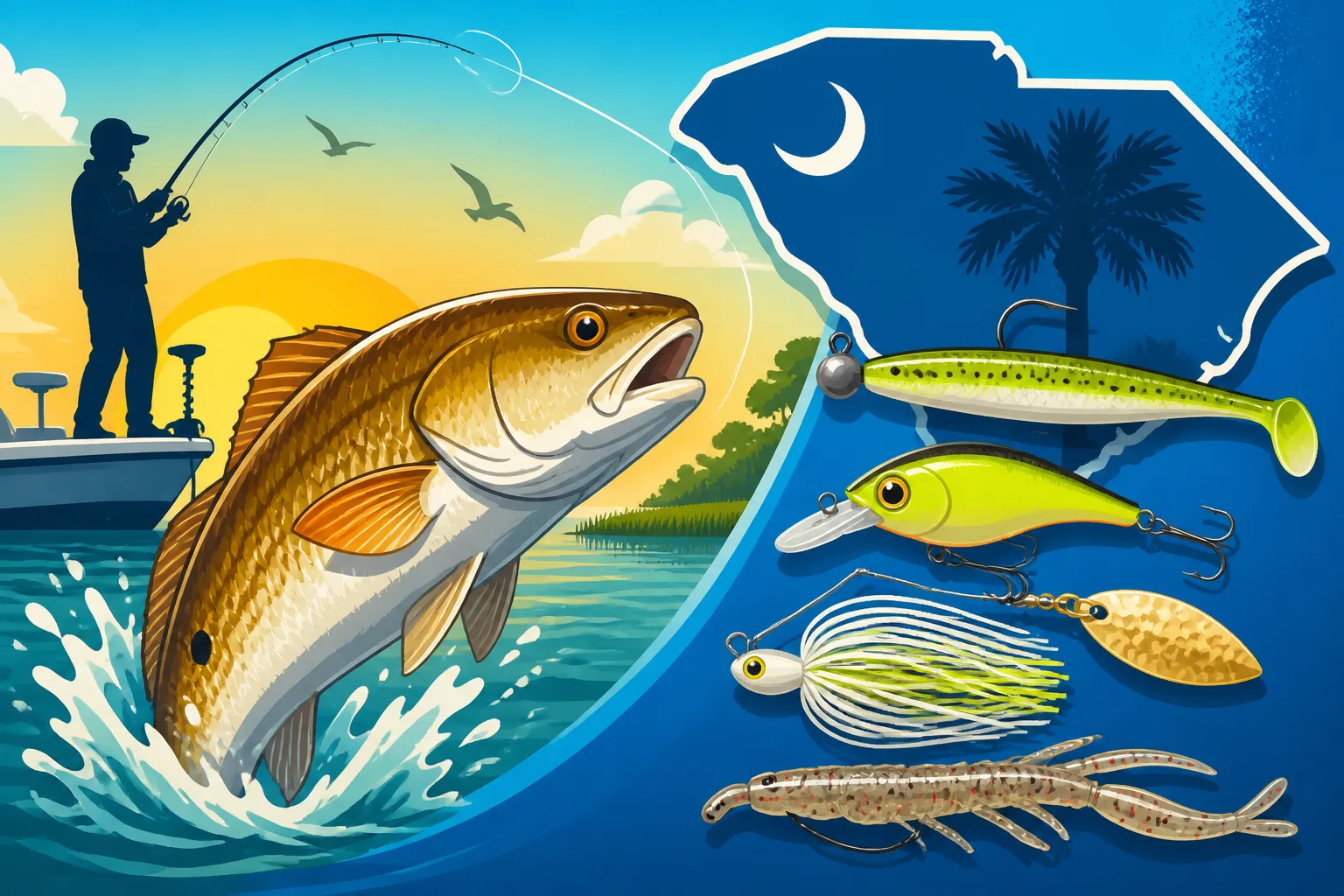
- Tide-Based Tactics: For redfish, understanding the tide is paramount. On falling tides, they often pull off the grass flats and school up in deeper guts and creek mouths, where they're easier to target with soft plastic paddle tails on jig heads, Gulp! shrimp, or even live or cut bait. On rising tides, they'll push back onto the flooded grass, where weedless gold spoons, soft plastic toad imitations (rigged weedless), or topwater walking baits (early morning) can be very effective for "tailing" redfish. Our South Carolina Redfish Slot Limit and Tide-Based Techniques article offers deep insights here.
- Spotted Seatrout: These ambush predators often hold in slightly deeper water around oyster beds, dock pilings, and creek mouths, especially where there's good current flow. Soft plastic jerkbaits or paddle tails on light jig heads, suspending twitchbaits, and popping corks with live shrimp or Gulp! shrimp are excellent choices. Early mornings or late evenings can also bring them to the surface for topwater action.
- Shade and Structure: Both redfish and trout will seek shade from docks, bridges, and oyster reefs during the hottest parts of the day. Pitching soft plastics or small jigs into these shaded areas can produce bites when the open flats are slow.
- Colors & Sizes: Natural baitfish colors like white, chartreuse, and clear with glitter are often effective. For redfish, gold spoons are a classic. For trout, smaller, more subtle presentations often work best. Remember to always be aware of the South Carolina Redfish Slot Limit Rules and other regulations when targeting these species.
Gear and Presentation for Warm Weather Success
Choosing the right lure is only half the battle; knowing how to present it effectively and having the right gear to do so is equally important, especially when conditions are challenging due to warm water. It's about maximizing your chances and adapting to what the fish are telling you.
Matching Lures to Water Conditions
Water clarity, depth, and current are dynamic factors that demand careful consideration when selecting and presenting lures in warm weather.
- Water Clarity:
- Clear Water: In crystal clear lakes or coastal waters (like some of the pristine areas around Lake Keowee or parts of Hilton Head), fish rely heavily on sight. This means your lures need to be as realistic as possible. Finesse soft plastics in natural colors (green pumpkin, watermelon, clear with silver flake), natural shad-pattern swimbaits, and subtle topwater lures that don't create too much commotion are often best. You'll also want to use lighter line and longer leaders to minimize visibility.
- Stained or Murky Water: In stained rivers or churned-up lake sections, fish rely more on vibration, sound, and profile. Brighter colors like chartreuse, white, and black/blue combinations can be very effective. Lures with strong vibration (spinnerbaits, bladed jigs, lipless crankbaits), loud rattles (some crankbaits), and larger profiles can help fish locate your bait.
- Depth:
- Shallow Water (0-5 feet): Early mornings, late evenings, or heavily shaded areas often hold fish in the shallows. Topwater lures (frogs, poppers, walking baits), shallow-diving crankbaits, weightless Texas-rigged worms, and weedless soft plastic presentations are ideal.
- Mid-Depth (5-15 feet): This is a common zone in warm weather. Medium-diving crankbaits, spinnerbaits, bladed jigs, and heavier Texas-rigged or Carolina-rigged soft plastics will reach this range.
- Deep Water (15+ feet): As discussed, many fish retreat deep. Deep-diving crankbaits, heavy jigs, Carolina rigs, and drop-shot rigs are your go-to options here. Consider using a good fish finder to locate schools or structure in these depths.
- Current:
- Strong Current: In flowing rivers (like the Congaree or Santee) or tidal estuaries, fish will often hold in eddies or behind structure to conserve energy. Lures that can maintain their action in current, such as heavy jigs, spinnerbaits, or stout crankbaits, are good. Also, live bait or cut bait fished on a stout bottom rig can be very effective as they present a natural, easy meal.
- Slack Water: In calm conditions, lighter lures and more subtle presentations are often preferred. Weightless soft plastics, slow-falling Senkos, and light jigs can be very effective in these situations.
Line Choices and Retrieval Techniques
The right line and a well-executed retrieve can dramatically impact your warm weather success.
- Line Choices:
- Fluorocarbon: This line is nearly invisible underwater and has low stretch, offering excellent sensitivity for detecting subtle bites, which is crucial when fish are finicky. It sinks, making it great for bottom-contact lures like jigs and Carolina rigs.
- Monofilament: Offers good knot strength and stretch, which can be beneficial for topwater lures (to help keep them on the surface) or crankbaits (to absorb head shakes and prevent hooks from pulling out). It floats, making it ideal for lighter topwater presentations.
- Braided Line: Extremely strong for its diameter, zero stretch for maximum sensitivity, and excellent for fishing heavy cover due to its abrasion resistance. Often used for frogs and punching heavy mats. A fluorocarbon leader is frequently used with braid for stealth.
- Retrieval Techniques:
- Slow and Deliberate: When fish are lethargic in warm water, a slow retrieve is often key. Think about crawling jigs, slowly dragging Carolina rigs, or patiently twitching a wacky-rigged Senko.
- Erratic and Reactionary: Conversely, a highly erratic retrieve with spinnerbaits, bladed jigs, or fast-moving crankbaits can trigger a reaction strike, even from fish that aren't actively feeding. The sudden, unpredictable movement can be too much for them to ignore.
- Pause is Prime: Don't underestimate the power of a pause. Many strikes, especially on topwater and soft plastics, occur when the lure stops moving. That moment of vulnerability often triggers the fish to strike.
- Electronics: In deeper, warmer waters, good electronics (fish finders with side imaging or down imaging) can be invaluable for locating schools of baitfish, deep structure, and the game fish holding around them. Being able to pinpoint these subtle areas can save you hours of fruitless casting.
Essential Warm Weather Tackle Box Additions
Beyond the lures themselves, a few other items are crucial for comfortable and effective warm weather fishing. Many of these can be easily found and ordered from places like Amazon.
- Sun Protection: This isn't just a comfort item; it's a health necessity. A wide-brimmed hat, UV-protective clothing (long sleeves, neck gaiter), and high SPF sunscreen are non-negotiable for sunny South Carolina days. Polarized sunglasses are also critical for seeing through glare and spotting fish or structure.
- Hydration: Always bring more water than you think you'll need. Electrolyte drinks can also be very beneficial. Dehydration can quickly turn a fun day into a miserable one.
- Tools:
- Pliers/Forceps: Essential for removing hooks safely from fish, especially those that have swallowed a lure.
- Line Cutter: Sharp scissors or clippers for quick line changes.
- Measuring Tape/Scale: To ensure your catch meets legal size and bag limits.
- Tackle Management: Warm weather often means more lure changes as conditions shift. Having an organized tackle box or bag like those from Plano or Bass Pro Shops, with clear dividers, makes it easy to find what you need quickly.
- First Aid Kit: Small cuts, scrapes, and bug bites are common. A basic first aid kit with band-aids, antiseptic wipes, and insect repellent can be a lifesaver.
- Cooler: Not just for your drinks! A small cooler can be essential for keeping live bait fresh or preserving any fish you plan to keep.
By understanding how fish react to warm water, choosing the right lures, and having your gear dialed in, you'll be much better equipped to enjoy successful fishing trips throughout the hottest months in South Carolina.
Disclaimer
Fishing regulations, including license requirements, bag limits, and size restrictions, are subject to change. Always consult the latest South Carolina Department of Natural Resources (SCDNR) guidelines before heading out on the water. This guide is for informational purposes only and does not constitute legal advice.