How to Choose the Right Fishing Technique for Each Species
It can feel incredibly frustrating to hit the water, whether it's the vast expanse of Lake Murray or a quiet Lowcountry marsh, only to find that the fish just aren't biting. A common pitfall for many anglers, myself included, is thinking a "one-size-fits-all" approach will work for every fish species and every situation. The truth is, different fish have different personalities, preferences, and hunting styles, and knowing how to match your technique to their unique characteristics is the real secret to consistent success. This guide will dive deep into how to choose the right fishing technique for each species you'll encounter in South Carolina, helping you fill your cooler or simply enjoy more action.
The Foundation: Understanding Fish Biology and Environment
Before you even think about tying on a lure or baiting a hook, it's crucial to grasp the fundamental science behind why fish do what they do. Just like us, fish are creatures of habit, influenced by their biology and the world around them. Ignoring these basics is like trying to navigate Charleston Harbor without a chart – you might get lucky, but you're more likely to run aground.
Species-Specific Behavior and Feeding Habits
Every fish species has evolved with a distinct way of life, and their feeding habits are at the core of their survival. Understanding these differences is the first step in choosing an effective technique. For instance, a largemouth bass is an apex predator in its freshwater domain, often an ambush hunter that prefers to strike at unsuspecting prey from cover. They're typically opportunistic, willing to chase down a fleeing baitfish or inhale a slow-moving worm. Contrast that with a catfish, which is primarily a scavenger, relying on its keen sense of smell and touch to locate food along the bottom, often in murky water. They're not generally interested in a fast-moving topwater plug.
Then you have species like crappie, which are schooling fish that often feed in groups, suspending themselves around structure or schooled baitfish. Their mouths are delicate, requiring a subtle approach. On the other hand, a powerful striped bass might chase down schools of baitfish in open water, creating "boils" on the surface. These behavioral patterns dictate everything from the size of the bait you use to how fast you retrieve it, and even the type of line you choose. Trying to catch a crappie with a heavy bass rod and reel designed for power fishing is akin to using a sledgehammer to drive a thumbtack – it's just not the right tool for the job.
Habitat Preferences and Structural Significance
Just as we prefer certain types of homes or environments, fish have very specific habitat preferences that align with their survival needs, including feeding, spawning, and protection from predators. Recognizing these "hot zones" is key to finding the fish in the first place. Some species, like redfish in the Lowcountry, thrive in shallow, brackish marsh creeks and often forage along oyster beds and flooded grass flats. Their flat bodies and downward-angled mouths are perfectly adapted for rooting out crabs and shrimp in these areas.
Other fish, such as largemouth bass, are inextricably linked to underwater structure. This could be anything from submerged timber, docks, brush piles, rock piles, or even lily pads. These features provide cover for ambush, shade from the sun, and areas where baitfish congregate. In deeper lakes like Lake Murray, striped bass might relate to sharp drops, humps, or the thermocline (a layer of water with a rapid temperature change). Catfish often prefer the deep holes and channels of rivers like the Congaree River or the Santee River, where currents bring them food. Understanding what constitutes "good habitat" for your target species is paramount. You wouldn't look for flounder on a deep offshore reef, just as you wouldn't expect to find a redfish in a mountain stream.
The Influence of Seasons and Weather on Activity
Fish aren't machines; their activity levels and locations change dramatically with the seasons and even daily weather patterns. Water temperature is arguably the most significant factor, dictating everything from metabolism and digestion rates to spawning cycles and migrations. For instance, in the spring, as water temperatures rise, many freshwater species like largemouth bass move into shallower waters to spawn, making them more accessible and aggressive. During the scorching South Carolina summer, these same fish might retreat to deeper, cooler water or become more active during low-light conditions.
Similarly, coastal species are heavily influenced by seasonal temperature shifts. Redfish might be found cruising shallow flats during warm spring and fall days, but move to deeper channels or hold in larger schools during the colder winter months. Beyond temperature, factors like barometric pressure, wind, and even recent rainfall can have a profound impact. A sudden cold front, for example, can shut down a bite entirely, making fish lethargic and less willing to chase. Understanding these seasonal influences and weather-related behaviors, as detailed in our South Carolina Fishing Seasons Guide, allows you to adjust your techniques, from lure choice to presentation speed, to match their current mood.
Freshwater Techniques for South Carolina's Prized Catches
South Carolina's freshwater scene is a vibrant tapestry of lakes, rivers, and ponds, teeming with a variety of popular game fish. Each one demands a specific approach to unlock its secrets. For many of us, the quest for a trophy freshwater fish begins right here.
Targeting Largemouth Bass: The Art of Aggressive Presentation
Ah, the largemouth bass – the king of South Carolina's freshwater. These powerful predators are incredibly popular, and for good reason: they're aggressive, put up a fantastic fight, and are found in almost every major body of water, from Lake Hartwell to the Santee Cooper lakes. Catching them consistently requires a diverse toolkit of techniques, often revolving around imitating their prey and exploiting their territorial nature.
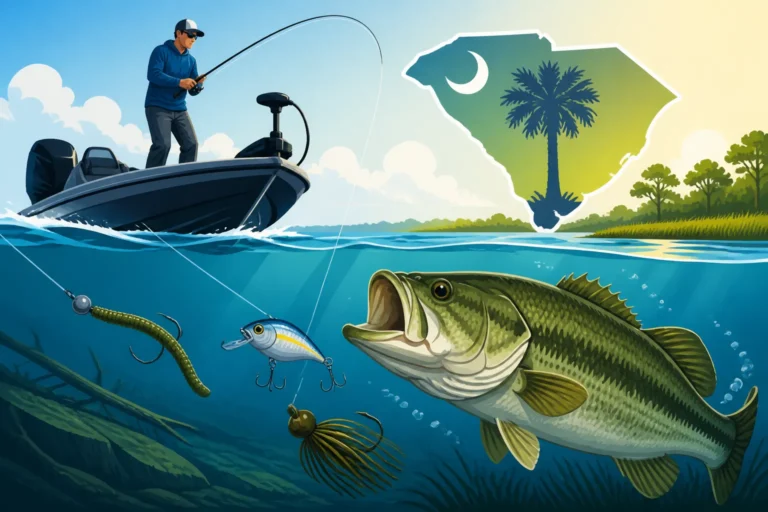
One of the most exciting techniques, especially during the warmer months, is topwater fishing. When bass are actively feeding near the surface, often during dawn or dusk, throwing a popper, a walking bait, or a frog imitation over lily pads or grass mats can lead to explosive strikes. The key is to work these lures with varying pauses and twitches, mimicking a struggling baitfish or frog. Another highly effective method, particularly when bass are holding tight to cover like submerged brush or docks, is flipping and pitching. This involves accurately presenting a weedless jig or soft plastic bait into tight spots with minimal splash. The goal is to drop the bait right into their living room and entice a reaction strike. For bass suspended in open water or cruising along ledges, crankbaiting is a go-to. These lures dive to different depths and wobble aggressively, imitating baitfish. You might find a good selection of various diving crankbaits on Amazon that cover different depth ranges. Experiment with different retrieve speeds until you find what triggers a bite, sometimes a steady retrieve works, other times a stop-and-go action is more effective. The versatility of a largemouth means you need to be ready to adapt, from subtle Texas-rigged worms for finicky fish to aggressive spinnerbaits for searching large areas.
Crappie Fishing: Subtle Tactics for Panfish Perfection
Crappie, both black and white, are beloved panfish in South Carolina, known for their delicious fillets and challenging, delicate bites. They often school around submerged brush, standing timber, bridge pilings, or deep ledges in lakes like Lake Moultrie or Lake Greenwood. Unlike bass, crappie have soft mouths and require a more finesse approach.
Jigging is perhaps the most popular and effective technique for crappie. This involves using small jigs (1/32 to 1/8 ounce) tipped with soft plastic bodies, often brightly colored, or a small live minnow. You can vertically jig these baits directly over known crappie structure from a boat, or cast them out and retrieve them slowly with subtle twitches. The trick is to find the depth where the crappie are holding. Electronic fish finders are invaluable for this, showing you exactly where the schools are stacked up. When crappie are particularly finicky or spread out, tightlining or spider-rigging becomes incredibly effective. This involves deploying multiple rods with minnows or jigs at varying depths, often from the front of the boat while slowly trolling. The idea is to cover a wider area and present baits at different depths simultaneously until you pinpoint their exact location. Our guide on Crappie Jigging Techniques for Beginners offers even more in-depth advice on these effective methods. Crappie bites can be incredibly subtle, often feeling like just a slight tap or pressure, so a sensitive rod and light line are absolute necessities.
Catfish: Robust Approaches for Bottom Dwellers
For anglers seeking powerful fights and often impressive sizes, South Carolina's catfish population offers an incredible opportunity. Channel, blue, and flathead catfish are abundant in our major river systems and lakes, including the Cooper River and Lake Marion. These fish are primarily bottom feeders, relying on their barbels (whiskers) to detect food by smell and touch, especially in low visibility conditions.
The most straightforward and widely used technique is bottom fishing. This involves using a heavy enough weight to hold your bait on the bottom, often with a Carolina rig or a three-way swivel rig, and a stout hook. Bait choice is critical for catfish. Cut bait (shad, mullet), chicken livers, and various prepared "stink baits" are perennial favorites for channel and blue catfish. For flatheads, live bait like bream or small white perch is often more effective, as they prefer live prey. You'll want a strong rod and reel combo, capable of handling heavy weights and powerful fish. For those looking to cover more water or fish multiple baits at once, trotlining and jug fishing are popular techniques, though they are subject to specific regulations, so always check South Carolina's Freshwater Fishing Regulations beforehand. Trotlines involve a main line stretched across a body of water with multiple baited hooks attached at intervals, while jug fishing uses individual lines attached to buoyant jugs or bottles that drift with the current. These methods are designed to attract passing catfish as they patrol their territories on the river or lake bottom, and are often set out overnight for prime results.
Striped Bass: Power Fishing in Reservoirs and Rivers
South Carolina is famous for its striped bass fishing, particularly in landlocked reservoirs like Lake Murray and Lake Hartwell, where these powerful fish thrive. Stripers are strong, fast-swimming predators that often school together, aggressively chasing down baitfish. Their pursuit of food can create exciting "boils" on the surface where they attack baitfish from below.
One of the most effective techniques for covering large areas and finding schooling stripers is trolling. Anglers use large, heavy-duty conventional or spinning setups with lures like umbrella rigs, deep-diving crankbaits, or bucktail jigs behind planers or downriggers to get them to the desired depth. Trolling speed is critical, often varying from 2 to 4 mph, depending on water temperature and the fish's mood. When stripers are actively chasing bait on the surface (a "boil"), topwater fishing becomes incredibly exhilarating. Casting large walking baits or poppers into the fray can result in vicious strikes. It's an opportunistic technique, so being ready to move quickly when a boil erupts is key. For a more direct approach, especially when stripers are holding in deeper water or near structure, live baiting with herring, shad, or gizzard shad is highly effective. These baits can be slow-trolled, fished under a balloon, or drifted down to depth. The fight of a large striped bass is truly memorable, so ensure your tackle is up to the task – strong lines (braided line is a great choice for sensitivity and power, available on Amazon), sturdy hooks, and a reliable drag system are essential.
Essential Saltwater Techniques for Coastal Adventures
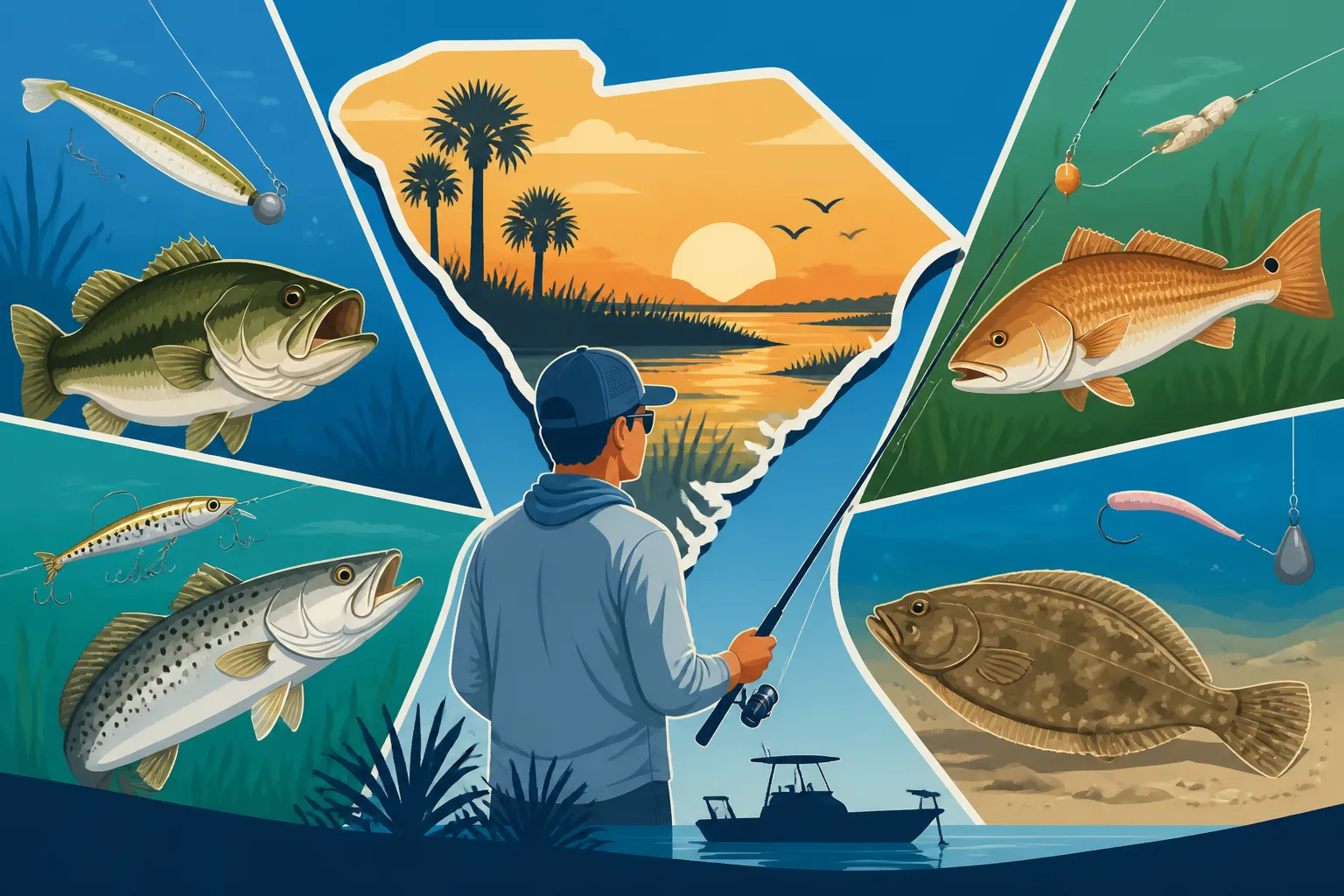
South Carolina's stunning coastline, with its intricate network of estuaries, marsh creeks, and barrier islands, offers incredible saltwater fishing opportunities. From the bustling waters of Charleston Harbor to the quiet backwaters of Murrells Inlet, a different set of techniques comes into play for these resilient coastal species.
Redfish: Inshore Stalking and Structure Fishing
The red drum, or redfish, is an iconic species of the South Carolina coast, revered for its strength and willingness to fight. They inhabit a variety of inshore environments, including shallow grass flats, oyster beds, and creek mouths. Their preferred technique often revolves around sight fishing or casting to specific structure.
Sight fishing for redfish is perhaps the most exciting and challenging method. During high tides, especially in the warmer months, redfish will often move into ultra-shallow grass flats, sometimes "tailing" as they root for crabs and shrimp with their heads down. This requires stealth, polarized sunglasses (a must-have!), and accurate casts with weedless spoons, soft plastic paddletails, or even fly tackle. You're looking for subtle movements, a flash of red, or even just a disturbance in the water. For more on this, check out Inshore Redfish Techniques for Beginners. When redfish are not tailing, they're often found patrolling oyster beds, submerged docks, or creek channels. Here, casting to structure with jig heads tipped with live shrimp, Gulp! shrimp, or cut bait (like mullet or blue crab) is incredibly effective. The idea is to bounce your bait along the bottom near these fish-holding features. The Redfish Fishing in South Carolina: Rules, Spots, and Tips guide can provide further insights into targeting these prized fish. Light to medium-heavy spinning tackle with a sensitive tip is ideal for detecting the often subtle "thump" of a redfish bite, followed by their powerful run.
Spotted Seatrout: Light Tackle and Live Bait Mastery
Spotted seatrout are another beloved inshore species, known for their beautiful spots and delicious white meat. They're often found in similar habitats to redfish, preferring oyster rakes, creek mouths, and grass edges, particularly where there's good current. They are opportunistic feeders, often ambushing baitfish and shrimp.
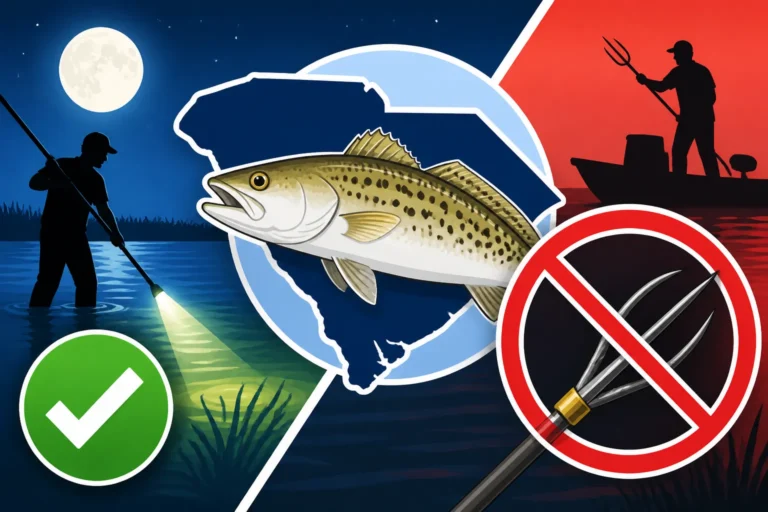
The popping cork technique is quintessential for spotted seatrout, especially when fished with live shrimp. The cork creates a "pop" on the surface, mimicking a feeding fish or a shrimp flicking its tail, which attracts trout. Beneath the cork, a live shrimp or a soft plastic imitation is suspended at a specific depth, usually 1 to 3 feet, allowing it to drift naturally with the current. This method is incredibly effective over grass beds or along oyster edges. Beyond popping corks, casting soft plastics on light jig heads (1/8 to 1/4 ounce) is also highly productive. Baits like Z-Man DieZel Minnowz or a good ol' grub imitation retrieved with a slow, twitching action can be irresistible to trout. They often hold in slightly deeper pockets during colder weather or stronger currents. The Spotted Seatrout in South Carolina Waters: The Full Guide offers extensive details on how and where to catch these popular fish. Light spinning tackle with a fast action rod is perfect for feeling the light bite of a trout and setting the hook effectively.
Flounder: Jigging and Drifting Live Bait
Flounder are masters of camouflage, burying themselves in sandy or muddy bottoms, waiting to ambush unsuspecting baitfish or shrimp. These flatfish are delicious table fare and offer a unique challenge to anglers. You'll find them in creek channels, around jetties, bridge pilings, and along the edges of oyster banks from Myrtle Beach down to Hilton Head.
The most common and effective techniques for flounder involve presenting bait directly on or very close to the bottom. Drifting live bait, particularly mud minnows or finger mullet, is a proven winner. Rig your live bait on a Carolina rig with a light-to-medium leader, a barrel swivel, and an egg sinker heavy enough to maintain bottom contact in the current. Allow your boat to drift slowly with the current over likely flounder habitat. The key is a very slow retrieve or drift, giving the flounder time to engulf the bait. Jigging with bucktails or soft plastics, like a Gulp! shrimp or grub, is another excellent method. Cast your jig out and work it back with a slow, bouncing motion along the bottom. The "thump" of a flounder bite can sometimes feel like you've snagged a piece of wood, so pay close attention. Our Flounder Fishing Guide for South Carolina Anglers provides more extensive tips. When a flounder hits, it's often a firm take, but they can be quick to drop the bait, so a solid hookset is essential.
Sheepshead: Pier and Structure Fishing with Crustaceans
Sheepshead are one of the most distinctive and challenging fish to catch on the South Carolina coast. Known for their human-like teeth, they specialize in scraping barnacles, mussels, and crabs off pilings, rocks, and other submerged structures. You'll find them in brackish waters around docks, bridge pilings, jetties, and artificial reefs.
Catching sheepshead requires finesse and patience, as their bite is incredibly subtle and their ability to steal bait legendary. The primary technique is finesse fishing around structure. You'll need very small, sharp hooks (like a #1 or #2 kahle or circle hook) and a light leader, often fluorocarbon to minimize visibility. The bait of choice is typically fiddler crabs, but pieces of clam, shrimp, or even small oysters can also work. Position yourself right next to a piling or structure, and drop your bait straight down. The bite often feels like a light tap, a tiny "peck," or simply added weight. You have to be quick and precise with your hookset. Many experienced sheepshead anglers prefer a sensitive spinning rod with a fast tip to detect these almost imperceptible bites. They are a true test of an angler's skill and patience, but the reward of a fresh sheepshead fillet is well worth the effort.
Adapting Techniques for South Carolina's Trout Waters
While South Carolina might be better known for its bass and redfish, the cooler, pristine waters of the Blue Ridge Mountains in the Upstate offer fantastic trout fishing opportunities. Here, you'll find both stocked rainbow and brown trout, as well as the elusive native brook trout.
Stocked Trout: Spin Fishing and Bait Presentation
For many anglers, especially those new to trout fishing or looking for a more accessible experience, targeting stocked trout is the way to go. The South Carolina Department of Natural Resources (SCDNR) regularly stocks various streams and lakes in the Upstate, making these fish readily available. Stocked trout are often less wary than their wild counterparts and are receptive to a wider range of techniques.
Spin fishing is a highly effective method for stocked trout. This involves using light spinning tackle with small inline spinners (brands like Panther Martin or Mepps are popular and can be easily found on Amazon), small spoons, or tiny crankbaits. The key is to cast upstream and retrieve downstream, allowing the lure to tumble naturally with the current, or cast across currents and retrieve, giving the lure an enticing wobble. Experiment with retrieve speed and depth, as trout will often hold in different water columns. For a more direct approach, bait fishing is incredibly simple and effective. PowerBait, especially in popular colors like chartreuse or rainbow, salmon eggs, or even small pieces of corn are excellent choices. Rig these baits on a small hook (size 10-14) with a light split shot or two a foot or so above the hook. Cast into deeper pools, eddies, or slower runs and let the bait drift naturally, either on the bottom or suspended under a small bobber. Understanding the current and presenting your bait realistically is crucial. Always check the South Carolina Stocked Trout Daily Limit for the specific stream you're fishing, as regulations can vary.
Native Brook Trout: Fly Fishing in Mountain Streams
For the purist, the pursuit of South Carolina's native brook trout (often called "specks" locally) offers a truly unique and rewarding experience. These beautiful, vibrant fish are the only trout species native to our state and reside in the colder, pristine headwater streams of the Blue Ridge Mountains, often in remote, rugged terrain. They are highly sensitive to water quality and temperature, and therefore demand a more delicate and stealthy approach. You can learn more about these resilient fish in South Carolina's Native Brook Trout: A Blue Ridge Mountain Original.
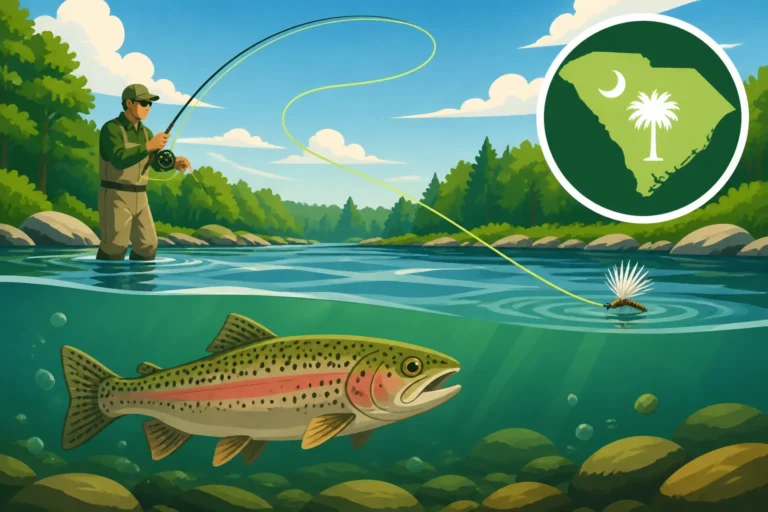
Fly fishing is by far the most traditional and effective technique for native brook trout. This isn't just a choice of method; it's a way to connect with these wild environments. Small, lightweight fly rods (2-4 weight) with a matching reel and floating line are ideal. You'll use small dry flies (imitating terrestrial insects or emergers), nymphs (imitating aquatic insect larvae), or wet flies. The emphasis is on delicate presentation, often "dapping" the fly into small pockets of water, casting short, accurate distances, and maintaining a drag-free drift. Stealth is paramount: approach streams quietly, stay low, and wear natural colors to avoid spooking these wary fish in their clear, shallow habitats. These are often small, feisty fish, but catching a native brook trout in its natural setting is an experience that transcends the size of the catch. Sometimes, a careful approach with ultra-light spinning gear and tiny artificial lures can work, but for the true native experience, fly fishing is king.
Essential Gear and Tackle Matching for Each Technique
Having the right rod, reel, line, and terminal tackle isn't just about spending money; it's about optimizing your chances and enhancing your experience. Mismatching your gear to your technique or target species can lead to frustration, lost fish, and a less enjoyable day on the water.
Rod and Reel Pairings: Precision for Every Species
The rod and reel are the foundation of your fishing setup, and their characteristics must align with your chosen technique and target species. Rods are primarily defined by their power (how much weight it takes to bend the blank) and action (where the rod bends). For instance, a heavy power, fast action rod is perfect for flipping and pitching for big bass, allowing for powerful hooksets and hauling fish out of heavy cover. The fast action means the rod bends mostly near the tip, providing sensitivity for light bites and quick response.
Conversely, a light power, moderate action rod would be ideal for crappie fishing. Its softer action absorbs the shock of a crappie's delicate mouth, preventing tear-outs, and its sensitivity helps detect those faint bites. Reel choice also matters: a high-speed baitcasting reel (7:1 gear ratio or higher) is excellent for rapidly retrieving lures for bass, while a smaller, smooth-dragging spinning reel (size 1000-2500) is more appropriate for trout or panfish, offering lighter line capacity and finesse. For heavier applications like catfishing or striped bass, a larger conventional reel or a robust spinning reel (size 4000-6000+) is necessary to handle strong runs and heavier lines. Each pairing is a delicate balance, aiming to give you maximum control and feel for the specific fishing scenario.
Line Choices: Mono, Fluoro, and Braid Considerations
Your fishing line is the critical link between you and the fish, and choosing the right type can significantly impact your success. There are three main types, each with distinct characteristics:
- Monofilament (Mono): This is the most traditional and versatile line. It's affordable, easy to tie knots with, and offers good stretch, which can be beneficial for shock absorption when fighting hard-pulling fish or using treble-hooked lures. However, its stretch reduces sensitivity, and it has more memory, meaning it retains coils from the spool. It's a good all-around choice for many freshwater applications, especially for topwater baits where its buoyancy is an advantage.
- Fluorocarbon (Fluoro): Known for its low visibility underwater, fluorocarbon is nearly invisible to fish because it refracts light similar to water. It has very low stretch, offering excellent sensitivity, which is critical for detecting subtle bites, like those from sheepshead or crappie. It's also more abrasion-resistant than monofilament. However, it's generally more expensive, stiffer, and can be harder to tie knots with. Many anglers use it primarily as a leader material for its invisibility and sensitivity, connecting it to a braided main line.
- Braided Line (Braid): This line is made from woven synthetic fibers, giving it incredible strength for its diameter, zero stretch, and exceptional sensitivity. Its lack of stretch allows for powerful hooksets and excellent feel for bottom contact or light bites. Braid is also incredibly durable and abrasion-resistant. The downside is its high visibility, which is why it's often paired with a fluorocarbon leader. Its thin diameter allows for longer casts and cuts through water better, making it popular for techniques like flipping and pitching for bass or deep-dropping for stripers. You can find all three types of line readily available from reputable brands on Amazon. Understanding these properties allows you to choose the best line for the job, whether it's 50 lb braid for power fishing for trophy catfish or 6 lb fluorocarbon for finesse trout fishing.
Terminal Tackle: Hooks, Weights, and Swivels
Terminal tackle refers to all the small components at the business end of your line, and they are just as crucial as your rod and reel. The right hook, weight, and swivel can be the difference between a successful hook-up and a lost fish.
Hooks come in a dizzying array of shapes and sizes, each designed for a specific purpose. Circle hooks are often preferred for live bait fishing, as they are designed to hook fish in the corner of the mouth, reducing gut-hooking and making catch-and-release easier. J-hooks are versatile and common for a variety of baits. Weedless hooks, like offset worm hooks, are essential for fishing soft plastics in heavy cover for bass. Size matters immensely; a tiny crappie jig requires a tiny hook, while a large chunk of cut bait for a blue catfish needs a stout, large hook. Weights (sinkers) ensure your bait or lure gets to the desired depth and stays there. From split shot for finesse presentations to heavy pyramid sinkers for surf fishing, choose a weight that matches the depth, current, and desired presentation. Too light, and your bait won't get down; too heavy, and you lose feel. Finally, swivels prevent line twist, especially important when using spinning lures or trolling. Ball bearing swivels are the best for preventing twist in high-speed applications, while simple barrel swivels are adequate for many still-fishing rigs. Small details in terminal tackle make a huge difference in the overall effectiveness of your technique.
Environmental Factors: Reading the Water for Better Bites
Fishing isn't just about putting a hook in the water; it's about understanding the subtle language of the environment. Fish are highly tuned to their surroundings, and learning to "read the water" and adapt to changing conditions can dramatically improve your success.
Water Conditions and Weather Patterns
The clarity, temperature, and movement of the water, along with the overhead weather, are powerful determinants of fish behavior. Water clarity is a prime example: in clear water, fish are often warier and rely more on sight, making low-visibility lines (like fluorocarbon leaders) and natural-colored baits more effective. In stained or muddy water, fish rely more on scent and vibration, so louder lures, scented baits, and brighter colors can be more productive. Heavy rains can muddy up rivers and creeks, prompting species like catfish to feed aggressively as new food sources wash into the water.
Water temperature dictates fish metabolism; cold water typically means lethargic fish that prefer slower presentations, while warmer water can lead to highly active, aggressive feeders. Too warm, however, and fish might seek deeper, cooler refuge. Barometric pressure also plays a role: stable or rising pressure often correlates with active feeding, while a sharp drop (indicating an approaching storm) can make fish uneasy and less willing to bite. Understanding these nuances helps you choose not just what to throw, but how to present it. Fishing after a cold front, for instance, often requires a much slower, more deliberate approach than on a warm, sunny day. Always observe the conditions around you and adjust accordingly – it’s a constant puzzle to solve.
Understanding Tides and Currents in Saltwater
For saltwater anglers, understanding the tides and currents is not just helpful, it's absolutely essential for consistent success. The rhythmic ebb and flow of the ocean profoundly impact fish behavior, dictating when and where they feed, how they move, and where they hold.
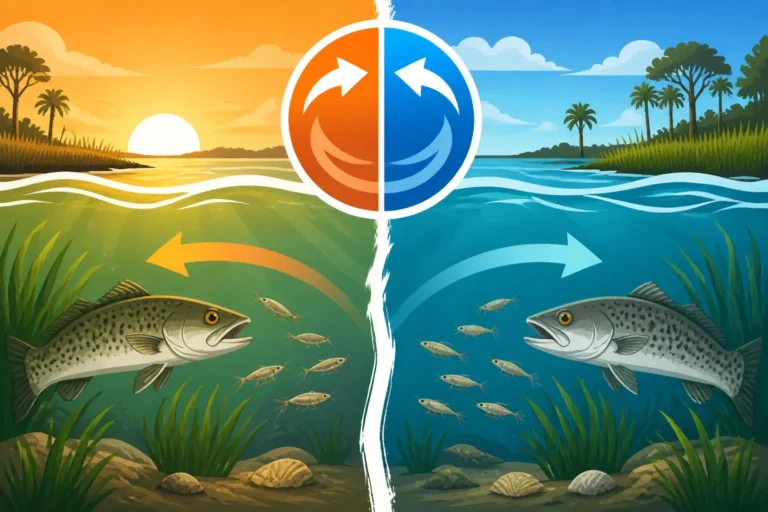
Tidal phases—incoming, outgoing, high slack, and low slack—each present unique fishing opportunities. Many inshore species, like redfish and spotted seatrout, become very active on a moving tide. An incoming tide brings in cooler, cleaner water and pushes baitfish into the marsh creeks and over oyster beds, making them excellent times for fishing these areas. As the tide reaches its peak (high slack), the water movement slows, and fish might retreat to deeper channels or hold tight to structure, requiring a more precise presentation. An outgoing tide pulls water and baitfish out of the marshes, often concentrating fish at creek mouths, points, and channel edges as they wait for an easy meal. This can be a prime time to target predatory species. Low slack tide can concentrate fish in deeper holes or cuts, making them easier to pinpoint.
Beyond the phase, the strength of the current matters. Strong currents can position fish in eddies or behind structure, making it necessary to use heavier weights to get your bait down. Conversely, lighter currents might allow for more subtle presentations. Planning your saltwater trip around the tides, as discussed in South Carolina Saltwater Fishing Seasons, is a non-negotiable step for maximizing your chances, whether you're chasing flounder near the jetties or redfish in the grass flats.
Time of Day and Light Levels
The time of day and the amount of available light are often overlooked but critical factors in determining fish activity and therefore, your technique choice. Just like humans, fish have prime feeding windows.
Dawn and dusk are universally considered prime fishing times for many species, both freshwater and saltwater. During these low-light periods, many predatory fish, like largemouth bass and striped bass, become more active as they have a visual advantage over their prey. Topwater lures are especially effective during these times as fish are often looking up. The cooler temperatures during dawn and dusk also encourage activity, especially during the hot South Carolina summers. For species like redfish and spotted seatrout, these low-light periods offer both feeding opportunities and a measure of protection from larger predators.
Conversely, midday can be challenging, especially on bright, sunny days when fish might retreat to deeper water, heavy cover, or dense shade to escape the intense light and heat. During these times, a slower, more deliberate presentation, or fishing in shaded areas under docks or heavy canopy, might be necessary. Night fishing opens up a whole new world of possibilities, particularly for species like catfish, which are often more active after dark. For these nocturnal feeders, reliance on scent-based baits and techniques that keep the bait on the bottom are most effective. Even some bass and striped bass will feed aggressively at night, often drawn to lights or moon phases. Understanding how light influences fish behavior helps you choose not only the right time to fish but also the right technique and lure color for the conditions.
Advanced Tips for South Carolina Anglers
Moving beyond the basics, there are always ways to refine your approach and become a more effective and ethical angler in South Carolina's diverse waters.
Reading the Water: Identifying Productive Areas
One of the most valuable skills an angler can develop is the ability to "read the water" – to look at a body of water and identify potential fish-holding areas. This isn't just guesswork; it's a combination of observation, knowledge of fish behavior, and understanding the nuances of the environment. For example, in a freshwater lake, look for visible signs of structure like submerged timber, rock piles, sudden depth changes, or grass lines. Also, pay attention to current seams, eddies behind obstacles, or any areas where baitfish are congregating or being actively pursued. If you see birds diving, that's a good indication of baitfish schools being driven to the surface, likely by predatory fish below.
In saltwater, reading the water means observing changes in bottom contours, identifying oyster beds, noting current lines where different water masses meet, and spotting subtle disturbances like "nervous water" indicating baitfish or "tails" of feeding redfish. Even the color of the water can give clues – clear water might call for finesse, while a slight stain might be ideal for certain species. Using electronics like fish finders can enhance this skill, revealing hidden structures and fish schools. However, the true art of reading the water comes from spending time on the water, making observations, and connecting the dots between what you see, where you cast, and what you catch. The more you practice, the more intuitive it becomes. For a deeper dive into this skill, refer to Best Fishing Spots in South Carolina and similar resources that help you identify productive areas.
Ethical Angling Practices: Catch and Release Considerations
As anglers, we have a responsibility to be stewards of our precious natural resources. Practicing ethical angling ensures healthy fish populations for future generations and maintains the integrity of the sport. This goes beyond simply following regulations; it encompasses how we treat the fish we catch.
Understanding and respecting regulations is fundamental. Always know the current bag limits, size limits, and open seasons for the species you are targeting. Resources like the South Carolina Fishing License Guide and specific guides on South Carolina's Freshwater Fishing Regulations and Saltwater Fishing Rules in South Carolina are indispensable. These rules are in place for a reason – to protect fish stocks. Beyond regulations, responsible catch and release is crucial for conservation. If you plan to release a fish, handle it as little as possible, and do so gently. Wet your hands before touching the fish to protect its slime coat, which is vital for its immune system. Use appropriate tools like de-hookers to remove hooks quickly and minimize stress. Avoid dragging fish onto dry land, especially delicate species. If a fish is deeply hooked, it's often better to cut the line as close to the hook as possible than to try and forcefully remove it, which can cause more damage. For some species, reviving them by gently holding them in the water until they can swim away on their own is necessary. By adopting these practices, we ensure that our love for fishing contributes positively to the health of South Carolina's aquatic ecosystems.
Common Mistakes to Avoid When Choosing Techniques
Even experienced anglers fall into common traps when selecting their fishing techniques. Recognizing these pitfalls can help you avoid frustration and improve your catch rate.
Overcomplicating Your Approach
It's easy to get caught up in the vast array of lures, baits, and gadgets available on the market. We've all seen the dazzling displays at the tackle shop or endless options on Amazon, promising to catch every fish under the sun. This can lead to an angler overcomplicating their approach, constantly switching lures, or trying overly elaborate techniques when a simpler method would suffice. Sometimes, the best approach is to "keep it simple, stupid" (KISS). A basic live worm under a bobber can often outfish a complicated, expensive lure, especially for panfish or stocked trout. For bass, a simple Texas-rigged worm or a basic jig and trailer can be deadly.
Overcomplicating can also mean trying too many different techniques in too short a time frame. Instead of giving a particular method a fair chance, an angler might switch after only a few casts, never truly understanding if it would have worked. Consistency and confidence in a chosen technique are often more important than having the most advanced gear. Start with the basics for a given species and location, master those, and then gradually expand your repertoire. Don't let analysis paralysis keep you from actually fishing! Focus on presentation, finding the fish, and understanding their mood, rather than endlessly swapping out tackle.
Ignoring Local Knowledge and Conditions
One of the biggest mistakes an angler can make is to ignore the wealth of local knowledge available or fail to observe the immediate conditions around them. What works beautifully on Lake Okeechobee might not translate well to Lake Murray, and what catches fish on an outgoing tide in Charleston might fail completely on an incoming tide in Hilton Head. Every body of water has its own personality, its own nuances, and its own local "secrets" that can only be learned through experience or by talking to those who have it.
Before heading out, consider checking local bait shops, online forums, or even chatting with other anglers at the boat ramp. These sources can provide invaluable, up-to-the-minute information on what baits are working, where fish are being caught, and what techniques are producing. Beyond that, pay close attention to the conditions on the water that day. Is the water clearer or muddier than usual? Is there more or less current? Is it windier? Have temperatures changed dramatically overnight? Are there any visible signs of baitfish or feeding activity? Ignoring these real-time cues and stubbornly sticking to a predetermined plan can lead to a frustrating day. Be flexible, be observant, and be willing to adapt your technique to what the fish and the water are telling you. The most successful anglers are always learning and always adjusting to the specific, hyper-local conditions they face.
Disclaimer
Fishing involves inherent risks, including but not limited to adverse weather conditions, boating accidents, and injury from fishing equipment or wildlife. Always prioritize safety, wear appropriate personal protective equipment (such as life jackets), and be aware of your surroundings. Regulations, limits, and licensing requirements can change, so always check the latest rules from the South Carolina Department of Natural Resources (SCDNR) before heading out. The information provided in this guide is for general informational purposes only and does not constitute professional advice.