Best Crappie Spots on the Santee Cooper Lakes
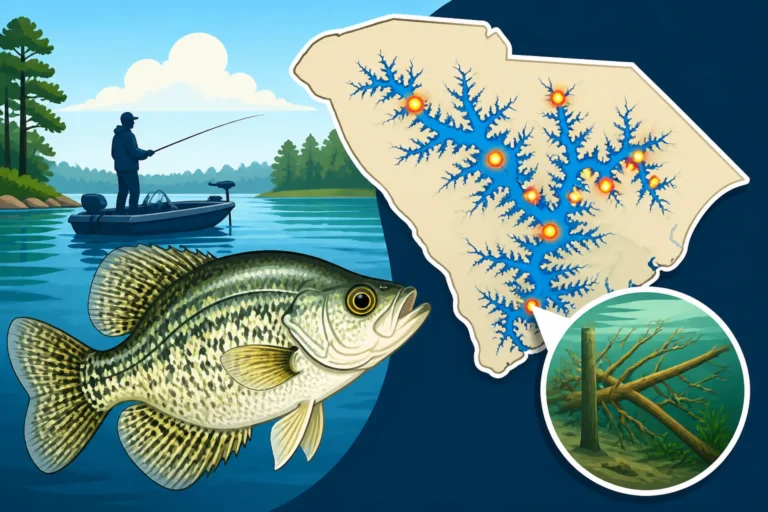
There’s nothing quite like the thrill of feeling that subtle tap on your line and knowing it’s a slab crappie on the other end. But finding those elusive schools, especially on vast impoundments like the Santee Cooper lakes, can feel like searching for a needle in a haystack. This guide is dedicated to helping you pinpoint the best crappie spots on these legendary South Carolina waters, giving you the insider knowledge to make your next trip a success.
Understanding Crappie Behavior on Santee Cooper
Before you can consistently catch crappie on the Santee Cooper lakes, you really need to get a handle on their habits. These fish aren't just swimming around aimlessly; they're incredibly predictable once you understand what drives them. It's all about comfort, food, and making little crappies.
Seasonal Movements of Crappie
Crappie are masters of seasonal migration, and their movements are almost entirely dictated by water temperature and their spawning cycle. In the winter, when the water cools down significantly, you'll find them hunkering down in deeper areas. Think main lake channels, deep creek beds, and around major submerged structures where the water temperature is more stable. They might not be as aggressive, but they’ll school up tight, making them a prime target if you can find them.
As spring approaches and the water starts to warm, usually when temperatures hit the mid-50s to low-60s Fahrenheit, crappie begin their famous push towards the shallow spawning grounds. This is when they become very active, congregating around cypress trees, brush piles, and shallow vegetation in just a few feet of water. After the spawn, they’ll disperse a bit, but still linger in shallower areas, feeding aggressively to recover.
By summer, when the surface temperatures climb high, crappie often retreat to deeper, cooler waters. They'll relate strongly to submerged timber, humps, ledges, and the edges of creek channels, often suspending over baitfish schools. In fall, as water temperatures cool again, they start feeding heavily, often moving shallower to ambush baitfish, making them easier to target before they settle into their winter patterns. Understanding these shifts is absolutely crucial for consistent success on a large system like Santee Cooper.
Preferred Habitat and Structure
Crappie are ambush predators, and they absolutely love structure. On the Santee Cooper lakes, this means a treasure trove of potential hiding spots. You're looking for anything that offers cover, shade, and a place to hide from bigger predators while waiting for an unsuspecting minnow to swim by.
Think about dense brush piles, both natural and man-made, which are abundant throughout both Lake Marion and Lake Moultrie. Submerged timber, leftover from when the lakes were impounded, creates vast underwater forests that crappie adore. Don't overlook the iconic cypress trees, especially in Lake Marion's shallower sections, where their knees and roots provide perfect sanctuary. Bridge pilings and docks also act as excellent vertical cover, attracting baitfish and, consequently, crappie, especially during midday heat or in colder months. Creek channels and humps on the main lake offer distinct depth changes that crappie use as travel routes and feeding stations. Learning to "read" your sonar for these types of structures is half the battle won.
Top Crappie Hotspots on Lake Marion
Lake Marion, the larger of the two Santee Cooper lakes, is often called "South Carolina's Inland Sea." It's known for its shallower, stump-filled waters and incredible crappie population. It can feel overwhelming, but there are definitely go-to areas that reliably produce.
Cypress Tree Stands and Brush Piles
The sheer abundance of cypress trees in Lake Marion makes it a crappie angler's dream, especially during the spring spawn and through much of the fall. One of the most legendary areas is the Sparkleberry Swamp. This vast, mystical cypress forest on the northern end of Lake Marion is an absolute paradise for crappie. Anglers often motor through the narrow channels, pitching jigs or live minnows to the bases of individual cypress trees or into dense clumps of vegetation. It can be tricky to navigate, so proceed with caution, but the rewards are often worth the effort.
Another prime spot, particularly rich in both cypress trees and man-made brush piles, is the area around Potato Creek. This creek runs into the western side of Lake Marion and offers numerous pockets, sloughs, and protected coves. Local anglers have been sinking brush piles here for decades, creating hidden honey holes. If you're struggling to locate these, consider chatting with folks at local bait shops in Santee or Moncks Corner, or even booking a trip through a service like FishingBooker to connect with a guide who knows the specific GPS coordinates of productive brush piles. Remember that Santee Cooper Bass Fishing Seasons in South Carolina often overlap with crappie, so you might find other species in these areas too!
Submerged Timber and Creek Channels
Beneath Lake Marion's surface lies an ancient landscape of submerged timber and intricate creek channels that were once dry land. This underwater forest is a magnet for crappie, particularly when they're not actively spawning in the extreme shallows. The old Santee River channel, which snakes its way through the entire lake, is a highway for fish movement and a prime target. Crappie will often suspend along the drops or hold tight to the timber lining its edges.
Major creek channels, like those found in Wyboo Creek and Eutaw Creek, also offer excellent opportunities. These channels often feature submerged ledges, humps, and plenty of brush and stumps. When the crappie are deeper, running your electronics over these channels is crucial. Look for distinct arcs or schools of fish congregating around structure. A good strategy is to find a significant depth change along a channel, then look for brush piles nearby. You can often see the crappie holding right in the branches. During the summer, these deeper, cooler spots become particularly productive. You can find many Lake Marion Fishing Spots and Access Points that get you right into these productive areas.
Bridge Pilings and Docks
Don't underestimate the power of man-made structures to attract crappie. The I-95 bridge that spans Lake Marion is a well-known hotspot. Its massive concrete pilings provide excellent vertical cover and create eddies and current breaks where crappie can hide and ambush bait. Many anglers target these pilings, particularly on cooler days or during the warmer months when crappie seek shade and structure. The deep water around the bridge also makes it a year-round option.
Beyond the major highway bridge, countless public and private docks dot the shoreline of Lake Marion. While private docks require permission, many public boat ramps and access points have docks that can be fished legally. Crappie will often congregate under these docks, especially those with some submerged brush nearby, to escape the sun and find structure. They also provide relatively easy Bank Fishing Techniques for Freshwater Anglers if you don't have a boat. Early morning or late evening often yields the best results around these structures.
Prime Crappie Locations on Lake Moultrie
Lake Moultrie, connected to Lake Marion by the Santee Cooper Diversion Canal, is a deeper, more open lake. While it might not have the sprawling cypress forests of its sister lake, Moultrie offers equally phenomenal crappie fishing, particularly for those who prefer wider expanses and deeper structure.
Diversion Canal and Pinopolis Dam
The Santee Cooper Diversion Canal is an absolute goldmine for crappie anglers, especially during cooler weather or when seeking fish that relate to current. This canal connects Lake Marion and Lake Moultrie, creating a constant flow of water and an abundant food source. Crappie will stack up along the canal's edges, around brush piles, and near any breaks in the current. It's an active spot where you can often find schools throughout the year.
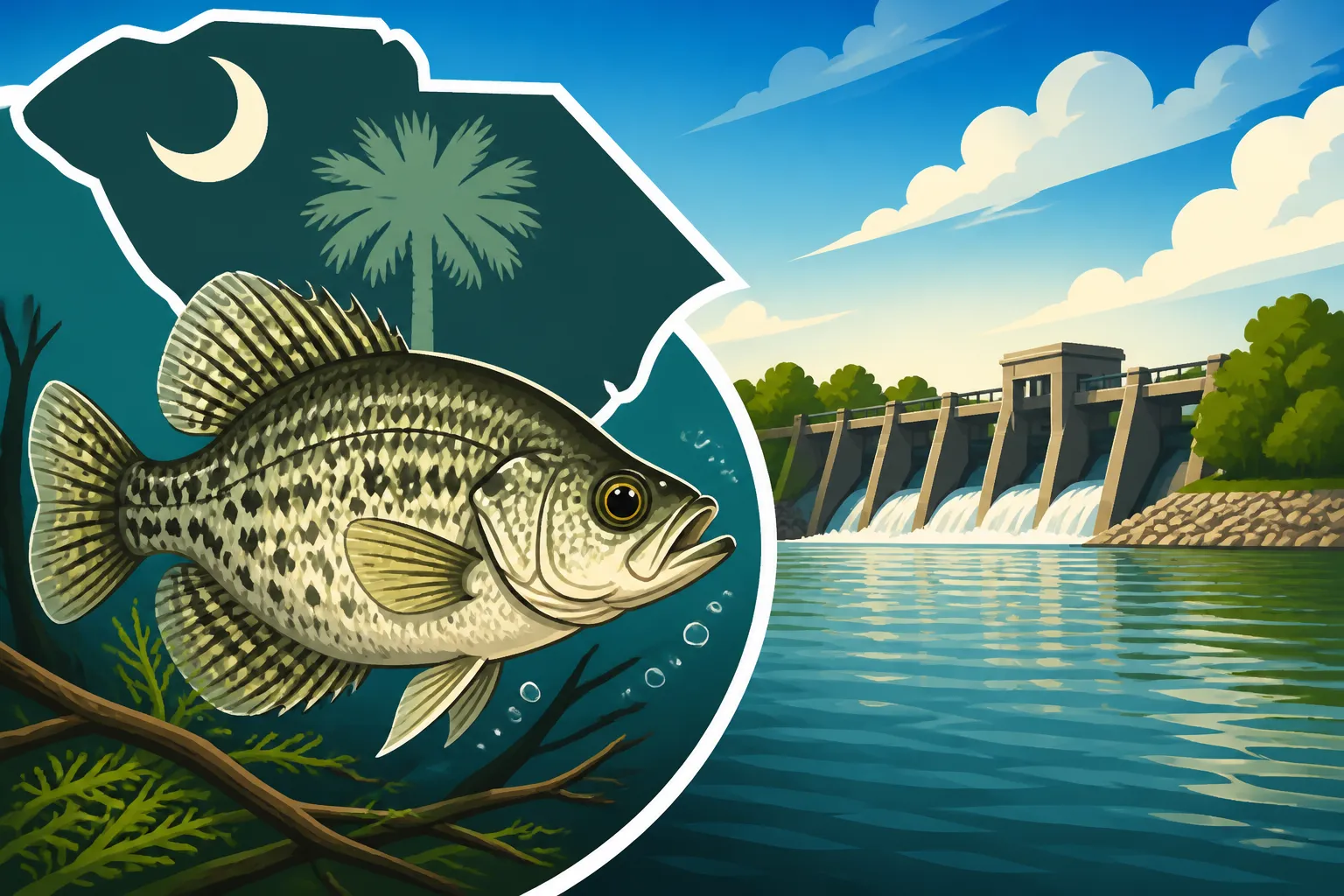
Near the southern end of Lake Moultrie, the waters around the Pinopolis Dam are another top crappie destination. The sheer depth and the structure associated with the dam (like rocky ledges and deep holes) attract large schools of crappie, particularly in winter. Anglers often use their electronics to pinpoint these deep schools, then employ vertical jigging or tightlining techniques. The dam area is vast and can be challenging to fish, but it often holds some of the largest crappie in the system. It's a key feature of the Santee Cooper Diversion Canal Fishing Spots that serious crappie anglers target.
Submerged Islands and Humps
Lake Moultrie's open nature hides numerous submerged islands and humps that rise from the lake bed. These underwater formations are crappie magnets, acting as congregation points for baitfish and providing structure in an otherwise open environment. Finding these can be challenging without good sonar, but they are incredibly rewarding.
Anglers often look for significant depth changes – areas where the bottom rises sharply from, say, 30 feet to 15 feet. Crappie will often hold on the sides or tops of these humps, especially if there's any brush or timber present. Many of these humps are not marked on standard navigation charts, so it takes a combination of electronic scouting, local knowledge, or help from a trusted guide. Services like FishingBooker can help you connect with local captains who have spent years mapping these hidden treasures, and know the Best Time of Year to Fish Santee Cooper Lakes in South Carolina for crappie on these specific structures.
Cypress Gardens and Backwater Coves
While Lake Moultrie is generally deeper, it does have its share of shallower, more protected backwater coves and cypress tree areas, particularly on its eastern and western shores. The region around Cypress Gardens on the western side of the lake offers calmer waters and some beautiful cypress stands. These areas can be excellent for crappie, especially during the spring spawn, when fish move into the shallows to lay their eggs.
Exploring the smaller, less-pressured coves and cuts can often lead to finding untouched schools of crappie. Look for areas with dense vegetation, lily pads, or submerged logs. These spots often hold fish that haven't seen as many lures, making them more willing to bite. These areas also tend to be more family-friendly, offering a gentler fishing experience than the main lake.
Effective Techniques for Santee Cooper Crappie
Finding the crappie is only half the battle; the other half is convincing them to bite. Santee Cooper crappie can be finicky, but with the right techniques, you can fill your livewell.
Jigging and Live Bait Strategies
When it comes to catching crappie on Santee Cooper, a combination of jigging and live bait fishing is often the most effective approach. For jigging, small lead-head jigs (1/16 to 1/8 ounce) tipped with soft plastic bodies are incredibly popular. Brands like Bobby Garland and Crappie Pro offer a huge range of colors and styles, and experimenting with these can make a big difference. Vertical jigging directly over submerged brush piles or deep-water schools is highly effective, especially with your boat positioned right over the structure. You can learn more about Crappie Jigging Techniques for Beginners if you're just starting out.
Another highly productive technique, particularly in deeper water or when crappie are scattered, is slow trolling with multiple rods, often referred to as "spider rigging." This involves using long rods extended out from the boat, each rigged with a live minnow or a jig, to cover a wide area at very slow speeds. Many anglers target areas around the Diversion Canal or the main lake humps using this method. Minnows are almost always a top choice for live bait, either fished on a bare hook or under a float, especially when the crappie are less active.
Reading Your Electronics for Crappie
In a vast lake system like Santee Cooper, your boat's electronics are your most valuable tool for consistently finding crappie. Modern fish finders with side imaging, down imaging, and 2D sonar capabilities are crucial. When crappie are relating to deep structure or suspending in open water, you simply won't find them without good sonar.
Start by looking for significant depth changes, creek channels, or known brush pile locations. Then, use your side imaging to scan wide areas to either side of your boat, looking for submerged timber, humps, or distinct schools of fish. Once you spot something promising, switch to down imaging or 2D sonar to get a clearer picture of the structure and the fish holding on or around it. Crappie often show up as distinct arches or clouds of fish, sometimes suspended just above the brush. Pay close attention to baitfish schools, as crappie are never far behind their food source. Understanding how to properly use these tools is key to unlocking the lake's best crappie spots. You can also explore options for How to Find Crappie in Spring using your electronics as they move shallow.
Here's a quick comparison of the two lakes for crappie anglers:
| Feature/Aspect | Lake Marion | Lake Moultrie |
|---|---|---|
| Primary Structure | Cypress trees, submerged stumps, shallow brush piles | Deep humps, submerged islands, Pinopolis Dam structure |
| Depth Profile | Generally shallower, vast areas under 15 feet | Deeper, more open water, average 20-40 feet |
| Best Season | Spring (spawn), Fall | Winter, Summer (deep), Spring (canal/coves) |
| Typical Techniques | Jigging, casting into trees, slow trolling minnows | Vertical jigging, spider rigging, deep tightlining |
| Navigation | Can be challenging due to stumps, narrow channels | More open, but requires good electronics for deep structure |
| Accessibility | Numerous ramps, many shallow access points | Good ramps, deep water access from most points |
Remember, the crappie fishing on Santee Cooper is legendary for a reason. With a little patience, the right approach, and a good understanding of these expansive waters, you're well on your way to a cooler full of delicious crappie. If you’re ever unsure, a local guide found on a platform like FishingBooker can often give you the freshest intelligence on where the bite is hot.
Disclaimer
Fishing conditions and regulations in South Carolina can change. Always consult the latest rules and guidelines from the South Carolina Department of Natural Resources (SCDNR) before heading out on your fishing trip. Ensure you have the proper South Carolina Fishing License Guide and are aware of all South Carolina Fishing Bag Limits Explained for crappie and other species.