Where to Catch Crappie on Lake Murray?
Lake Murray is a magnificent body of water, a true jewel of South Carolina, but for all its beauty and abundance, finding a specific species like crappie can sometimes feel like searching for a needle in a haystack. It’s a vast, complex reservoir with countless coves, channels, and submerged structures, and if you don’t know where to start, you can spend hours chasing your tail without a single bite. This guide is all about cutting through that frustration, giving you the real scoop on where to find those elusive crappie on Lake Murray, no matter the season.
Understanding Crappie Movement on Lake Murray
Before we dive into specific spots, it’s crucial to understand a bit about crappie behavior. These fish aren't just sitting in one place all year; they move constantly, driven by water temperature, forage availability, and their spawning instincts. Knowing these patterns is half the battle won, transforming a random casting session into a targeted, productive outing.
Seasonal Habitat Changes
Crappie are creatures of comfort, and their definition of "comfort" changes dramatically with the seasons. In the colder months, they tend to congregate in deeper water, seeking stable temperatures and schools of baitfish. Think deep channels, main lake humps, and the bases of significant structures like bridge pilings. As the water warms in spring, their instincts shift towards reproduction, and they'll push into much shallower areas. They're looking for woody cover in protected coves, places where they can safely lay their eggs. By summer, they've often moved back out, perhaps suspending over deeper water or relating to submerged brush piles where they can find both food and shade from the intense sun. Fall sees them transitioning again, often schooling up and feeding aggressively as they prepare for winter. Keeping an eye on the South Carolina Freshwater Fishing Calendar can help you anticipate these shifts.
Preferred Lake Murray Structure
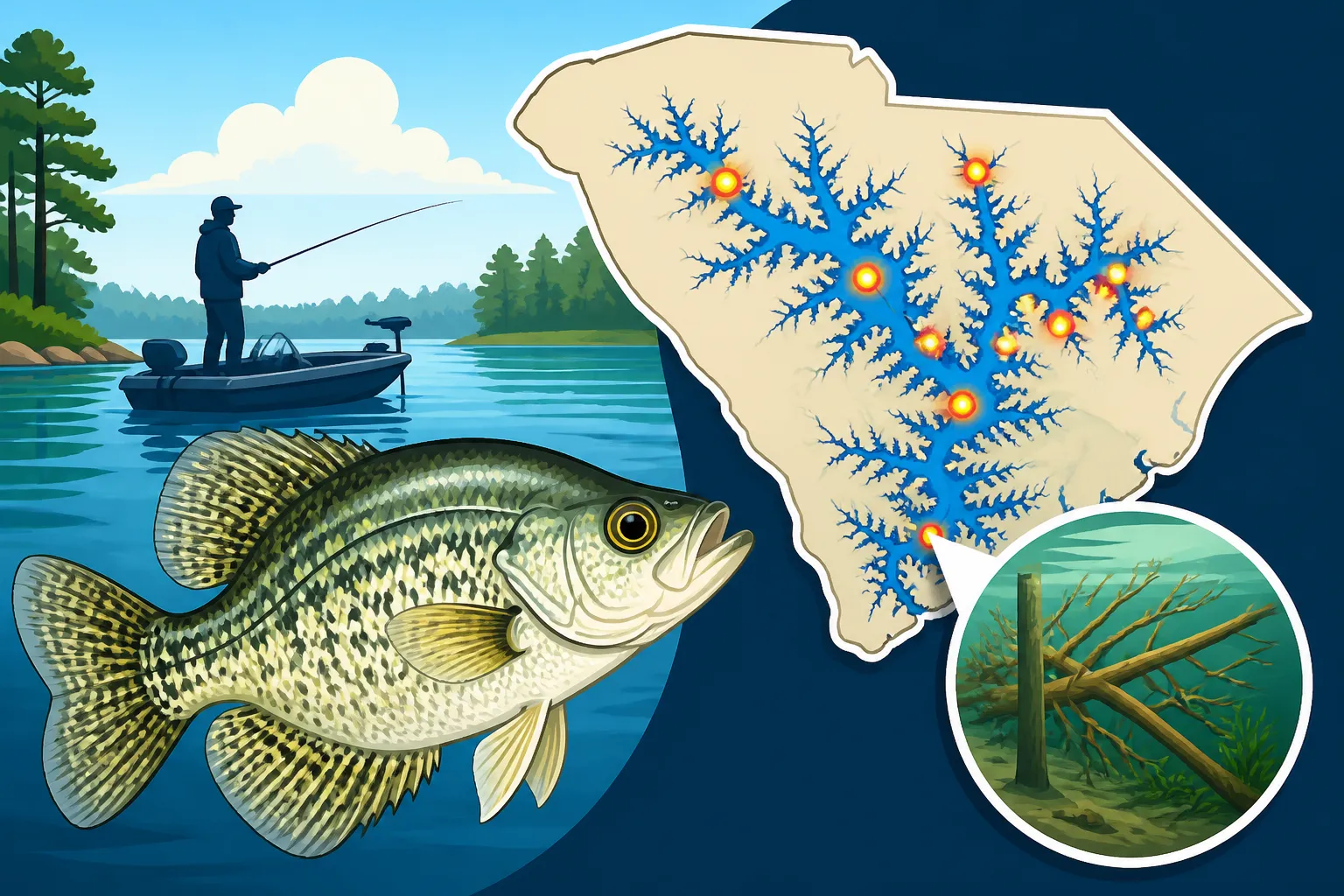
Lake Murray is absolutely loaded with structure, both natural and man-made, and crappie use it all. They are ambush predators, so they love anything that offers cover and a place to hide while waiting for a meal to swim by. This includes everything from natural fallen trees and stumps in creeks, to artificial brush piles placed by anglers, to the extensive network of docks, boat houses, and bridge supports that line the lake. Even main lake humps and points, especially those with some kind of woody debris or rock, can hold significant numbers of crappie in various seasons. The trick is to identify which types of structure they are using at any given time, which often ties directly back to those seasonal movements we just talked about.
Top Crappie Hotspots on Lake Murray
Now that we understand a bit more about crappie behavior, let's talk about the specific areas on Lake Murray where you're most likely to find them. Remember, success often comes down to timing and understanding the subtle nuances of each spot.
The Upper Reaches and Feeder Creeks
The "headwaters" of Lake Murray, particularly where the Saluda River flows in, can be phenomenal for crappie, especially during the spring spawn. This area, along with major feeder creeks like Big Hollow Creek, Wateree Creek, and Buffalo Creek, offers shallower, often murkier water that warms up faster in the spring.
- Spring Spawn Haven: As early spring water temperatures creep into the low to mid-60s, crappie will move into these creek arms. They're looking for flooded timber, laydowns, and brush piles in 3-10 feet of water. Focus on the backs of coves and creek channels where there’s a good mix of cover and a soft bottom for spawning. You’ll often find them packed tightly together, making it easier to catch a limit once you locate the school. A lot of local anglers use small jigs or minnows under a bobber around these structures.
- Post-Spawn to Summer Transition: After the spawn, crappie may linger in these creek arms for a bit, but as water temperatures continue to rise, they'll gradually retreat to the main creek channels, suspending over deeper water or moving to brush piles along the edges of the channels. It’s a good time to use your electronics to spot schools of fish holding at specific depths. Even in summer, some of these creeks can hold fish deeper down, especially early and late in the day.
Docks, Bridge Pilings, and Artificial Structure
Man-made structures offer consistent crappie habitat year-round on Lake Murray, providing shade, cover, and often deeper water access.
- Residential Docks and Boat Houses: These are crappie magnets. The pilings, the overhead shade, and often brush piles placed by homeowners create ideal sanctuaries. In spring, crappie will move shallower under docks to spawn. In summer and winter, they'll often suspend around the deeper ends of these structures. The key here is to fish quietly and thoroughly. Don't just make a few casts; try different depths and presentations. Some of the best docks are those that extend over a quick depth change or have visible brush underneath. You can find some excellent family-friendly fishing spots in South Carolina near these accessible areas.
- Bridge Pilings: Structures like the Dreher Island Bridge and other causeways spanning the lake are year-round crappie strongholds. The pilings themselves provide vertical structure, and the deeper water around them often holds baitfish. Crappie will suspend at various depths around these pilings. In winter, they can be found deep, sometimes 20-30 feet down. In warmer months, they might be shallower in the shade. Fishing vertically with jigs or minnows right up against the pilings is often the most effective method here. Just be mindful of boat traffic!
- Deliberately Placed Brush Piles: Many savvy anglers and fishing organizations place artificial brush piles throughout Lake Murray. These are often marked on high-end fishing electronics, or you might find them by observing where local boats congregate. These underwater havens are prime crappie real estate, especially in summer and winter when crappie seek deeper cover. Services like FishingBooker often list guides who specialize in these types of spots, as they often have their own secret brush piles.
Main Lake Humps and Deep Water
For those willing to venture out onto the main body of Lake Murray, humps, ledges, and deep-water brush piles can be incredibly productive, especially during the colder months or the heat of summer.
- Submerged Humps and Points: Look for contours that rise significantly from the main lake bottom. Crappie will often school up on the ledges and tops of these humps, particularly if there’s any brush or rock. These are best located using good sonar. Once you find a hump, try drifting over it or anchoring strategically to work different depths. This is where tightlining for crappie in deep water really shines.
- Deep Channel Edges: The main river channel that winds through Lake Murray is a natural highway for fish movement. Crappie will often relate to the drops and ledges along these channels, particularly in winter. They might suspend just off the bottom or hang around any structure (like brush or old stumps) on the drops. This is a pattern that can take a bit more patience and good electronics, but it can yield some truly massive crappie.
Techniques to Catch Lake Murray Crappie
Knowing where to fish is only part of the equation; you also need to know how. Lake Murray crappie can be caught using a variety of methods, but some are definitely more effective than others depending on the conditions.
Jigging for Crappie
Jigging is arguably one of the most versatile and productive ways to catch crappie on Lake Murray. It allows you to target specific depths and structures, making it perfect for working docks, brush piles, and bridge pilings.
- Vertical Jigging: This technique is ideal for precise presentations around structure. Using a light spinning rod and reel, drop a small jig (1/16 to 1/8 ounce is common) directly down to the depth where you're seeing fish on your electronics or where you suspect they are holding. Slowly raise and lower the jig, imparting a subtle twitching action. The key is often a very gentle touch, as crappie can be finicky. Popular jig colors on Lake Murray often include chartreuse, white, and various two-tone combinations. You can learn more about Crappie Jigging Techniques for Beginners if you're just starting out.
- Casting and Retrieving: For crappie holding around the edges of brush piles or under docks, a short cast and slow retrieve can be effective. Experiment with retrieve speeds and jig depths until you find what triggers a bite. Sometimes, a slow, steady retrieve works best, other times a stop-and-go retrieve with pauses allows the jig to flutter, mimicking an injured baitfish.
Using Live Bait: The Minnow Advantage
While jigs are fantastic, sometimes nothing beats a live minnow, especially when crappie are less aggressive or the water is colder.
- Fishing Under a Bobber: This classic method is incredibly effective, especially in shallower water around docks, stumps, or brush. Hook a lively minnow through the lips or back, set your bobber to the desired depth, and cast it near cover. The bobber not only indicates a bite but also suspends the minnow at a constant depth, keeping it in the strike zone longer. This is a great technique for all skill levels, including kids, making it perfect for a fun day out.
- Tightlining and Spider Rigging: For targeting crappie in deeper water or open areas, tightlining or spider rigging from a boat can be incredibly efficient. Tightlining involves using multiple rods, each rigged with a weight and a minnow, fished straight down. Spider rigging takes this a step further, using a spread of long poles out from the boat, covering a wide area as you slowly troll. This allows you to present multiple baits at different depths and speeds, quickly identifying the crappie's preferred zone. You can often see guides on FishingBooker employing this method with great success.
Essential Gear and Regulations
Being prepared with the right gear and knowing the rules are non-negotiable for a successful and legal crappie fishing trip on Lake Murray.
Recommended Crappie Fishing Gear
You don't need a massive investment to get started, but having the right tools makes a huge difference.
- Rods and Reels: Light to ultralight spinning combos are perfect. A 6 to 7-foot rod with a fast action allows for sensitive bite detection and good casting control with small jigs. Pair it with a small spinning reel spooled with 4-6 pound test monofilament or fluorocarbon line. Braided line can be used for increased sensitivity but often requires a fluorocarbon leader.
- Terminal Tackle: A variety of small jigs (1/32 to 1/8 ounce) in different colors is essential. Crappie hooks (size 2-6) are great for live minnows. Split shot weights, small bobbers (slip bobbers are excellent for deeper presentations), and swivels complete the basic setup.
- Electronics: While not strictly essential for every trip, a good fish finder with sonar and ideally side imaging can drastically improve your success rate on Lake Murray. It helps you locate brush piles, schools of baitfish, and crappie themselves, saving you countless hours of blind casting.
- Other Essentials: A comfortable PFD (personal flotation device) if you're in a boat, a cooler for drinks and your catch, a net (small, soft mesh is best for crappie), and sun protection are always a good idea. Don't forget your valid South Carolina Fishing License Guide.
South Carolina Crappie Regulations
It's critical to be aware of the current regulations to ensure you're fishing legally and responsibly. These rules are in place to protect the fishery for everyone.
- Statewide Limits: For crappie in South Carolina, there is generally a daily creel limit of 20 fish per person. There's also a minimum size limit of 8 inches, meaning any crappie shorter than that must be immediately released. These regulations are subject to change, so always double-check the latest South Carolina's Freshwater Fishing Regulations from the SCDNR before heading out.
- Why Regulations Matter: Adhering to these limits helps maintain healthy crappie populations in Lake Murray and across the state. By only keeping legal-sized fish and not exceeding your daily bag limit, you're contributing to sustainable fishing practices, ensuring there are plenty of crappie for future generations of anglers to enjoy. If you're planning a trip with a guide, reputable services listed on platforms like FishingBooker will always ensure their trips comply with all state and local regulations.
Remember, patience and persistence are key when crappie fishing on Lake Murray. These tips and locations should give you a fantastic head start, but don't be afraid to explore and find your own hidden gems!
Disclaimer
Fishing conditions and regulations in South Carolina can change. Always consult the latest rules and advisories from the South Carolina Department of Natural Resources (SCDNR) before embarking on any fishing trip. This guide is for informational purposes only and does not constitute professional advice.