Lake Moultrie Catfish Fishing Spots
It can be incredibly frustrating to hear about all the fantastic catfish fishing happening on a huge lake like Moultrie, only to feel lost when it comes to finding those prime spots yourself. You scroll through forums, watch videos, and still wonder where to even drop a line for those big blues and flatheads. This guide is here to cut through the confusion and pinpoint the best catfish fishing spots on Lake Moultrie, along with the techniques that will put fish in your cooler.
Why Lake Moultrie is a Catfish Paradise
Lake Moultrie, nestled in the heart of South Carolina, isn't just another pretty body of water; it's a true heavyweight when it comes to catfish. Part of the larger Santee Cooper Lakes system, it holds a reputation for producing monster blue catfish, alongside a healthy population of flatheads and channel cats. Many anglers travel from all over to experience the thrill of battling a true trophy cat here.
Understanding Lake Moultrie's Ecosystem for Catfish
What makes Lake Moultrie such a haven for whiskered predators? It boils down to a few key ecological factors. First, the lake is incredibly fertile. It’s a vast, shallow to moderately deep reservoir with an abundance of baitfish, such as gizzard shad and threadfin shad, which form the primary diet of large catfish. This plentiful food source allows catfish to grow to immense sizes quickly. The lake also has an incredible amount of submerged timber, stumps, and old river channels that provide perfect ambush points and cover for catfish, especially the more reclusive flatheads. The constant flow of water through the Santee Cooper Diversion Canal also creates currents that concentrate bait and, in turn, hungry catfish. If you're looking for more general information on the area, check out our guide to the Santee Cooper Lakes: South Carolina's Legendary Bass Fishery.
Key Species: Blue Catfish, Flathead, and Channel Catfish
When you're targeting catfish on Lake Moultrie, you're primarily after three distinct species, each with its own characteristics and preferred habitats:
- Blue Catfish: These are the superstars of Moultrie, known for their immense size. It's not uncommon to pull out blue cats weighing 50 pounds or more, with many exceeding 75 pounds. They prefer open water, deep channels, and areas with current, often schooling up. They are voracious eaters, primarily feeding on baitfish.
- Flathead Catfish: Flatheads are ambush predators, often found near heavy cover like submerged logs, stumps, or rock piles. They have a distinct, flattened head and a mottled brown-and-yellow coloration. Unlike blue cats, flatheads prefer live bait and will often ignore cut bait. They can also grow quite large, though usually not to the same extreme weights as the biggest blues.
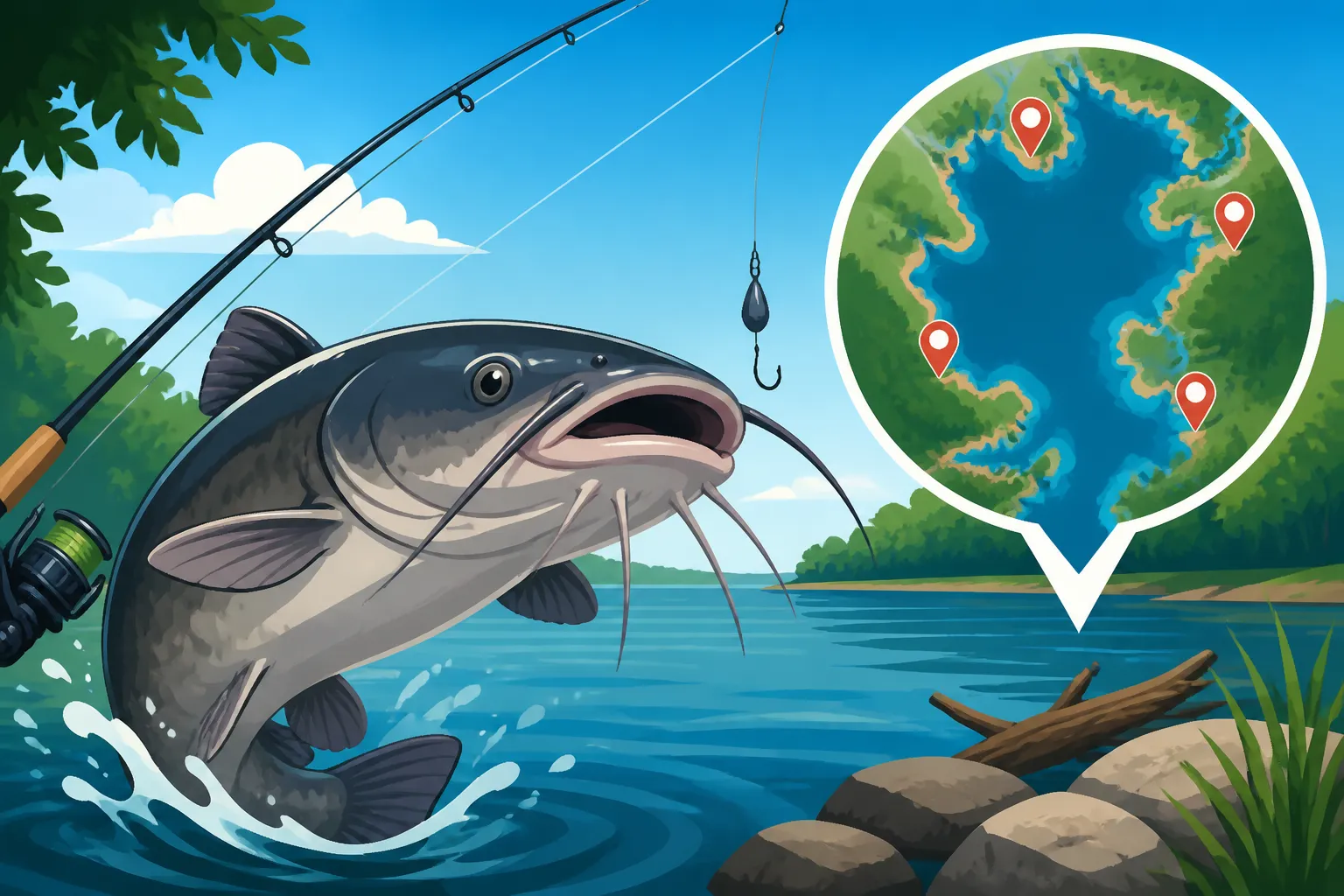
- Channel Catfish: While generally smaller than blues and flatheads, channel cats are abundant and offer fantastic sport, especially for families or those new to catfishing. They are more omnivorous, eating a variety of baits, and can be found in a wider range of habitats, from shallow coves to deeper main lake areas.
Understanding which species you're targeting will heavily influence your choice of spot, bait, and technique. Always remember to check South Carolina's Freshwater Fishing Regulations before heading out, as limits and rules can change.
Top Catfish Fishing Spots on Lake Moultrie
Okay, now for the good stuff – where exactly do you go to find these whisker-faced giants? Lake Moultrie offers a variety of productive areas, each with its own charm and challenges.
The Diversion Canal and Surrounding Areas
The Santee Cooper Diversion Canal is arguably one of the most famous catfish hotspots in the entire system, and for good reason. This canal connects Lake Marion to Lake Moultrie, creating a constant flow of water that acts like a conveyor belt for baitfish, concentrating them and, subsequently, the catfish that feed on them.
Anglers often target the areas just inside the canal where it meets Lake Moultrie, as well as the canal itself. The current here can be strong, so heavy weights are necessary to hold bottom. Many of the largest blue catfish are caught right in this stretch. The banks can be steep, and there's often deep water close to shore, making it accessible for both boat and bank anglers. For specific details on this area, you might find our guide on Santee Cooper Diversion Canal Fishing Spots useful. When planning your trip, remember you'll need a fishing license; our South Carolina Fishing License Guide can help you secure one.
Deep Water Channels and Old River Beds
Before Lake Moultrie was impounded, it was crisscrossed by river channels. These old river beds, now submerged, serve as highways and holding areas for catfish, particularly the big blue cats. They're often identifiable on a good depth finder as deeper troughs running through the lakebed.
These channels provide cooler water in summer and a stable environment in winter. Look for bends in these channels, submerged humps, or intersections with creek beds, as these are prime areas where catfish will congregate. Trolling along these channels or anchoring upcurrent from a promising spot and fanning out baits are popular and effective strategies. This is where those monster blues often roam, so be prepared for a fight!
Cypress Stands and Submerged Structure
Flathead catfish, in particular, are drawn to heavy cover. Lake Moultrie is dotted with ancient cypress trees that stand sentinels in its waters, many of which have extensive root systems and fallen logs beneath the surface. These dense, woody areas provide perfect ambush points for flatheads waiting to strike unsuspecting live bait.
You'll also find numerous submerged stumps, brush piles, and other woody debris left over from when the lake was flooded. These structures hold baitfish, which in turn attract all three species of catfish, though flatheads will be the most intimately associated with the thickest cover. Fishing close to these structures requires precise casting and stout tackle, as you're almost guaranteed to get snagged if you're not careful. If you're looking to book a guided trip to navigate these challenging but rewarding spots, a platform like FishingBooker can help you find experienced local guides who know these areas intimately.
The Mouth of the Cooper River
The Cooper River flows into Lake Moultrie on its western side, bringing with it a fresh influx of water, nutrients, and bait. The confluence of the river and the main lake creates a dynamic environment that catfish absolutely love. The current here, though less intense than in the Diversion Canal, is still significant and concentrates food sources.
Anglers targeting the Cooper River mouth often find success with a mix of blue and channel catfish. The depths can vary, offering opportunities for different techniques. Look for current breaks, deeper holes, and edges where the river channel meets the shallower lake bottom. These transition zones are always great spots for active fish.
Essential Techniques and Baits for Lake Moultrie Catfish
Having a prime spot is only half the battle; knowing how to fish it effectively is just as crucial. Lake Moultrie catfish respond well to several tried-and-true methods.
Bottom Fishing and Anchoring Strategies
Bottom fishing is the bread and butter of catfishing on Lake Moultrie. This technique involves presenting bait directly on the lakebed, where catfish primarily feed. When anchoring, try to position your boat slightly upcurrent from a promising structure or channel edge. This allows your baits to drift naturally into the feeding zone and covers a wider area.
- Rigging: A standard Carolina rig or a three-way swivel rig works wonders. For a Carolina rig, slide an egg sinker (or a no-roll sinker in current) onto your main line, tie on a swivel, then attach a leader of 12-24 inches to a strong circle hook. For a three-way swivel rig, tie your main line to one eye of the swivel, a short leader (6-12 inches) with a weight to another eye, and your hook leader (12-36 inches) to the third eye.
- Bait Presentation: Use enough weight to hold your bait firmly on the bottom, especially in areas with current like the Diversion Canal. Having multiple rods out, spaced apart, allows you to cover different depths and scents. Remember that big blue cats often cruise, so be patient and let the scent plume of your bait do the work. Our Catfish Bottom Fishing Basics guide can give you more in-depth information.
Trotlining and Jug Fishing Considerations
For anglers looking to cover more water or target multiple fish overnight, trotlining and jug fishing are effective methods, though they require a bit more planning and adherence to regulations. These techniques are often employed in wider, more open areas of the lake or along channel edges where you can set a long line without obstructing navigation.
- Trotlining: This involves a long main line stretched between two anchor points (often tree limbs or heavy weights) with baited hooks attached at intervals. It's a highly productive method for catching multiple catfish. Before deploying a trotline, always consult the South Carolina Department of Natural Resources (SCDNR) regulations, as there are specific rules regarding length, number of hooks, and tagging requirements.
- Jug Fishing: Similar to trotlining, jug fishing uses individual lines attached to floating jugs or bottles, each with a baited hook. These are set adrift and allowed to float with the current, covering vast areas. When a fish bites, the jug starts to dance, alerting you to the catch. It’s a very active form of fishing, often done at night. You can learn more about this through our Trotline Fishing for Catfish Explained and Jug Fishing for Catfish Step by Step guides.
Best Baits for Each Catfish Species
The right bait can make all the difference, and it often varies by species:
- Blue Catfish: Fresh cut bait is king for blue cats. Gizzard shad, threadfin shad, white perch, and even herring are excellent choices. Use chunks that are proportionate to the size of fish you're targeting – larger pieces for trophy blues. Some anglers also use chicken liver, but cut bait generally performs better for the bigger fish.
- Flathead Catfish: These guys are picky and almost exclusively prefer live bait. Live bream, bluegill, small carp, or robust shad are ideal. Present them on a stout hook, allowing them to swim freely but stay near the bottom, usually close to heavy cover. If you're using live bait, make sure it's legal to use as bait and caught from the same water body to prevent the spread of disease.
- Channel Catfish: Channel cats are less particular. They readily take cut bait, chicken livers, shrimp, nightcrawlers, and even commercial catfish baits like stink baits or punch baits. For sheer numbers and consistent action, especially for kids, chicken liver or a good punch bait can be incredibly effective.
Seasonal Catfish Patterns on Lake Moultrie
Catfish behavior on Lake Moultrie isn't static; it changes significantly with the seasons, driven by water temperature, spawning cycles, and baitfish movements. Understanding these patterns will help you adapt your strategies.
Spring Spawning and Post-Spawn Hotspots
As water temperatures begin to rise in spring (typically from late April through June), catfish move into shallower waters to spawn. Blue catfish and channel catfish seek out secluded areas with hard bottoms, undercut banks, and holes or crevices for their nests. Flatheads, too, will move shallower to find suitable spawning habitat, often preferring dense woody cover.
During this pre-spawn period, fish are actively feeding to bulk up for the spawn, making it an excellent time for aggressive bites. Target shallower flats adjacent to deeper channels, rocky points, and creek mouths. After the spawn, fish may be a bit lethargic but will soon begin to recover and feed heavily, often moving back towards deeper water but remaining somewhat close to their spawning grounds.
Summer Deep Water Tactics
When the scorching South Carolina summer heat sets in and water temperatures climb, catfish, especially the larger blues, retreat to deeper, cooler waters. The oxygen levels are better in these deeper zones, and baitfish also tend to concentrate there.
Focus your efforts on the main lake channels, deep holes, and the cooler waters of the Diversion Canal. You'll often find blue cats suspended over structure in 20-40 feet of water, or even deeper, depending on the day. This is a great time for drifting cut bait slowly over these deep areas, or anchoring on deep humps and ledges. Night fishing for catfish becomes incredibly popular and productive in the summer months, as catfish are more active under the cover of darkness and cooler temperatures. Explore our guide on Night Fishing Techniques for Catfish for more insight.
Fall Feeding Frenzies
Fall is arguably one of the best times to fish for catfish on Lake Moultrie. As water temperatures cool down, baitfish become more active and begin to school up, and catfish go on a serious feeding binge to fatten up for winter.
During the fall, catfish will often move shallower than in summer, but deeper than their spring spawning locations. Look for them along channel edges, humps, and points where baitfish are abundant. Trolling or drifting large cut baits in 15-30 feet of water can be extremely effective. The fish are aggressive, and you can expect some intense action. This is when some of the biggest trophy fish are often caught.
Winter Hole Fishing
Don't put your rods away just because it's cold! Winter fishing on Lake Moultrie can be surprisingly productive for catfish, especially for blue cats. As temperatures drop, catfish will congregate in massive schools in deep holes and channels, seeking stable water temperatures.
The key to winter success is finding these schools. Use your electronics to locate significant congregations of fish in the deepest parts of the lake. Once you find them, you can often catch multiple fish from the same spot. The bite might be more subtle, so use sensitive rods and pay close attention. Often, the best strategy is to anchor directly over the school and drop baits straight down. Heavy cut bait, such as large pieces of shad or herring, presented directly in front of their noses, is usually irresistible. For those interested in licensing specifics, our South Carolina Annual Fishing License Price Breakdown can help you prepare for year-round fishing.
| Fishing Spot | Primary Catfish Species | Best Time to Fish | Key Techniques | Recommended Bait |
|---|---|---|---|---|
| Diversion Canal & Inlets | Blue, Channel | Year-round, especially Summer & Fall | Bottom Fishing, Anchoring | Cut Shad, Cut Herring, Chicken Liver |
| Deep Water Channels & River Beds | Blue, Flathead | Year-round, especially Summer & Winter | Drifting, Bottom Fishing, Trolling | Large Cut Shad, Live Bream (Flathead) |
| Cypress Stands & Submerged Wood | Flathead, Channel | Spring, Fall | Still Fishing (Live Bait) | Live Bream, Live Shad (Flathead), Worms (Channel) |
| Mouth of the Cooper River | Blue, Channel | Spring, Fall | Bottom Fishing, Anchoring | Cut Shad, Cut Perch, Chicken Liver |
Remember that possessing the right South Carolina Fishing License is crucial for any angler. If you're an out-of-state visitor, you'll need to know about the South Carolina Nonresident Fishing License Guide. Many folks opt for convenience, buying their licenses online or exploring options like the South Carolina 3-Year Fishing License Options for a longer-term solution. Whether you're a seasoned angler or just starting out, Lake Moultrie truly offers some incredible catfish opportunities. If you ever want to streamline finding a guide for a trip on Lake Moultrie, FishingBooker offers a great way to browse and book local catfish charters.
Disclaimer
Fishing regulations and conditions can change rapidly. Always consult the official South Carolina Department of Natural Resources (SCDNR) website or their current fishing guide for the most up-to-date rules, bag limits, and any special advisories before heading out on Lake Moultrie or any other body of water in South Carolina. This guide is for informational purposes only and should not be considered a substitute for official regulations.