Best Bait for Sheepshead in Brackish Water
Oh, the elusive sheepshead! If you've spent any time fishing the brackish waters of South Carolina, you know these "convict fish" can be incredibly frustrating yet utterly rewarding. Their peculiar mouths and notorious bait-stealing habits can really test your patience, especially when you're trying to figure out what bait they'll actually commit to. This guide is all about helping you crack the code on the best baits for sheepshead in those murky, tide-swept brackish environments, giving you the upper hand against these wily striped beauties.
Understanding Sheepshead in Their Brackish Domain
Before we dive into the tackle box, let's talk a little about our target. Sheepshead ( Archosargus probatocephalus) are truly unique creatures, and understanding their habits is the first step to figuring out what makes them bite. They're not like your typical bass or trout that chase down flashy lures; sheepshead are primarily bottom feeders with a very specific diet and an even more specific way of eating.
Where They Live: Structure and Cover
Sheepshead absolutely adore structure. Think about barnacle-encrusted pilings, oyster reefs, bridge abutments, rocky jetties, sunken timber, and even old dock lines. These are their grocery stores and their homes. In South Carolina's brackish waters, this often means creek mouths, tidal rivers, and the fringes of our larger estuaries where freshwater meets saltwater, creating that perfect mix of salinity and abundant food sources. They use these structures for protection and, more importantly, as a smorgasbord of their favorite crustacean and mollusk meals. They'll hug these structures incredibly tight, sometimes sitting right in the current, waiting for an easy meal to drift by or actively scraping for food. You'll often find them lurking around the shade or in the eddies created by these features, making them a challenging but exhilarating target.
Why They're Called "Convict Fish"
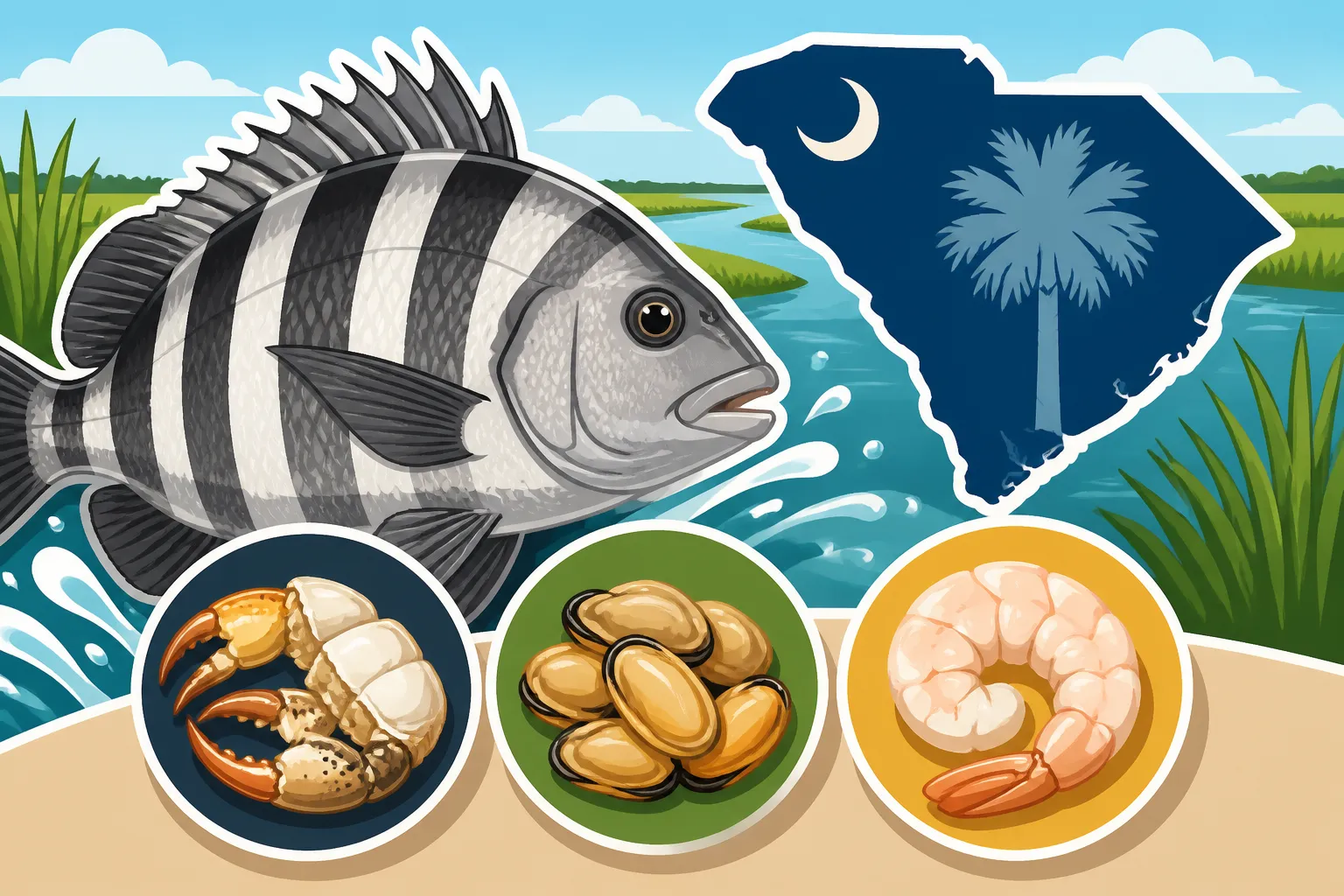
If you've ever seen a sheepshead's mouth, you'll immediately understand why they earned the nickname "convict fish." Their human-like incisors and molars are perfectly designed for crushing the shells of oysters, barnacles, and crabs. This is why conventional soft baits, or even baits on large hooks, often result in frustration. They're not biting down with force to engulf their prey; they're nibbling and crushing. They can expertly strip a bait clean off your hook without you even feeling a thing, leaving you with an empty hook and a bewildered look. This feeding strategy dictates everything about successful sheepshead fishing, from your bait choice to your hook size and presentation. It truly makes them one of the most maddeningly fun fish to target.
Brackish Water Challenges for Bait Selection
Brackish water presents its own set of considerations when choosing sheepshead bait. The fluctuating salinity, often cloudier water, and diverse food sources mean that what works offshore might not work in an inshore creek. In these environments, sheepshead are often accustomed to a wider variety of organisms, including freshwater mussels or smaller shrimp species that thrive in lower salinities. You also have to contend with other species that might go after your bait – anything from pinfish and small croakers to catfish – so picking something sheepshead prefer and that can withstand a few nudges is key. The strength of the current, water depth, and visibility can all play a role in how readily sheepshead will find and take your offering, making local knowledge and adaptability crucial.
The Absolute Best Live Baits for Sheepshead
When it comes to sheepshead, live bait almost always reigns supreme, especially in brackish water. The movement and natural scent are irresistible. They're naturally curious and opportunistic feeders, and a struggling crustacean or mollusk is like ringing the dinner bell.
Fiddler Crabs: The Go-To Choice
If there's one bait that consistently proves its worth for sheepshead in brackish estuaries, it's the fiddler crab. These small, readily available crustaceans are a natural part of the sheepshead's diet. Their hard shells are exactly what sheepshead are built to crush, and their frantic leg movements underwater are a powerful attractor. You can find them scuttling around muddy banks and marsh grass at low tide in many of South Carolina's coastal areas. They're pretty easy to catch by hand if you're quick, or you can pick them up from local bait shops.
When rigging a fiddler, you want to thread a small hook (usually a #1 or #2 kahle or octopus hook) through the crab's belly and out its back, or simply through the back shell. The goal is to keep the hook point exposed but hidden enough that the sheepshead doesn't feel it right away. A simple Carolina rig with a light leader, or even a bare hook with a small split shot, is often all you need. You'll want to gently toss it near pilings or oyster beds and wait for that subtle tap-tap-drag. Many anglers even keep a good supply of fiddlers in a bait pen or a well-ventilated bucket, making sure they have enough for a productive day out on the water. You can even find specialized bait buckets for crabs on Amazon that keep them lively.
Mud Crabs and Blue Crabs: Versatile Options
While fiddlers are king, don't underestimate the power of small mud crabs or pieces of larger blue crabs. Mud crabs are another common resident of brackish marshes and estuaries, providing a similar natural food source for sheepshead. They're a bit tougher than fiddlers and can stay on the hook longer, which is a big plus when you're dealing with bait stealers. You can often catch mud crabs by turning over rocks or oyster clusters at low tide.
For blue crabs, you're usually using smaller pieces. A quartered blue crab, especially a soft-shelled one, can be incredibly effective. The trick is to ensure the piece is small enough for the sheepshead to get its mouth around but large enough to stay on the hook. Cut a section with a bit of leg or claw attached for added appeal. The strong scent from the freshly cut crab meat will disperse quickly in the brackish water, drawing in curious sheepshead from nearby structures. This is particularly useful when targeting larger sheepshead that might ignore smaller offerings.
Live Shrimp: A Universal Attractor (with caveats for sheepshead)
Live shrimp are the universal bait for almost any inshore species in South Carolina, and sheepshead are no exception. They absolutely will eat a live shrimp. However, there's a catch (pun intended): everything else in the water also loves live shrimp. Pinfish, croakers, small drum, and even baitfish will quickly devour your shrimp before a sheepshead even gets a chance to look at it. If you're fishing in an area with a lot of "trash fish," you might find yourself constantly re-baiting with shrimp and never getting a sheepshead bite.
When using live shrimp for sheepshead in brackish water, try to use smaller shrimp, and definitely use a small hook, threaded carefully through the head or tail to keep it lively. Present it right against the structure you suspect sheepshead are holding. The movement and scent are excellent, but you'll need to be quick on the hookset and ready to lose some bait to other species. They can be incredibly effective when sheepshead are actively feeding, especially during cooler months or when water clarity is better. You can often find live shrimp at local bait shops, but sometimes catching your own with a cast net in shallower brackish creeks can provide fresher, livelier options.
Barnacles and Oysters: Natural Delicacies
This might sound a bit unconventional to some, but using barnacles or pieces of oysters directly from the structure you're fishing can be deadly effective. Sheepshead spend a significant portion of their lives scraping these mollusks off pilings and rocks. It's their natural food source, and you literally can't get a fresher bait. The downside is that they can be a pain to collect and keep on the hook.
To use barnacles, you'll need to carefully scrape them off a piling or rock (wear gloves, they're sharp!). You then crack them open and extract the fleshy part, carefully threading a small piece onto an equally small hook. For oysters, you'll shuck one and use a small, tough piece of the meat. The key here is presenting a very small, natural piece of what they're already eating. This is a tactic often employed by seasoned sheepshead anglers who know these fish can be incredibly picky. It's messy, a bit more work, but the results can be fantastic when other baits fail. This method works especially well on docks and bridges where sheepshead are literally living amongst vast colonies of these shellfish. You can often find specialty sheepshead jigs on Amazon that have small, sharp hooks perfect for these baits.
Effective Cut and Prepared Baits for Sheepshead
While live bait is generally preferred, there are times when cut bait or other prepared options can still entice a sheepshead, especially if you're targeting them around heavy current or in areas where live bait is hard to come by. The strong scent profile of these baits can be a major advantage in brackish, often stained water.
Clams and Mussels: Soft and Scent-Rich
Just like oysters, clams and mussels are a significant part of a sheepshead's diet, particularly in brackish environments where both freshwater and saltwater species can thrive. These soft-bodied mollusks release a powerful scent trail in the water, which can draw in sheepshead from a distance. The challenge, as with barnacles and oysters, is keeping them on the hook.
To use clams or mussels, you'll need to shuck them and use small, tough pieces of the meat. Some anglers will let the clam or mussel dry out slightly in the sun to toughen it up, or even wrap it with a little bit of bait thread to secure it to the hook. A small, sharp hook is essential, and a delicate presentation is key. Because they are soft, sheepshead can easily strip them off, so you need to be vigilant for the slightest tap. This bait works exceptionally well when sheepshead are actively foraging and relying heavily on scent to locate food, which can often be the case in darker, tannin-stained brackish creeks.
Small Pieces of Shrimp or Crab
Even if you don't have access to live shrimp or whole crabs, small, freshly cut pieces can still be effective. The key word here is "freshly cut." The juices and scent released are what attract the fish. Take a piece of shrimp, maybe a quarter of a larger market shrimp, or a small section of blue crab, and place it on a tiny hook.
The effectiveness of cut shrimp or crab often comes down to the quality of the bait and how well it stays on the hook. If the sheepshead are particularly aggressive, a robust piece of cut bait might just be enough to withstand their notorious nibbles until they commit. This can be a more economical option if live bait prices are high or if you're fishing with a group and need to stretch your bait supply. Always make sure your knife is sharp for clean cuts that maximize scent dispersion without tearing the bait apart. You can often find frozen shrimp and crab at your local grocery store, making it a convenient backup bait, though live is always preferred. For specialty hooks that really hold onto bait, looking at options on Amazon can be helpful.
Artificial Options?
Generally speaking, artificial baits are not the go-to for sheepshead. Their diet and feeding habits are so specialized around crushing hard-shelled organisms that soft plastics or flashy lures rarely entice them. However, in certain scenarios, especially if you're just looking to get a bite and experiment, you might find some very specific artificials can work. Scented soft plastics, particularly those designed to imitate shrimp or small crabs, sometimes get a sniff. The trick is usually to present them on a very small, strong jig head, mimicking a natural slow crawl along the bottom near structure. Some anglers have success with small "sheepshead jigs" tipped with a tiny piece of real shrimp or crab for added scent. This isn't a primary tactic for most, but it's worth mentioning for the adventurous angler. When fishing for Sheepshead Fishing Tips for South Carolina's Brackish Waters, remember that patience and subtlety are your best friends, regardless of bait choice.
Tips for Presenting Your Sheepshead Bait
Getting the sheepshead to bite is only half the battle; getting them hooked is the real challenge. Their unique mouths and light bites mean you need to be on your game when it comes to presentation and hookset. This is where many new sheepshead anglers get frustrated, as they constantly feel tiny bites but come up empty-handed.
Small Hooks are Key
This cannot be stressed enough: use small hooks. We're talking #1, #2, or even #4 size hooks. Remember those human-like teeth? They're for crushing, not engulfing. A large hook will simply not fit into their mouths, or they'll feel it immediately and spit it out. Kahle hooks, octopus hooks, or even circle hooks in tiny sizes are popular choices. The hook needs to be sharp enough to penetrate quickly with minimal pressure and strong enough to withstand the fight, as sheepshead can pull surprisingly hard. When rigging your bait, make sure the hook point is exposed or just barely covered, allowing for a clean hookset. Using a tiny hook also helps obscure it within the bait, making it less detectable to their keen senses.
The Right Rig: Carolina or Slip Sinker
A simple rig is usually the most effective. The Carolina rig is a classic for a reason: it allows your bait to move naturally while keeping your weight on the bottom. You'll need a small egg sinker (1/4 oz to 1 oz, depending on current), a small swivel, a leader (typically 12-20 lb fluorocarbon, about 1-2 feet long), and your small hook. The leader being lighter helps with presentation and stealth in the clear brackish water.
Another effective option is a slip-sinker rig, where a small split shot or a tiny egg sinker is crimped just above the hook. This rig offers an even more natural fall and presentation for your bait, especially when fishing directly on structure where the sheepshead might be picking at individual barnacles. For dock or bridge fishing, some anglers simply use a bare hook with a small split shot a few inches above it. The lighter the weight you can get away with, the more natural your bait presentation will be, which is crucial for these finicky feeders. Sheepshead Fishing Spots for Beginners often feature docks or pilings where these simple rigs excel.
Subtle Presentation and Bite Detection
Sheepshead bites are famously subtle. It's often described as a series of gentle taps, almost like a bluegill nibbling, followed by a slight weight. Many anglers miss the bite entirely by waiting for a strong pull. The trick is to feel that delicate "tap-tap" and then set the hook on the third or fourth tap, or when you feel the slightest bit of pressure. It's more of a gentle lift and sweep than a hard jerk. Keep your line tight, but not so tight that your bait looks unnatural.
When fishing around pilings, drop your bait directly alongside the structure. Let it fall naturally, feeling for those subtle bumps as it descends. If you're using a boat, position yourself so you can fish vertically down the side of a piling or rock pile. The less line you have out, the better you'll be able to detect those faint bites. It takes practice and patience, but once you start getting the hang of it, hooking into a sheepshead becomes incredibly satisfying. They’re notorious for being difficult, and that’s part of the fun! When you're ready to learn more about preparing your catch, check out Is Sheepshead Good to Eat?.
Bait Comparison Table for South Carolina Sheepshead
To help you choose the right bait for your next sheepshead adventure in South Carolina's brackish waters, here's a quick comparison of some of the top contenders:
| Bait Type | Pros | Cons | Best Use Scenario |
|---|---|---|---|
| Fiddler Crabs | Natural, highly effective, readily available in marshes | Can be delicate, easily stolen by small fish | Primary choice for all brackish sheepshead fishing |
| Mud Crabs | Natural, tougher shell, good scent | Can be harder to find/collect in bulk | Good alternative to fiddlers, especially for larger fish |
| Blue Crab Pieces | Strong scent, can attract larger sheepshead, readily available | Can be quickly stripped, less natural movement | When seeking bigger sheepshead or if live crabs are scarce |
| Live Shrimp | Universal attractor, good movement, strong scent | Attracts all fish, easily stolen, can be expensive | When sheepshead are very active, less baitfish present |
| Barnacles | Highly natural, exactly what sheepshead eat | Difficult to collect, hard to keep on hook, messy | When sheepshead are picky, directly on barnacle-covered structure |
| Oysters / Clams | Strong scent, natural food source | Very soft, easily stripped, messy | In murky water where scent is key, around oyster/clam beds |
| Artificials | Clean, reusable, always available (e.g., small jigs on Amazon) | Rarely as effective as live bait, very specific presentation required | Experimentation, tipping with real bait, low expectation scenarios |
Remember that sheepshead fishing requires keen attention to detail, from your South Carolina Fishing License Guide requirements to your bait selection and hookset. Experiment with different baits based on what's available and what the fish are telling you. The brackish waters of South Carolina are rich with sheepshead, and with the right approach, you'll be enjoying the fight and the delicious reward in no time! Exploring specific locations like Charleston Harbor Sheepshead Fishing Spots can also help refine your bait choices based on local conditions. For general guidance on where to go, consider Best Inshore Fishing Spots Along the South Carolina Coast.
Disclaimer
This article is for general informational purposes only and does not constitute professional advice. Laws, prices and regulations vary by location and change over time. Consult a qualified professional for guidance on your specific situation.