Best Time of Year to Catch Hybrid Striped Bass
If you've ever found yourself staring out at a vast South Carolina lake, wondering when exactly those hard-fighting hybrid striped bass decide to really turn on, you're not alone. Many anglers feel the frustration of knowing these powerful fish are out there but struggle to pinpoint the prime windows to target them. This guide is dedicated to breaking down the seasonal behaviors of hybrid stripers, helping you understand the absolute best times of year to catch them in the Palmetto State, and sharing the tactics that will put more of these impressive fish in your boat or on your line.
Understanding the Hybrid Striper's Annual Cycle in South Carolina
Hybrid striped bass, often simply called "hybrids," are a cross between a striped bass and a white bass. They grow fast, fight hard, and are a blast to catch, making them a favorite among South Carolina freshwater anglers. Their behavior, much like their purebred striped bass cousins, is heavily dictated by water temperature and the availability of their primary forage, which is usually baitfish like threadfin or gizzard shad. Knowing their seasonal patterns is the key to consistent success.
These fish are highly active and nomadic, constantly moving to find comfortable water temperatures and abundant food. This means that "the best time" isn't just one month; it's a series of windows throughout the year where their predictable patterns make them more vulnerable to angling. Understanding these windows requires knowing how they react to the changing seasons, from the cold depths of winter to the scorching heat of summer, and everything in between.
Factors Influencing Hybrid Striper Activity
Several environmental factors play a critical role in determining when and where hybrid stripers will be most active and, therefore, catchable. Ignoring these can lead to long, frustrating days on the water.
Firstly, water temperature is paramount. Hybrids prefer cooler water, generally thriving when temperatures are in the 55-75 degree Fahrenheit range. When water temperatures fall below or rise above this, their metabolism changes, affecting their feeding habits and preferred depths. You'll often find them chasing baitfish in areas where cooler, oxygenated water is present, or seeking out deeper, more stable thermal refuges when surface waters heat up.
Secondly, baitfish presence is non-negotiable. Hybrid stripers are voracious predators, and they will always be close to their food source. If you can locate schools of shad, you're often just a cast or two away from hybrids. This is where a good fish finder, which you can easily find on Amazon, really becomes your best friend. Look for large, dense schools of bait, often marked by arches or clouds on your sonar, especially near creek channels, points, and humps.
Finally, dissolved oxygen levels also influence their comfort and activity. While less of an issue in open water, in deeper areas or during stagnant periods, fish will seek out areas with higher oxygen content. This often coincides with cooler water, so the two factors frequently go hand-in-hand. Understanding these dynamics will significantly boost your chances of finding and catching these powerful game fish.
Spring: The Pre-Spawn Feast and Energetic Chases
Spring is arguably one of the most exciting times to target hybrid striped bass in South Carolina. As the water temperatures begin to rise from their winter lows, but before they get too hot, hybrids become incredibly active, feeding aggressively to build up energy for their upcoming spawning efforts (though hybrids are sterile and cannot naturally reproduce, they still exhibit spawning-like behaviors).
During early spring, as water temps creep into the upper 50s, you'll find them starting to move out of their deep winter haunts. They'll transition towards shallower main lake points, humps, and the mouths of larger creeks where baitfish are starting to congregate. This is a fantastic time for casting a variety of lures, as the fish are hungry and willing to chase. Later in spring, as temperatures rise into the 60s and low 70s, their activity really ramps up. They'll often be found roaming open water, busting bait on the surface, or hanging around structure.
Early Spring: Transition and Shallow Water Targets
In early spring, when the lake water is still cool but warming, hybrids will be making their move. Think about those first few weeks of consistent warmth after a long winter. The fish, having been somewhat lethargic in the cold depths, are now feeling that urge to feed and move.
They often stage along major creek channels and on main lake points that drop off into deeper water. These areas serve as highways for baitfish moving in and out of creeks, making them prime ambush points for hybrids. This is an excellent time for casting lipless crankbaits, jerkbaits, or even swimbaits that imitate the shad they're targeting. For example, if you're fishing Lake Murray, focus on points near the Saluda River arm. You might not see them busting on the surface yet, but a good fish finder will show you schools of bait and the hybrids hanging just below them. Pay close attention to current, as hybrids love to sit in current breaks, waiting for an easy meal. Lake Murray Summer Striped Bass Techniques in South Carolina offers some crossover insights for this period too.
Late Spring: Explosive Surface Action and Main Lake Patterns
As spring progresses and water temperatures climb into the mid-60s to low-70s, hybrid stripers often become much more visible. This is when you might witness those exhilarating surface blow-ups, where entire schools of hybrids erupt as they chase shad.
Look for birds diving into the water – gulls and terns are often excellent indicators of schooling baitfish and, by extension, actively feeding hybrids. When you see this, get there fast and cast topwater plugs, lipless crankbaits, or soft plastic jerkbaits into the fray. Even if they aren't busting, they'll likely be suspended in the water column over deeper areas of the main lake, especially near humps, ledges, and channels. Trolling umbrella rigs or swimbaits is also highly effective during this time, allowing you to cover vast amounts of water to find active schools. The sheer energy of the fish during late spring makes it a truly memorable time to be on the water.
Summer: Deep Water Retreats and Nighttime Opportunities
Summer in South Carolina brings high heat, and with it, rising water temperatures. This can make hybrid striped bass fishing a bit more challenging during the day, as these fish, which prefer cooler water, often retreat to deeper, cooler, and more oxygenated parts of the lake. However, summer also opens up some fantastic nighttime and early morning opportunities.
During the hottest parts of the day, hybrids will seek refuge in deeper thermal refuges, often congregating around submerged humps, deep points, and creek channels, or even near dam areas where cooler water might be released. They'll become less active during the intense mid-day sun. However, as the sun begins to set and especially after dark, the surface temperatures cool, and hybrids will often move shallower to feed. This makes summer a game of timing and depth.
Daytime Deep Water Strategies
When the summer sun is high, forget about the shallows. Your best bet for hybrids will be found in the deeper sections of South Carolina's larger lakes and reservoirs. Think about areas where the main lake channel runs close to a major point, or where a submerged island or hump rises up from a considerable depth.
Hybrid stripers will often suspend over these deep structures, especially if there's a thermocline (a layer of rapid temperature change) that provides them with a cooler, more comfortable zone. Vertical jigging spoons, heavy bucktails, or dropping live bait (like shad) down to their depth are highly effective methods. Pay very close attention to your fish finder to pinpoint their exact depth. You might mark schools of fish anywhere from 20 to 50 feet deep, depending on the lake and current conditions. Sometimes, trolling deep-diving crankbaits or umbrella rigs along these deeper contours can also trigger strikes. Fishing after a cold front can sometimes temporarily push them deeper, making these deep water tactics even more crucial.
Night Fishing and Low Light Exploitation
Summer nights offer some of the most exciting hybrid striped bass fishing in South Carolina. As the sun dips below the horizon, and surface temperatures begin to drop, hybrids will often push into shallower waters to feed on baitfish that also become more active under the cover of darkness.
Many anglers find success by using submersible lights around docks or in open water to attract baitfish, which in turn draws in the hybrids. Live bait, such as shad, fished under a float or on a bottom rig, is incredibly effective. For those who prefer artificials, large topwater plugs, prop baits, or even slow-rolled swimbaits can work wonders during the low-light hours of dawn, dusk, and throughout the night. Focus your efforts around main lake points, mouths of major creeks, and any areas where you've seen baitfish activity during the day. The absence of boat traffic and the cooler air can make for a peaceful and productive fishing experience. For more on this, check out Best Night Fishing Spots on South Carolina Lakes.
Fall: Aggressive Feeding and Schooling Frenzies
Fall is another fantastic time for hybrid striped bass fishing in South Carolina, often rivaling spring in terms of action and aggression. As air and water temperatures begin to cool down from the summer highs, hybrids become incredibly active, feeding ravenously to bulk up for the upcoming winter. This period is characterized by strong schooling behavior and intense baitfish chases.
The cooling water signals to the hybrids that it's time to put on weight, making them less selective and more willing to chase down a variety of lures. You'll often find them breaking the surface, pushing huge schools of shad against banks or into creek arms. This is prime time for covering water and looking for visual cues of active fish.
Early Fall: Surface Busts and Transition Zones
When the first cool fronts of autumn start rolling through, and water temperatures begin to dip into the mid-70s and then down into the 60s, hybrids shift into high gear. They'll start moving out of their deep summer haunts and spreading out more across the lake.
This is a phenomenal time for finding them busting bait on the surface, similar to late spring, but often with even more intensity. Watch for diving birds or boils on the water. Areas like main lake points, channel swings, and the mouths of larger creeks where baitfish are abundant become hotspots. Casting topwater lures, spoons, or fast-retrieved swimbaits into these feeding frenzies can result in multiple hook-ups. Keep a keen eye on your surroundings and be ready to move quickly when you spot the action. You might want to stock up on these versatile lures, many of which can be found conveniently on Amazon.
Late Fall: Cooler Waters and Strong Current Focus
As fall progresses and water temperatures drop further into the 50s, hybrids will often start to consolidate their schools and move towards areas with current or deeper structure. This doesn't mean less action; it just means a slightly different approach.
Concentrate your efforts on river channels, deep humps, and points where current flow is noticeable. These areas funnel baitfish, creating ideal ambush points for hybrids. Jigging spoons, blade baits, and larger swimbaits fished vertically or with a slow-roll retrieve can be highly effective when the fish are holding tighter to structure. Trolling can also be a great way to locate these schools, especially with deep-diving crankbaits or umbrella rigs. The fish are still actively feeding, but they might be holding a bit deeper and tighter to cover than in early fall. Remember, Best Lures for Striped Bass in South Carolina can provide even more detail on specific tackle choices that will work well for hybrids too.
Winter: Deep and Stable Patterns
Winter fishing for hybrid striped bass in South Carolina often presents a different set of challenges and opportunities. While the action might not be as explosive as spring or fall, hybrids can still be caught consistently if you know where to find them and how to entice them in colder water. Their metabolism slows down, but they still need to feed, often concentrating in large schools in stable, deep environments.
As water temperatures plunge into the 40s and low 50s, hybrids will generally move to the deepest parts of the lake, seeking out stable thermal zones. They often school up tightly, making them easier to locate with electronics once you find them. The key to winter success is precision and patience.
Locating Wintering Schools
In the dead of winter, hybrid stripers will often stack up in predictable areas. Look for the deepest sections of the lake, particularly main river and creek channels, deep humps, and major drop-offs. They'll be looking for the warmest, most stable water available.
Your fish finder is indispensable during this time. Spend time idling over likely areas, looking for large, dense schools of fish. They might be suspended anywhere from 30 to 70 feet deep, or even deeper, depending on the lake and its specific characteristics. Once you locate a school, mark it! These fish tend to stay in these wintering areas for extended periods, and if you find them one day, there's a good chance they'll be there the next. Knowing these spots can make all the difference between a tough day and a banner day.
Cold Water Techniques
When fishing for hybrids in winter, a slower, more deliberate approach is usually best. The fish aren't as willing to chase down fast-moving baits as they are in warmer months.
Vertical jigging is highly effective. Drop heavy spoons, blade baits, or bucktails directly into the schools you've marked on your electronics. A slow lift and fall, often just barely moving the bait, can be enough to trigger a strike. Live bait, such as gizzard shad or large shiners, fished on a bottom rig or a Carolina rig, is also a wintertime killer. Drop the live bait down to the depth of the fish, let it sit, and be patient. Sometimes, a slow-trolled umbrella rig or deep-diving crankbait can also entice a bite, especially if the fish are slightly more scattered. Remember to layer up when you head out, as winter days on the water can get quite chilly, and you'll appreciate that extra vest you ordered from Amazon. Winter Fishing Techniques in South Carolina Lakes has even more detail on how to approach these chilly conditions.
Best Time of Year to Catch Hybrid Striped Bass in South Carolina: A Seasonal Summary
To sum it up, while you can catch hybrid striped bass year-round in South Carolina, certain seasons offer distinct advantages and require different approaches. No matter when you go, understanding the fish's behavior relative to water temperature and bait location is paramount.
Here's a quick overview of the prime times and how to approach them:
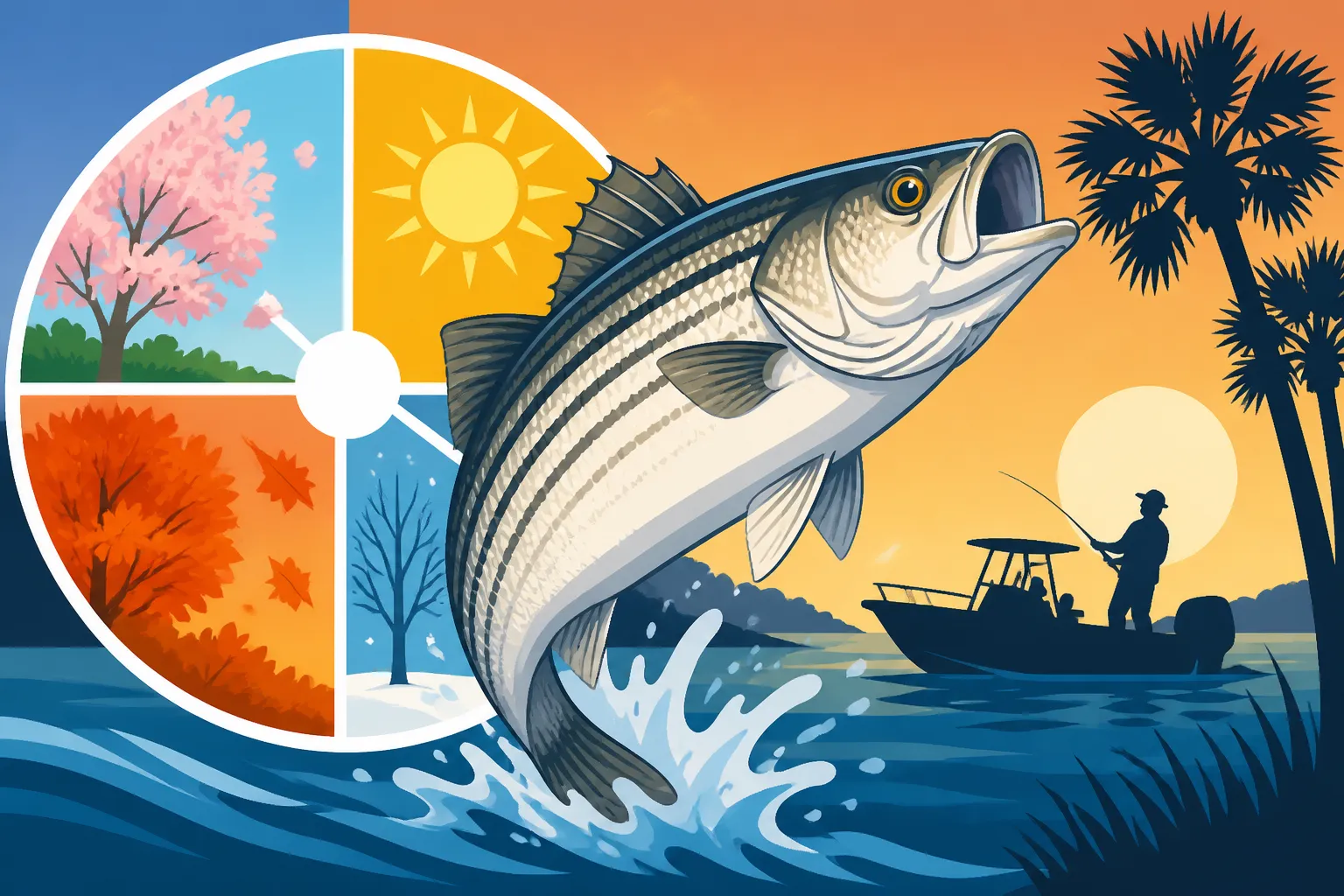
| Season | Hybrid Striper Behavior | Key Techniques | Best Time of Day | Overall Catchability |
|---|---|---|---|---|
| Spring | Highly active, feeding heavily, transitioning shallower | Topwater, crankbaits, jerkbaits, swimbaits, trolling | All day, especially morning/evening | Excellent |
| Summer | Retreats to deep, cool water during day; moves shallower at night | Vertical jigging, live bait (deep), night topwater, subsurface | Night, early morning, late evening | Good (with strategy) |
| Fall | Aggressive feeding frenzies, schooling, chasing bait | Topwater, spoons, swimbaits, trolling | All day, especially morning/evening | Excellent |
| Winter | Concentrates in deep, stable schools, slower metabolism | Vertical jigging (spoons, blade baits), live bait (deep) | Mid-day (stable conditions) | Good (with precision) |
While spring and fall often offer the most consistent and exciting action with aggressive surface feeding, don't discount the summer nights or the precise challenges of winter. Each season offers unique opportunities for the dedicated hybrid striper angler. Always consult local reports and conditions, as specific lake characteristics can also influence these patterns.
Essential Gear for Hybrid Striper Fishing
Having the right gear is crucial for tackling these hard-fighting fish. Hybrid stripers hit hard and pull even harder, so your tackle needs to be up to the task.
A medium-heavy to heavy action spinning or baitcasting rod, typically 7 to 7.5 feet long, paired with a reel spooled with 15-20 pound monofilament or 30-50 pound braided line, is a good starting point. You'll want a smooth drag system to handle their powerful runs. When it comes to lures, a diverse tackle box is your best friend. Include topwater plugs for those exhilarating surface bites, lipless crankbaits, jerkbaits, and swimbaits in shad patterns, along with heavy jigging spoons and blade baits for deep water. Don't forget a sturdy landing net! A good quality net with a long handle, like many available on Amazon, will make landing a thrashing hybrid much easier and safer for both you and the fish.
Having reliable electronics, particularly a good fish finder with down imaging or side imaging, will dramatically increase your success, especially when locating those deep-water schools. A GPS mapping system is also invaluable for marking productive spots and navigating safely. Remember, these fish are often on the move, so being able to cover water and accurately pinpoint schools is key.
Regulations and Conservation for Hybrid Striped Bass
Before you head out, it's absolutely vital to be familiar with South Carolina's fishing regulations for hybrid striped bass. Regulations are put in place to help conserve fish populations and ensure that future generations can enjoy the same great fishing experiences we do.
Always check the current South Carolina Department of Natural Resources (SCDNR) regulations, as they can change. Generally, there are specific bag limits and size restrictions for hybrid striped bass. These limits can vary from pure striped bass, so make sure you know the difference between the species if you plan to keep any fish. Understanding South Carolina Fishing Bag Limits Explained is essential.
Practicing catch and release is also a great way to contribute to conservation, especially for larger fish or if you've already met your limit. When releasing fish, handle them gently, minimize their time out of the water, and ensure they are revived before letting them go. Using barbless hooks can also make for an easier release. By adhering to regulations and practicing responsible angling, we can all help maintain the health and vitality of South Carolina's incredible hybrid striped bass fishery. South Carolina Fishing License Guide is also a crucial read before you even cast your first line.
Disclaimer
This article is for general informational purposes only and does not constitute professional advice. Laws, prices and regulations vary by location and change over time. Consult a qualified professional for guidance on your specific situation.