Best Bait for Flounder in Inshore Waters
Many anglers, myself included, have spent countless hours staring at the water, wondering why those cunning flounder aren't biting in our beautiful South Carolina inshore waters. It’s a common frustration – these flatfish are masters of disguise, often lying perfectly camouflaged on the bottom, making it a real challenge to present something they can't resist. This comprehensive guide will unravel the mystery of flounder feeding, exploring the best live baits and artificial lures, along with proven rigging techniques, to dramatically improve your chances of enticing those elusive doormats in our Lowcountry estuaries and tidal creeks.
Understanding Flounder Behavior and Feeding Habits
Before we even talk about bait, it’s crucial to understand the mindset of a flounder. These aren't actively chasing predators like a striped bass; they're more like opportunistic ambush hunters, masters of patience and camouflage. They lie in wait, perfectly blended with the sandy or muddy bottom, and spring into action only when a meal swims directly into their strike zone. Knowing this helps us choose and present our baits effectively.
The Art of Ambush Predation
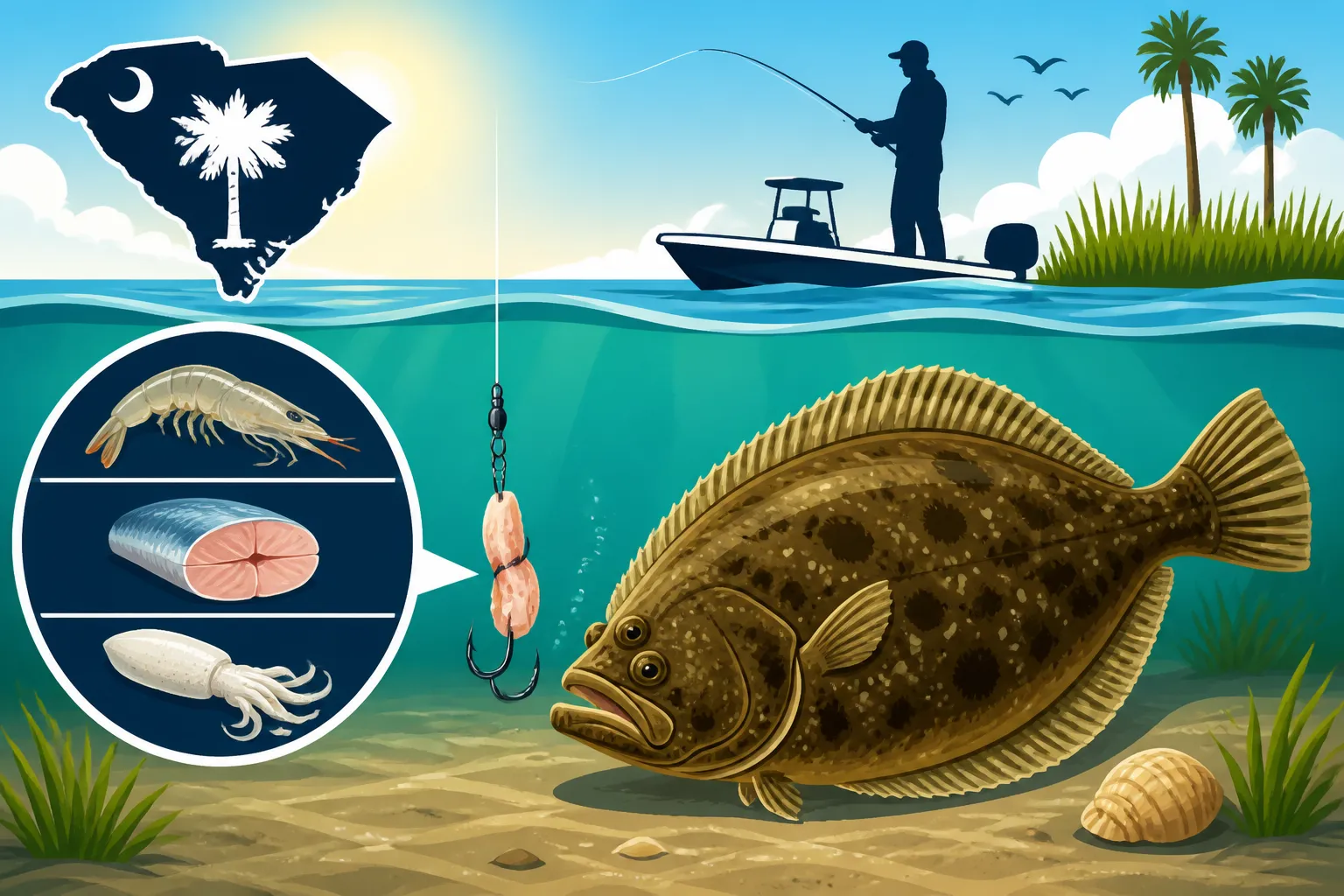
Flounder spend the vast majority of their time buried or partially buried in the substrate, with only their eyes protruding, scanning for movement. Their flat bodies and mottled coloration make them virtually invisible to unsuspecting prey – and anglers, for that matter! When a baitfish, shrimp, or crab ventures too close, the flounder erupts from the bottom with surprising speed, engulfing its prey in a swift, powerful gulp. This means your bait needs to be presented directly in front of them, often with a slow, deliberate movement, imitating a vulnerable creature. Simply casting out and letting it sit rarely works for flounder.
Their preferred ambush points are usually areas with some sort of structure or a current break. Think about points, oyster beds, the edges of grass lines, around docks, or even subtle depressions in the bottom. These spots offer cover and funnel baitfish past them. Paying attention to these subtle clues will significantly narrow down where you should be presenting your perfectly chosen bait.
How Tides Influence Flounder Feeding
Tides play an enormous role in flounder fishing in South Carolina's inshore waters. Flounder use tidal currents to their advantage, positioning themselves to intercept prey that is being swept along. On an incoming tide, they might sit at the mouth of a creek or along channel edges, waiting for baitfish to be carried in with the rising water. Conversely, on an outgoing tide, they often position themselves near oyster rakes, docks, or creek mouths where baitfish are flushed out of the shallows.
A moving tide, whether incoming or outgoing, is generally better than slack tide for flounder. The current concentrates bait and also gives the flounder a clear advantage in ambushing prey. Think about how the water moves around structures; flounder will typically face into the current, waiting for food to come to them. Understanding these Tide-Based Techniques for Inshore Fishing is paramount. Look for areas where the current creates eddies or choke points, as these are prime flounder real estate.
The Reign of Live Bait for Inshore Flounder
When it comes to consistently catching flounder, especially those larger "doormats," live bait is often considered king. Nothing quite matches the natural scent, vibration, and erratic movement of a live struggling baitfish or shrimp. Flounder, being ambush predators, are incredibly sensitive to these cues.
Mud Minnows and Finger Mullet: The Go-To Choices
If you ask any seasoned Lowcountry angler for their top flounder bait, mud minnows (often called "killifish") and finger mullet are almost always at the top of the list. These hardy baitfish are prevalent in South Carolina's inshore creeks and estuaries, making them a natural food source for flounder.
Mud minnows are fantastic because they are incredibly tough and can survive on a hook for a long time, even after being subjected to a flounder's initial strike. Their slow, wobbly swim is irresistible. Finger mullet, especially those in the 2-4 inch range, are another prime target. They emit strong scent trails and flash in the water, perfectly mimicking the flounder's natural prey. For larger flounder, a slightly bigger mullet might be more appealing. The key with these baits is to present them naturally, allowing them to swim and create those enticing vibrations without being too hindered by your rig.
Shrimp and Other Crustaceans
While mud minnows and mullet are excellent, live shrimp can also be incredibly effective, especially when flounder are feeding on crustaceans. Shrimp are a staple in the diet of many inshore species, and flounder are no exception. Their natural "flick" in the water as they swim or try to escape is a strong trigger for a waiting flounder.
Beyond shrimp, small fiddler crabs can also be a secret weapon in certain areas, particularly around oyster beds or marsh grass where crabs are abundant. These baits require a slightly more delicate presentation, as they aren't as hardy as a mud minnow. However, the natural scent of a live shrimp or crab is often enough to draw a flounder out from its hiding spot. Just be aware that other species like redfish and trout also love shrimp, so you might catch a variety of fish. For specific target species, see our guide on Redfish Fishing in South Carolina: Rules, Spots, and Tips.
Sourcing Your Live Bait
The freshest live bait is always the best. You can often buy live mud minnows and finger mullet at local bait shops throughout the South Carolina coast, from Murrells Inlet down to Hilton Head. These shops usually keep a good stock, especially during peak flounder season. If you're feeling adventurous, you can also catch your own. Small cast nets work wonders for finger mullet in shallow creeks, and minnow traps baited with a little bread can quickly fill a bucket with mud minnows.
Remember to keep your live bait healthy and lively. A good aerated bait bucket is essential, especially on warmer days. You can find excellent bait buckets and aerators on platforms like Amazon, making sure your precious bait stays frisky until it hits the water. Healthy bait means more action!
Enticing Flounder with Artificial Lures
While live bait often steals the show, artificial lures can be incredibly effective for flounder, especially once you understand their nuances. They offer the advantage of being readily available, durable, and allowing you to cover more water efficiently. Plus, there's a certain satisfaction that comes from fooling a fish on a lure you've chosen and worked yourself.
Soft Plastics: Mimicking Natural Prey
Soft plastic lures are incredibly versatile and can perfectly mimic a wide range of flounder prey. Paddle-tail swimbaits, jerk shads, and curly-tail grubs are all excellent choices. The key is to select colors that match the local baitfish or shrimp. Natural hues like "new penny," "chartreuse," "pearl," or "motor oil" are often highly effective in our South Carolina waters.
The retrieve is critical here. Remember that flounder are ambush predators. A slow, deliberate retrieve, often with a "drag-and-hop" motion along the bottom, is usually best. You want the lure to bounce and stir up a little sediment, mimicking a struggling baitfish or a shrimp trying to escape. Pairing these soft plastics with a light jig head allows for that perfect bottom-hugging presentation. Many anglers swear by brands like Z-Man or Gulp! for their durability and scent-infused options. You can easily stock up on a variety of colors and sizes of soft plastics on Amazon before your next trip.
Bucktail Jigs: The Classic Flounder Catcher
The bucktail jig is a timeless classic for flounder fishing, and for good reason. Its compact profile, combined with the pulsating action of the deer hair, is incredibly enticing. Bucktails can be fished naked or, even better, tipped with a small piece of bait like a mud minnow or a strip of Gulp! artificial bait for added scent and appeal.
Weights typically range from 1/4 oz to 1 oz, depending on the current and depth. Again, the retrieve is slow and methodical. A short hop or drag along the bottom, followed by a pause, is often the most productive technique. The jig creates a puff of sand or mud, which can pique a flounder's interest, making them think something is trying to bury itself. This makes bucktails especially effective around sandy bottoms or shell beds. They are a staple in any serious flounder angler's tackle box.
Hard Baits and Spoons for Aggressive Flounder
While less common than soft plastics or live bait, certain hard baits and spoons can also tempt flounder, particularly when they are in a more aggressive feeding mood or when you need to cover water quickly. Small crankbaits or lipless crankbaits that dive to the bottom can be effective when fished with a slow retrieve, allowing them to bump along the bottom.
Spoons, especially those with a fluttering action on the fall, can also trigger strikes. Cast them out, let them sink, and then retrieve with a slow, erratic motion, pausing occasionally to let them flutter. These lures are best suited for targeting flounder in slightly deeper channels or along expansive flats where you need to present a more visible target. For anglers looking to expand their tackle box, a quick search on Amazon will reveal a plethora of options in hard baits and spoons suitable for inshore fishing.
Here's a quick comparison of live vs. artificial baits for flounder:
| Feature | Live Bait (Mud Minnow, Mullet, Shrimp) | Artificial Lures (Soft Plastic, Bucktail) |
|---|---|---|
| Natural Appeal | High: Scent, vibration, live movement | Moderate to High: Mimics prey visually/action |
| Durability | Low: Needs frequent replacement | High: Reusable, resilient |
| Cost | Varies, can add up quickly | One-time purchase, can be economical |
| Availability | Bait shop or self-caught | Tackle shop, online retailers (e.g., Amazon) |
| Storage | Requires aerated bucket, care | Easy to store in tackle box |
| Effectiveness | Often superior for picky or larger fish | Excellent for covering water, active fish |
| Skill Level | Easier for beginners | Requires more finesse and retrieve practice |
Essential Rigging Techniques for Flounder Baits
The best bait in the world won't catch fish if it's not presented correctly. For flounder, your rigging technique is just as important as your bait choice. Since they are bottom dwellers, your rig needs to get the bait down to them and keep it there, while still allowing for natural movement.
The Carolina Rig: A Flounder Favorite
Without a doubt, the Carolina rig is the most popular and effective rig for flounder fishing in South Carolina. It’s simple, allows your bait to move naturally along the bottom, and gives the flounder time to engulf the bait before feeling resistance.
To tie a Carolina rig, you’ll need a main line (preferably braid for sensitivity), an egg sinker (1/2 oz to 1 oz, depending on current), a small swivel, a leader (18-24 inches of fluorocarbon, 15-20 lb test), and a hook (kahle or circle hook, size 1/0 to 3/0). First, slide your egg sinker onto your main line. Then, tie the main line to one end of the swivel. Tie your fluorocarbon leader to the other end of the swivel, and finally, tie your hook to the end of the leader. The weight slides freely on your main line, allowing the flounder to pick up the bait and move away slightly before feeling the resistance of the sinker, giving you a better hookset. This rig is especially good when using live bait like mud minnows or finger mullet, allowing them maximum freedom of movement.
Jig Head Presentations
When using soft plastics, jig heads are your best friend. They provide the weight to get your lure to the bottom and an integrated hook for easy rigging. Jig heads typically range from 1/4 oz to 3/4 oz, with a 3/8 oz or 1/2 oz being common in many inshore scenarios. The weight you choose depends on the depth and current. You want just enough weight to maintain bottom contact without snagging excessively or making the retrieve feel unnatural.
To rig, simply thread your soft plastic bait onto the jig head so it sits straight and natural on the hook shank. The hook point should emerge from the top of the soft plastic. The presentation is key: cast it out, let it sink to the bottom, and then use a slow, steady drag-and-hop retrieve. The jig head should intermittently tap the bottom, kicking up puffs of sediment. This perfectly mimics a wounded baitfish or a crab scurrying along the seabed. You can often find a wide variety of jig heads with different hook sizes and weights at your local tackle shop or conveniently through Amazon.
Specialized Rigs for Shallow Water
Sometimes, especially during higher tides when flounder push into very shallow creeks or grass flats, a standard Carolina rig might be too heavy or cause too many snags. In these scenarios, lighter, more specialized rigs come into play. A simple popping cork rig with a live shrimp or small mud minnow can be effective. The cork keeps your bait suspended just above the grass or shallow bottom, and the "pop" noise can attract attention.
Another option for extremely shallow water or very light current is a naked jig head with a soft plastic, or even a free-lined live bait with just a split shot or no weight at all. The goal is to present the bait as naturally and quietly as possible. Fishing these shallow areas often requires stealth and a keen eye to spot flounder laying in sandy depressions or along the edges of oyster shells. Knowing the Best Flounder Fishing Spots Along the South Carolina Coast can certainly help you decide which rig is most appropriate for the environment.
Remember that patience is a virtue when flounder fishing. They aren't aggressive strikers, and often you'll feel a subtle thump or just a sudden heaviness on your line. Give them a moment to fully ingest the bait before setting the hook. Always be prepared, check the South Carolina Flounder Fishing Regulations Explained before you head out, and enjoy the thrill of targeting these fascinating flatfish!
Disclaimer
This article is for general informational purposes only and does not constitute professional advice. Laws, prices and regulations vary by location and change over time. Consult a qualified professional for guidance on your specific situation.