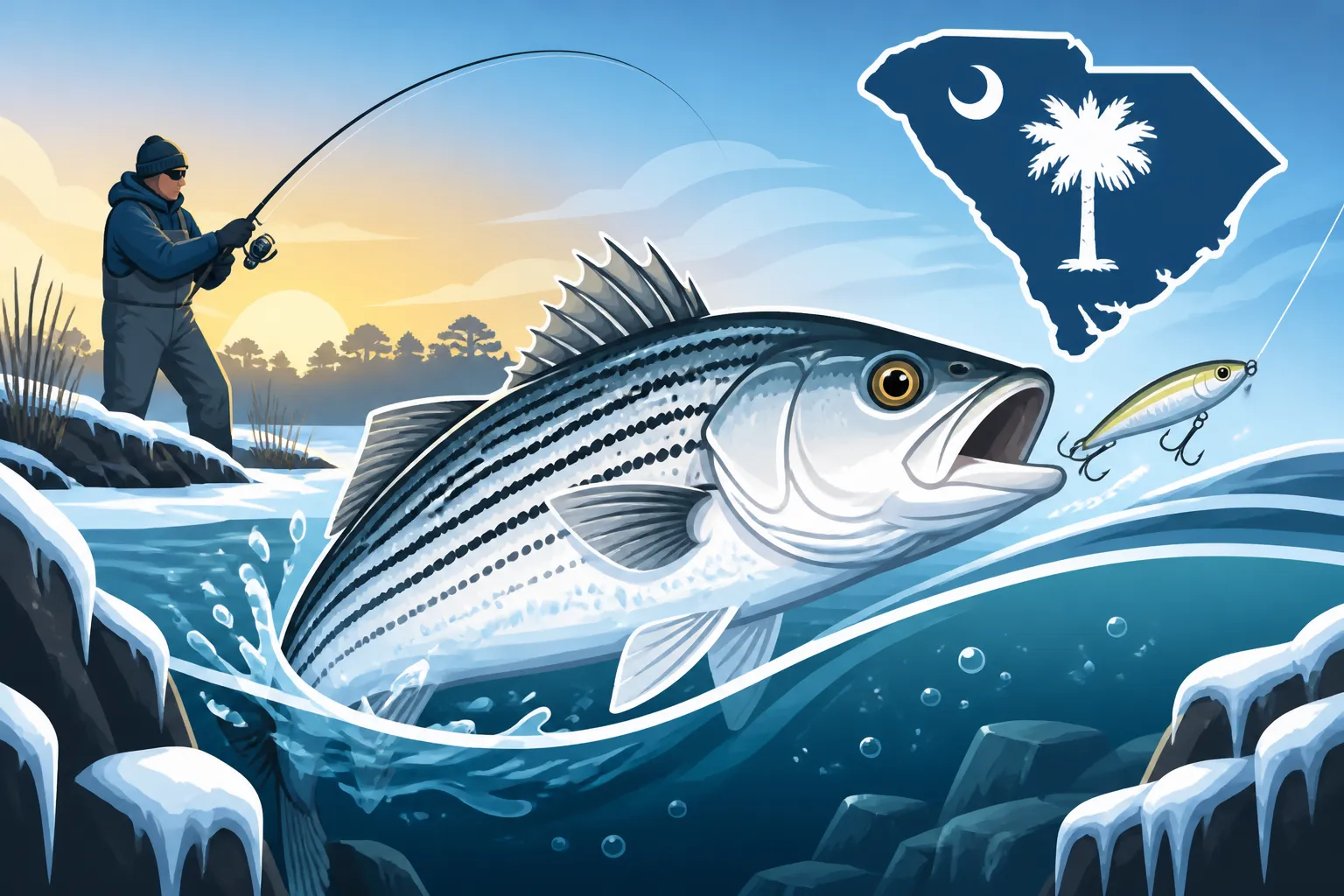
How to Catch Striped Bass in Cold Water
When the chill sets in across South Carolina, many anglers pack away their gear, convinced that the striped bass have simply vanished until warmer days. But for those who brave the colder months, a rewarding challenge awaits. Striped bass are still out there, and with the right approach, you can experience some incredible fishing. This guide will dive deep into understanding how these powerful fish behave in cold water and the best strategies to coax them onto your line.
Understanding Striped Bass Behavior in Cold Water
Fishing for striped bass in cold water isn't just about bundling up; it's about fundamentally understanding how these magnificent fish adapt to lower temperatures. Their entire world slows down, and so must our approach to catching them. It's a game of patience and precision, where every detail matters.
Metabolic Slowdown and Energy Conservation
Think about how you feel on a cold winter day – you probably don't want to run a marathon, right? Striped bass are similar. As water temperatures drop, their metabolism slows down significantly. This means they don't need to eat as often, and when they do feed, they're looking for the most efficient meal possible. They're conserving energy, so they won't expend a lot chasing down a fast-moving bait. This metabolic shift is crucial to grasp because it dictates everything from your retrieve speed to your bait choice.
They become less active, often schooling tightly and holding in deeper, more stable water. Finding these aggregations is key. Instead of widespread roaming, they'll congregate in specific areas where conditions are favorable. It’s like they're huddling together for warmth, and when you find one, you often find many. This tight schooling behavior can lead to incredible days once you pinpoint their location. This also means you might spend more time searching, but the payoff can be huge when you hit the jackpot. You'll want to review Striped Bass Winter Fishing Patterns in Freshwater Lakes to get a broader understanding of these habits.
Depth and Location Preferences
In cold water, striped bass seek thermal refuge. This typically means deeper water, which maintains a more stable temperature than the surface. They're not always on the bottom, but they'll often be suspended at specific depths where the water temperature is most comfortable for them – usually in the mid-to-upper 40s or low 50s Fahrenheit. Structure is still king, but now it's deep structure: submerged humps, creek channels, river bends, and points that drop off into significant depths. They will also orient themselves to vertical structures like bridge pilings or deep timber.
You might find them congregating in the deeper sections of major lake channels, especially near points or humps that offer a quick transition to shallower feeding grounds if a warm spell briefly moves baitfish up. On the other hand, if a prolonged cold snap hits, they might move even deeper, becoming incredibly lethargic. It's not uncommon to find them suspended 30 to 50 feet down in 60 to 100 feet of water, often directly over the old river channel or a prominent contour line. This search for stable temperatures makes a good fish finder indispensable. Learning about South Carolina's Best Striped Bass Waters can help identify prime deepwater locations.
Baitfish Movement and Foraging Habits
Striped bass are predators, and their movements are heavily influenced by their prey. In cold water, baitfish like gizzard shad, threadfin shad, and herring also become sluggish and often school tightly in deeper, warmer pockets of water. Find the bait, and you'll often find the stripers. Striped bass will follow these bait schools, making localized movements even within their deep-water sanctuaries. They're opportunistic feeders, and while their metabolism is slow, they won't pass up an easy meal.
This means your bait presentation needs to mimic a vulnerable, slow-moving or dying baitfish. Forget fast retrieves or erratic movements; think subtle twitches, slow lifts, and long pauses. The stripers aren't going to chase; they're going to ambush. If you can present a meal right in front of their nose that requires minimal effort to consume, you're in business. Sometimes, finding a major school of bait on your sonar will lead you directly to the stripers feeding underneath or alongside them. Understanding Best Bait for Striped Bass in Freshwater Lakes can further inform your choices.
Essential Gear and Bait for Cold Water Stripers
When the water turns cold, your gear choices become even more critical. You're dealing with sluggish fish that require subtle presentations, and biting cold weather that demands robust, reliable equipment. Skimping on quality here can mean the difference between a successful day and a frustrating one.
Rods, Reels, and Line Choices
For cold water striped bass, you'll generally want medium-heavy to heavy action rods, around 7 to 7.5 feet long. These provide the backbone needed to handle powerful stripers but still offer enough sensitivity to detect subtle cold-water bites. A good graphite rod will transmit those faint taps much better than a fiberglass one. You'll often be using jigs, spoons, or heavy baits, so a rod with a fast tip will help with casting distance and quick hook sets.
Pair your rod with a baitcasting reel that has a smooth drag system and a good line capacity. Look for reels with metal frames for durability and better cold-weather performance compared to plastic. A high gear ratio isn't as critical as in warmer months when you're burning baits, but a reliable retrieve is still important. For line, fluorocarbon is often the unsung hero of cold water fishing. Its low stretch provides excellent sensitivity, and its near-invisibility underwater is a huge advantage when fish are wary. A main line of 15-20 lb test fluorocarbon or braided line with a fluorocarbon leader (20-30 lb test) is a common setup. The reduced stretch of braid enhances sensitivity, which is vital for detecting light bites in deep water. You can find durable fluorocarbon and braided lines from reputable brands on Amazon, ensuring you get the quality needed for challenging conditions.
Lures and Artificial Baits
Artificial lures are incredibly effective for cold water stripers, especially when they're schooled up. The key is to select lures that can be presented slowly and effectively at depth.
- Vertical Jigs: Heavy spoons (like War Eagles or Hopkins) or jigging spoons are absolute killers. Drop them directly over schools of fish you mark on your sonar. A slow lift-and-drop motion, mimicking a dying baitfish, is often irresistible. Experiment with different sizes and weights to match the depth and current.
- Soft Plastics: Large swimbaits (5-8 inches) on heavy jig heads (3/4 to 2 oz) can be deadly. Choose natural colors like white, pearl, or shad patterns. Work them slowly, bouncing them along the bottom or retrieving them just above marked fish. Grubs or flukes on lighter jig heads can also work for suspended fish.
- Blade Baits: These compact, vibrating lures can be dropped and retrieved slowly, offering a lot of flash and vibration even with minimal movement. They're great for triggering reaction strikes from lethargic stripers.
- Hair Jigs: Often overlooked, large bucktail jigs with a slow fall can be incredibly effective. The subtle undulation of the hair drives stripers crazy. Tip them with a piece of cut bait or a soft plastic trailer for added scent and bulk.
Remember, the retrieve speed is paramount. Slow down, then slow down some more. A methodical, deliberate presentation will almost always outperform a fast, aggressive one in cold water.
Live Bait Options
While artificial lures are excellent, live bait often reigns supreme, particularly when stripers are extremely lethargic or picky. If you can get your hands on fresh bait, it significantly increases your chances.
- Shad (Gizzard & Threadfin): These are prime forage for South Carolina stripers. Presenting them on a Carolina rig or a three-way swivel rig is effective. Allow the live bait to swim naturally near the bottom or at the depth where you're marking fish. They provide the natural scent and movement that can trigger a strike when nothing else will.
- Herring: If available, live herring are another excellent choice, especially on larger lakes where stripers are accustomed to them.
- Minnows/Shiners: Smaller live baits can work too, especially if the stripers are keying in on smaller forage.
- Cut Bait: Don't underestimate cut bait, particularly for larger, more sluggish stripers. A fresh chunk of shad or herring on a Carolina rig can be very appealing, as the scent trail draws fish in.
When using live bait, use just enough weight to get your bait to the desired depth, allowing it to swim as naturally as possible. In cold water, sometimes the subtle struggles of a live bait are the only thing that will entice a bite. You might want to explore specific patterns in Striped Bass Winter Fishing Patterns in Freshwater Lakes.
Top Techniques for Winter Striped Bass Fishing
Catching striped bass in cold water requires a shift in your usual fishing techniques. It's less about power and speed, and more about finesse, patience, and understanding the subtle cues the fish give you.
Vertical Jigging
This is arguably one of the most effective techniques for cold water stripers, especially when you've located schools on your fish finder. The concept is simple: drop a heavy spoon, blade bait, or jig directly down to the depth of the fish.
Once your lure reaches the desired depth, engage in a slow, deliberate lift-and-drop motion. Think of it as a gentle jig, not a violent jerk. Lift the rod tip 1-2 feet, then slowly let it fall back, keeping a semi-taut line to feel for strikes on the drop. Many times, a striper will hit the lure as it falls. Pay close attention to your line; any unnatural slack, twitch, or sudden weight could indicate a bite. Sometimes, the bite will be so subtle it feels like your lure just got a little heavier. It's crucial to use your sonar to stay directly over the fish. If they move, you move. A quality jigging spoon can be a game-changer here, and you can find a wide variety of effective ones on Amazon, ready for your next trip. This technique is also excellent for Lake Murray Summer Striped Bass Techniques in South Carolina, although the depth and speed might vary.
Slow Trolling
Trolling can be incredibly effective for covering water and locating scattered schools of stripers, or for enticing a strike from less active fish. In cold water, "slow" is the operative word. Use umbrella rigs, deep-diving crankbaits, or even live bait on planer boards or downriggers.
When trolling, aim for speeds typically between 0.8 to 2.0 miles per hour, sometimes even slower. This allows your baits to swim with a natural, less aggressive action, which is what lethargic stripers prefer. If using umbrella rigs, equip them with soft plastic swimbaits or small bucktail jigs. For deep-diving crankbaits, choose models that can reach the depth where you're marking fish. Downriggers are invaluable for precisely presenting baits at specific depths. Monitor your fish finder constantly and adjust your trolling depth and speed based on what you're seeing. If you mark fish at 40 feet, make sure your baits are running at or just above that depth. Sometimes, a subtle turn of the boat or a brief pause can trigger a strike from following fish.
Live Bait Presentation (Anchored or Drifting)
Live bait is often the ultimate cold water weapon, providing scent and natural movement that artificials can't fully replicate. There are a couple of primary ways to present it effectively.
- Anchored: If you've found a specific piece of deep structure, like a hump or channel edge, anchoring up can be highly effective. Use a Carolina rig with a circle hook, presenting a lively shad or herring near the bottom or suspended at the striper's depth. The natural struggles of the live bait in one spot can be irresistible to nearby stripers. Remember to use minimal weight to keep the bait lively.
- Drifting: On larger bodies of water, drifting with the current or wind can cover a lot of ground, especially if fish are somewhat spread out. Use a similar Carolina rig setup, but vary your weights to keep baits at different depths as you drift. This allows you to explore the water column. If you start getting bites at a particular depth, you can adjust your other baits accordingly. Pay attention to how your boat is drifting over underwater contours, as this can often reveal patterns in where the fish are holding. This is also a fantastic method for Striped Bass Fishing on Lake Murray, South Carolina, where large areas can be drifted.
| Technique | Lure/Bait Type | Best Conditions | Retrieve/Presentation Speed | Key Benefit |
|---|---|---|---|---|
| Vertical Jigging | Heavy Spoons, Blade Baits, Jigging Spoons, Soft Plastics on Jig Heads | Fish schooled and marked on sonar, deeper water | Slow lift-and-drop, subtle twitches | Triggers reaction bites, precise depth control |
| Slow Trolling | Umbrella Rigs, Deep-Diving Crankbaits, Live Bait on Downriggers | Covering water, locating scattered fish, specific depth targeting | 0.8 – 2.0 MPH, often slower | Covers large areas, consistent depth control |
| Live Bait (Anchored) | Live Shad, Herring, Shiners | Fish concentrated on specific structure, very lethargic | Natural movement, minimal retrieve | Natural scent and action, high appeal |
| Live Bait (Drifting) | Live Shad, Herring, Shiners | Fish somewhat scattered, covering broader areas passively | Natural movement, current/wind dictated | Explores water column, passive search |
Navigating South Carolina's Best Cold Water Striper Spots
South Carolina is blessed with several fantastic striped bass fisheries, and many of them offer incredible opportunities even in the dead of winter. Knowing where to go and what to look for in these specific locations will greatly increase your chances of success.
Lake Murray
Lake Murray is legendary for its striped bass, and winter fishing here can be truly exceptional. The stripers on Lake Murray are known for schooling up in the colder months, often in deep water over the old Saluda River channel or around prominent humps and points that drop off quickly into deeper sections. Look for areas like Dreher Island's submerged humps or the channels leading into the dam area. The lower end of the lake, being deeper, often holds more consistent populations of winter stripers.
Anglers here often employ vertical jigging with heavy spoons or fishing live bait (blueback herring or gizzard shad are common) on downlines or freelines directly over marked schools. Pay close attention to temperature breaks, even subtle ones, as stripers will gravitate towards slightly warmer water pockets. Night fishing can also be productive, especially around bridge lights or areas with deep cover where baitfish congregate. Remember, patience is key, and once you find them, the action can be fast and furious. Anchoring the Submerged Humps Near Dreher Island for Stripers is a great strategy to consider.
Santee Cooper Lakes (Marion & Moultrie)
The Santee Cooper system, comprising Lake Marion and Lake Moultrie, is another powerhouse for striped bass. While both lakes hold stripers, Lake Moultrie often gets more attention in winter due to its deeper average depths and stronger current patterns, especially near the Diversion Canal. Stripers in Santee Cooper will often follow the major creek and river channels in these lakes.
During colder periods, target the deep bends in the river channels, the areas around the Pinopolis Dam in Lake Moultrie, and the deeper areas of the Diversion Canal itself. Live bait is extremely popular here, with anglers slow-trolling or drifting gizzard shad or herring. Keep an eye out for birds diving, which can indicate schools of baitfish being pushed to the surface by stripers, though this is less common in the coldest parts of winter. Look for subtle humps or drop-offs that lead into deeper water, as these are prime ambush points. These lakes are also known for their trophy catfish, so don't be surprised if you hook into something different while chasing stripers. Understanding Striped Bass Winter Fishing Patterns in Freshwater Lakes is particularly useful here.
Coastal Rivers and Estuaries
While much of the focus is on the large reservoirs, South Carolina's coastal rivers and estuaries can also offer fantastic cold water striped bass fishing, particularly for resident populations that don't migrate far offshore. Rivers like the Cooper, Santee, and Waccamaw, especially their brackish sections, can hold healthy numbers of stripers. These fish are often more localized and may be found further upstream in the fresher water sections when coastal waters cool significantly.
In these river systems, look for deeper holes, abrupt channel bends, and areas around structure like bridge pilings, docks, or submerged timber. These provide current breaks and ambush points. Tides play a critical role here; often, the fish will position themselves on the upstream or downstream side of structure, out of the main current. Vertical jigging with bucktail jigs or soft plastics, or fishing live mud minnows or shrimp on a Carolina rig, can be very effective. Casting swimbaits along seawalls or deep banks can also draw strikes. Remember that regulations for saltwater vs. freshwater striped bass can differ, so always be sure to check local rules before heading out. Sometimes, these river systems offer a unique opportunity to catch both freshwater and anadromous populations. Make sure to check Best Time to Catch Striped Bass on South Carolina's Rivers for more details.
Safety Considerations for Cold Weather Fishing
Fishing in cold water can be incredibly rewarding, but it also comes with inherent risks. Your safety, and the safety of anyone fishing with you, should always be your top priority. Preparing for the elements isn't just about comfort; it's about survival.
Dressing in Layers and Hypothermia Prevention
The most critical aspect of cold weather fishing safety is dressing appropriately. Layering is your best friend. Start with a moisture-wicking base layer (synthetics or wool, never cotton) to pull sweat away from your body. Add an insulating middle layer, such as fleece or down, for warmth. Finish with a waterproof and windproof outer shell to protect against rain, spray, and biting winds. Don't forget extremities: a warm hat (you lose a lot of heat through your head), insulated gloves, and waterproof, insulated boots are essential.
Hypothermia can set in quickly, even on days that don't feel "that cold," especially if you get wet. Symptoms include shivering, confusion, slurred speech, and loss of coordination. If you or a fishing buddy show signs, get warm immediately, change into dry clothes, and seek medical attention if severe. Always bring extra dry clothes in a waterproof bag, just in case.
Boat Safety and Emergency Preparedness
If you're fishing from a boat, cold water adds another layer of risk. Cold water immersion can lead to incapacitation within minutes. Always wear a life vest, even if you're a strong swimmer. Modern inflatable life vests are comfortable and won't hinder your casting.
Ensure your boat's safety equipment is in top condition: working navigation lights, a fully charged battery, a reliable bilge pump, and emergency signaling devices (flares, whistle, air horn). Tell someone where you're going and when you expect to return. Carry a fully charged cell phone in a waterproof case, but also have a backup communication method. A marine radio is a good idea. Consider a marine GPS or chart plotter, especially if fog rolls in, which is common in cold weather. It's also wise to carry a spare prop, tools, and extra fuel. You can find essential boating safety gear easily on Amazon, which can be a lifesaver in unexpected situations.
Staying Hydrated and Fueled
It might seem counterintuitive, but staying hydrated in cold weather is just as important as in warm weather. You're still expending energy, and the dry winter air can dehydrate you. Bring plenty of water or a warm thermos of tea or coffee. Avoid excessive alcohol consumption, as it can impair judgment and accelerate heat loss.
Fueling your body with high-energy snacks is also crucial. Your body burns more calories to stay warm, so bring calorie-dense foods like trail mix, energy bars, sandwiches, or fruit. Regular small meals will help maintain your core body temperature and keep your energy levels up. A well-nourished and hydrated angler is a safer, more alert, and ultimately more successful angler.
Disclaimer
This article is for general informational purposes only and does not constitute professional advice. Laws, prices and regulations vary by location and change over time. Consult a qualified professional for guidance on your specific situation.