Redeye Bass vs Spotted Bass: Key Differences
It can be incredibly frustrating when you're out on a beautiful South Carolina river or lake, you land a feisty bass, and then you're left scratching your head, wondering exactly which species it is. Telling the difference between a redeye bass and a spotted bass can be tricky for many anglers because they share similar appearances and often overlap in habitat. This guide will help you confidently identify the key distinctions between these two fantastic fighting fish, making your time on the water more informed and enjoyable.
The Elusive Redeye Bass: A South Carolina Mountain Dweller
The redeye bass, often affectionately called the "Coosa bass" in other regions, is a true gem of South Carolina's pristine mountain waters. While not as widespread as some other bass species, finding and identifying a redeye is a special treat for any angler who ventures into the state's northwestern reaches.
Physical Traits of the Redeye Bass
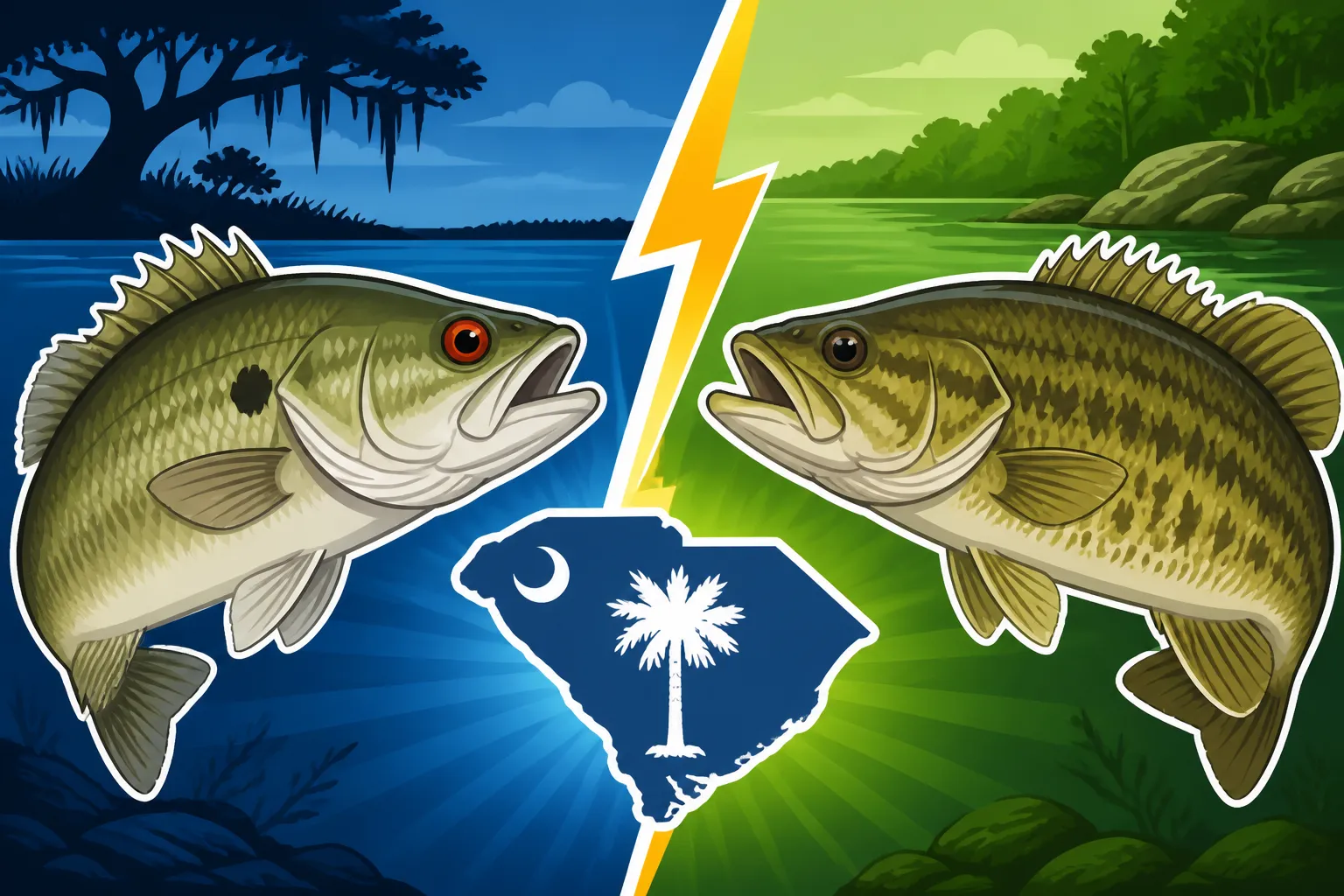
When you reel in a redeye bass, the first thing you might notice, true to its name, is its distinctive reddish-orange eye. This isn't always a super bright, fiery red, but it’s definitely a noticeable tint compared to the more subdued eyes of other bass. These fish typically have a slender, torpedo-shaped body, perfectly adapted for life in flowing streams and rivers. Their coloration tends to be olive green to bronze on the back, fading to lighter flanks and a white belly.
Unlike some of their cousins, redeye bass usually lack the prominent dark lateral line that runs down the side. Instead, they often have a series of blotchy, dark spots along their sides, which can sometimes be subtle. One very important identification clue is their mouth: when closed, the upper jaw of a redeye bass typically extends only to the middle of the eye, or not much beyond it. This is a crucial detail we’ll compare to the spotted bass later. Another subtle but important detail is the lack of a tooth patch on their tongue, which is a key differentiator for the spotted bass. In terms of size, redeye bass are generally smaller than largemouths, often topping out at around 1 to 2 pounds, though larger specimens are certainly caught.
Where to Find Redeye Bass in South Carolina
In South Carolina, redeye bass are almost exclusively found in the clear, cool, flowing waters of the upper Piedmont and mountainous regions. Think of the rivers and tributaries that feed into major systems in the Upstate, like the Savannah River basin or the Saluda River headwaters. They thrive in rocky, well-oxygenated streams with plenty of current and cover, such as fallen logs, boulders, and undercut banks. You won't typically find redeye bass in the vast, murky reservoirs of the midlands or coastal plain; they prefer those classic mountain stream environments. If you're exploring the more remote areas of the Blue Ridge foothills, especially streams that are also home to trout, you're in prime redeye territory. For those looking for specific locations, checking out detailed guides on Where to Catch Redeye Bass in South Carolina's Mountain Streams can provide excellent starting points.
Redeye Bass Behavior and Diet
Redeye bass are ambush predators, perfectly at home in the current. They'll often station themselves behind rocks or submerged timber, waiting for an unsuspecting meal to drift by. Their diet primarily consists of insects, small crustaceans, and smaller baitfish that inhabit their clear-water environment. Anglers targeting redeyes often find success with small spinnerbaits, inline spinners, or even fly fishing gear that mimics these natural food sources. Because they live in smaller, often shallower streams, they tend to be quite sensitive to water quality and habitat changes. They're strong fighters for their size, providing a thrilling challenge on light tackle, which is why many anglers, once they discover them, become dedicated redeye enthusiasts. They're a truly unique part of South Carolina Freshwater Fish Species Worth Targeting.
The Versatile Spotted Bass: More Widespread in the Palmetto State
The spotted bass is far more widespread and adaptable across South Carolina than its redeye cousin. While it shares some visual similarities with both the redeye and largemouth bass, the spotted bass has its own distinct characteristics and habits that make it a favorite target for many anglers throughout the state.
Identifying Characteristics of the Spotted Bass
At first glance, a spotted bass can look a lot like a largemouth, but there are crucial differences. Spotted bass get their name from the distinct rows of dark spots below the lateral line, forming a series of small, broken dashes or blotches. These spots are usually much more pronounced than the subtle markings you might see on a redeye. Their overall body color is typically green to brown on the back, fading to lighter sides and a white belly.
The mouth is a key differentiator. When a spotted bass's mouth is closed, its upper jaw extends well past the middle of the eye, but generally not beyond the back of the eye, setting it apart from the often longer-jawed largemouth. This subtle difference is often the first thing experienced anglers check. Another critical identifying feature, one that's a dead giveaway for a spotted bass and absent in redeye bass (and largemouths), is a patch of teeth on its tongue. If you gently feel the tongue of a bass you've caught, and it feels rough like sandpaper, you've likely got a spotted bass. This little detail, often overlooked by beginners, is a definite identifier. You can find excellent visual guides and learn more about Spotted Bass Identification and Where to Find Them in South Carolina.
Spotted Bass Habitats Across South Carolina
Unlike the redeye's preference for pristine mountain streams, spotted bass are much more adaptable. You'll find them thriving in a wide range of South Carolina's freshwater environments, from larger rivers and creeks to many of our major reservoirs like Lake Hartwell, Lake Keowee, and Lake Murray. They prefer areas with some current but are also comfortable in impoundments, especially around rocky points, deep humps, submerged timber, and bridge pilings. They tend to hang out deeper than largemouth bass in many lakes, seeking out cooler, more oxygenated water during warmer months. This wider distribution means that many more South Carolina anglers will encounter spotted bass regularly. For a deeper dive into their locations, consider reading Where Are Spotted Bass Found in South Carolina?.
Spotted Bass Feeding Habits and Aggression
Spotted bass are opportunistic and aggressive feeders, making them a blast to catch. Their diet is quite varied, including shad, crawfish, insects, and smaller fish. They are known for their strong strikes and powerful fights, often diving deep and using structure to their advantage. This makes them a popular target for anglers using a variety of techniques, from crankbaits and jigs to soft plastics. Because they often school and hold to deep structure, techniques like drop-shotting or jigging spoons can be very effective. If you're looking for specific lure recommendations, you might explore articles like Best Lures for Spotted Bass in Rocky Lakes. Many anglers appreciate the spotted bass because, pound for pound, they often outfight their largemouth cousins and are readily available in many parts of the state.
Key Distinctions: Redeye vs. Spotted Bass Side-by-Side
While both are "black bass" species and share some general characteristics, understanding the specific differences between redeye and spotted bass is crucial for accurate identification and for becoming a more effective angler.
Mouth Size and Jawline Differences
This is arguably the most reliable visual clue when you have one of these fish in hand. Take a close look at the mouth:
- Redeye Bass: The upper jaw (maxilla) extends back only to about the middle of the eye, or sometimes just slightly beyond it, when the mouth is closed. It's a noticeably shorter jaw compared to a spotted bass.
- Spotted Bass: The upper jaw extends back past the middle of the eye, often to about the back edge of the eye, but generally not beyond the entire eye. This is longer than a redeye but typically shorter than a largemouth bass.
This distinction takes a little practice to eyeball correctly, but once you get the hang of it, it becomes second nature. It's a quick field check that can save you from misidentification.
Dorsal Fin and Lateral Line Markings
Subtle markings can tell a big story, especially on these similar-looking bass.
- Redeye Bass: These fish tend to have a more uniform olive-green to bronze color. While they might have some faint blotches or spots, they generally lack a distinct dark lateral line running down their side, or it will be very broken and indistinct. The soft dorsal fin and caudal fin often have a reddish tint, especially on the edges.
- Spotted Bass: The spotted bass, true to its name, has very clear, often distinct rows of dark spots or small, broken horizontal lines along its lower sides, below the main lateral line. This is a key visual identifier. The lateral line itself is usually fairly continuous, though it might be a bit wavy. Their fins typically lack the reddish tint seen on redeyes.
Remember to also check for that tooth patch on the tongue of the spotted bass – it's an absolute confirmation if present!
Geographic Distribution in South Carolina
Location, location, location! Where you catch the fish can give you a huge hint.
- Redeye Bass: Confined almost exclusively to the upper Piedmont and mountainous regions of South Carolina. If you're fishing a small, clear, rocky stream with good current in the Upstate mountains, and you catch a bass with a short jaw and a reddish eye, it's very likely a redeye. These are the same kinds of waters where you might find Native Brook Trout Streams in South Carolina's Blue Ridge Mountains.
- Spotted Bass: Much more broadly distributed throughout South Carolina. You'll find them in large impoundments (like the bigger lakes) and larger rivers across the Piedmont and occasionally even further south where suitable habitat exists. If you're fishing a deep, rocky lake or a significant river in the central or western part of the state and catch a bass with a toothy tongue and distinct spots, it's almost certainly a spotted bass.
Here's a quick comparison table to help you keep these distinctions straight:
| Feature | Redeye Bass (Coosa Bass) | Spotted Bass |
|---|---|---|
| Eye Color | Distinctive reddish-orange tint | Typically standard dark or yellowish eye |
| Jaw Length | Upper jaw ends at or slightly before middle of eye | Upper jaw extends to or past middle of eye, but not beyond back edge of eye |
| Tongue Patch | No tooth patch on tongue (smooth) | Distinct tooth patch on tongue (rough like sandpaper) |
| Lateral Markings | Faint, blotchy spots; indistinct or absent lateral line | Distinct rows of dark spots below a generally continuous lateral line |
| Habitat in SC | Clear, cool, rocky, flowing mountain streams (Upstate) | Rivers, creeks, and larger reservoirs (widespread across Piedmont/Midlands) |
| Average Size | Generally smaller (1-2 lbs typical) | Can grow larger than redeyes (2-4 lbs common, larger possible) |
Why Knowing the Difference Matters for Anglers
Beyond simply satisfying your curiosity, correctly identifying the bass species you catch in South Carolina holds practical value for your fishing success and adherence to regulations.
Fishing Regulations and Bag Limits
While specific regulations can sometimes group all "black bass" together, it's always smart practice to know precisely what you've caught. Bag limits and size restrictions can vary by species or even by specific water body. For example, some mountain streams might have different rules for certain species or might be catch-and-release only for particular game fish. While largemouth, smallmouth, and spotted bass are often regulated similarly as "black bass" in South Carolina, the redeye bass, being more restricted in its native range, might sometimes fall under more localized rules, especially if there's a conservation effort for its habitat. Always consult the most current South Carolina Department of Natural Resources (SCDNR) regulations before heading out, perhaps by looking for resources like the South Carolina Fishing License Guide or specific lake regulations.
Understanding the distinctions also helps you appreciate the biodiversity of South Carolina's waters. If you're unsure, it's always best to err on the side of caution and release a fish you can't confidently identify, especially if it's caught in a sensitive ecological area. Educational resources, like those found on sites like Amazon, can provide portable, waterproof fish identification charts that are perfect for quick field reference.
Tailoring Your Techniques for Each Species
Knowing whether you're targeting redeye or spotted bass will significantly influence your fishing approach. Their preferred habitats are quite different, and successful anglers adapt their gear and techniques accordingly.
For Redeye Bass, because they inhabit smaller, faster-flowing streams, lighter tackle is usually the order of the day. Think ultralight spinning gear with 4-6 pound test line, or even fly fishing setups. Small lures like inline spinners (Mepps, Panther Martin, Rooster Tail) in sizes #0 to #2, or small crankbaits that mimic minnows, are highly effective. Flies like woolly buggers, streamers, or nymph patterns can also work wonders. You'll want to focus on casting into pockets of slower water behind boulders, fallen trees, or along undercut banks, allowing your lure to drift naturally with the current. This style of fishing is often more about finesse and stealth.
For Spotted Bass, given their presence in larger rivers and deeper lakes, you'll often use more conventional bass fishing gear. Medium-light to medium-heavy spinning or baitcasting setups with 8-12 pound test line are common. Spotted bass respond well to a wide array of lures, including jigs (especially shaky head jigs or football jigs for rocky bottoms), drop-shot rigs with small worms, small crankbaits, spinnerbaits, and even topwater lures during low-light conditions. Focus your efforts around deep structure like points, humps, ledges, and submerged timber. They're often found deeper than largemouths, so presentations that get down to them are key. For instance, many anglers will stock up on a variety of jigs and soft plastics, easily found on Amazon, to tackle these deeper-dwelling bass. Knowing your target fish means you can select the right lures and present them in the most effective way for their specific environment.
Ultimately, becoming proficient at telling the difference between a redeye bass and a spotted bass makes you a more knowledgeable and versatile angler. It helps you appreciate the nuanced beauty of South Carolina's diverse fisheries and ensures you're fishing smart and responsibly. Happy fishing!
Disclaimer
This article is for general informational purposes only and does not constitute professional advice. Laws, prices and regulations vary by location and change over time. Consult a qualified professional for guidance on your specific situation.