The Best Lakes for Fishing in South Carolina
Figuring out where to cast your line in South Carolina can feel like trying to choose a single grain of sand on one of our beautiful beaches – there are just so many incredible options! Whether you're a seasoned angler chasing trophy fish or a family looking for a relaxing day on the water, the sheer number of lakes, each with its own personality and bounty, can be overwhelming. This comprehensive guide is here to cut through the confusion, highlighting the very best lakes in the Palmetto State for an unforgettable fishing experience.
Why South Carolina's Lakes Are a Fishing Paradise
South Carolina isn't just known for its stunning coastline and historic cities; it's a bonafide freshwater fishing mecca. Our state is blessed with an abundance of large, diverse lakes, many of which are reservoirs created by damming major rivers. These man-made impoundments have matured into incredibly rich ecosystems, supporting thriving populations of game fish that draw anglers from across the country. From the cool, clear waters of the Upstate to the vast, cypress-studded expanses of the Lowcountry, there's a unique fishing adventure waiting around every bend.
Diverse Habitats for Every Angler
What truly sets South Carolina's lakes apart is their incredible variety of habitats. You're not just fishing in a giant bowl of water; these lakes are intricate underwater landscapes. You'll find everything from deep, rocky points and submerged timber to expansive grass flats, shallow stump fields, and meandering creek channels. This diversity means that no matter your preferred fishing style – whether you're throwing a topwater frog over hydrilla, jigging a spoon in 60 feet of water, or simply drowning a worm under a bobber – you'll find conditions that suit your technique. This ecological richness supports a vast array of species, ensuring that whether you're after bass, crappie, catfish, or even trout, you have a high chance of success. It's this natural complexity that makes fishing here so engaging and rewarding, constantly challenging you to adapt and learn new tricks.
Year-Round Action and Abundant Species
One of the greatest joys of fishing in South Carolina is that the action never truly stops. While patterns certainly shift with the seasons, our mild climate means that you can almost always find a bite somewhere. Spring brings the explosive bass spawn, with fish moving shallow and aggressively protecting their beds. Summer sees anglers chasing deep-water stripers or targeting catfish at night when temperatures cool. Fall offers some of the most consistent fishing, as fish feed heavily in preparation for winter, and winter itself can be fantastic for targeting crappie in deep brush piles or stripers schooled up in open water. This consistent availability is a huge relief for dedicated anglers who hate putting their gear away for months. We're talking about thriving populations of largemouth bass, hard-fighting striped bass, monstrous catfish (both blue and flathead), abundant crappie, and a variety of sunfish, all waiting to test your skills. For those venturing into the cooler Upstate waters, even trout can be on the menu.
Lake Murray: The Jewel of the Midlands
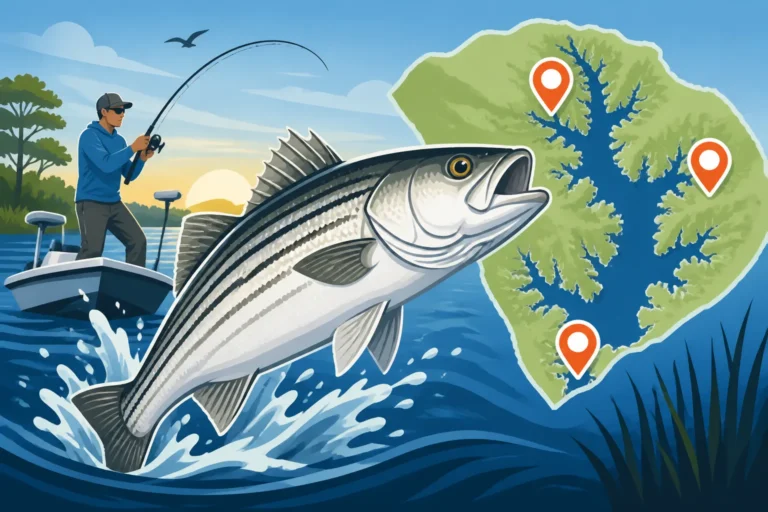
Often called the "Jewel of the Midlands," Lake Murray is a massive 50,000-acre reservoir known worldwide for its incredible striped bass fishery. Located just west of Columbia, this lake offers a diverse angling experience with clear water, numerous islands, deep ledges, and extensive points. It's a favorite for many, from those chasing personal bests to families enjoying a leisurely day on the water. The sheer size and varied topography mean there's always something new to explore, and the challenge of finding those elusive fish keeps you coming back for more. If you're looking for a detailed dive into this particular hotspot, our comprehensive Lake Murray Fishing Guide for South Carolina Anglers is an invaluable resource.
Targeting Striped Bass on Lake Murray
When you talk about Lake Murray, you have to talk about striped bass. This lake is legendary for its landlocked stripers, which can grow to impressive sizes and put up a formidable fight. Anglers often employ a variety of techniques depending on the season. In the warmer months, especially summer, stripers tend to hold in deeper, cooler water. This is when trolling with planer boards and live bait, such as blueback herring or gizzard shad, becomes incredibly effective. You'll often see boats slowly cruising over open water, carefully watching their sonar for schools of baitfish and the tell-tale arcs of stripers beneath them.
During cooler months, particularly in spring and fall, the stripers become more active and can be found shallower, often chasing baitfish near the surface. Topwater lures, spoons, and swimbaits become go-to choices. Early mornings or late evenings are prime times for this surface action, which can be absolutely explosive. Imagine a massive striper boiling on your topwater plug – it's an adrenaline rush like no other. Keep an eye on bird activity too; diving seagulls often signal baitfish being pushed to the surface by hungry stripers below. Anchoring the Submerged Humps Near Dreher Island for Stripers is a well-known tactic for good reason, offering consistent action when conditions are right.
Largemouth and Crappie Hotspots
While stripers often steal the spotlight, Lake Murray also boasts an exceptional fishery for largemouth bass and crappie. Largemouth bass thrive in the lake's abundant cover, which includes docks, submerged timber, rock piles, and patches of aquatic vegetation. Spring is prime time for bass, as they move into the shallows for the spawn. Anglers will pitch jigs, Texas-rigged worms, and spinnerbaits around docks and seawalls. The numerous coves and creeks, particularly in the lower end of the lake, offer excellent opportunities for flipping and pitching. During the summer, bass move deeper, often schooling up on humps and ledges, where deep-diving crankbaits and Carolina rigs can be incredibly effective. For those seeking trophy fish, the Best Largemouth Bass Spots on Lake Murray, South Carolina often involve targeting those deeper structures during warmer months or working isolated cover in shallower areas.
Crappie fishing on Lake Murray is also a highly popular pursuit, offering both quantity and quality. These panfish are often found congregating around brush piles, submerged timber, and bridge pilings. In spring, crappie move into shallower water to spawn, making them accessible to bank anglers and those fishing from small boats. Jigs tipped with minnows or small plastic grubs are the baits of choice, often fished under a bobber. As the water warms, crappie retreat to deeper brush piles and creek channels. Spider rigging – a technique involving multiple rods positioned off the bow of the boat, each fishing a different depth – is a common and productive method for covering water and finding active schools.
Essential Tips for Lake Murray Anglers
Fishing Lake Murray, given its size and unique characteristics, requires a bit of local knowledge to truly unlock its potential. First and foremost, always be mindful of boat traffic, especially during peak season and weekends. The lake is popular for all kinds of recreation, so staying aware of your surroundings is crucial. For those new to the area, investing in a good map or using modern sonar and GPS units will make a world of difference in navigating its vastness and identifying prime fishing structures.
Consider hiring a local guide, especially if you're targeting striped bass. They have an intimate understanding of the seasonal patterns, bait movements, and specific techniques that yield success. Many reputable guides can be found through platforms like FishingBooker, which makes it easy to compare services and read reviews. These guides often provide all the necessary gear and bait, making for a hassle-free experience. Also, always remember to check the current South Carolina fishing regulations, as limits and sizes can change, particularly for striped bass, to ensure the health of the fishery.
The Santee Cooper Lakes: A Legendary Fishery (Marion & Moultrie)
When anglers talk about legendary fishing destinations in South Carolina, the Santee Cooper Lakes almost immediately come to mind. This massive freshwater system, comprising Lake Marion and Lake Moultrie, covers over 171,000 acres, making it one of the largest man-made lakes in the Southeast. Created in the 1940s by damming the Santee River, these lakes are renowned for their incredible populations of catfish, largemouth bass, and crappie. The sheer scale of Santee Cooper can be intimidating, with its vast open waters, cypress forests, and intricate river channels, but it's precisely this wild, untamed nature that makes it such an exciting challenge for any angler. This vast waterway has earned its place as one of South Carolina's Legendary Bass Fishery.
Chasing Trophy Catfish on Lake Moultrie
Lake Moultrie is arguably the undisputed king of catfish in South Carolina, if not the entire Southeast. This 60,400-acre lake is relatively deep and boasts an incredible forage base, allowing blue catfish and flathead catfish to grow to truly monstrous sizes. It's not uncommon for anglers to land blue cats weighing over 50 pounds, with trophy fish exceeding 100 pounds being reported regularly. The appeal here is the thrill of the hunt for a true behemoth, a fish that can test your tackle and your resolve like few others.
Successful catfishing on Lake Moultrie often involves targeting the main river channels, deep holes, and ledges. Using heavy-duty gear with strong braided line and large circle hooks is a must. The most effective baits are usually fresh cut bait, such as gizzard shad, herring, or even smaller catfish, fished directly on the bottom. Anglers often anchor upcurrent of a promising spot, allowing their bait to drift naturally into feeding lanes. Night fishing is a particularly popular and productive method for trophy catfish, especially during the warmer months, as these nocturnal predators become more active under the cover of darkness. The patient angler willing to put in the time is often rewarded with a fish of a lifetime on Lake Moultrie.
Mastering Bass and Crappie on Lake Marion
Lake Marion, the larger of the two Santee Cooper lakes at approximately 110,000 acres, offers a distinct and equally rewarding fishing experience. It's famous for its vast expanses of cypress trees, shallow stump fields, and abundant aquatic vegetation, which create ideal habitats for largemouth bass and crappie. This lake is a labyrinth of productive cover, and understanding its unique layout is key to consistent success.
For largemouth bass, Lake Marion is a bucket-list destination. The lake regularly produces double-digit bass, and its reputation for quality fish is well-deserved. Anglers often target the abundant cypress trees, flipping and pitching jigs, creature baits, or plastic worms into the dense cover. The extensive grass beds, especially hydrilla and milfoil, are also prime areas for bass, where topwater frogs, spinnerbaits, and swim jigs can be incredibly effective. The Bass Fishing Spots on Lake Marion, South Carolina are incredibly diverse. The seasonal patterns are pronounced here; during the spawn in spring, bass are shallow and aggressive, while in summer, they often retreat to deeper creek channels and submerged structure.
Crappie fishing on Lake Marion is also exceptional, with anglers consistently catching large numbers of slab-sized fish. Like bass, crappie relate heavily to cover, particularly submerged timber, brush piles, and the base of cypress trees. Trolling with multiple jigs or slow-trolling with live minnows are popular techniques for covering water and locating schools. In spring, when crappie move shallow to spawn, small jigs fished under a bobber around shoreline cover can yield incredible results. Many local anglers have secret brush piles that they manage, and finding these honey holes can lead to a day of non-stop action.
Navigating Santee Cooper's Unique Challenges
Fishing the Santee Cooper Lakes comes with its own set of challenges, primarily due to its immense size and unique environment. Navigation can be tricky, especially in Lake Marion's cypress tree fields and stump-laden areas, where running aground is a real possibility if you stray from marked channels. Always use caution, especially if you're unfamiliar with the area, and consider a reliable GPS unit with detailed mapping.
The weather can also change rapidly on such large bodies of water, with strong winds quickly creating rough conditions. Always check the forecast before heading out. Despite these challenges, the rewards are often immense. For those planning a trip, consider consulting our guide on the Santee Cooper Bass Fishing Seasons in South Carolina to help you time your visit for optimal success. If you're overwhelmed by the options or want to maximize your chances, booking a local guide is highly recommended. These experienced captains know the subtle nuances of the lakes and can put you on fish quickly. Many of them can be found through platforms like FishingBooker, offering guided trips specifically tailored for bass, crappie, or trophy catfish.
| Lake Name | Primary Target Species | Key Features | Best Time of Year | Average Depth | Size (Acres) |
|---|---|---|---|---|---|
| Lake Murray | Striped Bass, Largemouth Bass, Crappie | Clear water, deep ledges, numerous islands, open water | Spring, Fall, Summer (deep) | 41 ft | 50,000 |
| Lake Marion | Largemouth Bass, Crappie, Catfish | Cypress trees, stump fields, grass flats, vast shallows | Spring, Fall | 13 ft | 110,000 |
| Lake Moultrie | Catfish (trophy), Striped Bass, Crappie | Deep channels, open water, diversion canal, strong currents | Year-round, Summer (night) | 19 ft | 60,400 |
| Lake Hartwell | Striped Bass, Spotted Bass, Walleye | Deep, clear, rocky points, submerged timber, creek arms | Spring, Fall | 45 ft | 56,000 |
| Lake Wateree | Largemouth Bass, Catfish, Crappie | Abundant timber, hydrilla, riverine features | Spring, Fall | 15 ft | 13,800 |
| Lake Greenwood | Largemouth Bass, Striped Bass, Crappie | Moderate depth, good structure, recreational friendly | Spring, Fall | 28 ft | 11,400 |
| Lake Keowee | Smallmouth Bass, Spotted Bass, Trout | Deep, clear, cold, rocky shorelines, mountainous backdrop | Year-round (trout/bass) | 54 ft | 18,500 |
Lake Hartwell: Upstate's Premier Fishing Destination
Nestled in the beautiful foothills of the Blue Ridge Mountains, Lake Hartwell is a sprawling 56,000-acre reservoir that straddles the border of South Carolina and Georgia. Renowned for its clear waters, rocky points, and abundant submerged timber, Hartwell is a favorite among anglers for its excellent populations of striped bass, spotted bass, and largemouth bass. It's hosted numerous national fishing tournaments, solidifying its reputation as a serious angling destination. The dramatic scenery, with rolling hills and forested shorelines, only adds to the allure of this fantastic fishery. If you're making a trip out here, you'll want to check out our specific guide to Lake Hartwell Fishing Spots on the South Carolina-Georgia Border.
Strategies for Lake Hartwell Striped Bass and Spotted Bass
Lake Hartwell offers fantastic opportunities for both striped bass and spotted bass, each requiring slightly different approaches. For striped bass, Hartwell is another top-tier lake in South Carolina. Like Lake Murray, the stripers here can be found in deeper water during the warmer months, often schooling in the main lake basin. Trolling with downriggers and planer boards using live blueback herring is a common and highly effective method. As temperatures cool in the spring and fall, stripers will move shallower, often chasing baitfish in the backs of creeks and around main lake points. Topwater lures, large swimbaits, and bucktail jigs are excellent choices when the fish are active near the surface. The Tugaloo River Arm Bass Fishing on Lake Hartwell is particularly known for productive striper action.
Spotted bass, or "spots," are a dominant force in Lake Hartwell and are incredibly fun to catch. They thrive in the lake's clear, rocky environments and are known for their aggressive strikes and hard fighting nature, often punching above their weight. Anglers targeting spotted bass will have great success throwing finesse baits like shaky heads, drop shots, and small swimbaits around rocky points, humps, and submerged brush piles. These fish often hold deeper than largemouth bass, so understanding your electronics and finding structure is crucial. During the cooler months, spotted bass can be found schooling on deep main-lake points and humps, offering fast-paced action if you can locate them.
Finding Walleye and Other Game Fish
While not as prominent as its bass and striper populations, Lake Hartwell also holds a small but dedicated following for walleye. These elusive, tasty fish are typically found in deeper, cooler parts of the lake, often relating to submerged timber and rocky ledges. Walleye are most active during low-light conditions, so dawn, dusk, and night fishing are often the most productive times. Trolling deep-diving crankbaits or jigging with live bait (like nightcrawlers or minnows) are effective methods. Catching a Hartwell walleye is often considered a prized accomplishment due to their challenging nature.
Beyond the main game fish, Hartwell also supports healthy populations of crappie and catfish. Crappie fishing picks up in the spring as they move to shallow cover for the spawn, and during cooler months, they can be found in deep brush piles. Catfish, including channel and flathead, are present throughout the lake, particularly in the river arms and deeper creek channels, and can be caught year-round using traditional bottom-fishing techniques with cut bait or stink bait. The diversity of species means there’s almost always something biting on Lake Hartwell, catering to a wide range of angling preferences.
Public Access and Amenities on Lake Hartwell
Lake Hartwell is incredibly angler-friendly, offering a wealth of public access points and amenities to support your fishing trip. The lake is managed by the U.S. Army Corps of Engineers, which maintains numerous boat ramps, public fishing piers, and recreation areas around the shoreline. This makes it easy for both boaters and bank anglers to get out on the water. Many of the boat ramps are well-maintained with ample parking, even for larger trailers, allowing easy launch and retrieval.
Several state parks and campgrounds, such as Sadlers Creek State Park and Twin Lakes State Park, offer not only additional access points but also camping facilities, picnic areas, and hiking trails, making Hartwell an ideal destination for a family fishing vacation. These spots often have convenient amenities like restrooms and fish cleaning stations. For those needing gear, bait, or local advice, numerous tackle shops and marinas are dotted around the lake, especially near towns like Anderson, Clemson, and Seneca. Before heading out, it’s a good idea to check the specific access points you plan to use, as some may have small fees or seasonal closures. For a truly immersive experience, many local guides specialize in Lake Hartwell, and you can easily find and book them through services like FishingBooker, ensuring you get on the best bite.
Hidden Gems and Lesser-Known Lakes
While Lake Murray, Santee Cooper, and Lake Hartwell often dominate the conversation, South Carolina is home to many other fantastic fishing lakes that offer incredible experiences without quite the same crowds. These "hidden gems" provide excellent angling opportunities, often with a more serene atmosphere, making them perfect for those seeking a peaceful day on the water or wanting to explore beyond the mainstream. Each of these lakes has its own character and special appeal, proving that the Palmetto State's fishing bounty runs deep.
Lake Wateree: A Bass and Catfish Haven
Northeast of Columbia, Lake Wateree is a 13,800-acre reservoir formed by the Wateree River. It's a fantastic lake that often flies under the radar compared to its larger cousins, but seasoned local anglers know its potential, particularly for largemouth bass and catfish. Wateree is characterized by its abundant standing timber, hydrilla beds, and extensive creek channels, providing excellent cover and feeding grounds for a variety of species. Its slightly darker, more stained water can also make for aggressive bites, especially for bass.
For largemouth bass, Lake Wateree is a true powerhouse. Anglers can find success year-round, but spring and fall are particularly productive. Flipping jigs and creature baits into the numerous timber fields and around docks is a classic and effective technique. The hydrilla mats offer prime real estate for punching rigs and topwater frogs. Many local tournaments are held on Wateree, a testament to its consistent bass fishing. The lake also holds an impressive population of catfish, including trophy-sized blue and flathead cats. Targeting the deeper channels and holes with cut bait or live bait is a reliable strategy for hooking into a monster. If you're interested in learning more, our dedicated guide to Lake Wateree Fishing Spots in South Carolina covers all the essential details.
Lake Greenwood: A Family-Friendly Fishing Retreat
Lake Greenwood, located in the western part of the state, is an 11,400-acre reservoir known for its beautiful scenery and diverse fishery. It's often considered a more relaxed, family-friendly option, offering excellent opportunities for largemouth bass, striped bass, crappie, and various panfish. The lake has a good mix of open water, coves, and structured shorelines, making it accessible and enjoyable for anglers of all skill levels. Its moderate size makes it less intimidating to navigate than the really big lakes, yet it's large enough to support a robust fishery.
Largemouth bass fishing on Lake Greenwood is very solid, with anglers targeting docks, submerged brush, and points. Spinnerbaits, crankbaits, and plastic worms are all productive, especially during the spring and fall. Striped bass also thrive in Lake Greenwood, often found schooling in the main lake basin. Trolling with live bait or casting spoons and jigs to schooling fish can lead to exciting action. Crappie anglers will find plenty of opportunities around bridge pilings, brush piles, and fallen trees. Lake Greenwood's many public access points, including lakeside parks, make it easy for families to enjoy a day of fishing, whether from a boat or from the bank. For a complete guide, check out our Lake Greenwood Fishing Guide for South Carolina Families.
Lake Keowee: Clear Waters and Trout Opportunities
Up in the Upstate, close to the North Carolina border, you'll find Lake Keowee, an 18,500-acre reservoir that stands out for its incredibly clear, deep, and cool waters. Formed in the early 1970s, Keowee is a unique gem, fed by mountain streams and offering a vastly different fishing experience than the state's other major lakes. While it's known for its stunning beauty and recreational opportunities, it's also a fantastic fishing destination, particularly for spotted bass, smallmouth bass (a rarity in SC), and even some trout.
The clarity and depth of Lake Keowee make it an ideal habitat for spotted bass, which can be found in abundance around rocky points, deep humps, and submerged timber. Finesse techniques like drop shots, shaky heads, and clear-water crankbaits are highly effective here. Keowee is also one of the few places in South Carolina where you can consistently target smallmouth bass, which prefer the cooler, rocky environments. While not as numerous as spots, catching a smallmouth from Keowee is a special treat. Uniquely, due to the cold water discharged from the bottom of Lake Jocassee (which feeds Keowee), the lake supports a small population of rainbow trout, especially in its deeper sections. Trolling small spoons or jigging near the bottom can sometimes yield a surprising trout. Our Lake Keowee Fishing Spots and Boat Ramps guide provides more detailed information for planning your visit.
Planning Your South Carolina Lake Fishing Adventure
Embarking on a fishing trip to South Carolina's lakes is an exciting prospect, but a little planning goes a long way to ensure a successful and enjoyable experience. With so many fantastic options, it's easy to feel overwhelmed by the choices. Taking the time to consider your goals, your experience level, and the specific characteristics of each lake will help you narrow down the perfect destination for your next angling adventure. From gear considerations to leveraging local insights, preparation is key to unlocking the full potential of these incredible waters.
Choosing the Right Lake for Your Target Species
The first and most crucial step in planning your trip is to align your target species with the right lake. If you dream of battling a trophy blue catfish, the vast depths of Lake Moultrie in the Santee Cooper system should be at the top of your list. For those who live for the explosive strike of a striped bass, Lake Murray or Lake Hartwell offer world-class opportunities. If largemouth bass are your passion, then Lake Marion, Lake Wateree, or even Lake Murray provide abundant chances for big fish. Crappie anglers will find consistent action across most of the major lakes, particularly Santee Cooper and Lake Murray, especially around brush piles and timber.
Consider the time of year as well; while most lakes offer year-round fishing, certain seasons are prime for specific species. For instance, the bass spawn in spring is a great time to hit Lake Marion, while summer often means deeper-water tactics for stripers on Lake Murray. Researching seasonal patterns for each lake and species will significantly increase your chances of success. Our guide to South Carolina Fishing Seasons Guide can provide a broader overview to help you align your trip.
Essential Gear and Boat Ramp Considerations
Once you've picked your lake and target species, it's time to think about your gear. While a basic spinning rod and reel can catch fish in almost any lake, specialized gear will enhance your experience and effectiveness. For trophy catfish, you'll need heavy-duty rods, stout reels, and strong line. For finesse bass fishing in clear waters like Lake Hartwell or Keowee, lighter action rods and fluorocarbon line are preferred. Always pack a tackle box with a variety of lures and baits that are known to work for your target species in that particular lake. Don't forget essentials like pliers, a net, sunscreen, bug spray, and plenty of water.
If you're bringing a boat, research the available boat ramps. Larger lakes like Santee Cooper and Lake Murray have numerous well-maintained ramps, but some smaller or more remote lakes might have limited access or ramps unsuitable for very large vessels. Check for launch fees, parking availability, and current water levels, especially during drought conditions. If you don't have a boat, many lakes offer bank fishing access, fishing piers, or boat rentals for a more casual experience. Always ensure your boat is properly maintained and that you have all required safety equipment on board.
Leveraging Guides and Local Expertise
For those new to a particular lake or looking to maximize their fishing time, leveraging the expertise of a local fishing guide is an invaluable investment. These professionals spend countless hours on the water, understanding the nuanced patterns, hot spots, and effective techniques that can take years to learn on your own. A guide can teach you specific methods, help you understand the lake's structure, and often put you on fish you might otherwise miss. They also typically provide all the necessary tackle, bait, and often even handle the fishing licenses for their party (though it's always good to confirm).
Platforms like FishingBooker are excellent resources for finding reputable South Carolina fishing guides and charters. You can browse different guides, read reviews from other anglers, compare prices, and book your trip directly. This is particularly helpful for visiting anglers who might not be familiar with the vastness of a lake like Santee Cooper or the specific tactics needed for Lake Murray stripers. Investing in a guided trip can transform a frustrating day into a memorable and highly successful one. Learning How to Book a Fishing Charter in South Carolina can simplify this process and connect you with the right expert.
Understanding South Carolina's Freshwater Regulations
Before you even think about casting a line in any of South Carolina's magnificent lakes, it is absolutely crucial to understand and comply with the state's fishing regulations. These rules are not just bureaucratic hurdles; they are designed to protect our precious natural resources and ensure that future generations can enjoy the same incredible fishing opportunities we have today. Ignorance of the law is never an excuse, and game wardens in South Carolina are diligent in enforcing these regulations to maintain healthy fish populations.
License Requirements and Age Exemptions
The most fundamental regulation is the requirement for a valid fishing license. Almost every angler over a certain age must possess a current South Carolina fishing license. This applies to both residents and non-residents, and it's important to have the correct type of license for the waters you intend to fish (freshwater, saltwater, or a combination). Licenses can be purchased online through the South Carolina Department of Natural Resources (SCDNR) website, at authorized retail agents like tackle shops and sporting goods stores, or even by phone. The process is generally straightforward, but it's essential to do it before you hit the water. Our South Carolina Fishing License Guide provides a detailed breakdown of all the options and requirements.
However, there are some important exemptions to be aware of. Generally, children under the age of 16 are not required to have a fishing license in South Carolina. This is a fantastic initiative to encourage youth participation in fishing and makes it easier for families to introduce kids to the sport without added cost or paperwork. Additionally, residents born before July 1, 1940, are exempt from needing a fishing license. There are also specific "Free Fishing Days" each year where residents can fish without a license, but it's critical to know if Do You Need a License on South Carolina's Free Fishing Days? applies to your specific situation and if any restrictions apply to non-residents during these periods. Always double-check current regulations to confirm eligibility for any exemptions.
Bag Limits and Size Restrictions
Beyond licensing, understanding bag limits and size restrictions is equally important. These regulations vary significantly by species and sometimes even by specific body of water, and they are regularly updated by the SCDNR to manage fish populations sustainably. For instance, largemouth bass will have a specific daily creel limit (the number of fish you can keep), and often a minimum or maximum size limit, or even a slot limit (where you can only keep fish within a certain size range, with smaller or larger fish having to be released). The same applies to crappie, catfish, and striped bass.
For example, on Lake Murray, striped bass often have specific size and bag limits that can change seasonally based on biological assessments. Catfish limits are typically more generous but still exist. The reasoning behind these rules is simple: to prevent overfishing of certain age classes, allow fish to reach reproductive maturity, and ensure a balanced ecosystem. Always carry a measuring device and be prepared to release any fish that do not meet the legal requirements. The SCDNR website or a current copy of the South Carolina's Freshwater Fishing Regulations handbook (available where licenses are sold) are your best resources for the most up-to-date information. Violating these rules can result in significant fines and penalties, so take the time to learn them before you fish.
Disclaimer
Please note that fishing regulations, including license requirements, bag limits, and size restrictions, are subject to change by the South Carolina Department of Natural Resources (SCDNR). It is the angler's responsibility to verify and comply with all current state and local fishing laws before engaging in any fishing activity. This guide provides general information and should not be considered a substitute for official SCDNR publications or direct consultation with the department.