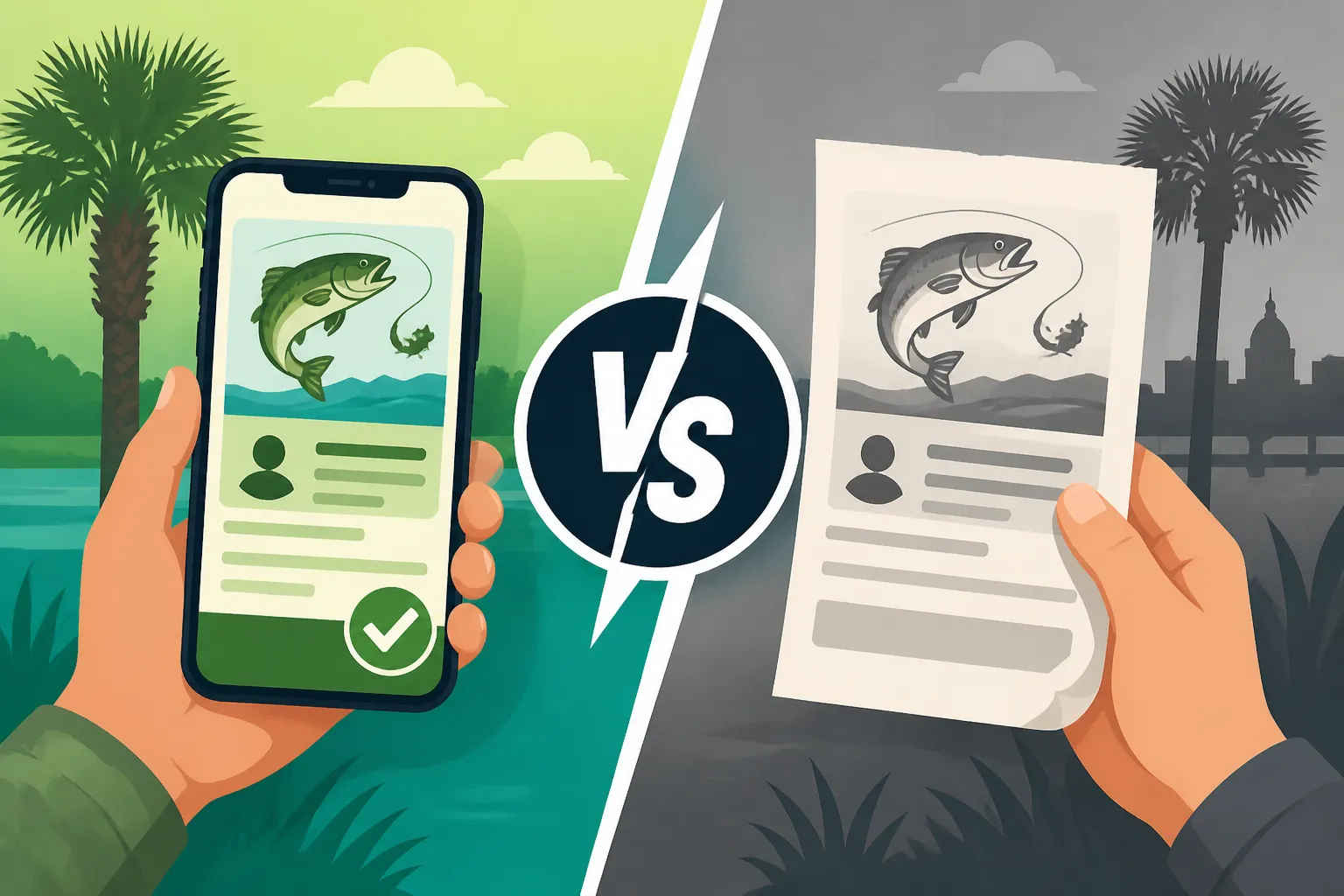
Digital Fishing License vs Printed Paper Copy
One of the most common headaches for anglers in South Carolina is figuring out the best way to carry their fishing license. Should you trust your phone, or is a good old-fashioned paper copy still the way to go? It's a real dilemma that can cause a lot of anxiety when you're out on the water, especially when you consider the penalties for fishing without a license in South Carolina. This guide will walk you through the ins and outs of both digital and printed fishing licenses, helping you decide what works best for your Palmetto State adventures.
The Modern Convenience of a Digital Fishing License
In our increasingly digital world, it’s only natural to wonder if your smartphone can serve as your official proof of a fishing license. The South Carolina Department of Natural Resources (SCDNR) has indeed embraced technology, allowing anglers to display their license on a mobile device. This seems like a no-brainer for many, offering a level of convenience that paper simply can't match.
Instant Access and Portability in Your Pocket
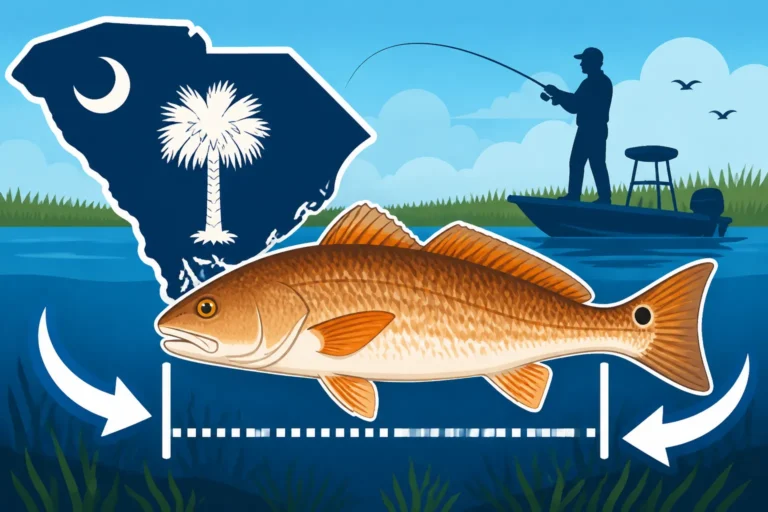
Think about it: most of us carry our phones everywhere we go. Your fishing license can be tucked away in your digital wallet or a dedicated app, ready to be pulled up at a moment's notice. This eliminates the frantic search for a misplaced paper license right before you head out the door. Imagine you're driving down to the coast for some inshore redfish action, and suddenly remember you didn't grab your license. If it's on your phone, you're usually good to go, as long as you bought it online through the official Go Outdoors Online License Portal Explained. It feels pretty liberating to know that your official documentation is always with you, as readily available as your car keys or wallet – often even more so.
Consider a scenario where you've just decided on a whim to hit a local pond after work. If you typically keep your physical license in a tackle box or a specific binder at home, that spontaneous trip might be derailed. But with a digital license, that impulse decision becomes a reality. You simply open your phone, display the license, and you're ready to cast a line. This ease of access encourages more fishing and reduces the barrier to entry, which is a huge plus for those of us who appreciate flexibility in our outdoor plans.
Real-time Updates and Proof of Purchase
When you buy your license online, whether it's a South Carolina Annual Fishing License Price Breakdown or a short-term option like a South Carolina 14-Day Fishing License Options, the digital system often provides immediate proof of purchase. This can be a huge relief, especially if you're buying a license right at the moment you're about to start fishing. The confirmation email or a screen capture from the official SCDNR app can act as temporary proof until you can securely save the digital copy.
Furthermore, any changes or renewals you make are typically updated instantly in the digital system. This means you don't have to wait for a new paper copy to arrive in the mail or worry about carrying an outdated document. It streamlines the entire process of managing your license, making it much more efficient. For example, if you decide to upgrade your freshwater license to a combo license to cover both freshwater and saltwater excursions, the digital record would reflect this change almost immediately, ensuring you're compliant across all waters without any additional hassle of reprinting.
The Downside: When Digital Fails You
While digital licenses offer undeniable advantages, they also come with a unique set of vulnerabilities that can leave you in a bind. We've all been there: out in a remote area, phone battery flashing red, or worse, completely dead. What happens then? A dead phone means no license, which, to a South Carolina DNR warden, is the same as not having a license at all. This can quickly turn a peaceful fishing trip into a stressful encounter, potentially leading to fines or other penalties.
Imagine you're deep in the Congaree National Park, enjoying the tranquility of the river, far from any cell towers. Your phone, which you rely on for GPS, photos, and your license, suddenly runs out of juice. Now you're not only navigating blind, but you also have no way to present your fishing license if approached by a ranger. It's a risk many anglers often overlook. Beyond battery life, factors like direct sunlight causing screen glare, a cracked screen making the text unreadable, or even simply dropping your phone into the water can render your digital license inaccessible. These aren't just minor inconveniences; they can be legitimate barriers to proving your compliance.
The Enduring Reliability of a Printed Paper Copy
Despite the allure of digital convenience, many seasoned anglers, myself included, still swear by the trusty paper copy. There’s a certain peace of mind that comes with a tangible document, something that doesn't rely on batteries or signal strength. It's the classic, fail-safe option that has stood the test of time.
Tangible, Durable, and Weather-Proof
A printed fishing license, especially if you take a few simple steps to protect it, offers remarkable resilience against the elements. You can easily laminate it, slip it into a waterproof pouch, or even just keep it in a Ziploc bag in your tackle box. This makes it impervious to splashes, rain, and the general dampness that often accompanies a day on the water. Unlike a phone screen that can become unreadable in bright sunlight or suffer catastrophic damage from a fall into the water, a laminated paper copy just keeps on working.
Think about fishing on Lake Murray on a rainy day, or casting your line in the coastal marshes near Murrells Inlet where saltwater spray is a constant. A digital license might be challenging to view, or worse, your phone might not be waterproof. But a laminated paper license? It's unfazed. It provides a consistent, clear display of your credentials, no matter the environmental conditions. This durability is particularly valuable for those who fish frequently and in varied conditions, ensuring they always have verifiable proof of their right to fish. You can even find affordable laminating pouches on Amazon to keep your license safe and sound.
Ease for Law Enforcement and Personal Comfort
For South Carolina DNR wardens, inspecting a physical paper license is often simpler and quicker. They don't have to worry about screen brightness settings, phone glitches, or struggling with a wet touchscreen. A clear, printed license can be quickly scanned or visually checked, allowing them to verify your information efficiently and get back to their important work of protecting our natural resources. This also contributes to a smoother interaction for you, the angler, minimizing potential misunderstandings or delays during a routine check.
From a personal comfort standpoint, carrying a paper license means one less drain on your phone's battery. You can save your phone's power for navigation, checking tide charts, or snapping photos of your catches. It also means you’re not risking a potentially expensive piece of electronics in an environment that can be notoriously hard on gadgets. For many, separating their fishing license from their phone just feels more secure and less complicated. It's a dedicated tool for a dedicated purpose, allowing for a more focused and worry-free fishing experience.
The Potential Pitfalls of Paper
While reliable, paper licenses aren't without their own set of potential problems. They can be easily misplaced, especially if you're not diligent about putting them back in the same spot every time. We've all experienced that moment of panic, tearing through gear bags, wondering "Where did I put it?" A paper license can also get soaked and ruined if not properly protected, rendering it illegible. Fading from sunlight exposure over time, or tearing from frequent handling, are also common issues.
Consider the hassle of realizing your license is nowhere to be found just as you're about to launch your boat. You'd have to scramble to find a place to print a new one, or worse, risk a citation. If your license gets damaged or lost, you might need to go through the process of Replacing a Lost or Stolen Fishing License, which takes time and effort. While the official SCDNR website (Go Outdoors South Carolina) makes it relatively easy to print a replacement from home, it still means you need access to a printer and potentially a computer, which isn't always convenient when you're already out and about.
Navigating South Carolina's Requirements and Best Practices
So, what's the official word from the folks who make the rules? And how can you ensure you're always on the right side of the law while still enjoying your time on the water? Understanding South Carolina's specific guidelines and adopting a smart strategy will keep you compliant and stress-free.
Official Stance from SCDNR
The good news is that the South Carolina Department of Natural Resources (SCDNR) fully accepts both digital and printed copies of your fishing license. According to their official guidelines, anglers are required to have their valid fishing license "on their person" while engaged in fishing activities. This means having it readily available for inspection by a law enforcement officer. Whether that's displayed clearly on your smartphone screen or presented as a physical paper copy, either is acceptable.
This flexibility is a testament to the SCDNR's understanding of modern technology and their desire to make fishing accessible. However, the key phrase is "readily available and legible." If your phone is dead, or your paper copy is a soggy mess, it ceases to be readily available and legible, and that's where you could run into trouble. Therefore, while both are permissible, the responsibility falls squarely on the angler to ensure their chosen method of display meets these criteria at all times. This flexibility allows residents and non-residents alike to choose the option that best suits their needs, whether they are looking into South Carolina Nonresident Fishing License Guide or resident options.
The Hybrid Approach for Peace of Mind
Given the pros and cons of both digital and paper licenses, the absolute best practice for South Carolina anglers is to adopt a hybrid approach. Why choose one when you can have the benefits of both? Carry your license digitally on your smartphone, and also keep a laminated paper copy in your tackle box, wallet, or boat. This way, you're prepared for almost any scenario.
Imagine you're fishing a remote creek where cell service is spotty at best. Your phone might not be able to pull up your digital license, but your laminated paper copy is sitting safe and sound in your dry bag. Or, what if you accidentally drop your wallet in the drink? Your digital copy on your phone could be your saving grace. This redundant system virtually eliminates the risk of being unable to present your license, giving you genuine peace of mind and allowing you to focus on the fishing, not on whether your documentation is safe. This dual-layer of protection is particularly useful when considering South Carolina Fishing License Requirements in South Carolina as a whole, ensuring all bases are covered.
Specific Scenarios to Consider
Different fishing situations can really highlight the advantages of one license type over another, and ultimately underscore why a hybrid approach is so valuable.
- Remote Freshwater Lakes: If you're venturing to places like Lake Jocassee or some of the more secluded areas of the Santee Cooper Lakes, cell service can be non-existent. In these situations, your paper license is your most reliable friend. You don't want to find yourself explaining to a warden that you have a license, but "the bars just aren't there." Having that physical proof when you're far from civilization is non-negotiable.
- Offshore Charters and Coastal Fishing: When you're out on the open ocean with a charter, or surf fishing along Myrtle Beach, conditions can be wet, windy, and sunny. Saltwater spray can quickly ruin a phone not rated for marine use, and glare can make a screen impossible to read. A laminated paper license, tucked into a waterproof pocket, ensures it's accessible and readable even when conditions are less than ideal.
- Fishing Tournaments: Many fishing tournaments, especially those with weigh-ins, often require anglers to present their licenses at check-in. While a digital copy is usually accepted, having a quick-to-show paper copy can speed up the process, especially if tournament officials are processing a large number of participants. It’s all about efficiency and avoiding any potential hiccups when you're focused on the competition.
- Kids and Family Trips: When you're out with the family, especially with younger anglers who might not have their own phones (or even need a license depending on their age, as explained in Fishing License Rules for Kids in South Carolina), a paper license for yourself is generally simpler. You don't want to hand over your phone to a child just so they can show your license to a ranger, risking a drop or damage.
Ultimately, understanding these varied scenarios emphasizes that while digital is convenient, paper is robust, and together, they form an unbreakable defense against compliance issues. Regardless of your choice, remember that your license is a crucial part of your fishing gear, just like your rod and reel, and it deserves the same consideration and care.
How to Get Your South Carolina Fishing License
Before you even worry about digital vs. paper, you need to acquire your license. The process is straightforward, thanks to the SCDNR's online system. You can purchase your license directly from the official Go Outdoors South Carolina website, or visit authorized license vendors across the state, such as sporting goods stores like Academy Sports + Outdoors or Walmart locations. For a comprehensive guide on the process, check out How to Get a Fishing License in South Carolina.
When purchasing online, you'll typically receive an email confirmation with your license details, often including a link to download or print your official copy. This is your opportunity to save the digital version to your phone and print a paper copy. Many anglers find it helpful to save the digital copy as a screenshot or a PDF in their phone's photo gallery or a dedicated fishing folder for quick access, rather than relying solely on email or a web browser.
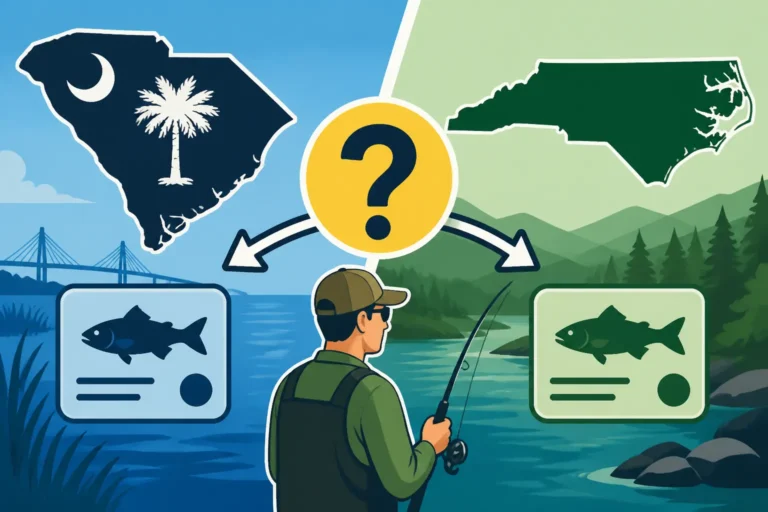
No matter how you choose to carry it, make sure you understand the nuances. For example, if you're fishing on border waters with North Carolina or Georgia, there are specific reciprocity rules you need to be aware of. You might want to read up on South Carolina Fishing License Reciprocity With North Carolina or South Carolina Fishing License Reciprocity With Georgia to avoid any surprises.
Digital vs. Paper: A Quick Comparison
To help you visualize the key differences, here's a quick table summarizing the main points:
| Feature | Digital Fishing License | Printed Paper Copy |
|---|---|---|
| Accessibility | On your phone, always with you (if battery and signal permit) | Physical document, requires forethought to carry |
| Durability | Vulnerable to battery drain, water, screen damage, signal loss | Can be laminated/waterproofed, immune to tech issues |
| Legibility | Can be affected by screen glare, brightness settings, phone size | Consistent, clear print, easy to read in all conditions |
| Proof of Use | Accepted by SCDNR if legible and accessible | Accepted by SCDNR, tangible and traditional |
| Replacement | Easily re-downloaded/screenshotted if phone is replaced/recharged | Requires reprinting from home/vendor if lost or damaged |
| Cost | No additional cost beyond license fee | Minor cost for printing, laminating, or protective pouches |
Disclaimer
Please be aware that fishing regulations, license requirements, and accepted forms of identification can change. Always consult the official South Carolina Department of Natural Resources (SCDNR) website or contact them directly for the most current and accurate information before you head out on your fishing trip. This guide is for informational purposes only and should not be considered legal advice.