Night Fishing Spots in South Carolina
There’s a unique thrill that comes with casting a line under the cover of darkness, a quiet solitude broken only by the hum of crickets or the splash of a fish. Many anglers find themselves limited to daytime excursions, but they’re often missing out on some of the most productive and peaceful fishing opportunities South Carolina has to offer, especially when temperatures soar during the day. This comprehensive guide will illuminate the best night fishing spots across the Palmetto State, from the tranquil coastal estuaries to the vast inland lakes and winding rivers, ensuring you’re well-equipped for your next nocturnal angling adventure.
Coastal and Inshore Night Fishing Havens
South Carolina's coastline, with its intricate network of estuaries, marsh creeks, and jetties, truly comes alive after the sun dips below the horizon. The cooler water temperatures, coupled with the cover of night, often bring predatory fish out of hiding, making for excellent opportunities to hook into redfish, speckled trout, and even flounder. The low light can also make fish less wary of baits and lures, offering a distinct advantage.
The Murrells Inlet Experience After Dark
Murrells Inlet is a legendary fishing destination during the day, but it transforms into a magical playground for night anglers. The calm, protected waters here are teeming with life, and the artificial lights from docks, restaurants, and homes often create irresistible feeding zones for a variety of species. As baitfish are drawn to these light sources, game fish like redfish, spotted seatrout, and even flounder follow closely behind, ready to ambush.
When fishing Murrells Inlet at night, pay close attention to the tidal movements. An incoming tide often pushes new bait into the creeks and along the marsh edges, while an outgoing tide can concentrate bait in deeper channels and around oyster beds. Using live or cut shrimp, mud minnows, or even Gulp! soft plastics under a popping cork can be incredibly effective, especially when positioned near dock lights or alongside the jetties. The tranquility of the inlet at night, combined with the often-aggressive bites, creates an unforgettable experience. Many local guides listed on platforms like FishingBooker specialize in evening trips here, offering insights into the best nocturnal patterns.
Charleston Harbor's Nocturnal Opportunities
Charleston Harbor, a bustling waterway by day, offers some fantastic and often overlooked night fishing opportunities. The harbor's extensive system of bridge pilings, jetties, and deep channels provides abundant structure and ambush points for fish after dark. Redfish, often called "red drum," patrol these areas, as do robust populations of spotted seatrout, black drum, and sheepshead.
Targeting bridge pilings, like those under the iconic Ravenel Bridge, can be particularly productive. The lights from the bridge illuminate the water, attracting baitfish and, consequently, their predators. Live fiddler crabs or pieces of clam are excellent choices for sheepshead and black drum that hide close to the pilings, while soft plastics or live mullet can entice redfish and trout. For anglers new to the area, considering a guided trip found on FishingBooker could be a great way to learn the ropes of Charleston Harbor's nighttime bite. Remember to check the South Carolina Redfish Slot Limit Rules and Spotted Seatrout Size and Bag Limits in South Carolina before heading out, as regulations are always important.
Folly Beach and Myrtle Beach Pier Fishing at Night
For those without a boat, fishing from piers at night offers accessible and often exciting opportunities along the South Carolina coast. Piers in places like Folly Beach and Myrtle Beach are equipped with lights that draw in baitfish, creating a concentrated feeding frenzy for larger species. Spanish mackerel, bluefish, various drum species, whiting, and even sharks are commonly caught after dark.
The key to successful pier fishing at night is often positioning yourself near the brightest lights or at the end of the pier where deeper water and stronger currents bring in more fish. Live or cut bait, such as mullet or shrimp, cast on a bottom rig or a Carolina rig, can be highly effective for drum and whiting. For species like Spanish mackerel, casting and retrieving Gotcha Plugs or other fast-moving lures can yield thrilling strikes. Always be mindful of other anglers on the pier, and bring a reliable headlamp to manage your tackle without disturbing others. Many piers have specific rules for night fishing, so it's always wise to check with the pier office beforehand.
Lake and Reservoir Night Fishing Hotspots
South Carolina's expansive freshwater lakes and reservoirs are not just for daytime recreation; they hold incredible potential for night anglers. The summer heat can push fish into deeper, cooler waters during the day, but as temperatures drop after sundown, many species move into shallower feeding grounds, presenting prime opportunities for those willing to fish after dark.
Lake Murray's Striper and Catfish Nights
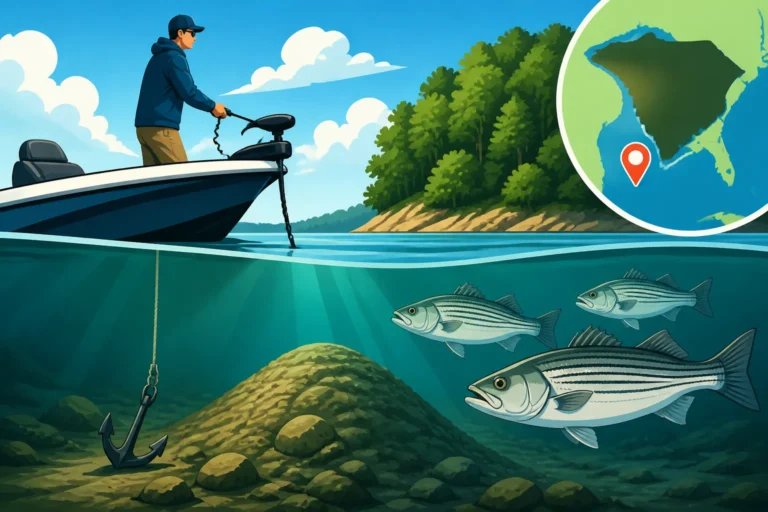
Lake Murray, often called the "Jewel of South Carolina," is renowned for its striped bass fishery, and many of the biggest stripers are caught after dark. As the sun sets, these powerful fish often move up from the thermocline into shallower areas, especially around submerged humps, points, and ledges. Catfish, too, become incredibly active at night, especially during the warmer months.
For striped bass, trolling large artificial lures like bucktails or deep-diving crankbaits can be effective, particularly around the areas highlighted in guides like the Lake Murray Fishing Guide for South Carolina Anglers. Live bait, such as blueback herring or gizzard shad, drifted or slow-trolled, is also a highly productive method. For catfish, target deeper channels and creek beds with cut bait, chicken livers, or stink baits on a bottom rig. The quiet solitude of a Lake Murray night, punctuated by the drag-screaming run of a trophy striper or a hard-pulling catfish, is an experience every angler should try. For detailed strategies, check out resources on Catfish Fishing Spots on Lake Murray, South Carolina, as these nocturnal giants are a major draw.
Santee Cooper Lakes Under the Stars
The Santee Cooper Lakes—Lake Marion and Lake Moultrie—are legendary for their enormous catfish and robust crappie populations, and night fishing here is a time-honored tradition. These massive reservoirs, with their vast amounts of submerged timber and intricate channel systems, offer endless opportunities for anglers seeking a nocturnal thrill.
Catfish, especially the trophy blue and flathead catfish, are prime targets at night. Many anglers employ jug fishing or trotlines, setting them out in the evening and checking them periodically through the night or at first light. For those using a rod and reel, anchoring near deep channels, old river beds, or brush piles and using fresh cut bait is the most popular technique. Crappie also become very active at night, particularly under specialized "crappie lights" that attract plankton and baitfish, drawing the crappie right to your boat. Vertical jigging small jigs or minnows around these lights is incredibly effective. Learning more about Lake Marion Fishing Spots and Access Points and Lake Moultrie Catfish and Crappie Fishing Guide can enhance your success on these sprawling waters.
Lake Hartwell's Evening Bass and Striper Bites
Nestled on the border with Georgia, Lake Hartwell provides excellent night fishing, particularly for largemouth and spotted bass, as well as striped bass. Similar to Lake Murray, the cooler night temperatures often bring these species shallower to feed aggressively, especially around lighted docks and rocky points.
For bass, casting topwater lures or slow-rolling spinnerbaits and crankbaits around boat docks and submerged brush piles under the cover of darkness can be highly effective. The low light allows bass to ambush prey with greater confidence. Striped bass often congregate around deep humps and creek channels, and live bait fishing or trolling can produce some impressive catches. Many anglers find that the biggest fish are often caught during the darkest hours. Exploring the Lake Hartwell Fishing Spots on the South Carolina-Georgia Border will give you a head start on finding the best nocturnal hunting grounds for these powerful fish.
River Systems for After-Hours Angling
South Carolina's numerous river systems, from the blackwater Edisto to the mighty Congaree and Broad Rivers, offer their own unique challenges and rewards for night anglers. These flowing waters are often cooler and hold a diverse array of fish species that become more active once the sun goes down, especially catfish and various bass species.
The Edisto River's Stealthy Catfish and Bass
The Edisto River, the longest free-flowing blackwater river in North America, provides a serene and productive environment for night fishing. Its dark, tannin-stained waters conceal a thriving population of catfish (channel, blue, and flathead) and a healthy number of largemouth bass. The river's countless oxbows, log jams, and deep bends offer perfect ambush points for nocturnal predators.
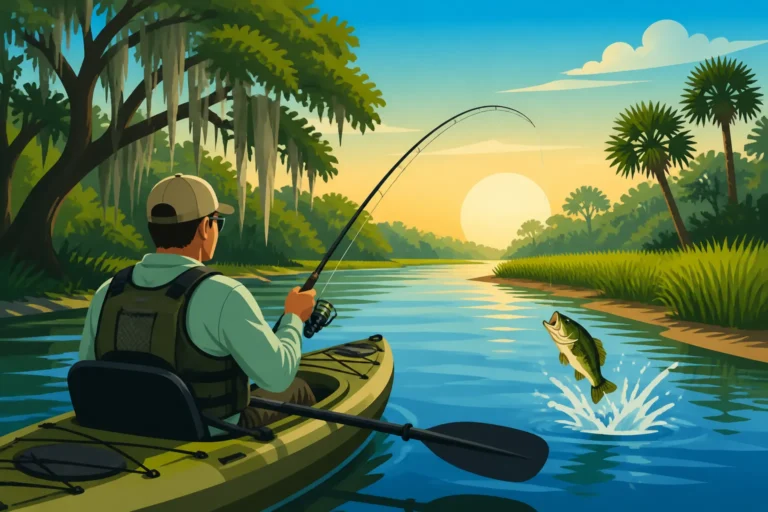
For catfish, anchoring near deep holes or significant log jams and deploying multiple rods with cut bait or night crawlers can lead to some impressive catches. The strong scent trail of cut bait is particularly effective in the dark waters. For bass, stealth is key. Casting dark-colored spinnerbaits, plastic worms, or topwater frogs near submerged structure and overhanging vegetation can trigger explosive strikes. Kayak fishing at night on the Edisto can be an especially rewarding experience for those seeking true solitude, but extreme caution and proper lighting are essential. Detailed insights into Edisto River Fishing Spots in South Carolina can point you towards promising sections for after-hours angling.
Congaree and Broad River's Nighttime Hauls
The Congaree and Broad Rivers, particularly in the Midlands region near Columbia, are powerhouse waterways for night fishing, primarily targeting trophy catfish and robust striped bass. The strong currents, deep holes, and rocky shoals found in these rivers create dynamic environments that are highly productive after dark.
Below dams, such as the Columbia Canal on the Broad River, fish congregate in large numbers, drawn by the turbulent, oxygenated water and the promise of easy meals. Heavy tackle is often necessary to contend with the powerful current and the size of the fish you might encounter. For catfish, large chunks of cut bait (shad or mullet) fished on heavy bottom rigs are the standard. Striped bass can be caught on large artificial lures or live bait, particularly in the slack water pockets just out of the main current. Always be aware of the fast-moving water and potential hazards when fishing these powerful rivers at night. Consulting resources on Congaree River Catfish Fishing Spots Near Columbia and Broad River Fishing Access Points in South Carolina will help you identify safe and productive access points for your nighttime excursions.
Essential Gear and Safety for Night Fishing
Night fishing isn't just daytime fishing after dark; it requires specific gear and a heightened awareness of safety. The lack of natural light means you need to be prepared for every eventuality, from navigating your boat to simply re-tying a knot. Neglecting these preparations can quickly turn a peaceful outing into a frustrating, or even dangerous, situation.
Lighting Up Your Night Fishing Trip
Proper lighting is paramount for any successful night fishing trip. You'll need more than just the navigation lights on your boat. A good quality headlamp with adjustable brightness and a red-light option (to preserve night vision) is indispensable for tying knots, baiting hooks, and generally moving around. Many anglers also bring a powerful lantern for illuminating the general area, especially on a boat or at a pier. For those targeting crappie or baitfish, specialized underwater fishing lights (green or white) can be deployed to attract your quarry directly to your boat.
Always carry spare batteries for all your lights, and consider a backup light source entirely, like a small flashlight or even glow sticks for marking rods or specific areas. The goal is to see clearly without blinding yourself or others, while also having enough light to handle any task that arises. It’s also wise to wear reflective clothing or accessories, especially if you're fishing near boat traffic.
Navigating the Dark: Safety First
Safety should always be your top priority when venturing out at night. The darkness conceals hazards that are easily visible during the day, such as submerged stumps, rocks, or other vessels. If you’re boating, familiarity with the waterway is crucial, and always operate at a reduced speed. Ensure all your boat's navigation lights are functioning correctly and that you have a sound-signaling device (like a whistle or horn) on board. Always wear a PFD (Personal Flotation Device), even if you're an experienced swimmer, as falls overboard in the dark can be disorienting and dangerous.
It’s always a good idea to fish with a buddy, or at the very least, let someone know your float plan – where you’re going and when you expect to return. Check the weather forecast meticulously; unexpected storms or heavy winds can be far more perilous at night. Keep your cell phone fully charged and consider carrying a marine radio for emergencies. A well-stocked first-aid kit is also a non-negotiable item. Platforms like FishingBooker emphasize safety, and reputable guides will always prioritize it on their trips.
Must-Have Gear for Night Anglers
Beyond lighting and safety gear, a few other items can significantly improve your night fishing experience. Heavy-duty tackle is often preferred, as you might hook into larger, more aggressive fish in the low light, and you'll want the stopping power. Consider using fishing line with higher visibility or even glow-in-the-dark line for easier tracking. Scent attractants can be highly effective at night, as fish rely more heavily on their sense of smell in the dark.
A sturdy pair of pliers, line cutters, and a hook remover are essential, as working with sharp objects in low light requires precision. Insect repellent is a must, especially in the warmer months when mosquitoes and other biting insects are most active. Finally, dress in layers. Even on warm days, nights on the water can get surprisingly cool, and staying comfortable will allow you to focus on the fishing. A good set of rod holders can also be a game-changer, allowing you to relax and keep multiple lines in the water without constant vigilance.
Best Practices for Success in the Dark
Night fishing isn't just about showing up with a light; it involves a nuanced understanding of fish behavior and adapting your techniques to the unique conditions of darkness. Mastering these practices can turn a mediocre night into an unforgettable angling success.
Understanding Nocturnal Fish Behavior
Fish behavior shifts dramatically once the sun goes down. Many predatory species, which might be lethargic during the bright, hot day, become active hunters under the cover of night. This is often due to several factors: cooler water temperatures, which make them more comfortable and energetic; reduced visibility for their prey; and less fishing pressure from humans. Baitfish, often drawn to lights, become easy targets, creating feeding opportunities for larger game fish.
Species like striped bass, catfish, and redfish are particularly known for their nocturnal activity. They use their heightened senses of smell, lateral line (to detect vibrations), and sometimes even improved low-light vision to locate prey. This means presentations should often be slower, allowing fish more time to locate your bait or lure. Noisy lures that create a lot of vibration can also be highly effective, mimicking struggling prey. Knowing how different species react to darkness is key to targeting them successfully.
Adapting Your Techniques for Low Light
The techniques you use during the day might need a tweak or two for optimal night fishing. For one, slower retrieves are almost universally beneficial. Fish aren't relying on sight as much, so giving them time to home in on your offering using other senses is crucial. Lures with strong profiles, dark colors (which create a good silhouette against ambient light), or even glow-in-the-dark features can be excellent choices. Many anglers swear by black or dark blue lures at night.
Using live bait can simplify things, as the natural scent and movement of a live shrimp, minnow, or piece of cut bait can be irresistible to nocturnal predators. When casting, be mindful of your surroundings to avoid snags, and try to keep your setup as simple as possible to minimize tangles and re-tying in the dark. Focus on areas where you know there's structure or a transition in depth, as these are natural ambush points for fish. Crappie Jigging Techniques for Beginners often emphasizes slow, controlled movements, which is perfect for nighttime crappie. Similarly, Catfish Bottom Fishing Basics remains a staple technique after dark.
Planning Your Trip: Tides, Moon, and Weather
Just like daytime fishing, planning is crucial for night fishing. However, the factors you consider might weigh differently. For coastal and inshore fishing, tides are arguably even more critical. Fishing an incoming or outgoing tide around peak movement can significantly increase your chances, as these movements concentrate bait and activate feeding. The moon phase also plays a role; a full moon might provide more ambient light, which some anglers prefer, while a new moon (darker nights) can sometimes lead to more aggressive bites as fish feel more secure in the deeper shadows.
Stable weather conditions are always preferred. Avoid fishing during or immediately after a major storm, as it can make navigation dangerous and often turns fish off their bite. Look for consistent barometric pressure. Slight changes in atmospheric pressure can influence fish behavior, and stable conditions generally mean more predictable fishing. Always check multiple weather sources before heading out, paying close attention to wind forecasts, which can make a calm night choppy in an instant.
Night Fishing Comparison: Coastal vs. Freshwater
Here's a quick look at how night fishing differs between South Carolina's distinct environments:
| Feature | Coastal/Inshore Night Fishing | Freshwater Lake/River Night Fishing |
|---|---|---|
| Primary Species | Redfish, Spotted Seatrout, Flounder, Drum, Sheepshead, Shark | Catfish (Blue, Flathead, Channel), Striped Bass, Largemouth Bass, Crappie |
| Key Structures | Dock lights, Jetties, Marsh Grass, Oyster Beds, Bridge Pilings | Submerged Humps, Ledges, Creek Channels, Brush Piles, Docks, Log Jams |
| Ideal Conditions | Moving Tides (incoming/outgoing), Calm Winds, Darker Nights (often) | Stable Weather, Cooler Water Temps, Darker Nights (often) |
| Common Baits/Lures | Live Shrimp, Mud Minnows, Cut Bait, Soft Plastics, Popping Corks | Cut Bait (Shad/Mullet), Chicken Livers, Worms, Live Minnows, Deep-Diving Crankbaits, Jigs |
| Specialized Gear | Lighted Popping Corks, High-Vis Line | Crappie Lights (Underwater), Trotlines, Jugs, Stronger Rod Holders |
| Safety Concerns | Navigating shallow channels, Boat traffic in harbors | Submerged timber, Unmarked hazards, Strong river currents |
Disclaimer
Fishing inherently involves risks. Always prioritize your safety and adhere to all local, state, and federal fishing regulations. Conditions on the water can change rapidly, and it is your responsibility to be prepared for any eventuality. This guide is for informational purposes only and does not guarantee fishing success or safety. Always check current regulations from the South Carolina Department of Natural Resources (SCDNR) before embarking on any fishing trip.