How to Read a Trout Stream for Beginners
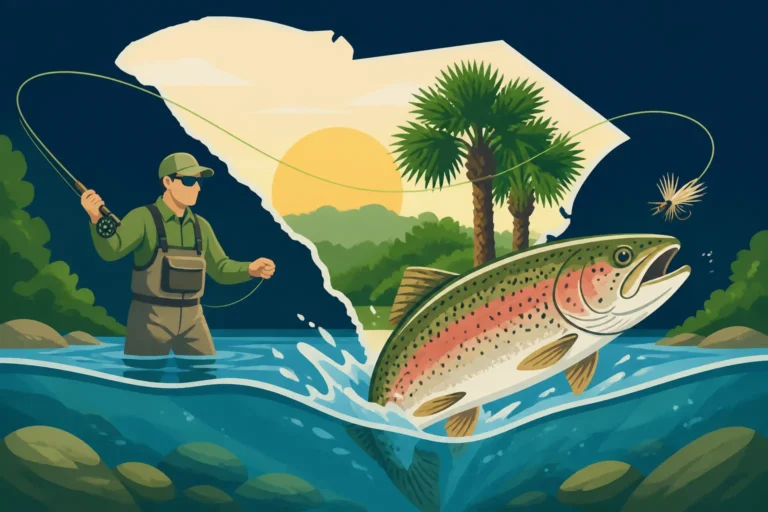
Have you ever stood at the edge of a beautiful trout stream, looking at the water tumble and swirl, and felt completely overwhelmed? It’s a common feeling. What looks like a chaotic rush of water to an untrained eye is actually a dynamic, organized system with distinct features that tell a story – a story of where trout live, where they feed, and where they hide. This guide is here to unravel that mystery, helping beginners like you learn how to read a trout stream and approach it with confidence, rather than just casting blindly.
Understanding the Basics of Trout Stream Anatomy
When you first encounter a trout stream in South Carolina's stunning Upstate region, perhaps one of the crystal-clear freestone streams, it might just look like moving water. But beneath that surface, and sometimes plainly visible, are specific structures that create prime habitat for trout. Think of these as the neighborhoods of the stream, each with its own advantages and disadvantages for a fish. Learning to identify these distinct features is the very first step in deciphering a stream's secrets.
Riffles and Rapids: The Oxygenators
Riffles are those shallower, turbulent sections of the stream where water tumbles over rocks and gravel, creating a noticeable "riffle" on the surface. Rapids are similar but more pronounced, with faster, more aerated water. From a human perspective, these might look like obstacles, but for trout, they are bustling cafeterias and oxygen factories. The disturbed water here picks up a lot of oxygen, which is crucial for trout, especially in warmer months. Furthermore, this turbulent flow dislodges insects, larvae, and other aquatic critters from the streambed, effectively serving up a buffet for hungry fish.
While trout won't often hold directly in the fastest part of a riffle, they'll be found strategically positioned in the slower water just downstream or alongside the main current, waiting for food to be delivered. Look for deeper pockets within or adjacent to the riffle, or the "tailout" where the riffle transitions into a deeper run. These areas offer both food delivery and a break from the strongest currents. Mastering how to read a trout stream for beginners means recognizing the food production of riffles and knowing where to find the fish waiting for their meal.
Runs and Currents: The Conveyor Belts
Runs are those stretches of stream where the water flows in a more uniform, often deeper, channel compared to riffles. The current is still present, but it's usually smoother and less chaotic. These "conveyor belts" are vital because they transport food from upstream riffles and pools down to waiting trout. Fish in runs often position themselves strategically, conserving energy by staying just out of the strongest current while still having easy access to drifting food.
When scouting a run, pay close attention to subtle changes in depth or current speed. A slightly deeper trench, a large submerged rock, or even a fallen log can create a prime holding lie for a trout. They might sit directly behind an obstruction, using it as a shield from the current, or just to the side of the main current seam, darting out to snatch passing morsels. The depth and consistent flow make runs excellent spots for drifting nymphs or small wet flies, mimicking the natural drift of aquatic insects.
Pools: The Deep Hideaways
Ah, pools! These are the deeper, slower-moving sections of a stream, often found after a riffle or a significant bend in the river. Pools are the trout's living rooms and bedrooms – places of refuge, deep enough to offer protection from predators and to provide stable water temperatures. They’re also excellent spots for trout to rest and digest. While the current is slower, food still makes its way into pools, settling in the calmer waters.
Trout in pools are often less active than those in riffles or runs, but they can be larger and warier. Look for areas with overhead cover, like fallen trees, undercut banks, or large boulders. The deepest part of the pool is always a good bet, especially during bright midday sun or hot weather, when trout seek cooler temperatures and protection from aerial predators. When fishing pools, a stealthy approach and a careful presentation are key. Casting too much shadow or making too much noise can easily spook these often-resident fish. You can learn more about South Carolina Stocked Trout Season Fishing Techniques for tips on targeting these fish.
Eddies and Slack Water: The Resting Spots
Eddies are fascinating pockets of water where the current either slows down significantly or even flows in a circular, upstream direction. These typically form behind large obstructions like boulders, fallen trees, or tight bends in the river. Slack water refers to any area where the current is notably weaker than the main flow, often along the banks or in shallow pockets adjacent to faster water. For trout, these are crucial resting spots. They provide a respite from the constant battle against the current, allowing fish to conserve energy.
While trout might rest in eddies, they're also opportunistic feeders there. Food that drifts down the main current can get swept into an eddy, circulating around for a trout to easily pick off. Larger, smarter trout often position themselves at the very edge of an eddy, where the main current meets the slower water. This "seam" offers the best of both worlds: easy access to a steady food supply and a low-energy place to hold. When you're trying to figure out how to read a trout stream for beginners, identifying these transition zones is paramount for success.
Deciphering the Signs: Where Trout Hide and Feed
Knowing the basic stream structures is a huge leap forward, but to truly become adept at reading a trout stream, you need to zoom in on the specific micro-habitats within those structures. Trout are masters of efficiency, always seeking the optimal balance of food, cover, and minimal energy expenditure. Their behavior is often dictated by these priorities, and learning to spot the subtle cues will reveal their hiding spots.
Current Seams and Transition Zones
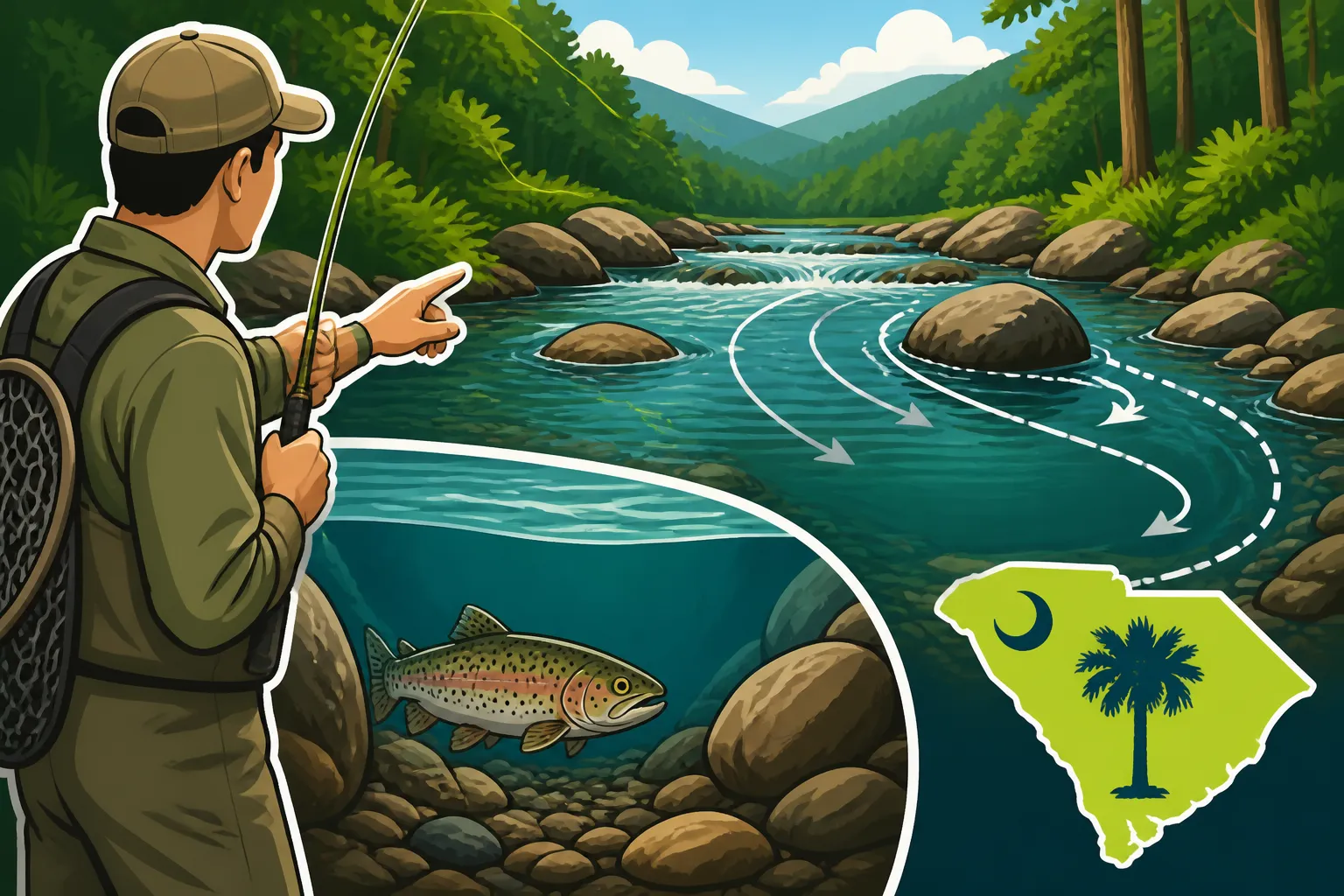
Perhaps the most important concept in trout fishing is the "current seam." This is the invisible line where two different currents meet, or where fast water transitions into slow water. Think of the edge of a fast run meeting a slower eddy, or the boundary where a deep channel meets a shallower flat. These seams are absolute magnets for trout because they act like conveyor belts for food. Insects, baitfish, and other edibles get funneled along these seams, creating a natural feeding lane.
Trout will often hold just out of the strongest current, usually on the slower side of the seam, waiting for food to drift by. They can quickly dart into the faster water to grab a meal, then retreat to their low-energy holding lie. Look for these seams around large rocks, fallen logs, at the head and tail of pools, or wherever the bank structure creates a change in flow. A properly presented fly or lure drifted along a current seam often elicits an immediate strike. You might find this technique useful when fishing in one of the many Native Brook Trout Streams in South Carolina's Blue Ridge Mountains.
Submerged Structure and Cover
Trout are constantly on the lookout for cover, both from predators (like ospreys, kingfishers, or even larger fish) and from strong currents. Any submerged object that breaks the flow or provides a hiding spot can be a prime trout lie. This includes large boulders, sunken logs, root balls from eroded banks, and even patches of aquatic vegetation. These structures create shadows, reduce current speed, and often harbor insect life, making them triple threats for trout.
When you're looking at a stretch of water, try to visualize what's beneath the surface. If you see a ripple disappearing around a large rock, there's likely a calmer pocket of water behind it. If a tree has fallen into the stream, its branches and trunk provide countless hiding spots. Even subtle depth changes, like a sudden drop-off, can act as cover. Many experienced anglers often wear polarized sunglasses, which can be purchased on platforms like Amazon, to help them peer into the water and identify these submerged features more easily. Understanding Why Trout Limits Differ From Stream to Stream can also give you clues about how much pressure fish in certain areas face, making them more wary of uncovered lies.
Overhanging Banks and Shade
Don't neglect the edges of the stream! Overhanging banks, especially those with exposed roots, provide excellent overhead cover and create undercut pockets where trout can hide. These spots offer shade, which is particularly appealing during bright, sunny days when trout prefer cooler, darker conditions. The exposed roots also offer hiding spots for insects and small baitfish, adding to the appeal.
Similarly, areas of the stream that are shaded by trees or steep terrain are prime spots, especially during the middle of the day. The shade keeps the water cooler and darker, making trout feel more secure and less visible to predators. Pay attention to how the sun moves throughout the day and how shadows fall on the water. A spot that looks unproductive in direct sun might come alive once it's under the shade of a tall pine. This holds true for species found in places like the Best Streams for Brook Trout in the Blue Ridge Mountains where dappled light is common.
The Influence of Water Conditions and Time of Day
A trout stream is never static; it's a living, breathing ecosystem that changes with the weather, seasons, and time of day. These external factors significantly influence trout behavior and, consequently, where you'll find them holding and feeding. Ignoring these variables is like trying to guess the weather without looking out the window – you might get lucky, but you're probably going to be disappointed.
Water Temperature and Oxygen Levels
Water temperature is arguably the most critical factor influencing trout behavior. Trout are cold-water species, thriving in temperatures generally between 45-65 degrees Fahrenheit. As water temperatures rise above this range, trout become stressed, seek cooler, deeper water, and become less active. Conversely, in very cold water, they might also become sluggish. Higher temperatures also mean lower dissolved oxygen levels, forcing trout to seek out areas with more aeration, such as the heads of riffles or sections with strong current.
This means that on a hot summer day, your best bet might be to target deep pools, shaded sections, or the highly aerated water at the tail of a waterfall or fast riffle. In cooler spring or fall conditions, trout might be more spread out and active throughout the stream. Knowing How to Fish Bait for Stocked Trout or even Fly Fishing Basics for Stocked Trout can be adapted based on the water temperature. Always consider carrying a small stream thermometer. Observing what's going on around you, from recent rain to the position of the sun, gives you huge clues.
Water Clarity and Light Conditions
The clarity of the water and the amount of light penetrating the surface also play a huge role. Crystal-clear water, while beautiful, makes trout warier and more easily spooked. In such conditions, a stealthy approach, longer leaders, and lighter tippets are often necessary. Trout in clear water also rely heavily on overhead cover and deep water for security. This is particularly true in pristine waters where you might encounter South Carolina's Native Brook Trout: A Blue Ridge Mountain Original.
Conversely, slightly stained or off-color water can make trout bolder, as the reduced visibility gives them more confidence to move into open areas to feed. After a rain shower, when the water might be a bit murky, trout often move closer to the banks, searching for dislodged food. Light conditions, from bright sun to overcast skies, also matter. On bright days, trout often retreat to deeper, shaded areas. On overcast days, they might be more willing to hold in shallower, more open water.
Seasonal and Daily Changes
Trout streams aren't just impacted by daily weather; they evolve through the seasons. Spring often brings higher water levels from rain and snowmelt, and trout are actively feeding after the lean winter months. Summer means lower, warmer water, pushing trout into refugia. Fall sees cooling temperatures and often a renewed feeding frenzy before winter sets in.
Within a single day, conditions also change. Early morning and late evening (dawn and dusk) are often prime feeding times, as light levels are low, providing security, and insects are often most active. Midday, especially on bright, hot days, can be challenging, with trout seeking deeper, cooler, more oxygenated water or tight to cover. However, a passing cloud cover or a brief shower can temporarily turn off the "midday slump" switch and get fish active again. If you're wondering Do Stocked Trout Bite Better After Rain, the answer often ties into these daily and seasonal changes.
Putting It All Together: A Step-by-Step Approach to Stream Reading
So, you've learned about riffles, runs, pools, and eddies. You know to look for current seams, submerged cover, and shaded banks. You've considered temperature and light. Now, how do you actually apply all this knowledge when you step up to a new stretch of trout stream? It can still feel like a lot to process. The key is to have a systematic approach, to break down the daunting whole into manageable parts.
Approach, Observe, and Plan Your Cast
The very first step when you arrive at a new section of stream is to stop, look, and listen. Don't rush to the water and start casting immediately. Take a few minutes, even five to ten, to observe from a distance. Use that trusty pair of polarized sunglasses (perhaps a brand you found on Amazon) to peer into the water. Look for rises (trout eating insects off the surface), subtle movements, or flashes of fish. Identify the major structures: where does a riffle turn into a run? Where’s the deepest part of the pool? Are there any obvious current seams or large pieces of cover?
As you observe, think about how the water is flowing and where a trout would logically position itself to feed with minimal effort. This is where your knowledge of current seams and holding lies comes into play. Formulate a plan for your first cast. Where do you want your fly or lure to land? How will it drift? What's the optimal angle to approach without spooking potential fish? Planning your approach, rather than simply reacting, is a hallmark of an effective stream reader. Don't forget to check the South Carolina Stocked Trout Daily Limit and other regulations before you cast.
Move Slowly and Stealthily
Trout are incredibly wary, especially in clear, shallow water. Your approach is often more important than your cast. Move slowly and deliberately, keeping a low profile. Avoid wearing bright clothing that contrasts sharply with your surroundings. Walk softly along the bank, avoiding heavy footsteps that can send vibrations through the water. If possible, approach from downstream, casting upstream, as trout generally face into the current. This makes it harder for them to see you coming.
When you identify a promising spot, make your first cast count. Often, the first good drift through a prime lie is your best chance at hooking a fish. If you don't get a strike, don't just keep casting aimlessly. Re-evaluate. Did your fly drift naturally? Was your presentation good? Or did you perhaps spook the fish? Sometimes, moving just a few feet upstream or downstream to approach from a different angle can make all the difference. Remember, the goal of learning how to read a trout stream for beginners isn't just to spot fish, but to catch them, and stealth is a huge part of that equation. You might consult resources like How to Read a Trout Stream for Beginners to refine your approach.
Here's a quick guide to common stream features and what they tell you:
| Stream Feature | Description | Trout Behavior & Lies | Fishing Strategy |
|---|---|---|---|
| Riffle/Rapids | Shallow, turbulent, oxygenated water over rocks. | Produce food, trout hold just out of strongest current. | Drift nymphs/wet flies at edges or downstream. |
| Runs | Deeper, smoother, consistent current channel. | Trout hold in slower water, along seams, behind structure. | Drift nymphs/streamers along current seams and structure. |
| Pools | Deep, slow-moving sections. | Resting, cover, larger, wary fish. Deeper sections, cover. | Subtle presentations, dry flies on surface, deeper nymphs. |
| Eddies/Slack Water | Calm water behind obstructions or along banks. | Resting, opportunistic feeding where current meets slack. | Target current seams, drift flies into the eddy. |
| Current Seams | Where fast and slow water meet. | Prime feeding lanes, trout hold on slower side. | Focus casts directly on these seams. |
| Submerged Structure | Boulders, logs, root balls. | Cover from current & predators, ambush points. | Cast close to and behind structure. |
| Overhanging Banks/Shade | Undercut banks, shaded areas by trees. | Cover from sun & predators, cooler water. | Cast under banks, target shaded areas. |
| Depth Changes | Drop-offs, trenches. | Deeper water for cover, temperature refuge. | Probe these areas with weighted flies or lures. |
Becoming proficient at reading a trout stream takes time, practice, and a keen eye. Every stream is unique, and conditions change constantly. But by understanding these fundamental principles, you'll start to see the stream not as a chaotic mystery, but as an open book, revealing its secrets one ripple and eddy at a time. The more you practice, the more intuitive it becomes, and soon you'll be confidently finding those elusive South Carolina trout! And remember, there are different rules for different types of fishing, so always be aware of things like Which South Carolina Streams Are Catch-and-Release Only for Trout? or Checking a Stream's Trout Limit Before You Fish It. It's all part of being a responsible and successful angler.
Disclaimer
This article is for general informational purposes only and does not constitute professional advice. Laws, prices and regulations vary by location and change over time. Consult a qualified professional for guidance on your specific situation.