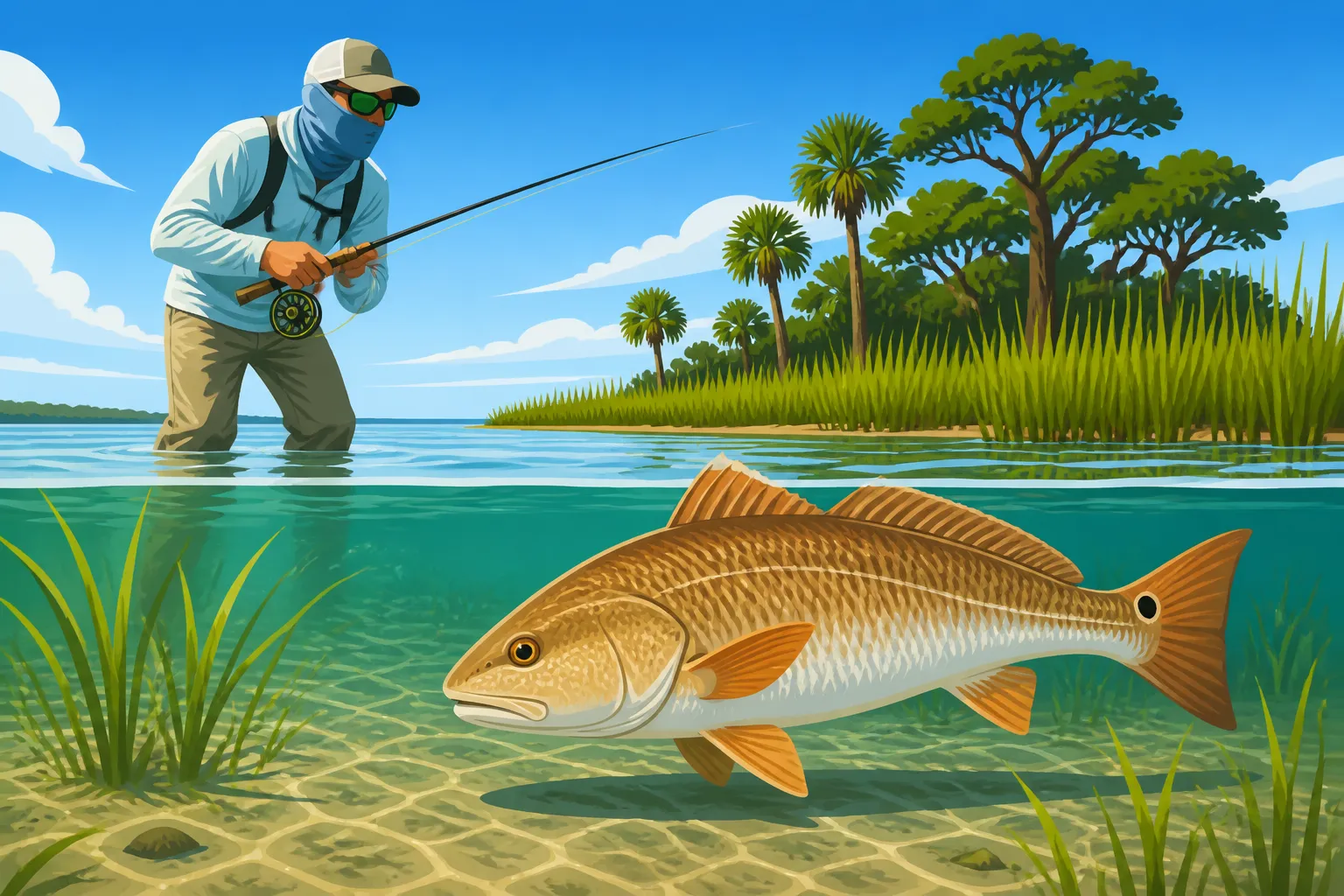
How to Sight Fish for Redfish in Shallow Water
There’s nothing quite like the heart-stopping moment when you spot a redfish cruising silently in crystal-clear, shallow water. It’s a pure adrenaline rush, but that excitement can quickly turn to frustration if you don't know how to approach and present your bait without spooking these wary creatures. This guide is all about equipping you with the knowledge and tactics to successfully sight fish for redfish in South Carolina’s beautiful shallow waters, turning those elusive sightings into unforgettable catches.
Understanding the Shallow Water Redfish Habitat and Behavior
Redfish, also known as red drum, are incredibly adaptable fish that thrive in the rich estuaries, marsh creeks, and shallow flats along the South Carolina coast. However, their behavior changes dramatically when they move into extremely shallow water, and understanding these nuances is critical for successful sight fishing. They become more cautious, their movements are more deliberate, and they are much more susceptible to being spooked.
Why Redfish Move into the Shallows
Redfish venture into the skinny water for two main reasons: to feed and to seek refuge. As the tide rises, it floods vast expanses of grass flats and oyster rakes, uncovering a smorgasbord of crabs, shrimp, and small baitfish that were previously inaccessible. This is when you'll often see them "tailing"—their tails breaking the surface as they root around for a meal. The shallow water also offers a degree of protection from larger predators, as bigger fish and dolphins often can't follow them into such skinny water. It’s a trade-off, though; in these vulnerable spots, they rely heavily on their senses and the clarity of the water to detect threats. Knowing when and where they'll make these moves is half the battle, and understanding their patterns in places like the Murrells Inlet Redfish Fishing Spots in South Carolina or the vast marsh systems around Charleston can really improve your chances.
Identifying Redfish Behavior in Shallow Water
When you're scanning those calm flats, look for more than just a flashing tail. Redfish will often create subtle disturbances that are easy to miss if you're not paying close attention. A slight ripple where there shouldn't be one, a nervous wake moving across an otherwise still surface, or even a change in water color can indicate a fish. Sometimes, you'll see a dark "shadow" moving slowly – that's often a redfish. If they feel threatened, they might "blow up" the water as they dart away, or if they're feeding intensely, they might churn up mud or grass. Paying attention to these cues helps you understand if the fish is actively feeding, cruising, or already aware of your presence. A cruising redfish might be easier to intercept, while a tailing fish is usually focused on its meal, offering a better presentation window.
Common Shallow Water Hangouts
South Carolina's coast offers a diverse range of shallow water habitats where redfish love to hang out. You'll find them on vast grass flats, particularly during higher tides when the water covers the grass. These areas are prime for tailing redfish. Oyster beds and shell rakes are also huge attractors, as they provide both food and structure. Redfish will patrol the edges of these beds, picking off crabs and other crustaceans. Sand bars and potholes within the flats are also key spots. During falling tides, redfish often congregate in these deeper depressions, waiting for the tide to turn or ambushing bait as it gets flushed out. Understanding where to look at different tide stages is crucial; for instance, the lowcountry estuaries near Beaufort are famous for these diverse shallow-water habitats.
Essential Gear for Sight Fishing Redfish
Successful sight fishing isn't just about spotting the fish; it's about having the right tools to make that crucial, stealthy cast. Your gear choices, from what you wear to the rod in your hand, play an enormous role in your ability to present a bait effectively without spooking your target.
Vision Aids: Polarized Sunglasses and Elevated Platforms
This might sound obvious, but I can't stress enough how vital high-quality polarized sunglasses are for sight fishing. They cut the glare off the water, allowing you to see into the water column and spot fish that would otherwise be invisible. Brands like Costa Del Mar or Maui Jim are popular for a reason—their lenses make a huge difference. Think of them as an extension of your eyes. Beyond sunglasses, an elevated vantage point is a game-changer. If you’re fishing from a boat, a poling platform or even standing on your cooler can give you that extra foot or two of height, significantly expanding your field of vision into the water. For kayak anglers, a stand-up paddleboard or a stable kayak designed for standing offers a similar advantage. You can often find great deals on quality eyewear and kayak accessories on platforms like Amazon.
Rod and Reel Setup for Stealth and Accuracy
When it comes to rods and reels, you need a setup that prioritizes accuracy and a light touch. For spin fishermen, a medium-light to medium action rod, typically 7 to 7.5 feet long, paired with a 2500 or 3000 series reel is ideal. This combination gives you the backbone to fight a strong redfish but enough finesse for delicate presentations. Load your reel with 10-15 pound braided line, which offers superior casting distance and sensitivity. For fly anglers, an 8 or 9-weight rod is the standard. It has the power to punch flies into a headwind and handle larger flies, but still offers the accuracy needed for precise casts to spooky fish. A weight-forward floating line matched to your rod weight is crucial. Regardless of your preference, remember that your cast needs to be soft and accurate, landing the bait just beyond or to the side of the fish, not directly on its head.
Bait and Lure Selection for Shallow Water Redfish
The key to choosing the right bait or lure for sight fishing redfish is imitation and a subtle presentation. You want to mimic the natural forage they're hunting in the shallows.
Live Bait Options
If you prefer live bait, live shrimp are always a fantastic choice. They're natural, readily available, and redfish absolutely love them. Rig them on a light circle hook, either free-lined or with a tiny split shot if you need a little extra casting weight. Small mud minnows or finger mullet are also excellent, especially in areas where these are prevalent baitfish. The beauty of live bait is its natural movement, which can entice even a hesitant redfish. However, keeping live bait alive and making long, accurate casts with it can sometimes be a challenge.
Artificial Lures for Sight Fishing
When it comes to artificials, soft plastics are kings in shallow water. Shrimp imitations, grub tails, and jerk shads in natural colors like root beer, pearl, or chartreuse are highly effective. Rig them on a light jig head, usually 1/8 to 1/4 ounce, to allow for a slow, subtle fall. The goal is to make the lure look like an easy meal drifting by. Topwater lures, particularly walk-the-dog style baits or poppers, can be incredibly exciting when redfish are actively feeding and the water is calm. They trigger aggressive strikes. For fly anglers, crab and shrimp patterns like the Enrico Puglisi (EP) Crab or the Kwan are perennial favorites. Clouser Minnows or other small baitfish imitations can also work well, especially when tied on weedless hooks to avoid snagging on the grass. You can find a vast array of effective Best Lures for Tailing Redfish in Grass Flats on platforms like Amazon, offering great choices for every scenario.
Techniques for Spotting and Presenting Baits to Redfish
Sight fishing redfish is an art form that blends patience, keen observation, and precise execution. It's not just about seeing a fish; it's about understanding its trajectory and making an almost invisible presentation.
The Art of Spotting and Reading Fish
Spotting redfish in the glare and reflections of shallow water is incredibly challenging, and it gets even harder the more wind there is. Always start by scanning for movement, wakes, or disturbances. Then, look for the fish itself—a dark shadow, a glint of gold, or, ideally, a tail breaking the surface. Once you spot a fish, don't just cast immediately. Take a moment to "read" it. Is it cruising purposefully? Is it tailing and feeding intently? Is it spooked and moving fast? This informs your approach. You need to predict its direction and speed. If you spot a redfish moving quickly, trying to intercept it might be better than casting directly at it. Remember, redfish often cruise parallel to structure, like the edge of an oyster bar or a deeper channel. Understanding Redfish Slot Limit Rules for South Carolina Anglers is also crucial, so you know which fish you can keep if you do catch them.
The Importance of Stealth and Patience
Redfish in shallow water are on high alert. Any sudden movement, loud noise, or splash from your boat or kayak can send them fleeing. When poling or paddling, move slowly and deliberately. If wading, shuffle your feet to avoid kicking up mud. Cast shadows are also a major concern; try to keep the sun at your back, or at least avoid casting your shadow over the fish. Patience is absolutely key. It’s better to wait for the perfect shot at a fish than to rush a bad cast and spook it. Sometimes, you might have to wait for minutes for the fish to get into a better position or for the wind to die down just enough for a clean cast.
The Perfect Cast and Retrieve
Once you've spotted your target and read its intentions, the cast is the moment of truth.
Mastering the Presentation
Your cast needs to be soft, accurate, and just beyond or to the side of the fish, ideally within 2-4 feet. Never cast directly on top of a redfish; it will almost always spook them. For spin fishermen, a sidearm cast or roll cast can keep your line low and reduce the splash. For fly anglers, a delicate presentation is paramount; avoid false casting directly over the fish. Once your lure or fly lands, let it sink naturally for a few seconds. The goal is for the bait to appear as if it's casually swimming or drifting into the fish's strike zone. This is a critical point; if your bait lands too far away, the fish might not see it, and too close, it will bolt. This skill improves with practice, and targeting areas known for fish, like the Charleston Harbor Redfish Fishing Spots can give you more opportunities to refine your technique.
Effective Retrieve Techniques
The retrieve should be slow, subtle, and natural. Think about how a wounded baitfish or a foraging crab would move. For soft plastics, short, gentle twitches of the rod tip, followed by pauses, can mimic a shrimp or small fish. Allow the jig to settle to the bottom during the pauses, as redfish often pick up food from the substrate. If you're using a topwater lure, a slow walk-the-dog action is usually most effective, creating just enough commotion to draw attention without being overly aggressive. Fly fishing retrieves vary by fly pattern; crab patterns usually involve slow, short strips, while shrimp patterns might incorporate a longer strip followed by a pause. Always be ready for the strike; redfish often inhale the bait without much fanfare, so watch your line for any subtle twitch or movement.
Environmental Factors and Timing for Success
Beyond your personal skill, external environmental conditions play a massive role in whether your sight fishing trip will be a roaring success or a frustrating exercise in futility. Paying attention to these factors before you even launch your boat can significantly improve your odds.
The Impact of Tides and Water Clarity
In shallow water sight fishing, tides are everything. The rising tide brings redfish onto the flats to feed, and the falling tide often concentrates them in channels, potholes, and along oyster bar edges. Timing your trip to the middle to high stages of the incoming tide is often ideal for finding tailing fish on the grass flats. As the tide begins to fall, you might shift your focus to the edges of the flats and deeper cuts. Understanding Does Tide Timing Matter for South Carolina Redfish? is foundational to successful inshore angling.
Water clarity is equally, if not more, important. You simply cannot sight fish effectively if you can't see the fish. Clear, calm water is your best friend. After heavy rains, runoff can muddy the water, making sight fishing nearly impossible. Similarly, strong winds can churn up the bottom, reducing visibility. Always check the weather forecast and tide charts before heading out. A slight breeze might be manageable, but anything over 10-15 mph can make spotting fish incredibly difficult.
The Role of Sun Angle and Weather
The position of the sun is a huge factor in your ability to spot fish. When the sun is high in the sky and at your back, you'll have the best visibility into the water. Early mornings and late afternoons, when the sun is lower, can create more glare, making it tougher to see unless you're positioned perfectly. Overcast conditions can also present a challenge because they reduce the shadows and contrasts that often give away a fish's presence. However, a light, consistent overcast can sometimes provide a more even light distribution, allowing you to see deeper without harsh glare.
Best Seasons and Conditions for Sight Fishing
South Carolina generally offers excellent sight fishing opportunities year-round, but some seasons are undeniably better than others.
Spring and Fall: Peak Season
Spring and fall are arguably the prime seasons for sight fishing redfish. The weather is typically milder, and the water temperatures are comfortable for both anglers and fish. In spring, redfish become more active after the winter chill, feeding aggressively to build up energy. In the fall, as water temperatures begin to drop, redfish are in full-on feeding mode, preparing for winter. The cooler air can also lead to more stable, clear water conditions. This is when you'll often find schooling redfish in large numbers, particularly in the fall.
Summer: Early Mornings and Late Evenings
Summer can be challenging due to the heat and potential for afternoon thunderstorms, but it still offers fantastic sight fishing, especially during the cooler parts of the day. Early mornings, just after sunrise, and late evenings, leading up to sunset, are often the most productive. The lower sun angle and calmer conditions usually mean better visibility. During the heat of the day, redfish might seek deeper water or denser cover, making them harder to spot in the open flats.
Winter: A Unique Opportunity
Don't write off winter! Cooler water temperatures can actually make the water incredibly clear. Redfish often school up in large numbers during the colder months, making them easier to spot if you find the school. They can become lethargic, however, so a slower, more deliberate presentation is often required. Keep an eye on the water temperature; extremely cold water can send them into deeper holes, but mild winter days can offer some of the best sight fishing of the year. Always check the local forecast, as well as specific local regulations like the South Carolina Redfish Vessel Limit Explained or the South Carolina Redfish Daily Bag Limit Per Person before you head out.
| Factor | Ideal Conditions for Sight Fishing Redfish | Challenging Conditions |
|---|---|---|
| Water Clarity | Crystal clear, calm, visibility of 2+ feet | Muddy, stained, turbulent water, heavy runoff |
| Tide | Mid to high incoming for grass flats; falling for edges/potholes | Slack tide (fish less active), extreme tides (fish scattered) |
| Sun Angle | High sun, at your back (for spotting); early/late with sun at your back | Low sun directly in your eyes, heavy overcast (less contrast) |
| Wind | Calm to light breeze (under 10 mph) | Strong winds (15+ mph) creating chop and stirring bottom |
| Temperature | Moderate (Spring/Fall) 60-80°F; mild winter days | Extreme heat (fish seek deep water); extreme cold (fish lethargic) |
| Patience | Essential for waiting for the perfect cast and approaching fish stealthily | Rushing casts, loud movements, lack of observation |
Disclaimer
This article is for general informational purposes only and does not constitute professional advice. Laws, prices and regulations vary by location and change over time. Consult a qualified professional for guidance on your specific situation.