Best Jig Colors for Crappie Fishing
There’s nothing quite as frustrating as hitting your favorite South Carolina crappie spot, seeing fish on the sonar, trying every trick in your tackle box, and still coming up empty-handed. Often, the difference between a full livewell and a quiet ride home boils down to something as seemingly simple as jig color. It might sound like a small detail, but in the nuanced world of crappie fishing, selecting the right hue can absolutely make or break your day. This guide will dive deep into understanding how water conditions influence crappie jig color choices, helping you put more slabs in the boat.
Understanding Water Conditions and Their Impact on Jig Color
Crappie, like most fish, rely heavily on their vision to hunt, especially when it comes to tiny jigs mimicking their prey. The way light penetrates the water, the clarity of that water, and even the time of day all play a massive role in how a crappie perceives your lure. Ignoring these factors is like trying to guess the speed limit without seeing the signs – you’re just setting yourself up for disappointment.
How Light Penetration Affects Visibility
Think about it this way: what looks vibrant in bright sunlight might completely disappear in murky depths or under cloudy skies. Different colors absorb and reflect light at varying wavelengths. Reds and oranges are the first to be absorbed by water, meaning they quickly lose their color and appear gray or brown as they go deeper or as light diminishes. Blues and greens, on the other hand, penetrate water much better and maintain their visual integrity at greater depths.
On a sunny day with clear water, a bright, natural-looking jig might sparkle and entice. But on a heavily overcast day, or if you're fishing early morning or late evening, those same colors might be practically invisible. You need to pick colors that will stand out and create a strong profile under the available light conditions, or at least mimic what the crappie are seeing naturally at that depth. This is why having a diverse selection in your tackle box, maybe even a multi-pack of crappie jigs from a place like Amazon, is so crucial.
The Role of Water Clarity
Water clarity is perhaps the most significant factor. South Carolina's lakes and rivers can range from crystal clear mountain streams to tannin-stained blackwater rivers and turbid coastal estuaries. Each scenario demands a different approach. In clear water, fish have excellent visibility and are often more wary. They see your jig, but they also see the line, the knot, and any unnatural movements. In these conditions, natural colors or translucent jigs that blend in tend to perform better, mimicking baitfish or insects without alarming the crappie.
Conversely, in dingy or muddy water, visibility is severely limited. Crappie rely more on lateral lines to detect vibrations and less on sight. Here, you want colors that create the strongest contrast and silhouette, making them easier for the crappie to spot. Bright, fluorescent colors or those with UV enhancements can make a big difference. Think about how a bright orange safety vest stands out against a foggy backdrop – that’s the effect you’re aiming for. Knowing the local conditions, perhaps after checking recent reports for lakes like Santee Cooper, can give you a significant advantage.
Top Crappie Jig Colors for Different Situations
While crappie can be finicky, there are some universally loved jig colors that tend to produce results across various conditions. Having these staples in your arsenal is a must, but learning when to deploy each one is the real art. Remember, crappie moods can shift, so be prepared to change up your presentation. If you're looking for more general guidance, our Crappie Fishing Tips for South Carolina Lakes guide offers a broader perspective.
Clear Water and Sunny Conditions
When the water is clear and the sun is high, crappie often hold deeper or in shaded areas, but they still need to see your bait. In these conditions, subtlety is your friend.
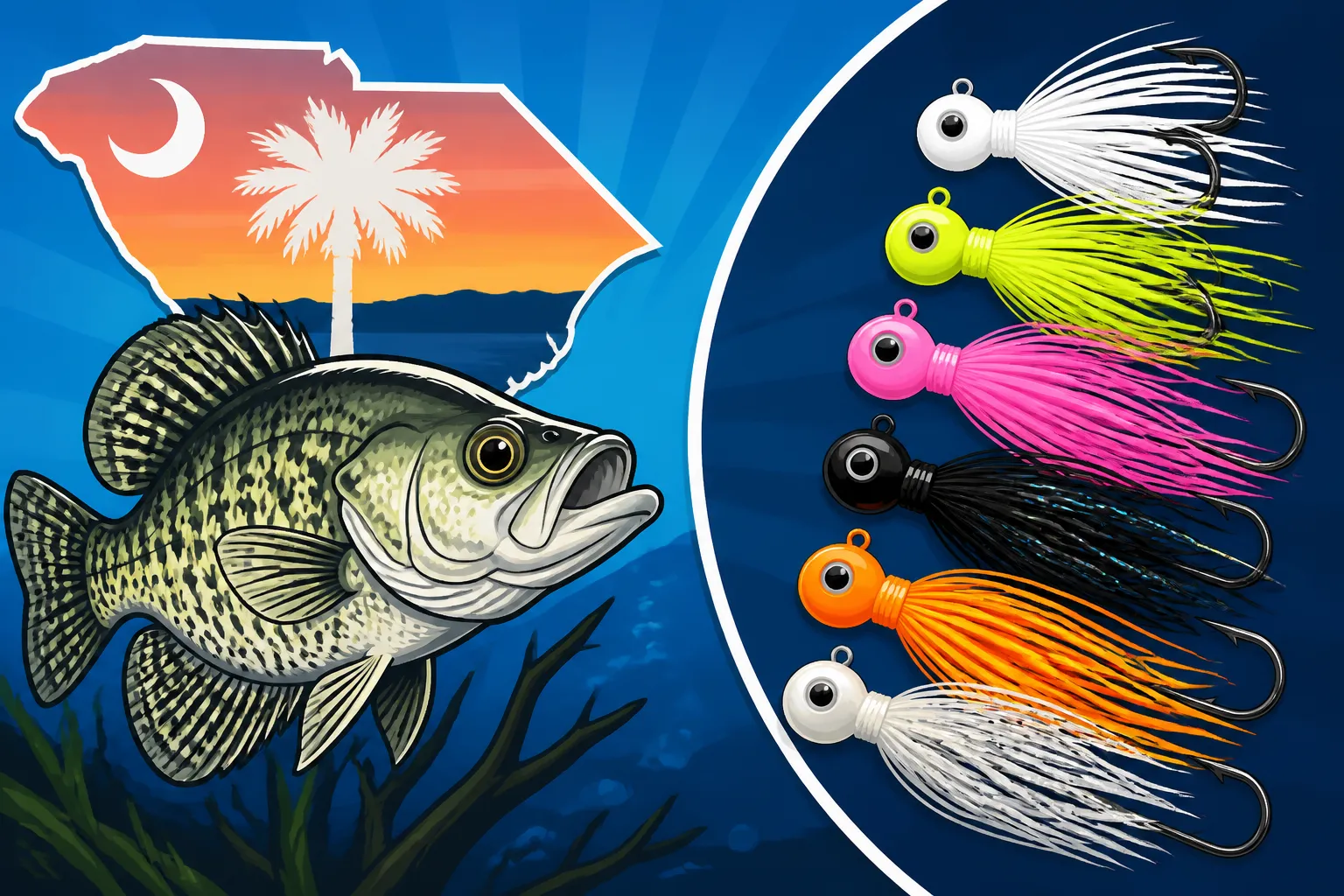
- Natural Baitfish Imitations: Colors like pearl, silver, white, or light gray are excellent choices. They mimic small shad, minnows, and other forage fish that crappie commonly prey on. These colors reflect natural light, making them appear lifelike without being overly aggressive.
- Translucent Colors: Clear jigs with a touch of glitter or a light tint of blue or green can be deadly. They allow light to pass through, creating a more natural, ghost-like appearance that wary crappie find hard to resist.
- Light Greens and Browns: If crappie are feeding on aquatic insects or small crustaceans, subtle greens (like chartreuse-pearl combinations) or browns can be effective, especially around weed lines or submerged timber.
For example, on a calm, sunny morning on Lake Murray, if you're targeting crappie suspended around brush piles in clear water, a small, white or silver jig tipped with a minnow might be your best bet. The natural flash will draw them in without spooking them.
Murky or Stained Water and Low Light
When the water is stained, muddy, or the light is dim (think dawn, dusk, or heavy overcast days), you need colors that scream "eat me!" Crappie in these conditions rely on strong visual cues and vibration.
- Fluorescent and High-Contrast Colors: Chartreuse, neon green, bright orange, and hot pink are absolute workhorses. These colors have a strong visual presence even in low-light environments because they reflect UV light, which fish can see better than humans. A chartreuse jig, for instance, can appear incredibly vibrant to a crappie in stained water, even if it looks a bit dull to us.
- Darker Solids: Believe it or not, black or dark blue jigs can be incredibly effective in murky water. They create a distinct silhouette against any available light, making them easier for crappie to detect from a distance. This is especially true when fishing close to the bottom or under heavy cover.
- Orange and Red: While reds and oranges are quickly absorbed by water, in very shallow and stained water, or when used as an accent color, they can still be effective, especially if you're mimicking crawfish or injured baitfish.
Imagine fishing the dark, cypress-studded waters of the Santee Cooper Lakes on a cloudy afternoon. A bright chartreuse or orange jig is going to give you a much better chance of being noticed than a subtle silver one. When targeting deep-water crappie, perhaps while trying How to Jig for Crappie in Deep Water, remember that visibility is greatly reduced, making these vibrant colors even more critical.
Transitional or Moderate Conditions
Sometimes, you're not dealing with extremes. The water might be slightly stained, or the light is variable. These are the times to combine strategies.
- Two-Tone Jigs: Jigs with two contrasting colors are often fantastic in moderate conditions. Think black and chartreuse, pink and white, or blue and pearl. The contrast helps the jig stand out, while one of the colors might appeal more under specific light penetration.
- Glow-in-the-Dark: While often associated with night fishing, glow jigs can be very effective in moderately stained water or at deeper depths, even during the day. A quick charge with a flashlight can make them highly visible, emitting a soft, attractive glow.
- "Stinger" Tails or Accents: Sometimes, it's not just the primary color but a small accent that makes the difference. A white jig with a chartreuse tail, or a black jig with a red "stinger" hook, can provide just enough contrast or flash to trigger a bite.
When facing these in-between conditions, don't be afraid to experiment. If you're not getting bites on one color, switch to another. Sometimes a slight variation, like changing from a solid chartreuse to a chartreuse-white combo, can unlock the bite. Having a variety of jig types, perhaps a multi-pack from a popular brand available on Amazon, can make this experimentation much easier.
| Water Condition | Light Conditions | Recommended Jig Colors | Why These Colors Work |
|---|---|---|---|
| Clear Water | Bright Sun | White, Pearl, Silver, Light Blue, Translucent, Natural Greens | Mimic natural baitfish; subtle, less likely to spook. |
| Clear Water | Overcast/Low Light | White, Pearl, Light Blue, Light Chartreuse | Maintain visibility while still appearing natural. |
| Stained/Murky Water | Bright Sun | Chartreuse, Neon Green, Orange, Hot Pink, Black, Dark Blue | High contrast, strong silhouette, reflect UV light. |
| Stained/Murky Water | Overcast/Low Light | Chartreuse, Neon Green, Orange, Glow-in-the-Dark, Black | Maximum visibility, strong profile in poor conditions. |
| Tannin-Stained (Blackwater) | Any | Chartreuse, Orange, Black, Red, Pink | High contrast against dark water; UV properties effective. |
Beyond Color: Other Factors That Influence Crappie Bites
While jig color is a huge piece of the puzzle, it’s not the only piece. Experienced crappie anglers in South Carolina know that success often comes from a holistic approach, combining several elements to create an irresistible presentation. Even the Best Time of Year to Catch Crappie can influence what colors they're looking for!
Size and Shape of the Jig
A crappie’s diet varies depending on the season and the available forage. Sometimes they're focused on tiny baitfish, other times on larger minnows or even insect larvae. Matching the hatch in terms of size and shape can be just as crucial as color. A crappie might ignore a 2-inch jig but readily snatch up a 1-inch offering.
For example, in early spring when crappie are still sluggish, a very small, subtle jig might be preferred. As they become more active, they might chase larger baits. Jig shapes also play a role; some days they want a classic tube jig, other days a minnow-profile swimbait. If you're struggling to get bites, try changing the size or profile of your jig before giving up on a specific color entirely.
Action and Retrieval Speed
Even the perfect color can fail if the jig isn't moving right. Crappie are ambush predators, often reacting to erratic or injured-looking movements. A jig that swims naturally, darts, or twitches tantalizingly can be incredibly effective.
Consider the depth and structure you’re fishing. If you're fishing How to Fish for Crappie Around Brush Piles, a slow, deliberate jigging motion might be best to draw out hesitant fish. In open water, a faster retrieve with pauses and twitches might trigger a reaction strike. Experiment with different retrieval speeds, pauses, and twitches until you find what the crappie want that day. Sometimes a subtle "dead stick" presentation is all it takes, letting the jig suspend motionless near a school of fish.
Scent and Attractants
While not directly related to color, scent can definitely enhance your jig's appeal, especially in murky water or when crappie are less active. Crappie have a keen sense of smell, and adding a dab of scent attractant to your jig can provide an extra layer of temptation.
Many anglers use liquid scents or gel formulations that can be applied directly to soft plastic jigs. Others prefer to tip their jigs with live bait, such as a small minnow or a piece of Berkley PowerBait crappie nibblers. This combination of visual appeal (color), movement (action), and scent can be a powerful trifecta, making your offering truly irresistible. It can often turn a slow bite into a hot one, especially when those crappie are playing hard to get.
Practical Tips for Experimenting with Jig Colors
The beauty of crappie fishing is that there's always something new to learn, and experimentation is key. Don't be afraid to break away from what "worked last time" or what someone else is using. The crappie will tell you what they prefer, if you're willing to listen. If you're trying to Find Crappie in Spring, for example, don't assume the same colors you used in fall will work.
Start with a Baseline and Adjust
When you arrive at your fishing spot, start with a versatile, proven color like white, chartreuse, or a combination like black and chartreuse. Pay close attention to the water clarity and light conditions. If you're not getting bites after 15-20 minutes, or if you're seeing fish but they aren't committing, it's time to make a change.
Your first adjustment should often be color, but don't forget about size and depth. Try going lighter or darker, more natural or more fluorescent. Keep a mental note, or even a literal fishing log, of what colors work in which conditions. This data will become invaluable over time.
The "Crazy Color" Theory
Sometimes, crappie will hit jigs that seem completely out of place. We've all had those days where a bright purple or electric blue jig is the only thing they'll touch. This often happens when crappie are reacting purely out of aggression or curiosity, rather than hunger, or perhaps when the "crazy color" creates a unique profile in specific light conditions that no other bait provides.
Don't be afraid to throw something completely different into the mix, especially if the bite is slow. It might be the unexpected pop of color that finally triggers a strike. Keep a few "oddball" colors in your tackle box for these surprising situations. You can find a vast array of unique color combinations on online retailers like Amazon, perfect for those experimental days.
Observe Other Anglers (Subtly, of Course!)
While you should always trust your instincts, sometimes observing what other successful anglers are using (if it's a public spot) can offer clues. Are they catching fish on bright colors or natural hues? Are they jigging fast or slow? This isn't about copying exactly, but gathering information that can inform your own experimentation.
Remember, though, that conditions can change rapidly. What worked for someone an hour ago might not work now. Use observations as a starting point for your own systematic testing, rather than a definitive answer. Ultimately, the crappie in front of you are the final arbiters of the "best" color.
Organize Your Jigs for Easy Access
When you're out on the water, the last thing you want is to be fumbling through a disorganized tackle box when the bite is hot. Organize your jigs by color, size, or type so you can quickly make changes. Small, clear tackle trays are perfect for this, allowing you to see your options at a glance.
Having your jigs neatly arranged allows you to transition seamlessly between different colors and presentations, maximizing your time on the water and your chances of success. After all, the quicker you can switch to the right color, the more crappie you’ll have a chance to catch.
Disclaimer
Fishing conditions and regulations in South Carolina can change. Always consult the latest South Carolina Department of Natural Resources (SCDNR) regulations before heading out. This guide is for informational purposes only and does not constitute legal advice.