Tide-Based Techniques for Inshore Fishing
Many anglers in South Carolina find themselves staring blankly at the water, wondering why the fish just aren't biting, often overlooking the most crucial factor in coastal success: the tide. It's a common frustration, especially when you've planned your day meticulously, only to find the fish seemingly vanished. This comprehensive guide will pull back the curtain on the mysteries of South Carolina's inshore tides, equipping you with practical, tide-based techniques to consistently find and catch fish in our beautiful coastal waters.
Understanding South Carolina's Tides
South Carolina's coastal environment is a dynamic place, constantly shaped by the push and pull of the ocean's tides. For an inshore angler, understanding these movements isn't just helpful; it's absolutely essential to putting fish in the boat or on the bank. Ignoring the tide is like trying to drive a car with no gas – you might have the best intentions, but you're not going anywhere.
Types of Tides in South Carolina
Along our coast, we primarily experience a semi-diurnal tide, meaning we have two high tides and two low tides each day, roughly every 24 hours and 50 minutes. These aren't always equal in height, leading to what we call higher high tides and lower high tides, and similarly for the lows. The strength of these tides, or the tidal range, can vary significantly depending on the moon's phase. During a new moon or full moon, we experience spring tides, which bring much stronger currents and more dramatic changes between high and low water. Conversely, during a quarter moon, we get neap tides, which are much weaker with less water movement. Knowing these patterns helps you anticipate how active the fish will be.
The geographical features of our coastline, like the extensive marsh systems, estuaries, and barrier islands from Murrells Inlet down to Hilton Head, amplify these tidal effects. The sheer volume of water moving in and out of these intricate creek systems creates highways and feeding grounds for various species. Without this constant flush, our inshore fisheries wouldn't be nearly as vibrant or productive. These complex interactions are a significant part of what makes South Carolina's Saltwater Fishing Seasons so diverse.
Reading Tide Charts and Apps
Gone are the days of guessing the tide by looking at a dock pilings (though that's still a good backup!). Today, anglers have incredible resources at their fingertips. Websites and smartphone applications like Tide Charts Near Me, FishWeather, or local marine forecast sites provide incredibly accurate, real-time tidal predictions for specific locations along the South Carolina coast. You can zoom in on Charleston Harbor, Murrells Inlet, or even smaller creeks around Beaufort to get precise high and low tide times, as well as the expected tidal range.
When you're looking at a tide chart, pay attention to the "exchange" – the difference in height between high and low tide. A larger exchange indicates a stronger current, which can be fantastic for active fish but challenging for boat control. A smaller exchange, during neap tides, means slower currents, which can make fish more lethargic or concentrated in deeper holes. It’s also crucial to remember that these charts are predictions, and real-world conditions like strong winds can slightly alter the actual water levels, sometimes making a high tide higher or a low tide lower than predicted.
Local Tidal Influences
While the general tidal patterns are predictable, specific locales along the South Carolina coast have their own unique quirks. For instance, areas with narrow inlets and expansive marsh systems, like parts of the Lowcountry around Mount Pleasant or Edisto Island, will often experience much stronger currents and faster water movement than broader, more open areas. The sheer volume of water being pushed through those constricted channels creates an intense flow that can make fishing difficult during peak current, but incredibly productive during the slack periods or just before the turn.
River systems, like the Edisto River or the Santee River, also introduce an element of freshwater flow that can interact with tidal currents. This creates brackish water zones where fish behavior can be a mix of freshwater and saltwater tendencies. Understanding these local nuances often comes with experience on the water, but asking local bait shop owners or fellow anglers can provide invaluable insights into how the tides behave in their specific fishing spots. It’s not just about knowing when the tide changes, but how it changes in your chosen fishing ground.
The Impact of Tidal Stages on Inshore Species
Different fish species react to the tide in various ways. What might be an excellent tide for redfish could be a bust for spotted seatrout, and vice-versa. Understanding these species-specific behaviors is key to optimizing your fishing efforts. The tide acts as a dinner bell, a highway, and sometimes, a protective shield for our inshore fish.
Redfish Behavior by Tide
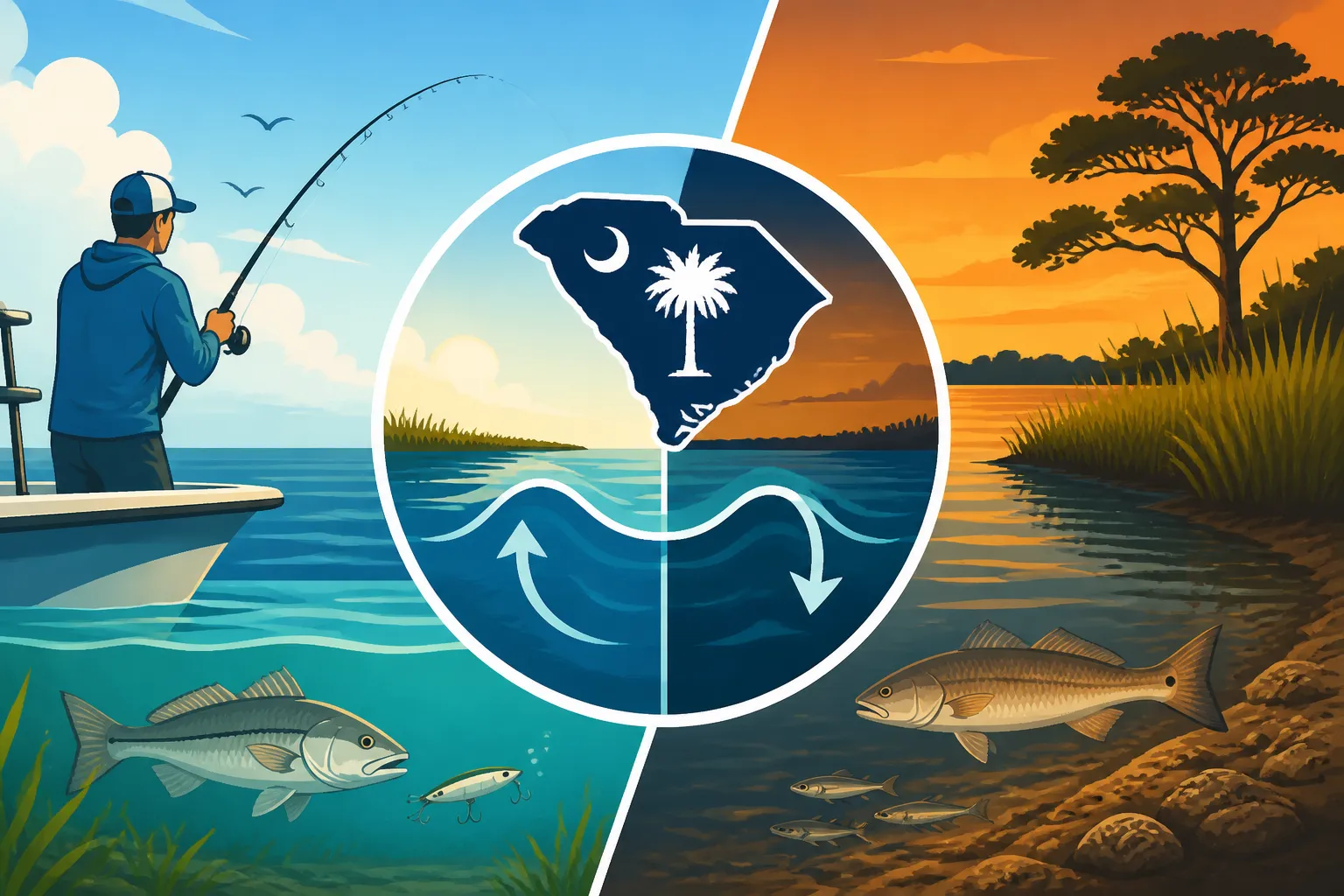
Redfish, often called "red drum" or "spot-tail bass," are absolute champions of tidal movements. They are opportunists, always looking for an easy meal, and the tide helps them find it. On an incoming tide, especially a strong one, redfish will often push into the flooded grass flats, creeks, and oyster beds. They follow the rising water into these areas to forage for fiddler crabs, shrimp, and small baitfish that are temporarily exposed or dislodged. This is where you'll find those iconic "tailing" redfish, their tails breaking the surface as they nose down in the grass, grubbing for food. You can learn more about South Carolina Redfish Slot Limit Rules to ensure you're fishing legally.
Conversely, as the tide begins to fall, redfish will start to move out of the shallowest areas, often congregating along creek edges, oyster rakes, and deeper channels. They'll hold in these areas, ambushing bait that's being flushed out of the grass or forced into more concentrated spaces. This makes them predictable targets if you know where to set up. Think of the tide as cleaning off their dinner table; they move with the food source. You might be interested in Understanding Redfish Slot Limit Changes Over Time as well.
Spotted Seatrout Feeding Habits
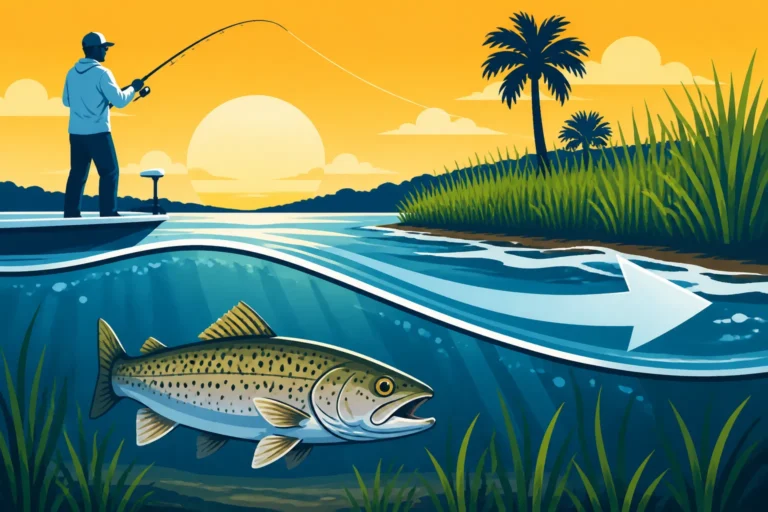
Spotted seatrout, or "specks," are often found in similar habitats to redfish, but their feeding strategy and preferred tidal stages can differ significantly. Trout are ambush predators, often preferring slightly calmer water where they can lie in wait and dart out to snatch passing baitfish or shrimp. They don't typically "tail" in the grass like redfish. Instead, you'll often find them holding on the edges of current seams, around oyster bars, or near submerged structure in creek mouths. Knowing their habits can help you find them, and it's also worth being aware of South Carolina Spotted Seatrout Minimum Size 14 Inches for legal harvest.
Many experienced anglers find that spotted seatrout are more active during the middle stages of the tide, both incoming and outgoing, when there’s a consistent but not overwhelming flow of water. They also tend to bite well during the slack tide periods, especially if there's sufficient depth or structure to hold them. During super strong currents, they might tuck into eddies or deeper holes to conserve energy. Their preference for baitfish means they’re often looking for schools of mullet or pilchards being moved by the water.
Flounder and Sheepshead Movements
Flounder are masters of camouflage and patience, often burying themselves in the sand or mud, waiting for bait to swim by. Their tidal preferences are largely dictated by their ambush style. They often position themselves in strategic choke points where currents will funnel bait past them. This could be near creek mouths, around bridge pilings, or along sharp drop-offs. As the tide moves, they’ll simply shift their position slightly to take advantage of the most opportune ambush points.
Sheepshead, with their distinctive "human-like" teeth, are specialists in eating crustaceans and mollusks. They love structure – oyster reefs, barnacle-encrusted pilings, bridge supports, and rock jetties. The tide plays a role in making their food accessible. On an incoming tide, new areas of structure might become submerged, making barnacles or small crabs available. As the tide falls, the current can dislodge crabs from their hiding spots, offering an easy meal. Sheepshead are less dependent on strong tidal flow for feeding than redfish, but still use it to access their preferred forage zones.
Techniques for Incoming Tide Fishing
The incoming tide, also known as the flood tide, is a golden opportunity for many inshore anglers in South Carolina. As the water pushes in, it brings fresh bait, covers new territory, and often stimulates fish into an active feeding mode. Knowing how to leverage this tidal stage is a game-changer.
Targeting Creek Mouths and Oyster Beds
As the tide begins to flood, baitfish and shrimp are often pushed into the smaller creek mouths and through the intricate network of oyster beds that are characteristic of the Lowcountry. This creates natural ambush points for predatory fish like redfish and spotted seatrout. Look for areas where a smaller creek empties into a larger channel, or where an oyster reef creates a current break. Fish will often stage at these locations, waiting for the buffet to be delivered.
Your strategy here should involve casting upstream of these pinch points and allowing your bait or lure to drift naturally with the current into the feeding zone. Using a popping cork with live shrimp or a soft plastic under it can be incredibly effective, as the cork's "pop" mimics a feeding fish, drawing attention. For artificials, a 1/4 oz jig head with a soft plastic paddle tail or a Z-Man MinnowZ can work wonders. This is also a fantastic time for fly anglers to target reds with crab or shrimp patterns. Remember, the goal is to make your offering look like an easy meal being carried by the incoming water. This aligns with effective Inshore Redfish Techniques for Beginners.
Fishing Flood Tides in Grass Flats
When the incoming tide reaches its peak, often referred to as a "flood tide," it inundates the vast saltwater grass flats. This is prime real estate for redfish, especially those larger "bull reds" that venture into the shallows. They nose into the grass, sometimes with their backs entirely out of the water, rooting for fiddler crabs, snails, and other critters. This phenomenon is why anglers often seek How to Fish an Incoming Tide for Redfish.
To fish these flats effectively, stealth is paramount. Use a push pole or a shallow-draft boat to quietly navigate the edges of the grass. Look for wakes, nervous water, or, ideally, those tell-tale redfish tails sticking out of the water. Long, accurate casts with weedless lures are essential to avoid snagging on the grass. Soft plastics rigged Texas-style, weedless spoons, or even shallow-running topwater lures can be incredibly effective. The idea is to present a natural-looking offering that won't get hung up in the vegetation. Polaroid sunglasses are your best friend here, helping you spot fish before they spot you.
Best Baits for Incoming Water
The incoming tide brings in fresh saltwater and, critically, fresh food sources. Live baits that mimic the natural forage swept in by the tide are almost always a strong choice. Live shrimp, whether free-lined or under a popping cork, is a universal favorite for redfish, trout, and flounder. Small live finger mullet or mud minnows also work exceptionally well, particularly for larger redfish and aggressive trout. You can often find these baitfish congregating at the mouths of creeks as the tide pushes in.
For artificials, focus on lures that imitate these natural bait items. Soft plastic shrimp imitations from brands like Vudu Shrimp or Gulp! Shrimp are incredibly lifelike and effective. Paddle tail swimbaits in natural colors (like pearl, rootbeer, or chartreuse) are great for mimicking baitfish. Topwater lures can also be explosive on calm mornings, especially if the tide is just starting to flood the flats. The key is to match the hatch and present your bait or lure in a way that suggests it's an easy meal being carried by the current. If you need new lures, Amazon has a vast array of options.
Strategies for Outgoing Tide Fishing
As the waters recede, the outgoing tide presents a whole new set of opportunities and challenges for the inshore angler in South Carolina. This ebb tide flushes bait out of the shallow marshes and concentrates fish into predictable holding patterns, making them easier targets if you know where to look.
Focusing on Drains and Drop-offs
When the tide starts to fall, the expansive grass flats and shallow creeks begin to drain, pushing all the resident baitfish, shrimp, and crabs out into deeper water. This creates a natural funneling effect, and predators like redfish, trout, and flounder will instinctively position themselves at these "drainage" points. Look for the mouths of small creeks, cuts through oyster beds, and any sharp drop-offs along the main channels. These become prime ambush locations as the bait gets swept past.
To fish these areas effectively, position your boat or yourself (if bank fishing) so you can cast into the outgoing current. Let your bait or lure drift naturally with the flow, mimicking a disoriented baitfish being washed out of the shallows. Often, the best bites occur when the current is strongest, as fish become more aggressive, knowing their food supply is literally being delivered to them. Consider using a heavier jig head if the current is particularly swift, ensuring your offering stays in the strike zone near the bottom. This is a primary strategy detailed in How to Fish an Outgoing Tide for Trout.
Fishing the Falling Tide on Oyster Rakes
Oyster rakes and shell beds are magnets for inshore fish, offering both structure and a buffet of crabs and other small creatures. On a falling tide, especially after the water has dropped significantly, these rakes become exposed or have very shallow water over them, forcing bait and fish into the deeper edges. Redfish, in particular, will cruise these edges, picking off anything exposed or flushed out. For those targeting redfish, understanding How to Catch Redfish on a Falling Tide is invaluable.
When targeting oyster rakes on a falling tide, cast your lure or bait close to the edge of the rake, allowing it to sink and then retrieve it slowly, bumping along the bottom. Soft plastics rigged on jig heads, weedless spoons, or even live bait like mud minnows or cut bait can be highly effective. Be prepared for aggressive strikes near these areas, as fish here are often actively feeding. Also, be mindful of your propeller or lower unit if you're in a boat, as oysters are sharp and can cause significant damage in shallow water.
Lure Selection for Outgoing Currents
The outgoing tide often means stronger currents, so your lure selection needs to account for this. Lures that can cut through the current or maintain their action in flow are ideal. Soft plastic paddle tail swimbaits on weighted jig heads (1/4 to 3/8 ounce, sometimes heavier) are excellent, as their tail action is irresistible to hungry fish. Colors can vary, but natural hues or those with a touch of chartreuse often perform well. For those looking for the right gear, Amazon offers a huge selection of jig heads and soft plastics from various brands to suit any tidal condition. You can discover more options for Best Lures for Inshore Redfish Fishing in another guide.
Another fantastic option is a gold spoon, especially for redfish. Its fluttering action mimics a fleeing baitfish, and the flash can draw strikes from a distance, even in stained water. Hard plastic suspending or sinking twitchbaits can also be deadly when fished along current seams or near structure, as they imitate injured baitfish that can't fight the current. Finally, for topwater enthusiasts, if you find a calm eddy or an area where bait is schooling on the surface as the tide falls, a walk-the-dog style lure can provoke explosive strikes from both redfish and trout.
Adapting to Varying Tidal Conditions
Not all tides are created equal, and being a successful inshore angler in South Carolina means knowing how to adapt your approach to whatever the water is doing. From subtle neap tides to roaring spring tides, each presents its own unique set of opportunities and challenges.
Adjusting for Strong vs. Weak Tides
Strong tides, typically associated with spring tides around new and full moons, mean a significant volume of water moving very quickly. This can be fantastic for pushing bait and getting fish active, but it also makes presentation challenging. During these strong flows, fish will often tuck into eddies, behind oyster rakes, or into deeper holes to escape the main current and ambush passing food. Your lures or baits will need more weight to reach the bottom and stay in the strike zone. Consider heavier jig heads, larger Carolina rigs, or even anchoring strategically to maintain your position.
Weak tides, or neap tides, offer less current. This can mean fish are more scattered and less aggressive, as the bait isn't being concentrated as much. However, it also means you can fish lighter tackle and present smaller, more subtle baits. During weak tides, fish might be more willing to roam the flats for longer periods or hold on less distinct structure. This is often a good time for sight fishing in clear water, as you can approach fish more easily. You might find you need to cover more ground to locate active fish when the current isn't doing the work for you. Understanding Does Tide Timing Matter for South Carolina Redfish? is crucial here.
Dealing with Slack Tide Challenges
Slack tide – the brief period when the water stops moving between high and low tide – can be either incredibly frustrating or surprisingly productive, depending on the day and the species. For some, it feels like the fish just shut down, while for others, it's a prime window. Fish might disperse more during slack tide as they don't have the current to guide their movements or concentrate their food. However, it can also be a time when fish feel less pressure and might be more willing to chase a slower-moving bait or artificial.
During slack tide, consider slowing down your retrieve significantly. Lures like soft plastics on very light jig heads, suspending twitchbaits, or even dead sticking a live shrimp can be effective. This is also a good time to target deeper holes or creek channels where fish might congregate, waiting for the current to pick back up. Sometimes, a subtle presentation with a small, live bait under a float is the ticket. Don't immediately pack up your gear when the water goes slack; instead, change your strategy and experiment with different approaches.
Weather's Influence on Tides
While tidal charts predict astronomical tides based on lunar and solar gravity, real-world weather conditions can significantly alter actual water levels and currents. Strong winds, especially sustained winds blowing in one direction for an extended period, can either "stack" water up against the coast, making high tides higher and low tides less pronounced, or push water out, doing the opposite. A strong northeast wind, for example, can hold water in the estuaries, making it harder for the tide to fall out completely.
Heavy rainfall, particularly in conjunction with rivers flowing into the estuary, can also influence water levels and salinity. A surge of freshwater can temporarily push back incoming tides or prolong outgoing tides. This can displace bait and fish, pushing them to areas with more consistent salinity. Always check the weather forecast in addition to your tide chart. If a strong front is coming through or there have been days of heavy rain, mentally adjust your tidal expectations and be prepared to find fish in different areas or acting differently than usual. This is important for Trout Fishing Techniques for Inshore Anglers as well.
Gear and Preparation for Tide-Focused Angling
Successful inshore fishing with a focus on tides isn't just about knowing when to fish; it's also about having the right tools and being prepared for the dynamic conditions South Carolina's coastal waters can throw at you.
Essential Tackle for Tidal Fishing
When the current is ripping, having the right tackle can make all the difference between a successful hookup and a frustrating tangle. For general inshore fishing, a medium-light to medium action spinning rod, typically 7 feet to 7 feet 6 inches in length, paired with a 2500-3000 series reel, is a versatile setup. Load your reel with 10-15 lb braided line, which offers superior casting distance and sensitivity, especially when trying to feel subtle bites in current. A 2-3 foot leader of 20-30 lb fluorocarbon is essential for abrasion resistance against oyster shells and for making your line less visible to fish.
Jig heads are your workhorses in tidal fishing. Have a variety of weights from 1/8 oz for lighter currents or shallow flats, up to 1/2 oz or even 3/4 oz for deeper channels and strong flows. Brands like VMC or Gamakatsu make excellent jig heads. Don't forget your selection of soft plastics (paddle tails, jerk shads, shrimp imitations), hard plastic twitchbaits, spoons (gold and silver), and a few popping corks for live bait or soft plastics. Having a good tackle box to organize these essentials, perhaps purchased on Amazon, will save you time on the water.
Kayak and Boat Positioning
For anglers in kayaks or boats, understanding how to position yourself relative to the current is critical. If you're drifting, you want to position yourself upstream of your target area and allow the current to carry you and your bait/lure naturally through the zone. Use your trolling motor, if you have one, to slow your drift or precisely hold your position. If you're anchored, always anchor from the bow, facing into the current. This keeps your boat stable and allows you to cast effectively without fighting the boat's swing.
When fishing tight creeks or around structure, consider using a shallow-water anchor system like a Power-Pole or a simple stake-out pole to quietly hold your position without spooking fish. For kayak anglers, a drift sock or anchor trolley system can be incredibly useful for controlling your drift speed and angle. The key is to minimize disturbance and present your bait or lure in the most natural way possible, allowing the current to do some of the work for you. Always be mindful of other boaters and give them plenty of space, especially in narrow channels.
Safety Considerations
Fishing the tides, especially in dynamic South Carolina coastal waters, comes with inherent safety considerations. Strong currents can be dangerous, particularly for kayakers or smaller boats. Always wear a personal flotation device (PFD), even if you're a strong swimmer. Inform someone of your float plan – where you're going and when you expect to return. This is especially important if you're venturing into remote marsh creeks.
Be aware of tidal changes impacting navigation. A channel that was easily navigable at high tide might become impassable at low tide, stranding you on a sandbar or oyster bed for hours. Always have up-to-date charts (physical or on your GPS/phone) and pay attention to depth readings. Check the weather forecast before you leave, as sudden storms or strong winds can quickly turn a calm day into a perilous one. A VHF radio or fully charged cell phone is also a must for communication in emergencies. Being prepared means you can focus on fishing, not on potential dangers.
| Tidal Stage | Fish Behavior | Recommended Techniques | Best Baits/Lures |
|---|---|---|---|
| Incoming Tide | Fish push into grass flats, creek mouths to feed on new bait. Tailing reds in shallows. | Target creek mouths, oyster beds, flooded grass. Cast upcurrent, drift naturally. | Live shrimp, small mullet. Soft plastic shrimp/paddle tails, weedless spoons, popping corks. |
| High Slack Tide | Fish may scatter or hold in deeper holes, less aggressive. | Slow retrieves, target deep structure, eddies. Subtle presentations. | Soft plastics on light jigs, suspending twitchbaits, dead sticked live bait. |
| Outgoing Tide | Fish ambush bait flushing out of shallows. Concentrate at drains, drop-offs. | Focus on creek drains, drop-offs, oyster rake edges. Cast upcurrent, let drift. | Live minnows, cut bait, larger paddle tails on weighted jigs, gold spoons. |
| Low Slack Tide | Similar to high slack, but fish often more concentrated in deeper channels. | Target deepest holes in creeks, channel bends. Slow retrieves. | Live shrimp, mud minnows, soft plastics, bottom rigs with cut bait. |
| Strong Current | Fish hold in eddies, behind structure. Aggressive feeding. | Heavier jig heads, Carolina rigs, targeted casting into current breaks. | Live bait, larger profile soft plastics, heavy spoons. |
| Weak Current | Fish more scattered, less aggressive. Roam flats longer. | Lighter tackle, sight fishing in clear water, covering more ground. | Smaller soft plastics, unweighted live bait, topwater in calm areas. |
Disclaimer
Fishing regulations, seasons, and licensing requirements can change, and it is the angler's responsibility to stay informed of the most current rules set forth by the South Carolina Department of Natural Resources (SCDNR). Always check the latest SCDNR guidelines before heading out on the water.