Bass Fishing Techniques After the Spawn
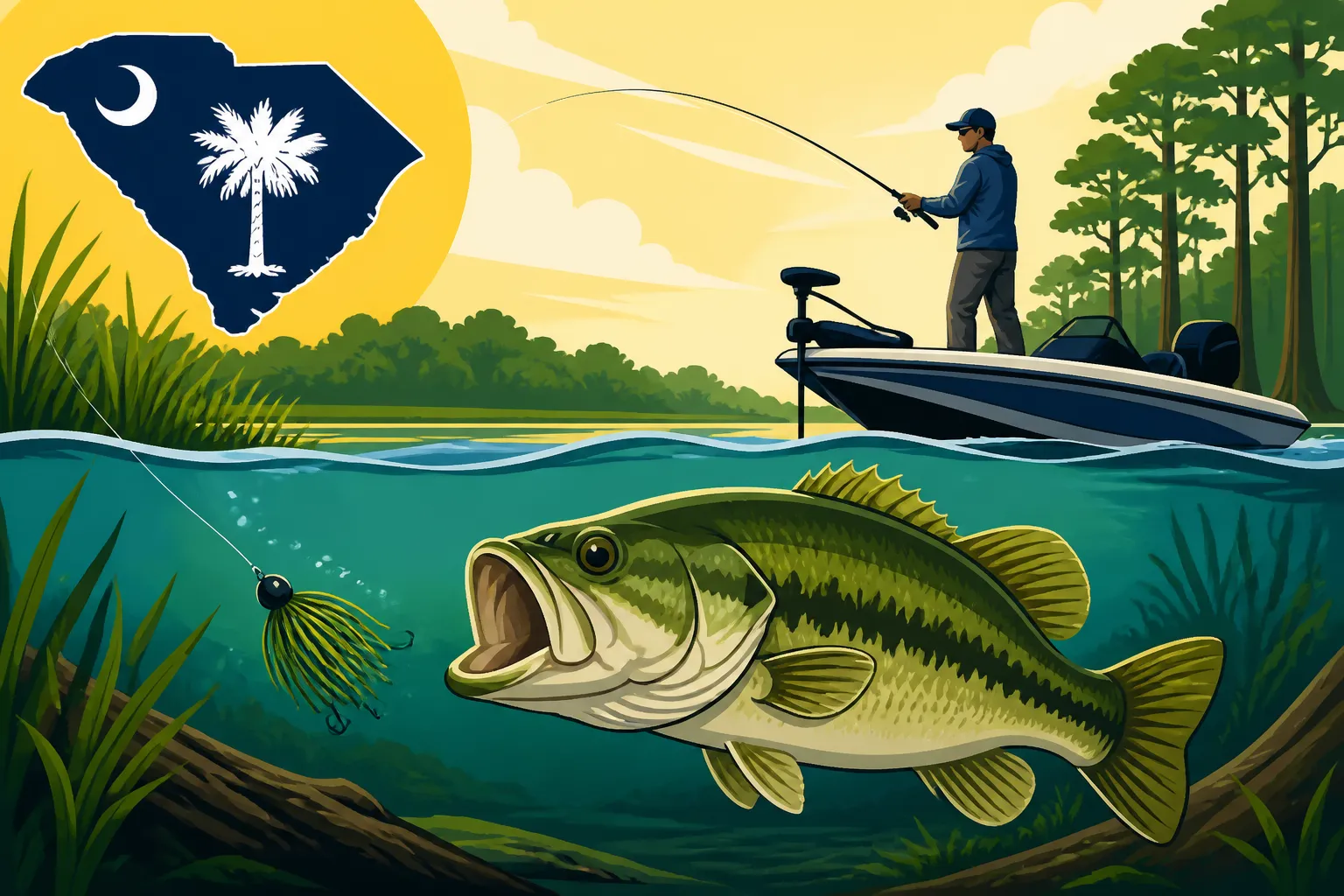
That moment when the dogwoods have bloomed, the warm weather is settling in, and you’re ready to hit the water for some serious bass fishing, only to find the fish have seemingly vanished. It's a common, frustrating reality for many anglers: the bass just aren't on their beds anymore, and the frantic pre-spawn bite has dried up. If you've ever felt lost trying to find those elusive post-spawn largemouths in South Carolina, this guide is for you. We'll break down the techniques and strategies to keep you reeling them in, even when they're transitioning to their summer haunts.
Understanding the Post-Spawn Transition
The bass spawn is an incredible spectacle, a time when these powerful fish throw caution to the wind to reproduce. But once those eggs are laid and guarded, a significant shift occurs. It’s not an overnight change, but a gradual transition that can make them incredibly hard to locate and entice. Many anglers refer to this period as the "post-spawn funk" because the fish just seem to disappear.
The Immediate Post-Spawn Phase the "Funk"
Right after the spawn, both male and female bass are exhausted. The males, having spent days guarding the nests, are often emaciated and lethargic. The females, having expended massive amounts of energy laying eggs, are equally worn out. Their priority isn't feeding aggressively; it's recovering and resting. This is why you often find them in very shallow, dense cover immediately adjacent to their spawning grounds, seeking refuge and an easy meal if one presents itself. Think thick lily pads, shallow brush, or even just tucked under a laydown log where they can relax without expending much energy. They're often in a state of suspended animation, making them incredibly difficult to catch on typical baits. Trying to force a fast retrieve or a large, obnoxious lure on these weary fish is often a wasted effort. Patience and precision become your best friends during this time.
Moving to Summer Patterns
As the bass regain their strength, and water temperatures continue to climb, their behavior shifts again. They begin to move away from the immediate spawning areas, migrating towards deeper water and more stable summer patterns. This migration isn't random; they'll follow underwater highways like creek channels, old river beds, and depth contours. Their primary goal is to find comfortable temperatures, oxygen-rich water, and consistent food sources. This means they'll often relate to structure and cover in deeper water, such as submerged humps, ledges, deep brush piles, and standing timber. These areas offer both ambush points for feeding and cooler, more stable conditions. Understanding this migration path and where they'll eventually settle is key to intercepting them before they fully lock into their deepest summer patterns. You might find some pioneering fish already making these moves while others are still in recovery mode, making the post-spawn period a diverse challenge. For more insights into how these patterns evolve, take a look at our guide on South Carolina Bass Fishing Techniques by Season.
Locating Post-Spawn Bass
Finding bass after they've left their beds can feel like searching for a needle in a haystack, especially in vast South Carolina reservoirs like Lake Murray or the Santee Cooper lakes. However, by understanding their transitional movements and preferred hideouts, you can narrow down your search significantly. It's all about thinking like a bass and following their path from shallow water to deeper comfort.
Targeting Transition Areas
Bass don't just vanish; they move through specific corridors as they shift from spawning grounds to summer homes. These "transition areas" are critical fishing spots during the post-spawn. Look for points that extend from shallow coves into deeper water, submerged humps that rise off the main lake bed, ledges where the bottom drops off sharply, and the edges of creek channels that wind through the lake. These are like highways and rest stops for migrating bass. In particular, focus on the first significant drop-off or breakline outside a spawning flat. Bass will often stage here, resting and feeding before moving deeper. Using your boat's electronics, especially side imaging and down imaging, becomes invaluable here. You can literally "see" schools of baitfish and individual bass lurking along these contours. For example, on Lake Hartwell, you might find bass staging on rocky points or underwater humps adjacent to where they spawned in the shallow pockets of the Tugaloo River arm. Learning How to Fish Deep Structure for Bass in Summer can give you an edge in these spots.
Finding Cover and Structure
Once they've moved through the transition zones, post-spawn bass will seek out specific types of cover and structure that provide shade, ambush points, and comfort. Deep brush piles are absolute magnets for these fish, offering protection and a consistent food source. Think about where brush piles might have been intentionally sunk by anglers or naturally accumulated. Standing timber in old river channels or flooded areas is another prime target, especially if it extends from moderately deep water into shallower feeding zones. Docks, particularly those with deeper water underneath or adjacent to them, offer shade and overhead cover. Submerged hydrilla beds, especially those with distinct edges or holes, create excellent ambush points for bass. In the Santee Cooper Lakes, for instance, sprawling hydrilla beds are famous for holding massive largemouths. Bass will often position themselves on the deeper side of these structures, facing outwards, ready to ambush unsuspecting baitfish. These areas are not only about depth but also about security and opportunity, making them ideal places for recovering and feeding bass.
Effective Lure and Bait Choices
The post-spawn period calls for a flexible approach to your tackle box. Bass behavior can be erratic, swinging between aggressive feeding and finicky lethargy, sometimes even within the same day. Having a variety of lure types ready to go will allow you to adapt to their mood and location.
Reaction Baits for Active Fish
When bass are feeling a bit more energetic and willing to chase, reaction baits can be incredibly effective. These lures are designed to provoke a strike, often when a fish isn't actively feeding but reacts instinctively. Deep-diving crankbaits are fantastic for covering water along those transition ledges and humps we talked about. Look for models that can reach the depth where you're marking fish – sometimes 15 to 25 feet or even deeper. Colors that mimic local baitfish like shad or bream are always a good starting point. On a particularly breezy day or if you're fishing stained water, a spinnerbait or a bladed jig, like a Z-Man ChatterBait, can work wonders around the edges of cover or through sparse grass. The flash and vibration can draw strikes from bass that might not commit to a faster-moving lure. Experiment with retrieve speeds; sometimes a slow roll is what they want, other times a quicker, erratic retrieve triggers a reaction. You can find a huge variety of these effective lures on online retailers like Amazon, making it easy to stock up for your next trip.
Finesse Presentations for Finicky Bass
There will undoubtedly be days, especially immediately after the spawn or after a cold front, when bass are sluggish and unwilling to chase. This is when finesse presentations truly shine. Techniques like the drop shot, shaky head, and Neko rig become your go-to. A drop shot rig, presented vertically to fish suspended over deep structure or brush piles, allows you to keep your bait in the strike zone for an extended period with minimal movement. Small, straight-tail worms or minnow imitations are excellent choices. Shaky heads, fished slowly along the bottom of ledges or through scattered cover, provide a subtle presentation that even the most finicky bass can't resist. Experiment with soft plastic worm colors, often opting for natural greens, browns, or black and blue. The Neko rig, essentially a wacky-rigged worm with a weight inserted into one end, offers a unique fall and presentation that can be deadly on pressured fish. The key with finesse is patience and a slow, methodical retrieve. Let the bait do the work, and pay close attention to the slightest tick on your line. You might find that on days when nothing else works, these subtle offerings are the only way to get a bite.
Topwater Action When Conditions Are Right
While often associated with early morning or late evening, topwater lures can be surprisingly effective in the post-spawn period if conditions align. Look for cloudy days, periods of low light, or active baitfish schools near the surface. Poppers, walking baits (like a Heddon Super Spook), and hollow-body frogs can trigger explosive strikes from bass hiding under dense cover or suspended near the surface. For instance, fishing a frog over matted hydrilla or lily pads in the lowcountry rivers can be exhilarating. A walking bait worked methodically over submerged grass beds or along riprap can also draw hungry bass up. The key is to be patient with your retrieve and let the lure sit for a moment after casting before beginning your retrieve. Sometimes, a long pause is all it takes to convince a lurking bass to explode on your bait. While not an every-day technique in the post-spawn, when it works, it’s one of the most exciting ways to catch a bass. If you're wondering What Time of Day Do Bass Bite Best?, topwater fishing is often at its peak during those golden hours.
Key Techniques for Post-Spawn Success
Beyond choosing the right lure, how you present that lure and approach the water makes all the difference during the post-spawn. This period demands a blend of efficient searching and precise presentation, as bass can be scattered and sometimes hesitant.
Covering Water Efficiently
Post-spawn bass can be anywhere from shallow cover to deep structure, making efficient water coverage crucial. Don't waste time meticulously dissecting every inch of a spot that isn't producing. Instead, start by making long casts with reaction baits like crankbaits or spinnerbaits to quickly eliminate unproductive water along ledges, points, and creek channels. Pay close attention to your electronics. Graphing an area before you even make a cast can save you hours of fruitless effort. Look for bait balls, distinct bottom contours, and even individual fish arches. Once you identify a promising area, then you can slow down and work it thoroughly with more precise presentations. A good trolling motor with GPS capabilities, often available from brands like Minn Kota or MotorGuide, can help you maintain position on offshore structure, allowing you to focus on your casting and retrieve. You can often find great deals on these kinds of advanced fishing tools on Amazon.
Vertical Jigging and Dropping
When you find bass suspended or tightly grouped on deep structure, vertical jigging and dropping techniques become incredibly powerful. This involves positioning your boat directly over the fish, usually identified by your sonar, and dropping a lure straight down to them. Flutter spoons, heavy jigs, or even a drop shot can be highly effective here. The trick is to mimic a wounded baitfish, causing a reaction strike. With spoons, let it flutter down, then give it a sharp rip and let it fall again. For jigs, a slow lift and drop, maintaining bottom contact, often works best. This technique is particularly potent in clearer lakes or when bass are holding tight to brush piles or isolated timber in deeper water, and you see them clearly on your fish finder. It’s a direct, surgical approach that allows you to present your bait right into the bass’s strike zone without having to make long, accurate casts.
Understanding the Role of Current
Current is a game-changer for bass at any time of year, but its importance can be magnified during the post-spawn. Bass are opportunistic feeders, and current brings food directly to them. In rivers like the Congaree or the Broad, bass will naturally position themselves in current breaks – behind submerged logs, rocks, or even subtle changes in the bottom contour. They wait in these calmer pockets, expending minimal energy, ready to ambush anything that washes by. Even in reservoirs, wind-driven current or current generated by dam operations can create feeding opportunities. Look for areas where current sweeps around points, through narrow channels, or over humps. These current-swept areas tend to concentrate baitfish, which in turn attract hungry bass. Presenting your lures to drift naturally with the current or positioning them in the slack water just out of the main flow can be incredibly effective. Consider How Water Temperature Affects Fish Feeding as current can bring both cooler or warmer water depending on the source.
South Carolina Specific Post-Spawn Considerations
South Carolina boasts a diverse range of freshwater fisheries, each with its unique characteristics that influence post-spawn bass behavior. Understanding these regional nuances can significantly improve your success.
Lake Murray and Santee Cooper Strategies
These two powerhouse lakes are famous for their excellent bass fishing, but they require distinct post-spawn approaches. Lake Murray, known for its clear to moderately stained water and abundant deep structure, often sees bass move to offshore humps, ledges, and deep brush piles after the spawn. Anglers often find success targeting stripers, but largemouth bass will also school up on similar structures. Deep-diving crankbaits, Carolina rigs, and vertical jigging with flutter spoons are go-to methods here. Electronics are crucial for locating these offshore schools. Consider how Lake Murray Summer Striped Bass Techniques in South Carolina apply to largemouth, as both species often follow similar deep-water forage.
The Santee Cooper Lakes (Marion and Moultrie) are a different beast entirely. With vast expanses of shallow, stained water, abundant cypress trees, and extensive hydrilla beds, bass here will often relate to dense cover even in post-spawn. While some fish move deeper into the old river channels, many will simply burrow into the thickest hydrilla mats or seek refuge under cypress trees or in deep stump fields. Punching heavy jigs or Texas-rigged creature baits through dense mats, or fishing frogs over matted vegetation, can be deadly. Spinnerbaits and bladed jigs can be effective around the edges of these mats or through sparse hydrilla. Pay close attention to areas where deeper water is accessible near extensive shallow cover, as bass will use these as highways.
Upstate Lakes Hartwell Keowee Approaches
The Upstate lakes, such as Lake Hartwell and Lake Keowee, present their own set of post-spawn challenges and opportunities. These lakes are generally clearer and often deeper than their Midlands or Lowcountry counterparts. After the spawn, bass in Hartwell and Keowee frequently gravitate towards rocky points, steep bluffs, and offshore humps. The clearer water often means finesse tactics will shine more consistently. Drop shots, shaky heads, and smaller jigs become prime choices, especially when fishing deeper structure. On Lake Hartwell, for example, you might find bass suspending around standing timber in the deeper creek arms, or schooling on points that drop off into the main lake.
Due to the clarity, stealth is often more important. Longer casts and fluorocarbon line can make a difference. Early morning and late evening can bring bass shallower to feed, offering opportunities for topwater or jerkbaits, especially around cover on those rocky points. During the heat of the day, however, these fish will often retreat to deeper, cooler water. Learning the nuances of Lake Hartwell Spring and Fall Bass Fishing Patterns in South Carolina can help bridge the gap to understanding their post-spawn behavior.
Common Post-Spawn Challenges and Solutions
Even with the right knowledge and techniques, the post-spawn period can still be challenging. Bass can be moody, and external factors often play a role. Being prepared for these common hurdles can help you turn a tough day into a successful one.
The "Finicky Bite"
Ah, the finicky bite. It's the bane of every angler's existence, and it's particularly common in the post-spawn. Bass often aren't as aggressive as they were pre-spawn, or even as they will be in the full swing of summer. They've just been through a grueling spawning process, and their priorities are recovery and easy meals. If you're encountering a lot of short strikes, bites that feel like nothing more than a "thump," or fish that just aren't committing, it's time to adjust.
The first solution is often to downsize your baits. If you were throwing a 1/2-ounce jig, try a 1/4-ounce. If your worm was 7 inches, try a 5-inch. Smaller, less intimidating profiles can often coax a bite from a hesitant bass. Second, dramatically slow down your retrieve. Many times, a finicky bass wants the bait to linger in its strike zone, making it an easy target. Consider pausing your retrieve for longer durations, or using techniques like a dead-sticking a worm on a drop shot. Third, experiment with subtle color changes. Sometimes, a slight shift from a bright green pumpkin to a more muted, natural shade of green pumpkin with blue flake can make all the difference. Don't be afraid to try natural-colored plastics, especially in clearer water. Finally, focus on presentation. Are you hitting the cover just right? Is your bait falling naturally? Sometimes, the slightest adjustment in how you cast or rig your bait can be the key to triggering a strike from those hard-to-convince bass.
Dealing with Pressure
South Carolina's popular lakes, especially the larger reservoirs, can experience significant fishing pressure. This pressure, whether from other anglers or boat traffic, can make post-spawn bass even more wary and challenging to catch. If you find yourself on a crowded lake and the fish are just not biting, it's time to adapt your strategy.
One effective solution is to move to less-pressured areas. This might mean exploring smaller creeks, less accessible coves, or even entirely different sections of the lake that don't see as much boat traffic. Sometimes, a short drive to a lesser-known spot can yield better results than stubbornly fishing a popular, beaten-down area. Another tactic is to fish at "odd" hours. While everyone else is out during midday, try concentrating your efforts during the low-light periods of dawn and dusk, or even consider night fishing for species like catfish, which are less affected by daylight pressure. Bass can often become more active and less wary under the cover of darkness. Finally, target overlooked spots. While everyone is fishing the main lake points, try the back of a shallow pocket with isolated cover, or a subtle depth change that isn't obvious on standard mapping. Bass will often seek refuge in these less-obvious places. Using a quiet, electric-only boat or a kayak can also give you an advantage in these stealthy situations, allowing you to approach fish without spooking them. You can find excellent quality kayak fishing accessories, including silent anchors and propulsion systems, on Amazon to help you stay stealthy.
Post-Spawn Bass Fishing Techniques Table
Here's a quick reference table to help you choose the right techniques based on typical post-spawn conditions and bass behavior.
| Bass Behavior/Condition | Location Type | Recommended Lure/Bait | Retrieval/Technique | Key Consideration |
|---|---|---|---|---|
| Immediately Post-Spawn (Lethargic) | Shallow, dense cover (pads, brush, docks) | Soft plastic creature baits (Texas-rigged), Senkos | Slow, methodical, pitching & flipping, dead-sticking | Stealth, quiet approach, small movements |
| Recovering/Staging | Transition areas (points, ledges, humps) | Deep-diving crankbaits, Carolina rigs, jigs, shaky heads | Fan casting, slow roll, bottom bouncing, long pauses | Electronics crucial for finding fish and structure |
| Actively Feeding | Edges of cover, current breaks, baitfish schools | Spinnerbaits, bladed jigs, jerkbaits, topwater (low light) | Varying speeds, erratic retrieve, burning, stop-and-go | Matching baitfish, exploiting low light or cloudy days |
| Finicky/Pressured | Deep structure, isolated cover | Drop shot, Neko rig, smaller jigs, finesse worms | Very slow, vertical presentation, subtle twitches, long pauses | Downsize baits, light line, patience |
| Moving to Summer Patterns | Main lake humps, deep ledges, standing timber | Heavy jigs, flutter spoons, large swimbaits | Vertical jigging, slow retrieve along contours, sounding | Finding bait schools, deep water access |
Disclaimer
The information provided in this guide is for general informational purposes only. Fishing regulations, conditions, and fish behavior can change rapidly. Always consult the latest South Carolina Department of Natural Resources (SCDNR) regulations before heading out on the water. Fishing inherently carries risks, and safety should always be your top priority.