Spin Fishing Techniques for Stocked Trout
There's nothing quite like the thrill of a bending rod and a feisty trout on the line, especially when you're out enjoying the stunning waterways of South Carolina. But let's be honest, fishing for stocked trout can sometimes feel a bit like a puzzle. They're not always as eager as you might expect, even when they've just been released. It can be frustrating to see the fish but struggle to get a bite, wondering if your gear or technique is off. If you've ever felt that way, you're in the right place, because this comprehensive guide is all about mastering spin fishing techniques to consistently catch stocked trout in our beautiful Palmetto State.
Understanding Stocked Trout Behavior in South Carolina
Before you even think about casting a line, it's incredibly helpful to get into the mind of a stocked trout. These aren't your wily, stream-born natives. They come from a hatchery, and their experiences and instincts are a world apart from their wild cousins.
The "Stocked" Mentality
When hatchery-raised trout are first released into a stream or lake, they're often a bit disoriented and stressed. Imagine being moved from a relatively safe, predictable environment where food appeared automatically, to a vast, flowing waterway with new sights, sounds, and potential predators. It's a lot to take in!
Initially, these fish tend to group up, often in the deeper, slower sections of water where they feel a sense of security. They might not be actively feeding right away, still adjusting to their new surroundings. This period of shock can last anywhere from a few hours to a day or two. Understanding this means you might not get immediate bites right after a stocking, but once they settle in, their hatchery instincts kick in.
Stocked trout are generally less wary than wild trout. They haven't had to evade natural predators or discern between natural food and an angler's deception for generations. This means they're often more opportunistic feeders. They're accustomed to pellet food, so while they'll eventually adapt to natural forage, they're often quite receptive to baits and lures that are visually appealing or have a strong scent. This "easier" catchability is precisely why they're stocked in the first place, providing a fantastic opportunity for anglers of all skill levels.
This difference in behavior dramatically impacts your lure and bait choices. Highly realistic, subtle presentations, while effective for wild trout, aren't always necessary (or even preferred) for freshly stocked fish. Sometimes, the bolder, flashier, or smellier options are precisely what gets their attention and triggers a bite, leveraging their conditioned feeding responses.
Prime Locations for Stocked Trout
The South Carolina Department of Natural Resources (SCDNR) does an excellent job of managing our trout fisheries, primarily focusing on the Upstate region where the water stays cold enough year-round to support these fish. You'll typically find stocked trout in designated trout streams and rivers, and occasionally in specific lakes or ponds managed for put-and-take fisheries. Streams like the Chattooga River, Chauga River, Eastatoe Creek, and the Cheohee Creek are prime examples. For exact stocking locations and dates, it’s always a good idea to check the official SCDNR website, as these schedules are periodically updated.
When you arrive at a stocked waterbody, look for key features that stocked trout will gravitate towards. They prefer areas that offer some cover, protection from strong currents, and access to food. Deep pools, for instance, provide refuge and a place to rest. The tails of pools, where the water begins to speed up again, can be excellent feeding lanes. Eddies, which are calm spots behind rocks or logs where the current swirls, are also prime holding spots where trout can ambush food without expending too much energy.
Oxygenated water is another critical factor, especially during warmer periods (though South Carolina's stocked trout season typically avoids the hottest summer months). Fast-moving riffles and rapids churn the water, increasing oxygen levels. While trout won't sit directly in the fastest currents, they'll often be found in the slightly slower water immediately adjacent to these highly oxygenated areas. Knowing these types of structures helps you focus your efforts and present your bait where the fish are most likely to be holding.
Environmental Factors Affecting Stocked Trout
Trout, whether wild or stocked, are highly sensitive to their environment, especially water temperature, oxygen levels, and flow. These factors dictate their comfort, activity levels, and where they choose to hold in the water column.
Ideal water temperatures for trout generally fall between 45 and 65 degrees Fahrenheit. When the water is within this range, trout are most active, feeding aggressively and moving freely throughout the stream. If the water gets too cold (below 40°F), their metabolism slows down, and they become lethargic, often holding in deeper, slower water. Conversely, if the water gets too warm (above 70°F), it holds less oxygen, and trout become stressed, seeking out cooler, more oxygenated pockets, or even dying if conditions persist. This is why most of our stocked trout fishing opportunities are concentrated in the cooler months, typically from fall through spring.
High water flow, often a result of heavy rain or dam releases, can make fishing challenging. The increased current makes it harder for trout to hold in one spot, and the water often becomes murky, reducing visibility. In these conditions, trout will move to slower, more protected areas along the banks, behind large rocks, or in deep pools. Conversely, very low water flow can make trout extremely spooky, as they have less cover and feel more exposed. They'll often concentrate in the deepest pools, making them harder to approach without spooking.
As mentioned, oxygenated water is vital. Fast-moving sections of streams, like riffles and cascades, naturally oxygenate the water. However, trout won't always sit directly in the fastest, most turbulent water. Instead, they'll often position themselves just out of the main current, in seams or eddies, where they can easily dart into the feeding lane without fighting the strongest flow. Understanding these preferences will help you choose the right fishing spots and present your lure or bait effectively.
Essential Spin Fishing Gear for Stocked Trout
Getting the right gear isn't about spending a fortune, but rather about choosing tackle that enhances your ability to detect subtle bites and present your offerings naturally. For stocked trout, a refined, sensitive setup makes all the difference.
Rod and Reel Selection
When it comes to spin fishing for stocked trout, you want to think "light." An ultralight or light action spinning rod is your best friend. These rods are designed with a flexible tip that allows for delicate presentations and can detect even the softest takes. A good length for stream fishing is typically 5 to 6.5 feet. This length provides enough leverage for casting while still being maneuverable in tighter, brushy stream environments. For wider, more open rivers or small lakes, you might opt for a rod closer to 7 feet for increased casting distance. The lighter action also makes fighting even smaller trout a lot of fun, making them feel like true trophies!
Pair your ultralight rod with a small spinning reel, something in the 1000 to 2000 series size. These reels are lightweight and perfectly balanced with an ultralight rod, preventing fatigue during a long day of casting. Look for a reel with a smooth, consistent drag system. Trout, even stocked ones, can make powerful runs, and a sticky drag will lead to snapped lines and lost fish. A good retrieve ratio is helpful, allowing you to pick up slack quickly or keep a steady retrieve on your lure.
The benefit of a balanced ultralight setup is undeniable. It allows for incredibly accurate casting of small, lightweight lures and baits, which are often what stocked trout prefer. The sensitivity of the rod transmits every bump and nibble right to your hands, letting you react quickly to strikes. Plus, the lighter setup minimizes the chance of overpowering a smaller fish, reducing injury if you plan to release them, and simply making the whole experience more enjoyable. You'll be amazed at how much fun a 12-inch trout can be on appropriate gear!
Line Choices and Why They Matter
When fishing for stocked trout, your line choice is paramount. These fish, while less wary than wild trout, still have good eyesight, and heavy, visible line can deter bites. Plus, the subtle nature of their bites often requires a line with minimal stretch for better sensitivity.
For most stocked trout spin fishing, a main line in the 2 to 6-pound test range is ideal. Going heavier than 6-pound test can significantly reduce your casting distance with small lures and make your line too visible.
Monofilament (mono) line is a classic choice for trout. Its inherent stretch acts as a shock absorber, which can be forgiving when a trout strikes hard or makes a sudden run, preventing smaller hooks from tearing out. Monofilament is also relatively inexpensive and easy to tie knots with. For basic bait fishing or fishing with small spinners, a good quality 4-pound test monofilament is an excellent all-around option. Brands like Stren or Berkley offer reliable choices that you can find at most tackle shops or even on Amazon.
Fluorocarbon is another excellent choice, often used as a leader material. Its key advantage is that it's nearly invisible underwater, which is a huge benefit when targeting finicky fish in clear South Carolina streams. It also has less stretch than monofilament, providing increased sensitivity, and it sinks, which can help get your bait or lure down faster. Many anglers will use a main line of 4-pound test monofilament or even a super-thin braided line (which we'll touch on next) and then tie on a 2 to 4-foot leader of 2 to 4-pound fluorocarbon for that added stealth.
Braided line offers incredible sensitivity and strength for its diameter. A super-thin braided line, like a 6-pound test braid, has the diameter of a 2-pound test monofilament, allowing for long casts and excellent feel. However, braid is highly visible underwater and has no stretch, which can sometimes lead to pulled hooks if you set it too hard. For this reason, if you use braid as your main line, always tie on a fluorocarbon leader of at least 3-4 feet. This setup gives you the best of both worlds: the casting distance and sensitivity of braid, combined with the invisibility of fluorocarbon.
Terminal Tackle Essentials
Having the right terminal tackle is just as important as your rod and reel. These small components connect your line to your bait or lure and directly influence your presentation and hook-up ratio.
First up are hooks. For trout, smaller is almost always better. Sizes ranging from 10 to 14 are typically ideal for natural baits like worms, PowerBait, or corn. You'll find both single and treble hooks. Many anglers prefer single hooks for live bait presentations as they are often less damaging to the fish if you plan on releasing them. Some stocked trout anglers, especially those using PowerBait, swear by small treble hooks because they offer more hook points to snag a biting fish. Regardless of your choice, make sure they are sharp! A dull hook will lead to missed bites.
Next, you'll need weights. For spin fishing with bait, split shot or pinch-on weights are perfect. These allow you to add just enough weight to get your bait down to the strike zone without hindering its natural drift. Start with a single small split shot (e.g., #7 or #5) a foot or so above your hook, and add more if needed to reach the desired depth or counter current. The goal is to use the absolute minimum amount of weight necessary to achieve a natural presentation. Too much weight makes your bait look unnatural and can be easily detected by a curious trout.
Finally, don't overlook barrel swivels. These tiny pieces of hardware are crucial for preventing line twist, especially when using spinners or when your bait is tumbling in the current. A small barrel swivel (size 12 or 14) tied between your main line and your leader will allow your lure or bait to spin freely without twisting your entire line, which can lead to frustrating tangles and weakened line. While not always necessary with every rig, they are a simple addition that can save you a lot of headaches, particularly when you're using in-line spinners frequently.
Top Spin Fishing Lures and Baits for Stocked Trout
Now that you've got your gear sorted, let's talk about what to put on the end of your line. Stocked trout aren't usually picky eaters, but having a variety of options can make a big difference in different situations.
Artificial Lures That Get Bites
Artificial lures are a fantastic way to cover water and entice active, aggressive stocked trout. The flash, vibration, and erratic movement of a well-presented lure can often trigger a strike from fish that might ignore stationary bait.
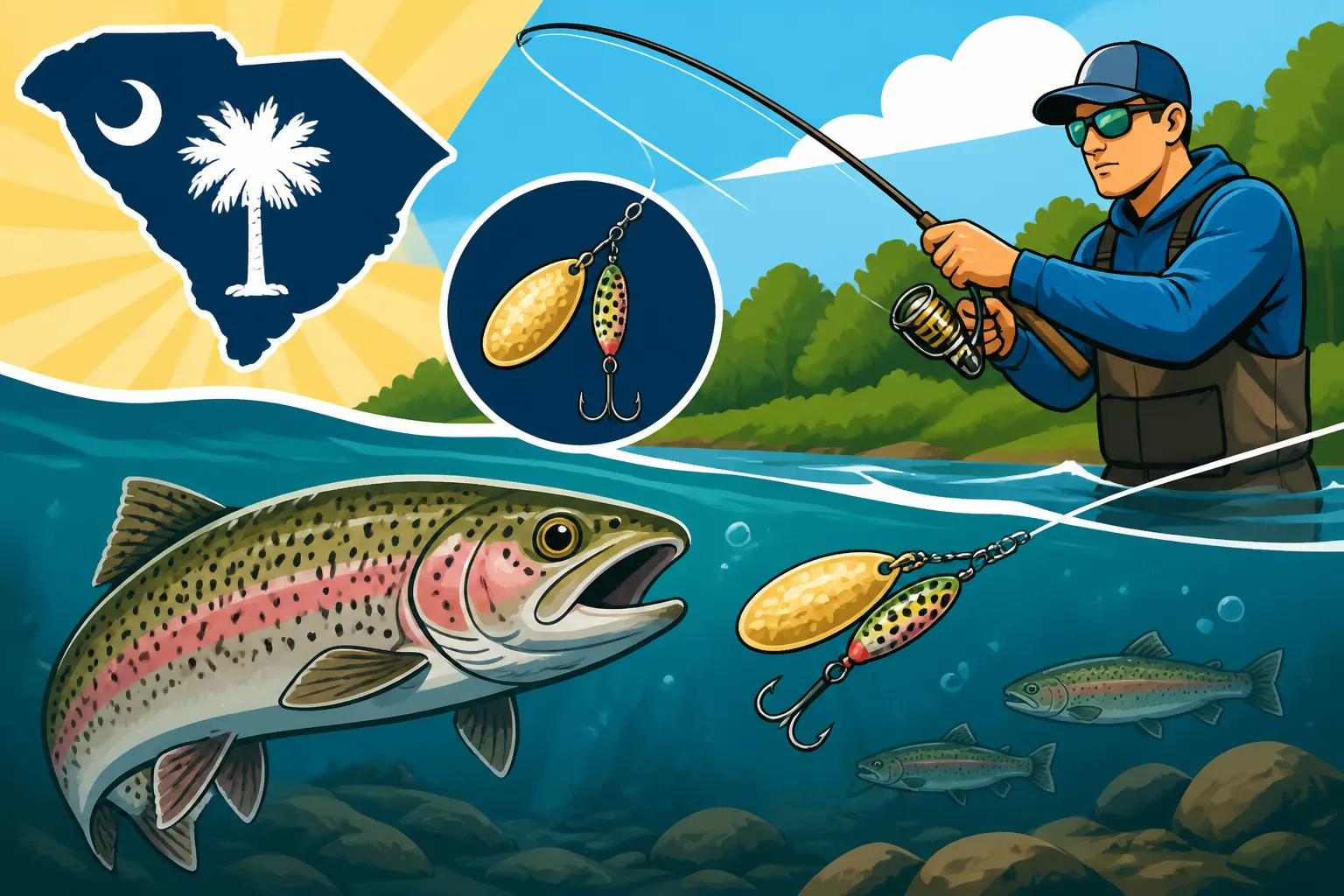
One of the most classic and effective lures for stocked trout is the in-line spinner. Brands like Mepps, Panther Martin, and Rooster Tail have been catching trout for decades, and for good reason. Their spinning blade creates flash and vibration that trout simply can't resist. They come in various sizes (from #0 to #2 are often best for trout) and colors. Silver and gold blades are excellent for sunny days or clear water, while bright colors like chartreuse, orange, or fire tiger can stand out in murky water or on overcast days. A slow, steady retrieve is usually all it takes to get these lures working their magic.
Small casting spoons are another stellar choice. Lures like the Acme Little Cleo, Dardevle, or Kastmaster are designed to flutter enticingly as they sink and retrieve, mimicking a wounded baitfish. Their metallic flash is a powerful attractor. Again, silver, gold, and brass are standard, but spoons with colored inserts (like blue/silver or red/white) can also be very effective. Casting spoons are particularly good for covering larger pools or casting across wider runs. The key is to vary your retrieve speed and add occasional pauses to let the spoon flutter, often when a strike will occur.
Mini crankbaits can also be surprisingly effective, especially in larger pools or slower-moving sections of streams where trout might be feeding on smaller baitfish. Think tiny Rapala countdowns or similar small, minnow-imitating plugs. These lures dive to a specific depth and have a tight wobbling action that can trigger aggressive strikes. Experiment with different depths and retrieve speeds to see what the fish prefer on any given day. On Amazon, you'll find a wide selection of these lures, making it easy to stock up on various colors and sizes.
Natural and Prepared Baits
Sometimes, trout just want a meal that smells and tastes familiar (or at least, enticingly novel). Natural and prepared baits often outperform lures, especially for less active or recently stocked fish.
PowerBait, a brand known for its dough and nugget formulations, is a staple for many stocked trout anglers. It comes in a dizzying array of colors, from bright neon green and orange to more natural white or chartreuse. The beauty of PowerBait is its scent, which attracts trout, and its buoyancy. When rigged with a small hook and a light split shot, PowerBait will float off the bottom, presenting itself perfectly to trout cruising below. Experiment with different colors on any given day; sometimes a subtle white is key, other times a vibrant pink or yellow gets all the attention. You can easily find multi-packs of different PowerBait colors on Amazon, giving you options without having to buy individual jars.
Live bait is another universal fish catcher, and trout are no exception. Worms, particularly small red wigglers or pieces of nightcrawlers, are highly effective. Their natural scent and wiggling action are irresistible. Mealworms and wax worms are also excellent choices, especially when trout are feeding on smaller insects. The key with live bait is to present it as naturally as possible, allowing it to drift freely with the current, or suspending it under a small bobber in slower water.
Finally, simple baits like canned corn or salmon eggs can also be deadly. These are small, scent-driven options that mimic natural food sources or hatchery pellets. Corn, when threaded onto a small hook, is particularly effective in clear water, as its bright yellow color provides a visual cue. Salmon eggs, often fished in clusters, are a compact and potent offering. These baits are particularly useful when trout are being finicky or when you're fishing in highly pressured areas where the fish have seen a lot of other presentations.
The Art of Presentation and Retrieval
Having the best lures and baits won't do you any good if you don't present them properly. For stocked trout, understanding how to make your offering look natural and appealing is key to getting strikes.
When using spinners or small casting spoons, a slow, steady retrieve is often the most effective. You want to retrieve just fast enough to get the blade spinning or the spoon fluttering. Avoid jerking the rod or retrieving too quickly, as this can make the lure appear unnatural or move too fast for a trout to react. Sometimes, adding a slight pause or a subtle twitch during the retrieve can trigger a hesitant fish to strike, as it mimics an injured or fleeing baitfish. Think about the natural movement of small insects or minnows in the water; they rarely move in a perfectly straight, uninterrupted line.
For natural baits like worms, PowerBait, or corn, the goal is often to let them drift as naturally as possible with the current. This "drift fishing" or "suspension fishing" technique is incredibly effective. Cast your bait upstream of where you expect trout to be holding and allow it to drift downstream, taking up any slack in your line as it goes. This makes the bait appear like natural food being carried by the current. It's especially effective in runs and seams where trout are actively feeding. You might use a very small bobber for visual indication, or simply watch your line for any twitch or pause that signals a bite.
Varying your retrieve speed and adding pauses isn't just for lures; it can even make a difference with bait. If you're not getting bites on a straight drift, try a very slow, subtle retrieve that just barely drags the bait along the bottom, or lift and drop it slightly. Sometimes, this subtle movement is enough to catch a trout's eye. The golden rule is to experiment. If one retrieve isn't working, try another. Fish are curious, and a change in presentation might be exactly what they're looking for.
Effective Spin Fishing Techniques in South Carolina Streams
Now we get to the "how-to." Knowing where to cast and how to work your bait or lure is what separates a good day from a great day on the water.
Upstream Casting and Drifting
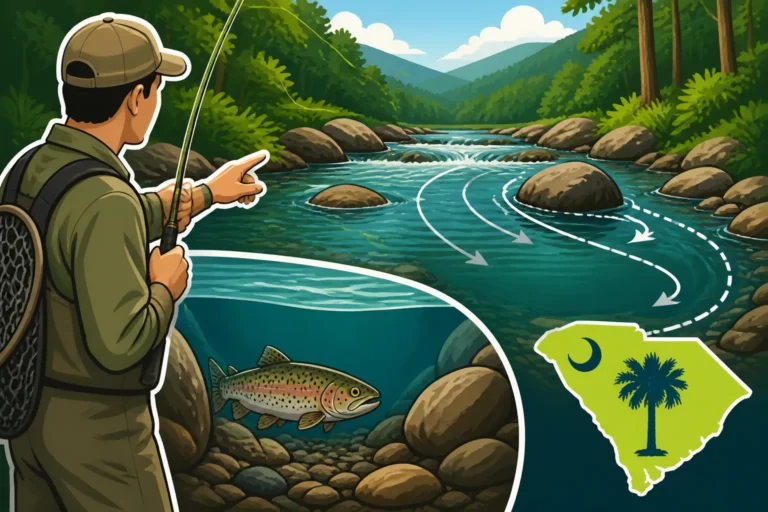
One of the most natural and effective techniques for stream fishing, particularly for trout, is casting upstream and allowing your bait or lure to drift back downstream towards you. This approach is called "up-current fishing" or "dead-drifting."
Start by identifying a likely holding spot for trout – perhaps a deep pool, an eddy behind a large rock, or a seam where faster and slower currents meet. Cast your bait or lure several feet upstream of this spot. The idea is to let it enter the water above where the fish are, allowing the current to carry it naturally to them. This makes your offering appear less threatening and more like a piece of food naturally flowing downstream. As your bait or lure drifts, keep your rod tip high and maintain a slight arc in your line, just enough to stay in contact with your bait without dragging it unnaturally.
The crucial part here is managing slack line. As the current brings your bait towards you, you'll need to slowly reel in the slack to keep a tight line. This is called "mending" your line. You don't want too much slack, as it makes it hard to detect subtle bites. But you also don't want your line so tight that you're pulling the bait faster than the current. The goal is for your bait to move at the exact speed of the current, mimicking an unattached piece of food. Any hesitation, bump, or sudden stop in your line could indicate a bite, so be ready to set the hook! This technique is especially vital when fishing for wild trout, but even stocked trout respond well to it.
Reading the water is essential for successful upstream drifting. Pay attention to current breaks, depth changes, and submerged cover. Trout will position themselves where they can expend minimal energy while having easy access to food. Often, this is just out of the main current, along current seams, or in deeper pockets. By casting upstream of these areas, you allow your offering to drift right into their feeding lanes. This method is incredibly versatile and works well with both artificial lures (like spinners, allowing them to tumble naturally) and natural baits (worms, PowerBait).
Downstream Casting and Retrieval
While upstream drifting is often preferred, there are situations where casting downstream and retrieving against the current can be highly effective, though it requires a slightly different approach. This technique is often used to cover more water quickly or to target fish that might be actively chasing.
Casting downstream allows you to present lures that work best when retrieved against the current, such as certain crankbaits or even some spinners that get more action with opposing flow. When you cast downstream, your lure will naturally swing wide in the current. As you retrieve, you're working the lure upstream. This creates a different kind of action compared to an up-current retrieve, making the lure appear to be struggling against the flow, which can be an irresistible trigger for aggressive trout. It's generally more challenging to maintain a natural presentation this way, as the current will put more pressure on your line, making it harder to feel subtle bites.
This technique is particularly useful when trout are actively chasing baitfish or insects, or when they are holding in slower, deeper pockets downstream of faster water. In these scenarios, a lure that is visibly "fighting" the current can draw attention. It's also a good way to cover the opposite bank from where you're standing, allowing you to present a lure to spots that might be inaccessible with an upstream cast.
When fishing downstream, a slightly faster retrieve might be necessary to keep your lure working properly against the current. However, always be prepared to vary your speed. Sometimes, a quick burst followed by a pause can elicit a strike. This method requires a good feel for your lure and the current, as you're actively manipulating the lure's action. Don't be afraid to experiment, as many experienced anglers find downstream presentations to be very productive when other methods fail.
Targeting Pools, Runs, and Riffles
Streams and rivers are a mosaic of different water types, each demanding a slightly different approach to fishing. Understanding how trout position themselves in pools, runs, and riffles is crucial for successful spin fishing.
Deep pools are often resting and holding areas for trout, especially larger ones, and can be particularly productive after a stream has been stocked. In pools, trout have plenty of depth and often cover (like submerged logs or rocks) to make them feel safe. When targeting pools, you'll want to get your bait or lure down to their level. For bait fishing, use just enough weight to allow your PowerBait or worm to slowly sink into the deepest parts of the pool, or use a bobber to suspend it at a specific depth. For lures, small casting spoons or mini crankbaits that can be worked slowly through the deeper water are excellent. Allow them to sink, then retrieve with a slow, erratic motion. Remember that fish in pools might be less active, so a slower, more deliberate presentation is usually best.
Runs are those sections of the stream where the water flows at a moderate, consistent speed. These are prime feeding grounds for trout because the current delivers a steady supply of food. Trout will often hold along the edges of the main current, in "seams" where faster water meets slower water. These are perfect spots for drifting natural baits upstream, allowing them to flow naturally into the feeding lane. Spinners are also exceptionally effective in runs; cast them slightly upstream and across, letting them swing through the productive seams as you retrieve them just fast enough to get the blade spinning. Active fish will often dart out of their holding spots to strike a well-presented lure in a run.
Riffles are shallow, fast-moving sections of water, often characterized by rocks and turbulent surfaces. While they might seem too fast or shallow, riffles are vital for oxygenation and can hold surprisingly active trout, especially smaller ones. The broken surface also provides excellent cover for trout, making them feel secure while feeding. For riffles, small, agile lures like tiny spinners or even fly-fishing nymphs (if you're brave enough to try them on spinning gear with split shot) can be effective. Cast upstream into the broken water and let your offering tumble naturally through, keeping a tight line to detect bites. Remember that in fast water, trout have less time to react, so a presentation that looks like easy prey is key.
Stealth and Approach
It might sound dramatic, but when stream fishing for trout, you often need to think like a hunter. These fish, even stocked ones, are highly sensitive to vibrations and shadows. A careless approach can spook an entire section of stream, ruining your chances before you even cast.
Always try to approach your fishing spot from downstream. Trout naturally face upstream to wait for food to drift down, meaning their primary field of vision is forward and to the sides. Approaching from behind them (upstream) makes you much more visible. Keep your profile low; crouch, kneel, or use natural cover like bushes and trees to break up your silhouette. Avoid standing directly on the bank, especially if it's elevated, as your shadow cast over the water can send fish scattering.
Wearing natural, muted colors can also make a difference. Bright, contrasting clothing will stand out against the natural backdrop and can alert wary fish. Think earth tones: greens, browns, grays. It might sound a bit extreme, but in clear, shallow trout streams, every little bit of stealth helps.
Finally, make long casts whenever possible. The further you can cast, the further you can stay from the fish, minimizing your chances of spooking them. If you're using light line and small lures, a longer rod and good casting technique will be invaluable here. Once you've cast, move slowly and deliberately. Avoid sudden movements, stomping your feet, or loudly talking. Remember, sound travels incredibly well through water, and vibrations from the bank can transmit directly to the fish, putting them on high alert. Take your time, observe the water, and move with purpose.
Adapting to Conditions and Local Regulations
Being a successful angler isn't just about technique; it's also about understanding the wider context of your fishing environment – from seasonal changes to the rules designed to protect our fisheries.
Seasonal Adjustments
While South Carolina's stocked trout fishing is generally focused on cooler weather, the nuances of each season still play a role in trout behavior.
Spring is often the prime time for stocked trout fishing. Following winter, water temperatures begin to rise, and trout become more active. Many stockings occur in the spring, leading to a period of initial frenzy where fish might bite almost anything. As the water warms, trout are more likely to spread out from their initial stocking points and actively feed. During this time, a wide variety of lures and baits can be effective, and you might find trout in various parts of the stream, from riffles to runs. However, be mindful of potential spring rains that can cause high, murky water, requiring brighter lures or scent-heavy baits.
Fall and Winter fishing for stocked trout in South Carolina can be excellent, especially in the clear, cold mountain streams. As temperatures drop, trout metabolism slows, and they become less aggressive. They tend to seek deeper, slower water where they can conserve energy and find slightly warmer temperatures. This means a slower presentation is often key. Think drift fishing natural baits or slowly retrieving small spoons and jigs close to the bottom. During colder periods, fish might bite more subtly, so highly sensitive gear and keen attention to your line are paramount. Keep an eye on the South Carolina Stocked Trout Season Fishing Techniques for more detailed insights into seasonal patterns.
While stocked trout fishing opportunities in South Carolina are limited in summer due to naturally warmer water temperatures, if you do find yourself on a high-elevation stream that remains cool, trout will be seeking out the coldest, most oxygenated water. This means focusing on shaded areas, deep pools, and especially the turbulent water below waterfalls or rapids. Early morning and late evening will be your best bets, as the water is coolest during these times.
Understanding South Carolina's Trout Limits
It's absolutely critical to be aware of and follow South Carolina's fishing regulations, not just to avoid penalties, but to help conserve our fisheries. These rules are in place to ensure sustainable fishing for everyone.
The SCDNR sets specific daily limits and size restrictions for trout. For example, in many general regulation waters, the daily creel limit for trout (which includes brook, brown, and rainbow trout combined) is 10 fish per person per day. However, there can be exceptions. Some streams, especially those managed for wild trout or trophy trout, might have much stricter limits, such as a 5-fish limit or even be designated as catch-and-release only. For instance, some sections might have a 5-fish trout limit, while others could have a 7-fish trout limit or an 8-fish trout limit depending on management goals.
It's your responsibility as an angler to check the specific regulations for the waterbody you plan to fish before you go. The SCDNR's annual fishing guide is an invaluable resource, and their website often has stream-specific information. Paying attention to Checking a Stream's Trout Limit Before You Fish It is non-negotiable. Some areas may have special tackle restrictions as well, such as artificial lures only, or single-hook artificials. These rules are particularly common in catch-and-release areas to minimize harm to the fish.
The differences in trout limits from stream to stream are often due to specific management goals. Some streams are managed primarily as put-and-take fisheries, where the expectation is that anglers will harvest their catch, while others are managed for trophy potential or to protect delicate wild trout populations. Understanding Why Trout Limits Differ From Stream to Stream helps you appreciate the conservation efforts in play. Always measure your fish carefully if there are size restrictions, and if you're practicing catch and release, handle the fish as gently and quickly as possible to maximize their survival chances.
The Importance of a Fishing License
This might seem obvious, but it's a step that far too many people overlook or get wrong, leading to potential fines and a ruined day on the water. In South Carolina, if you are 16 years of age or older, you absolutely need a valid fishing license to fish in public waters. This isn't just a suggestion; it's a legal requirement. You can find all the details in the South Carolina Fishing License Guide.
Getting your license is thankfully straightforward. You can purchase one online through the SCDNR's Go Outdoors South Carolina portal. This is often the quickest and most convenient option, allowing you to print your license immediately or save a digital copy on your phone. Alternatively, you can buy a license in person at authorized license vendors, which include many sporting goods stores, tackle shops, and even some Walmarts across the state. For a complete list of places, check out Where to Buy a Fishing License in South Carolina or specifically Buying a South Carolina Fishing License Online.
Failing to have a valid fishing license can result in significant penalties. If a game warden or law enforcement officer checks your license and you don't have one, you could face fines, confiscation of your gear, and potentially even court appearances. It's just not worth the risk. Make it a habit to check the expiration date on your license and renew it well in advance. Having a valid license not only keeps you legal but also contributes directly to the conservation efforts and management of South Carolina's fisheries, ensuring that future generations can enjoy the same opportunities you do. Don't let your excitement get ahead of your responsibility; always get licensed!
Spin Fishing Gear Comparison Table for Stocked Trout
To help you visualize some of the best gear choices, here’s a quick comparison of popular items for stocked trout spin fishing.
| Gear Category | Recommended Type/Size | Key Benefit | Popular Brands/Notes |
|---|---|---|---|
| Rod | Ultralight/Light Action (5-7 ft) | Sensitivity, casting small lures, fun fight | Ugly Stik, St. Croix, Fenwick |
| Reel | 1000-2000 Series Spinning | Lightweight, balanced, smooth drag | Shimano, Daiwa, Pflueger |
| Main Line | 4-6 lb Monofilament | Stretch, shock absorption, easy to use | Berkley Trilene XL, Stren |
| 6-10 lb Braid (with leader) | Sensitivity, casting distance, strength | PowerPro, Sufix (use with fluoro leader) | |
| Leader | 2-4 lb Fluorocarbon | Nearly invisible, abrasion resistance | Seaguar, P-Line (essential with braid) |
| Hooks | Size 10-14 Single/Treble | Small for natural bait, better hookup | Gamakatsu, Owner, Eagle Claw |
| Weights | Small Split Shot | Adjustable depth, minimal interference | Dinsmore, Water Gremlin (non-toxic options preferred) |
| Swivels | Size 12-14 Barrel Swivel | Prevents line twist, especially with spinners | Sampo, Spro |
| Lures: Spinners | Size #0-#2 In-Line | Flash, vibration, active presentation | Mepps, Panther Martin, Rooster Tail |
| Lures: Spoons | Small Casting Spoons | Fluttering action, mimics baitfish | Acme Little Cleo, Kastmaster, Dardevle |
| Bait: Prepared | PowerBait (Dough/Nuggets) | Scent, buoyancy, visual appeal | Berkley PowerBait (various colors available on Amazon) |
| Bait: Live | Worms, Mealworms | Natural scent, movement, universal appeal | Red wigglers, nightcrawler pieces |
Disclaimer
Fishing conditions and regulations in South Carolina can change. Always consult the latest South Carolina Department of Natural Resources (SCDNR) regulations before heading out on your fishing trip. This article is for informational purposes only and does not constitute legal advice regarding fishing licenses or regulations.