Tightlining for Crappie in Deep Water
Many anglers hit the water in South Carolina, eager to catch some crappie, only to find them frustratingly absent from the shallow, easily accessible spots they frequented during the spawn. It can feel like these speckled beauties simply vanish once they move into deeper haunts, leaving you scratching your head with an empty stringer. But don't despair! This comprehensive guide is here to demystify the art of tightlining for crappie in those deeper pockets, providing you with the knowledge and techniques to keep catching them year-round in South Carolina's fantastic lakes, no matter how deep they decide to hide.
Understanding Crappie Behavior in Deep Water
Crappie, those delectable panfish we all love to catch, aren't always found in those easy-to-reach shallows. When water temperatures fluctuate, seasons change, or fishing pressure mounts, they often retreat to deeper, more stable environments. Understanding why they go deep is the first step to figuring out where they'll be.
Why Crappie Go Deep
During the scorching South Carolina summers, the shallows can become uncomfortably warm and oxygen-depleted. Crappie will seek out cooler, deeper pockets where the water column is more stable and holds more dissolved oxygen, often near the thermocline. Conversely, in the dead of winter, while some might think they suspend high, many crappie will hug deep structure where water temperatures are slightly more consistent than the super-chilled surface, offering a reliable, if slow, feeding opportunity. This migration to deeper water often means they're schooling up tightly, which is fantastic news for anglers who can locate them. Instead of chasing scattered fish, you're looking for dense congregations. This behavior makes tightlining not just effective, but often the most efficient way to fill a cooler once you've pinpointed their hangout.
This behavioral shift from shallow to deep can be a major challenge for many anglers. It's a common frustration to see the fish disappear from your usual spots. However, adapting your approach and understanding this instinctual move is key. When crappie are grouped up, your chances of a successful day are much higher if you can get your bait in front of them consistently.
Identifying Deepwater Holds and Structure
Crappie aren't just swimming around aimlessly in the deep; they're relating to specific types of underwater structure. Think of it like their underwater neighborhoods. They'll be found near old creek channels, submerged timber, brush piles, rock piles, bridge pilings, ledges, and even artificial fish attractors that state agencies and local clubs might deploy. These structures provide cover, ambush points for baitfish, and a sense of security. On a lake like the Santee Cooper Lakes, for instance, the vast submerged timber fields and old riverbeds are absolute magnets for deepwater crappie. Learning to read your electronics to identify these submerged features is absolutely crucial for success. We're talking about not just seeing "fish," but seeing "fish on structure."
Even subtle changes in the bottom contour, like a slight drop-off from 20 to 25 feet, can be enough to concentrate a school of crappie. They love edges, transitions, and anything that breaks up the monotony of a flat bottom. Pay close attention to your depth finder for these nuances; they're often the key to unlocking a productive fishing spot. These deepwater structures aren't just random spots; they are vital sanctuaries for crappie. Finding these hidden gems requires patience and a good understanding of how to interpret your sonar.
Essential Gear for Deepwater Tightlining
When you're tightlining in deep water, feeling the often incredibly subtle bite of a crappie is paramount. This isn't about brute force; it's about finesse and sensitivity. Your gear needs to be up to the task of transmitting those faint signals from depths, through the water, and up your rod.
Rods and Reels for Sensitivity
You'll want a rod that's specifically designed for light tackle crappie fishing. Look for something in the 6 to 8-foot range, with a light to medium-light power and a fast or extra-fast action. This combination allows for precise jig control and excellent feedback. Many seasoned tightliners opt for a graphite rod blank because of its superior sensitivity. You want to feel every tap, every bump, and every slight change in resistance as your jig descends. Paired with a small spinning reel, typically a 1000 or 2000 series, spooled with light line, you'll have a perfectly balanced setup. For those looking to upgrade their arsenal, checking out sensitive graphite rods on sites like Amazon can be a great starting point.
The rod's length is also important. A longer rod provides better leverage for controlling your jig straight down, especially when fishing directly over a school of fish. It also helps to absorb the shock of a sudden head shake, preventing break-offs on light lines. Don't underestimate how much a quality rod can improve your catch rate when those crappie are barely breathing on your bait. A good crappie rod is an investment in your fishing success, translating every faint nudge into a detectable signal.
Line Selection: The Unsung Hero
Your fishing line is the direct link between you and the fish, and in deepwater tightlining, it needs to be nearly invisible and super sensitive. Most anglers gravitate towards monofilament or fluorocarbon lines in the 4 to 6-pound test range. Monofilament has some stretch, which can be forgiving, but fluorocarbon offers less stretch and superior sensitivity, making those faint bites much easier to detect. Fluorocarbon is also nearly invisible underwater, which can be a huge advantage when targeting wary crappie in clear, deep lakes. The low memory of good quality fluorocarbon line helps it spool smoothly and lay straighter in the water column, reducing line twist and improving presentation. Some anglers even use braided line as a main line for its zero stretch and extreme sensitivity, adding a fluorocarbon leader for stealth.
Whatever line type you choose, make sure it's fresh. Old, brittle line can cost you fish, especially when you're probing brush piles or dealing with a surprise lunker crappie. Regularly check your line for nicks and abrasions, especially after fishing around heavy cover. A small investment in quality line can make a huge difference to your success. The choice of line is often overlooked, but it's arguably one of the most critical components for feeling those subtle bites in deep water.
Hooks, Weights, and Baits
The business end of your tightlining setup requires careful consideration. You'll primarily be using small jigs, typically 1/32 to 1/8 ounce, tipped with either live minnows or small soft plastic crappie baits. The weight of the jig is critical for getting your bait down quickly and keeping it vertical in deep water, especially if there's any current or wind. When using live minnows, opt for a small, sharp jig head or a thin-wire Aberdeen hook, typically size 4 or 6, to minimize harm to the minnow and ensure a natural presentation. The sharpness of the hook is non-negotiable; crappie have papery mouths, and a dull hook will result in missed opportunities. For soft plastics, there's a myriad of options from tiny tubes and grubs to minnow imitations. Experiment with colors, but chartreuse, white, and various greens are consistent producers.
Sometimes, if fish are particularly deep or finicky, a simple split shot weight positioned a foot or so above a bare hook (baited with a minnow) can be incredibly effective. The key is to get your bait to the fish and keep it there, with as natural a presentation as possible. Remember, in deep water, visibility is often reduced, so scent and subtle movement become even more important. Understanding Best Jig Colors for Crappie Fishing can also significantly impact your success, as certain hues perform better under specific light and water conditions.
Mastering the Tightlining Technique
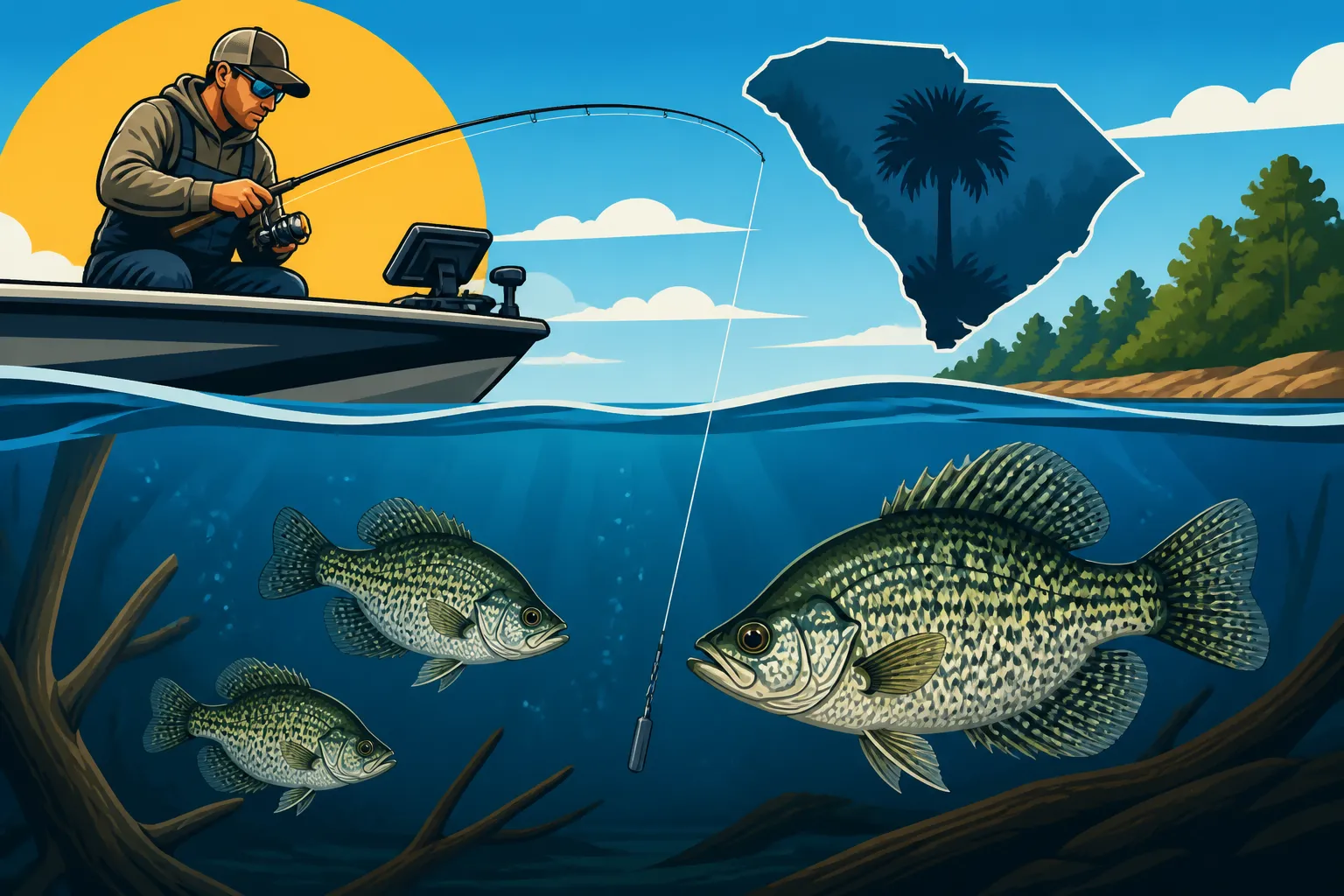
Tightlining, at its core, is about fishing directly below your boat, keeping your line as vertical as possible. This seems simple, but it's an art form that blends precision, boat control, and keen sensory awareness.
The Art of Vertical Presentation
You're essentially dropping your bait straight down into a school of fish that you've located on your electronics. The goal is to keep your bait in their strike zone for as long as possible without drifting away. Boat control is paramount here. Whether you're using a trolling motor or drifting slowly with a drift sock, maintaining a consistent, slow speed directly over the crappie is key. If you're too fast, your line will scope out, making it harder to feel bites and keeping your bait away from the fish. If you're too slow, you might spook them or pass them by too quickly. It's a delicate dance between boat speed, current, and wind.
Once you've dropped your jig, let it sink until it's just above or within the school of fish you've identified. Then, a subtle jigging motion, often just a slight lift and fall of the rod tip, is usually all it takes to entice a bite. Think less about aggressive jerking and more about mimicking a struggling baitfish. Often, the bite will come on the fall, so pay close attention as your jig descends. This precision is why specialized equipment like sensitive rods and reels available on platforms like Amazon is so popular among tightlining enthusiasts.
Reading Your Electronics
Your fish finder is your best friend when tightlining deep. It's not just about seeing blobs on a screen; it's about interpreting those blobs. Learn to differentiate between baitfish, crappie, and brush piles. Crappie often appear as distinct arches or thick lines, sometimes stacked tightly together. Pay attention to the depth at which they're holding and try to present your bait just above them, as crappie typically feed looking upwards. Many modern fish finders, especially those with side imaging or down imaging, can give you incredibly detailed views of the underwater world. You can literally see individual branches of a submerged tree and the fish holding around them. Use your GPS to mark these productive spots precisely, so you can return to them later or make multiple passes. Being able to mark the "sweet spot" and return to it within a few feet can dramatically increase your catch.
Don't just look for fish; look for patterns. Are they always on the north side of the creek channel? Are they suspended 5 feet off the bottom, or are they hugging tight to the brush? The more information you gather from your electronics, the more efficiently you'll be able to target them. This real-time feedback is what makes deepwater tightlining so rewarding once you get the hang of it, turning guesswork into a more scientific approach.
Feeling the Subtle Bite
Crappie in deep water, especially in colder temperatures, often have an incredibly light bite. It's rarely a violent tug. Instead, it might be a subtle "tick," a feeling of extra weight on your line, or simply your line going slack when it should still be falling. Sometimes, it's just a slight tremor or a momentary pause in your jig's descent. This is where your sensitive rod and low-stretch line truly earn their keep. Keep a very close eye on your line where it enters the water. Any twitch, jump, or unnatural movement could signal a bite. It takes practice and concentration, but once you learn to distinguish a crappie bite from a snag or bottom contact, your hook-up ratio will soar. It's often better to set the hook on suspicion rather than waiting for a definitive pull.
If you're fishing with multiple rods (which is common when tightlining, sometimes called "spider rigging"), set up a system to monitor each one. Rod holders can help, but your attention needs to be divided among them. Pay particular attention to the rod tips; a slight dip or wiggle can be your cue. When it comes to fishing for these wary deepwater crappie, patience and keen observation are just as important as the right gear. Understanding Tightlining Techniques for Crappie Explained further details these nuances.
Finding the Sweet Spots: Locating Deepwater Crappie
Finding crappie in the vastness of a deep lake can feel like searching for a needle in a haystack. But with the right tools and knowledge, you can narrow down the search considerably, transforming frustration into productive fishing.
Interpreting Sonar and Mapping
As we touched upon earlier, your sonar and detailed lake maps are indispensable tools for tightlining success. Don't just motor around hoping to stumble upon fish; use your electronics to systematically scan areas likely to hold crappie. Look for contour lines that indicate old creek beds, humps, or sharp drop-offs. These are prime crappie highways and hangouts. Modern mapping software, often integrated into your fish finder or available on dedicated units, provides incredible detail on bottom structure. You can often see historical river channels, submerged roadbeds, and even the locations of artificial fish attractors that have been deployed. For example, on Lake Murray, knowing the locations of submerged islands or deep-water points can be a game-changer for finding crappie.
Once you've identified a promising piece of structure on your map, use your sonar (down imaging and side imaging, if you have it) to confirm its presence and, crucially, to look for fish relating to it. Mark any fish you see on your GPS, and then work that area methodically. This systematic approach saves you time and fuel, putting your bait in front of more fish. Many of the best crappie spots on the Santee Cooper Lakes have been found this way, through careful interpretation of underwater topography.
Key Deepwater Structures
Crappie in deep water are almost always associated with structure. They don't just float around in open water for long periods. Here are some of their favorite deepwater haunts:
- Submerged Timber and Brush Piles: These are classic crappie magnets. Whether it's standing timber from a flooded forest or man-made brush piles sunk by anglers or conservation agencies, these offer shelter, ambush points, and attract baitfish. Often, you'll see crappie suspended just above the thickest parts of the brush. You can find out more about how to Fish for Crappie Around Brush Piles to improve your tactics around these prime locations.
- Creek Channels and Ledges: Deep creek channels that wind through the lake bed are superhighways for crappie movement. The ledges, or "breaks," where the channel drops off, are particularly productive. Crappie will often position themselves along these edges, using them as travel corridors and feeding stations.
- Bridge Pilings and Docks: While not always "deep" in the same sense as offshore humps, bridge pilings and deepwater dock structures provide vertical cover that crappie adore. They offer shade, protection, and often hold baitfish. The deeper pilings in major South Carolina lakes can hold impressive numbers of crappie.
- Humps and Roadbeds: Submerged humps (underwater hills) and old roadbeds offer distinct changes in depth and bottom composition, which attract bait and, in turn, crappie. These often rise up from deeper water, creating ideal feeding zones. On Lake Wateree, for instance, these features are well-known for producing good crappie catches.
Seasonal Considerations for Deepwater Tightlining
The behavior of crappie, even in deep water, is heavily influenced by the seasons. Understanding these shifts will help you pinpoint their locations and adjust your techniques for maximum effectiveness.
Winter's Deep Crappie Bounty
Winter might seem like a slow time for fishing, but it's often prime time for deepwater tightlining for crappie in South Carolina. As surface temperatures plummet, crappie often school up incredibly tightly in deeper holes, creek channels, and around submerged timber, seeking stable, slightly warmer water. They might be lethargic, but they're concentrated, making them easier to target once found. During winter, crappie metabolism slows down, so their bites can be even more subtle. Smaller jigs (1/32 oz) and slow presentations are often key. Look for them holding close to the bottom or suspended in tight balls over deep structure. This is when your sensitive rod and fluorocarbon line truly shine, allowing you to detect those faint "breathing" bites. For specific tactics, you might want to learn more about South Carolina Crappie Fishing Techniques by Season.
Lakes like Lake Moultrie or Lake Marion are famous for their winter deepwater crappie fisheries. Anglers will spend hours slowly idling over marked structure, watching their electronics intently, and when they find a school, they drop their jigs straight down. It's a game of patience, but the rewards can be significant, often yielding large numbers of quality fish.
Summer's Thermal Retreats
Just like winter, the dog days of summer also drive crappie deep. The oppressive heat makes shallow water uncomfortable, pushing crappie into cooler, deeper sections of the lake where oxygen levels are better. They'll often seek out the thermocline – a layer in the water column where temperatures change rapidly – or position themselves around deep, shady cover like thick timber or bridge pilings. In summer, crappie might be more active than in winter, but they're still often concentrated around specific deep structures. Look for them suspended over the main river channel or tucked into the deepest brush piles. Larger jigs (1/16 to 1/8 oz) and a slightly more aggressive jigging cadence can sometimes be effective, especially if you're marking active fish.
The challenge in summer is often boat traffic and finding those less-pressured deep spots. Early mornings and late evenings can still be productive, even in deep water. Pay attention to how the crappie are orienting themselves on structure; are they on the top, middle, or bottom of a brush pile? Adjust your jig depth accordingly. This also plays into the broader understanding of Best Time of Year to Catch Crappie.
Troubleshooting Common Tightlining Challenges
Even with the best gear and knowledge, tightlining in deep water presents its own set of unique frustrations. Learning to anticipate and overcome these common challenges is a crucial part of becoming a successful deepwater crappie angler.
Dealing with Snags and Break-offs
This is perhaps the most frustrating aspect of deepwater tightlining, especially when you're fishing around submerged timber or brush piles. It's inevitable that you'll get snagged. The key is to minimize break-offs and learn how to free your line efficiently. One common technique is to use a "jig saver" or "plug knocker" – a heavy weight on a separate line that you slide down your main line to dislodge the snagged jig. You can find various versions of these handy tools on Amazon. Another tip is to back off the snagged area with your boat, allowing the angle of the line to change, sometimes freeing the hook.
If you're constantly snagging, consider changing your jig weight (sometimes lighter or heavier helps), your hook size, or even the type of bait. Sometimes, just a slight adjustment in your presentation or boat position can make a big difference. And always, always check your line for fraying after a snag; a damaged line is a guaranteed lost fish. Remember, patience is key, but so is being prepared for the inevitable. The frustration of losing tackle is real, but a proactive approach can save you time and money.
Adjusting for Finicky Bites
There will be days when the crappie are there, you see them on your electronics, but they just won't commit. This is when you need to become a detective and adjust your tactics.
- Slow Down or Speed Up: Crappie might want a slower, more subtle presentation, or sometimes, a faster, more erratic jigging motion can trigger a reaction strike. Experiment with both. For example, if you're struggling, try just holding the bait perfectly still in front of their faces for an extended period.
- Change Bait/Color: If live minnows aren't working, switch to a soft plastic, and vice-versa. Experiment with different colors and sizes of jigs. Sometimes a subtle shift from chartreuse to white, or a slightly smaller profile bait, can make all the difference. You can explore more about Crappie Jigging Techniques for Beginners to understand these nuances.
- Adjust Depth: Even if your electronics show fish at 20 feet, they might be feeding at 19 feet or 21 feet. Subtle depth adjustments, sometimes just six inches up or down, can be the difference between an empty hook and a biting fish. Crappie often feed looking up, so presenting your bait just above the school is often more productive than right in the middle of it.
- Leader Length: If you're using braided mainline with a fluorocarbon leader, try adjusting the leader length. Sometimes a longer, more subtle leader is needed, especially in clear water or when fish are pressured. Don't be afraid to change things up until you find what triggers those fish to bite. This kind of persistent experimentation is often what separates a good day from a great day on the water.
Recommended Gear for Deepwater Crappie Tightlining
Here's a quick overview of the essential gear you'll want to have on hand for successful deepwater crappie tightlining.
| Gear Item | Recommendation | Key Features | Why It Matters |
|---|---|---|---|
| Rod | 6-8 foot, Light to Medium-Light Power, Fast/Extra-Fast Action Graphite | Highly sensitive, good backbone, flexible tip | Detects subtle bites, provides control, prevents break-offs |
| Reel | Small Spinning Reel (1000-2000 series) | Smooth drag, lightweight, good line capacity for light lines | Finesse presentation, balances well with light rods, handles crappie fights |
| Main Line | 4-6 lb Test Fluorocarbon or High-Quality Monofilament | Low stretch (fluoro), invisible (fluoro), manageable memory | Maximizes bite detection, stealthy, durable |
| Jig Heads | 1/32 oz – 1/8 oz (round head or unique profiles like VMC Moon Eye) | Varied weights for different depths/currents, sharp hook | Gets bait to depth, natural presentation, good hook-up ratio |
| Soft Plastics | 1-2 inch tube jigs, grubs, minnow imitations (chartreuse, white, natural shad colors) | Mimics baitfish, adds scent/attraction (some infused), versatile | Entices strikes, allows for scent application (if using crappie attractant) |
| Live Bait | Small Minnows | Natural movement, scent | Often irresistible to crappie, especially lethargic ones |
| Electronics | Down/Side Imaging Sonar with GPS and detailed mapping | Identifies structure, locates fish, marks waypoints, provides real-time feedback | Essential for finding deepwater crappie and navigating structure |
| Rod Holders | Adjustable, sturdy rod holders (for spider rigging) | Keeps multiple rods secure, allows for consistent bait presentation | Critical for hands-free fishing when running multiple lines, aids in detecting bites |
Disclaimer
Please note that fishing regulations, including bag limits and size restrictions, can change. Always consult the latest South Carolina Department of Natural Resources (SCDNR) guidelines before heading out on the water. This guide is for informational purposes only and does not constitute official legal advice. Enjoy your time on South Carolina's beautiful waters!