Crappie Fishing Spots on Lake Hartwell
One of the most rewarding, yet sometimes frustrating, experiences for an angler is trying to locate crappie on a massive reservoir. Lake Hartwell, a sprawling body of water on the South Carolina-Georgia border, presents an incredible opportunity for crappie fishing, but its sheer size can be daunting. This guide is here to cut through the confusion, helping you pinpoint the best crappie fishing spots on Lake Hartwell and understand the behaviors that lead to a successful trip.
Understanding Lake Hartwell's Crappie Habitat
Lake Hartwell is a true gem in the Upstate of South Carolina, offering incredible fishing for a variety of species. But when it comes to crappie, knowing their preferred haunts and behaviors is key to filling your cooler. They aren't just everywhere; they gravitate towards specific types of cover and structure that offer protection and ample feeding opportunities.
The Vastness of Lake Hartwell and Crappie Behavior
Imagine a lake with over 56,000 acres of water and nearly 962 miles of shoreline. That's Lake Hartwell for you! This immense size, while picturesque, can make finding schooling crappie feel like searching for a needle in a haystack, especially if you're new to the lake. Crappie are masters of their environment, constantly moving in relation to water temperature, light penetration, and the availability of food. They are often found in tight schools, so once you find one, you're likely to find more.
The challenge truly lies in understanding their seasonal movements. In spring, they push shallow to spawn, congregating in creek arms and coves. As summer heat sets in, they retreat to deeper, cooler waters, often suspending over structure. Fall sees them scattering a bit more, feeding actively before winter sends them deep again, often suspended in large schools over the main river channels. Recognizing these patterns is your first step to unlocking Hartwell's crappie potential. It's not just about where to cast, but when and why they'd be there.
Key Structures and Cover Attracting Crappie
Crappie are ambush predators, and they love cover. Think of it as their underwater apartment complex, providing shelter from bigger predators and a convenient spot to hide from baitfish. On Lake Hartwell, you'll find an abundance of both natural and man-made structures that act as crappie magnets.
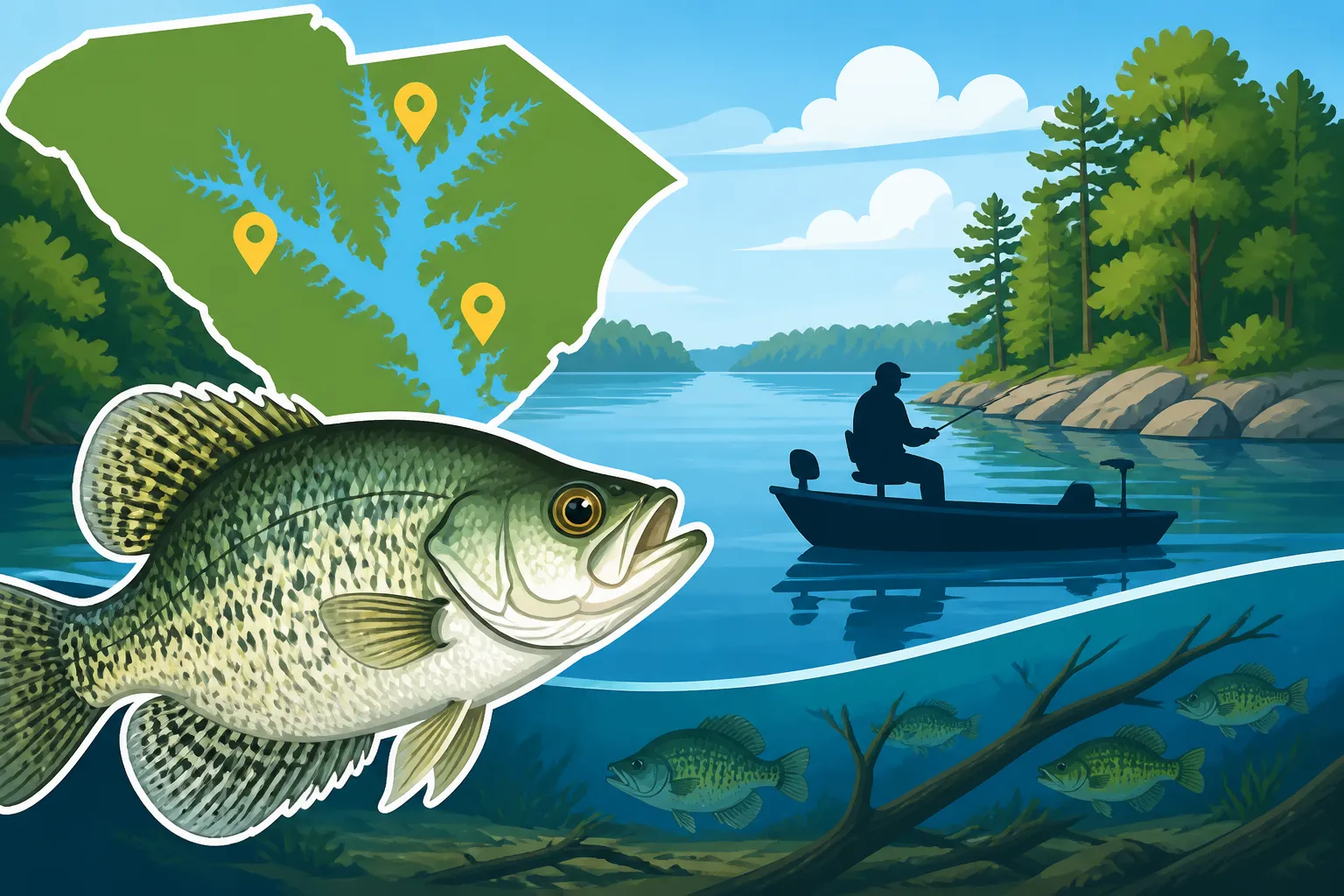
Submerged timber is a huge one. When the lake was impounded, countless trees were left standing, and their branches and trunks now offer perfect vertical and horizontal cover. These can be particularly productive in the deeper parts of the lake, where crappie will suspend within the branches. Brush piles, whether natural accumulations or those sunk by thoughtful anglers, are another prime target. These offer dense protection and attract baitfish, creating a perfect crappie ecosystem. You might find them off points, in creek channels, or near old roadbeds.
Beyond natural features, man-made structures are equally important. Bridge pilings, like those supporting the major highways crossing the lake, provide excellent vertical structure and shade. Crappie will often stack up against these. Marina docks are also phenomenal crappie spots, especially in cooler months or during periods of bright sunshine. The shade and abundant structure offered by the dock pilings, boat lifts, and even submerged debris around marinas create ideal crappie hangouts. Understanding these key features is paramount to success on this expansive lake.
Top Crappie Hotspots on Lake Hartwell
While crappie can be found throughout Lake Hartwell, certain areas consistently produce better results due to their unique characteristics and the way crappie utilize them throughout the year. Identifying these high-potential zones will significantly improve your chances.
Creek Arms and Tributaries for Seasonal Catches
During the spring spawn, the numerous creek arms and tributaries of Lake Hartwell become absolute crappie havens. The warmer, shallower waters here are perfect for their reproductive cycle. The Seneca River arm and the Tugaloo River arm, in particular, are renowned for their crappie populations. These vast arms have countless smaller creeks and coves that crappie push into.
Look for areas with standing timber, brush piles, or flooded willows in 5 to 15 feet of water. Specific coves like those found within Lightwood Log Creek, Six & Twenty Creek, and even the larger sections of the Tugaloo River near the confluence with the Seneca offer ideal spawning grounds. As the water warms, crappie will move shallower and then back out to slightly deeper edges of these same coves after spawning. For instance, the back of Martin Creek or the coves around the State Park can be incredibly productive, especially in April and May. This is where you can often capitalize on their aggressive feeding during the pre-spawn and post-spawn periods, sometimes even catching them on topwater lures in low light conditions!
Deep Water Structures and Brush Piles
Once the spring spawn subsides and the scorching South Carolina summer sets in, crappie on Lake Hartwell generally retreat to deeper, cooler waters. This is when understanding contour maps and having good electronics becomes indispensable. Crappie will often suspend over or around deep-water structures, particularly brush piles, submerged humps, and old creek channels.
Many local anglers and guides have sunk countless brush piles throughout the lake, and these become hotspots. You'll often find these off main lake points or along the deeper bends of the old Seneca and Tugaloo River channels. Areas near the "Rock Quarry" on the Tugaloo arm or the deep bends of the Seneca River arm around the Anderson side are notorious for holding large schools of crappie in summer and winter. These fish might be holding anywhere from 15 to 40 feet deep, depending on the thermocline and baitfish presence. A quality fish finder with side imaging is crucial here, allowing you to scan wide areas and pinpoint these submerged structures, then drop jigs or minnows directly onto them. Finding these hidden gems can be challenging, but the reward of a slab crappie makes the effort worthwhile. If you're looking for more general information on fishing various locations, our guide on the Best Fishing Spots in South Carolina can offer broader insights.
Bridge Pilings and Marina Docks
Beyond natural features and sunken brush, man-made structures provide reliable crappie habitat year-round, especially on a large, deep lake like Hartwell. Bridge pilings and marina docks are prime examples. The massive pilings of major bridges, such as the US-123 bridge near Clemson or the I-85 bridges spanning the lake, offer excellent vertical cover that crappie utilize.
These pilings create shade and current breaks, attracting baitfish and, subsequently, crappie. You'll often find crappie stacked up on the deeper side of the pilings, or suspending in the shade underneath. Vertical jigging or dropping minnows down the pilings can be incredibly effective. Marinas, while sometimes tricky to fish due to boat traffic, are also crappie magnets. Places like Portman Marina, Big Water Marina, and Hartwell Marina offer abundant dock pilings, boat lifts, and submerged infrastructure that hold crappie. These spots are particularly productive in the cooler months, providing refuge and stability, and can be fantastic for night fishing under the dock lights, which attract bait. Just be mindful of private property and boat traffic when fishing near marinas.
Techniques for Targeting Hartwell Crappie
Once you've identified potential crappie hotspots, the next step is to employ the right techniques to entice them to bite. On a lake the size of Hartwell, covering water efficiently and presenting baits effectively are crucial. Many anglers focus on specific strategies to maximize their catch.
Spider Rigging and Trolling
For covering a lot of water and presenting multiple baits, spider rigging and trolling are incredibly effective techniques on Lake Hartwell. Spider rigging involves using numerous long rods (sometimes 8 or more) extended from the bow of the boat, resembling a "spider." Each rod is rigged with a jig or a live minnow, or a combination of both, at varying depths. This allows you to present baits through different parts of the water column simultaneously.
When crappie are scattered or suspended in open water, slowly trolling with this setup at speeds typically between 0.5 to 1.5 mph allows you to systematically search large areas of a creek channel or main lake basin. You can use lighter jigs, sometimes tipped with a minnow, or small crankbaits designed for crappie. The key is to find the right depth where the crappie are holding. Your electronics will be your best friend here, identifying schools of fish and the depth at which they are suspended. Often, anglers will target old river beds or submerged timber lines with this method, especially during the colder months when crappie are schooled up deep. If you're keen on exploring various methods, our guide on Jigging and Bait Fishing Techniques Explained offers a broader understanding of effective approaches.
Vertical Jigging and Dock Shooting
When crappie are concentrated in tight schools around specific structures, vertical jigging and dock shooting become the go-to techniques. Vertical jigging is best when you've pinpointed a brush pile or a submerged tree on your fish finder and see crappie holding tight to it. You simply position your boat directly over the structure and drop your jig or minnow straight down, presenting it right in front of the fish.
Small lead-head jigs (1/16 to 1/8 ounce) tipped with soft plastic bodies or live minnows are standard. The retrieve is usually a subtle lift-and-drop, just enough to impart action without moving the bait too far from the strike zone. Dock shooting is a more specialized technique, primarily used around marina docks or private piers. It involves bending your rod tip back, gripping the jig, and launching it like a slingshot under docks, into dark corners where crappie love to hide. This allows you to reach spots that are otherwise inaccessible. Light spinning tackle and small, compact jigs are essential for this method. It requires a bit of practice but can be incredibly rewarding for catching those elusive, dock-dwelling slabs. For beginners looking to master specific crappie techniques, Crappie Jigging Techniques for Beginners could be a useful resource.
Planning Your Lake Hartwell Crappie Trip
A successful crappie trip to Lake Hartwell involves more than just knowing where to go; it's about understanding the seasonal patterns, having the right gear, and leveraging available resources. Preparation can make all the difference on such a large and dynamic fishery.
Best Times of Year for Crappie
Crappie fishing on Lake Hartwell offers year-round opportunities, but the tactics and locations will shift dramatically with the seasons. Understanding this calendar is paramount to success.
Spring (March-May): The Spawn. This is arguably the most popular time for crappie fishing. As water temperatures rise into the 50s and 60s Fahrenheit, crappie move from deep channels into shallower creek arms and coves to spawn. They'll be found in 3-15 feet of water, often around brush, submerged timber, or even flooded grass. Live minnows under a bobber or small jigs fished slowly are incredibly effective. Our detailed guide on How to Find Crappie in Spring can give you even more pointers during this prime season.
Summer (June-August): Deep Water Retreat. With rising air and water temperatures, crappie head for deeper, cooler water. They'll often suspend over or around submerged structures like brush piles, humps, and old river channels in 15-40 feet of water. Trolling jigs or minnows with spider rigging setups, or vertically jigging fish located on electronics, are the most productive methods. Early morning and late evening can see them move slightly shallower.
Fall (September-November): Feeding Frenzy. As temperatures begin to cool, crappie become more active and start schooling up, moving out of their deepest summer haunts. They might be found along creek channel edges, main lake points, or around brush piles in transitional depths (10-25 feet). They're often chasing baitfish aggressively, making trolling or casting small crankbaits and jigs effective.
Winter (December-February): Deep and Slow. Crappie are deep and can be lethargic in winter. They'll typically school tightly in the deepest parts of creek channels or main lake basins, often suspended over old timber or brush piles in 25-50 feet of water. Vertical jigging with small jigs or slow-trolling with minnows is the key. The bite can be subtle, but when you find a school, you can often catch quite a few. For a general overview of seasonal patterns across the state, consider reading our article on the Best Time of Year to Catch Crappie.
Essential Gear and Electronics
Having the right tackle and technology can significantly enhance your crappie fishing experience on Lake Hartwell. Given the varied techniques and depths involved, a versatile setup is beneficial.
For rods, light to medium-light spinning rods (5.5 to 7 feet in length) are ideal, paired with small spinning reels spooled with 4-8 pound monofilament or fluorocarbon line. Braided line can also be effective, especially for vertical jigging, but a fluorocarbon leader is recommended for stealth. Your tackle box should be stocked with a variety of small lead-head jigs (1/32 to 1/8 ounce) in various colors, as well as an assortment of soft plastic crappie tubes, grubs, and curly-tail baits. Live minnows are a perennial crappie favorite, so a good minnow bucket and small hooks are also essential. Don't forget bobbers for shallow water fishing.
Perhaps most critically, a quality fish finder with GPS and mapping capabilities is almost a necessity on Lake Hartwell. Features like side imaging and down imaging allow you to scan vast areas and pinpoint submerged brush piles, old roadbeds, and schools of crappie that would otherwise be invisible. This technology is invaluable for locating deep-water fish and navigating safely. Many anglers also benefit from a good mapping chip for their unit, which details contours, creek channels, and even some known brush pile locations. Remember to check out the South Carolina Fishing License Guide to ensure you have all your necessary permits before heading out on the water.
Leveraging Resources and Local Knowledge
Even with all the right gear and an understanding of crappie behavior, there's no substitute for local knowledge, especially on a lake as large and complex as Hartwell. Connecting with local resources can fast-track your success.
Start by visiting local tackle shops around towns like Anderson, Clemson, or Hartwell, Georgia. They often have the most up-to-date fishing reports, know what baits are working, and can point you to general areas that have been hot. Don't be shy about asking questions; most tackle shop owners are passionate anglers themselves. Online forums and local fishing groups on social media can also provide a wealth of information from fellow anglers.
If you're short on time or want to learn the lake quickly, consider hiring a local crappie guide. A professional guide will have years of experience on Hartwell, know countless productive brush piles, and can teach you specific techniques for the current conditions. Websites like FishingBooker can be an excellent resource for finding experienced Lake Hartwell crappie guides who specialize in these species. They can provide all the necessary gear, teach you the ropes, and put you on fish, making your trip much more efficient and enjoyable. Always check the current South Carolina's Freshwater Fishing Regulations before you go, as limits and rules can change.
| Crappie Hotspot Area | Prime Seasons | Key Features | Recommended Techniques |
|---|---|---|---|
| Creek Arms (Seneca, Tugaloo, Lightwood Log) | Spring, Fall | Shallow coves, flooded timber, brush piles, warm water | Casting jigs, live minnows under bobber, slow trolling |
| Deep Water Channels (Main Lake Basin, River Channels) | Summer, Winter | Submerged humps, old river beds, brush piles (15-50 ft) | Vertical jigging, spider rigging with minnows/jigs, slow trolling |
| Bridge Pilings (US-123, I-85 Bridges) | Year-round | Vertical structure, shade, current breaks | Vertical jigging, dropping minnows, dock shooting (if accessible) |
| Marina Docks (Portman, Big Water, Hartwell) | Year-round | Shade, dock pilings, boat lifts, submerged debris | Dock shooting, vertical jigging, night fishing under lights |
Disclaimer
The information provided in this guide is for general informational purposes only and is subject to change. Fishing regulations, license requirements, and fish populations can vary. Always consult the official South Carolina Department of Natural Resources (SCDNR) website or publications for the most current and accurate regulations before engaging in any fishing activities. Adherence to all local, state, and federal laws is the sole responsibility of the angler.