Anchoring the Submerged Humps Near Dreher Island for Stripers
There’s nothing quite like the thrill of chasing striped bass, but anyone who’s spent time on South Carolina’s Lake Murray knows how frustrating it can be when those elusive stripers dive deep and seem to vanish. This comprehensive guide will walk you through the proven strategy of anchoring the submerged humps near Dreher Island, providing you with the knowledge and techniques to consistently put more of these powerful fish in your boat.
Understanding Dreher Island's Striper Hotspots
Lake Murray, affectionately known as the "Jewel of South Carolina," is renowned for its incredible striped bass fishery. While stripers can be found throughout the lake, the area around Dreher Island State Park holds some of the most consistent action, particularly when targeting the unique underwater topography that stripers love. It's not just about being near the island; it's about knowing where the fish hide beneath the surface.
Why Submerged Humps Are Striper Magnets
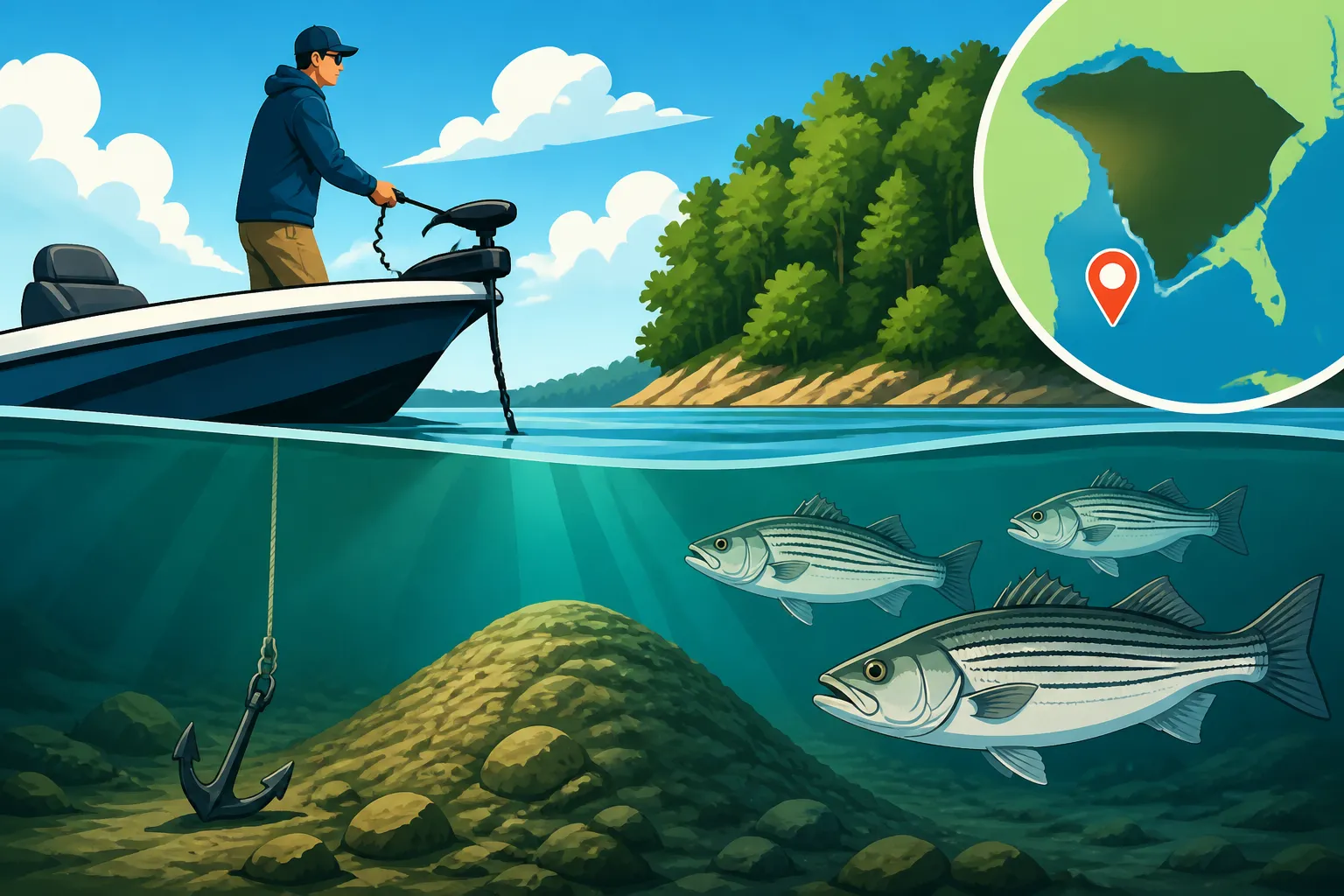
Think of submerged humps as underwater islands. They rise from the lake bed, creating structure, current breaks, and ambush points that predatory fish like stripers absolutely thrive on. These humps often feature rocky outcroppings, shell beds, or even submerged timber, providing perfect habitat for baitfish to congregate. Where the baitfish go, the stripers follow. During warmer months, especially, when the surface water warms up, stripers will often seek refuge in the cooler, more oxygenated waters found around deeper humps and ledges. They use these elevated features to funnel bait, allowing them to expend less energy while waiting for an easy meal. This makes them prime targets for anglers willing to put in the effort to find and fish them effectively.
Locating Key Humps Near Dreher Island
Finding these hidden gems is half the battle, and it requires a combination of modern electronics and a good understanding of Lake Murray's underwater geography. Modern fish finders and chartplotters are your best friends here. Start by studying detailed lake maps or your boat's GPS charts, looking for areas where depth contours change rapidly, or where "mountains" are indicated beneath the surface. These are your humps. Specifically around Dreher Island, there are numerous such structures. Pay close attention to humps that top out between 20-40 feet, surrounded by much deeper water. These are often the most productive. Use your side-scan and down-imaging sonar to get a clear picture of the structure, identifying baitfish schools or even individual striper arches holding tight to the hump. A great starting point would be areas just off the main lake channels surrounding Dreher Island, where the old riverbed merges with higher ground.
Seasonal Movements and How They Impact Hump Fishing
Striped bass movements on Lake Murray are highly seasonal, and understanding these patterns is crucial for successful hump fishing. In spring, as water temperatures rise, stripers become more active and can be found chasing bait in shallower waters, but they'll still relate to humps as staging areas. Summer is arguably the prime time for hump fishing, as the fish descend to the cooler, deeper thermocline, often congregating tightly around these underwater structures. This is when techniques discussed in a guide like Lake Murray Summer Striped Bass Techniques in South Carolina become invaluable. During fall, as temperatures cool, stripers disperse more, but they will revisit humps as they transition between deep and shallow water, aggressively feeding to bulk up for winter. In winter, they may school even tighter on deeper humps, making them challenging but rewarding targets if you can pinpoint their location. Each season demands a slightly different approach, but the humps remain consistent points of interest for these powerful fish.
Essential Gear and Techniques for Hump Anchoring
Having the right equipment is non-negotiable when you're targeting big stripers on deep humps. A flimsy rod or an undersized anchor could mean the difference between landing a trophy and losing your gear. Preparation is key to a successful day on the water, especially when dealing with the potential power of a Lake Murray striper.
The Right Anchor Setup for Deep Water Structure
Anchoring effectively over a submerged hump in potentially strong winds or currents requires a robust setup. For Lake Murray, a grapple-style anchor is often preferred for its ability to bite into rocky or irregular bottoms. Make sure your anchor is appropriately sized for your boat, and don't skimp on anchor rode. A good rule of thumb is to have at least a 7:1 scope (seven feet of rope for every foot of depth), plus a few feet of heavy chain to ensure the anchor sets properly and absorbs shock. So, if you’re anchoring in 30 feet of water, you’ll want at least 210 feet of rope and 10-15 feet of chain. This generous scope prevents your boat from dragging and keeps you positioned perfectly over the hump. Investing in a quality anchor winch can also make the process much smoother, especially when constantly repositioning.
Recommended Rods, Reels, and Line for Lake Murray Stripers
Lake Murray stripers can be absolute powerhouses, so your tackle needs to match the fight. Medium-heavy to heavy action casting or spinning rods, typically 7 to 8 feet long, are ideal. Look for rods with a strong backbone but a sensitive tip to detect subtle bites. Pair these with robust reels that have a smooth, powerful drag system. Many anglers opt for baitcasting reels when bottom fishing or jigging on humps, as they offer excellent control for dropping baits precisely. For line, 20-30 lb braided line is a popular choice due to its sensitivity and strength, often with a 20-30 lb fluorocarbon leader for abrasion resistance and invisibility. The longer rods help with casting distance if needed and provide extra leverage when fighting a fish in deep water. This robust setup is essential for managing the strong runs and headshakes of a determined striper. You can find more specific recommendations in guides like Striped Bass Fishing on Lake Murray, South Carolina.
Bait and Lure Strategies for Anchored Hump Fishing
Once you’re anchored, the real work begins: tempting those stripers. Live bait is often king when anchoring humps. Large gizzard shad, threadfin shad, or herring are excellent choices. Use a Carolina rig or a three-way swivel rig to present your bait naturally near the bottom. Hook your bait through the nose or back, allowing it to swim freely. For artificial lures, heavy spoons, bucktail jigs, and large soft plastic swimbaits are effective. Jig them vertically right over the hump, making sure they get down to where the fish are holding. Don't be afraid to experiment with retrieve speeds and jigging motions. Sometimes a slow, methodical lift-and-drop works, while other times a more aggressive snap-jigging motion can trigger a strike. It's often about finding what the fish want on that particular day. Remember, learning the Best Bait for Striped Bass in Freshwater Lakes can significantly improve your catch rates.
Lake Murray Striper Fishing – Hump Strategy Overview
| Season | Typical Striper Behavior & Hump Strategy |
|---|---|
| Spring (March-May) | Stripers move shallower to feed and spawn, but still use humps as staging areas near deeper water. Target humps adjacent to creek channels or points. Live bait and casting swimbaits are effective. |
| Summer (June-August) | Prime Time for Humps. Stripers retreat to cooler, oxygenated water in the thermocline (often 25-45 ft deep) around humps. They school tightly. Vertical jigging with spoons or live bait on downlines is highly effective. |
| Fall (September-November) | Fish become more active and widespread, chasing bait. Humps serve as ambush points. Look for schooling fish over humps, often higher in the water column during feeding frenzies. Topwater action can occur early/late in the day; otherwise, live bait or jigging is good. |
| Winter (December-February) | Stripers are lethargic but school tightly on deeper humps (40-70 ft). Vertical jigging or slow-trolling live bait or large jigs is key. Sonar is crucial to find these tight schools. Bites can be very subtle. |
Mastering the Anchor and Presentation
Precision is paramount when fishing submerged humps. It's not enough to simply be near the hump; you need to be on it, or strategically positioned to intercept fish moving over it. This takes practice and a keen understanding of your surroundings.
Precision Anchoring Techniques for Optimum Position
The goal is to position your boat so your baits or lures are right where the stripers are. This often means being directly over the highest point of the hump or just off its edges. Before dropping anchor, use your GPS to mark the hump's peak. Then, consider the wind and any current. You'll want to approach the hump from upwind or upcurrent, giving yourself enough room to drift back to your desired spot after the anchor sets. Drop your anchor well ahead of the hump, letting out sufficient scope as you slowly drift backward. As your boat settles, check your sonar to confirm your position relative to the hump. Don't be afraid to pull anchor and reposition if you're off the mark. Sometimes, a subtle shift of 20 feet can make all the difference. Marker buoys can also be helpful for visual reference once you've identified a sweet spot.
Effective Bait Presentation While Anchored
Once anchored, your presentation needs to be impeccable. If using live bait, downlines are incredibly effective for keeping baits in the strike zone. This involves attaching a heavy lead weight (2-6 ounces, depending on depth and current) to your main line, with a short leader (1-3 feet) tied above it, leading to your bait. This ensures your live shad swims tantalizingly close to the bottom, right where stripers are likely to be. Pay close attention to your rod tip for the slightest tap or bend. When jigging artificials, make sure your lure is reaching the bottom and staying there during your retrieve. Experiment with different jigging rhythms – a fast, erratic motion can imitate a fleeing baitfish, while a slow, subtle bounce might appeal to less active fish. Remember, stripers are often found near the bottom structure, so ensuring your bait or lure is in their face is key. Check out Best Lures for Lake Murray Striped Bass in South Carolina Summer for more ideas on artificials.
Reading Sonar and Adjusting Your Approach
Your sonar unit is your most important tool once you're on the water. Before you even drop anchor, use it to scan the hump, looking for schools of baitfish, arching marks that indicate stripers, or even just interesting structural features like ledges or rock piles. Once anchored, continue to monitor your sonar. Are the fish holding tight to the bottom, or are they suspended higher on the hump? Is the baitfish density good? If you're not seeing any activity after a while, don't be stubborn. It's better to move to another hump or adjust your position than to waste time on barren water. Sometimes, stripers will move off one side of a hump to chase bait, and a slight repositioning of your boat could put you directly on them. Learn to interpret your screen, understanding how different marks translate to what's happening beneath your boat, and be prepared to adapt your strategy.
Safety, Regulations, and Local Insights
Fishing these humps is a fantastic experience, but it’s crucial to prioritize safety, adhere to regulations, and consider leveraging local expertise for the best chance of success. Lake Murray is a large body of water, and understanding its nuances is key.
Navigational Safety and Weather Considerations
Lake Murray can be a busy lake, especially during peak seasons. Always be aware of other boaters, especially in areas around popular spots like Dreher Island. When anchoring, ensure your anchor light is on if fishing at dawn or dusk, and always keep an eye on the weather. Sudden thunderstorms can pop up quickly in South Carolina, turning calm waters into choppy conditions that are no fun to navigate, let alone fish in. Have a weather app handy and be ready to pull anchor and seek shelter if conditions deteriorate. It’s also wise to inform someone of your fishing plans and expected return time. A safe trip is always a successful trip.
South Carolina Striper Regulations and Best Practices
Before you even cast a line, ensure you're up to date on all South Carolina fishing regulations, especially for striped bass on Lake Murray. These regulations can change to protect the fishery, so always consult the latest guide from the South Carolina Department of Natural Resources (SCDNR). This includes bag limits, size limits, and any special seasonal restrictions. A good starting point is understanding the overall South Carolina Fishing License Guide requirements. Beyond just legalities, practice good conservation. Catch and release techniques are vital for sustaining healthy striper populations, especially for larger breeding fish. Handle fish gently, minimize their time out of water, and use appropriate de-hooking tools. This ensures future generations of anglers can enjoy the thrill of catching these magnificent fish.
Considering a Guide for Your Dreher Island Adventure
While this guide provides a wealth of information, there's no substitute for local knowledge, especially if you're new to Lake Murray or targeting specific techniques like hump anchoring. Many excellent guides operate on Lake Murray who specialize in striper fishing. They have years of experience, intimate knowledge of the lake's humps and hot spots, and top-of-the-line equipment. Booking a trip with a guide, perhaps through a platform like FishingBooker, can shorten your learning curve immensely, teach you advanced techniques, and significantly increase your chances of a successful day. They can show you the best times to fish, the most productive humps, and exactly how to present your bait. Whether you're a seasoned angler looking to refine your skills or a beginner seeking a productive day, a guide is an invaluable resource. You can often find guides specializing in this exact type of fishing through FishingBooker. They can provide insights into current fish behavior, helping you decide whether to focus on anchoring specific humps or perhaps explore other areas. Consulting resources like Choosing the Right South Carolina Fishing Guide can help you make an informed decision when looking for that perfect local expert.
Disclaimer
Please note that fishing conditions, regulations, and fish behavior can change. Always consult the latest South Carolina Department of Natural Resources (SCDNR) regulations before heading out. This guide is for informational purposes only and does not guarantee fishing success. Exercise caution, practice safe boating, and be mindful of local conditions.